Gospel of John, Chapter 1:1–18 (The Logos Prologue)
Introduction
The Prologue of John's Gospel (1:1–18) is the most philosophically ambitious opening in all of ancient literature. It begins not with narrative but with ontology: “In the beginning was the Word.” The Greek term Logos (λόγος) carried immense weight in both Jewish and Hellenistic thought. For the Stoics, the Logos was the rational principle governing the cosmos. For Philo of Alexandria, it was the mediating power between the transcendent God and the material world. For the author of this Gospel, the Logos is not merely a principle or an intermediary but a person who “became flesh and dwelt among us.”
This passage stands at the centre of the theosis question. If the Word was God, and the Word became flesh, then divinity has entered humanity. The Prologue makes claims that the rest of the Gospel will spend twenty chapters unpacking: that the divine light shines in the darkness, that those who receive it are given the power to become children of God, that the fullness (pleroma, πλήρωμα) of God dwells in Christ. The Gnostics read these same verses and found in them confirmation that divine knowledge (γνῶσις) is the path to salvation. The Church Fathers read them and built the doctrine of the Incarnation.
The text presented here is from Codex Sinaiticus, the earliest complete surviving manuscript of the New Testament, produced in the fourth century. Where the Sinaiticus reading differs from the later Textus Receptus (the basis of the King James Version), the differences are noted. The Greek is given exactly as it appears in the manuscript.
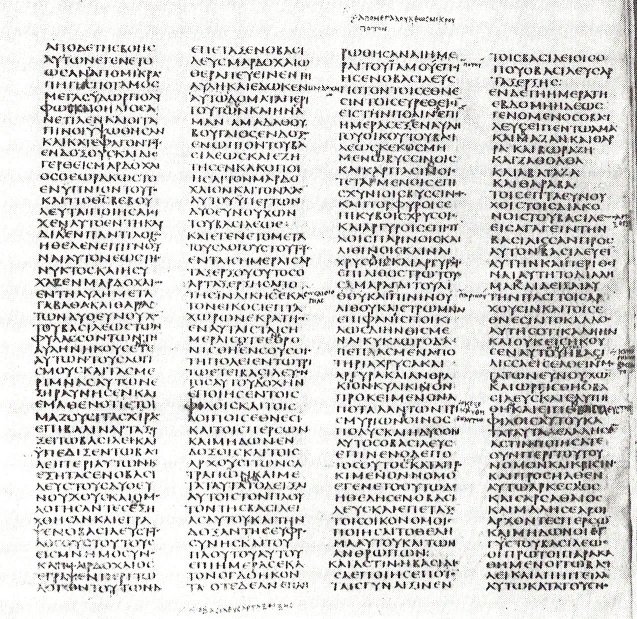
ἐν ἀρχῇ ἦν ὁ λόγος · καὶ ὁ λόγος ἦν πρὸς τὸν θεόν · καὶ θεὸς ἦν ὁ λόγος ·
In the beginning was the Word (Logos, λόγος), and the Word was with God, and the Word was God.
οὗτος ἦν ἐν ἀρχῇ πρὸς τὸν θεόν ·
He was in the beginning with God.
πάντα δι’ αὐτοῦ ἐγένετο · καὶ χωρὶς αὐτοῦ ἐγένετο οὐδὲ ἕν · ὃ γέγονεν
All things came into being through him, and apart from him not one thing came into being that has come into being.
ἐν αὐτῷ ζωὴ ἦν · καὶ ἡ ζωὴ ἦν τὸ φῶς τῶν ἀνθρώπων · καὶ τὸ φῶς ἐν τῇ σκοτίᾳ φαίνει · καὶ ἡ σκοτία αὐτὸ οὐ κατέλαβεν ·
In him was life, and the life was the light of humankind. And the light shines in the darkness, and the darkness did not overcome it.
ἐγένετο ἄνθρωπος ἀπεσταλμένος παρὰ θεοῦ · ὄνομα αὐτῷ Ἰωάννης · οὗτος ἦλθεν εἰς μαρτυρίαν · ἵνα μαρτυρήσῃ περὶ τοῦ φωτός · ἵνα πάντες πιστεύσωσιν δι’ αὐτοῦ · οὐκ ἦν ἐκεῖνος τὸ φῶς · ἀλλ’ ἵνα μαρτυρήσῃ περὶ τοῦ φωτός ·
There was a man sent from God, whose name was John. He came as a witness, to testify concerning the light, so that all might believe through him. He was not the light, but came to testify concerning the light.
ἦν τὸ φῶς τὸ ἀληθινόν · ὃ φωτίζει πάντα ἄνθρωπον ἐρχόμενον εἰς τὸν κόσμον · ἐν τῷ κόσμῳ ἦν · καὶ ὁ κόσμος δι’ αὐτοῦ ἐγένετο · καὶ ὁ κόσμος αὐτὸν οὐκ ἔγνω · εἰς τὰ ἴδια ἦλθεν · καὶ οἱ ἴδιοι αὐτὸν οὐ παρέλαβον ·
The true light, which enlightens every person, was coming into the world. He was in the world, and the world came into being through him, yet the world did not know him. He came to his own, and his own people did not receive him.
ὅσοι δὲ ἔλαβον αὐτόν · ἔδωκεν αὐτοῖς ἐξουσίαν τέκνα θεοῦ γενέσθαι · τοῖς πιστεύουσιν εἰς τὸ ὄνομα αὐτοῦ · οἳ οὐκ ἐξ αἱμάτων · οὐδὲ ἐκ θελήματος σαρκὸς · οὐδὲ ἐκ θελήματος ἀνδρὸς · ἀλλ’ ἐκ θεοῦ ἐγεννήθησαν ·
But to all who received him, who believed in his name, he gave the right to become children of God, who were born not of blood, nor of the will of the flesh, nor of the will of a man, but of God.
καὶ ὁ λόγος σὰρξ ἐγένετο · καὶ ἐσκήνωσεν ἐν ἡμῖν · καὶ ἐθεασάμεθα τὴν δόξαν αὐτοῦ · δόξαν ὡς μονογενοῦς παρὰ πατρός · πλήρης χάριτος καὶ ἀληθείας ·
And the Word became flesh and dwelt among us, and we beheld his glory, glory as of the only-begotten (monogenes, μονογενής) from the Father, full of grace and truth.
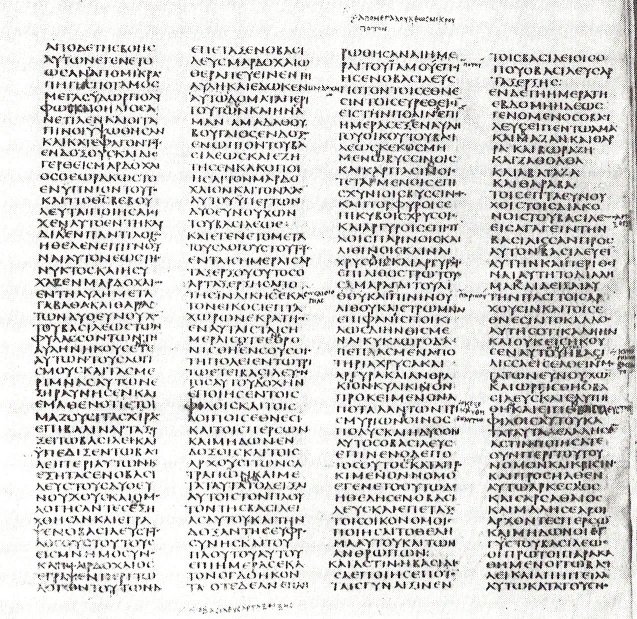
Ἰωάννης μαρτυρεῖ περὶ αὐτοῦ · καὶ κέκραγεν λέγων · οὗτος ἦν ὃν εἶπον · ὁ ὀπίσω μου ἐρχόμενος ἔμπροσθέν μου γέγονεν · ὅτι πρῶτός μου ἦν · καὶ ἐκ τοῦ πληρώματος αὐτοῦ ἡμεῖς πάντες ἐλάβομεν · καὶ χάριν ἀντὶ χάριτος ·
John testified concerning him and cried out, saying, “This was the one of whom I said: the one coming after me has surpassed me, because he was before me.” For from his fullness (pleroma, πλήρωμα) we have all received, grace upon grace.
ὅτι ὁ νόμος διὰ Μωυσέως ἐδόθη · ἡ χάρις καὶ ἡ ἀλήθεια διὰ Ἰησοῦ Χριστοῦ ἐγένετο · θεὸν οὐδεὶς ἑώρακεν πώποτε · μονογενὴς θεὸς ὁ ὢν εἰς τὸν κόλπον τοῦ πατρὸς · ἐκεῖνος ἐξηγήσατο ·
For the law was given through Moses; grace and truth came through Jesus Christ. No one has ever seen God. The only-begotten God (monogenes theos, μονογενὴς θεός), the one who is in the bosom of the Father, he has made him known.
Translator's Notes
- §1:1: The Greek Logos (λόγος) is traditionally rendered “Word” in English Bibles following the Vulgate's Verbum. The term carries far more weight than this rendering suggests. In Stoic philosophy, the Logos is the rational principle that orders the cosmos. In Philo of Alexandria's Jewish-Platonic synthesis, it is the mediating power between the transcendent God and creation. The Gnostics adopted the term as a name for one of the primary aeons of the Pleroma. The author of John uses all of these resonances simultaneously.
- §1:3: The punctuation of this verse is disputed and has major theological implications. If the phrase ends after “not one thing came into being,” then “that has come into being” begins the next sentence: “What has come into being in him was life.” This was the preferred reading of many early Church Fathers and makes Christ the source of life for all created things. The alternative (used here) treats “that has come into being” as completing the previous clause. Codex Sinaiticus has no punctuation to settle the question.
- §1:12–13: The phrase “the right to become children of God” (ἐξουσίαν τέκνα θεοῦ γενέσθαι) is central to the theosis question. The Gnostics read this as confirmation that humans contain a divine spark that can be awakened through knowledge. The orthodox reading emphasizes that this is a gift (“he gave”) rather than an innate property, and that it comes through belief. Both sides cite this verse.
- §1:14: The term monogenes (μονογενής) is traditionally rendered “only-begotten” (following the Latin unigenitus). Modern scholarship debates whether it means “only-begotten” (implying a generative relationship) or simply “unique, one of a kind.” The question matters enormously for the theosis debate: if Christ is “only-begotten” of God, then his divine nature is exclusive. If he is “unique,” the door remains open for others to participate in divinity in different ways.
- §1:16: The term pleroma (πλήρωμα), rendered here as “fullness,” became a central technical term in Valentinian Gnostic theology, where it designates the totality of divine emanations. The Gnostics did not invent the term; it appears here in John, and Paul uses it extensively (Colossians 1:19, 2:9; Ephesians 1:23, 3:19). Whether the Gnostic usage derives from these passages or from an independent tradition is an open question.
- §1:18: Codex Sinaiticus reads μονογενὴς θεός (“only-begotten God” or “unique God”), not μονογενὴς υἱός (“only-begotten Son”) as in the later Textus Receptus and the King James Version. This is one of the most significant textual variants in the New Testament. The Sinaiticus reading is generally considered more original by modern scholars. It makes a stronger claim: not that the Son reveals the Father, but that the “unique God” who is in the Father's bosom has made him known. The theological implications for the relationship between Father and Son—and for the theosis question—are substantial.
Export
Source & Cross-References
- Source text: Codex Sinaiticus (4th century), British Library Add. MS 43725 — view original
- Critical edition: Lake, K. and Lake, S. (eds.), Codex Sinaiticus Petropolitanus, Oxford: Clarendon Press, 1911
- The Book of Various Heresies, Chapters 29–43: The Gnostic Schools by Filastrius of Brescia