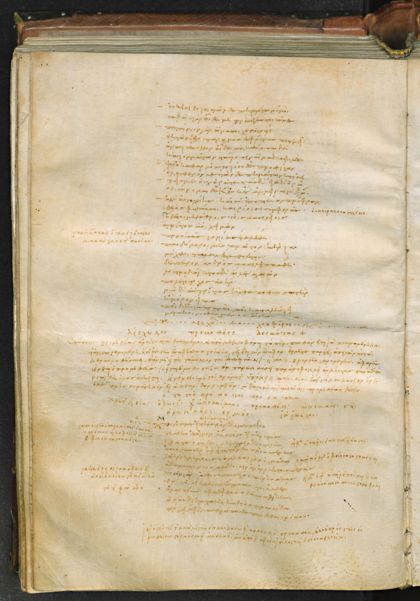
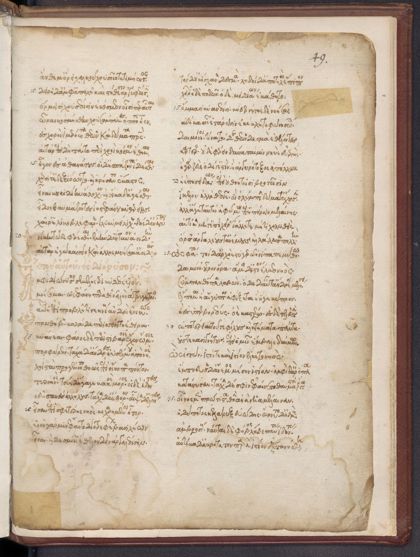
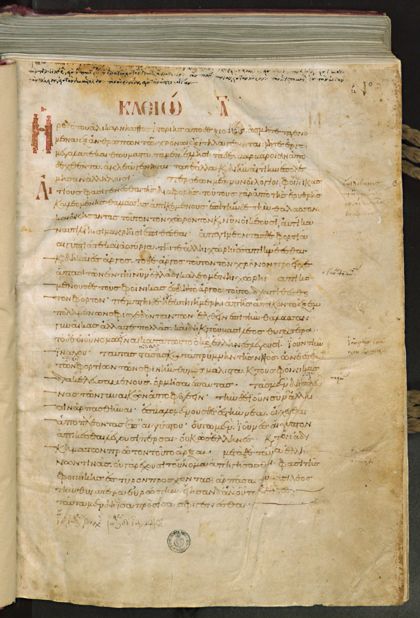
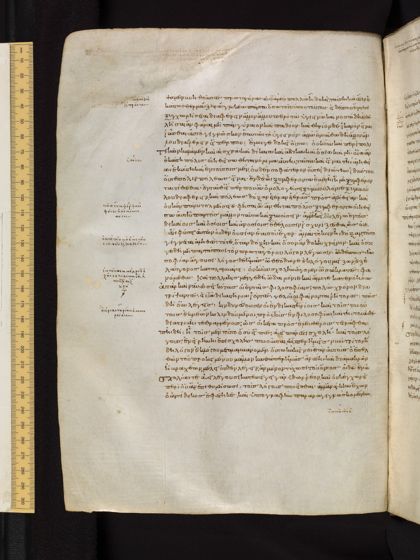
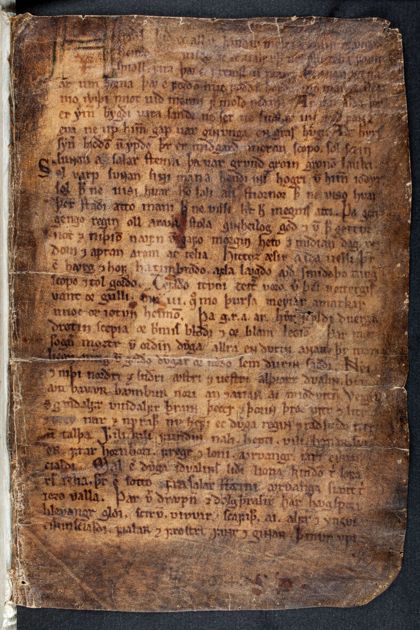
Library

5,350 entries in 107 collections, oldest civilisations first. Every section shows the original document, the original language and an English translation. Compare the Bible manuscripts verse by verse →

Earliest Writing · Mesopotamia · Egypt · Levant & Israel · Old Testament · Persia · India · China · Greece · Dead Sea Scrolls & Second Temple · Rome · New Testament · Early Christian · Later Traditions

Earliest Writing

The first written records, from the cities of Sumer.
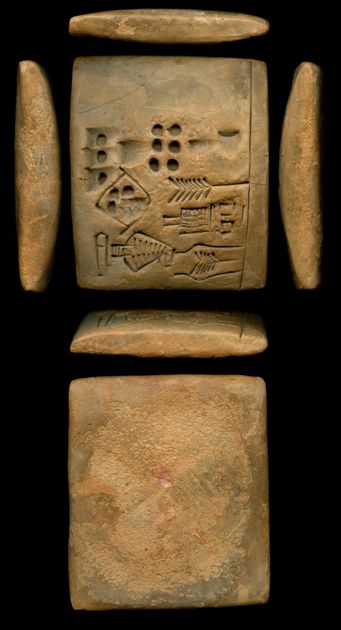
Mesopotamia

Sumerian and Babylonian literature, law and history on clay.
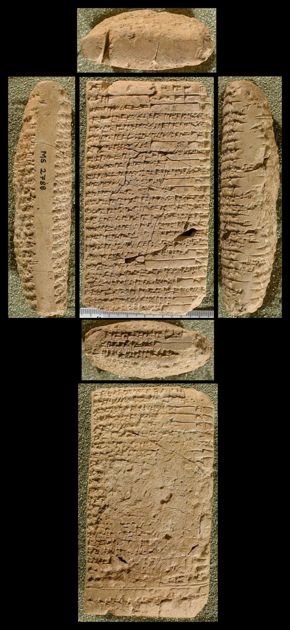
Instructions of Shuruppak
composed by c. 2600-2500 BCE; Old Babylonian copies shown, c. 1900-1700 BCE · 1 entry
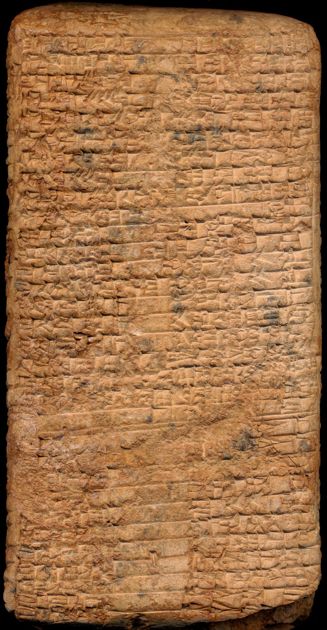
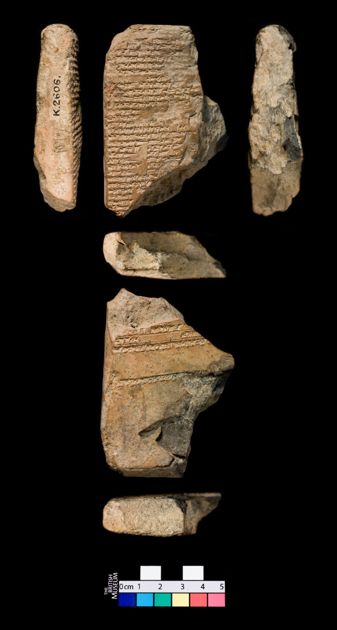
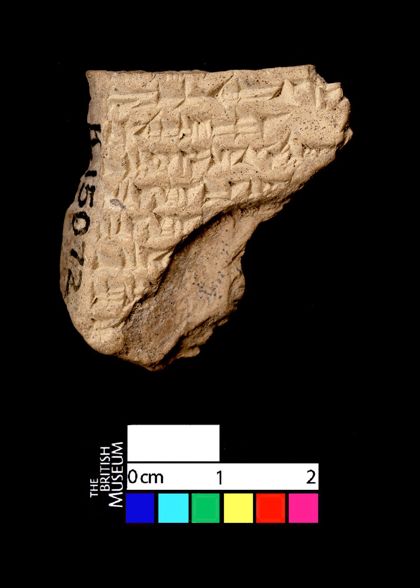
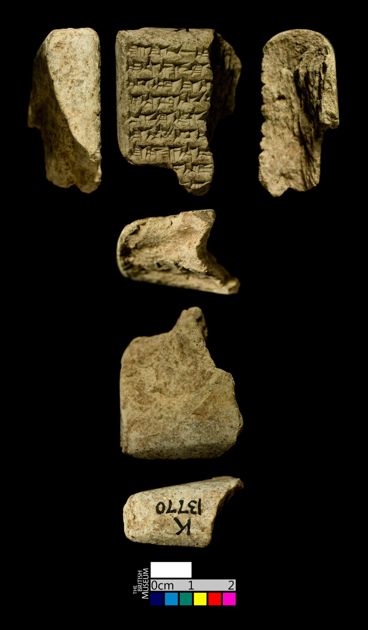
The Instructions of Shuruppak, early Sumerian wisdom literature, on the Old Babylonian tablets that carry it.
Keš Temple Hymn
composed by c. 2600-2500 BCE; Old Babylonian copies shown, c. 1900-1700 BCE · 1 entry
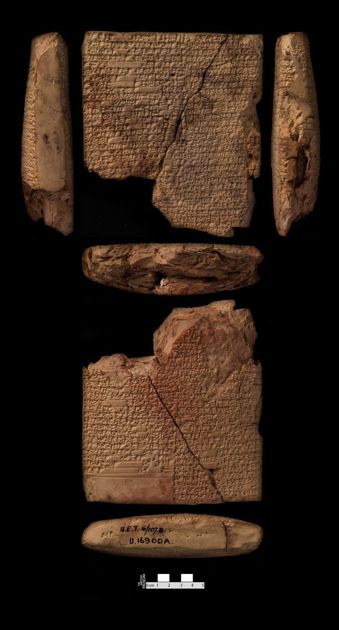
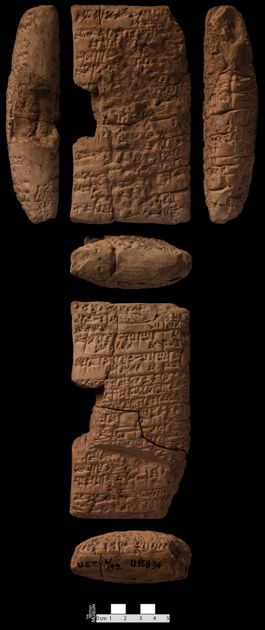
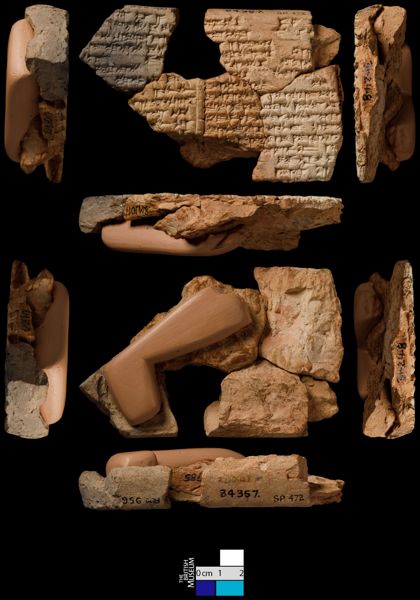
The Keš Temple Hymn, one of the two oldest works of literature, on the Old Babylonian tablets that carry it.
Exaltation of Inana (Enheduanna)
composed c. 2300 BCE (attributed to Enheduanna); Old Babylonian copies shown, c. 1900-1700 BCE · 1 entry
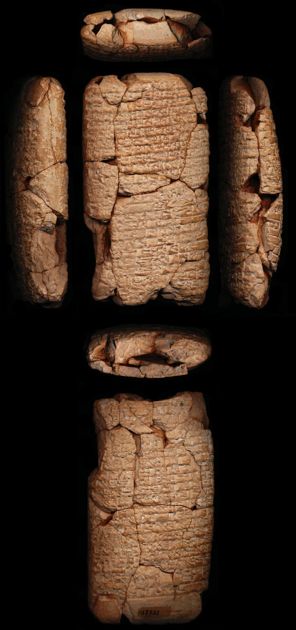
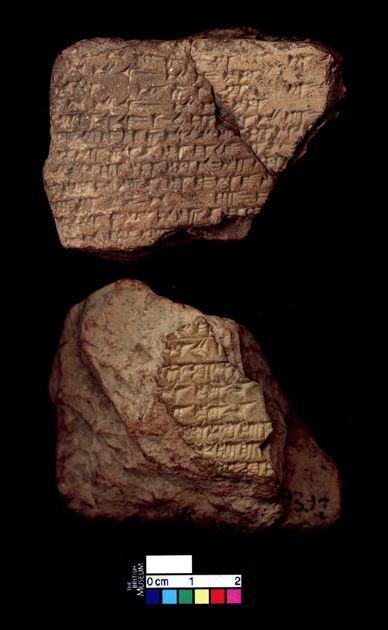
Enheduanna's Exaltation of Inana, on the Old Babylonian tablets that carry it.
Lament for Ur
composed soon after c. 2004 BCE; Old Babylonian copies, c. 1900-1700 BCE · 1 entry
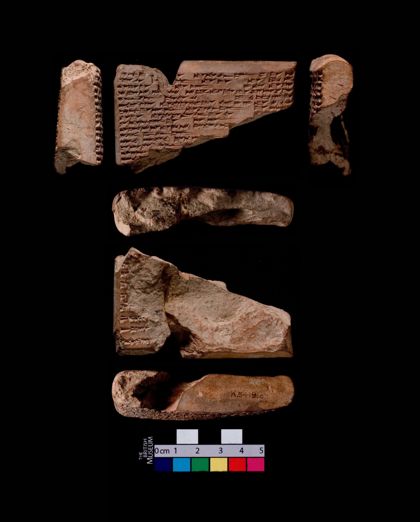
The Lament for Ur, on the Old Babylonian tablets that carry it.
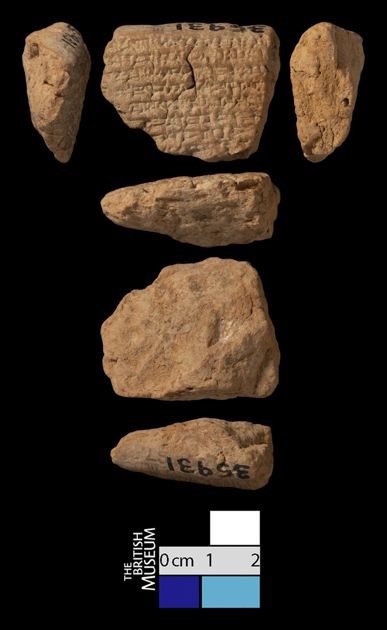
Cuthaean Legend of Naram-Sin (cuneiform tablets)
composed early 2nd millennium BCE; tablets 7th c. BCE · 1 entry
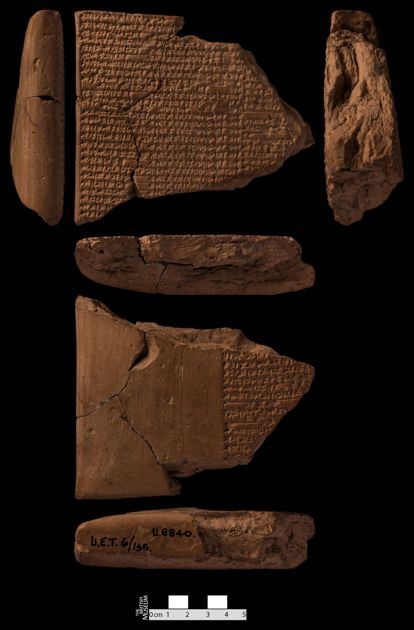
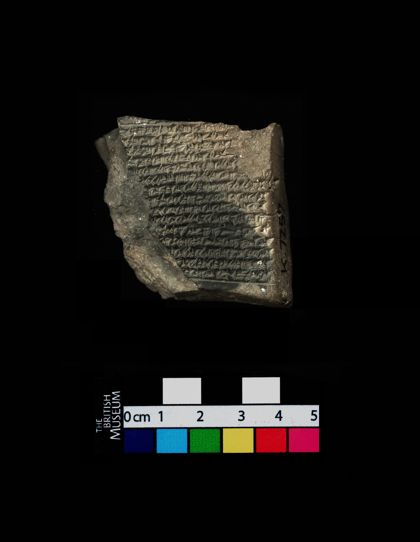
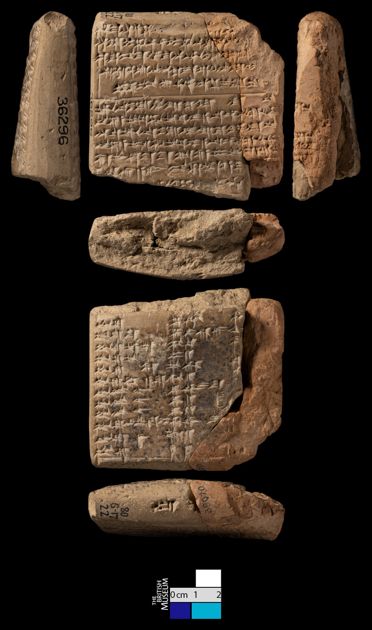
The Cuthaean Legend of Naram-Sin, Standard Babylonian version, read line by line on photographed clay tablets, with each tablet's own transliteration and B. R. Foster's English translation from the electronic Babylonian Library.
Etana (cuneiform tablets)
composed early 2nd millennium BCE; tablets 18th-7th c. BCE · 3 entries
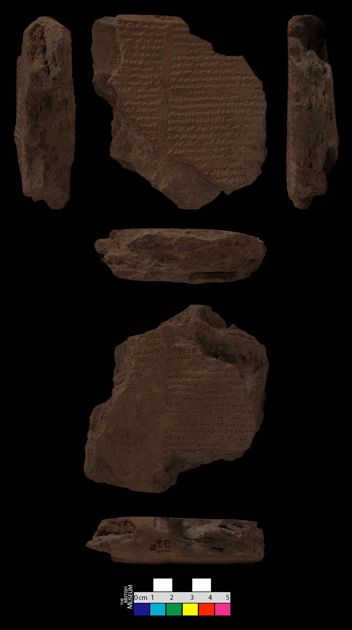
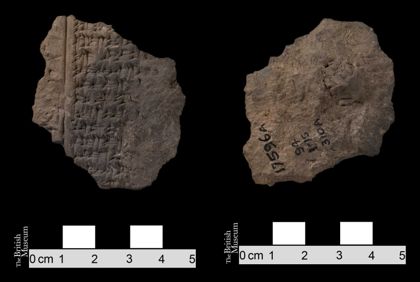
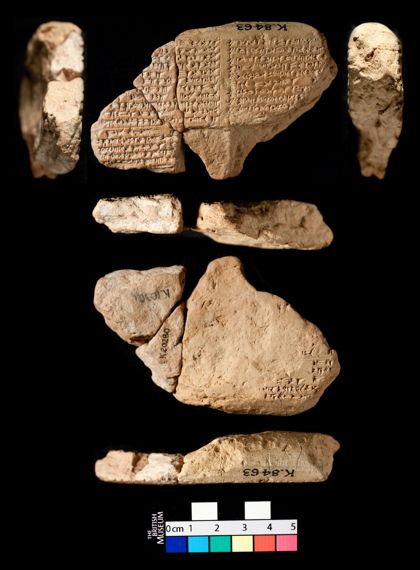
The Legend of Etana, Standard Babylonian version, read line by line on photographed clay tablets, with each tablet's own transliteration and B. R. Foster's English translation from the electronic Babylonian Library.
Gilgameš and Ḫuwawa
Old Babylonian copies, c. 1900-1700 BCE · 1 entry
The Sumerian poem Gilgameš and Ḫuwawa, on the Old Babylonian tablets that carry it.
Inana's Descent to the Netherworld
Old Babylonian copies, c. 1900-1700 BCE · 1 entry
Inana's Descent to the Netherworld, on the Old Babylonian tablets that carry it.
Sumerian King List
c. 1800 BCE (prism, reign of Sin-magir of Isin or soon after) · 1 entry
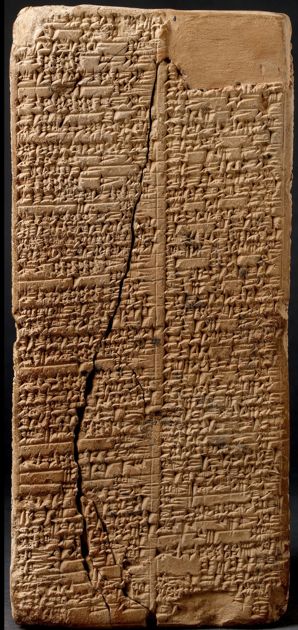
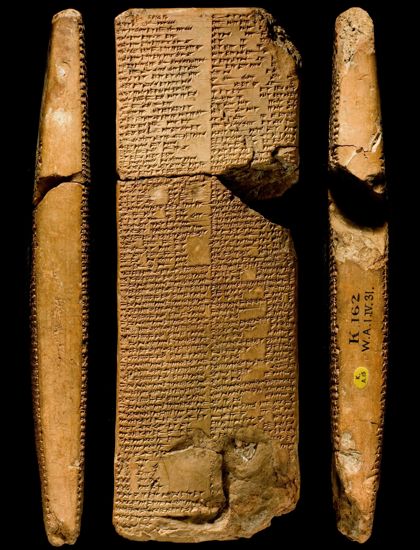
The Sumerian King List on the Weld-Blundell Prism in the Ashmolean Museum: the kings before the Flood, the Flood, and the dynasties after it, shown face by face.
Code of Hammurabi
c. 1754 BCE (stele set up late in Hammurabi's reign) · 7 entries
The Code of Hammurabi on the basalt stele in the Louvre (Sb 8): the prologue, laws 1-65 and 100-282, and the epilogue, each law shown with its Akkadian lines, Harper's 1904 English and the stele column that carries it.
Anzu (cuneiform tablets)
composed early 2nd millennium BCE; tablets 18th-7th c. BCE · 3 entries
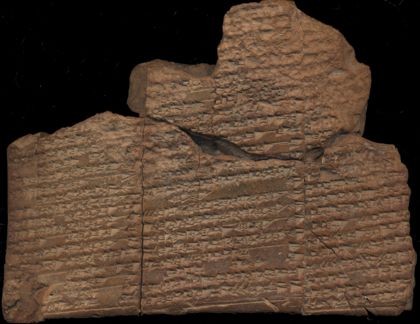
The Epic of Anzu, Standard Babylonian version, read line by line on photographed clay tablets, with each tablet's own transliteration and B. R. Foster's English translation from the electronic Babylonian Library.
Enki and Ninhursaĝa
c. 1800-1600 BCE (Old Babylonian tablet from Nippur) · 1 entry
The Sumerian myth of Enki and Ninhursaĝa in Dilmun, on its main Nippur tablet.
Atrahasis (cuneiform tablets)
Old Babylonian tablet written by Ipiq-Aya at Sippar, c. 1635 BCE · 4 entries
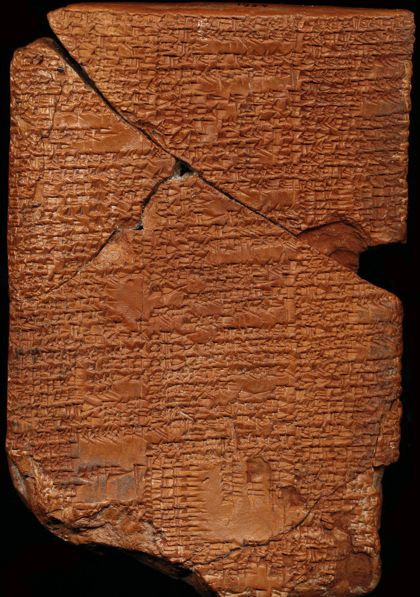
Atrahasis, the Babylonian story of the creation of humankind and the Flood, read line by line on photographed clay tablets, with each tablet's own transliteration and B. R. Foster's English translation from the electronic Babylonian Library.
Sumerian Flood Story (Eridu Genesis)
c. 1800-1600 BCE (Old Babylonian tablet from Nippur) · 1 entry
The Sumerian Flood story (Eridu Genesis) on its Nippur tablet: creation, the first cities, the flood and Ziusudra.
Adapa (cuneiform tablets)
composed 2nd millennium BCE; tablets 14th-7th c. BCE · 1 entry
The story of Adapa, read line by line on photographed clay tablets, with each tablet's own transliteration and B. R. Foster's English translation from the electronic Babylonian Library.
Epic of Gilgamesh
composed c. 1200-1000 BCE; tablets 7th-2nd c. BCE · 13 entries
The Standard Babylonian Epic of Gilgamesh, Tablets I-XII, read line by line on photographed clay tablets, mostly in the British Museum: each section shows one tablet's own transliteration with A. R. George's English translation from the electronic Babylonian Library.
Ludlul bel nemeqi (cuneiform tablets)
composed late 2nd millennium BCE; tablets 8th-1st c. BCE · 5 entries
Ludlul bel nemeqi, the Babylonian Poem of the Righteous Sufferer, read line by line on photographed clay tablets, with each tablet's own transliteration and B. R. Foster's English translation from the electronic Babylonian Library.
Enuma Elish
composed 2nd millennium BCE (date debated); tablets 9th-2nd c. BCE · 7 entries
Enuma Elish, the Babylonian Poem of Creation, Tablets I-VII, read line by line on photographed clay tablets: each section shows one tablet's own transliteration with B. R. Foster's English translation from the electronic Babylonian Library.
Counsels of Wisdom (cuneiform tablets)
composed late 2nd millennium BCE; tablets 7th-1st c. BCE · 1 entry
The Babylonian Counsels of Wisdom, read line by line on photographed clay tablets, with each tablet's own transliteration and B. R. Foster's English translation from the electronic Babylonian Library.
Descent of Ishtar
composed 2nd millennium BCE; tablets 8th-7th c. BCE · 1 entry
The Akkadian Descent of Ishtar to the Netherworld, read line by line on photographed clay tablets, with each tablet's own transliteration and B. R. Foster's English translation from the electronic Babylonian Library.
Great Hymn to Shamash (cuneiform tablets)
composed late 2nd millennium BCE; tablets 7th-1st c. BCE · 1 entry
The Great Hymn to Shamash, read line by line on photographed clay tablets, with each tablet's own transliteration and B. R. Foster's English translation from the electronic Babylonian Library.
Babylonian Theodicy (cuneiform tablets)
composed c. 1000 BCE; tablets 7th-2nd c. BCE · 1 entry
The Babylonian Theodicy, read line by line on photographed clay tablets, with each tablet's own transliteration and B. R. Foster's English translation from the electronic Babylonian Library.
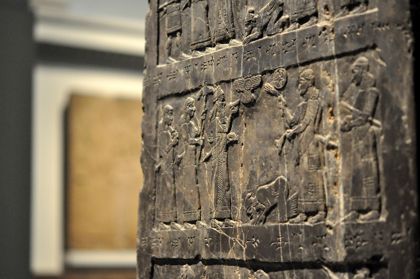
Black Obelisk of Shalmaneser III
about 825 BCE · 1 entry
The five tribute captions of Shalmaneser III's Black Obelisk (about 825 BCE), among them the tribute of Jehu of Israel, with ORACC's text and translation and photographs of the four sides.
Erra and Ishum (cuneiform tablets)
composed c. 8th c. BCE; tablets 8th-7th c. BCE · 1 entry
Erra and Ishum, Tablet I, read line by line on photographed clay tablets, with each tablet's own transliteration and B. R. Foster's English translation from the electronic Babylonian Library.
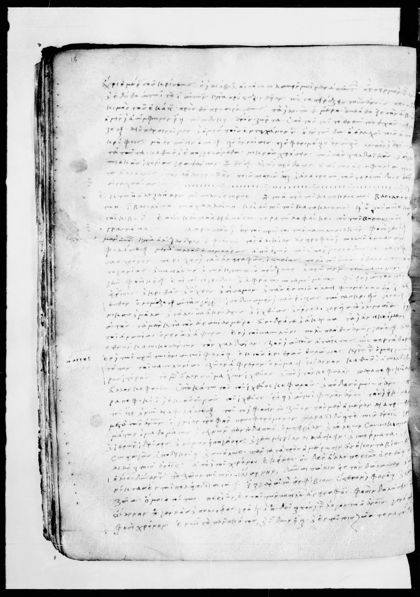
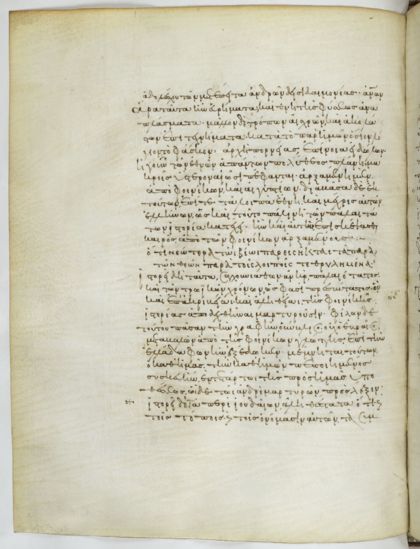
Berossus, History of Babylonia
c. 290-278 BCE (Berossus); 11th c. (Paris gr. 1711) · 6 entries
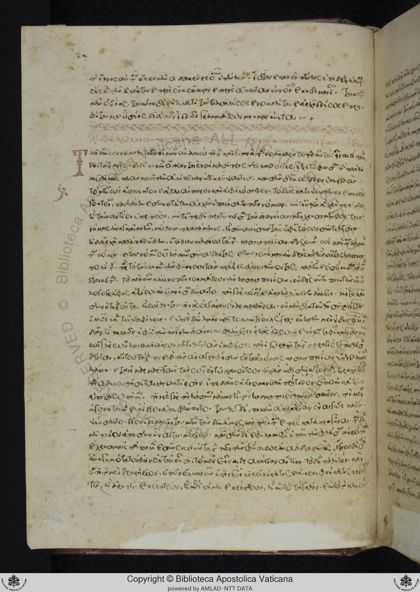
The Babylonian priest Berossus' Greek history of his land (c. 290 BCE): Oannes the fish-man who taught civilization, the creation, the ten kings before the flood and the flood of Xisouthros, and the last kings of Babylon, on the pages of a Paris manuscript of George Syncellus and a Florence manuscript of Josephus.
Egypt

Pyramid walls, papyri and stelae of the Nile valley.
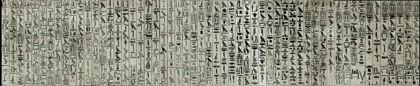
Pyramid Texts of Unas
c. 2350 BCE (pyramid of Unas, end of the 5th Dynasty) · 17 entries
The Pyramid Texts in the pyramid of Unas at Saqqara (c. 2350 BCE), the oldest Egyptian religious texts: all seventeen inscribed walls, utterance by utterance, with the TLA transliteration and Mercer's 1952 English, each section placed on its wall photograph by column number.
Tale of the Shipwrecked Sailor
c. 1990-1800 BCE (12th Dynasty) · 1 entry
The Tale of the Shipwrecked Sailor, papyrus Hermitage 1115: lines 24-50 (the voyage and the wreck) on two photographs of the papyrus, with the TLA transliteration and hieroglyphs and Petrie's English.
Papyrus Prisse (Kagemni and Ptahhotep)
Middle Kingdom composition; manuscript c. 1850 BCE (12th Dynasty) · 2 entries
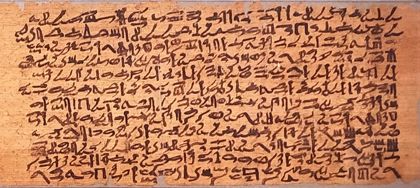
The Papyrus Prisse (BnF, c. 1850 BCE), the oldest complete copy of the Instruction of Ptahhotep, with the end of the Instruction for Kagemni: every column photographed, TLA transliteration and hieroglyphs, Gunn's 1906 English.
Papyrus Westcar (Tales of the Magicians)
Middle Kingdom composition; manuscript c. 1650-1550 BCE · 1 entry
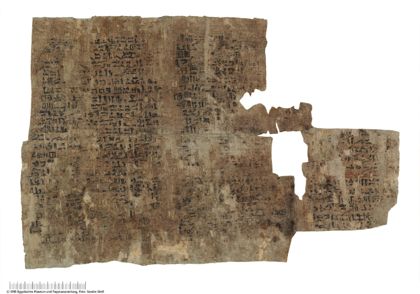
Papyrus Westcar (Berlin P 3033): the tales of wonders told at the court of King Khufu, column by column on the Berlin photographs, with TLA transliteration and hieroglyphs and Petrie's English.
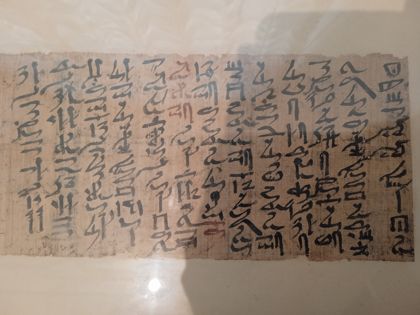
Instruction of Amenemope
copy c. 650 BCE (papyrus BM EA 10474); composed in the late New Kingdom · 1 entry
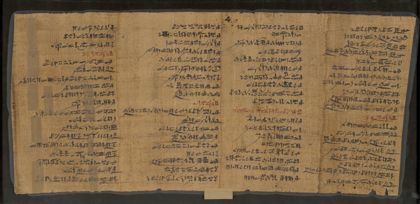
The Instruction of Amenemope, the Egyptian wisdom book with close parallels in Proverbs: pages 11-14 (chapters 9-11) of the British Museum papyrus, on the photograph of the papyrus, with the TLA transliteration and Budge's 1924 English.
Herodotus on the kings of Egypt
c. 430 BCE (Herodotus); 10th c. (Laur. Plut. 70.3) · 11 entries
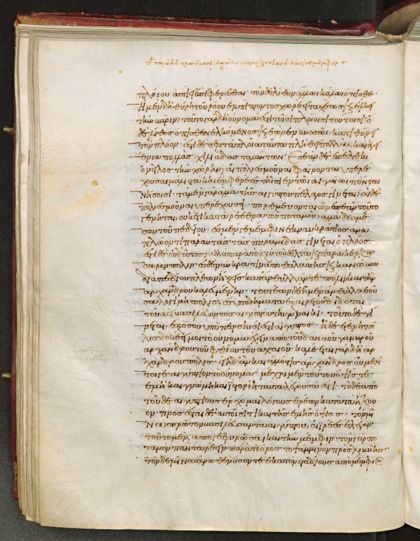
Herodotus' account of the kings of Egypt from Min to Sethos, as the priests of Memphis told it, and their chronology of 341 generations and 11,340 years, on the pages of the oldest manuscript of the Histories (Florence, Laur. Plut. 70.3, 10th c.).
Manetho, History of Egypt
c. 280 BCE (Manetho); Syncellus c. 810 AD; manuscript 11th c. · 6 entries
Manetho's history of Egypt, written in Greek about 280 BCE, survives only in quotations. This shelf shows them on the manuscript pages that carry them.
Book of the Dead (papyrus of Iuefankh, Turin)
Ptolemaic period (332-30 BCE); papyrus from Thebes · 159 entries
The Book of the Dead in the papyrus of Iuefankh (Turin, Ptolemaic period), the roll from which Lepsius took the standard numbering of the spells: spell by spell, with the TLA transliteration, Samuel Birch's 1867 English made from the same papyrus, and the Museo Egizio photographs of the whole roll.
Rosetta Stone (Greek text)
27 March 196 BCE (year 9 of Ptolemy V) · 1 entry
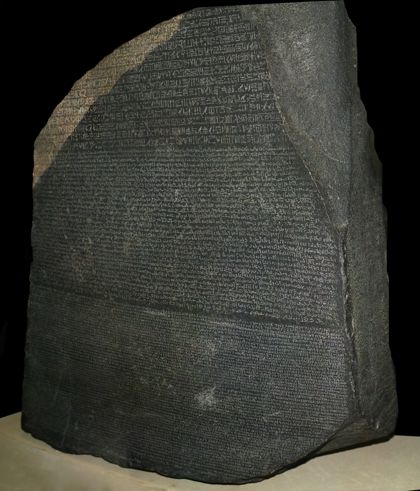
The Rosetta Stone (British Museum EA 24, 196 BCE): the complete Greek text of the priests' decree for Ptolemy V, 54 lines in groups of six, each cut from the British Museum's photograph of the stone, with Budge's 1904 English.
Diodorus Siculus on the gods of Egypt
c. 60-30 BCE (Diodorus); mid-10th c. (Vat. gr. 130) · 6 entries
Diodorus of Sicily's account of the Egyptian traditions on the first men, the gods who ruled Egypt as kings, the deeds and death of Osiris, the colonies said to have gone out from Egypt, and the 18,000 years of gods and heroes, on the pages of the 10th-century Vatican manuscript.
Levant & Israel

Inscriptions from the lands of the Old Testament.
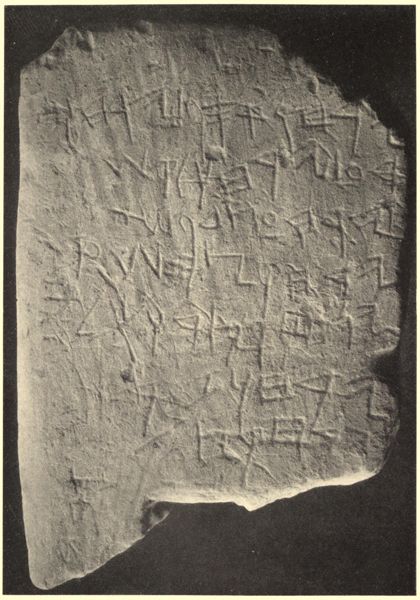
Gezer Calendar
about 10th century BCE · 1 entry
The Gezer calendar (about 10th century BCE), a small limestone tablet listing the farming months, with Lidzbarski's reading, Driver's 1913 translation and photographs of the tablet.
Mesha Stele
c. 840 BCE · 1 entry
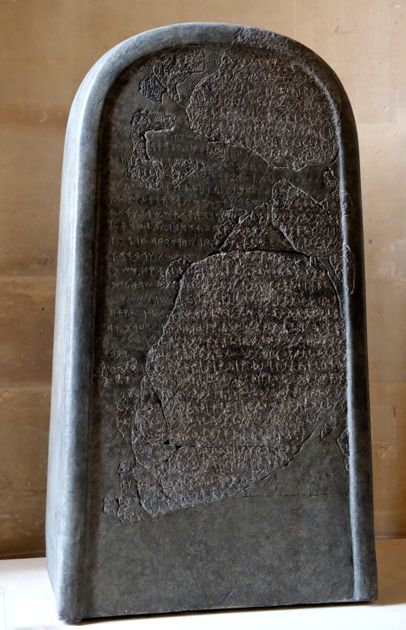
The Mesha Stele (Moabite Stone, c. 840 BCE): Mesha of Moab's account of his revolt against the house of Omri, line by line with Compston's 1919 text and translation and the photograph of the stele in the Louvre.
Tel Dan Stele
second half of the 9th century BCE · 1 entry
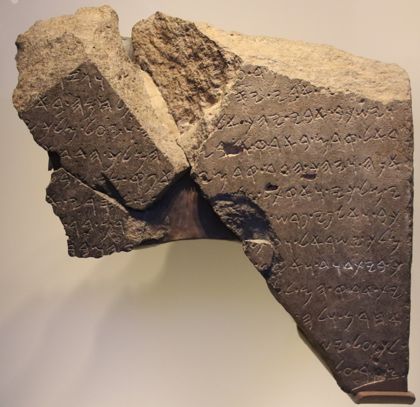
The Tel Dan stele (9th century BCE), in which an Aramaean king claims victory over the king of Israel and the 'House of David': Biran and Naveh's text and Biran's translation with a photograph of the stone.
Siloam Inscription
late 8th century BCE · 1 entry
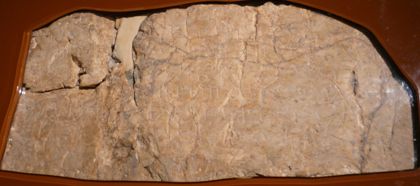
The Siloam inscription (late 8th century BCE) from the water tunnel under the City of David, which tells how the miners met in the rock: Driver's 1913 text and translation with photographs of the stone in Istanbul.
Ketef Hinnom Amulet
late 7th or early 6th century BCE · 1 entry
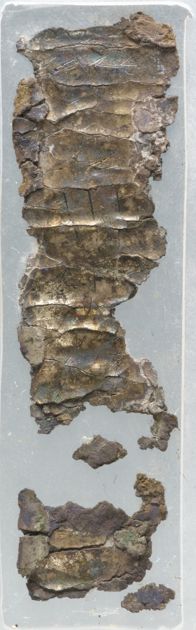
The smaller of the two Ketef Hinnom silver amulets (about 600 BCE), carrying the priestly blessing of Numbers 6:24-26, the oldest surviving words also found in the Old Testament.
Sanchuniathon, Phoenician History
c. 100 AD (Philo of Byblos); c. 313 AD (Eusebius); 914 AD (Paris gr. 451) · 6 entries
The Phoenician account of the beginning of the world, the first inventors, and the reigns of Uranus, Kronos (El) and Astarte, from Philo of Byblos' Greek translation of Sanchuniathon, on the pages of the Arethas codex of Eusebius written in 914 AD.
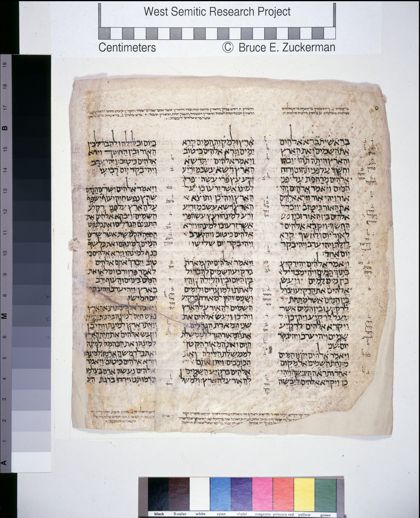
Old Testament

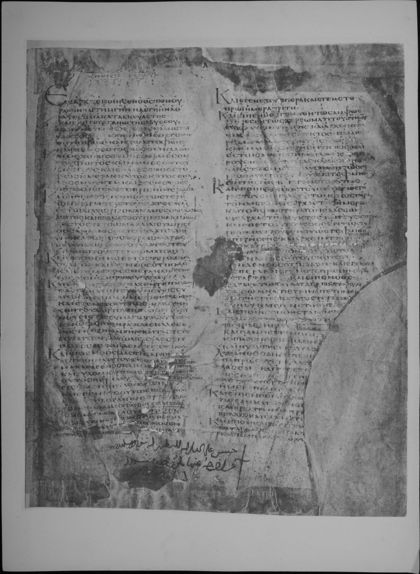
The Hebrew scriptures in their oldest complete manuscript.
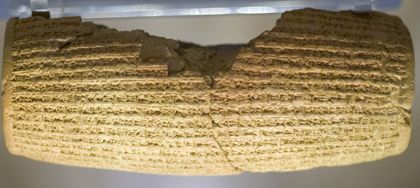
Persia

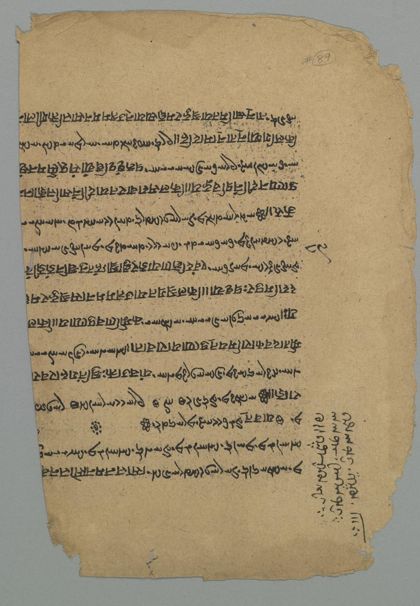
The Achaemenid kings and the Avesta of Zarathustra.
India

The Vedas, the Upanishads and the Bhagavad Gita.
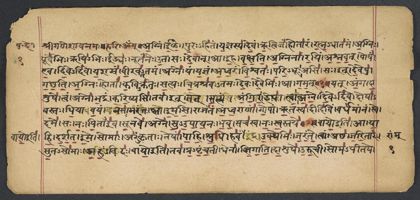
Rigveda
c. 1500-1000 BCE (composition); manuscript undated (Penn Ms. Coll. 390 Item 41) · 1,028 entries
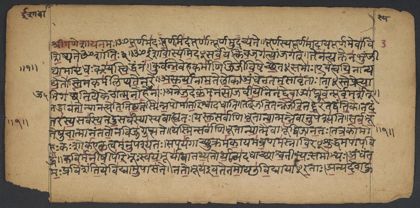
The complete Rigveda, the oldest collection of Sanskrit hymns, hymn by hymn (1,028 hymns): Aufrecht's accented text, Griffith's English, and the page of a Devanagari manuscript in the University of Pennsylvania collection that carries each verse: a padapāṭha copy of the whole Rigveda, a saṃhitā copy of 1711 for 10.46-10.191, and a copy of 1737 for the Gāyatrī hymn (3.62).
Principal Upanishads
c. 700-200 BCE (composition); 18th or 19th c. (Penn manuscript) · 31 entries
Principal Upanishads in Sanskrit and English, each passage mapped to its page in Sanskrit manuscripts at the University of Pennsylvania: the Isa, the Kena, the Katha (six vallis), the Prasna (six questions), the Mundaka (three chapters) and the Mandukya from Ms. Coll. 390 Item 869, the Aitareya from Item 1216, the Taittiriya from Item 868, the Svetasvatara from Item 1203, and the complete Chandogya in eight chapters from Item 945 (chapter 6, 'thou art that', from Item 1213, copied in 1836).
Dhammapada
c. 3rd century BCE (compilation); manuscript undated (Sinhalese palm leaf, Manchester Pali MS 19) · 26 entries
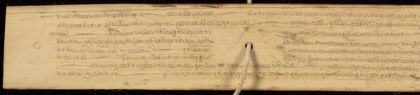
The complete Dhammapada, 423 verses in 26 chapters: the Pali text and Max Müller's 1881 English, each verse on the page of a Sinhalese palm-leaf manuscript in the John Rylands Library, Manchester (Pali MS 19), that carries it.
Edicts of Ashoka
c. 256 BCE (edicts dated 12 and 13 years after Ashoka's consecration) · 17 entries
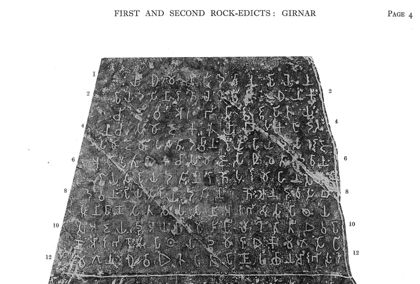
The edicts of the Maurya king Ashoka (c. 260-232 BCE), the earliest datable writing in India, rock by rock: E. Hultzsch's 1925 transliteration and English, each edict shown on the inked impression of the stone that carries it.
Bhagavad Gita (Penn manuscript of 1794)
c. 2nd c. BCE (composition, date debated); manuscript dated Saṃvat 1851 (1794 CE) · 18 entries
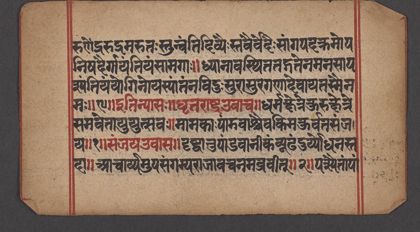
The complete Bhagavad Gita, chapter by chapter and page by page, on a Sanskrit manuscript copied in 1794 (University of Pennsylvania Ms. Coll. 390 Item 559), with the Sanskrit text and Annie Besant's verse-by-verse English.
China

Oracle bones and the classics of the Zhou and Han.
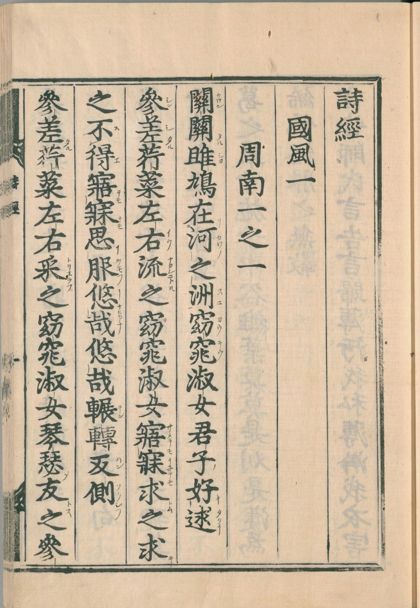
Book of Odes (Keicho-era print)
c. 10th-7th c. BCE (Airs of the States); print Keicho era (1596-1615) · 168 entries
The 160 Airs of the States (Guofeng) and eight Major Odes that tell the rise of the Zhou house, page by page on a Japanese movable-type print of the Keicho era, with the Mao text and James Legge's English (1871 for the Airs, 1879 for the Major Odes).
Classic of Changes (Ming print of 1596)
Western Zhou (c. 9th c. BCE or earlier); print with postface of 1596 · 88 entries
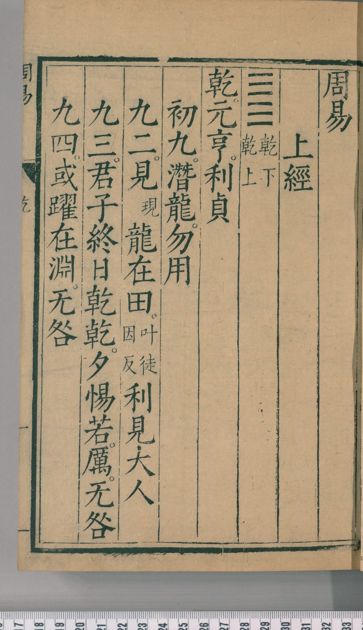
The 64 hexagrams of the Classic of Changes, each with its hexagram statement and line statements, and the Great Treatise (Xici zhuan) in its 24 chapters, page by page on a Nanjing print of the Five Classics (postface 1596) in the National Diet Library, with the received Chinese text and James Legge's English (1882).
Analects of Confucius (Kamakura-period manuscript)
5th-4th c. BCE (compilation); manuscript c. 1300 CE (Kamakura period, attributed to Kiyohara Yoshieda) · 20 entries
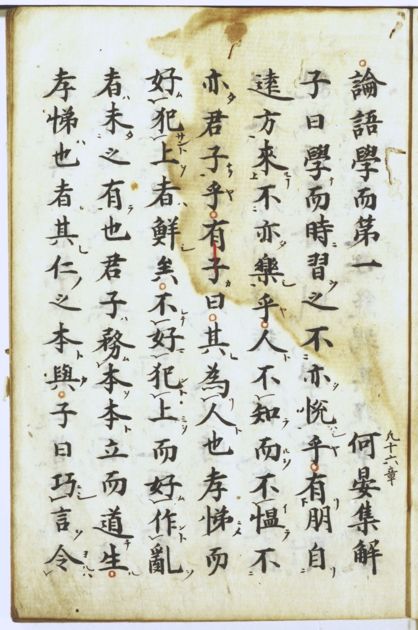
The Analects of Confucius, all twenty books, page by page on a Kamakura-period manuscript in Kyoto University Library (attributed to Kiyohara Yoshieda, c. 1300), with the received Chinese text and James Legge's English.
Daodejing (Mawangdui silk manuscripts)
4th c. BCE (composition); silk copies before 168 BCE (Mawangdui Tomb 3) · 81 entries
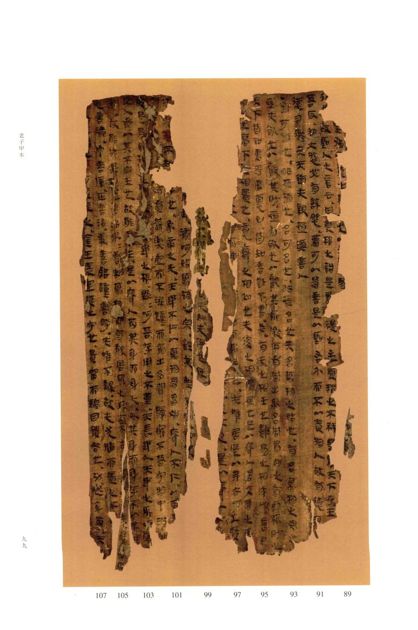
The Daodejing chapter by chapter on the two Mawangdui silk manuscripts (copied before 168 BCE), the oldest nearly complete copies, with the column-by-column transcription, the received Wang Bi text and James Legge's English.
Greece

Homer, Hesiod, Plato and the Greek historians.
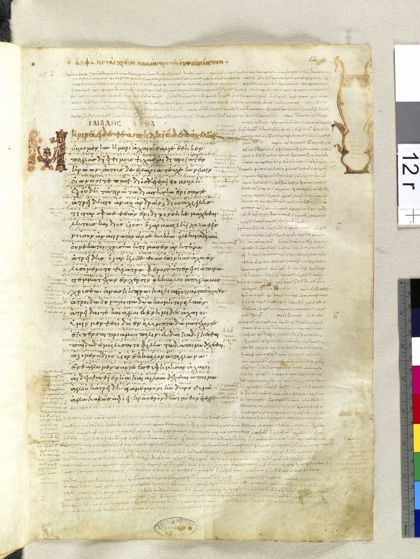
Homer, Iliad (Venetus A)
c. 750 BCE (composition); 10th c. manuscript · 24 entries
All 24 books of the Iliad on the Venetus A manuscript, one section per page, with the manuscript's own text from the Homer Multitext project.
Hesiod, Shield of Heracles
c. 6th c. BCE (composition); manuscript late 13th c. · 4 entries
The Shield of Heracles, handed down under Hesiod's name, complete, on the pages of the late 13th-century Florence manuscript Laur. Plut. 32.16.
Hesiod, Theogony
c. 700 BCE (composition); manuscript late 13th c. · 11 entries
Hesiod's Theogony, the Greek account of the birth of the gods and the war of the Titans, complete, on the pages of the oldest complete manuscript with published images (Florence, Laur. Plut. 32.16, late 13th century).
Hesiod, Works and Days
c. 700 BCE (composition); manuscript late 13th c. · 10 entries
Hesiod's Works and Days, with the Five Ages of mankind and the myth of Pandora, complete, on the pages of the late 13th-century Florence manuscript Laur. Plut. 32.16.
Homer, Odyssey (Florence manuscript)
c. 700 BCE (composition); manuscript 10th c. · 25 entries
Homer's Odyssey page by page on the oldest Odyssey manuscript with published images, Florence, Laur. Plut. 32.24 (10th century), with Murray's Greek and English. That codex ends at book 24, line 103; the rest of book 24 (lines 104-548) is given from a second Florence manuscript, Laur. Plut. 32.4 (15th century).
Homeric Hymns (Leiden manuscript)
c. 700-500 BCE (composition); manuscript 15th c. · 6 entries
The Homeric Hymns to Demeter, Apollo, Hermes and Aphrodite and the shorter hymns, column by column on the Leiden 'Moscow' manuscript (BPG 33 H), the only witness of the Hymn to Demeter.
Aeschylus: Prometheus Bound
5th century BCE (composition); manuscript 10th century · 3 entries
Aeschylus' Prometheus Bound complete (lines 1-1093) in three parts, page by page on the 10th-century Medicean manuscript of Aeschylus, with Smyth's Greek and his 1922 English.
Hyperborea: the ancient testimonia
6th century BCE (probable composition); first half of the 15th century (Leiden BPG 33 H) · 17 entries
What the ancient writers said about the Hyperboreans, the people 'beyond the North Wind' beloved of Apollo, each passage shown on the medieval manuscript page that carries it.
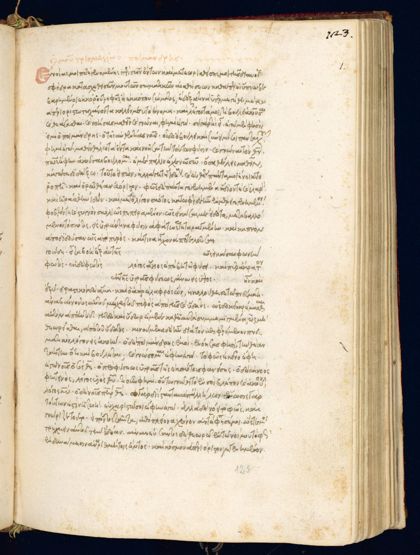
Herodotus, Histories (Florence manuscript)
c. 430 BCE (composition); 10th c. (Laur. Plut. 70.3) · 76 entries
Herodotus' Histories page by page on the oldest manuscript of the work, Florence, Laur. Plut. 70.3 (10th century), with Godley's Greek text and his English translation. Books 1, 2, 3, 4, 5, 6 are complete.
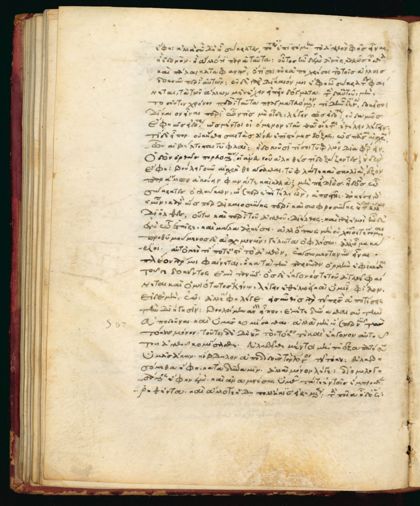
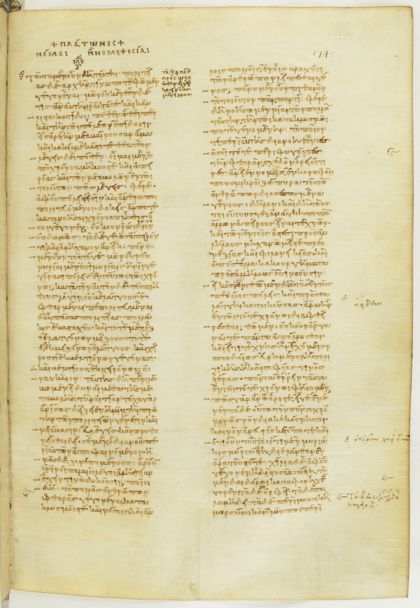
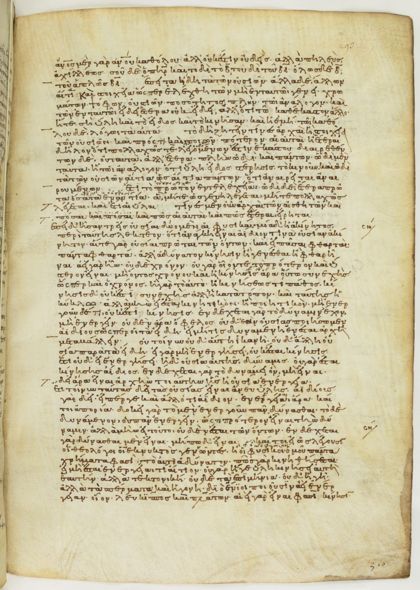
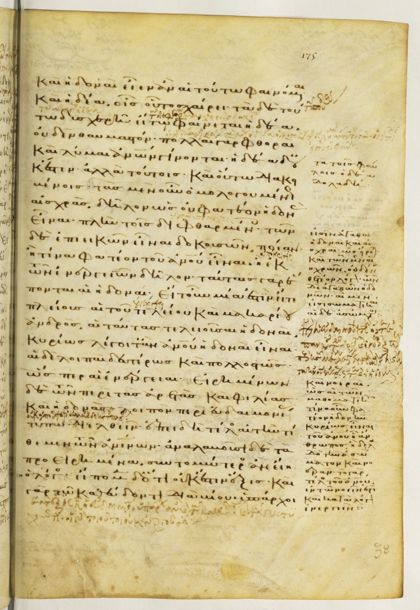
Plato: becoming like god
c. 369 BCE (composition); manuscript 895 AD · 5 entries
Plato's passages on the divine in man and on becoming like god, each shown on the pages of the oldest manuscript that carries it.
Plato, Republic: the Sun, the Line and the Cave
c. 375 BCE (composition); manuscript 12th century · 2 entries
The central images of Plato's Republic, the Sun, the Divided Line and the Cave, each Stephanus subsection shown on the page of the 12th-century Florence manuscript Laur. Plut. 80.19 that carries it, with Burnet's Greek and Paul Shorey's English.
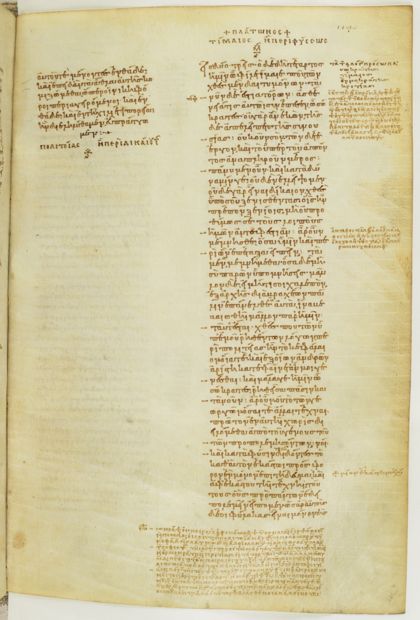
Plato, Timaeus (Paris gr. 1807)
c. 360 BCE (composition); c. 850-875 AD (Paris gr. 1807) · 76 entries
The complete Timaeus, Plato's account of the making of the world, which opens with Critias' story of Atlantis (20d-25d). Every Stephanus section is shown on the page of the oldest medieval manuscript that carries it, Paris gr. 1807 (9th century), with Burnet's Greek and R. G. Bury's English.
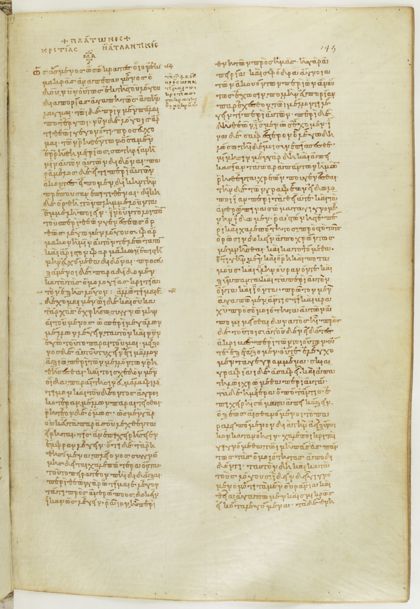
Plato, Critias (Paris gr. 1807)
c. 360 BCE (composition); c. 850-875 AD (Paris gr. 1807) · 16 entries
The Critias, Plato's unfinished account of ancient Athens and the island of Atlantis, complete as far as Plato wrote it. Every Stephanus section is shown on the page of the oldest medieval manuscript that carries it, Paris gr. 1807 (9th century), with Burnet's Greek and R. G. Bury's English.
Atlantis: the ancient testimonia
c. 430-425 BCE (composition); 10th century (Laur. Plut. 70.3) · 6 entries
Ancient passages on Atlantis and the peoples of Atlas outside Plato's own dialogues, each shown on the medieval manuscript page that carries it. Plato's Timaeus and Critias are separate collections.
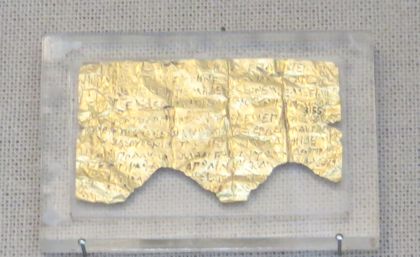
Orphic gold tablets
4th century BCE · 1 entry
Gold tablets buried with Orphic or Bacchic initiates, telling the soul which spring to avoid in the underworld and what to say to the guardians of Memory, shown on a photograph of the tablet with a public-domain Greek text and translation.
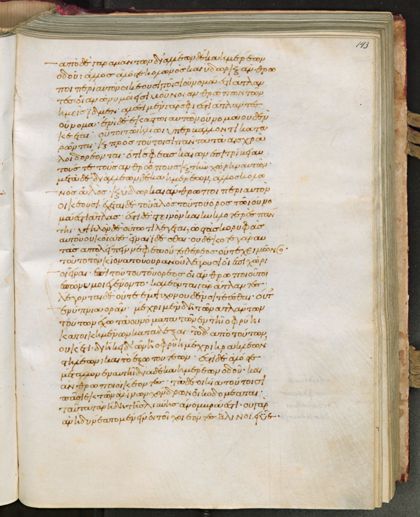
Plato, Laws book 3: the floods and the rebirth of civilization
c. 350 BCE (composition); c. 850-875 AD (Paris gr. 1807) · 2 entries
Plato's account in Laws 3 of the floods that repeatedly destroyed civilization, the herdsmen who survived on the mountains, and the slow regrowth of society from households to cities, on the pages of the 9th-century Paris manuscript of Plato.
Aristotle: the unmoved mover
c. 340s-330s BCE (composition); manuscript 10th c. · 1 entry
Aristotle's theology in Metaphysics Lambda, shown on a 10th-century Paris manuscript.
Aristotle: the contemplative life
c. 330s BCE (composition); manuscripts 10th and 12th c. · 1 entry
Aristotle on contemplation as the most divine human activity, shown on the oldest manuscript of the Nicomachean Ethics.
Corpus Hermeticum
c. 2nd-3rd century AD (composition); manuscript 14th century · 2 entries
The Hermetic Poimandres (CH I), the vision of the divine Mind and of the soul's ascent to become God, and the secret discourse on rebirth (CH XIII), shown section by section on the oldest manuscript of the Corpus Hermeticum, with Parthey's Greek and G. R. S. Mead's English.
Dead Sea Scrolls & Second Temple

Jewish writings from the Babylonian exile to the fall of the Temple.
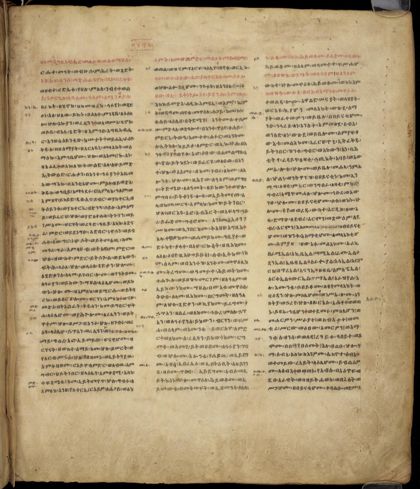
1 Enoch (Ethiopic, Rylands MS 23)
c. 3rd century BC (composition); Ethiopic copy 18th c. (Rylands Ethiopic MS 23) · 5 entries
The complete Book of Enoch (1 Enoch, chapters 1-108) in Ge'ez and English, every chapter linked to the page of an 18th-century Ethiopic manuscript in the John Rylands Library, Manchester, that carries it.
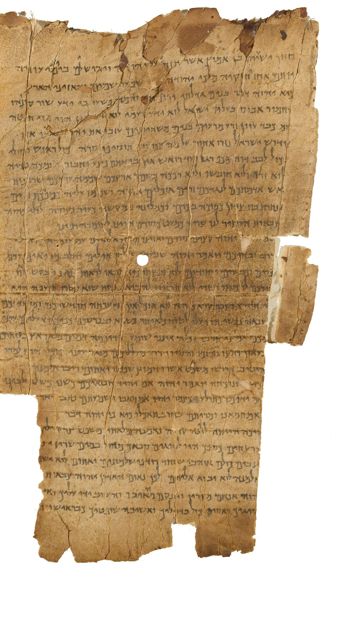
Great Isaiah Scroll (1QIsa-a)
c. 125 BCE · 66 entries
The complete book of Isaiah from Qumran Cave 1, a thousand years older than the medieval codices, column by column.
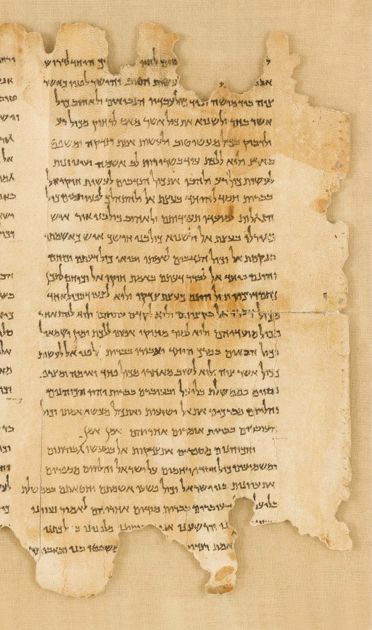
The Community Rule (1QS)
c. 100-75 BCE (copy); composition 2nd century BCE · 1 entry
The Community Rule (Manual of Discipline) from Qumran Cave 1, complete in eleven columns, on the Israel Museum's photograph of the scroll, with the scroll's own Hebrew and W. H. Brownlee's 1951 English.
Pesher Habakkuk (1QpHab)
1st century BCE (composition and copy) · 2 entries
The Habakkuk Commentary from Qumran Cave 1, all 13 columns, on photographs of the scroll, with the scroll's own Hebrew and W. H. Brownlee's 1948 English.
Philo of Alexandria: Creation and the Logos
c. 20-50 AD (composition); manuscript 14th-15th century · 3 entries
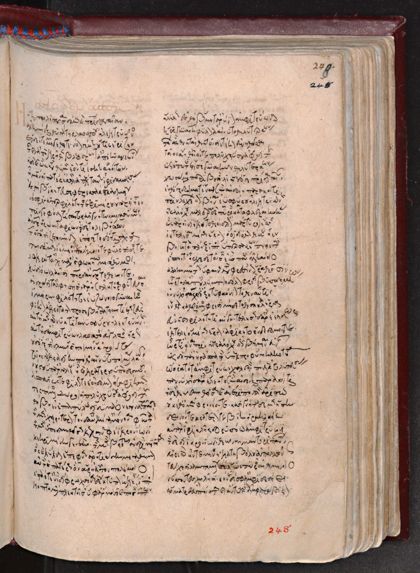
Philo of Alexandria's On the Creation of the World, complete, with his two best-known passages on the Logos, each section shown on the page of the Vatican Philo manuscript Pal. gr. 248 that carries it, with Cohn-Wendland's Greek and C. D. Yonge's English.
Josephus (Vatican manuscripts)
c. 93/94 AD (composition); 10th-14th c. (Vatican manuscripts) · 1 entry
Josephus on Jesus, on three Vatican manuscripts.
Rome

Latin authors on the Roman world and the first Christians.
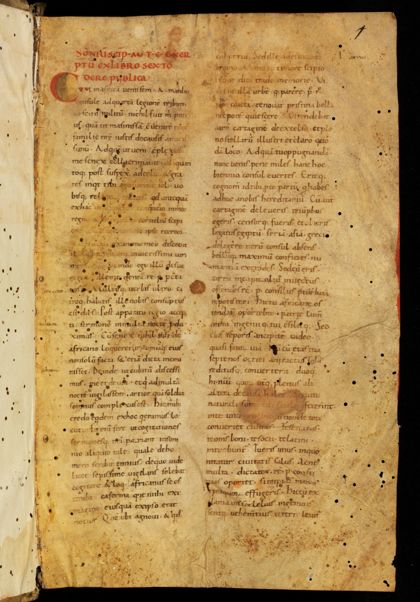
New Testament

The great codices of the Greek Bible, chapter by chapter.
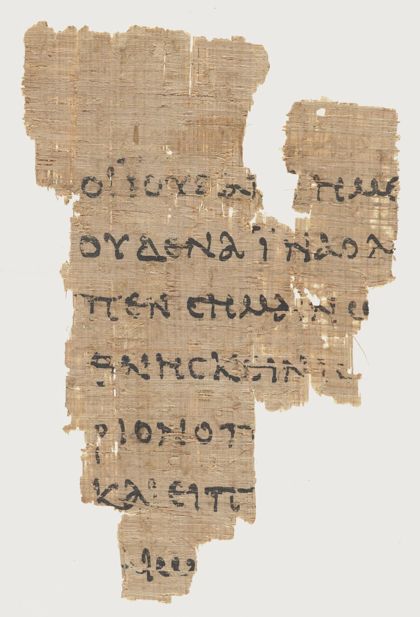
P52 (John Rylands fragment)
c. 125-175 AD (NTVMR); mid to late 2nd century (Rylands catalogue) · 1 entry
The oldest known New Testament manuscript: a 2nd-century papyrus scrap of John 18 in the John Rylands Library, Manchester, both sides.
P46 (Chester Beatty II + Michigan)
c. 200 AD (NTVMR: 200-225) · 70 entries
The oldest collection of Paul's letters: the papyrus codex P46 (c. 200), split between Dublin and Ann Arbor, page by page.
P66 (Papyrus Bodmer II)
c. 200 AD (NTVMR: 200-225) · 21 entries
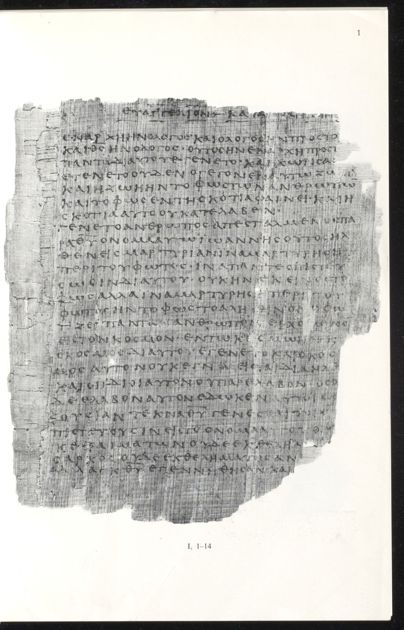
The most complete early copy of the Gospel of John: the papyrus codex P66 (c. 200), page by page from the Bodmer Foundation.
P75 (Papyrus Hanna 1)
c. 175-225 AD · 30 entries
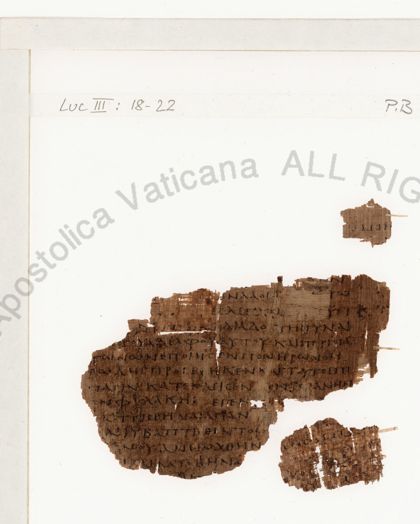
The oldest copy of Luke and one of the oldest of John: the papyrus codex P75 (c. 175-225) in the Vatican Library, page by page.
P72 (Papyrus Bodmer VII-VIII)
3rd/4th century AD (NTVMR: 200-399) · 9 entries
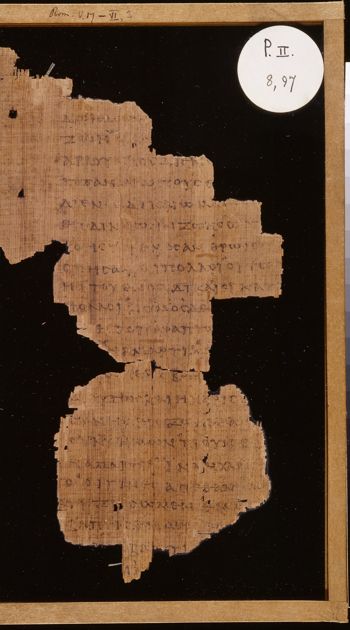
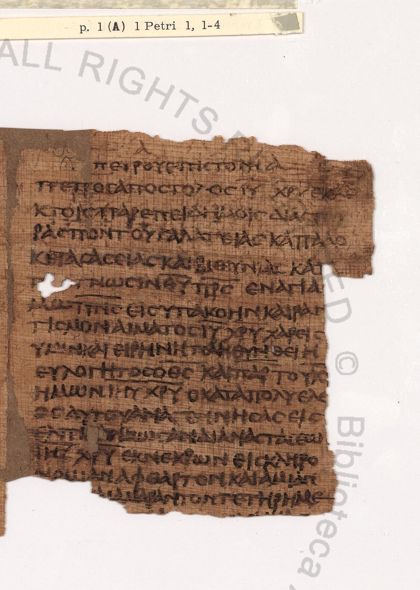
The oldest copies of 1 Peter, 2 Peter and Jude, page by page on a 3rd/4th-century papyrus codex in the Vatican Library and the Bodmer Foundation, including 2 Peter 1:4, "partakers of the divine nature".
Codex Vaticanus
c. 300-350 AD · 220 entries
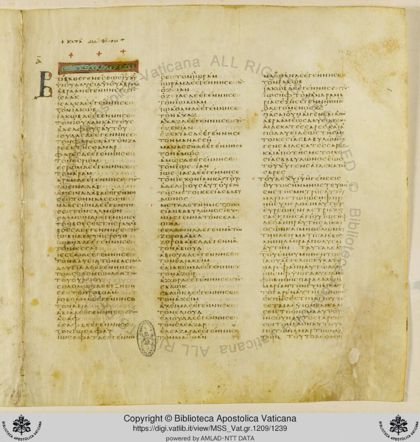
The Vatican Library's 4th-century Greek Bible, New Testament chapters mapped verse by verse to its pages.
Codex Sinaiticus
c. 330-360 AD · 699 entries
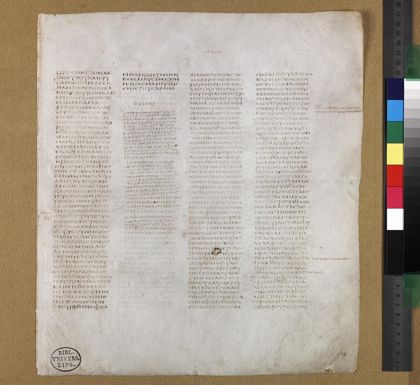
The oldest complete New Testament, with much of the Greek Old Testament, the Epistle of Barnabas and the Shepherd of Hermas. Every chapter on its own folio from the Codex Sinaiticus Project.
Codex Bezae
c. 400 AD · 45 entries
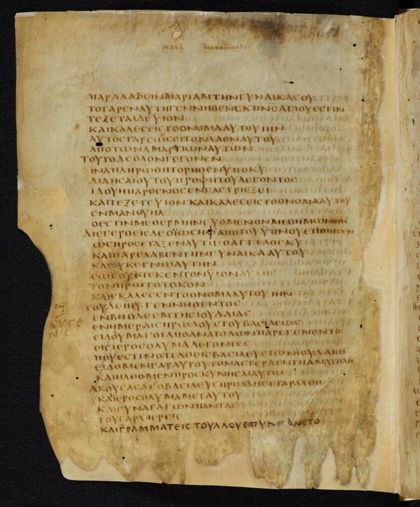
The Greek-Latin Gospels and Acts at Cambridge, with its distinctive Western text.
Codex Washingtonianus
4th-5th c. AD · 88 entries
The Freer Gospels in the Smithsonian, including the Freer Logion in Mark 16.
Codex Alexandrinus
c. 400-440 AD · 228 entries
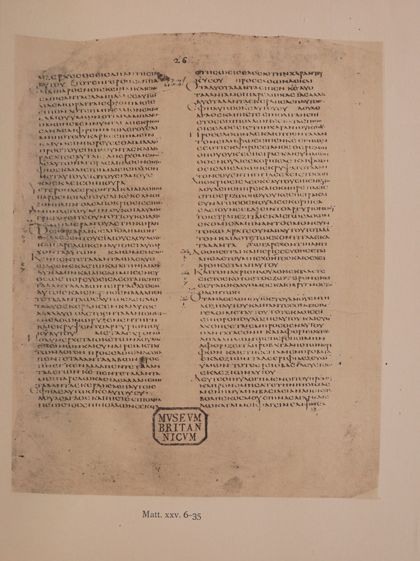
The British Library's 5th-century Greek Bible, New Testament chapters on the 1909 photographic facsimile.
Early Christian

Christian writings outside the New Testament canon.
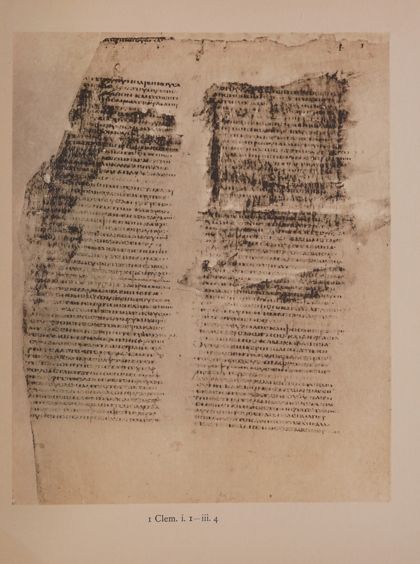
1 and 2 Clement (Codex Alexandrinus)
c. 96 AD (composition); 5th c. (Codex Alexandrinus); 1056 (Hierosolymitanus 54) · 2 entries
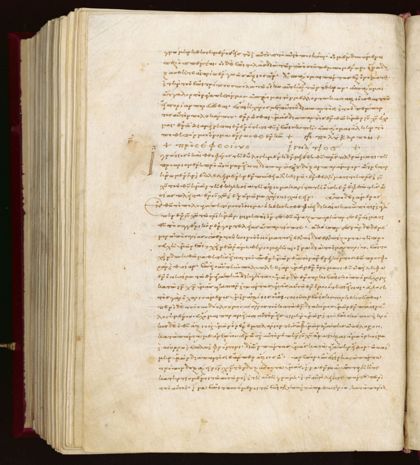
1 Clement, the letter of the Roman church to Corinth, and 2 Clement, an early sermon, on the last pages of Codex Alexandrinus, with the lost passages on Codex Hierosolymitanus 54.
Didache (Codex Hierosolymitanus 54)
late 1st or early 2nd c. AD (composition); 1056 (manuscript) · 1 entry
The Didache, an early Christian church manual, on the ten pages of the only complete Greek manuscript, Codex Hierosolymitanus 54 (1056).
Odes of Solomon
late 1st or early 2nd c. AD (composition); 15th-16th c. (manuscript) · 1 entry
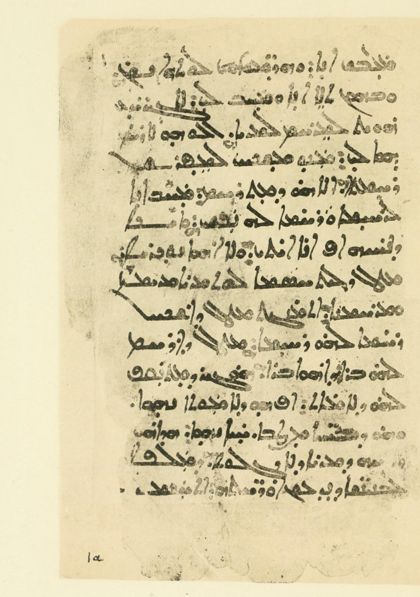
The Odes of Solomon (Odes 3-42), early Christian hymns preserved in Syriac, Ode by Ode on the pages of the manuscript Rendel Harris discovered in 1909.
Ignatius of Antioch, Seven Letters
c. 110 AD (composition); 11th c. (manuscript) · 7 entries
The seven letters of Ignatius of Antioch (middle recension), chapter by chapter on their oldest Greek manuscripts: Laur. Plut. 57.7 for six letters and Paris gr. 1451 for Romans.
Polycarp of Smyrna: Letter to the Philippians and Martyrdom
c. 110-140 AD (composition); 12th c. (Greek manuscript) · 2 entries
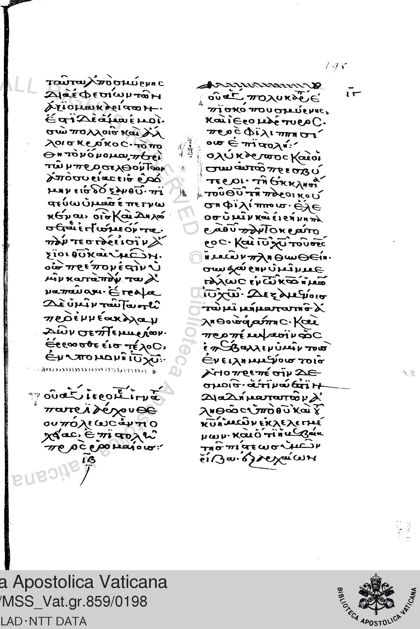
Polycarp's Letter to the Philippians and the account of his martyrdom sent by the church of Smyrna, chapter by chapter on their manuscripts: Vat. gr. 859 with Eusebius (Paris gr. 1431) and the Latin version (Reg. lat. 81) for the letter, Paris gr. 1452 for the Martyrdom.
Gospel of Thomas (Nag Hammadi Codex II)
composed 1st/2nd c. AD (Greek); Coptic copy 4th c. (Nag Hammadi Codex II) · 20 entries
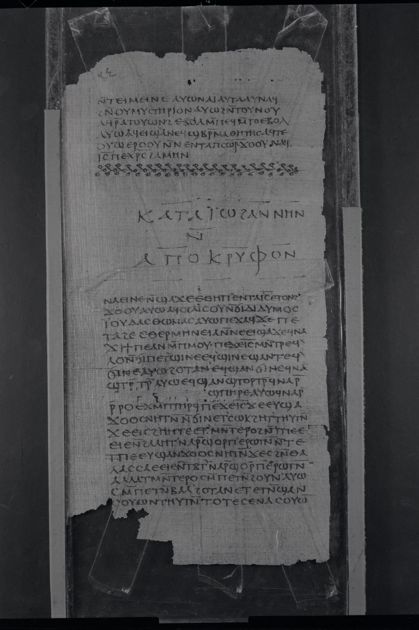
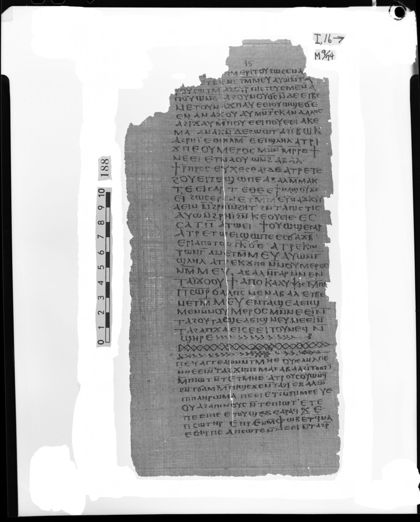
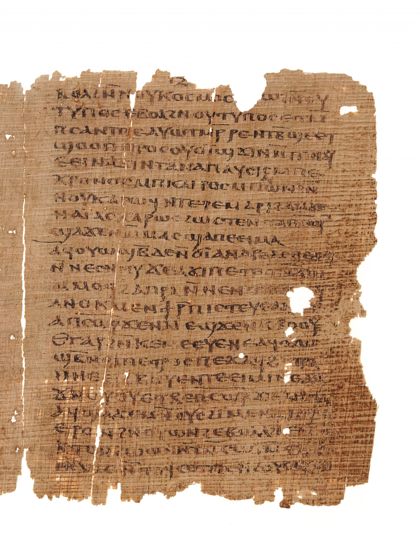
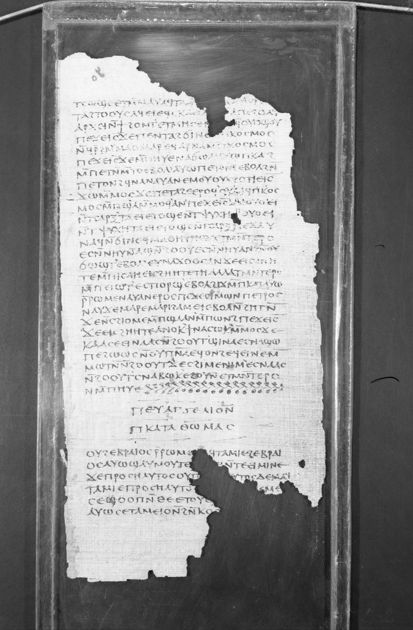
The Gospel of Thomas, 114 sayings attributed to Jesus, in the only complete copy: the Coptic text of Nag Hammadi Codex II (4th century), pages 32-51, each saying linked to the photograph of its page.
Akhmim Codex (Gospel and Apocalypse of Peter)
2nd century AD (composition); Akhmim codex 6th-9th century · 3 entries
The Gospel of Peter and the Greek fragment of the Apocalypse of Peter from the Akhmim codex, page by page in Lods's 1893 photographic plates with his line-by-line transcription, Robinson's English (Gospel) and James's English (Apocalypse).
Gospel of Truth (Nag Hammadi Codex I)
composed mid 2nd c. AD (Greek); Coptic copy 4th c. (Nag Hammadi Codex I) · 5 entries
The Gospel of Truth, a 2nd-century Christian meditation on the Father and the Word, in the complete Coptic copy of Nag Hammadi Codex I (4th century), pages 16-43, each page linked to its photograph.
Gospel of Mary (Berlin Codex)
composed 2nd c. AD (Greek); Coptic copy 4th-5th c. (Berlin Codex) · 1 entry
The Gospel of Mary, a 2nd-century Christian dialogue in which Mary Magdalene recounts a vision, in the Coptic of the Berlin Codex (4th-5th century): its last three pages (17-19), each linked to the museum's photograph.
Gospel of Philip (Nag Hammadi Codex II)
composed 2nd-3rd c. AD (Greek); Coptic copy 4th c. (Nag Hammadi Codex II) · 6 entries
The Gospel of Philip, a 2nd-3rd century Christian anthology on the sacraments and on becoming what one sees, in its only copy: the Coptic text of Nag Hammadi Codex II (4th century), pages 51-86, each page linked to its photograph.
Later Traditions

Later scriptures and poetry kept for comparison.