Romans, Chapter 10 (Codex Alexandrinus)
Introduction
Romans 10 from Codex Alexandrinus (GA 02), a fifth-century Greek Bible held by the British Library (Royal MS 1 D. VIII). In the New Testament it is the chief witness to the Byzantine text in the Gospels and to the Alexandrian text in the rest of the New Testament. Its New Testament volume lacks Matthew 1:1-25:5, John 6:50-8:52 and 2 Corinthians 4:13-12:6.
This entry meets the strict three-criteria standard of the Theosis Library:
- Manuscript scan: the actual page(s) of Codex Alexandrinus containing this passage (folios 115r, 115v), reproduced from the British Museum's 1909 photographic facsimile edited by F. G. Kenyon, as digitised by the Getty Research Institute for the Internet Archive. The facsimile prints the verse range beneath each plate; that printed range was read for every page used and agrees with the INTF's NTVMR verse-level page index (CC BY 4.0). The page for each section now comes from the NTVMR transcription itself, which records the page and column on which every verse is written.
- Original text: the manuscript's own text, from a diplomatic transcription (see Greek text below), with Tischendorf's 8th critical edition (1869) for comparison.
- English translation: the King James Version (1611), retrieved verbatim from the public-domain bible-api.com endpoint.
Greek text: a diplomatic transcription of Codex Alexandrinus made by the Institut für Neutestamentliche Textforschung (INTF), Münster, for the New Testament Virtual Manuscript Room (NTVMR), published under a Creative Commons Attribution 4.0 licence. It gives the letters as the first scribe wrote them: no accents or breathings, the scribe's own spelling, and the sacred names in their contracted form (θς for θεος, ις for ιησους, κς for κυριος; the overline is not reproduced). Corrections by later hands are not shown. Letters in square brackets are not legible on the page and were restored by the transcribers, a dot under a letter marks an uncertain reading, and [...] marks text lost to damage. Beneath each section, for comparison, is Tischendorf's 8th critical edition (1869). Where the two differ, the transcription is what the manuscript says. Each section is shown with the page on which the transcription places its verses.
How was this verified? (Provenance)
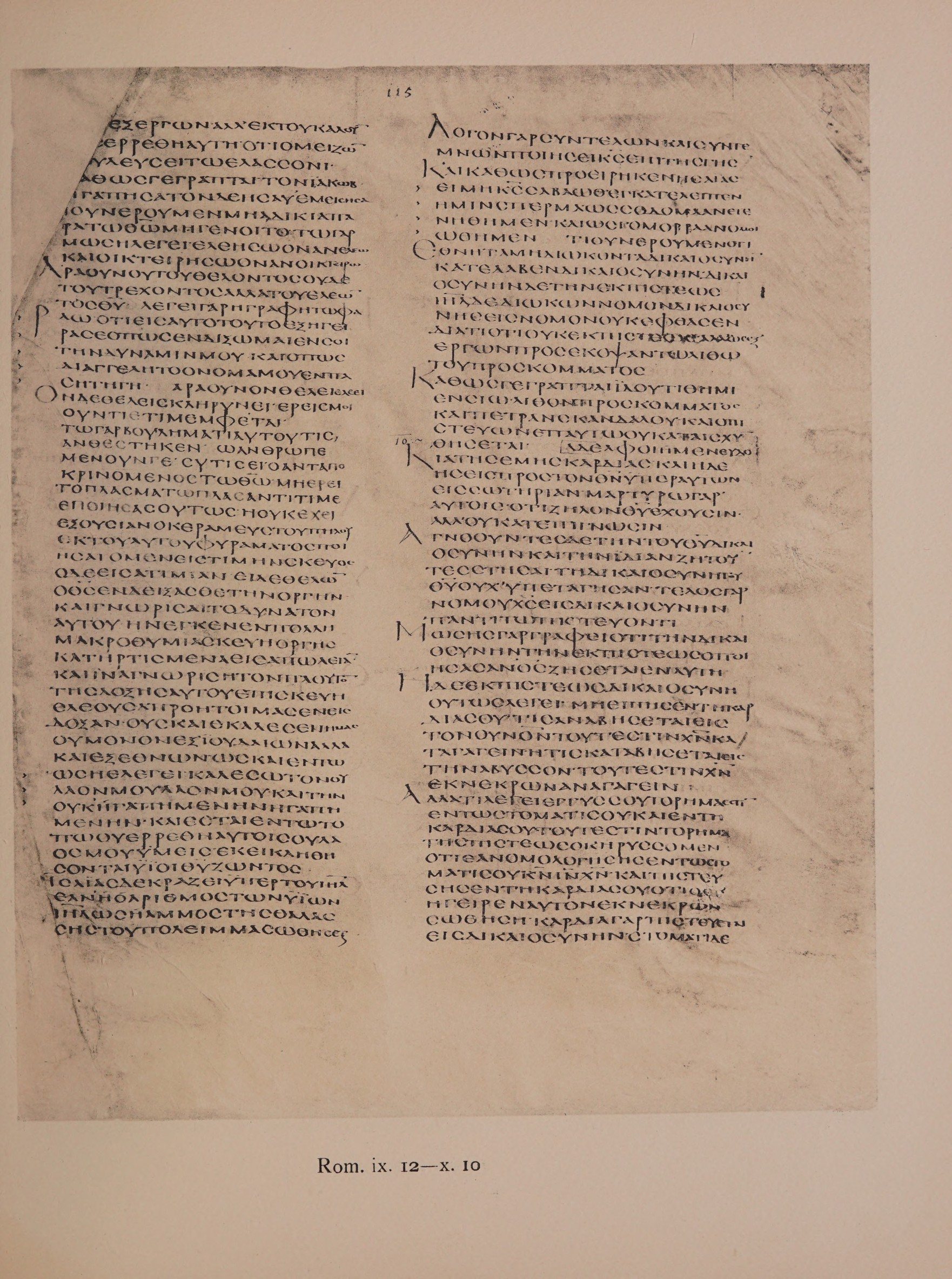
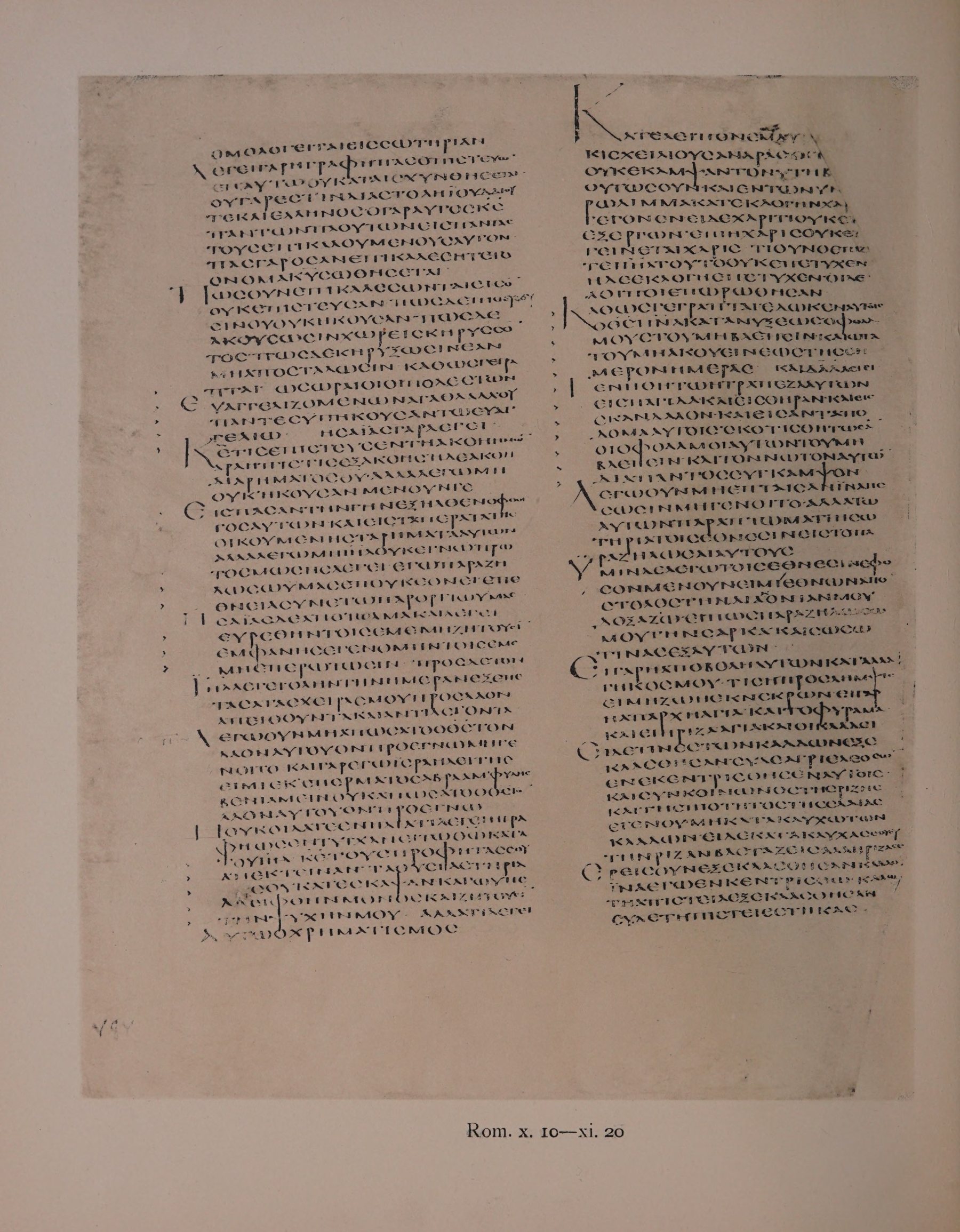
Where on the image
Page from the NTVMR transcription (docID 20002): verses 1-10 on fol. 115r (facsimile leaf 191), col. 2; verse 10 continues on fol. 115v (facsimile leaf 192), col. 1 (which begins 'ομολογειται εις σωτηριαν').
1αδελφοι η μεν ευδοκια της εμης καρδιας και η δεησεις προς τον θν υπερ αυτων εις σωτηριαν · 2μαρτυρω γαρ αυτοις · οτι ζηλον θυ εχουσιν · αλλ ου κατ επιγνωσιν · 3αγνοουντες δε την του θυ δικαιοσυνην · και την ιδιαν ζητουντες στησαι τη δικαιοσυνη του θυ ουχ υπεταγησαν · 4τελος γαρ νομου χς εις δικαιοσυνην παντι τω πιστευοντι 5μωσης γαρ γραφει οτι την δικαιοσυνην την εκ πιστεως ο ποιησας ανος ζησεται εν αυτη · 6η δε εκ πιστεως δικαιοσυνη ουτως λεγει · μη ειπης εν τη καρδια σου τις αναβησεται εις τον ουνον τουτ εστιν χν καταγαγειν · 7η τις καταβησεται εις την αβυσσον · τουτ εστιν χν εκ νεκρων αναγαγειν · 8αλλα τι λεγει εγγυς σου το ρημα εστιν εν τω στοματι σου · και εν τη καρδια σου τουτ εστιν το ρημα της πιστεως ο κηρυσσομεν 9οτι εαν ομολογησης εν τω στοματι σου κν ιν χν · και πιστευσης εν τη καρδια σου οτι ο θς ηγειρεν αυτον εκ νεκρων σωθηση · 10καρδια γαρ πιστευεται εις δικαιοσυνην · στοματι δε ομολογειται εις σωτηριαν ·
Compare: Tischendorf 8th edition (1869)
1Ἀδελφοί, ἡ μὲν εὐδοκία τῆς ἐμῆς καρδίας καὶ ἡ δέησις πρὸς τὸν θεὸν ὑπὲρ αὐτῶν εἰς σωτηρίαν. 2μαρτυρῶ γὰρ αὐτοῖς ὅτι ζῆλον θεοῦ ἔχουσιν, ἀλλ’ οὐ κατ’ ἐπίγνωσιν· 3ἀγνοοῦντες γὰρ τὴν τοῦ θεοῦ δικαιοσύνην, καὶ τὴν ἰδίαν δικαιοσύνην ζητοῦντες στῆσαι, τῇ δικαιοσύνῃ τοῦ θεοῦ οὐχ ὑπετάγησαν· 4τέλος γὰρ νόμου Χριστὸς εἰς δικαιοσύνην παντὶ τῷ πιστεύοντι. 5Μωϋσῆς γὰρ γράφει ὅτι τὴν δικαιοσύνην τὴν ἐκ νόμου ὁ ποιήσας ἄνθρωπος ζήσεται ἐν αὐτῇ. 6ἡ δὲ ἐκ πίστεως δικαιοσύνη οὕτως λέγει, μὴ εἴπῃς ἐν τῇ καρδίᾳ σου, τίς ἀναβήσεται εἰς τὸν οὐρανόν; τοῦτ’ ἔστιν Χριστὸν καταγαγεῖν· 7ἤ, τίς καταβήσεται εἰς τὴν ἄβυσσον; τοῦτ’ ἔστιν Χριστὸν ἐκ νεκρῶν ἀναγαγεῖν. 8ἀλλὰ τί λέγει; ἐγγύς σου τὸ ῥῆμά ἐστιν, ἐν τῷ στόματί σου καὶ ἐν τῇ καρδίᾳ σου· τοῦτ’ ἔστιν τὸ ῥῆμα τῆς πίστεως ὃ κηρύσσομεν. 9ὅτι ἐὰν ὁμολογήσῃς ἐν τῷ στόματί σου κύριον Ἰησοῦν, καὶ πιστεύσῃς ἐν τῇ καρδίᾳ σου ὅτι ὁ θεὸς αὐτὸν ἤγειρεν ἐκ νεκρῶν, σωθήσῃ· 10καρδίᾳ γὰρ πιστεύεται εἰς δικαιοσύνην, στόματι δὲ ὁμολογεῖται εἰς σωτηρίαν.
1Brethren, my heart’s desire and prayer to God for Israel is, that they might be saved. 2For I bear them record that they have a zeal of God, but not according to knowledge. 3For they being ignorant of God’s righteousness, and going about to establish their own righteousness, have not submitted themselves unto the righteousness of God. 4For Christ is the end of the law for righteousness to every one that believeth. 5For Moses describeth the righteousness which is of the law, That the man which doeth those things shall live by them. 6But the righteousness which is of faith speaketh on this wise, Say not in thine heart, Who shall ascend into heaven? (that is, to bring Christ down from above:) 7Or, Who shall descend into the deep? (that is, to bring up Christ again from the dead.) 8But what saith it? The word is nigh thee, even in thy mouth, and in thy heart: that is, the word of faith, which we preach; 9That if thou shalt confess with thy mouth the Lord Jesus, and shalt believe in thine heart that God hath raised him from the dead, thou shalt be saved. 10For with the heart man believeth unto righteousness; and with the mouth confession is made unto salvation.
Where on the image
Page from the NTVMR transcription (docID 20002): verses 11-21 on fol. 115v (facsimile leaf 192), col. 1.
11λεγει γαρ η γραφη πας ο πιστευων επ αυτω ου καταισχυνθησεται · 12ου γαρ εστιν διαστολη ιουδαιου τε και ελληνος · ο γαρ αυτος κς παντων πλουτων εις παντας τους επικαλουμενους αυτον · 13πας γαρ ος αν επικαλεσητε το ονομα κυ σωθησεται · 14πως ουν επικαλεσωνται εις ον ουκ επιστευσαν πως δε πιστευσουσιν ου ουκ ηκουσαν πως δε [...]σιν χωρεις κηρυσσοντος · 15πως δε κηρυξωσιν εαν μη αποσταλωσιν · καθως γεγραπται · ως ωραιοι οι ποδες των ευαγγελιζομενων αγαθα 16αλλ ου παντες υπηκουσαν τω ευαγγελιω · ησαιας γαρ λεγει · κε τις επιστευσεν τη ακοη ημων 17αρα η πιστις εξ ακοης · η δε ακοη δια ρηματος θυ · 18αλλα λεγω μη ουκ ηκουσαν μενουνγε εις πασαν την γην εξηλθεν ο φθογγος αυτων · και εις τα περατα της οικουμενης τα ρηματα αυτων 19αλλα λεγω μη ιηλ ουκ εγνω πρωτος μωσης λεγει · εγω παραζηλωσω υμας επ ουκ εθνει · επ εθνει ασυνετω παροργιω υμας 20ησαιας δε αποτολμα και λεγει ευρεθην τοις εμε μη ζητουσιν εμφανης εγενομην τοις εμε μη επερωτωσιν 21προς δε τον ιηλ λεγει · ολην την ημεραν εξεπετασα τας χειρας μου προς λαον απειθουντα και αντιλεγοντα
Compare: Tischendorf 8th edition (1869)
11λέγει γὰρ ἡ γραφή, πᾶς ὁ πιστεύων ἐπ’ αὐτῷ οὐ καταισχυνθήσεται. 12οὐ γάρ ἐστιν διαστολὴ Ἰουδαίου τε καὶ Ἕλληνος, ὁ γὰρ αὐτὸς κύριος πάντων, πλουτῶν εἰς πάντας τοὺς ἐπικαλουμένους αὐτόν· 13πᾶς γὰρ ὃς ἂν ἐπικαλέσηται τὸ ὄνομα κυρίου σωθήσεται. 14πῶς οὖν ἐπικαλέσωνται εἰς ὃν οὐκ ἐπίστευσαν; πῶς δὲ πιστεύσωσιν οὗ οὐκ ἤκουσαν; πῶς δὲ ἀκούσονται χωρὶς κηρύσσοντος; 15πῶς δὲ κηρύξωσιν ἐὰν μὴ ἀποσταλῶσιν; καθὼς γέγραπται, ὡς ὡραῖοι οἱ πόδες τῶν εὐαγγελιζομένων τὰ ἀγαθά. 16Ἀλλ’ οὐ πάντες ὑπήκουσαν τῷ εὐαγγελίῳ· Ἡσαΐας γὰρ λέγει, κύριε, τίς ἐπίστευσεν τῇ ἀκοῇ ἡμῶν; 17ἄρα ἡ πίστις ἐξ ἀκοῆς, ἡ δὲ ἀκοὴ διὰ ῥήματος Χριστοῦ. 18ἀλλὰ λέγω, μὴ οὐκ ἤκουσαν; μενοῦνγε, εἰς πᾶσαν τὴν γῆν ἐξῆλθεν ὁ φθόγγος αὐτῶν, καὶ εἰς τὰ πέρατα τῆς οἰκουμένης τὰ ῥήματα αὐτῶν. 19ἀλλὰ λέγω, μὴ Ἰσραὴλ οὐκ ἔγνω; πρῶτος Μωϋσῆς λέγει, ἐγὼ παραζηλώσω ὑμᾶς ἐπ’ οὐκ ἔθνει, ἐπ’ ἔθνει ἀσυνέτῳ παροργιῶ ὑμᾶς. 20Ἡσαΐας δὲ ἀποτολμᾷ καὶ λέγει, εὑρέθην τοῖς ἐμὲ μὴ ζητοῦσιν, ἐμφανὴς ἐγενόμην τοῖς ἐμὲ μὴ ἐπερωτῶσιν. 21πρὸς δὲ τὸν Ἰσραὴλ λέγει, ὅλην τὴν ἡμέραν ἐξεπέτασα τὰς χεῖράς μου πρὸς λαὸν ἀπειθοῦντα καὶ ἀντιλέγοντα.
11For the scripture saith, Whosoever believeth on him shall not be ashamed. 12For there is no difference between the Jew and the Greek: for the same Lord over all is rich unto all that call upon him. 13For whosoever shall call upon the name of the Lord shall be saved. 14How then shall they call on him in whom they have not believed? and how shall they believe in him of whom they have not heard? and how shall they hear without a preacher? 15And how shall they preach, except they be sent? as it is written, How beautiful are the feet of them that preach the gospel of peace, and bring glad tidings of good things! 16But they have not all obeyed the gospel. For Esaias saith, Lord, who hath believed our report? 17So then faith cometh by hearing, and hearing by the word of God. 18But I say, Have they not heard? Yes verily, their sound went into all the earth, and their words unto the ends of the world. 19But I say, Did not Israel know? First Moses saith, I will provoke you to jealousy by them that are no people, and by a foolish nation I will anger you. 20But Esaias is very bold, and saith, I was found of them that sought me not; I was made manifest unto them that asked not after me. 21But to Israel he saith, All day long I have stretched forth my hands unto a disobedient and gainsaying people.
Cite
Sources
- Source: Codex Alexandrinus page images + NTVMR transcription (CC BY 4.0) + Tischendorf 8th edition + KJV (holding institution)
- Critical edition: Codex Alexandrinus transcription, NTVMR (INTF Münster, CC BY 4.0); Tischendorf 8th edition for comparison
← previous · → next · v cycle view · l back to library