Instruction of Amenemope: pages 11-14 (chapters 9-11)
Introduction
The Instruction of Amenemope is an Egyptian book of advice on honest and modest conduct, written as the teaching of the scribe Amenemope, son of Kanakht, to his son, in thirty numbered chapters. It is best known for its close parallels with Proverbs 22:17-24:22. The only complete copy is the papyrus British Museum EA 10474, a roll of 27 pages of hieratic (551 lines) bought by the Museum in 1888; Budge reported that it came from western Thebes. The Thesaurus Linguae Aegyptiae dates the hand to the reign of Psamtik I (664-610 BCE); the British Museum gives the Third Intermediate Period. The work itself was composed earlier, in the late New Kingdom.
This entry gives pages 11-14 of the papyrus, the four pages held in the glazed frame marked 4, which is the only part of the roll with an openly reachable photograph. They contain the end of chapter 8, chapters 9 and 10, and the beginning of chapter 11. Chapter 9 ("Make not to be a friend of thine the hasty, hot-headed man") answers Proverbs 22:24-25, and chapter 11 (14,5-14,18, the bread of the glutton that is vomited) answers Proverbs 23:6-8. Pages 1-10 and 15-27 are not given here.
Each section is one page of the papyrus. The Egyptian is the transliteration of the Thesaurus Linguae Aegyptiae (edition by Peter Dils), with page and line numbers; signs restored by the editor are in square brackets, signs the scribe left out in angle brackets, signs the scribe wrote in error in braces, damaged signs in half brackets. The English is E. A. Wallis Budge's line-by-line translation of 1924 with the same line numbers; Budge's own running line numbers are given in each section heading. The photograph shows the four pages read from right to left: page 11 at the right, page 14 at the left.
How was this verified? (Provenance)
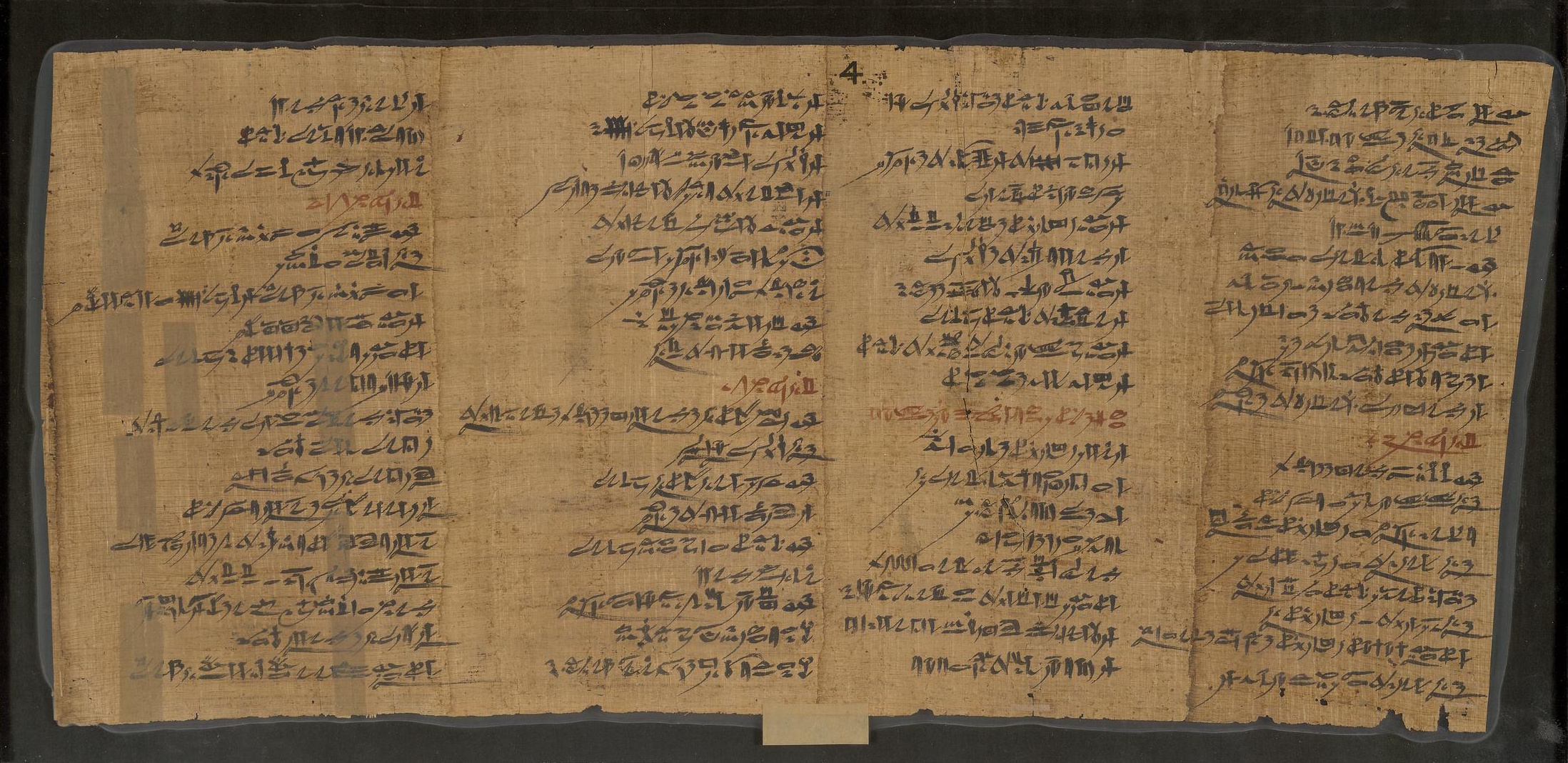
Where on the image
Page 11 is the rightmost page of the frame on the photograph of frame 4. Checked on the image: 20 lines; the red chapter heading ('chapter 9', 11,12) is the 12th line; the 19th line runs out to the left into the margin, as the long line 11,19 of the TLA text does; this matches the 20 lines of TLA page 11. Budge's line 195 is TLA 11,1 (Budge numbers the lines of the papyrus straight through).
11,1jri̯.y =k mr,wt〈j〉 n kꜣ~wꜣ~wj
11,2gmi̯ =k s,ṱ =k m-ẖnw ḥw,t-nṯr
11,3drp.w =k n pꜣw,t{jw}.pl […] pꜣwtj.pl n nb =k
11,4jri̯.yw =k jmꜣḫ{ḫ} ḥꜣp tw =k ḏb〈ꜣ〉,t =k
11,5wḏꜣ =k r bꜣ,w n nṯr
11,6m-jri̯ njs btꜣw r r〈m〉ṯ
11,7ḥꜣp pꜣ sḫr.w.pl n wꜥr
11,8jr sḏm =k pꜣ nfr m-rʾ-pw bjn
11,9j:jri̯ sw m-rrʾwj〈tj〉 bw sḏm =f
11,10jmm smj nfr ḥr-tp ns{,t} =k
11,11jw pꜣ ḏw,w ḥꜣp m ẖ,t =k
11,12ḥw,t mḥ-9.t
11,13m-jri̯ snsn.tj n =k pꜣ šmm
11,14mtw =k ẖnẖn =f r sḏd
11,15swḏꜣ ns{,t} =k r wšb ={j} n ḥr〈,j〉 =k
11,16mtw =k zꜣw =k r wꜥꜣ =f
11,17m-ḏr.t〈j〉 ḫꜣꜥ =f mdw〈,t〉 =f r spḥ =k
11,18mtw =k ntfjw n wšb.ṱ =k
11,19j:jri̯ =k nḏnḏ wšb〈,t〉 m-ḏr,t z m ḏꜣ~rʾ =k
11,20mtw =k zꜣw =k r ṯfjdn =sw
11,1(Col. XI). Show thou kindness (or, affection) to people of humble condition.
11,2Find thou thy seat in the sanctuary of the house of the god,
11,3The gifts made by thee shall be the cake-offerings of thy Lord.
11,4Make thyself to be [as if] thou wast one of the blessed dead, [and as if] thou wast a swathed [mummy] in thy coffin.
11,5Be thou strong for the Divine Souls (i.e., Will) of God (to do His Will ?).
11,6Make not an invocation to bring a detestable thing upon people.
11,7Hide [thou] the affairs (or, plans) of the fugitive (slave ?)
11,8Whether thou hearest the thing that is good or the thing that is evil,
11,9Treat it as a matter that is outside thy interest; hearken not to it.
11,10I beseech thee to spread with thy tongue only the report of that which is good upon the earth,
11,11Whilst as far as reports of evil are concerned, hide them in thy belly.
11,12Ninth Chapter.
11,13Make not to be a friend of thine the hasty, hot-headed man,
11,14Even though thou hast to go to his house frequently to have speech with him.
11,15Keep well thy tongue in making an answer to him that is thy chief,
11,16At the same time guarding thyself against reviling him.
11,17Never permit his speech to fall on thee like a lasso
11,18So that thou must uncoil it by means of thy answer.
11,19Put questions to him (or, consult with him), answering like a subordinate in thy agitation.
11,20At the same time taking good heed not to oppose (?) him.
Where on the image
Page 12 is the second page from the right (under the number 4 written on the frame) on the photograph of frame 4. Checked on the image: 19 lines; the 11th line is written in red ink (not a chapter heading in the TLA text); this matches the 19 lines of TLA page 12. Budge's line 215 is TLA 12,1 (Budge numbers the lines of the papyrus straight through).
12,1šꜣ~rš mdw〈,t〉 m-ḏr,tj ḥḏ-jb
12,2r ṯꜣw -〈〈Präp.〉〉- ḥꜣ,t
12,3sw 〈ḥr〉 whnj sw 〈ḥr〉 qd m ns{,t} =f
12,4ḏd =f ḫnw n gꜣj
12,5sw 〈ḥr〉 jri̯ wšb〈,t〉 m-šꜣ,wj qnqn
12,6jw pꜣy =s ⸢jṯi̯〈.t〉⸣ m ḥḏ
12,7sw 〈ḥr〉 jri̯ ẖn〈,t〉 n-mj […] n-mj tꜣ-tmm.pl
12,8sw ꜣdp 〈m〉 mdw〈,t〉 n ꜥḏꜣ
12,9sw 〈ḥr〉 jri̯ mẖn,tj n sḫt 〈m〉 mdw〈,t〉
12,10sw 〈ḥr〉 šmj jyi̯ m ṯtṯt
12,11ḫr wnm =f ḫr sjwr =f m-ẖnw
12,12jw tꜣy =f wšb〈,t〉 m-bw~〈n〉~rʾ
12,13jr h{w}r〈w〉 sꜥḥꜥ btꜣ,ṱ =f
12,14jmm n ms.wj.pl =f
12,15bsi̯ r =f H̱nmw 〈m〉-r-ꜥ ={j}
12,16pꜣ nḥp n pꜣ tꜣ-rʾ
12,17j:jri̯.w =f pjpj r ngꜣfj ḥꜣ,tj.pl
12,18sw mj ṯꜣ.wj n wnš{.pl} n jhꜣy
12,19sw 〈ḥr〉 msn〈ḥ〉 jr,t r 2-nw =s
12,1(Col. XII). The word that is uttered by a man with malicious (?) intent is swifter to hurt
12,2Than the wind that precedes the storm (?).
12,3This man casts to the ground, this man builds up with his tongue,
12,4He gives utterance to strings of words that carry destruction in them.
12,5This man makes an answer that merits a beating (?).
12,6[For] the burden (i.e., object) thereof is to do harm.
12,7He trafficks by means of a boat after the manner of other folk.
12,8He loads the boat with the discourse of iniquity,
12,9He makes himself the ferryman of him that catches [men] in a net of words.
12,10[Whether] he is going away [or whether] he is coming back, he continues to chatter (or, gossip).
12,11Whether he is eating or whether he is drinking, even in his own house,
12,12His conversation returns to matters that are outside (or, that have-nothing to do with him).
12,13The Day itself stands up and makes an accusation against his abominable deeds,
12,14His sons and daughter cry out “Woe” to themselves.
12,15The god Khnem-Rā makes a process (or, brings a case) against him.
12,16He is of the potter’s wheel of (i.e., worked by) the devil Tar,
12,17He mixes together and kneads [material] to destroy the hearts (or, minds of men) therewith.
12,18He is like a whelp of [one of] the dogs (literally, wolves) of the stable (or, farm-yard)
12,19With his eye fixed jealously on [the movements of] his companions.
Where on the image
Page 13 is the second page from the left on the photograph of frame 4. Checked on the image: 19 lines; the short red chapter heading ('chapter 10', 13,10) is the 10th line and the 11th line is long, running into the margin; this matches the 19 lines of TLA page 13. Budge's line 234 is TLA 13,1 (Budge numbers the lines of the papyrus straight through).
13,1sw 〈ḥr〉 ḏi̯.t sn.w.pl 〈ḥr〉 ṯtṯt
13,2sw 〈ḥr〉 šmj 〈r〉-ḥꜣ,t ṯꜣw nb mj šnꜥ
13,3sw 〈ḥr〉 ḥḏi̯ jnw =f n šww
13,4sw 〈ḥr〉 jnqꜣ sd{,t} =f mj ṯꜣ.wj n msḥ
13,5sw 〈ḥr〉 jri̯ dmj =f n gꜣṯꜣ
13,6sp,t.du =f bjnr ns{,t} =f jkn
13,7tꜣ ḫ,t rkḥ.ṱ m ẖ,t =f
13,8m-jri̯ pwy r mḥ pfj
13,9tm ḥr,y〈t〉 jni̯.ṱ =k
13,10ḥw,t mḥ-10.t
13,11m-jri̯ wšd tw m pꜣyw =k šmm m gꜣ~nj~sꜣ =k
13,12mtw =k ḥḏi̯ jb =k ḏs =k
13,13m-jri̯ ḏd n =f jꜣw{t}.tw =k n-ꜥḏꜣ
13,14jw wn ḥr{y} […] ḥr,y〈t〉 m ẖ,t =k
13,15m-jri̯ mdwi̯ 〈j〉~rʾ~mʾ r〈m〉ṯ n-ꜥḏꜣ
13,16tꜣ bw,t n pꜣ nṯr
13,17m-jri̯ pšn ḥꜣ,tj =k r ns{,t} =k
13,18ḫpr sḫr.w.pl =k mꜥrj
13,19ḫpr =〈k〉 dns.ṱ m-bꜣḥ tꜣ kꜣ~wꜣ~wj.pl
13,1(Col. XIII). He causes men and women to become enemies by his scandal-mongering.
13,2He goes before every wind like the blast that goes before the habûb (i.e., the sand-storm or whirlwind of the desert).
13,3He destroys the hair (or, skin) of Shu.
13,4He gathers his tail (i.e., bends it round) about him like the young crocodile,
13,5Bringing it close to him ready for the deadly sweep.
13,6His lips are date-syrup, his tongue is a deadly dagger.
13,7A consuming fire blazes within his belly.
13,8Make no flights (i.e., attempts) to fill (i.e., please) that fellow,
13,9Lest thou bring calamity upon thyself.
13,10Tenth Chapter.
13,11Allow not thyself to be greeted as a friend among thy [neighbours] by the hasty, hot-headed man who is thy opponent;
13,12[If thou dost] thou wilt thyself damage thy heart (or, mind).
13,13Make not thyself to say to him, “Thou art praised,” with evil intent,
13,14There being terror in thy body.
13,15Hold not converse in the company of men of iniquity,
13,16For that is an abominable thing [to do] before the God.
13,17Make not thy mind to be divided for the sake of thy tongue.
13,18Let all thy plans and behaviour have a sound foundation.
13,19Be weighty (i.e., dignified) in the presence of people of lowly condition.
Where on the image
Page 14 is the leftmost page of the frame on the photograph of frame 4. Checked on the image: 19 lines; the short red chapter heading ('chapter 11', 14,4) is the 4th line; this matches the 19 lines of TLA page 14. Budge's line 253 is TLA 14,1 (Budge numbers the lines of the papyrus straight through).
14,1jw =〈k〉 wḏꜣ.ṱ m-ḏr,t pꜣ nṯr
14,2msdi̯ nṯr sꜥḏꜣ mdw〈,t〉
14,3tꜣy =f bw,t ꜥꜣ šnn ẖ,t
14,4ḥw,t mḥ-11.t
14,5m-jri̯ snk,tj r nkt n twꜣ
14,6mtw =k ḥqr r tʾ =f
14,7jr nkt n twꜣ sw 〈ḥr〉 šnꜥ […] 〈m〉 šnꜥ r jḥdjy
14,8sw 〈ḥr〉 jri̯ sẖy r ꜥšꜥš
14,9j:jri̯.w =f sḫpr{r} =f m ꜥnḫ.y.pl n ꜥḏꜣ
14,10jw jb =f […] shꜣ m ẖ,t =f
14,11m-ḏr.t pꜣ rq ⸢〈ḥr〉⸣ ṯnj pꜣ mnḫ
14,12whꜣ bjn nfr
14,13wn〈n〉 =k whꜣ.ṱ m-bꜣḥ ḥr〈,j〉 =k
14,14jw =k wjꜣ〈w〉jꜣ.ṱ m nꜣyw =k sḏd
14,15nꜣyw =k swnwn st 〈ḥr〉 ḫsf m sḥwr
14,16nꜣyw =k snn,tj-tꜣ n qnqn
14,17pꜣ mḥ rʾ 〈m〉 tʾ ꜥꜣ ꜥmꜣm =k sw bši̯ =k sw
14,18jw =k šwi̯.ṱ m pꜣyw =k nfr
14,19j:jri̯.w =k sjꜣꜣ r ḥjy n twꜣ
14,1(Col. XIV). Put thou thyself for safe keeping in the hand of the God.
14,2God hates the man who utters frivolous, lying speech.
14,3The greatest abomination to Him is the man who [nourishes] enmity [in his] belly.
14,4Eleventh Chapter.
14,5Hanker not greedily after the things of the man whose food is dainty and spiced,
14,6Though thou art hungry for his bread.
14,7Now the food that is dainty and spiced is as a storm in the gullet (or, turns the stomach),
14,8[And] it makes the bowels to eject it.
14,9It turns the man who is a counsellor into a man of iniquity,
14,10And his sense turns itself away from his body.
14,11Inasmuch as the evil nature (or, base appetite) corrupts [his] disposition for well-doing,
14,12The evil [in him] destroys what is good.
14,13Be thou a creature of nought in the presence of thy chief (i.e., superior officer).
14,14Thou shalt acclaim him humbly in thy speech (i.e., conversation).
14,15Thy adulatory remarks, they shall meet and turn aside his cursings.
14,16Thy homage when smelling the earth [shall disarm his] violence.
14,17When thou hast swallowed the mouthful of bread of a great man thou shalt vomit it,
14,18[And] thou shalt be empty of thy good thing (or, dainty ?).
14,19Make thyself to understand (or, see) the foresight (?) of the glutton.
Notes
- Budge's stanza numerals (XXXV-LII) and his footnotes are left out; his column markers such as (Col. XII) are kept and fall on the first line of each page.
- Budge translated from his own copy of the papyrus (Facsimiles, Second Series, 1923); where his reading differs from the TLA transliteration the English follows Budge.
Cite
Sources
- Source: Papyrus British Museum EA 10474, frame 4 (British Museum photograph via Wikimedia Commons) + TLA transliteration (AED-TEI, CC BY-SA 4.0) + E. A. W. Budge, The Teaching of Amen-em-apt (1924) (holding institution)
- Critical edition: Thesaurus Linguae Aegyptiae, ed. Peter Dils (2018 data, AED-TEI)
← previous · → next · v cycle view · l back to library