Bhagavad Gita, Chapter 16: The Yoga of Division between the Divine and the Demoniacal
Introduction
The Bhagavad Gita ("Song of the Lord") is a dialogue of 700 verses between the prince Arjuna and Krishna, set on the battlefield of Kurukshetra in book 6 (Bhishmaparvan) of the Mahabharata. Its date of composition is debated; many scholars place it in the last centuries BCE. This is chapter 16, The Yoga of Division between the Divine and the Demoniacal (24 verses as numbered in the manuscript and in Besant's edition).
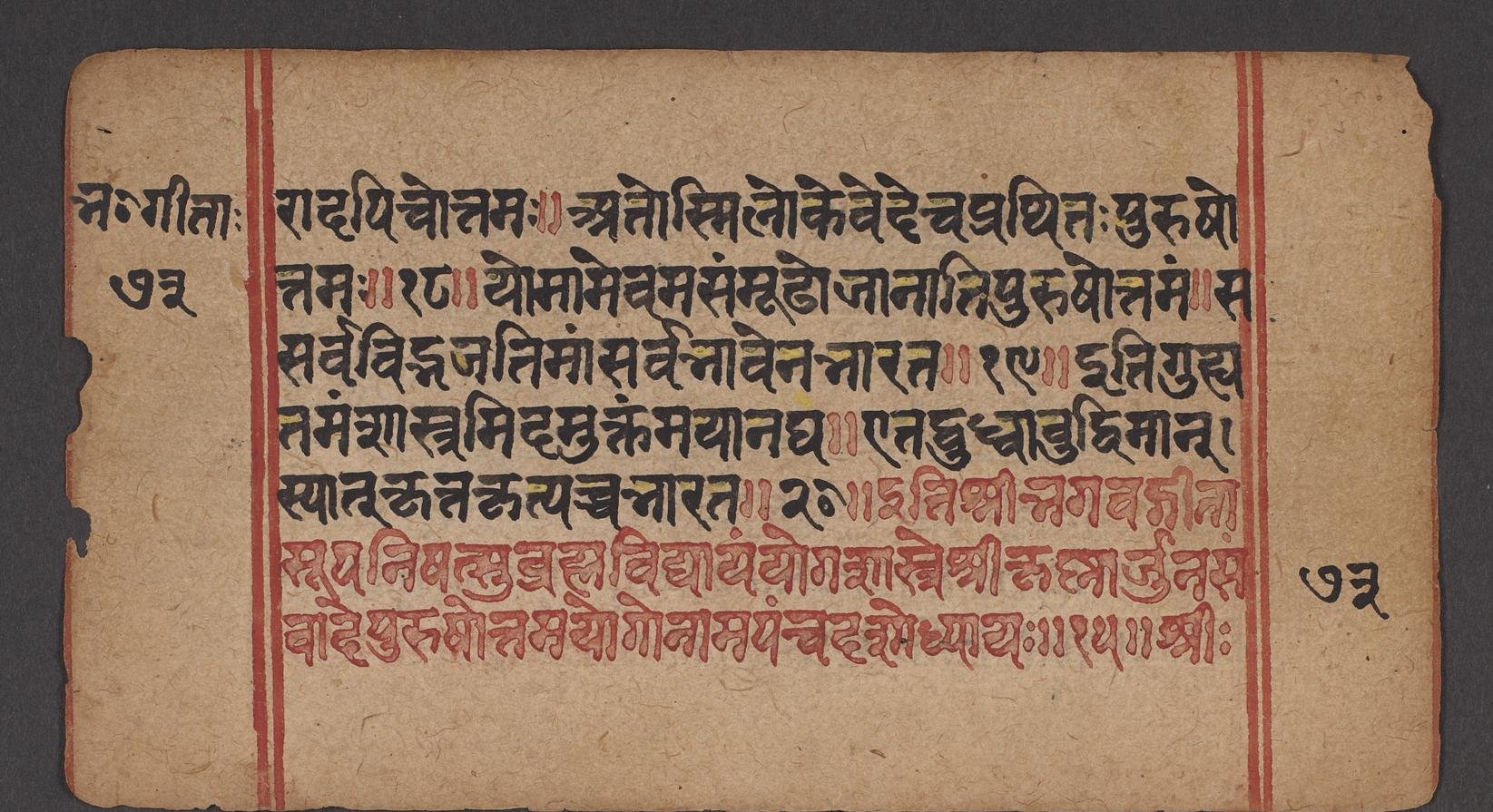
The pages shown are from a complete Sanskrit manuscript of the Gita at the University of Pennsylvania (Penn Ms. Coll. 390 Item 559), 90 paper leaves of 7 lines in Devanagari, with speaker headings, colophons and verse-end marks in red. Its final colophon (fol. 90r) dates the copy to Saṃvat 1851, the third day of the bright half of Caitra (1794 CE). Chapter 16 runs from fol. 73v to the chapter colophon on fol. 77r.
Each section below is one manuscript page: the verses whose text ends on that page, located by reading the scribe's verse numbers and the first and last words on the image. When a verse begins at the foot of one page and ends on the next, both pages are shown. The Sanskrit and English are from Annie Besant's edition and translation (4th edition, 1922), which prints each verse in Devanagari with its English; the manuscript's spelling differs from the printed text in small details.
How was this verified? (Provenance)
Where on the image
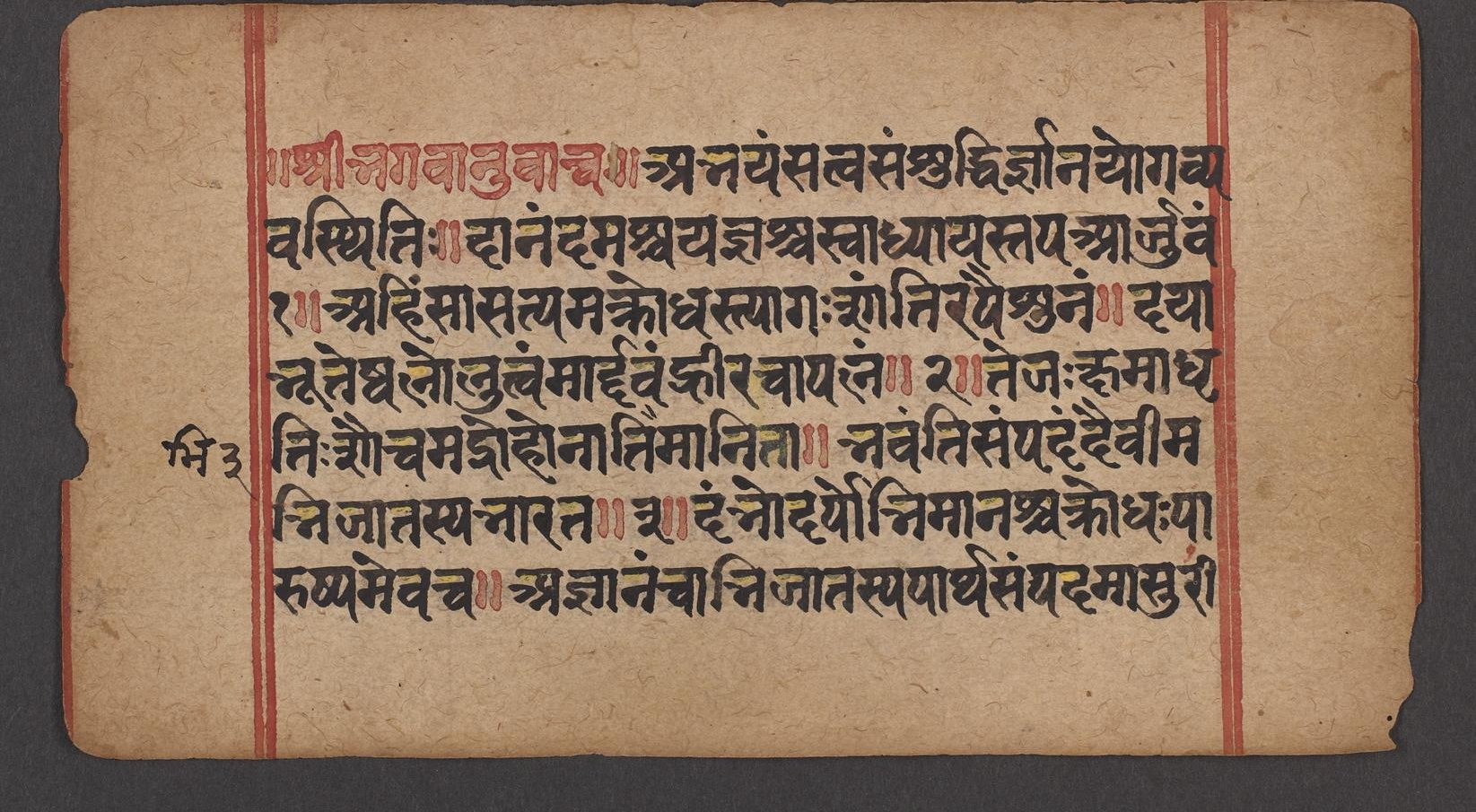
fol. 74r, OPenn image 6555_0073 (lower leaf). Checked on the image: '-bhagavān uvāca' line 1 (speaker begun on 73v); ||1|| line 2, ||2|| line 3, ||3|| line 5; 16.4 begins line 6. Verse 16.1 begins on the previous page, fol. 73v, so both pages are shown.
1श्रीभगवानुवाच ।
अभयं सत्त्वसंशुद्धिर्ज्ञानयोगव्यवस्थितिः ।
दानं दमश्च यज्ञश्च स्वाध्यायस्तप आर्जवम् ॥ १ ॥
2अहिंसा सत्यमक्रोधस्त्यागः शान्तिरपैशुनम् ।
दया भूतेष्वलोलुप्त्वं मार्दवं ह्रीरचापलम् ॥ २ ॥
3तेजः क्षमा धृतिः शौचमद्रोहो नातिमानिता ।
भवन्ति सम्पदं दैवीमभिजातस्य भारत ॥ ३ ॥
1The Blessed Lord said:
Fearlessness, cleanness of life, steadfastness in the Yoga of wisdom, almsgiving, self-restraint and sacrifice and study of the Scriptures, austerity and straightforwardness,
2Harmlessness, truth, absence of wrath, renunciation, peacefulness, absence of crookedness, compassion to living beings, uncovetousness, mildness, modesty, absence of fickleness,
3Vigour, forgiveness, fortitude, purity, absence of envy and pride—these are his who is born with the divine properties, O Bhârata.
Where on the image
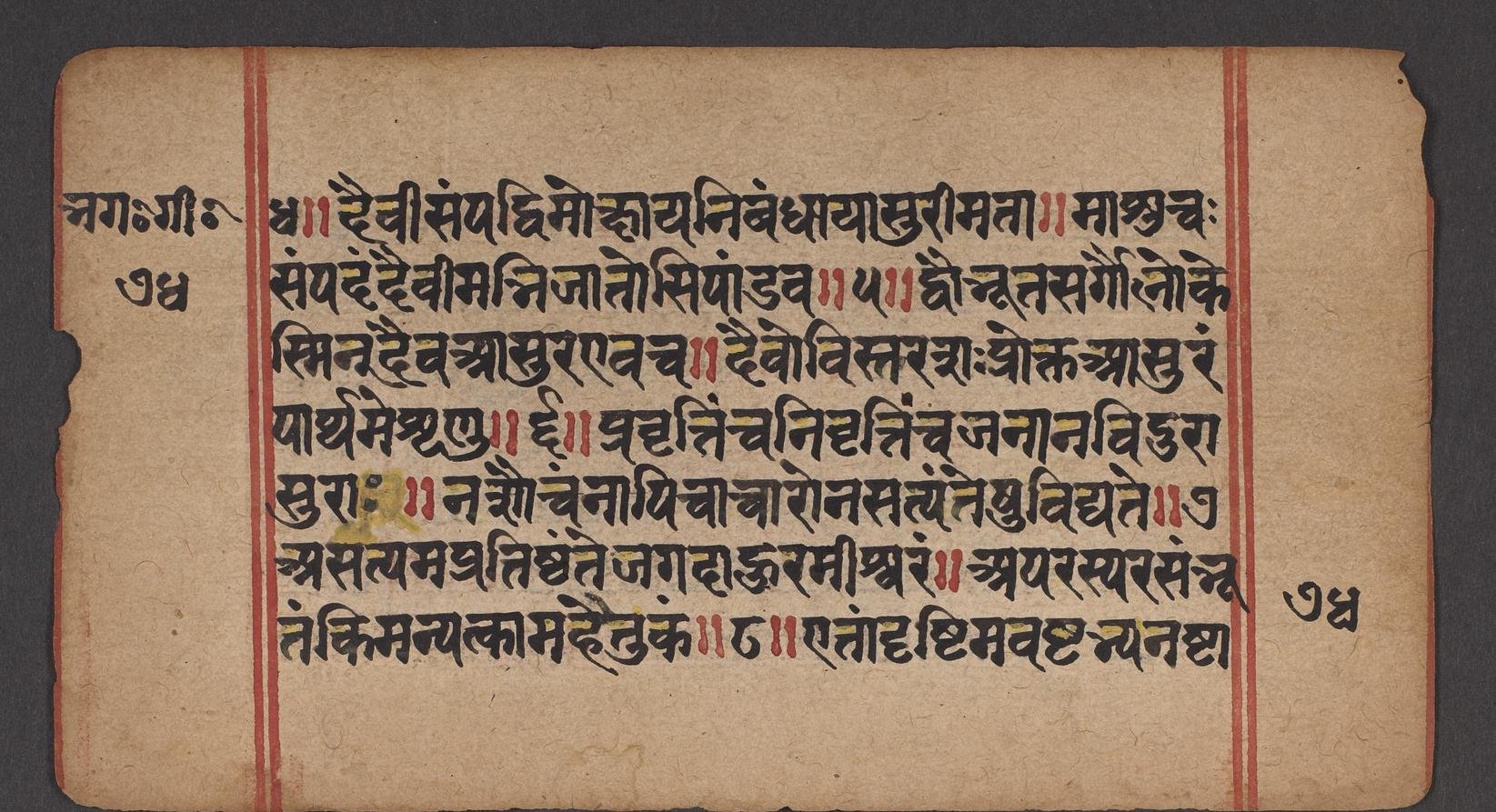
fol. 74v, OPenn image 6555_0074 (upper leaf). Checked on the image: ||4|| line 1 ... ||8|| line 7. Verse 16.4 begins on the previous page, fol. 74r, so both pages are shown.
4दम्भो दर्पोऽभिमानश्च क्रोधः पारुष्यमेव च ।
अज्ञानं चाभिजातस्य पार्थ सम्पदमासुरीम् ॥ ४ ॥
5दैवी सम्पद्विमोक्षाय निबन्धायासुरी मता ।
मा शुचः सम्पदं दैवीमभिजातोऽसि पाण्डव ॥ ५ ॥
6द्वौ भूतसर्गौ लोकेऽस्मिन्दैव आसुर एव च ।
दैवो विस्तरशः प्रोक्त आसुरं पार्थ मे शृणु ॥ ६ ॥
7प्रवृत्तिं च निवृत्तिं च जना न विदुरासुराः ।
न शौचं नापि चाचारो न सत्यं तेषु विद्यते ॥ ७ ॥
8असत्यमप्रतिष्ठं ते जगदाहुरनीश्वरम् ।
अपरस्परसंभूतं किमन्यत्कामहैतुकम् ॥ ८ ॥
4Hypocrisy, arrogance and conceit, wrath and also harshness and unwisdom are his who is born, O Pârtha, with demoniacal properties.
5The divine properties are deemed to be for liberation, the demoniacal for bondage. Grieve not, thou art born with divine properties, O Pândava.
6Twofold is the animal creation in this world, the divine and the demoniacal: the divine hath been described at length: hear from Me, O Pârtha, the demoniacal.
7Demoniacal men know neither right energy nor right abstinence; nor purity, nor even propriety, nor truth is in them.
8"The universe is without truth, without basis," they say, "without a God; brought about by mutual union, and caused by lust and nothing else."
Where on the image
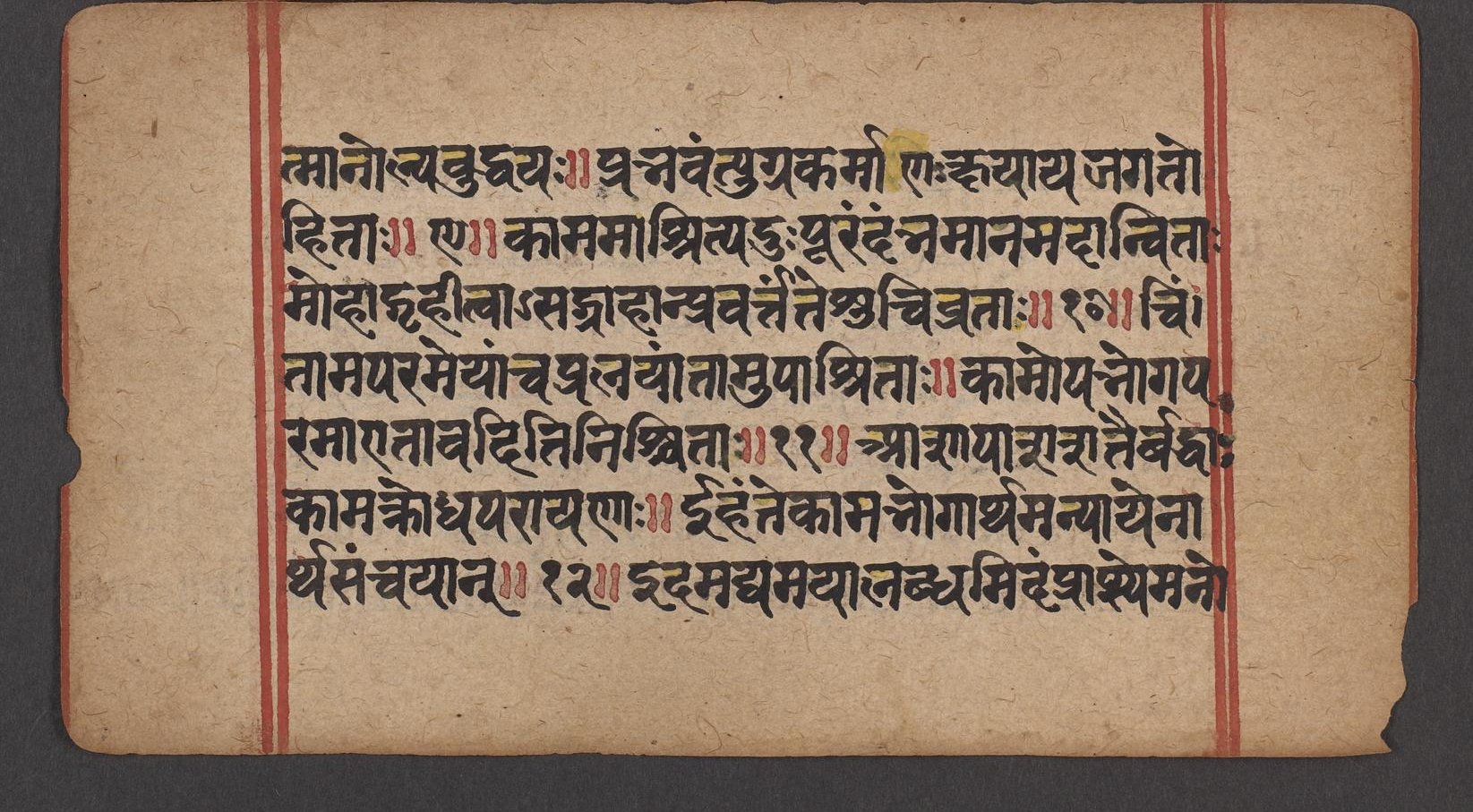
fol. 75r, OPenn image 6555_0074 (lower leaf). Checked on the image: ||9|| line 2 ... ||12|| line 7. Verse 16.9 begins on the previous page, fol. 74v, so both pages are shown.
9एतव दृष्टिमवष्टभ्य नष्टात्मानोऽल्पबुद्धयः ।
प्रभवन्त्युग्रकर्माणः क्षयाय जगतोऽहिताः ॥ ९ ॥
10काममाश्रित्य दुष्पूरं दम्भमानमदान्विताः ।
मोहाद्गृहीत्वाऽसद्ग्राहान्प्रवर्तन्तेऽशुचिव्रताः ॥ १० ॥
11चिन्तामपरिमेयां च प्रलयान्तामुपाश्रिताः ।
कामोपभोगपरमा एतावदिति निश्चिताः ॥ ११ ॥
12आशापाशशतैर्बद्धाः कामक्रोधपरायणाः ।
ईहन्ते कामभोगार्थमन्यायेनार्थसञ्चयान् ॥ १२ ॥
9Holding this view, these ruined selves of small understanding, of fierce deeds, come forth as enemies for the destruction of the world.
10Surrendering themselves to insatiable desires, possessed with vanity, conceit and arrogance, holding evil ideas through delusion, they engage in action with impure resolves.
11Giving themselves over to unmeasured thought whose end is death, regarding the gratification of desires as the highest, feeling sure that this is all,
12Held in bondage by a hundred ties of expectation, given over to lust and anger, they strive to obtain by unlawful means hoards of wealth for sensual enjoyments.
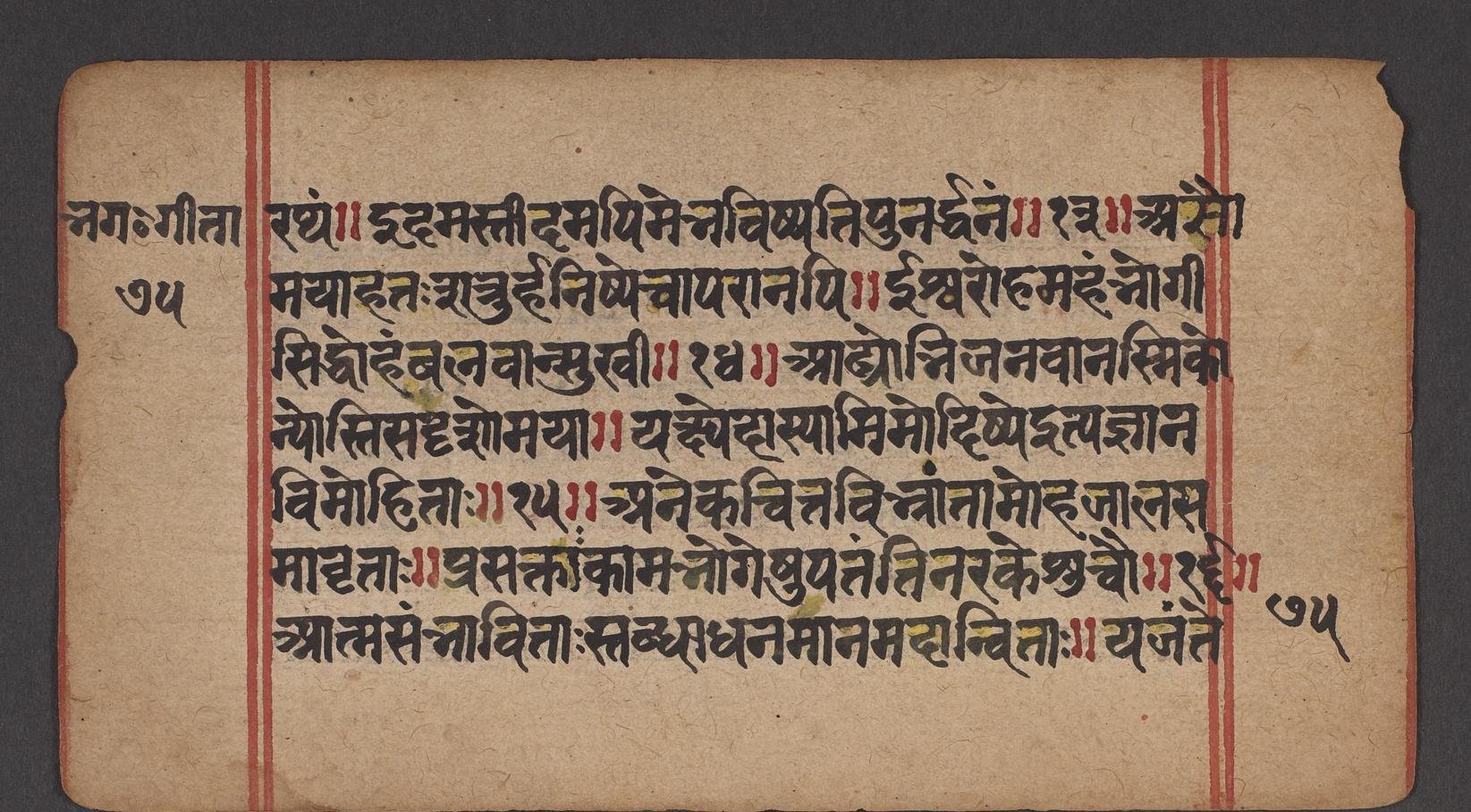
Where on the image
fol. 75v, OPenn image 6555_0075 (upper leaf). Checked on the image: ||13|| line 1 ... ||16|| line 6. Verse 16.13 begins on the previous page, fol. 75r, so both pages are shown.
13इदमद्य मया लब्धमिमं प्राप्स्ये मनोरथम् ।
इदमस्तीदमपि मे भविष्यति पुनर्धनम् ॥ १३ ॥
14असौ मया हतः शत्रुर्हनिष्ये चापरानपि ।
ईश्वरोऽहमहं भोगी सिद्धोऽहं बलवान्सुखी ॥ १४ ॥
15आढ्योऽभिजनवानस्मि कोऽन्योऽस्ति सदृशो मया ।
यक्ष्ये दास्यामि मोदिष्य इत्यज्ञानविमोहिताः ॥ १५ ॥
16अनेकचित्तविभ्रान्ता मोहजालसमावृताः ।
प्रसक्ताः कामभोगेषु पतन्ति नरकेऽशुचौ ॥ १६ ॥
13"This to-day by me hath been won, that purpose I shall gain; this wealth is mine already, and also this shall be mine in future.
14"I have slain this enemy, and others also I shall slay. I am the Lord, I am the enjoyer, I am perfect, powerful, happy;
15"I am wealthy, well-born; what other is there that is like unto me? I will sacrifice, I will give alms, I will rejoice." Thus deluded by unwisdom,
16Bewildered by numerous thoughts, enmeshed in the web of delusion, addicted to the gratification of desire, they fall downwards into a foul hell.
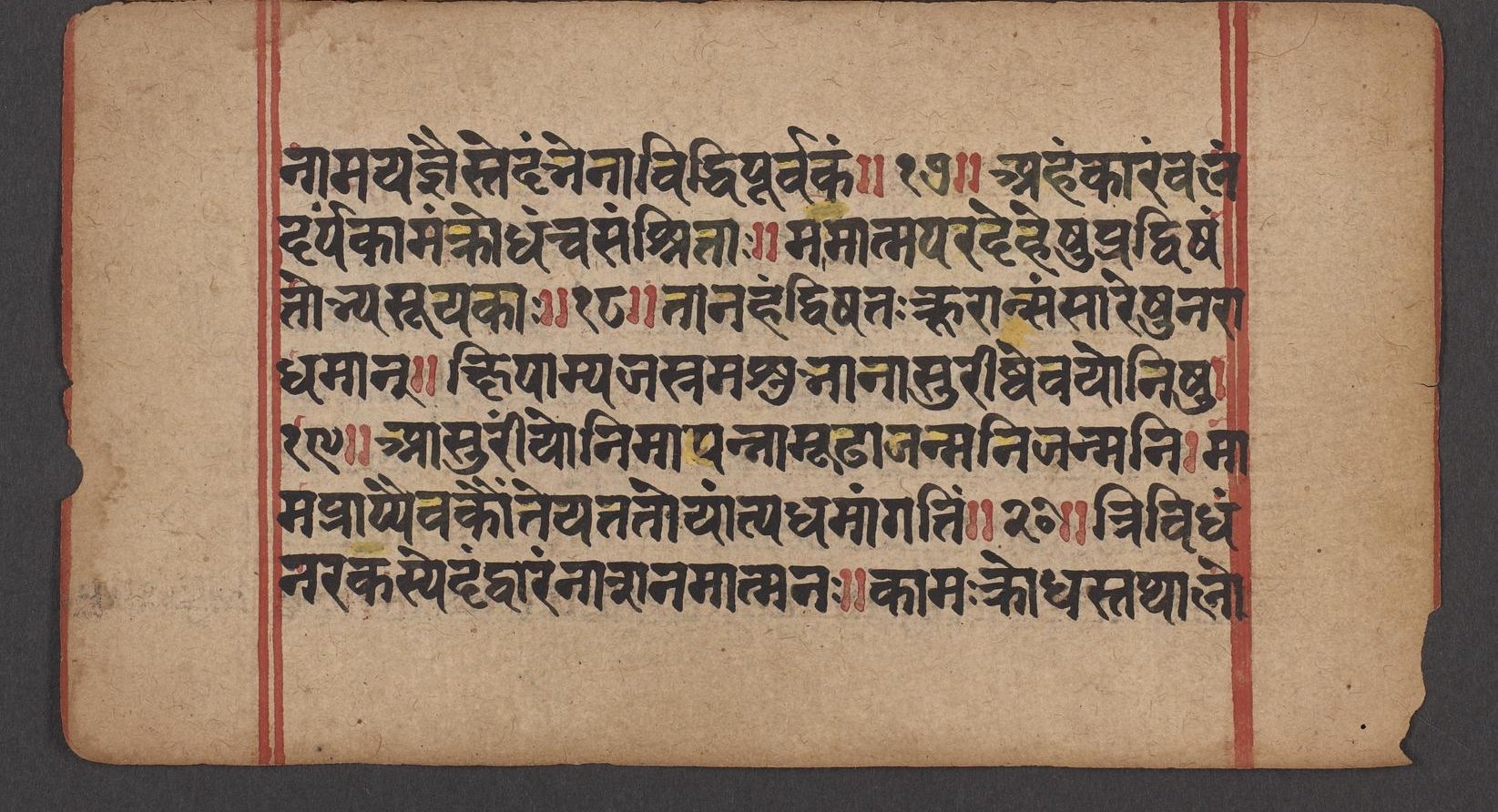
Where on the image
fol. 76r, OPenn image 6555_0075 (lower leaf). Checked on the image: ||17|| line 1 ... ||20|| line 6. Verse 16.17 begins on the previous page, fol. 75v, so both pages are shown.
17आत्मसंभाविताः स्तब्धा धनमानमदान्विताः ।
यजन्ते नामयज्ञैस्ते दम्भेनाविधिपूर्वकम् ॥ १७ ॥
18अहङ्कारं बलं दर्पं कामं क्रोधं च संश्रिताः ।
मामात्मपरदेहेषु प्रद्विषन्तोऽभ्यसूयकाः ॥ १८ ॥
19तानहं द्विषतः क्रूरान्संसारेषु नराधमान् ।
क्षिपाम्यजस्रमशुभानासुरीष्वेव योनिषु ॥ १९ ॥
20आसुरीं योनिमापन्ना मूढा जन्मनि जन्मनि ।
मामप्राप्यैव कौन्तेय ततो यान्त्यधमां गतिम् ॥ २० ॥
17Self-glorifying, stubborn, filled with the pride and intoxication of wealth, they perform lip-sacrifices for ostentation, contrary to scriptural ordinance.
18Given over to egoism, power, insolence, lust and wrath, these malicious ones hate Me in the bodies of others and in their own.
19These haters, evil, pitiless, vilest among men in the world, I ever throw down into demoniacal wombs.
20Cast into demoniacal wombs, deluded birth after birth, attaining not to Me, O Kaunteya, they sink into the lowest depths.
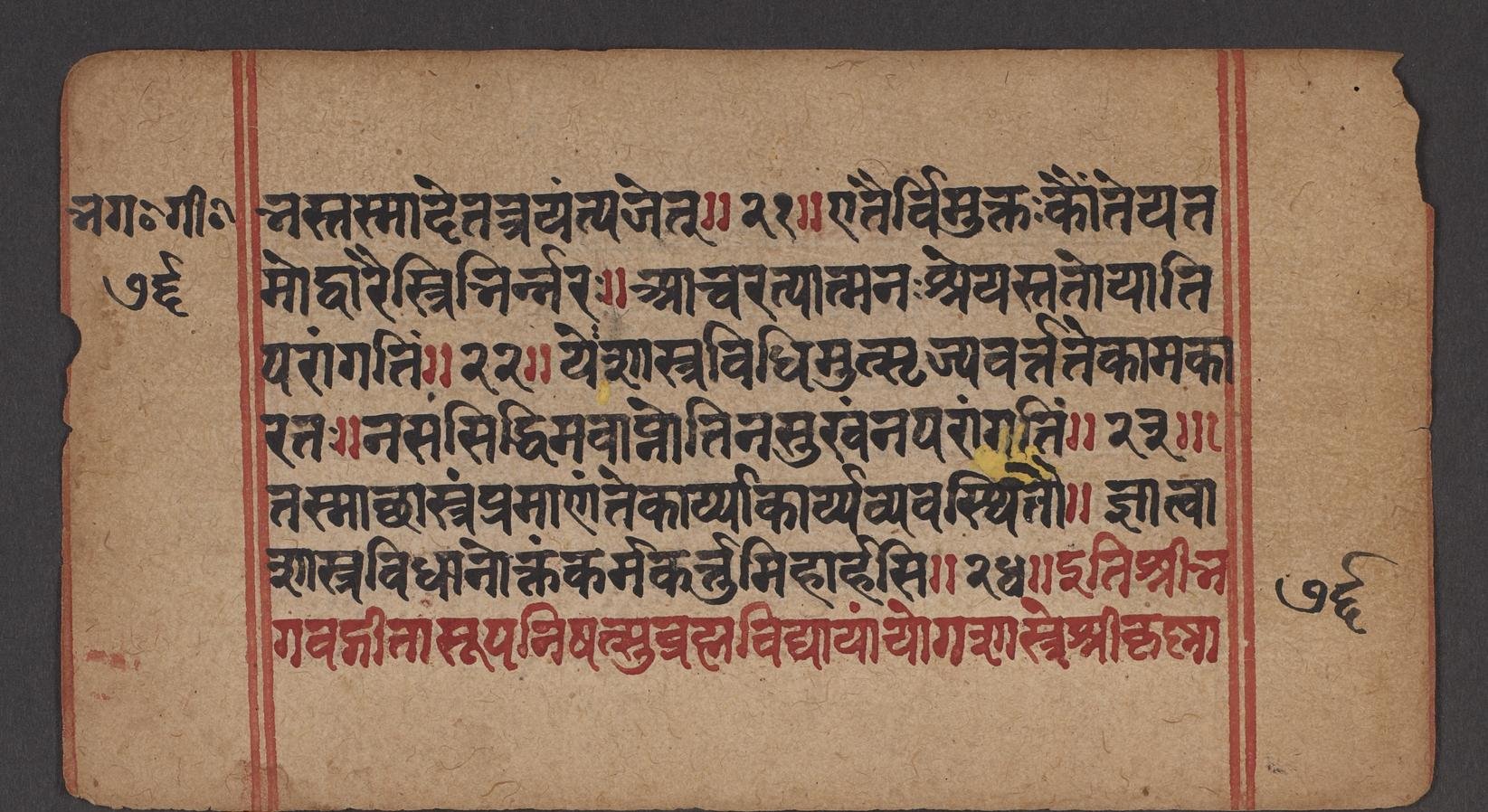
Where on the image
fol. 76v, OPenn image 6555_0076 (upper leaf). Checked on the image: ||21|| line 1 ... ||24|| line 6; colophon of ch. 16 begins line 6 'iti śrībhagavadgītāsūpaniṣatsu ... śrīkṛṣṇā-'. Verse 16.21 begins on the previous page, fol. 76r, so both pages are shown.
21त्रिविधं नरकस्येदं द्वारं नाशनमात्मनः ।
कामः क्रोधस्तथा लोभस्तस्मादेतत्त्रयं त्यजेत् ॥ २१ ॥
22एतैर्विमुक्तः कौन्तेय तमोद्वारैस्त्रिभिर्नरः ।
आचरत्यात्मनः श्रेयस्ततो याति परां गतिम् ॥ २२ ॥
23यः शास्त्रविधिमुत्सृज्य वर्तते कामकारतः ।
न स सिद्धिमवाप्नोति न सुखं न परां गतिम् ॥ २३ ॥
24तस्माच्छास्त्रं प्रमाणं ते कार्याकार्यव्यवस्थितौ ।
ज्ञात्वा शास्त्रविधानोक्तं कर्म कर्तुमिहार्हसि ॥ २४ ॥
21Triple is the gate of this hell, destructive of the self—lust, wrath, and greed; therefore let man renounce these three.
22A man liberated from these three gates of darkness, O son of Kunti, accomplisheth his own welfare, and thus reacheth the highest goal.
23He who, having cast aside the ordinances of the Scriptures, followeth the promptings of desire, attaineth not to perfection, nor happiness, nor the highest goal.
24Therefore let the Scriptures be thy authority, in determining what ought to be done, or what ought not to be done. Knowing what hath been declared by the ordinances of the Scriptures, thou oughtest to work in this world.
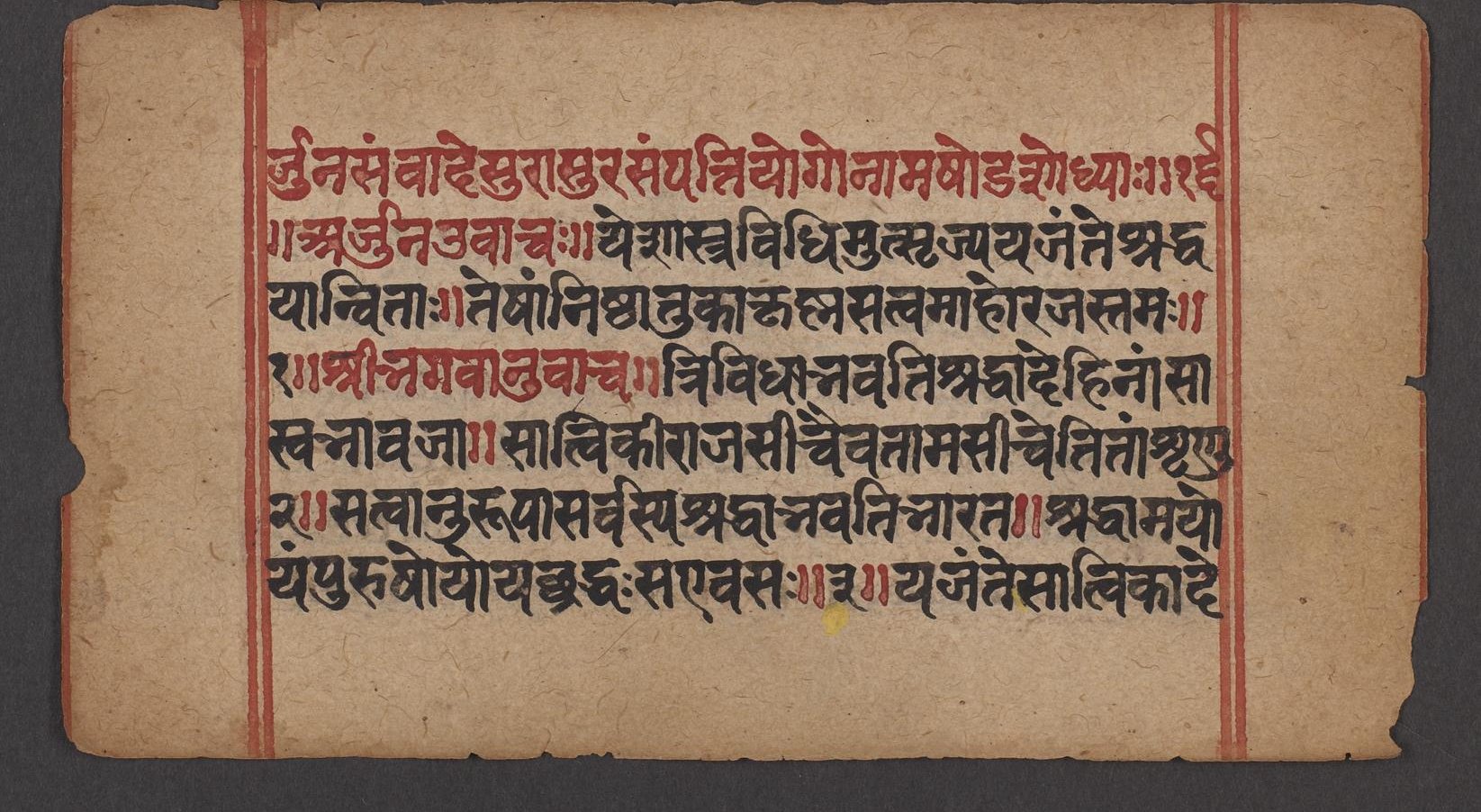
Where on the image
fol. 76v: ||21|| line 1 ... ||24|| line 6; colophon of ch. 16 begins line 6 'iti śrībhagavadgītāsūpaniṣatsu ... śrīkṛṣṇā-'. fol. 77r: colophon of ch. 16 ends line 1 '-rjunasaṃvāde daivāsurasaṃpadvibhāgayogo nāma ṣoḍaśo 'dhyāyaḥ ||16||'; arjuna uvāca line 2; ||1|| line 3, ||2|| line 5, ||3|| line 6; 17.4 begins line 7. The manuscript names the chapter daivāsurasaṃpadvibhāgayoga; the Sanskrit and English shown are the colophon printed in Besant's edition, whose wording differs in places from the manuscript's.
इति श्रीमद्भगवद्गीता॰ दैवासुरसम्पद्विभागयोगो नाम षोडशोऽध्यायः ।
Thus in the glorious Upanishads of the Bhagavad-Gita, the science of the Eternal, the scripture of Yoga, the dialogue between Shri Krishna and Arjuna, the sixteenth discourse, entitled: THE YOGA OF DIVISION BETWEEN THE DIVINE AND THE DEMONIACAL.
Notes
- Sanskrit and English: Annie Besant, The Bhagavad-Gita, 4th edition (Madras: G. A. Natesan, 1922), transcription validated on English Wikisource. Besant's footnotes are not reproduced.
- Verse numbers follow Besant and the manuscript, which agree throughout: chapter 13 counts Arjuna's opening question ('prakṛtiṃ puruṣaṃ caiva...') as verse 1, so it has 35 verses and the whole text 701.
- K. T. Telang's translation (Sacred Books of the East 8, 1882) was the first choice for the English, but it is continuous prose without verse divisions, so it cannot be matched to manuscript pages verse by verse; Besant's verse-numbered translation is used instead.
- The last section of each chapter is the chapter colophon. Besant prints most Sanskrit colophons in shortened form (marked with ॰) while her English gives the full formula; the manuscript writes the colophon out in full, and its chapter names differ in places from Besant's (see the scan note).
Cite
Sources
- Source: Penn Ms. Coll. 390 Item 559 (dated 1794) via OPenn + Sanskrit and English of Annie Besant, The Bhagavad-Gita (4th ed. 1922), Wikisource (holding institution)
- Critical edition: Annie Besant, The Bhagavad-Gita, 4th ed. (1922), Sanskrit text, via Wikisource
← previous · → next · v cycle view · l back to library