Daodejing, chapter 17 (Mawangdui silk manuscripts)
Introduction
Chapter 17 of the Daodejing (Laozi), shown on the two oldest nearly complete copies of the work: the silk manuscripts Laozi A and Laozi B, found in 1973 in Tomb 3 at Mawangdui, Changsha (Hunan), a tomb sealed in 168 BCE. Laozi A is written in a script between seal and clerical forms and does not avoid the personal name of the Han founder Liu Bang (邦); it is commonly dated before 195 BCE. Laozi B is in clerical script, avoids 邦, and is commonly dated 194-180 BCE. Both put the De part (chapters 38-81) before the Dao part (chapters 1-37), and a few chapters stand in a different order from the received text.
Each section gives the silk transcription column by column, with the Jicheng column number before each column (for Laozi B, 上 and 下 are the upper and lower halves of a column, photographed on facing plates), and links to the plate that carries those columns. □ marks a lost character; ∠, ‧ and ﹦ are marks written on the silk (﹦ repeats the character before it). Below the transcription is the received text of the Wang Bi recension, which is the text James Legge translated in 1891; the silk wording differs from it, most visibly in 恆 for received 常 (the received text avoids the name of Emperor Wen, Liu Heng), in the frequent final particle 也, and in loan characters such as 胃 for 謂.
How was this verified? (Provenance)
Where on the image
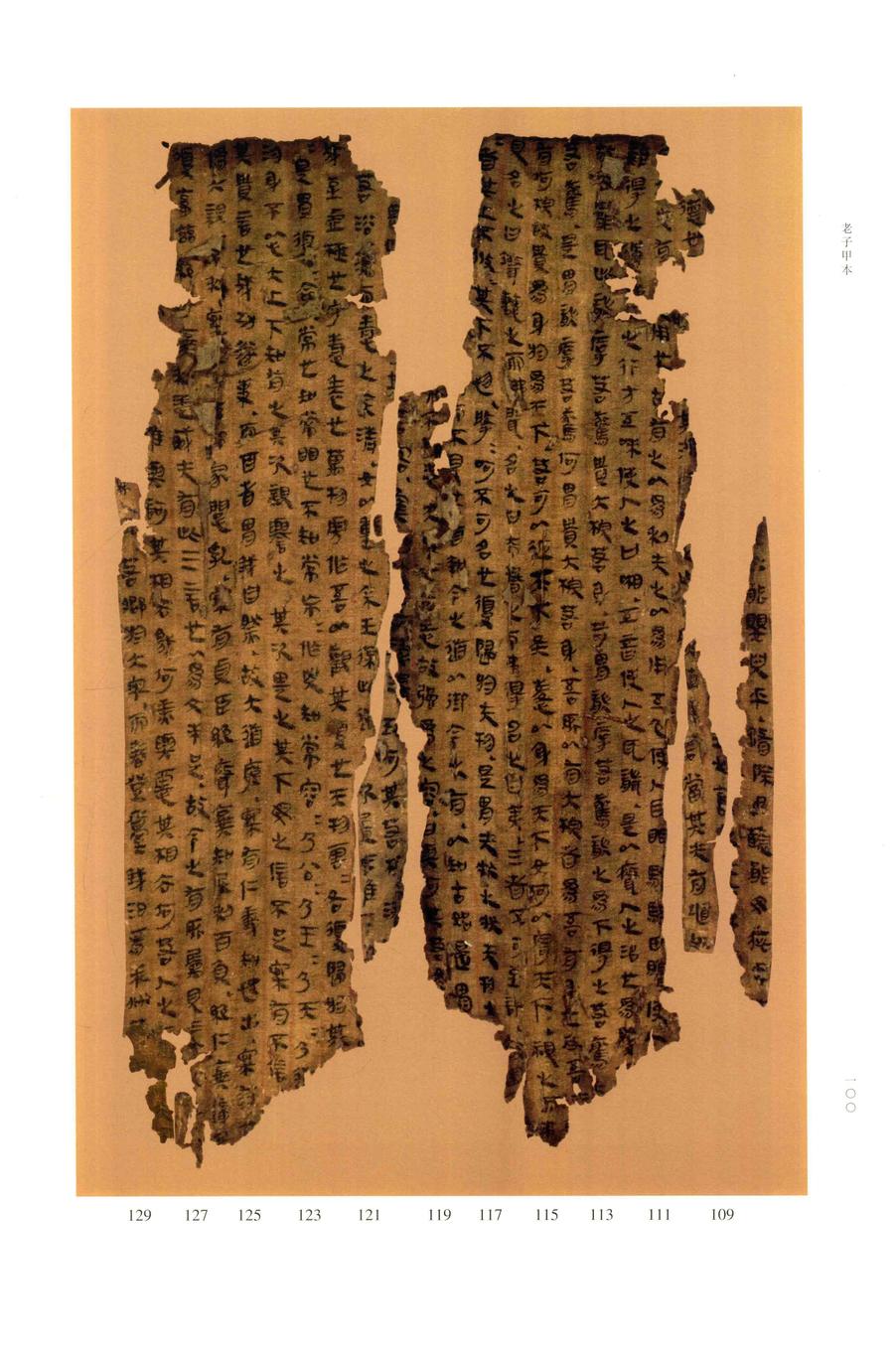
Laozi A (甲本), columns 124 to 125, on plate p. 100 of Changsha Mawangdui Han mu jianbo jicheng, vol. 1 (column numbers are printed under each plate; the columns run from right to left). Checked on the image: column 124 reads 沕身不殆 大上下知有之其次親譽之 (the opening of this chapter, with the end of the preceding text where shown). □ marks a character lost on the silk (2 in this section). Transcription and column numbers: Wikisource 老子 (帛書甲本), which follows the Jicheng column numbering. The English is Legge's translation of the received text, shown below the silk transcription; the silk wording differs from it in many places, so compare the two Chinese texts for the variants.
124大上下知有之其次親譽之其次畏之其下母之信不足案有不信□□
125其貴言也成功遂事‧而百省胃我自然∠
Compare: Received text (Wang Bi recension), the text Legge translated
太上,下知有之,其次,親而譽之,其次,畏之,其次,侮之。信不足焉,有不信焉。悠兮其貴言,功成事遂,百姓皆謂:我自然。
1In the highest antiquity, (the people) did not know that there were (their rulers). In the next age they loved them and praised them. In the next they feared them; in the next they despised them. Thus it was that when faith (in the Tao) was deficient (in the rulers) a want of faith in them ensued (in the people).
2How irresolute did those (earliest rulers) appear, showing (by their reticence) the importance which they set upon their words! Their work was done and their undertakings were successful, while the people all said, 'We are as we are, of ourselves!'
Where on the image
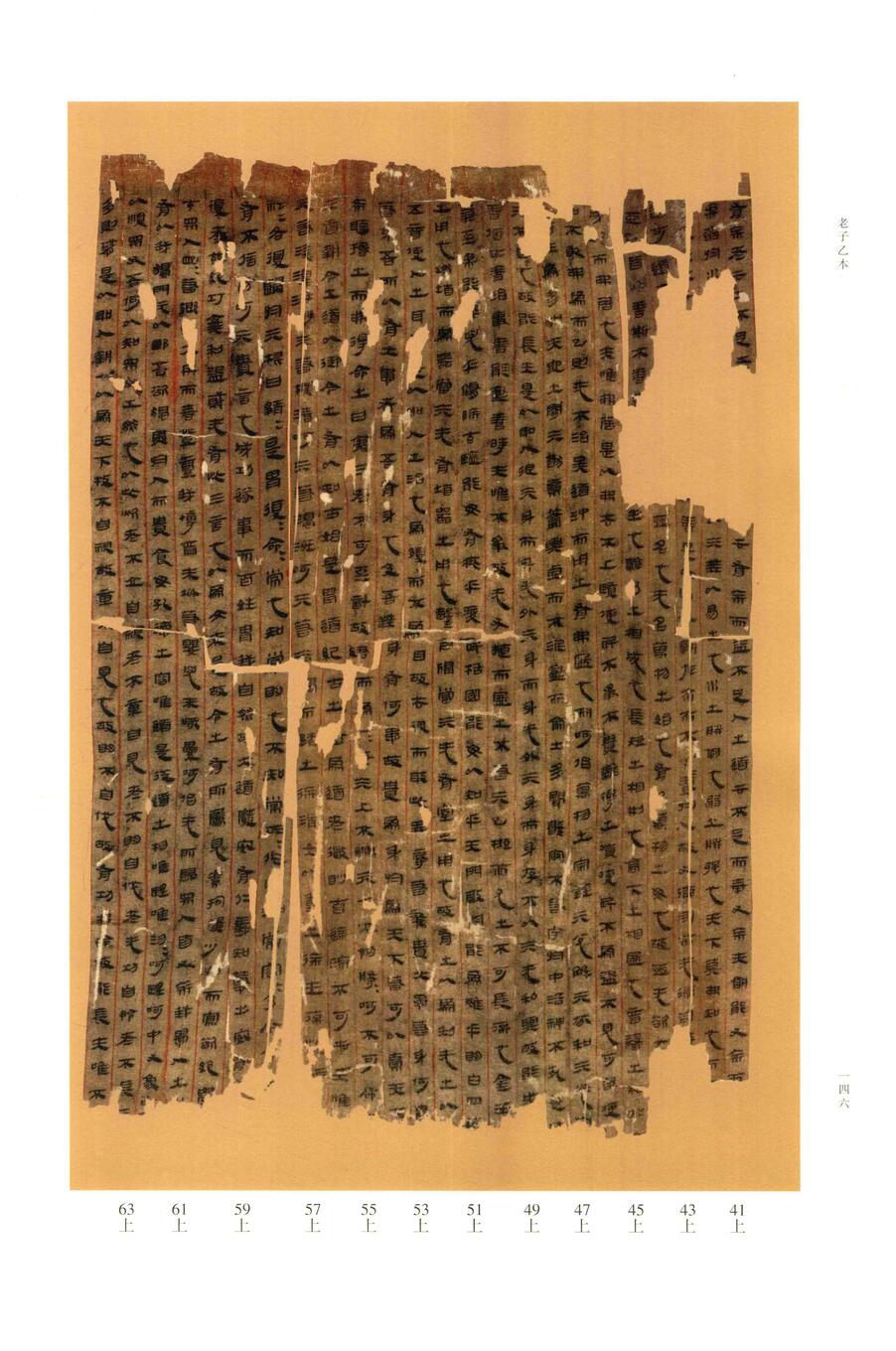
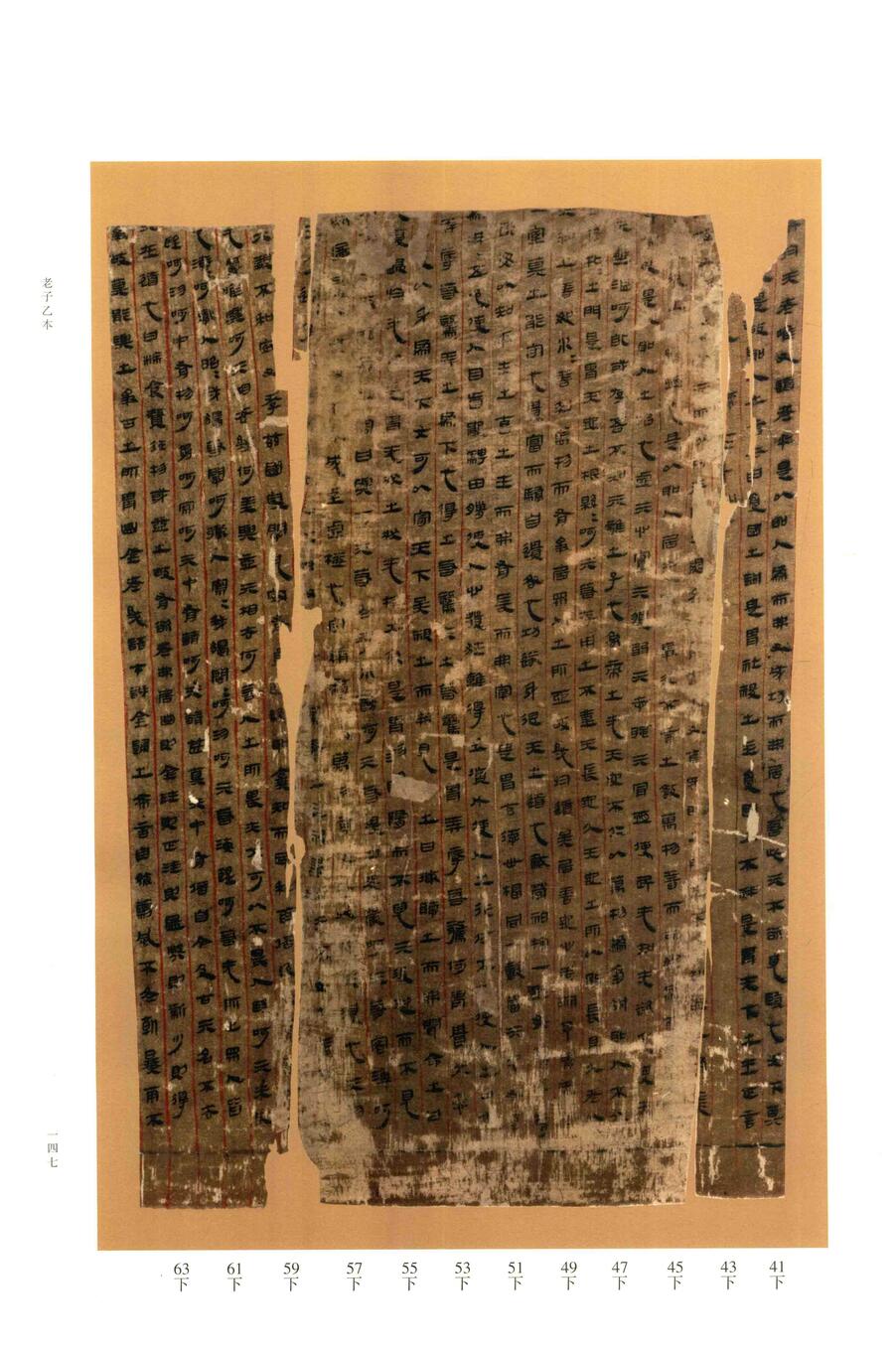
Laozi B (乙本), columns 58下 to 59上, on plates p. 146 and p. 147 of Changsha Mawangdui Han mu jianbo jicheng, vol. 1 (column numbers are printed under each plate; the columns run from right to left; each column of Laozi B is photographed as an upper half (上) and a lower half (下) on facing plates). Checked on the image: column 59上 reads 有不信猷呵亓貴言也成功遂事而百姓胃我自然. The opening characters of this chapter are lost or not readable on this plate image, so these are the first characters that were confirmed. □ marks a character lost on the silk (2 in this section). Transcription and column numbers: Wikisource 老子 (帛書乙本), which follows the Jicheng column numbering. The English is Legge's translation of the received text, shown below the silk transcription; the silk wording differs from it in many places, so compare the two Chinese texts for the variants.
58下大上下知又□亓□親譽之亓次畏之亓下母之信不足安
59上有不信猷呵亓貴言也成功遂事而百姓胃我自然
Compare: Received text (Wang Bi recension), the text Legge translated
太上,下知有之,其次,親而譽之,其次,畏之,其次,侮之。信不足焉,有不信焉。悠兮其貴言,功成事遂,百姓皆謂:我自然。
1In the highest antiquity, (the people) did not know that there were (their rulers). In the next age they loved them and praised them. In the next they feared them; in the next they despised them. Thus it was that when faith (in the Tao) was deficient (in the rulers) a want of faith in them ensued (in the people).
2How irresolute did those (earliest rulers) appear, showing (by their reticence) the importance which they set upon their words! Their work was done and their undertakings were successful, while the people all said, 'We are as we are, of ourselves!'
Notes
- English: James Legge, The Tao Teh King (Sacred Books of the East 39, 1891); Legge's paragraph numbers are kept as superscripts.
- Legge translated the received text, not the silk manuscripts. Where the silk wording differs, his English follows the received text shown under the transcription.
- Silk transcription: Wikisource Page transcriptions of the Jicheng plates (revisions of 18 October 2026, marked not yet proofread on Wikisource), checked against the plates for each chapter opening.
Cite
Sources
- Source: Mawangdui Laozi A and B silk manuscripts (plates of Changsha Mawangdui Han mu jianbo jicheng vol. 1, via Wikimedia Commons) + Wikisource column transcription + Wang Bi received text (Wikisource) + Legge 1891 English (Project Gutenberg) (holding institution)
- Critical edition: Changsha Mawangdui Han mu jianbo jicheng (2014) column numbers; Wikisource transcription; Wang Bi received text
← previous · → next · v cycle view · l back to library