Daodejing, chapter 20 (Mawangdui silk manuscripts)
Introduction
Chapter 20 of the Daodejing (Laozi), shown on the two oldest nearly complete copies of the work: the silk manuscripts Laozi A and Laozi B, found in 1973 in Tomb 3 at Mawangdui, Changsha (Hunan), a tomb sealed in 168 BCE. Laozi A is written in a script between seal and clerical forms and does not avoid the personal name of the Han founder Liu Bang (邦); it is commonly dated before 195 BCE. Laozi B is in clerical script, avoids 邦, and is commonly dated 194-180 BCE. Both put the De part (chapters 38-81) before the Dao part (chapters 1-37), and a few chapters stand in a different order from the received text.
Each section gives the silk transcription column by column, with the Jicheng column number before each column (for Laozi B, 上 and 下 are the upper and lower halves of a column, photographed on facing plates), and links to the plate that carries those columns. □ marks a lost character; ∠, ‧ and ﹦ are marks written on the silk (﹦ repeats the character before it). Below the transcription is the received text of the Wang Bi recension, which is the text James Legge translated in 1891; the silk wording differs from it, most visibly in 恆 for received 常 (the received text avoids the name of Emperor Wen, Liu Heng), in the frequent final particle 也, and in loan characters such as 胃 for 謂.
How was this verified? (Provenance)
Where on the image
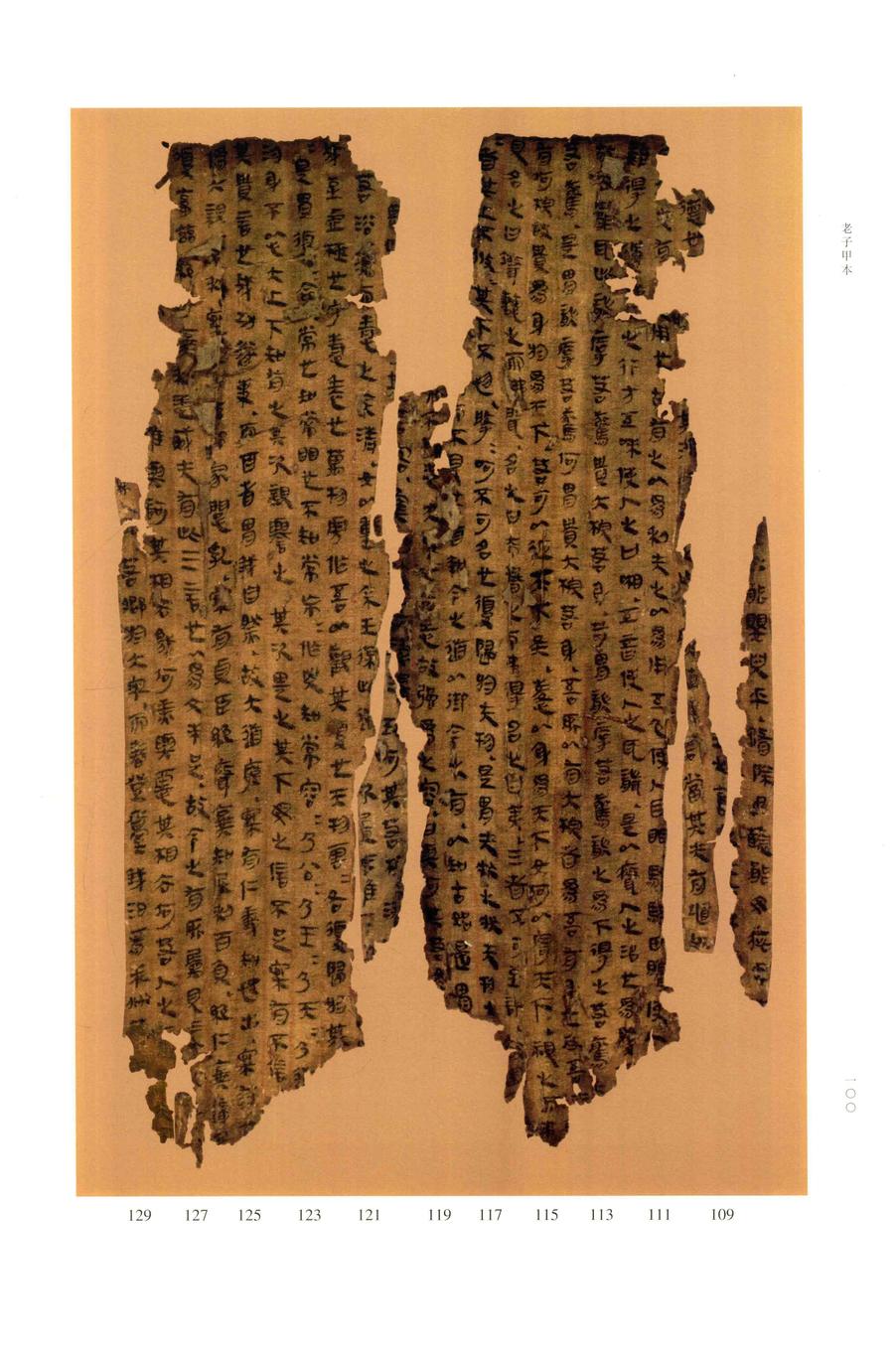
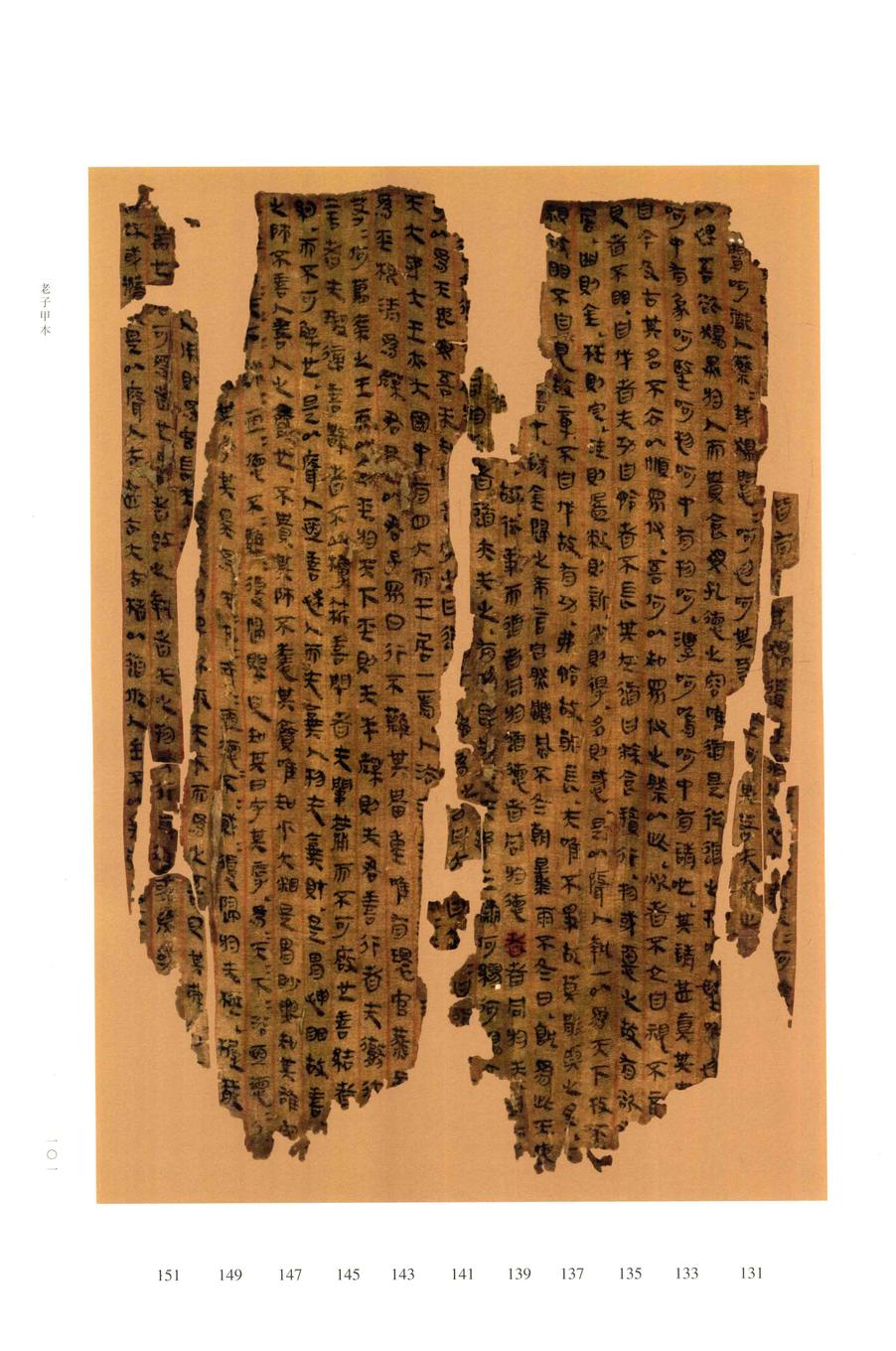
Laozi A (甲本), columns 128 to 132, on plates p. 100 and p. 101 of Changsha Mawangdui Han mu jianbo jicheng, vol. 1 (column numbers are printed under each plate; the columns run from right to left). Checked on the image: column 128 reads 何美與惡其相去何若人之. The opening characters of this chapter are lost or not readable on this plate image, so these are the first characters that were confirmed. Column 130 was located on the image at the edge of plate p. 101; the Wikisource page split puts it on the neighbouring plate. □ marks a character lost on the silk (40 in this section). Transcription and column numbers: Wikisource 老子 (帛書甲本), which follows the Jicheng column numbering. The English is Legge's translation of the received text, shown below the silk transcription; the silk wording differs from it in many places, so compare the two Chinese texts for the variants.
128□□□□唯與訶其相去幾何美與惡其相去何若人之□□亦不
129□□□□□□□□□□眾人熙﹦若鄉於大牢‧而春登臺我泊焉未佻若□□□
130□累呵如□□□□□皆有餘我獨遺我禺人之心也蠢﹦呵□□□□□
131□昏呵鬻人蔡﹦我獨昏﹦呵忽呵其若□望呵其若無所止□□□□□□□□
132以悝吾欲獨異於人而貴食母
Compare: Received text (Wang Bi recension), the text Legge translated
絕學無憂,唯之與阿,相去幾何?善之與惡,相去若何?人之所畏,不可不畏。荒兮其未央哉﹗眾人熙熙,如享太牢,如春登臺。我獨泊兮其未兆,如嬰兒之未孩;儽儽兮若無所歸。眾人皆有餘,而我獨若遺。我愚人之心也哉﹗沌沌兮,俗人昭昭,我獨昏昏。俗人察察,我獨悶悶。澹兮其若海,飂兮若無止。眾人皆有以,而我獨頑似鄙。我獨異於人,而貴食母。
1When we renounce learning we have no troubles.
The (ready) 'yes,' and (flattering) 'yea;'--
Small is the difference they display.
But mark their issues, good and ill;--
What space the gulf between shall fill?
What all men fear is indeed to be feared; but how wide and without end is the range of questions (asking to be discussed)!
2The multitude of men look satisfied and pleased; as if enjoying a full banquet, as if mounted on a tower in spring. I alone seem listless and still, my desires having as yet given no indication of their presence. I am like an infant which has not yet smiled. I look dejected and forlorn, as if I had no home to go to. The multitude of men all have enough and to spare. I alone seem to have lost everything. My mind is that of a stupid man; I am in a state of chaos.
Ordinary men look bright and intelligent, while I alone seem to be benighted. They look full of discrimination, while I alone am dull and confused. I seem to be carried about as on the sea, drifting as if I had nowhere to rest. All men have their spheres of action, while I alone seem dull and incapable, like a rude borderer. (Thus) I alone am different from other men, but I value the nursing-mother (the Tao).
Where on the image
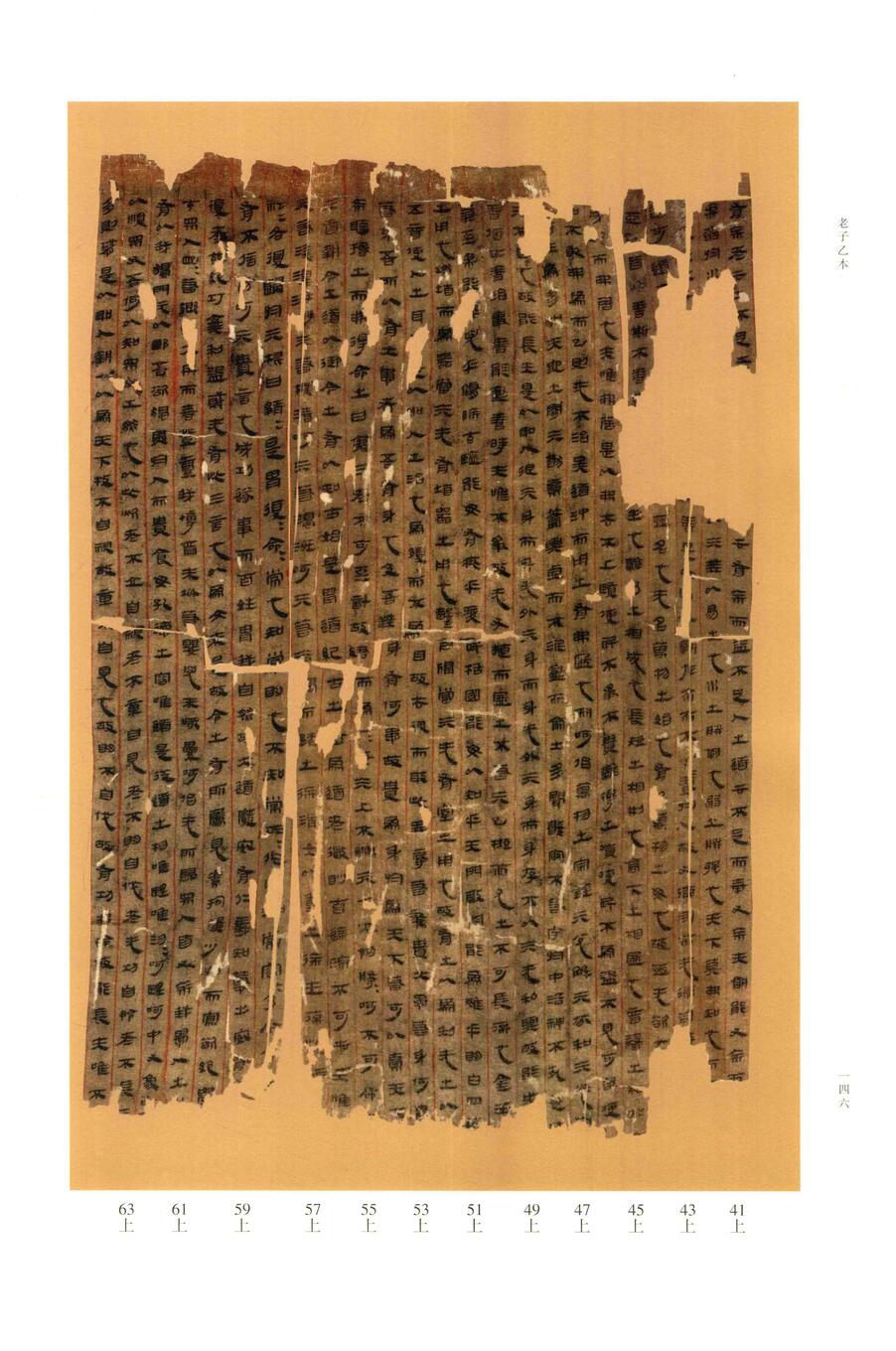
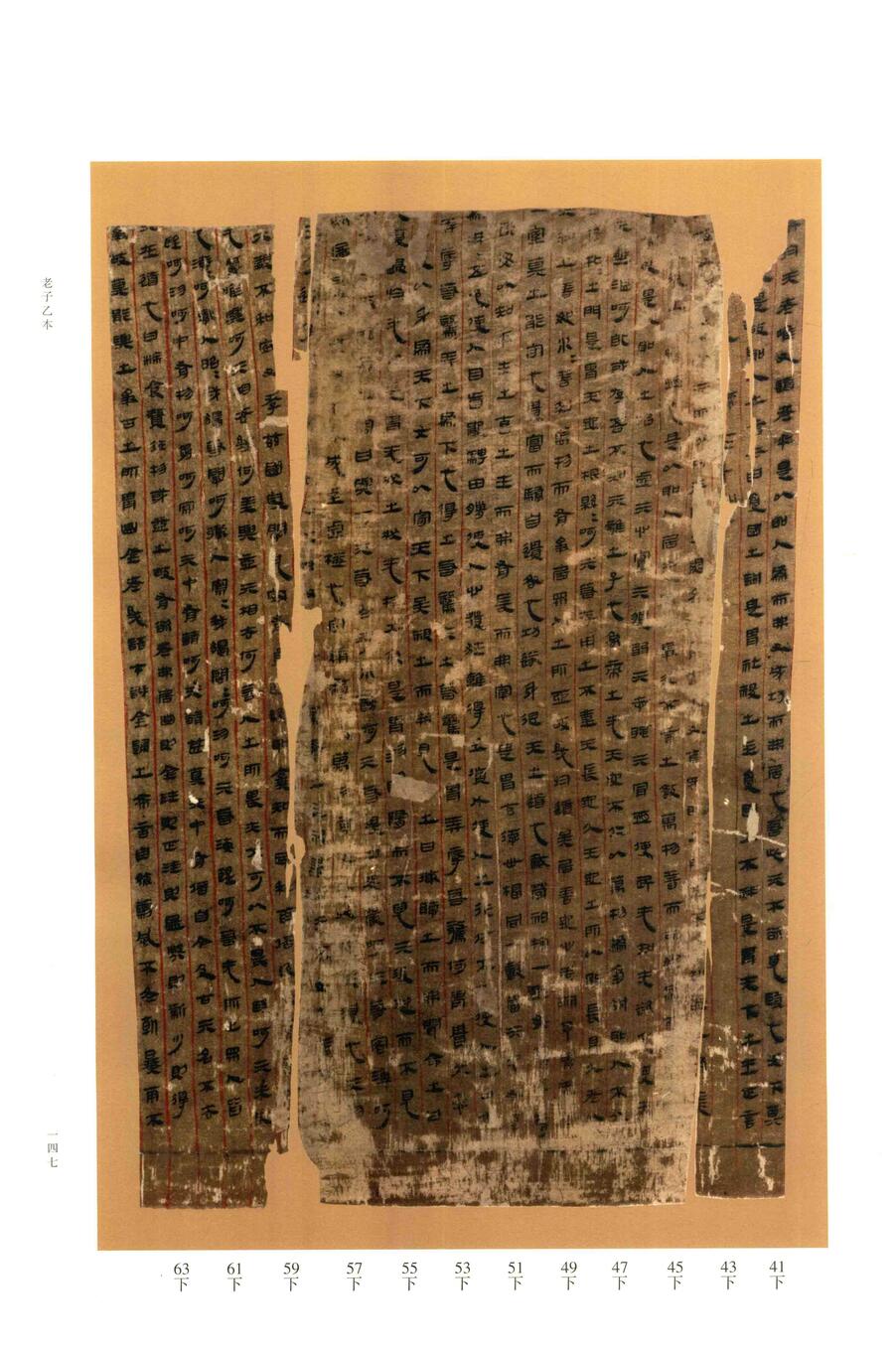
Laozi B (乙本), columns 60上 to 62上, on plates p. 146 and p. 147 of Changsha Mawangdui Han mu jianbo jicheng, vol. 1 (column numbers are printed under each plate; the columns run from right to left; each column of Laozi B is photographed as an upper half (上) and a lower half (下) on facing plates). Checked on the image: column 60上 reads 少□而寡欲 絕學 (the opening of this chapter, with the end of the preceding text where shown). Transcription and column numbers: Wikisource 老子 (帛書乙本), which follows the Jicheng column numbering. The English is Legge's translation of the received text, shown below the silk transcription; the silk wording differs from it in many places, so compare the two Chinese texts for the variants.
60上絕學
60下無憂唯與呵亓相去幾何美與亞亓相去何若人之所畏亦不可以不畏人朢呵亓未央
61上才眾人熙﹦若鄉於大牢而春登臺我博焉未垗若嬰兒未咳纍呵佁無所歸眾人皆又余我愚人之心
61下也春﹦呵鬻人昭﹦我獨若昏呵鬻人察﹦我獨閩﹦呵忽呵亓若海朢呵若無所止眾人皆
62上有以我獨門元以鄙吾欲獨異於人而貴食母
Compare: Received text (Wang Bi recension), the text Legge translated
絕學無憂,唯之與阿,相去幾何?善之與惡,相去若何?人之所畏,不可不畏。荒兮其未央哉﹗眾人熙熙,如享太牢,如春登臺。我獨泊兮其未兆,如嬰兒之未孩;儽儽兮若無所歸。眾人皆有餘,而我獨若遺。我愚人之心也哉﹗沌沌兮,俗人昭昭,我獨昏昏。俗人察察,我獨悶悶。澹兮其若海,飂兮若無止。眾人皆有以,而我獨頑似鄙。我獨異於人,而貴食母。
1When we renounce learning we have no troubles.
The (ready) 'yes,' and (flattering) 'yea;'--
Small is the difference they display.
But mark their issues, good and ill;--
What space the gulf between shall fill?
What all men fear is indeed to be feared; but how wide and without end is the range of questions (asking to be discussed)!
2The multitude of men look satisfied and pleased; as if enjoying a full banquet, as if mounted on a tower in spring. I alone seem listless and still, my desires having as yet given no indication of their presence. I am like an infant which has not yet smiled. I look dejected and forlorn, as if I had no home to go to. The multitude of men all have enough and to spare. I alone seem to have lost everything. My mind is that of a stupid man; I am in a state of chaos.
Ordinary men look bright and intelligent, while I alone seem to be benighted. They look full of discrimination, while I alone am dull and confused. I seem to be carried about as on the sea, drifting as if I had nowhere to rest. All men have their spheres of action, while I alone seem dull and incapable, like a rude borderer. (Thus) I alone am different from other men, but I value the nursing-mother (the Tao).
Notes
- English: James Legge, The Tao Teh King (Sacred Books of the East 39, 1891); Legge's paragraph numbers are kept as superscripts.
- Legge translated the received text, not the silk manuscripts. Where the silk wording differs, his English follows the received text shown under the transcription.
- Silk transcription: Wikisource Page transcriptions of the Jicheng plates (revisions of 18 October 2026, marked not yet proofread on Wikisource), checked against the plates for each chapter opening.
Cite
Sources
- Source: Mawangdui Laozi A and B silk manuscripts (plates of Changsha Mawangdui Han mu jianbo jicheng vol. 1, via Wikimedia Commons) + Wikisource column transcription + Wang Bi received text (Wikisource) + Legge 1891 English (Project Gutenberg) (holding institution)
- Critical edition: Changsha Mawangdui Han mu jianbo jicheng (2014) column numbers; Wikisource transcription; Wang Bi received text
← previous · → next · v cycle view · l back to library