Daodejing, chapter 64 (Mawangdui silk manuscripts)
Introduction
Chapter 64 of the Daodejing (Laozi), shown on the two oldest nearly complete copies of the work: the silk manuscripts Laozi A and Laozi B, found in 1973 in Tomb 3 at Mawangdui, Changsha (Hunan), a tomb sealed in 168 BCE. Laozi A is written in a script between seal and clerical forms and does not avoid the personal name of the Han founder Liu Bang (邦); it is commonly dated before 195 BCE. Laozi B is in clerical script, avoids 邦, and is commonly dated 194-180 BCE. Both put the De part (chapters 38-81) before the Dao part (chapters 1-37), and a few chapters stand in a different order from the received text.
Each section gives the silk transcription column by column, with the Jicheng column number before each column (for Laozi B, 上 and 下 are the upper and lower halves of a column, photographed on facing plates), and links to the plate that carries those columns. □ marks a lost character; ∠, ‧ and ﹦ are marks written on the silk (﹦ repeats the character before it). Below the transcription is the received text of the Wang Bi recension, which is the text James Legge translated in 1891; the silk wording differs from it, most visibly in 恆 for received 常 (the received text avoids the name of Emperor Wen, Liu Heng), in the frequent final particle 也, and in loan characters such as 胃 for 謂.
How was this verified? (Provenance)
Where on the image
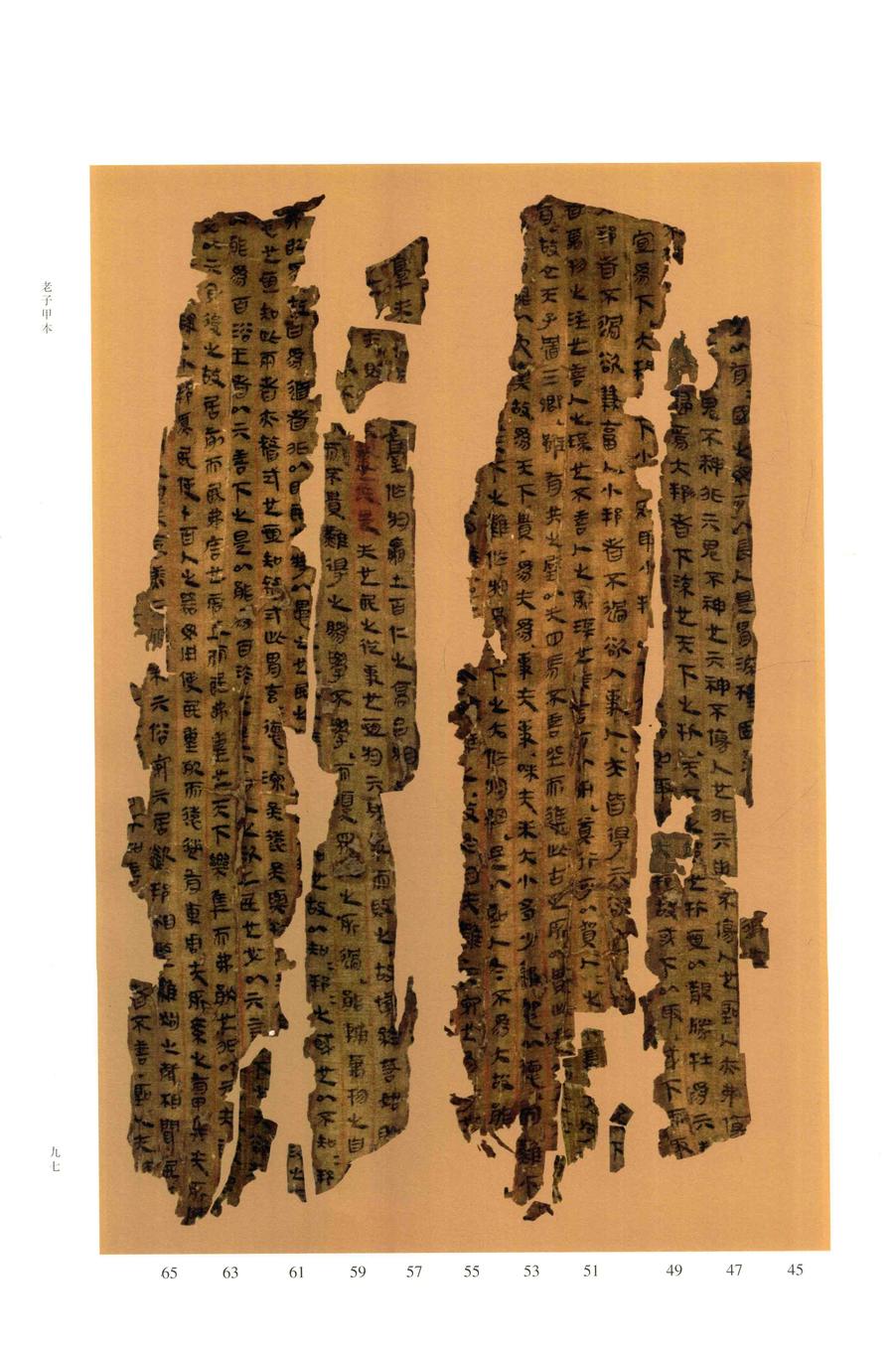
Laozi A (甲本), columns 55 to 60, on plate p. 97 of Changsha Mawangdui Han mu jianbo jicheng, vol. 1 (column numbers are printed under each plate; the columns run from right to left). Checked on the image: column 55 reads 故終於無難 ‧亓安也易 (the opening of this chapter, with the end of the preceding text where shown). □ marks a character lost on the silk (63 in this section). Transcription and column numbers: Wikisource 老子 (帛書甲本), which follows the Jicheng column numbering. The English is Legge's translation of the received text, shown below the silk transcription; the silk wording differs from it in many places, so compare the two Chinese texts for the variants.
55‧亓安也易持也□□
56□□易謀□□□□□□□□□□□□□□□□□□□□□□□□□□□□□□
57□□毫末九成之臺作於羸土百仁之高台於是□□□□□□□□□□□□
58□□□也□無敗□無執也故無失也民之從事也恆於亓成事而敗之∠故慎終若始則□□
59□□□□□□欲不欲而不貴難得之貨學不學∠而復眾人之所過∠能輔萬物之自□□
60弗敢為
Compare: Received text (Wang Bi recension), the text Legge translated
其安易持,其未兆易謀。其脆易泮,其微易散。為之於未有,治之於未亂。合抱之木,生於毫末;九層之臺,起於累土;千里之行,始於足下。為者敗之,執者失之。是以聖人無為故無敗,無執故無失。民之從事,常於幾成而敗之。慎終如始,則無敗事。是以聖人欲不欲,不貴難得之貨;學不學,復眾人之所過。以輔萬物之自然,而不敢為。
1That which is at rest is easily kept hold of; before a thing has given indications of its presence, it is easy to take measures against it; that which is brittle is easily broken; that which is very small is easily dispersed. Action should be taken before a thing has made its appearance; order should be secured before disorder has begun.
2The tree which fills the arms grew from the tiniest sprout; the tower of nine storeys rose from a (small) heap of earth; the journey of a thousand li commenced with a single step.
3He who acts (with an ulterior purpose) does harm; he who takes hold of a thing (in the same way) loses his hold. The sage does not act (so), and therefore does no harm; he does not lay hold (so), and therefore does not lose his hold. (But) people in their conduct of affairs are constantly ruining them when they are on the eve of success. If they were careful at the end, as (they should be) at the beginning, they would not so ruin them.
4Therefore the sage desires what (other men) do not desire, and does not prize things difficult to get; he learns what (other men) do not learn, and turns back to what the multitude of men have passed by. Thus he helps the natural development of all things, and does not dare to act (with an ulterior purpose of his own).
Where on the image
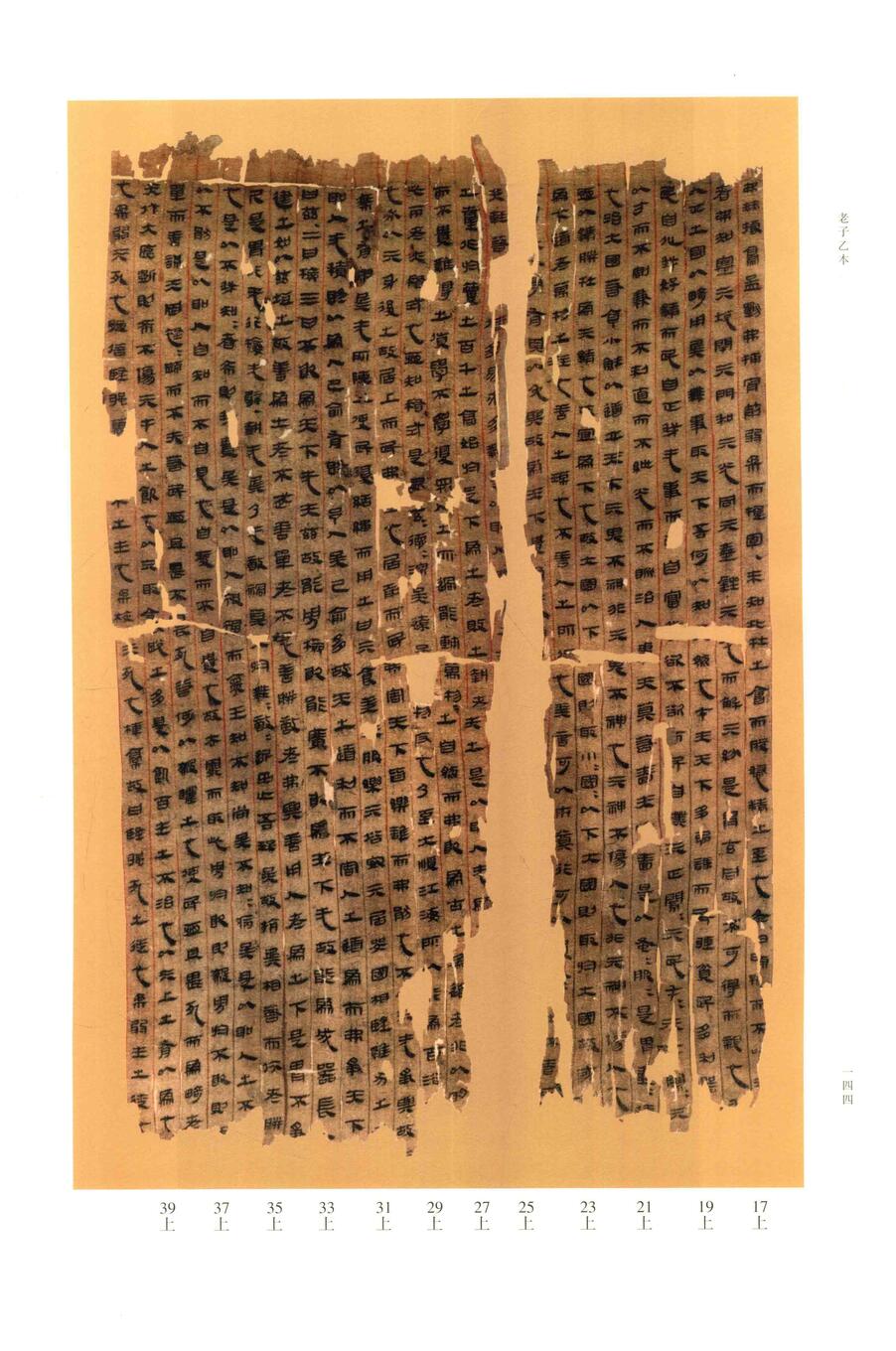
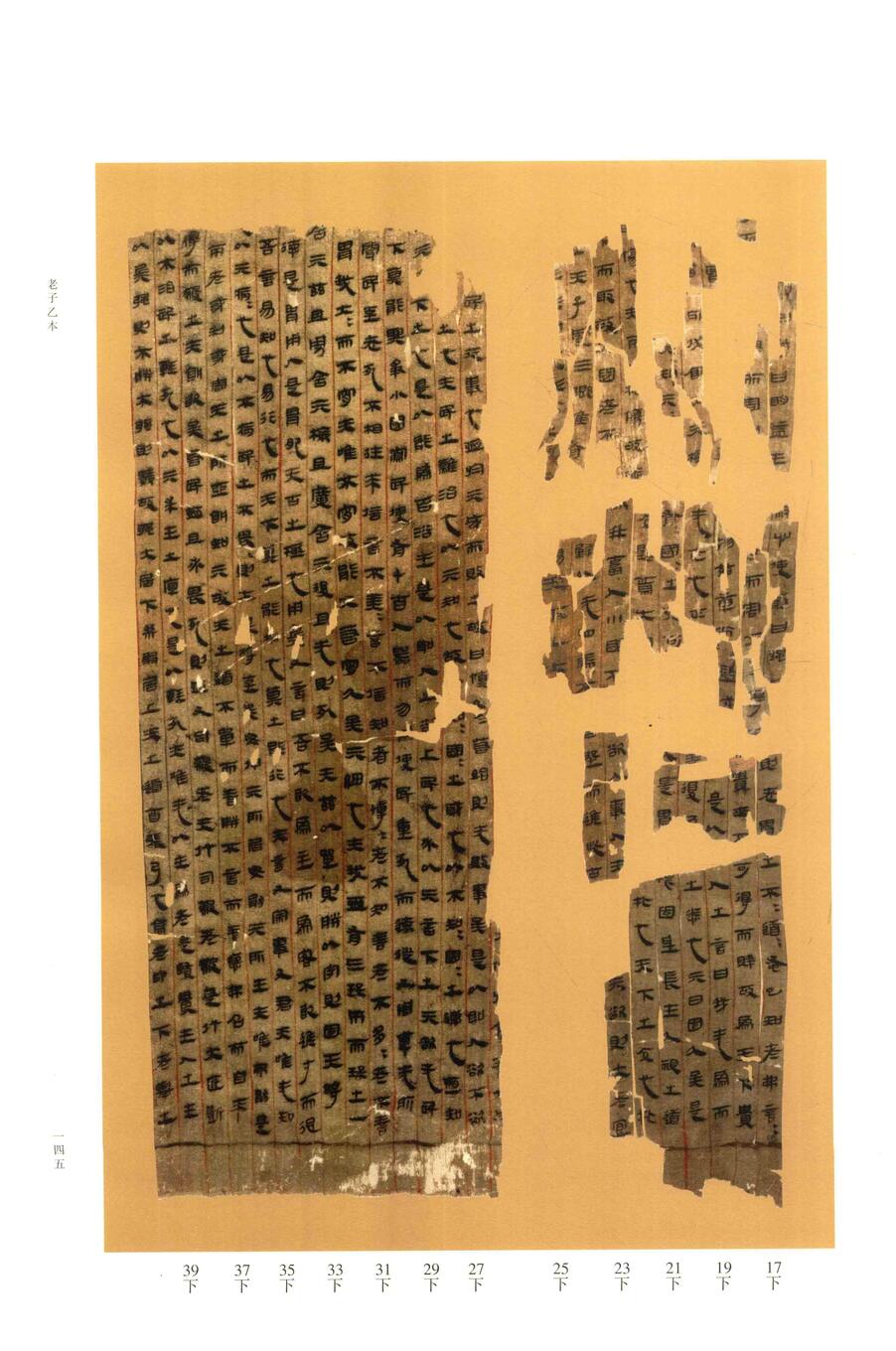
Laozi B (乙本), columns 26上 to 28上, on plates p. 144 and p. 145 of Changsha Mawangdui Han mu jianbo jicheng, vol. 1 (column numbers are printed under each plate; the columns run from right to left; each column of Laozi B is photographed as an upper half (上) and a lower half (下) on facing plates). Checked on the image: column 27上 reads 之臺作於欙土百千之高始於足下為之者敗之. The opening characters of this chapter are lost or not readable on this plate image, so these are the first characters that were confirmed. □ marks a character lost on the silk (50 in this section). Transcription and column numbers: Wikisource 老子 (帛書乙本), which follows the Jicheng column numbering. The English is Legge's translation of the received text, shown below the silk transcription; the silk wording differs from it in many places, so compare the two Chinese texts for the variants.
26上□□□□□□□□□□□□□□□
26下□□□□□□□□□□□□□□□□□□□□□□□木作於毫末九成
27上之臺作於欙土百千之高始於足不為之者敗之執者失之是以聖人無為□□
27下□□□□□□□□□□民之從事也恆於亓成而敗之故曰慎冬若始則無敗事矣是以聖人欲不欲
28上而不貴難得之貨學不學復眾人之所過能輔萬物之自然而弗敢為
Compare: Received text (Wang Bi recension), the text Legge translated
其安易持,其未兆易謀。其脆易泮,其微易散。為之於未有,治之於未亂。合抱之木,生於毫末;九層之臺,起於累土;千里之行,始於足下。為者敗之,執者失之。是以聖人無為故無敗,無執故無失。民之從事,常於幾成而敗之。慎終如始,則無敗事。是以聖人欲不欲,不貴難得之貨;學不學,復眾人之所過。以輔萬物之自然,而不敢為。
1That which is at rest is easily kept hold of; before a thing has given indications of its presence, it is easy to take measures against it; that which is brittle is easily broken; that which is very small is easily dispersed. Action should be taken before a thing has made its appearance; order should be secured before disorder has begun.
2The tree which fills the arms grew from the tiniest sprout; the tower of nine storeys rose from a (small) heap of earth; the journey of a thousand li commenced with a single step.
3He who acts (with an ulterior purpose) does harm; he who takes hold of a thing (in the same way) loses his hold. The sage does not act (so), and therefore does no harm; he does not lay hold (so), and therefore does not lose his hold. (But) people in their conduct of affairs are constantly ruining them when they are on the eve of success. If they were careful at the end, as (they should be) at the beginning, they would not so ruin them.
4Therefore the sage desires what (other men) do not desire, and does not prize things difficult to get; he learns what (other men) do not learn, and turns back to what the multitude of men have passed by. Thus he helps the natural development of all things, and does not dare to act (with an ulterior purpose of his own).
Notes
- English: James Legge, The Tao Teh King (Sacred Books of the East 39, 1891); Legge's paragraph numbers are kept as superscripts.
- Legge translated the received text, not the silk manuscripts. Where the silk wording differs, his English follows the received text shown under the transcription.
- Silk transcription: Wikisource Page transcriptions of the Jicheng plates (revisions of 18 October 2026, marked not yet proofread on Wikisource), checked against the plates for each chapter opening.
Cite
Sources
- Source: Mawangdui Laozi A and B silk manuscripts (plates of Changsha Mawangdui Han mu jianbo jicheng vol. 1, via Wikimedia Commons) + Wikisource column transcription + Wang Bi received text (Wikisource) + Legge 1891 English (Project Gutenberg) (holding institution)
- Critical edition: Changsha Mawangdui Han mu jianbo jicheng (2014) column numbers; Wikisource transcription; Wang Bi received text
← previous · → next · v cycle view · l back to library