Didache (Teaching of the Twelve Apostles), on Codex Hierosolymitanus 54
Introduction
The Didache ("Teaching") is a short early Christian manual in sixteen chapters: the Two Ways of life and death (1-6), instructions on baptism, fasting, prayer and the eucharist (7-10), on travelling apostles and prophets (11-13), on the Lord's day and on bishops and deacons (14-15), and a closing warning about the last days (16). It is usually dated to the late first or early second century. Ancient writers name it, but its text was lost until Philotheos Bryennios found it in this manuscript and published it in 1883.
The only complete Greek copy is Codex Hierosolymitanus 54 (Jerusalem, Library of the Greek Orthodox Patriarchate, Panagios Taphos 54), a parchment volume of 120 folios dated 1056. The same volume holds the Epistle of Barnabas and 1 and 2 Clement. The Didache fills fol. 76r-80v: it begins on fol. 76r after the end of 2 Clement and a list of Old Testament books, and ends on fol. 80v, where the rest of the page is left blank.
The photographs are the Library of Congress microfilm of the Jerusalem patriarchate manuscripts (public domain). Each section is linked to the page or pages that carry that chapter; the page boundaries were read on the images, and every page's first and last words are recorded in the notes. The Greek is Kirsopp Lake's edition (1912); the English is J. B. Lightfoot's translation (1891).
How was this verified? (Provenance)
Where on the image
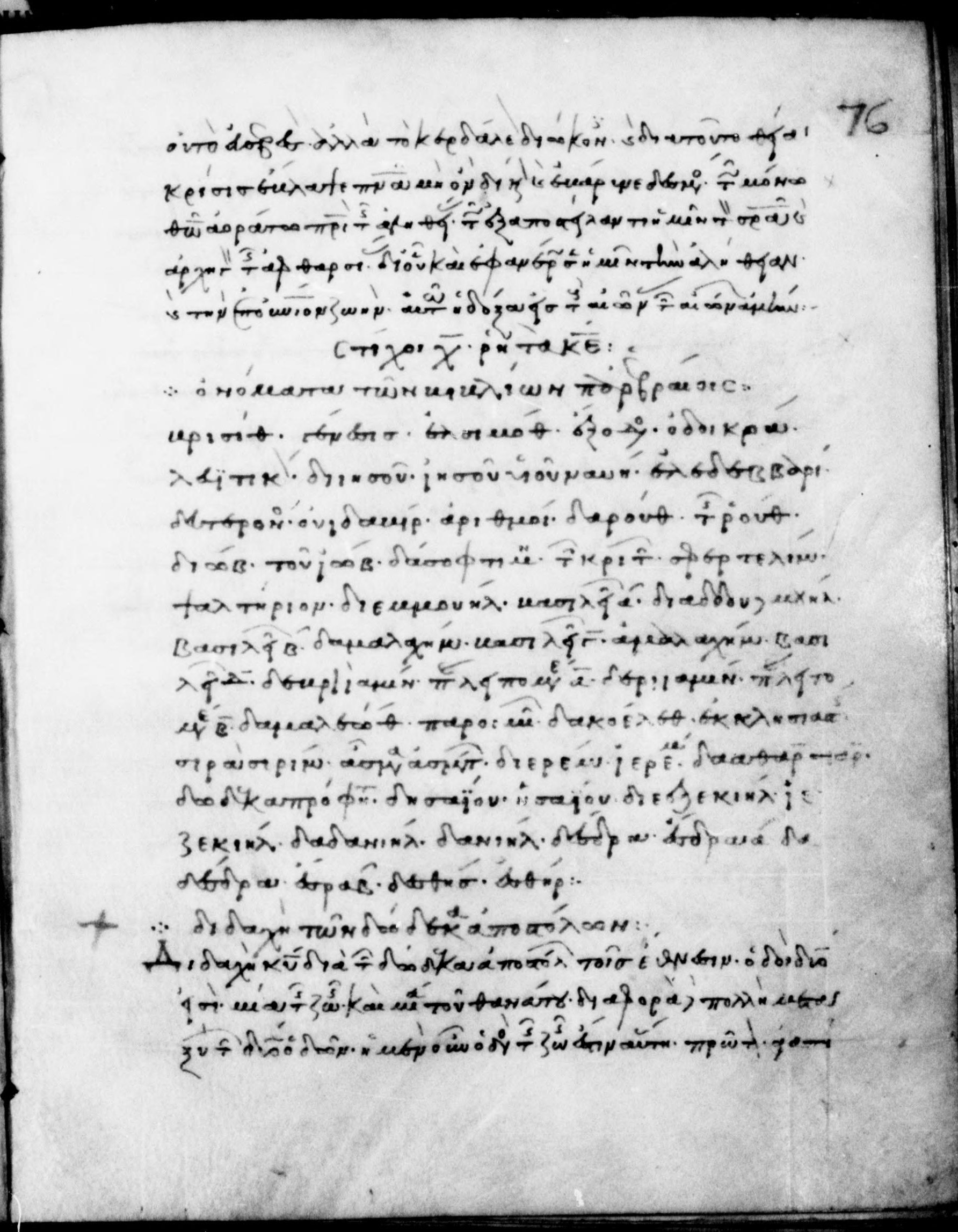
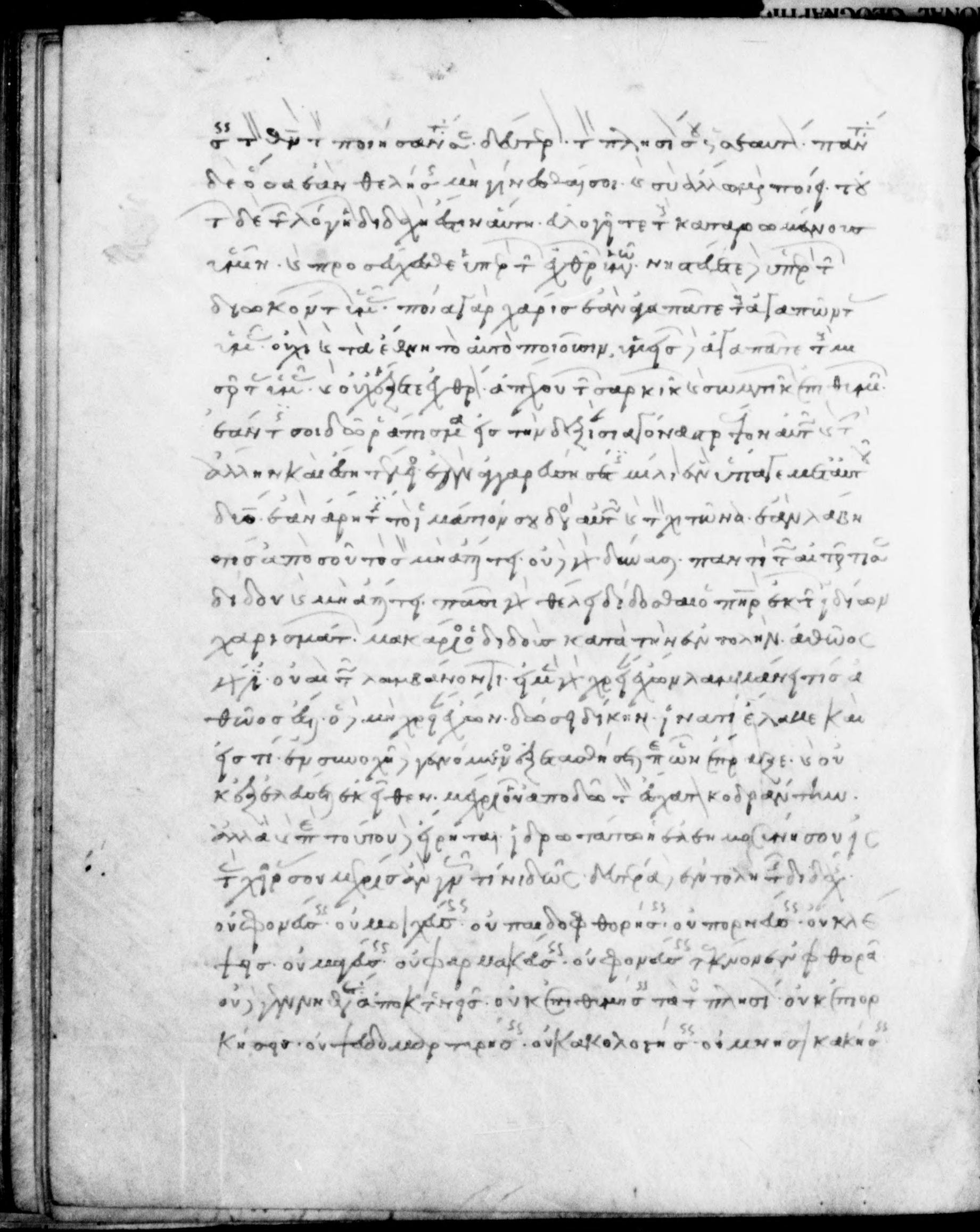
fol. 76r (LoC microfilm frame 78, right page) carries title, 1.1-1.2; checked on the image: the page begins 'Διδαχὴ τῶν δώδεκα ἀποστόλων (heading, below the end of 2 Clement and the list of Old Testament books)' and ends 'πρῶτον ἀγα[πήσεις]'; fol. 76v (LoC microfilm frame 79, left page) carries 1.2-2.3; checked on the image: the page begins '[ἀγαπή]σ(εις) τὸν θ(εὸ)ν τὸν ποιήσαντά σε· δεύτερον τὸν πλησίον σου' and ends 'οὐ κακολογήσεις· οὐ μνησικακήσ[εις]'. The Greek shown is Lake's printed text (1912), which follows this manuscript closely; the scribe's abbreviations and spellings on the page differ in small details.
Διδαχὴ κυρίου διὰ τῶν δώδεκα ἀποστόλων τοῖς ἔθνεσιν.
1Ὁδοὶ δύο εἰσί, μία τῆς ζωῆς καὶ μια τοῦ θανάτου, διαφορὰ δὲ πολλὴ μεταξὺ τῶν δύο ὁδῶν. 2Ἡ μὲν οὖν ὁδὸς τῆς ζωῆς ἐστιν αὕτη· πρῶτον ἀγαπήσεις τὸν θεὸν τὸν ποιήσαντά σε, δεύτερον τὸν πλησίον σου ὡς σεαυτόν· πάντα δὲ ὅσα ἐὰν θελήσῃς μὴ γίνεσθαί σοι, καὶ σὺ ἄλλῳ μὴ ποίει. 3Τούτων δὲ τῶν λόγων ἡ διδαχή ἐστιν αὕτη· εὐλογεῖτε τοὺς καταρωμένους ὑμῖν καὶ προσεύχεσθε ὑπὲρ τῶν ἐχθρῶν ὑμῶν, νηστεύετε δὲ ὑπὲρ τῶν διωκόντων ὑμᾶς· ποία γὰρ χάρις, ἐὰν ἀγαπᾶτε τοὺς ἀγαπῶντας ὑμᾶς; οὐχὶ καὶ τὰ ἔθνη τὸ αὐτὸ ποιοῦσιν; ὑμεῖς δὲ ἀγαπᾶτε τοὺς μισοῦντας ὑμᾶς, καὶ οὐχ ἕξετε ἐχθρόν. 4ἀπέχου τῶν σαρκικῶν καὶ σωματικῶν ἐπιθυμιῶν· ἐάν τίς σοι δῷ ῥάπισμα εἰς τὴν δεξιὰν σιαγόνα, στρέψον αὐτῷ καὶ τὴν ἄλλην, καὶ ἔσῃ τέλειος· ἐὰν ἀγγαρεύσῃ σέ τις μίλιον ἕν, ὕπαγε μετ’ αὐτοῦ δύο· ἐὰν ἄρῃ τις τὸ ἱμάτιόν σου, δὸς αὐτῷ καὶ τὸν χιτῶνα· ἐὰν λάβῃ τις ἀπὸ σοῦ τὸ σόν, μὴ ἀπαίτει· οὐδὲ γὰρ δύνασαι. 5παντὶ τῷ αἰτοῦντί σε δίδου καὶ μὴ ἀπαίτει· πᾶσι γὰρ θέλει δίδοσθαι ὁ πατὴρ ἐκ τῶν ἰδίων χαρισμάτων. μακάριος ὁ διδοὺς κατὰ τὴν ἐντολήν· ἀθῷος γάρ ἐστιν. οὐαὶ τῷ λαμβάνοντι· εἰ μὲν γὰρ χρείαν ἔχων λαμβάνει τις, ἀθῷος ἔσται· ὁ δὲ μὴ χρείαν ἔχων δώσει δίκην, ἱνατί ἔλαβε καὶ εἰς τί· ἐν συνοχῇ δὲ γενόμενος ἐξετασθήσεται περὶ ὧν ἔπραξε, καὶ οὐκ ἐξελεύσεται ἐκεῖθεν, μέχρις οὗ ἀποδῷ τὸν ἔσχατον κοδράντην. 6ἀλλὰ καὶ περὶ τούτου δὲ εἴρηται· Ἱδρωσάτω ἡ ἐλεημοσύνη σου εἰς τὰς χεῖράς σου, μέχρις ἂν γνῷς, τίνι δῷς.
There are two ways, one of life and one of death, and there is a great difference between the two ways. The way of life is this. First of all, thou shalt love the God that made thee; secondly, thy neighbour as thyself. And all things whatsoever thou wouldest not have befal thyself neither do thou unto another. Now of these words the doctrine is this. Bless them that curse you, and pray for your enemies and fast for them that persecute you; for what thank is it, if ye love them that love you? Do not even the Gentiles the same? But do ye love them that hate you, and ye shall not have an enemy. Abstain thou from fleshly and bodily lusts. If any man give thee a blow on thy right cheek, turn to him the other also, and thou shalt be perfect; if a man impress thee to go with him, one mile, go with him twain; if a man take away thy cloak, give him thy coat also; if a man take away from thee that which is thine own, ask it not back, for neither art thou able. To every man that asketh of thee give, and ask not back; for the Father desireth that gifts be given to all from His own bounties. Blessed is he that giveth according to the commandment; for he is guiltless. Woe to him that receiveth; for, if a man receiveth having need, he is guiltless; but he that hath no need shall give satisfaction why and wherefore he received; and being put in confinement he shall be examined concerning the deeds that he hath done, and he shall not come out thence until he hath given back the last farthing. Yea, as touching this also it is said; Let thine alms sweat into thine hands, until thou shalt have learnt to whom to give.
Where on the image
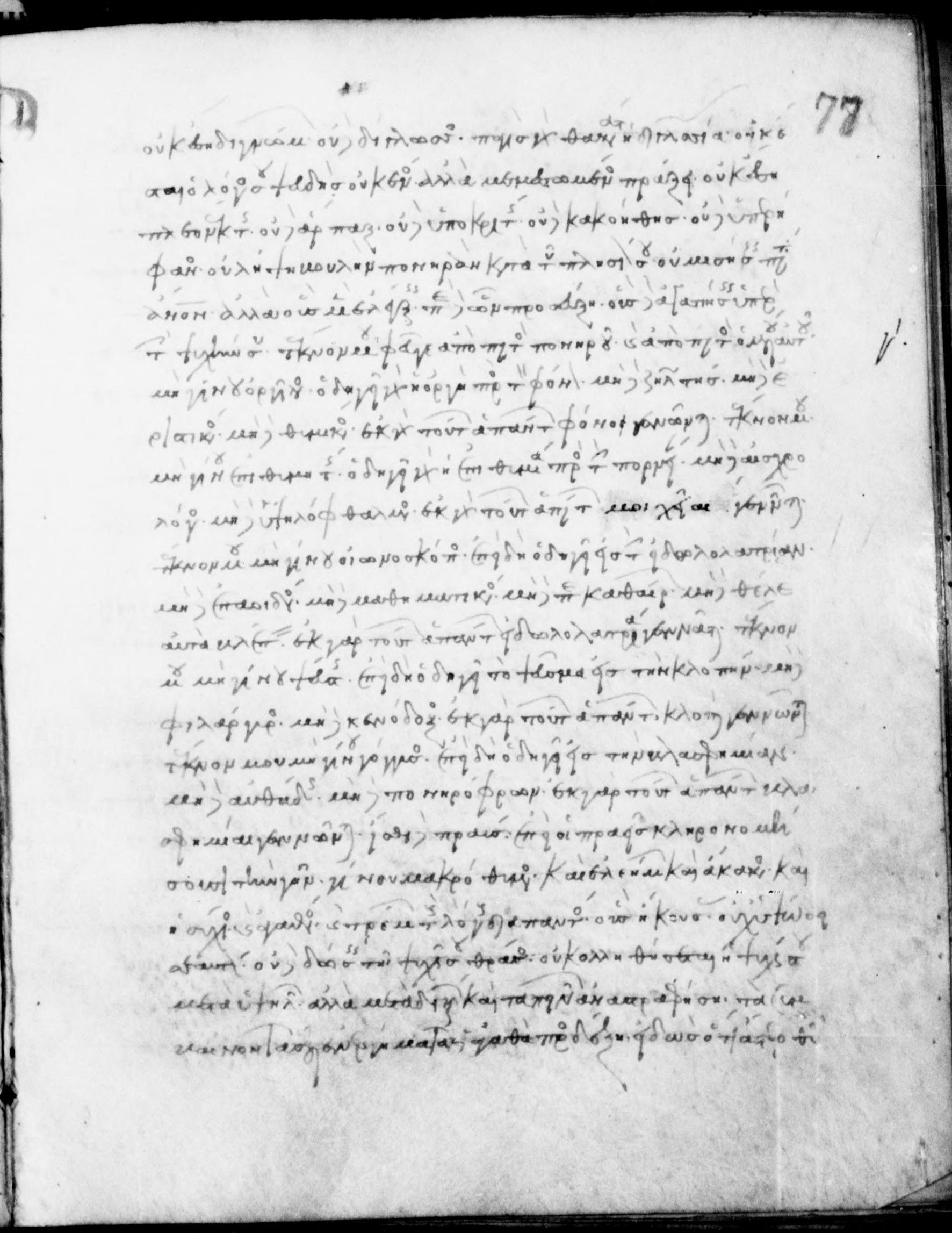
fol. 76v (LoC microfilm frame 79, left page) carries 1.2-2.3; checked on the image: the page begins '[ἀγαπή]σ(εις) τὸν θ(εὸ)ν τὸν ποιήσαντά σε· δεύτερον τὸν πλησίον σου' and ends 'οὐ κακολογήσεις· οὐ μνησικακήσ[εις]'; fol. 77r (LoC microfilm frame 79, right page) carries 2.4-3.10; checked on the image: the page begins 'οὐκ ἔσῃ διγνώμων οὐδὲ δίγλωσσος' and ends 'εἰδὼς ὅτι ἄτερ θ(εο)ῦ'. The Greek shown is Lake's printed text (1912), which follows this manuscript closely; the scribe's abbreviations and spellings on the page differ in small details.
1Δευτέρα δὲ ἐντολὴ τῆς διδαχῆς· 2οὐ φονεύσεις, οὐ μοιχεύσεις, οὐ παιδοφθορήσεις, οὐ πορνεύσεις, οὐ κλέψεις, οὐ μαγεύσεις, οὐ φαρμακεύσεις, οὐ φονεύσεις τέκνον ἐν φθορᾷ, οὐδὲ γεννηθὲν ἀποκτενεῖς, οὐκ ἐπιθυμήσεις τὰ τοῦ πλησίον. 3οὐκ ἐπιορκήσεις, οὐ ψευδομαρτυρήσεις, οὐ κακολογήσεις, οὐ μνησικακήσεις. 4οὐκ ἔσῃ διγνώμων οὐδὲ δίγλωσσος· παγὶς γὰρ θανάτου ἡ διγλωσσία. 5οὐκ ἔσται ὁ λόγος σου ψευδής, οὐ κενός, ἀλλὰ μεμεστωμένος πράξει. 6οὐκ ἔσῃ πλεονέκτης οὐδὲ ἅρπαξ οὐδὲ ὑποκριτὴς οὐδὲ κακοήθης οὐδὲ ὑπερήφανος. οὐ λήψῃ βουλὴν πονηρὰν κατὰ τοῦ πλησίον σου. 7οὐ μισήσεις πάντα ἄνθρωπον, ἀλλὰ οὓς μὲν ἐλέγξεις, περὶ δὲ ὧν προσεύξῃ, οὓς δὲ ἀγαπήσεις ὑπὲρ τὴν ψυχήν σου.
And this is the second commandment of the teaching. Thou shalt do no murder, thou shalt not commit adultery, thou shalt not corrupt boys, thou shalt not commit fornication, thou shalt not steal, thou shalt not deal in magic, thou shalt do no sorcery, thou shalt not murder a child by abortion nor kill them when born, thou shalt not covet thy neighbour's goods, thou shalt not perjure thyself, thou shalt not bear false witness, thou shalt not speak evil, thou shalt not cherish a grudge, thou shalt not be double-minded nor double-tongued; for the double tongue is a snare of death. Thy word shall not be false or empty, but fulfilled by action. Thou shalt not be avaricious nor a plunderer nor a hypocrite nor ill-tempered nor proud. Thou shalt not entertain an evil design against thy neighbour. Thou shalt not hate any man, but some thou shalt reprove, and for others thou shalt pray, and others thou shalt love more than thy life.
Where on the image
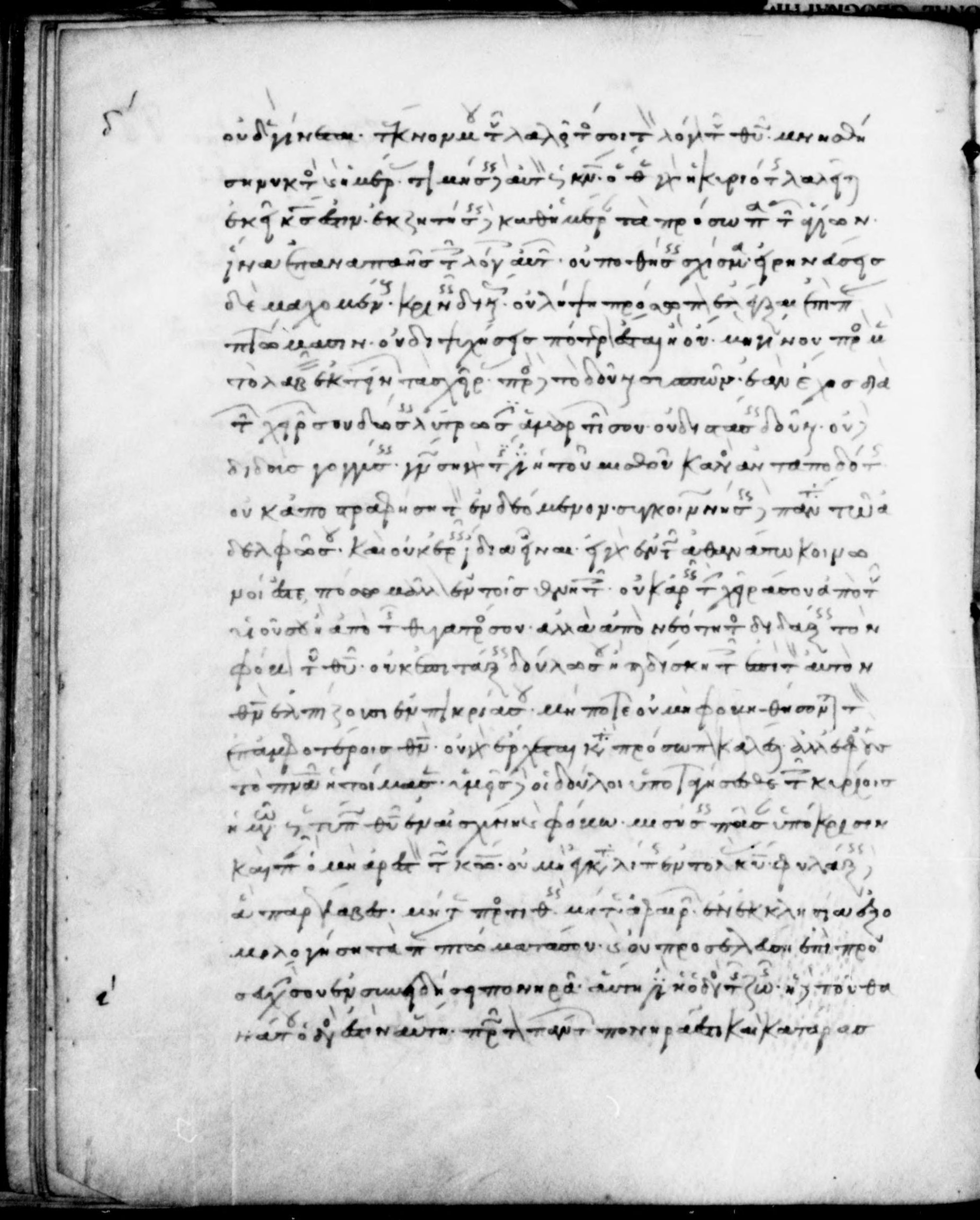
fol. 77r (LoC microfilm frame 79, right page) carries 2.4-3.10; checked on the image: the page begins 'οὐκ ἔσῃ διγνώμων οὐδὲ δίγλωσσος' and ends 'εἰδὼς ὅτι ἄτερ θ(εο)ῦ'; fol. 77v (LoC microfilm frame 80, left page) carries 3.10-5.1; checked on the image: the page begins 'οὐδὲν γίνεται· τέκνον μου, τοῦ λαλοῦντός σοι' and ends 'πρῶτον πάντων πονηρά ἐστι καὶ κατάρας'. The Greek shown is Lake's printed text (1912), which follows this manuscript closely; the scribe's abbreviations and spellings on the page differ in small details.
1Τέκνον μου, φεῦγε ἀπὸ παντὸς πονηροῦ καὶ ἀπὸ παντὸς ὁμοίου αὐτοῦ. 2μὴ γίνου ὀργίλος, ὁδηγεῖ γὰρ ἡ ὀργὴ πρὸς τὸν φόνον, μηδὲ ζηλωτὴς μηδὲ ἐριστικὸς μηδὲ θυμικός· ἐκ γὰρ τούτων ἁπάντων φόνοι γεννῶνται. 3τέκνον μου, μὴ γίνου ἐπιθυμητής, ὁδηγεῖ γὰρ ἡ ἐπιθυμία πρὸς τὴν πορνείαν, μηδὲ αἰσχρολόγος μηδὲ ὑψηλόφθαλμος· ἐκ γὰρ τούτων ἁπάντων μοιχεῖαι γεννῶνται. 4τέκνον μου, μὴ γίνου οἰωνοσκόπος, ἐπειδὴ ὁδηγεῖ εἰς τὴν εἰδωλολατρίαν, μηδὲ ἐπαοιδὸς μηδὲ μαθηματικὸς μηδὲ περικαθαίρων, μηδὲ θέλε αὐτὰ βλέπειν· ἐκ γὰρ τούτων ἁπάντων εἰδωλολατρία γεννᾶται. 5τέκνον μου, μὴ γίνου ψεύστης, ἐπειδὴ ὁδηγεῖ τὸ ψεῦσμα εἰς τὴν κλοπήν, μηδὲ φιλάργυρος μηδὲ κενόδοξος· ἐκ γὰρ τούτων ἁπάντων κλοπαὶ γεννῶνται. 6τέκνον μου, μὴ γίνου γόγγυσος, ἐπειδὴ ὁδηγεῖ εἰς τὴν βλασφημίαν, μηδὲ αὐθάδης μηδὲ πονηρόφρων· ἐκ γὰρ τούτων ἁπάντων βλασφημίαι γεννῶνται. 7ἴσθι δὲ πραΰς, ἐπεὶ οἱ πραεῖς κληρονομήσουσι τὴν γῆν. 8γίνου μακρόθυμος καὶ ἐλεήμων καὶ ἄκακος καὶ ἡσύχιος καὶ ἀγαθὸς καὶ τρέμων τοὺς λόγους διὰ παντός, οὓς ἤκουσας. 9οὐχ ὑψώσεις σεαυτὸν οὐδὲ δώσεις τῇ ψυχῇ σου θράσος. οὐ κολληθήσεται ἡ ψυχή σου μετὰ ὑψηλῶν, ἀλλὰ μετὰ δικαίων καὶ ταπεινῶν ἀναστραφήσῃ. 10τὰ συμβαίνοντά σοι ἐνεργήματα ὡς ἀγαθὰ προσδέξῃ, εἰδὼς ὅτι ἄτερ θεοῦ οὐδὲν γίνεται.
My child, flee from every evil and everything that resembleth it. Be not angry, for anger leadeth to murder, nor jealous nor contentious nor wrathful; for of all these things murders are engendered. My child, be not lustful, for lust leadeth to fornication, neither foul-speaking neither with uplifted eyes; for of all these things adulteries are engendered. My child, be no dealer in omens, since it leads to idolatry, nor an enchanter nor an astrologer nor a magician, neither be willing to look at them; for from all these things idolatry is engendered. My child, be not a liar, since lying leads to theft, neither avaricious neither vainglorious; for from all these things thefts are engendered. My child, be not a murmurer, since it leadeth to blasphemy, neither self-willed neither a thinker of evil thoughts; for from all these things blasphemies are engendered. But be meek, since the meek shall inherit the earth. Be long-suffering and pitiful and guileless and quiet and kindly and always fearing the words which thou hast heard. Thou shalt not exalt thyself, neither shalt thou admit boldness into thy soul. Thy soul shall not cleave together with the lofty, but with the righteous and humble shalt thou walk. The accidents that befal thee thou shalt receive as good, knowing that nothing is done without God.
Where on the image
fol. 77v (LoC microfilm frame 80, left page) carries 3.10-5.1; checked on the image: the page begins 'οὐδὲν γίνεται· τέκνον μου, τοῦ λαλοῦντός σοι' and ends 'πρῶτον πάντων πονηρά ἐστι καὶ κατάρας'. The Greek shown is Lake's printed text (1912), which follows this manuscript closely; the scribe's abbreviations and spellings on the page differ in small details.
1Τέκνον μου, τοῦ λαλοῦντός σοι τὸν λόγον τοῦ θεοῦ μνησθήσῃ νυκτὸς καὶ ἡμέρας, τιμήσεις δὲ αὐτὸν ὡς κύριον· ὅθεν γὰρ ἡ κυριότης λαλεῖται, ἐκεῖ κύριός ἐστιν. 2ἐκζητήσεις δὲ καθ’ ἡμέραν τὰ πρόσωπα τῶν ἁγίων, ἵνα ἐπαναπαῇς τοῖς λόγοις αὐτῶν. 3οὐ ποθήσεις σχίσμα, εἰρηνεύσεις δὲ μαχομένους· κρινεῖς δικαίως, οὐ λήψῃ πρόσωπον ἐλέγξαι ἐπὶ παραπτώμασιν. 4οὐ διψυχήσεις, πότερον ἔσται ἢ οὔ. 5Μὴ γίνου πρὸς μὲν τὸ λαβεῖν ἐκτείνων τὰς χεῖρας, πρὸς δὲ τὸ δοῦναι συσπῶν. 6ἐὰν ἔχῃς διὰ τῶν χειρῶν σου, δώσεις λύτρωσιν ἁμαρτιῶν σου. 7οὐ διστάσεις δοῦναι οὐδὲ διδοὺς γογγύσεις· γνώσῃ γάρ, τίς ἐστιν ὁ τοῦ μισθοῦ καλὸς ἀνταποδότης. 8οὐκ ἀποστραφήσῃ τὸν ἐνδεόμενον, συγκοινωνήσεις δὲ πάντα τῷ ἀδελφῷ σοῦ καὶ οὐκ ἐρεῖς ἴδια εἶναι· εἰ γὰρ ἐν τῷ ἀθανάτῳ κοινωνοί ἐστε, πόσῳ μᾶλλον ἐν τοῖς θνητοῖς; 9Οὐκ ἀρεῖς τὴν χεῖρά σου ἀπὸ τοῦ υἱοῦ σου ἢ ἀπὸ τῆς θυγατρός σου, ἀλλὰ ἀπὸ νεότητος διδάξεις τὸν φόβον τοῦ θεοῦ. 10οὐκ ἐπιτάξεις δούλῳ σου ἢ παιδίσκῃ, τοῖς ἐπὶ τὸν αὐτὸν θεὸν ἐλπίζουσιν, ἐν πικρίᾳ σου, μήποτε οὐ μὴ φοβηθήσονται τὸν ἐπ’ ἀμφοτέροις θεόν· οὐ γὰρ ἔρχεται κατὰ πρόσωπον καλέσαι, ἀλλ’ ἐφ’ οὓς τὸ πνεῦμα ἡτοίμασεν. 11ὑμεῖς δὲ οἱ δοῦλοι ὑποταγήσεσθε τοῖς κυρίοις ὑμῶν ὡς τύπῳ θεοῦ ἐν αἰσχύνῃ καὶ φόβῳ. 12Μισήσεις πᾶσαν ὑπόκρισιν καὶ πᾶν ὃ μὴ ἀρεστὸν τῷ κυρίῳ. 13οὐ μὴ ἐγκαταλίπῃς ἐντολὰς κυρίου, φυλάξεις δὲ ἃ παρέλαβες, μήτε προστιθεὶς μήτε ἀφαιρῶν. 14ἐν ἐκκλησίᾳ ἐξομολογήσῃ τὰ παραπτώματά σου, καὶ οὐ προσελεύσῃ ἐπὶ προσευχήν σου ἐν συνειδήσει πονηρᾷ· αὕτη ἐστὶν ἡ ὁδὸς τῆς ζωῆς.
My child, thou shalt remember him that speaketh unto thee the word of God night and day, and shalt honour him as the Lord; for whencesoever the Lordship speaketh, there is the Lord. Moreover thou shalt seek out day by day the persons of the saints, that thou mayest find rest in their words. Thou shalt not make a schism, but thou shalt pacify them that contend; thou shalt judge righteously, thou shalt not make a difference in a person to reprove him for transgressions. Thou shalt not doubt whether a thing shall be or not be. Be not thou found holding out thy hands to receive, but drawing them in as to giving. If thou hast ought passing through thy hands, thou shalt give a ransom for thy sins. Thou shalt not hesitate to give, neither shalt thou murmur when giving; for thou shalt know who is the good paymaster of thy reward. Thou shalt not turn away from him that is in want, but shalt make thy brother partaker in all things, and shalt not say that anything is thine own. For if ye are fellow-partakers in that which is imperishable, how much rather in the things which are perishable? Thou shalt not withhold thy hand from thy son or from thy daughter, but from their youth thou shalt teach them the fear of God. Thou shalt not command thy bondservant or thine handmaid in thy bitterness, who trust in the same God as thyself, lest haply they should cease to fear the God who is over both of you; for He cometh, not to call men with respect of persons, but He cometh to those whom the Spirit hath prepared. But ye, servants, shall be subject unto your masters, as to a type of God, in shame and fear. ®LA1¯4:16 Thou shalt hate all hypocrisy, and everything that is not pleasing to the Lord. Thou shalt never forsake the commandments of the Lord; but shalt keep those things which thou hast received, neither adding to them nor taking away from them. In church thou shalt confess thy transgressions, and shalt not betake thyself to prayer with an evil conscience. This is the way of life.
Where on the image
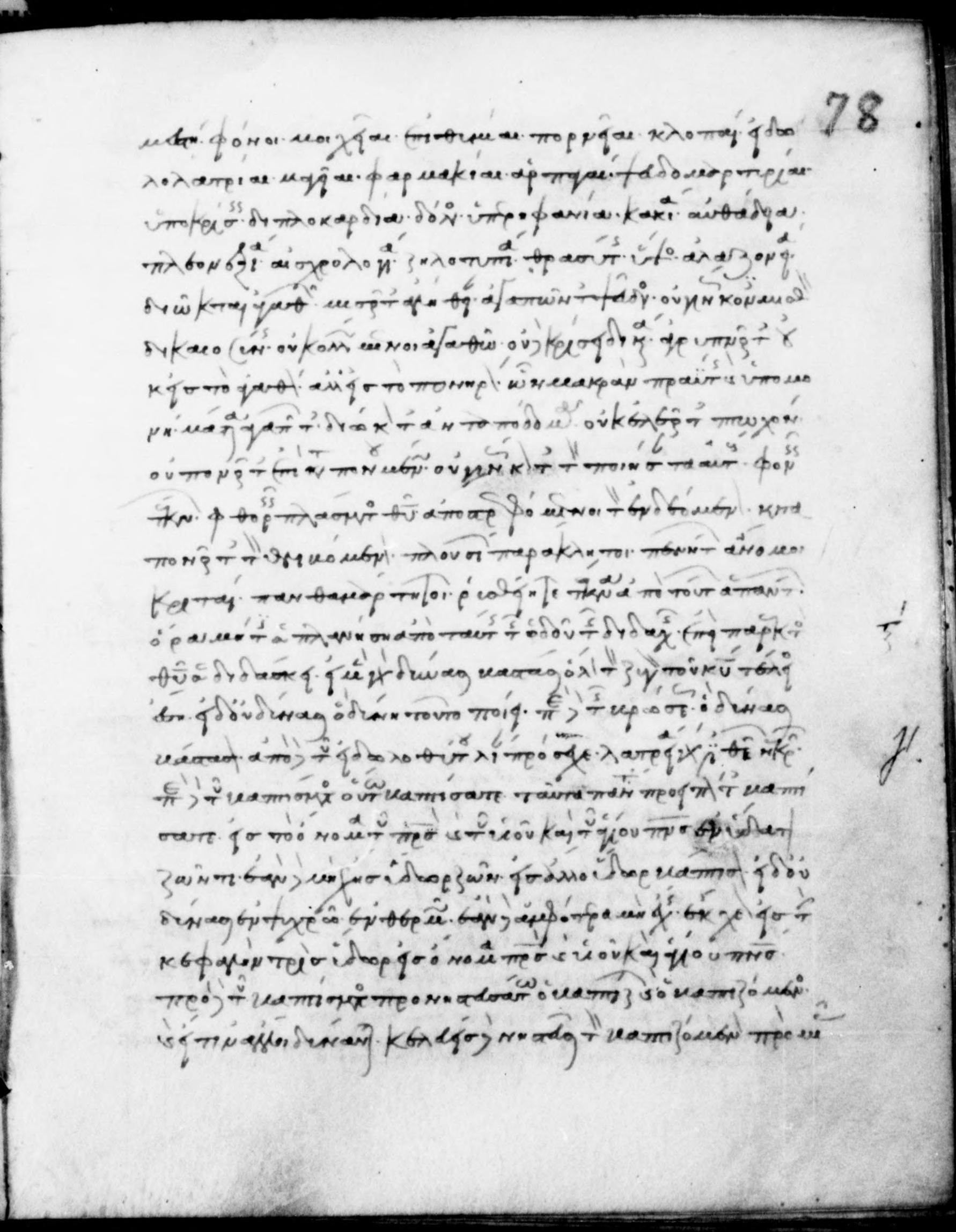
fol. 77v (LoC microfilm frame 80, left page) carries 3.10-5.1; checked on the image: the page begins 'οὐδὲν γίνεται· τέκνον μου, τοῦ λαλοῦντός σοι' and ends 'πρῶτον πάντων πονηρά ἐστι καὶ κατάρας'; fol. 78r (LoC microfilm frame 80, right page) carries 5.1-7.4; checked on the image: the page begins 'μεστή· φόνοι, μοιχεῖαι, ἐπιθυμίαι' and ends 'κελεύεις δὲ νηστεῦσαι τὸν βαπτιζόμενον πρὸ μι[ᾶς]'. The Greek shown is Lake's printed text (1912), which follows this manuscript closely; the scribe's abbreviations and spellings on the page differ in small details.
1Ἡ δὲ τοῦ θανάτου ὁδός ἐστιν αὕτη· πρῶτον πάντων πονηρά ἐστι καὶ κατάρας μεστή· φόνοι, μοιχεῖαι, ἐπιθυμίαι, πορνεῖαι, κλοπαί, εἰδωλολατρίαι, μαγεῖαι, φαρμακίαι, ἁρπαγαί, ψευδομαρτυρίαι, ὑποκρίσεις, διπλοκαρδία, δόλος, ὑπερηφανία, κακία, αὐθάδεια, πλεονεξία, αἰσχρολογία, ζηλοτυπία, θρασύτης, ὕψος, ἀλαζονεία. 2διῶκται ἀγαθῶν, μισοῦντες ἀλήθειαν, ἀγαπῶντες ψεῦδος, οὐ γινώσκοντες μισθὸν δικαιοσύνης, οὐ κολλώμενοι ἀγαθῷ οὐδὲ κρίσει δικαίᾳ, ἀγρυπνοῦντες οὐκ εἰς τὸ ἀγαθόν, ἀλλ’ εἰς τὸ πονηρόν· ὧν μακρὰν πραΰτης καὶ ὑπομονή, μάταια ἀγαπῶντες, διώκοντες ἀνταπόδομα, οὐκ ἐλεοῦντες πτωχόν, οὐ πονοῦντες ἐπὶ καταπονουμένῳ, οὐ γινώσκοντες τὸν ποιήσαντα αὐτούς, φονεῖς τέκνων, φθορεῖς πλάσματος θεοῦ, ἀποστρεφόμενοι τὸν ἐνδεόμενον, καταπονοῦντες τὸν θλιβόμενον, πλουσίων παράκλητοι, πενήτων ἄνομοι κριταί, πανθαμάρτητοι· ῥυσθείητε, τέκνα, ἀπὸ τούτωι ἁπάντων.
But the way of death is this. First of all, it is evil and full of a curse murders, adulteries, lusts, fornications, thefts, idolatries, magical arts, witchcrafts, plunderings, false witnessings, hypocrisies, doubleness of heart, treachery, pride, malice, stubbornness, covetousness, foul-speaking, jealousy, boldness, exaltation, boastfulness; persecutors of good men, hating truth, loving a lie, not perceiving the reward of righteousness, not cleaving to the good nor to righteous judgment, wakeful not for that which is good but for that which is evil; from whom gentleness and forbearance stand aloof; loving vain things, pursuing a recompense, not pitying the poor man, not toiling for him that is oppressed with toil, not recognizing Him that made them, murderers of children, corrupters of the creatures of God, turning away from him that is in want, oppressing him that is afflicted, advocates of the wealthy, unjust judges of the poor, altogether sinful. May ye be delivered, my children, from all these things.
Where on the image
fol. 78r (LoC microfilm frame 80, right page) carries 5.1-7.4; checked on the image: the page begins 'μεστή· φόνοι, μοιχεῖαι, ἐπιθυμίαι' and ends 'κελεύεις δὲ νηστεῦσαι τὸν βαπτιζόμενον πρὸ μι[ᾶς]'. The Greek shown is Lake's printed text (1912), which follows this manuscript closely; the scribe's abbreviations and spellings on the page differ in small details.
1Ὅρα, μή τίς σε πλανήσῃ ἀπὸ ταύτης τῆς ὁδοῦ τῆς διδαχῆς, ἐπεὶ παρεκτὸς θεοῦ σε διδάσκει. 2εἰ μὲν γὰρ δύνασαι βαστάσαι ὅλον τὸν ζυγὸν τοῦ κυρίου, τέλειος ἔσῃ· εἰ δ’ οὐ δύνασαι, ὃ δύνῃ, τοῦτο ποίει. 3περὶ δὲ τῆς βρώσεως, ὃ δύνασαι βάστασον· ἀπὸ δὲ τοῦ εἰδωλοθύτου λίαν πρόσεχε· λατρεία γάρ ἐστι θεῶν νεκρῶν.
See lest any man lead you astray from this way of righteousness, for he teacheth thee apart from God. For if thou art able to bear the whole yoke of the Lord, thou shalt be perfect; but if thou art not able, do that which thou art able. But concerning eating, bear that which thou art able; yet abstain by all means from meat sacrificed to idols; for it is the worship of dead gods.
Where on the image
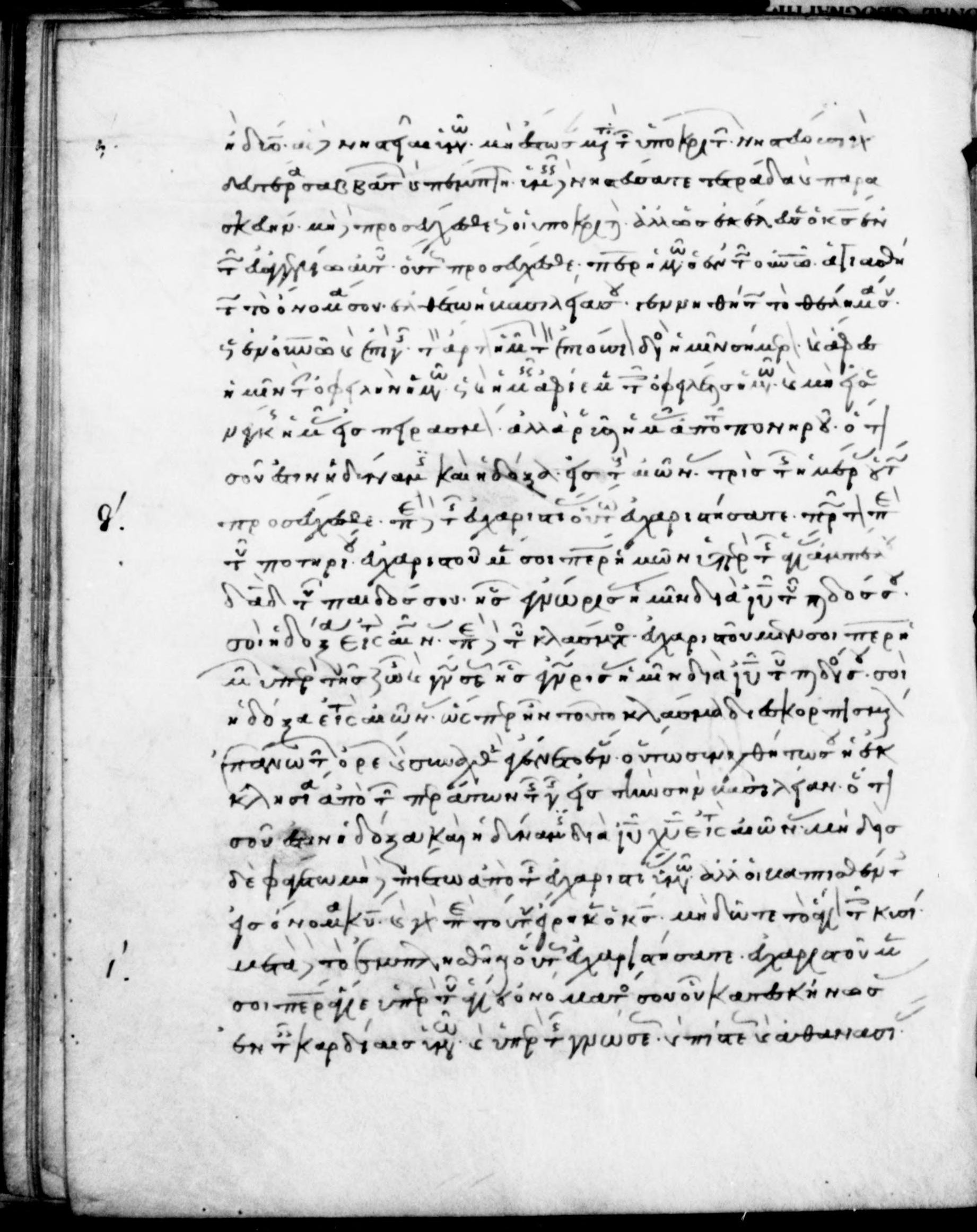
fol. 78r (LoC microfilm frame 80, right page) carries 5.1-7.4; checked on the image: the page begins 'μεστή· φόνοι, μοιχεῖαι, ἐπιθυμίαι' and ends 'κελεύεις δὲ νηστεῦσαι τὸν βαπτιζόμενον πρὸ μι[ᾶς]'; fol. 78v (LoC microfilm frame 81, left page) carries 7.4-10.2; checked on the image: the page begins 'ἢ δύο. αἱ δὲ νηστεῖαι ὑμῶν μὴ ἔστωσαν' and ends 'καὶ ὑπὲρ τῆς γνώσεως καὶ πίστεως καὶ ἀθανασί[ας]'. The Greek shown is Lake's printed text (1912), which follows this manuscript closely; the scribe's abbreviations and spellings on the page differ in small details.
1Περὶ δὲ τοῦ βαπτίσματος, οὕτω βαπτίσατε· ταῦτα πάντα προειπόντες, βαπτίσατε εἰς τὸ ὄνομα τοῦ πατρὸς καὶ τοῦ υἱοῦ καὶ τοῦ ἁγίου πνεύματος ἐν ὕδατι ζῶντι. 2ἐὰν δὲ μὴ ἔχῃς ὕδωρ ζῶν, εἰς ἄλλο ὕδωρ βάπτισον· εἰ δ’ οὐ δύνασαι ἐν ψυχρῷ, ἐν θερμῷ. 3ἐὰν δὲ ἀμφότερα μὴ ἔχῃς, ἔκχεον εἰς τὴν κεφαλὴν τρὶς ὕδωρ εἰς ὄνομα πατρὸς καὶ υἱοῦ καὶ ἁγίου πνεύματος. 4πρὸ δὲ τοῦ βαπτίσματος προνηστευσάτω ὁ βαπτίζων καὶ ὁ βαπτιζόμενος καὶ εἴ τινες ἄλλοι δύνανται· κελεύεις δὲ νηστεῦσαι τὸν βαπτιζόμενον πρὸ μιᾶς ἢ δύο.
But concerning baptism, thus shall ye baptize. Having first recited all these things, baptize in the name of the Father and of the Son and of the Holy Spirit in living (running) water. But if thou hast not living water, then baptize in other water; and if thou art not able in cold, then in warm. But if thou hast neither, then pour water on the head thrice in the name of the Father and of the Son and of the Holy Spirit. But before the baptism let him that baptizeth and him that is baptized fast, and any others also who are able; and thou shalt order him that is baptized to fast a day or two before.
Where on the image
fol. 78v (LoC microfilm frame 81, left page) carries 7.4-10.2; checked on the image: the page begins 'ἢ δύο. αἱ δὲ νηστεῖαι ὑμῶν μὴ ἔστωσαν' and ends 'καὶ ὑπὲρ τῆς γνώσεως καὶ πίστεως καὶ ἀθανασί[ας]'. The Greek shown is Lake's printed text (1912), which follows this manuscript closely; the scribe's abbreviations and spellings on the page differ in small details.
1Αἱ δὲ νηστεῖαι ὑμῶν μὴ ἔστωσαν μετὰ τῶν ὑποκριτῶν. νηστεύουσι γὰρ δευτέρᾳ σαββάτων καὶ πέμπτῃ· ὑμεῖς δὲ νηστεύσατε τετράδα καὶ παρασκευήν. 2μηδὲ προσεύχεσθε ὡς οἱ ὑποκριταί, ἀλλ’ ὡς ἐκέλευσεν ὁ κύριος ἐν τῷ εὐαγγελίῳ αὐτοῦ, οὕτω προσεύχεσθε· Πάτερ ἡμῶν ὁ ἐν τῷ οὐρανῷ, ἁγιασθήτω τὸ ὄνομά σου, ἐλθέτω ἡ βασιλεία σου, γενηθήτω τὸ θέλημά σου ὡς ἐν οὐρανῷ καὶ ἐπὶ γῆς· τὸν ἄρτον ἡμῶν τὸν ἐπιούσιον δὸς ἡμῖν σήμερον, καὶ ἄφες ἡμῖν τὴν ὀφειλὴν ἡμῶν, ὡς καὶ ἡμεῖς ἀφίεμεν τοῖς ὀφειλέταις ἡμῶν, καὶ μὴ εἰσενέγκῃς ἡμᾶς εἰς πειρασμόν, ἀλλὰ ῥῦσαι ἡμᾶς ἀπὸ τοῦ πονηροῦ· ὅτι σοῦ ἐστιν ἡ δύναμις καὶ ἡ δόξα εἰς τοὺς αἰῶνας. 3τρὶς τῆς ἡμέρας οὕτω προσεύχεσθε.
And let not your fastings be with the hypocrites, for they fast on the second and the fifth day of the week; but do ye keep your fast on the fourth and on the preparation (the sixth) day. Neither pray ye as the hypocrites, but as the Lord commanded in His Gospel, thus pray ye. Our Father, which art in heaven, hallowed be Thy name; Thy kingdom come; Thy will be done, as in heaven, so also on earth; give us this day our daily bread; and forgive us our debt, as we also forgive our debtors; and lead us not into temptation, but deliver us from the evil one; for Thine is the power and the glory for ever and ever. Three times in the day pray ye so.
Where on the image
fol. 78v (LoC microfilm frame 81, left page) carries 7.4-10.2; checked on the image: the page begins 'ἢ δύο. αἱ δὲ νηστεῖαι ὑμῶν μὴ ἔστωσαν' and ends 'καὶ ὑπὲρ τῆς γνώσεως καὶ πίστεως καὶ ἀθανασί[ας]'. The Greek shown is Lake's printed text (1912), which follows this manuscript closely; the scribe's abbreviations and spellings on the page differ in small details.
1Περὶ δὲ τῆς εὐχαριστίας, οὕτως εὐχαριστήσατε· 2πρῶτον περὶ τοῦ ποτηρίου· Εὐχαριστοῦμέν σοι, πάτερ ἡμῶν, ὑπὲρ τῆς ἁγίας ἀμπέλου Δαυεὶδ τοῦ παιδός σου, ἧς ἐγνώρισας ἡμῖν διὰ Ἰησοῦ τοῦ παιδός σου· σοὶ ἡ δόξα εἰς τοὺς αἰῶνας. 3περὶ δὲ τοῦ κλάσματος· Εὐχαριστοῦμέν σοι, πάτερ ἡμῶν, ὑπὲρ τῆς ζωῆς καὶ γνώσεως, ἧς ἐγνώρισας ἡμῖν διὰ Ἰησοῦ τοῦ παιδός σου. σοὶ ἡ δόξα εἰς τοὺς αἰῶνας. 4ὥσπερ ἦν τοῦτο τὸ κλάσμα διεσκορπισμένον ἐπάνω τῶν ὀρέων καὶ συναχθὲν ἐγένετο ἕν, οὕτω συναχθήτω σου ἡ ἐκκλησία ἀπὸ τῶν περάτων τῆς γῆς εἰς τὴν σὴν βασιλείαν. ὅτι σοῦ ἐστιν ἡ δόξα καὶ ἡ δύναμις διὰ Ἰησοῦ Χριστοῦ εἰς τοὺς αἰῶνας. 5μηδεὶς δὲ φαγέτω μηδὲ πιέτω ἀπὸ τῆς εὐχαριστίας ὑμῶν, ἀλλ’ οἱ βαπτισθέντες εἰς ὄνομα κυρίου· καὶ γὰρ περὶ τούτου εἴρηκεν ὁ κύριος· Μὴ δῶτε τὸ ἅγιον τοῖς κυσί.
But as touching the eucharistic thanksgiving give ye thanks thus. First, as regards the cup: We give Thee thanks, O our Father, for the holy vine of Thy son David, which Thou madest known unto us through Thy Son Jesus; Thine is the glory for ever and ever. Then as regards the broken bread: We give Thee thanks, O our Father, for the life and knowledge which Thou didst make known unto us through Thy Son Jesus; Thine is the glory for ever and ever. As this broken bread was scattered upon the mountains and being gathered together became one, so may Thy Church be gathered together from the ends of the earth into Thy kingdom; for Thine is the glory and the power through Jesus Christ for ever and ever. But let no one eat or drink of this eucharistic thanksgiving, but they that have been baptized into the name of the Lord; for concerning this also the Lord hath said: Give not that which is holy to the dogs.
Where on the image
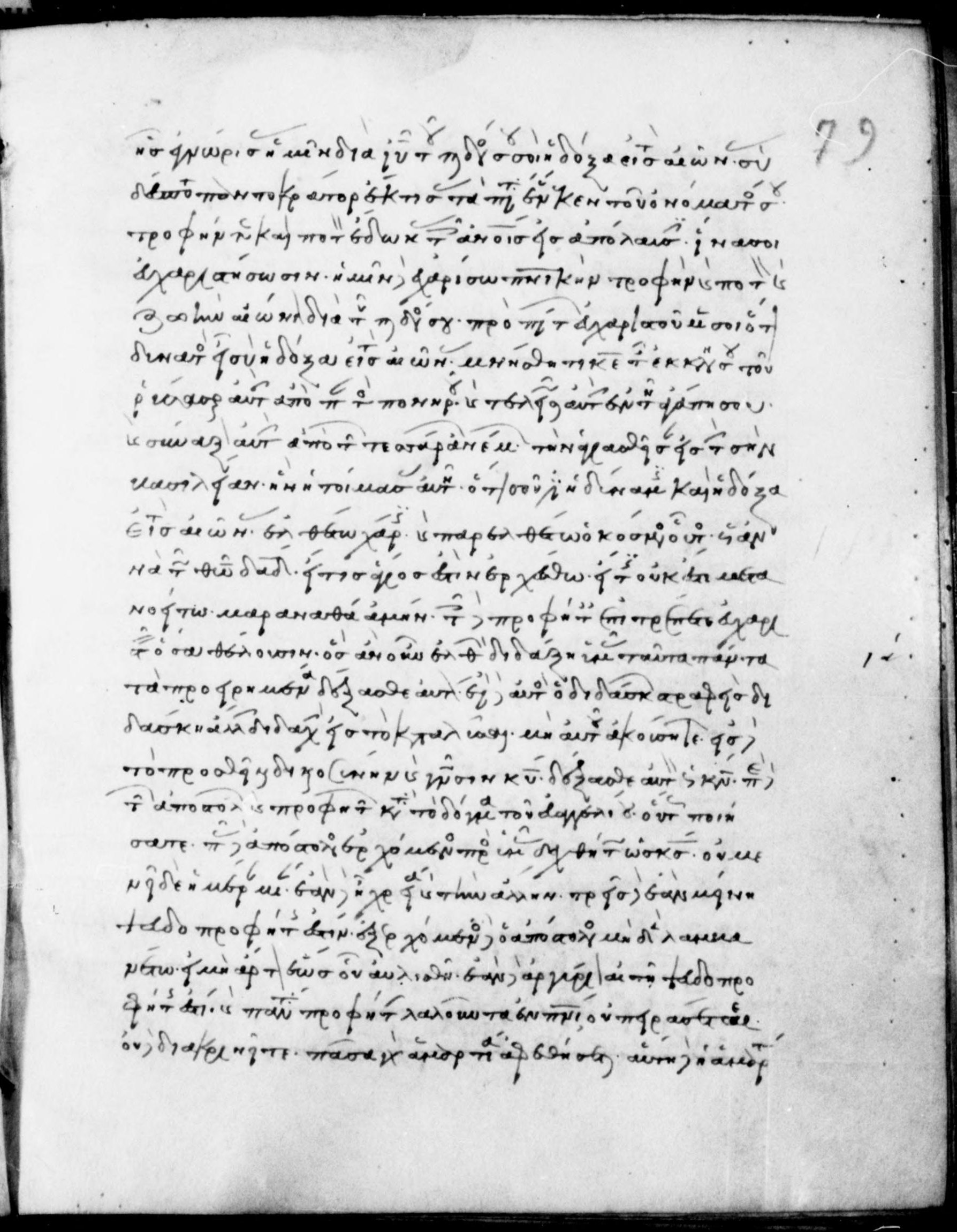
fol. 78v (LoC microfilm frame 81, left page) carries 7.4-10.2; checked on the image: the page begins 'ἢ δύο. αἱ δὲ νηστεῖαι ὑμῶν μὴ ἔστωσαν' and ends 'καὶ ὑπὲρ τῆς γνώσεως καὶ πίστεως καὶ ἀθανασί[ας]'; fol. 79r (LoC microfilm frame 81, right page) carries 10.2-11.7; checked on the image: the page begins 'ἧς ἐγνώρισας ἡμῖν διὰ Ἰ(ησο)ῦ τοῦ παιδός σου' and ends 'αὕτη δὲ ἡ ἁμαρ[τία]'. The Greek shown is Lake's printed text (1912), which follows this manuscript closely; the scribe's abbreviations and spellings on the page differ in small details.
1Μετὰ δὲ τὸ ἐμπλησθῆναι οὕτως εὐχαριστήσατε· 2Εὐχαριστοῦμέν σοι, πάτερ ἅγιε, ὑπὲρ τοῦ ἁγίου ὀνόματός σου, οὗ κατεσκήνωσας ἐν ταῖς καρδίαις ἡμῶν, καὶ ὑπὲρ τῆς γνώσεως καὶ πίστεως καὶ ἀθανασίας, ἧς ἐγνώρισας ἡμῖν διὰ Ἰησοῦ τοῦ παιδός σου· σοὶ ἡ δόξα εἰς τοὺς αἰῶνας. 3σύ, δέσποτα παντοκράτορ, ἔκτισας τὰ πάντα ἕνεκεν τοῦ ὀνόματός σου, τροφήν τε καὶ ποτὸν ἔδωκας τοῖς ἀνθρώποις εἰς ἀπόλαυσιν, ἵνα σοι εὐχαριστήσωσιν, ἡμῖν δὲ ἐχαρίσω πνευματικὴν τροφὴν καὶ ποτὸν καὶ ζωὴν αἰώνιον διὰ τοῦ παιδός σου. 4πρὸ πάντων εὐχαριστοῦμέν σοι, ὅτι δυνατὸς εἶ; σοὶ ἡ δόξα εἰς τοὺς αἰῶνας. 5μνήσθητι, κύριε, τῆς ἐκκλησίας σου, τοῦ ῥύσασθαι αὐτὴν ἀπὸ παντὸς πονηροῦ καὶ τελειῶσαι αὐτὴν ἐν τῇ ἀγάπῃ σου, καὶ σύναξον αὐτὴν ἀπὸ τῶν τεσσάρων ἀνέμων, τὴν ἁγιασθεῖσαν, εἰς τὴν σὴν βασιλείαν, ἣν ἡτοίμασας αὐτῇ· ὅτι σοῦ ἐστιν ἡ δύναμις καὶ ἡ δόξα εἰς τοὺς αἰῶνας. 6ἐλθέτω χάρις καὶ παρελθέτω ὁ κόσμος οὗτος. Ὡσαννὰ τῷ θεῷ Δαυείδ. εἴ τις ἅγιός ἐστιν, ἐρχέσθω· εἴ τις οὐκ ἔστι, μετανοείτω· μαρὰν ἀθά· ἀμήν. 7τοῖς δὲ προφήταις ἐπιτρέπετε εὐχαριστεῖν ὅσα θέλουσιν.
And after ye are satisfied thus give ye thanks: We give Thee thanks, Holy Father, for Thy holy name, which Thou hast made to tabernacle in our hearts, and for the knowledge and faith and immortality, which Thou hast made known unto us through Thy Son Jesus; Thine is the glory for ever and ever. Thou, Almighty Master, didst create all things for Thy name's sake, and didst give food and drink unto men for enjoyment, that they might render thanks to Thee; but didst bestow upon us spiritual food and drink and eternal life through Thy Son. Before all things we give Thee thanks that Thou art powerful; Thine is the glory for ever and ever. Remember, Lord, Thy Church to deliver it from all evil and to perfect it in Thy love; and gather it together from the four winds--even the Church which has been sanctified--into Thy kingdom which Thou hast prepared for it; for Thine is the power and the glory for ever and ever. May grace come and may this world pass away. Hosanna to the God of David. If any man is holy, let him come; if any man is not, let him repent. Maran Atha. Amen. But permit the prophets to offer thanksgiving as much as they desire.
Where on the image
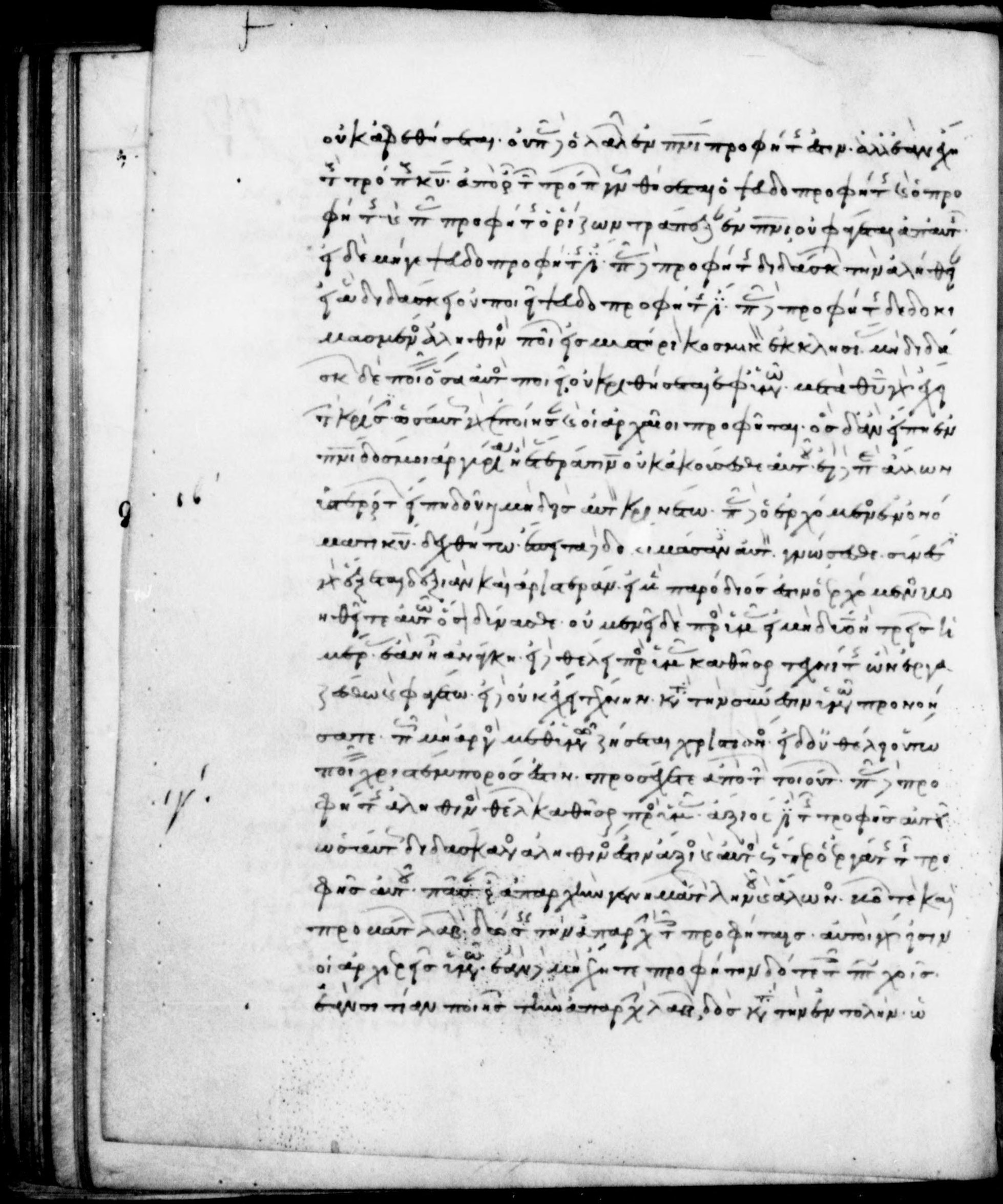
fol. 79r (LoC microfilm frame 81, right page) carries 10.2-11.7; checked on the image: the page begins 'ἧς ἐγνώρισας ἡμῖν διὰ Ἰ(ησο)ῦ τοῦ παιδός σου' and ends 'αὕτη δὲ ἡ ἁμαρ[τία]'; fol. 79v (LoC microfilm frame 82, left page) carries 11.7-13.6; checked on the image: the page begins 'οὐκ ἀφεθήσεται. οὐ πᾶς δὲ ὁ λαλῶν ἐν πνεύματι' and ends 'δὸς κατὰ τὴν ἐντολήν. ὡ[σαύτως]'. The Greek shown is Lake's printed text (1912), which follows this manuscript closely; the scribe's abbreviations and spellings on the page differ in small details.
1Ὃς ἂν οὖν ἐλθὼν διδάξῃ ὑμᾶς ταῦτα πάντα τὰ προειρημένα, δέξασθε αὐτόν· 2ἐὰν δὲ αὐτὸς ὁ διδάσκων στραφεὶς διδάσκῃ ἄλλην διδαχὴν εἰς τὸ καταλῦσαι, μὴ αὐτοῦ ἀκούσητε· εἰς δὲ τὸ προσθεῖναι δικαιοσύνην καὶ γνῶσιν κυρίου, δέξασθε αὐτὸν ὡς κύριον. 3Περὶ δὲ τῶν ἀποστόλων καὶ προφητῶν, κατὰ τὸ δόγμα τοῦ εὐαγγελίου οὕτω ποιήσατε. 4πᾶς δὲ ἀπόστολος ἐρχόμενος πρὸς ὑμᾶς δεχθήτω ὡς κύριος· 5οὐ μενεῖ δὲ εἰ μὴ ἡμέραν μίαν· ἐὰν δὲ ᾖ χρεία, καὶ τὴν ἄλλην· τρεῖς δὲ ἐὰν μείνῃ, ψευδοπροφήτης ἐστίν. 6ἐξερχόμενος δὲ ὁ ἀπόστολος μηδὲν λαμβανέτω εἰ μὴ ἄρτον, ἕως οὗ αὐλισθῇ· ἐὰν δὲ ἀργύριον αἰτῇ, ψευδοπροφήτης ἐστί. 7Καὶ πάντα προφήτην λαλοῦντα ἐν πνεύματι οὐ πειράσετε οὐδὲ διακρινεῖτε· πᾶσα γὰρ ἁμαρτία ἀφεθήσεται, αὕτη δὲ ἡ ἁμαρτία οὐκ ἀφεθήσεται. 8οὐ πᾶς δὲ ὁ λαλῶν ἐν πνεύματι προφήτης ἐστίν, ἀλλ’ ἐὰν ἔχῃ τοὺς τρόπους κυρίου. ἀπὸ οὖν τῶν τρόπων γνωσθήσεται ὁ ψευδοπροφήτης καὶ ὁ προφήτης. 9καὶ πᾶς προφήτης ὁρίζων τράπεζαν ἐν πνεύματι οὐ φάγεται ἀπ’ αὐτῆς, εἰ δὲ μήγε ψευδοπροφήτης ἐστί. 10πᾶς δὲ προφήτης διδάσκων τὴν ἀλήθειαν, εἰ ἃ διδάσκει οὐ ποιεῖ, ψευδοπροφήτης ἐστί. 11πᾶς δὲ προφήτης δεδοκιμασμένος, ἀληθινός, ποιῶν εἰς μυστήριον κοσμικὸν ἐκκλησίας, μὴ διδάσκων δὲ ποιεῖν, ὅσα αὐτὸς ποιεῖ, οὐ κριθήσεται ἐφ’ ὑμῶν· μετὰ θεοῦ γὰρ ἔχει τὴν κρίσιν· ὡσαύτως γὰρ ἐποίησαν καὶ οἱ ἀρχαῖοι προφῆται. 12ὃς δ’ ἂν εἴπῃ ἐν πνεύματι· δός μοι ἀργύρια ἢ ἕτερά τινα, οὐκ ἀκούσεσθε αὐτοῦ· ἐὰν δὲ περὶ ἄλλων ὑστερούντων εἴπῃ δοῦναι, μηδεὶς αὐτὸν κρινέτω.
Whosoever therefore shall come and teach you all these things that have been said before, receive him; but if the teacher himself be perverted and teach a different doctrine to the destruction thereof, hear him not; but if to the increase of righteousness and the knowledge of the Lord, receive him as the Lord. But concerning the apostles and prophets, so do ye according to the ordinance of the Gospel. Let every apostle, when he cometh to you, be received as the Lord; but he shall not abide more than a single day, or if there be need, a but if he abide three days, he is a false prophet. And when he departeth let the apostle receive nothing save bread, until he findeth shelter; but if he ask money, he is a false prophet. And any prophet speaking in the Spirit ye shall not try neither discern; for every sin shall be forgiven, but this sin shall not be forgiven. Yet not every one that speaketh in the Spirit is a prophet, but only if he have the ways of the Lord. From his ways therefore the false prophet and the prophet shall be recognized. And no prophet when he ordereth a table in the Spirit shall eat of it; otherwise he is a false prophet. And every prophet teaching the truth, if he doeth not what he teacheth, is a false prophet. And every prophet approved and found true, if he doeth ought as an outward mystery typical of the Church, and yet teacheth you not to do all that he himself doeth, shall not be judged before you; he hath his judgment in the presence of God; for in like manner also did the prophets of old time. And whosoever shall say in the Spirit, Give me silver or anything else, ye shall not listen to him; but if he tell you to give on behalf of others that are in want, let no man judge him.
Where on the image
fol. 79v (LoC microfilm frame 82, left page) carries 11.7-13.6; checked on the image: the page begins 'οὐκ ἀφεθήσεται. οὐ πᾶς δὲ ὁ λαλῶν ἐν πνεύματι' and ends 'δὸς κατὰ τὴν ἐντολήν. ὡ[σαύτως]'. The Greek shown is Lake's printed text (1912), which follows this manuscript closely; the scribe's abbreviations and spellings on the page differ in small details.
1Πᾶς δὲ ὁ ἐρχόμενος ἐν ὀνόματι κυρίου δεχθήτω· ἔπειτα δὲ δοκιμάσαντες αὐτὸν γνώσεσθε, σύνεσιν γὰρ ἕξετε δεξιὰν καὶ ἀριστεράν. 2εἰ μὲν παρόδιός ἐστιν ὁ ἐρχόμενος, βοηθεῖτε αὐτῷ, ὅσον δύνασθε· οὐ μενεῖ δὲ πρὸς ὑμᾶς εἰ μὴ δύο ἢ τρεῖς ἡμέρας, ἐὰν ᾖ ἀνάγκη. 3εἰ δὲ θέλει πρὸς ὑμᾶς καθῆσθαι, τεχνίτης ὤν, ἐργαζέσθω καὶ φαγέτω. 4εἰ δὲ οὐκ ἔχει τέχνην, κατὰ τὴν σύνεσιν ὑμῶν προνοήσατε, πῶς μὴ ἀργὸς μεθ’ ὑμῶν ζήσεται Χριστιανός. 5εἰ δ’ οὐ θέλει οὕτω ποιεῖν, χριστέμπορός ἐστι· προσέχετε ἀπὸ τῶν τοιούτων.
But let every one that cometh in the name of the Lord be received; and then when ye have tested him ye shall know him, for ye shall have understanding on the right hand and on the left. If the comer is a traveller, assist him, so far as ye are able; but he shall not stay with you more than two or three days, if it be necessary. But if he wishes to settle with you, being a craftsman, let him work for and eat his bread. But if he has no craft, according to your wisdom provide how he shall live as a Christian among you, but not in idleness. If he will not do this, he is trafficking upon Christ. Beware of such men.
Where on the image
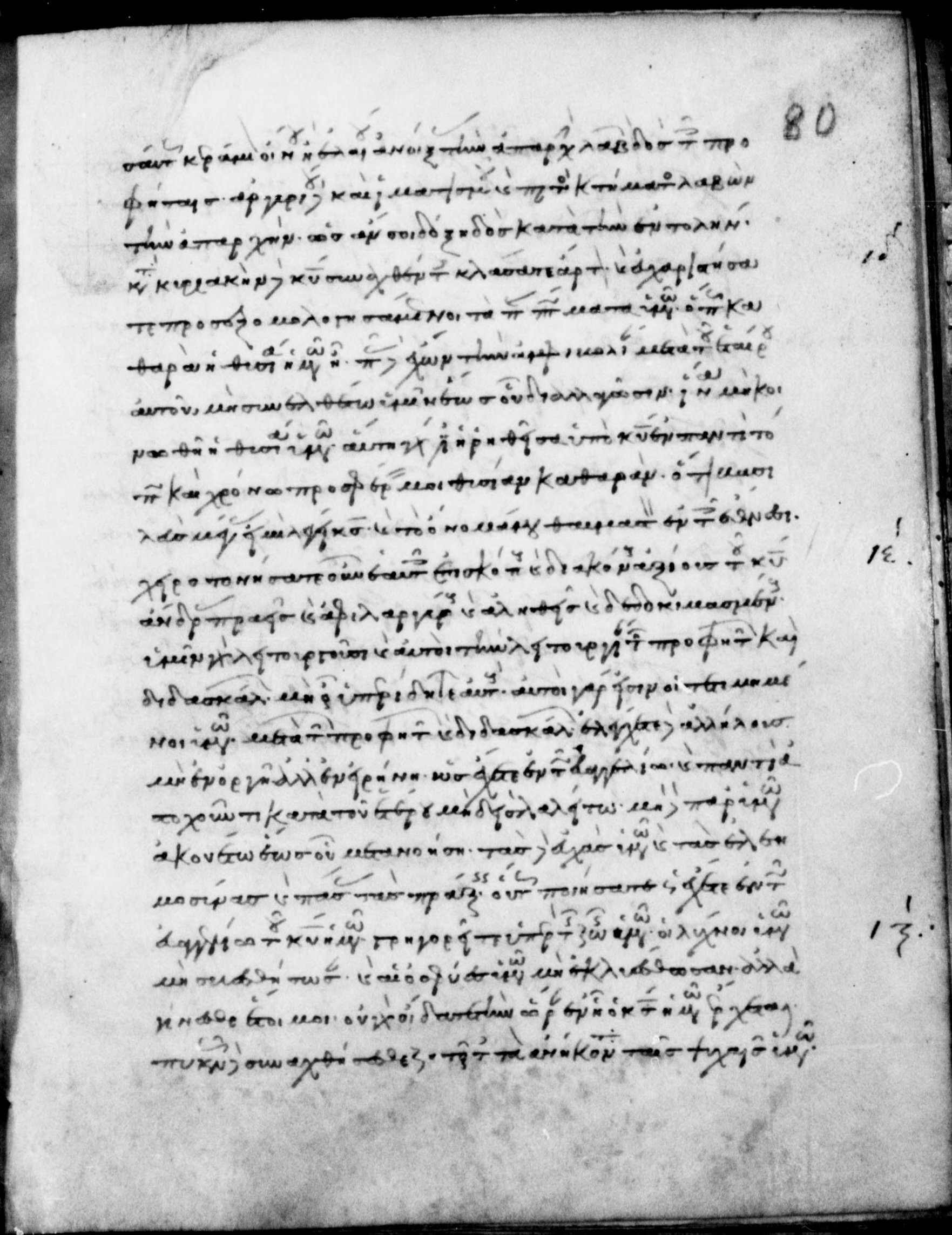
fol. 79v (LoC microfilm frame 82, left page) carries 11.7-13.6; checked on the image: the page begins 'οὐκ ἀφεθήσεται. οὐ πᾶς δὲ ὁ λαλῶν ἐν πνεύματι' and ends 'δὸς κατὰ τὴν ἐντολήν. ὡ[σαύτως]'; fol. 80r (LoC microfilm frame 82, right page) carries 13.6-16.2; checked on the image: the page begins 'σαύτως κεράμιον οἴνου ἢ ἐλαίου ἀνοίξας' and ends 'ζητοῦντες τὰ ἀνήκοντα ταῖς ψυχαῖς ὑμῶν'. The Greek shown is Lake's printed text (1912), which follows this manuscript closely; the scribe's abbreviations and spellings on the page differ in small details.
1Πᾶς δὲ προφήτης ἀληθινὸς θέλων καθῆσθαι πρὸς ὑμᾶς ἄξιός ἐστι τῆς τροφῆς αὐτοῦ. 2ὡσαύτως διδάσκαλος ἀληθινός ἐστιν ἄξιος καὶ αὐτὸς ὥσπερ ὁ ἐργάτης τῆς τροφῆς αὐτοῦ. 3πᾶσαν οὖν ἀπαρχὴν γεννημάτων ληνοῦ καὶ ἅλωνος, βοῶν τε καὶ προβάτων λαβὼν δώσεις τὴν ἀπαρχὴν τοῖς προφήταις· αὐτοὶ γάρ εἰσιν οἱ ἀρχιερεῖς ὑμῶν. 4ἐὰν δὲ μὴ ἔχητε προφήτην, δότε τοῖς πτωχοῖς. 5ἐὰν σιτίαν ποιῇς, τὴν ἀπαρχὴν λαβὼν δὸς κατὰ τὴν ἐντολήν. 6ὡσαύτως κεράμιον οἴνου ἢ ἐλαίου ἀνοίξας, τὴν ἀπαρχὴν λαβὼν δὸς τοῖς προφήταις· 7ἀργυρίου δὲ καὶ ἱματισμοῦ καὶ παντὸς κτήματος λαβὼν τὴν ἀπαρχήν, ὡς ἄν σοι δόξῃ, δὸς κατὰ τὴν ἐντολήν.
But every true prophet desiring to settle among you is worthy of his food. In like manner a true teacher is also worthy, like the workman, of his food. Every firstfruit then of the produce of the wine-vat and of the threshing-floor, of thy oxen and of thy sheep, thou shalt take and give as the firstfruit to the prophets; for they are your chief-priests. But if ye have not a prophet, give them to the poor. If thou makest bread, take the firstfruit and give according to the commandment. In like manner, when thou openest a jar of wine or of oil, take the firstfruit and give to the prophets; yea and of money and raiment and every possession take the firstfruit, as shall seem good to thee, and give according to the commandment.
Where on the image
fol. 80r (LoC microfilm frame 82, right page) carries 13.6-16.2; checked on the image: the page begins 'σαύτως κεράμιον οἴνου ἢ ἐλαίου ἀνοίξας' and ends 'ζητοῦντες τὰ ἀνήκοντα ταῖς ψυχαῖς ὑμῶν'. The Greek shown is Lake's printed text (1912), which follows this manuscript closely; the scribe's abbreviations and spellings on the page differ in small details.
1Κατὰ κυριακὴν δὲ κυρίου συναχθέντες κλάσατε ἄρτον καὶ εὐχαριστήσατε, προεξομολογησάμενοι τὰ παραπτώματα ὑμῶν, ὅπως καθαρὰ ἡ θυσία ὑμῶν ᾖ. 2πᾶς δὲ ἔχων τὴν ἀμφιβολίαν μετὰ τοῦ ἑταίρου αὐτοῦ μὴ συνελθέτω ὑμῖν, ἕως οὗ διαλλαγῶσιν, ἵνα μὴ κοινωθῇ ἡ θυσία ὑμῶν. 3αὕτη γάρ ἐστιν ἡ ῥηθεῖσα ὑπὸ κυρίου· Ἐν παντὶ τόπῳ καὶ χρόνῳ προσφέρειν μοι θυσίαν καθαράν. ὅτι βασιλεὺς μέγας εἰμί, λέγει κύριος, καὶ τὸ ὄνομά μου θαυμαστὸν ἐν τοῖς ἔθνεσι.
And on the Lord's own day gather yourselves together and break bread and give thanks, first confessing your transgressions, that your sacrifice may be pure. And let no man, having his dispute with his fellow, join your assembly until they have been reconciled, that your sacrifice may not be defiled; for this sacrifice it is that was spoken of by the Lord; In every place and at every time offer Me a pure sacrifice; for I am a great king, saith the Lord and My name is wonderful among the nations.
Where on the image
fol. 80r (LoC microfilm frame 82, right page) carries 13.6-16.2; checked on the image: the page begins 'σαύτως κεράμιον οἴνου ἢ ἐλαίου ἀνοίξας' and ends 'ζητοῦντες τὰ ἀνήκοντα ταῖς ψυχαῖς ὑμῶν'. The Greek shown is Lake's printed text (1912), which follows this manuscript closely; the scribe's abbreviations and spellings on the page differ in small details.
1Χειροτονήσατε οὖν ἑαυτοῖς ἐπισκόπους καὶ διακόνους ἀξίους τοῦ κυρίου, ἄνδρας πραεῖς καὶ ἀφιλαργύρους καὶ ἀληθεῖς καὶ δεδοκιμασμένους· ὑμῖν γὰρ λειτουργοῦσι καὶ αὐτοὶ τὴν λειτουργίαν τῶν προφητῶν καὶ διδασκάλων. 2μὴ οὖν ὑπερίδητε αὐτούς· αὐτοὶ γάρ εἰσιν οἱ τετιμημένοι ὑμῶν μετὰ τῶν προφητῶν καὶ διδασκάλων. 3Ἐλέγχετε δὲ ἀλλήλους μὴ ἐν ὀργῇ, ἀλλ’ ἐν εἰρήνῃ ὡς ἔχετε ἐν τῷ εὐαγγελίῳ· καὶ παντὶ ἀστοχοῦντι κατὰ τοῦ ἑτέρου μηδεὶς λαλείτω μηδὲ παρ’ ὑμῶν ἀκουέτω, ἕως οὗ μετανοήσῃ. 4τὰς δὲ εὐχὰς ὑμῶν καὶ τὰς ἐλεημοσύνας καὶ πάσας τὰς πράξεις οὕτω ποιήσατε, ὡς ἔχετε ἐν τῷ εὐαγγελίῳ τοῦ κυρίου ἡμῶν.
Appoint for yourselves therefore bishops and deacons worthy of the Lord, men who are meek and not lovers of money, and true and approved; for unto you they also perform the service of the prophets and teachers. Therefore despise them not; for they are your honourable men along with the prophets and teachers. And reprove one another, not in anger but in peace, as ye find in the Gospel; and let no one speak to any that has gone wrong towards his neighbour, neither let him hear a word from you, until he repent. But your prayers and your almsgivings and all your deeds so do ye as ye find it in the Gospel of our Lord.
Where on the image
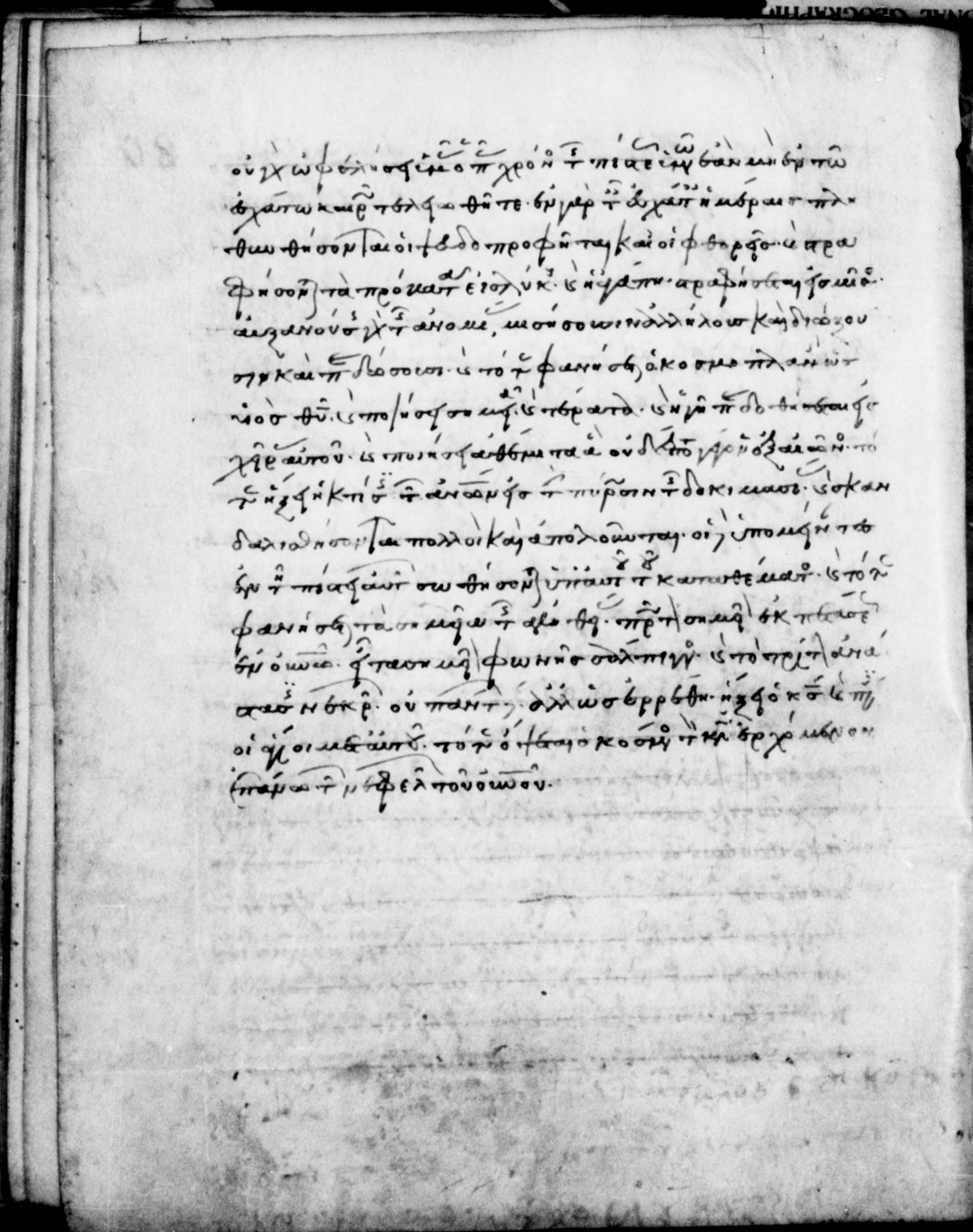
fol. 80r (LoC microfilm frame 82, right page) carries 13.6-16.2; checked on the image: the page begins 'σαύτως κεράμιον οἴνου ἢ ἐλαίου ἀνοίξας' and ends 'ζητοῦντες τὰ ἀνήκοντα ταῖς ψυχαῖς ὑμῶν'; fol. 80v (LoC microfilm frame 83, left page) carries 16.2-16.8; checked on the image: the page begins 'οὐ γὰρ ὠφελήσει ὑμᾶς ὁ πᾶς χρόνος' and ends 'ἐπάνω τῶν νεφελῶν τοῦ οὐρανοῦ (end; rest of the page blank)'. The Greek shown is Lake's printed text (1912), which follows this manuscript closely; the scribe's abbreviations and spellings on the page differ in small details.
1Γρηγορεῖτε ὑπὲρ τῆς ζωῆς ὑμῶν· οἱ λύχνοι ὑμῶν μὴ σβεσθήτωσαν, καὶ αἱ ὀσφύες ὑμῶν μὴ ἐκλυέσθωσαν, ἀλλὰ γίνεσθε ἕτοιμοι· οὐ γὰρ οἴδατε τὴν ὥραν, ἐν ᾗ ὁ κύριος ἡμῶν ἔρχεται. 2πυκνῶς δὲ συναχθήσεσθε ζητοῦντες τὰ ἀνήκοντα ταῖς ψυχαῖς ὑμῶν· οὐ γὰρ ὠφελήσει ὑμᾶς ὁ πᾶς χρόνος τῆς πίστεως ὑμῶν, ἐὰν μὴ ἐν τῷ ἐσχάτῳ καιρῷ τελειωθῆτε. 3ἐν γὰρ ταῖς ἐσχάταις ἡμέραις πληθυνθήσονται οἱ ψευδοπροφῆται καὶ οἱ φθορεῖς, καὶ στραφήσονται τὰ πρόβατα εἰς λύκους, καὶ ἡ ἀγάπη στραφήσεται εἰς μῖσος. 4αὐξανούσης γὰρ τῆς ἀνομίας μισήσουσιν ἀλλήλους καὶ διώξουσι καὶ παραδώσουσι, καὶ τότε φανήσεται ὁ κοσμοπλανὴς ὡς υἱὸς θεοῦ, καὶ ποιήσει σημεῖα καὶ τέρατα, καὶ ἡ γῆ παραδοθήσεται εἰς χεῖρας αὐτοῦ, καὶ ποιήσει ἀθέμιτα, ἃ οὐδέποτε γέγονεν ἐξ αἰῶνος. 5τότε ἥξει ἡ κτίσις τῶν ἀνθρώπων εἰς τὴν πύρωσιν τῆς δοκιμασίας, καὶ σκανδαλισθήσονται πολλοὶ καὶ ἀπολοῦνται, οἱ δὲ ὑπομείναντες ἐν τῇ πίστει αὐτῶν σωθήσονται ὑπ’ αὐτοῦ τοῦ καταθέματος. 6καὶ τότε φανήσεται τὰ σημεῖα τῆς ἀληθείας· πρῶτον σημεῖον ἐκπετάσεως ἐν οὐρανῷ, εἶτα σημεῖον φωνῆς σάλπιγγος, καὶ τὸ τρίτον ἀνάστασις νεκρῶν. 7οὐ πάντων δέ, ἀλλ’ ὡς ἐρρέθη· Ἥξει ὁ κύριος καὶ πάντες οἱ ἅγιοι μετ’ αὐτοῦ. 8τότε ὄψεται ὁ κόσμος τὸν κύριον ἐρχόμενον ἐπάνω τῶν νεφελῶν τοῦ οὐρανοῦ.
Be watchful for your life; let your lamps not be quenched and your loins not ungirded, but be ye ready; for ye know not the hour in which our Lord cometh. And ye shall gather yourselves together frequently, seeking what is fitting for your souls; for the whole time of your faith shall not profit you, if ye be not perfected at the last season. For in the last days the false prophets and corrupters shall be multiplied, and the sheep shall be turned into wolves, and love shall be turned into hate. For as lawlessness increaseth, they shall hate one another and shall persecute and betray. And then the world-deceiver shall appear as a son of God; and shall work signs and wonders, and the earth shall be delivered into his hands; and he shall do unholy things, which have never been since the world began. Then all created mankind shall come to the fire of testing, and many shall be offended and perish; but they that endure in their faith shall be saved by the Curse Himself. And then shall the signs of the truth appear; first a sign of a rift in the heaven, then a sign of a voice of a trumpet, and thirdly a resurrection of the dead; yet not of all, but as it was said: The Lord shall come and all His saints with Him. Then shall the world see the Lord coming upon the clouds of heaven.
Notes
- Greek: Kirsopp Lake, The Apostolic Fathers I (Loeb Classical Library, 1912), digital text by the First1KGreek project (CC BY-SA 4.0). Lake's footnotes and scripture references are not shown. The digital text writes the Greek raised dot as a colon; it is shown as '·'.
- The digital text was read against the printed pages of Lake 1912 (pp. 308-332) and these errors of the digital text were corrected: 1.3 'τοῦς καταρωμένους' to 'τοὺς καταρωμένους'; 1.5 'λαμβάνονται' to 'λαμβάνοντι'; 5.1 'ʽΠ δὲ' to 'Ἡ δὲ'; 11.1 'ἂν οὑν' to 'ἂν οὖν'; 11.6 'ἕως οὖ' to 'ἕως οὗ'; 11.10 'οὐ ποιεῖ. ψευδοπροφήτης' to 'οὐ ποιεῖ, ψευδοπροφήτης'; 12.2 'δύο ἡ τρεῖς' to 'δύο ἢ τρεῖς'; 12.2 'ἑὰν ᾖ' to 'ἐὰν ᾖ'; 13.6 'οἴνου ἡ ἐλαίου' to 'οἴνου ἢ ἐλαίου'; 14.2 'ὁ??ʼ' to 'οὗ'; 14.3 'ὑπὸ κυρίον' to 'ὑπὸ κυρίου'. Lake's own misprints ('μια' in 1.1, 'τούτωι' in 5.2) are kept as printed. Elided words, which the digital text encodes with stray accent characters (e.g. 'καθ̓', 'παῤ'), are written with an apostrophe as Lake prints them.
- Accents, breathings and punctuation were then checked against the printed pages word by word (OCR comparison, every difference looked up on the page image) and these further errors of the digital text were corrected: 2.5 'μεμεστωμένος πράξει,' to 'μεμεστωμένος πράξει.'; 2.7 'περὶ δὲ ὦν' to 'περὶ δὲ ὧν'; 3.4 'γίνου οἰωνοσκόπος. ἐπειδὴ' to 'γίνου οἰωνοσκόπος, ἐπειδὴ'; 3.5 'γίνου ψεύστης. ἐπειδὴ' to 'γίνου ψεύστης, ἐπειδὴ'; 3.6 'ἀπάντων' to 'ἁπάντων'; 3.6 'βλασφημίαι γεννῶνται,' to 'βλασφημίαι γεννῶνται.'; 3.7 'τὴν γῆν·' to 'τὴν γῆν.'; 4.10 'ἐφ’ οὕς τὸ' to 'ἐφ’ οὓς τὸ'; 5.2 'τὸ πονηρόν ὧν' to 'τὸ πονηρόν· ὧν'; 6.2 'ὅ δύνῃ' to 'ὃ δύνῃ'; 6.3 'ὅ δύνασαι' to 'ὃ δύνασαι'; 6.3 'λίαν πρόσεχε λατρεία' to 'λίαν πρόσεχε· λατρεία'; 9.2 'ἦς' to 'ἧς'; 9.3 'ἦς' to 'ἧς'; 9.5 'ἄγιον' to 'ἅγιον'; 16.1 'ὤραν' to 'ὥραν'; 16.4 'ἅ οὐδέποτε' to 'ἃ οὐδέποτε'. Lake prints 'θελήσης' without iota subscript in 1.2 and 'τὼν' with a grave accent in 11.3; the correct forms of the digital text are kept.
- English: J. B. Lightfoot, The Apostolic Fathers (1891), as transcribed at earlychristianwritings.com. Phrases the transcription marks with braces (scriptural quotations and allusions) are shown in italics. The transcription divides the chapters into its own numbered lines, which do not match the Greek section numbers, so the English is given by chapter without those numbers.
- Lightfoot translated his own Greek text, which differs from Lake's in a few places.
Cite
Sources
- Source: Codex Hierosolymitanus 54 (1056), fol. 76r-80v, Library of Congress microfilm + Lake 1912 Greek (First1KGreek, CC BY-SA 4.0) + Lightfoot 1891 English (public domain) (holding institution)
- Critical edition: Kirsopp Lake, The Apostolic Fathers I (1912), via First1KGreek
← previous · → next · v cycle view · l back to library