The Sumerian Flood Story (Eridu Genesis): Nippur tablet CBS 10673
Introduction
The Sumerian Flood story, often called the Eridu Genesis, tells how the gods An, Enlil, Enki and Ninhursaĝa made mankind and the animals, how kingship came down from heaven and the first cities (Eridu, Bad-tibira, Larak, Sippar and Shuruppak) were founded, and how the gods sent a flood to destroy mankind. Enki warns the pious king Ziusudra, who survives the flood in a great boat for seven days and seven nights, offers sacrifice to the sun god Utu, and is given 'life like a god' and settled in Dilmun. It is the Sumerian telling of the Flood story also known from the Babylonian epics of Atrahasis and Gilgamesh, and it invites comparison with Genesis 6-9.
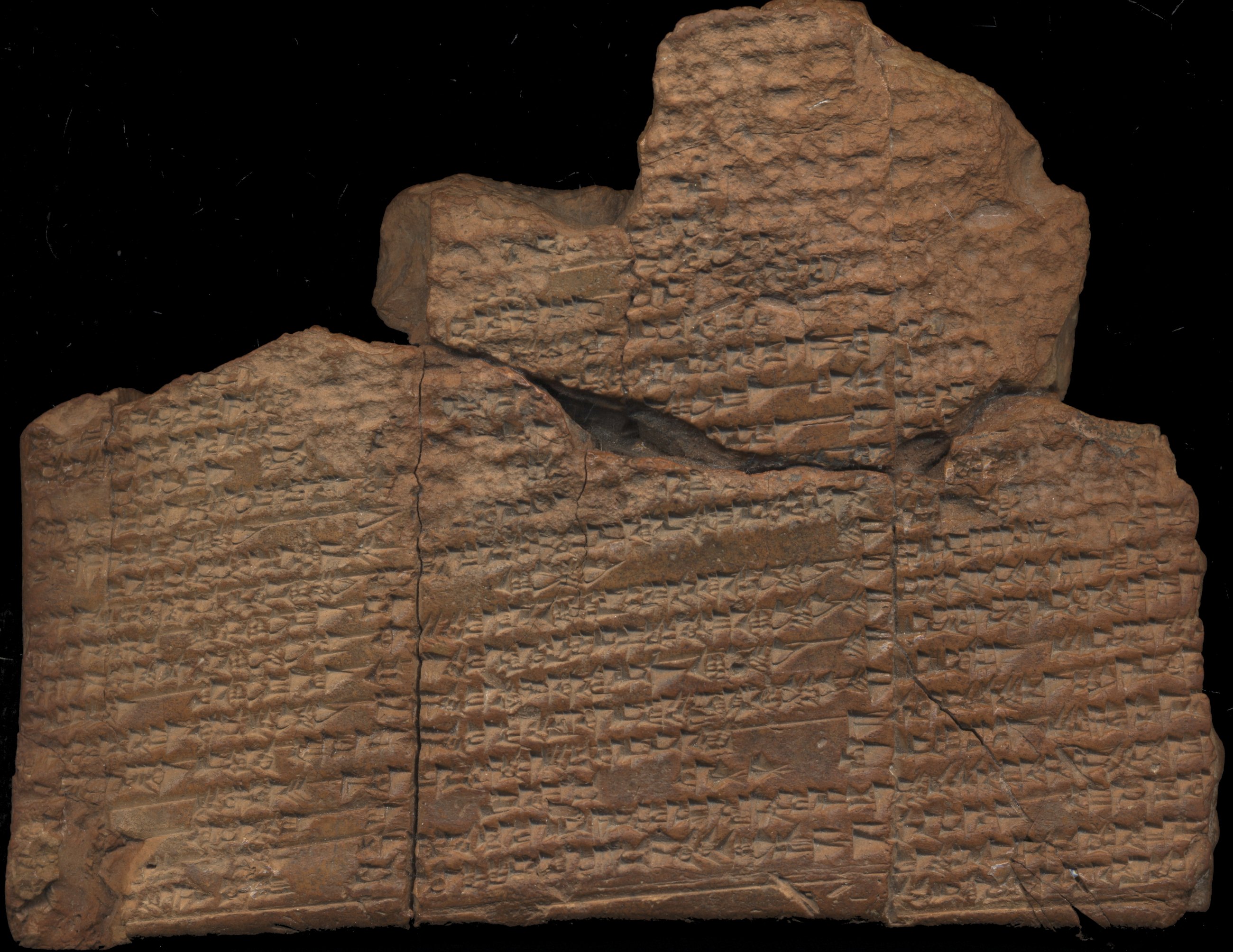
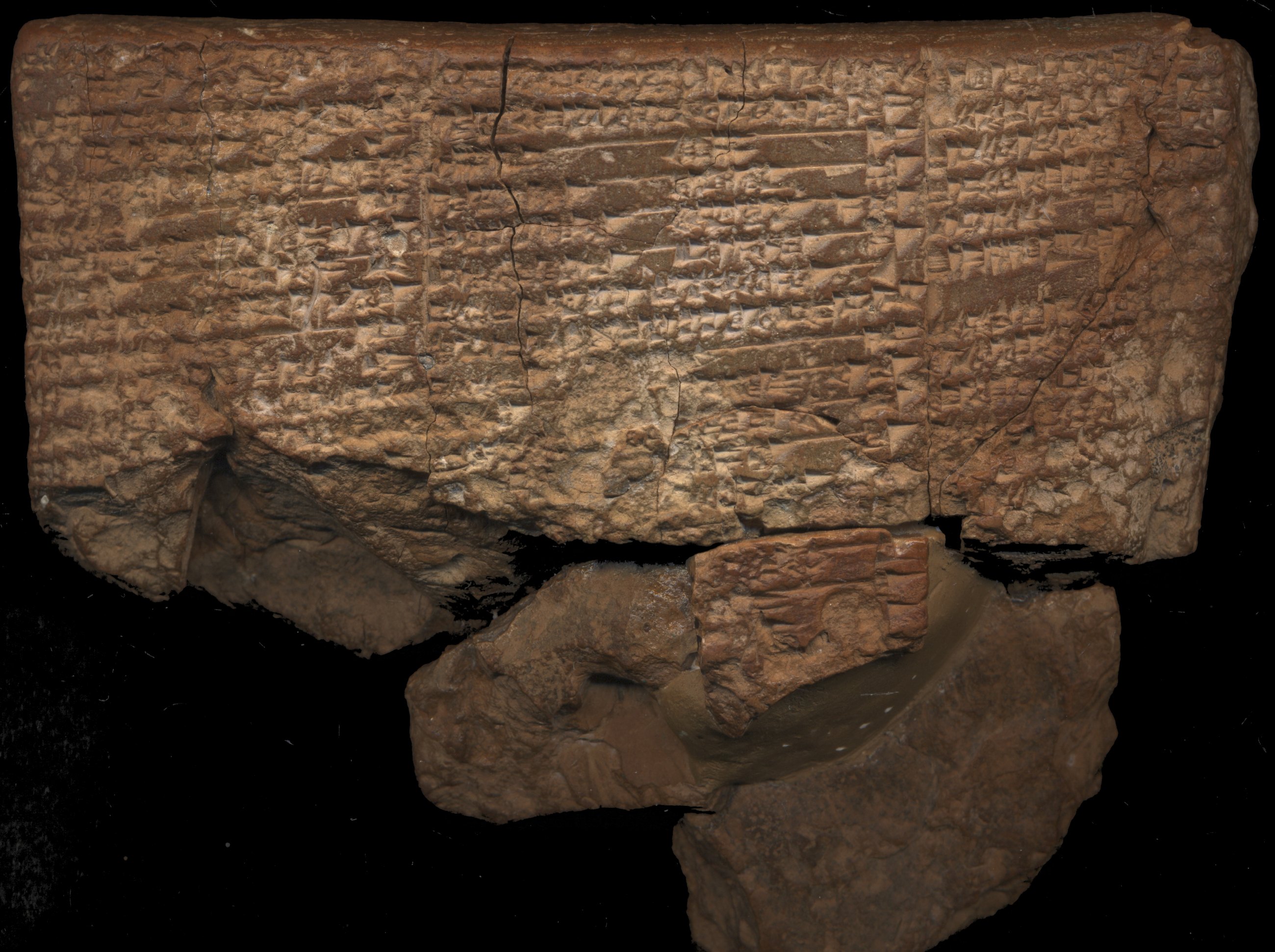
The text survives almost entirely on one tablet from Nippur, CBS 10673 in the Penn Museum, Philadelphia, written in the Old Babylonian period (about 1800-1600 BCE). Arno Poebel found it among the museum's tablets in 1912 and published it in 1914. Only the lower third of the tablet survives: the bottom of the three columns on the obverse and the top of the three columns on the reverse. Between about 32 and 38 lines are lost in each gap, so the story is far from complete. A small joined fragment (CBS 10867) sits at the top of the obverse in the photograph.
Each section below is one paragraph of the ETCSL translation (segments A to E are the surviving blocks of text). The photograph is the face of the tablet that carries the section, and the transliteration is marked with the column.
Gaps. The lost parts of the columns (noted in the English) cannot be shown. Two further manuscripts of the story are not included: a fragment from Ur (published in 2018, after the ETCSL edition) and a tablet in the Schøyen Collection (MS 3026) that is not yet fully published.
How was this verified? (Provenance)
Where on the image
CBS 10673 obverse column i: ETCSL segment A lines 1-10. Column numbering after Poebel 1914 (PBS 4/1, pp. 14-16), who transcribes the tablet column by column. Checked on the photograph: the obverse text is at the foot of its three columns (left to right i, ii, iii); the reverse text is at the top of its three columns, just after the bottom edge, read from right to left (iv, v, vi); in reverse column iv every line is broken off at the right, as in ETCSL lines C 17-28. The Sumerian is ETCSL's transliteration, whose only source is this tablet.
[obverse, column i]
A1[…] im-ĝa₂-⸢ĝa₂⸣ […]
A2nam-lu₂-ulu₃-ĝu₁₀ ḫa-lam-ma-bi-a ga-ba-⸢ni-ib⸣-[…]
A3{d}nin-tur₅-ra niĝ₂-dim₂-dim₂-ma-ĝu₁₀ sig₁₀-[sig₁₀]-⸢bi⸣-[a] ga-ba-ni-ib-gi₄-gi₄
A4uĝ₃ ki-ur₃-bi-ta ga-ba-ni-ib-gur-ru-ne
A5iri{ki} me-a-bi ḫe₂-em-mi-in-du₃ ĝissu-bi ni₂ ga-ba-ab-dub₂-bu
A6iri me-a šeg₁₂-bi ki kug-ga ḫe₂-em-mi-in-šub
A7ki-eš-<bar> me-a ki kug-ga ḫe₂-em-mi-ni-ib-ri
A8KUG? A niĝ₂ izi ten-na si mi-ni-in-si-sa₂
A9ĝarza me maḫ šu mi-ni-ib-šu-du₇
A10ki a im-ma-ab-dug₄ silim ga-mu-ni-in-ĝar
A 1-10 …… sets up ……. "I will …… the perishing of my mankind; for Nintur, I will stop the annihilation of my creatures, and I will return the people from their dwelling grounds. Let them build many cities so that I can refresh myself in their shade. Let them lay the bricks of many cities in pure places, let them establish places of divination in pure places, and when the fire-quenching …… is arranged, the divine rites and exalted powers are perfected and the earth is irrigated, I will establish well-being there."
Where on the image
CBS 10673 obverse column i: ETCSL segment A lines 11-14. Column numbering after Poebel 1914 (PBS 4/1, pp. 14-16), who transcribes the tablet column by column. Checked on the photograph: the obverse text is at the foot of its three columns (left to right i, ii, iii); the reverse text is at the top of its three columns, just after the bottom edge, read from right to left (iv, v, vi); in reverse column iv every line is broken off at the right, as in ETCSL lines C 17-28. The Sumerian is ETCSL's transliteration, whose only source is this tablet. ETCSL heads this paragraph 10-14; line A10 is shown with the previous paragraph, whose English renders it.
[obverse, column i]
A11an {d}en-lil₂ {d}en-ki {d}nin-ḫur-saĝ-ĝa₂-ke₄
A12saĝ gig₂-ga mu-un-dim₂-eš-a-ba
A13niĝ₂-gilim ki-ta ki-ta mu-lu-lu
A14maš₂-anše niĝ₂-ur₂-4 edin-na me-te-a-aš bi₂-ib₂-ĝal₂
A 10-14 After An, Enlil, Enki and Ninḫursaĝa had fashioned the black-headed people, they also made animals multiply everywhere, and made herds of four-legged animals exist on the plains, as is befitting. (approx. 32 lines missing)
Where on the image
CBS 10673 obverse column ii: ETCSL segment B lines 1-3. Column numbering after Poebel 1914 (PBS 4/1, pp. 14-16), who transcribes the tablet column by column. Checked on the photograph: the obverse text is at the foot of its three columns (left to right i, ii, iii); the reverse text is at the top of its three columns, just after the bottom edge, read from right to left (iv, v, vi); in reverse column iv every line is broken off at the right, as in ETCSL lines C 17-28. The Sumerian is ETCSL's transliteration, whose only source is this tablet.
[obverse, column ii]
B1[…] ⸢mu-un⸣-[…]
B2[…] AM₃ […]
B3[…] X de₅-⸢ga⸣ ga-ba-ni-in-[…]
B 1-3 (3 lines fragmentary)
Where on the image
CBS 10673 obverse column ii: ETCSL segment B lines 4-5. Column numbering after Poebel 1914 (PBS 4/1, pp. 14-16), who transcribes the tablet column by column. Checked on the photograph: the obverse text is at the foot of its three columns (left to right i, ii, iii); the reverse text is at the top of its three columns, just after the bottom edge, read from right to left (iv, v, vi); in reverse column iv every line is broken off at the right, as in ETCSL lines C 17-28. The Sumerian is ETCSL's transliteration, whose only source is this tablet.
[obverse, column ii]
B4[du]-⸢lum⸣-bi igi ga-ba-ni-ib-du₈-⸢du₈⸣-[X]
B5X šidim kalam-ma-ke₄ uš gen₆ ⸢ḫa⸣-ba-ab-ba-[al]
B 4-5 "I will oversee their labour. Let …… the builder of the Land, dig a solid foundation."
Where on the image
CBS 10673 obverse column ii: ETCSL segment B lines 6-18. Column numbering after Poebel 1914 (PBS 4/1, pp. 14-16), who transcribes the tablet column by column. Checked on the photograph: the obverse text is at the foot of its three columns (left to right i, ii, iii); the reverse text is at the top of its three columns, just after the bottom edge, read from right to left (iv, v, vi); in reverse column iv every line is broken off at the right, as in ETCSL lines C 17-28. The Sumerian is ETCSL's transliteration, whose only source is this tablet.
[obverse, column ii]
B6[ud X] X nam-lugal-la an-ta ed₃-de₃-a-ba
B7men maḫ {ĝiš}gu-za nam-lugal-la an-ta ed₃-a-ba
B8[ĝarza me] ⸢maḫ⸣ šu mi-ni-ib-šu-du₇
B9[iri-bi-e]-⸢ne⸣ [šeg₁₂-bi ki kug-ga im]-⸢ma⸣-an-da-šub
B10mu-bi ba-an-sa₄ kab dug₄-⸢ga⸣ [ba-ḫal]-⸢ḫal⸣-la
B11nesaĝ iri-be₂-e-ne eridug{ki} maš₂-saĝ {d}nu-dim₂-mud mi-ni-in-šum₂
B122-kam-ma-še₃ nu-gig-ra bad₃-tibira{ki} mi-ni-in-šum₂
B133-kam-ma la-ra-ag {d}pa-bil₂-«ḫur»-saĝ mi-ni-in-šum₂
B144-kam-ma zimbir{ki} šul {d}utu mi-ni-in-šum₂
B155-kam-ma šuruppag {d}sud₃{ki}-ra mi-ni-in-šum₂
B16iri-be₂-e-ne mu-bi ba-an-sa₄-a kab dug₄-ga ba-ḫal-ḫal-la
B17id₂ IM GUN₂? ma-an-šu₄-am₃ im-ma-al-la a im-ma-an-de₆
B18id₂ tur-tur-re šu luḫ-bi ĜAR ḪAR-ḪAR mi-ni-ib₂-ĝar-ĝar
B 6-18 After the …… of kingship had descended from heaven, after the exalted crown and throne of kingship had descended from heaven, the divine rites and the exalted powers were perfected, the bricks of the cities were laid in holy places, their names were announced and the …… were distributed. The first of the cities, Eridug, was given to Nudimmud the leader. The second, Bad-tibira, was given to the Mistress. The third, Larag, was given to Pabilsaĝ. The fourth, Zimbir, was given to the hero Utu. The fifth, Šuruppag, was given to Sud. And after the names of these cities had been announced and the …… had been distributed, the river ……, …… was watered, and with the cleansing of the small canals …… were established. (approx. 34 lines missing)
Where on the image
CBS 10673 obverse column iii, reverse column iv: ETCSL segment C lines 1-28. Column numbering after Poebel 1914 (PBS 4/1, pp. 14-16), who transcribes the tablet column by column. Checked on the photograph: the obverse text is at the foot of its three columns (left to right i, ii, iii); the reverse text is at the top of its three columns, just after the bottom edge, read from right to left (iv, v, vi); in reverse column iv every line is broken off at the right, as in ETCSL lines C 17-28. The Sumerian is ETCSL's transliteration, whose only source is this tablet. Line(s) C 28 are too broken for ETCSL to translate.
[obverse, column iii]
C1ki-tuš an-na X […]
C2e-[…]
C3a-ma-ru […]
C4nam-lu₂-[ulu₃ …]
C5⸢ur₅-gin₇⸣ bi₂-in-ak […]
C6ud-bi-a {d}nin-⸢tur₅⸣ […] DIM₂ A […]
C7kug {d}inana-ke₄ uĝ₃-bi-še₃ a-nir mu-[un-ĝa₂-ĝa₂]
C8{d}en-ki šag₄ ni₂-te-na-ke₄ ad i-ni-⸢in⸣-[gi₄-gi₄]
C9an {d}en-lil₂ {d}en-ki {d}nin-ḫur-saĝ-ĝa₂-[ke₄]
C10diĝir an ki-ke₄ mu an {d}en-lil₂ mu-X-[pad₃]
C11ud-ba zi-ud-su₃-ra₂ lugal-am₃ gudug X […]
C12an saĝ NIĜIN mu-un-dim₂-dim₂ EN […]
C13nam-sun₅-na inim sig₁₀-sig₁₀-ge ni₂ teĝ₃-ĝe₂₆ […]
C14ud šu₂-uš-e saĝ us₂ gub-ba […]
C15ma-mu₂ nu-me-a ed₂-de₃ inim ⸢bal⸣ […]
C16mu an ki-bi-ta pad₃-pad₃-de₃ […]
[reverse, column iv]
C17⸢ki?⸣-ur₃-še₃ diĝir-re-e-ne e₂-ĝar₈ […]
C18zi-ud-su₃-ra₂ da-bi gub-ba ĝiš mu-[un-tuku]
C19iz-zi-da a₂ gab₂-bu-ĝu₁₀ gub-ba […]
C20iz-zi-da inim ga-ra-ab-dug₄ inim-[ĝu₁₀ ḫe₂-dab₅]
C21na de₅-ga-ĝu₁₀ ĝizzal [ḫe₂-em-ši-ak]
C22DAG-me-a a-ma-ru ugu kab ⸢dug₄⸣-[ga …] ba-⸢ur₃⸣ […]
C23numun nam-lu₂-ulu₃ ḫa-lam-e-⸢de₃⸣ [nam-bi ba-tar]
C24di-til-la inim pu-uḫ₂-ru-[um-ma-ka šu gi₄-gi₄ nu-ĝal₂]
C25inim dug₄-ga an {d}en-[lil₂-la₂-ka] [šu bal-e nu-zu]
C26nam-lugal-bi bal-bi ⸢ba⸣-[bur₁₂ e-ne šag₄ kuš₂-u₃-de₃]
C27⸢e⸣-ne-eš₂ […]
C28⸢a⸣-na MU-⸢MU⸣ […]
C 1-27 ……seat in heaven. …… flood. …… mankind. So he made ……. Then Nintur ……. Holy Inana made a lament for its people. Enki took counsel with himself. An, Enlil, Enki and Ninḫursaĝa made all the gods of heaven and earth take an oath by invoking An and Enlil. In those days Zi-ud-sura the king, the gudug priest, ……. He fashioned ……. The humble, committed, reverent ……. Day by day, standing constantly at ……. Something that was not a dream appeared, conversation ……, …… taking an oath by invoking heaven and earth. In the Ki-ur, the gods …… a wall. Zi-ud-sura, standing at its side, heard: "Side-wall standing at my left side, ……. Side-wall, I will speak words to you; take heed of my words, pay attention to my instructions. A flood will sweep over the …… in all the ……. A decision that the seed of mankind is to be destroyed has been made. The verdict, the word of the divine assembly, cannot be revoked. The order announced by An and Enlil cannot be overturned. Their kingship, their term has been cut off; their heart should be rested about this. Now ……. What ……." (approx. 38 lines missing)
Where on the image
CBS 10673 reverse column v: ETCSL segment D lines 1-11. Column numbering after Poebel 1914 (PBS 4/1, pp. 14-16), who transcribes the tablet column by column. Checked on the photograph: the obverse text is at the foot of its three columns (left to right i, ii, iii); the reverse text is at the top of its three columns, just after the bottom edge, read from right to left (iv, v, vi); in reverse column iv every line is broken off at the right, as in ETCSL lines C 17-28. The Sumerian is ETCSL's transliteration, whose only source is this tablet.
[reverse, column v]
D1im-ḫul-im-ḫul {tum₉}si-si-ig du₃-a-bi teš₂-bi i₃-sug₂-ge-eš
D2a-ma-ru ugu kab dug₄-ga ba-an-da-ab-ur₃-e
D3ud 7-am₃ ĝi₆ 7-am₃
D4a-ma-ru kalam-ma ba-ur₃-ra-ta
D5{ĝiš}ma₂ gur₄-gur₄ a gal-la im-ḫul tuku₄-tuku₄-a-ta
D6{d}utu i-im-ma-ra-e₃ an ki-a ud ĝa₂-ĝa₂
D7zi-ud-su₃-ra₂ {ĝiš}ma₂ gur₄-gur₄ ab-BUR₂ mu-un-da-buru₃
D8šul {d}utu ĝiš-nu₁₁-ni-da {ĝiš}ma₂ gur₄-gur₄-še₃ ba-an-kur₉-re-en
D9zi-ud-su₃-ra₂ lugal-am₃
D10igi {d}utu-še₃ giri₁₇ ki su-ub ba-gub
D11lugal-e gud im-ma-ab-gaz-e udu im-ma-ab-šar₂-re
D 1-11 All the windstorms and gales arose together, and the flood swept over the ……. After the flood had swept over the land, and waves and windstorms had rocked the huge boat for seven days and seven nights, Utu the sun god came out, illuminating heaven and earth. Zi-ud-sura could drill an opening in the huge boat and the hero Utu entered the huge boat with his rays. Zi-ud-sura the king prostrated himself before Utu. The king sacrificed oxen and offered innumerable sheep.
Where on the image
CBS 10673 reverse column v: ETCSL segment D lines 12-17. Column numbering after Poebel 1914 (PBS 4/1, pp. 14-16), who transcribes the tablet column by column. Checked on the photograph: the obverse text is at the foot of its three columns (left to right i, ii, iii); the reverse text is at the top of its three columns, just after the bottom edge, read from right to left (iv, v, vi); in reverse column iv every line is broken off at the right, as in ETCSL lines C 17-28. The Sumerian is ETCSL's transliteration, whose only source is this tablet.
[reverse, column v]
D12[…] X si gal […] sikil-la-da
D13[…] X mu-un-na-X-X-ba
D14[…]
D15[…] bi₂-in-si
D16[…] X tab-ba
D17[…] A X
D 12-17 (six lines fragmentary) (approx. 33 lines missing)
Where on the image
CBS 10673 reverse column vi: ETCSL segment E lines 1-2. Column numbering after Poebel 1914 (PBS 4/1, pp. 14-16), who transcribes the tablet column by column. Checked on the photograph: the obverse text is at the foot of its three columns (left to right i, ii, iii); the reverse text is at the top of its three columns, just after the bottom edge, read from right to left (iv, v, vi); in reverse column iv every line is broken off at the right, as in ETCSL lines C 17-28. The Sumerian is ETCSL's transliteration, whose only source is this tablet.
[reverse, column vi]
E1zi an-na zi ki-a i₃-pad₃-de₃-en-ze₂-en za-zu-da ḫe₂-em-da-la₂
E2an {d}en-lil₂ zi an-na zi ki-a i₃-pad₃-de₃-ze₂-en za-da-ne-ne im-da-la₂
E 1-2 "They have made you swear by heaven and earth, ……. An and Enlil have made you swear by heaven and earth, ……."
Where on the image
CBS 10673 reverse column vi: ETCSL segment E lines 3-11. Column numbering after Poebel 1914 (PBS 4/1, pp. 14-16), who transcribes the tablet column by column. Checked on the photograph: the obverse text is at the foot of its three columns (left to right i, ii, iii); the reverse text is at the top of its three columns, just after the bottom edge, read from right to left (iv, v, vi); in reverse column iv every line is broken off at the right, as in ETCSL lines C 17-28. The Sumerian is ETCSL's transliteration, whose only source is this tablet.
[reverse, column vi]
E3niĝ₂-gilim-ma ki-ta ed₃-de₃ im-ma-ra-ed₃-de₃
E4zi-ud-su₃-ra₂ lugal-am₃
E5igi an {d}en-lil₂-la₂-še₃ giri₁₇ ki su-ub ba-⸢gub!⸣
E6an {d}en-lil₂ zi-ud-su₃-ra₂ mi₂-e-⸢eš₂?⸣ […-dug₄-…]
E7til₃ diĝir-gin₇ mu-un-na-šum₂-mu
E8zi da-ri₂ diĝir-gin₇ mu-un-<na>-ab-ed₃-de₃
E9ud-ba zi-ud-su₃-ra₂ lugal-am₃
E10mu niĝ₂-gilim-ma numun nam-lu₂-ulu₃ uru₃ ak
E11kur-bal kur dilmun-na ki {d}utu e₃-še₃ mu-un-til₃-eš
E 3-11 More and more animals disembarked onto the earth. Zi-ud-sura the king prostrated himself before An and Enlil. An and Enlil treated Zi-ud-sura kindly ……, they granted him life like a god, they brought down to him eternal life. At that time, because of preserving the animals and the seed of mankind, they settled Zi-ud-sura the king in an overseas country, in the land Dilmun, where the sun rises.
Where on the image
CBS 10673 reverse column vi: ETCSL segment E lines 12-12. Column numbering after Poebel 1914 (PBS 4/1, pp. 14-16), who transcribes the tablet column by column. Checked on the photograph: the obverse text is at the foot of its three columns (left to right i, ii, iii); the reverse text is at the top of its three columns, just after the bottom edge, read from right to left (iv, v, vi); in reverse column iv every line is broken off at the right, as in ETCSL lines C 17-28. The Sumerian is ETCSL's transliteration, whose only source is this tablet.
[reverse, column vi]
E12za-e? X […] ⸢BA⸣ X-bi til₃-eš X
E 12 "You ……." (approx. 39 lines missing)
Notes
- Transliteration: ETCSL 1.7.4 composite text in Unicode (ETCSL's c and j written š and ĝ; ⸢ ⸣ mark partly damaged signs, [ ] lost signs restored or marked …).
- Line labels such as A1 or C17 are ETCSL's: segment letter and line number within the segment.
Cite
Sources
- Source: Penn Museum CBS 10673 photograph via CDLI (P265876) + ETCSL 1.7.4 transliteration and English translation (CC BY-NC-SA 3.0); columns after Poebel 1914 (holding institution)
- Critical edition: ETCSL 1.7.4 (from CBS 10673)
← previous · → next · v cycle view · l back to library