Erra and Ishum, Tablet I: Erra roused to war
Introduction
After a hymn to Ishum, the poem shows Erra lying idle. The Seven, his weapons, urge him to war. Erra goes to Babylon and persuades Marduk to leave his dwelling so that his insignia may be cleaned, promising to keep order while he is away.
Erra and Ishum, written on five tablets by Kabti-ilani-Marduk (probably 8th century BCE), tells how Erra, god of war and plague, persuades Marduk to leave his throne and then devastates Babylonia, until his vizier Ishum calms him. Copies of the poem were used as amulets against plague. The eBL edition so far covers Tablet I only. This page follows the line numbering of the electronic Babylonian Library edition.
How this page is built. Each section is a run of consecutive lines as written on one photographed clay tablet. For every line the eBL edition (https://www.ebl.lmu.de/corpus/L/1/5/SB/I) lists the manuscripts that carry it, with each tablet's own column and line numbers; the tablet chosen for each run is the photographed copy of the work with the most signs preserved there. Commentaries and texts that only quote a line are never chosen. School and excerpt tablets are used only for lines that no photographed library copy preserves as well, and only where they carry the line as text; their sections say so (VAT.10174). The original text is eBL's transliteration of that tablet's signs (not a modern composite text): square brackets mark broken signs, x an illegible sign, # a damaged sign, ? an uncertain reading, and words in {braces} are determinatives; the notes give a key to every sign used on this page, and eBL's layout codes are written out in words (for example '(line break)' or '(blank space)'). Superscript numbers are the line numbers of the eBL edition, used in both the Akkadian and the English. The English is B. R. Foster's translation in the eBL edition (CC BY-NC-SA 4.0), one line of English per line of the text; italics mark uncertain renderings, as in the source. Where the tablet is broken, the English still translates the whole line of eBL's composite text; each section's note names the lines that are broken on its tablet.
Finding a line on the photograph. Each section names the tablet, the face and column, and the tablet's own line numbers (a prime, as in 5', counts from the first preserved line of a broken column). On a tablet with six columns the obverse carries columns i-iii from left to right; the reverse, turned over from bottom to top, carries columns iv-vi from right to left. The photographs often show the obverse above the reverse with the edges around them; a fragment preserves only part of this layout.
This page shows 143 of the 191 lines of the eBL edition (75%), from 9 tablets in the British Museum and Vorderasiatisches Museum, Berlin: BM.35931, BM.36197, K.8571 (Nineveh), K.16694 (Nineveh), VAT.10174 (Aššur), BM.36974, BM.37217, K.10023 (Nineveh), K.13361 (Nineveh).
Lines not shown. 48 of the 191 lines of the eBL edition are not shown, because no photographed copy of the work used here carries them: 20-27 (no photograph in eBL: VAT.9162 (Vorderasiatisches Museum, Berlin), SU-1951.122 (Museum of Anatolian Civilizations, Ankara)); 28-29 (no photograph in eBL: VAT.9162 (Vorderasiatisches Museum, Berlin), IM.95180 (Iraq Museum), SU-1951.122 (Museum of Anatolian Civilizations, Ankara); quotation in another text: IM.74442); 30 (no photograph in eBL: VAT.9162 (Vorderasiatisches Museum, Berlin), IM.95180 (Iraq Museum), SU-1951.122 (Museum of Anatolian Civilizations, Ankara)); 31-33 (no photograph in eBL: VAT.9162 (Vorderasiatisches Museum, Berlin), SU-1951.122 (Museum of Anatolian Civilizations, Ankara)); 86-91 (no photograph in eBL: VAT.9162 (Vorderasiatisches Museum, Berlin), SU-1951.122 (Museum of Anatolian Civilizations, Ankara)); 117-120 (no photograph in eBL: SU-1951.122 (Museum of Anatolian Civilizations, Ankara)); 166-176 (no photograph in eBL: VAT.9162 (Vorderasiatisches Museum, Berlin), IM.95180 (Iraq Museum), SU-1951.122 (Museum of Anatolian Civilizations, Ankara)); 177-180 (no photograph in eBL: VAT.9162 (Vorderasiatisches Museum, Berlin), SU-1951.122 (Museum of Anatolian Civilizations, Ankara)); 183-191 (no photograph in eBL: VAT.9162 (Vorderasiatisches Museum, Berlin), SU-1951.122 (Museum of Anatolian Civilizations, Ankara)). A line is shown only on a photographed tablet that carries it as text. Commentaries and other texts that quote a line (letters, rituals, god lists) are not used as witnesses, because they carry it with explanations or inside another text; tablets without a photograph in eBL are not used, because the line could not be shown on its tablet.
How was this verified? (Provenance)
Where on the image
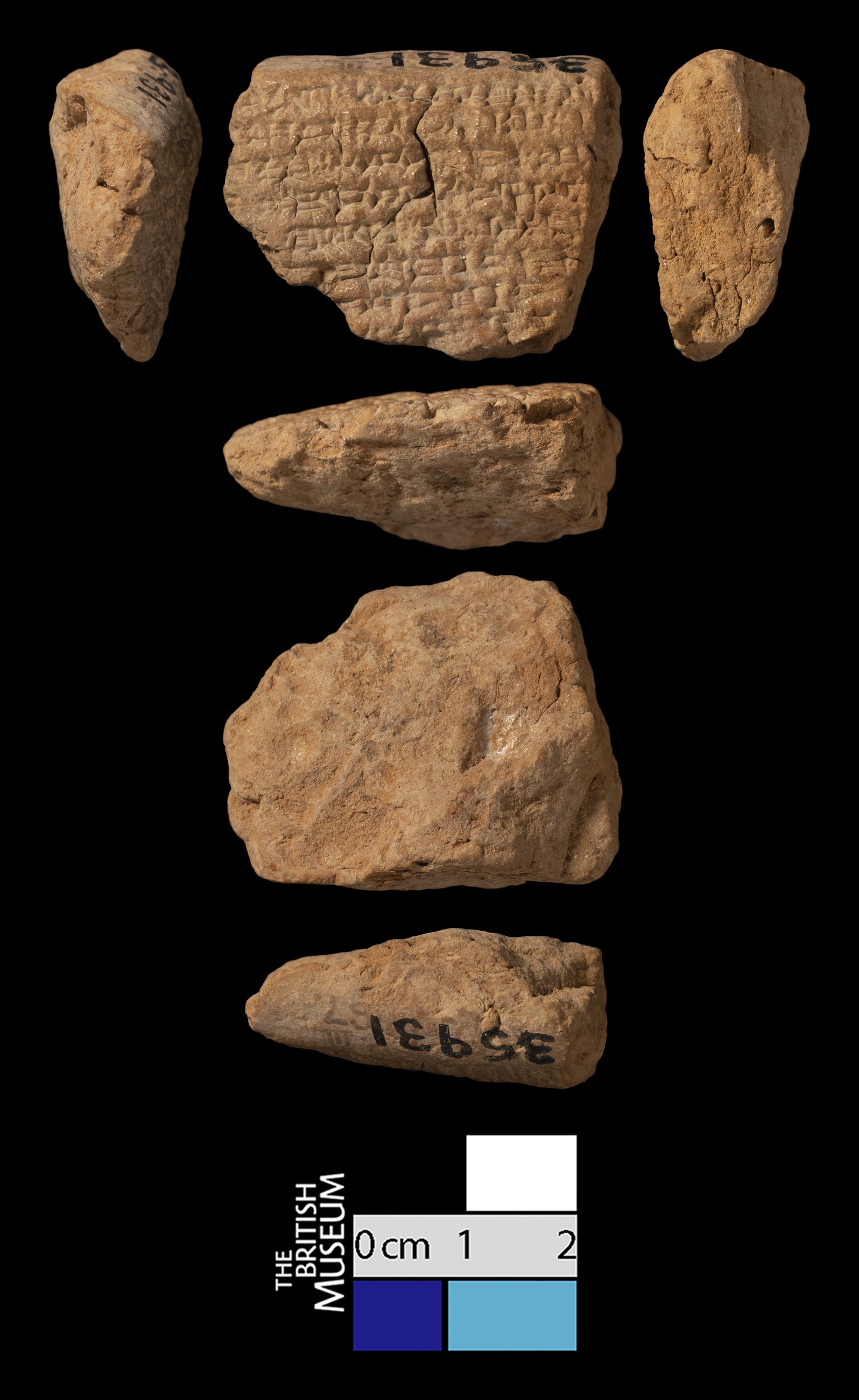
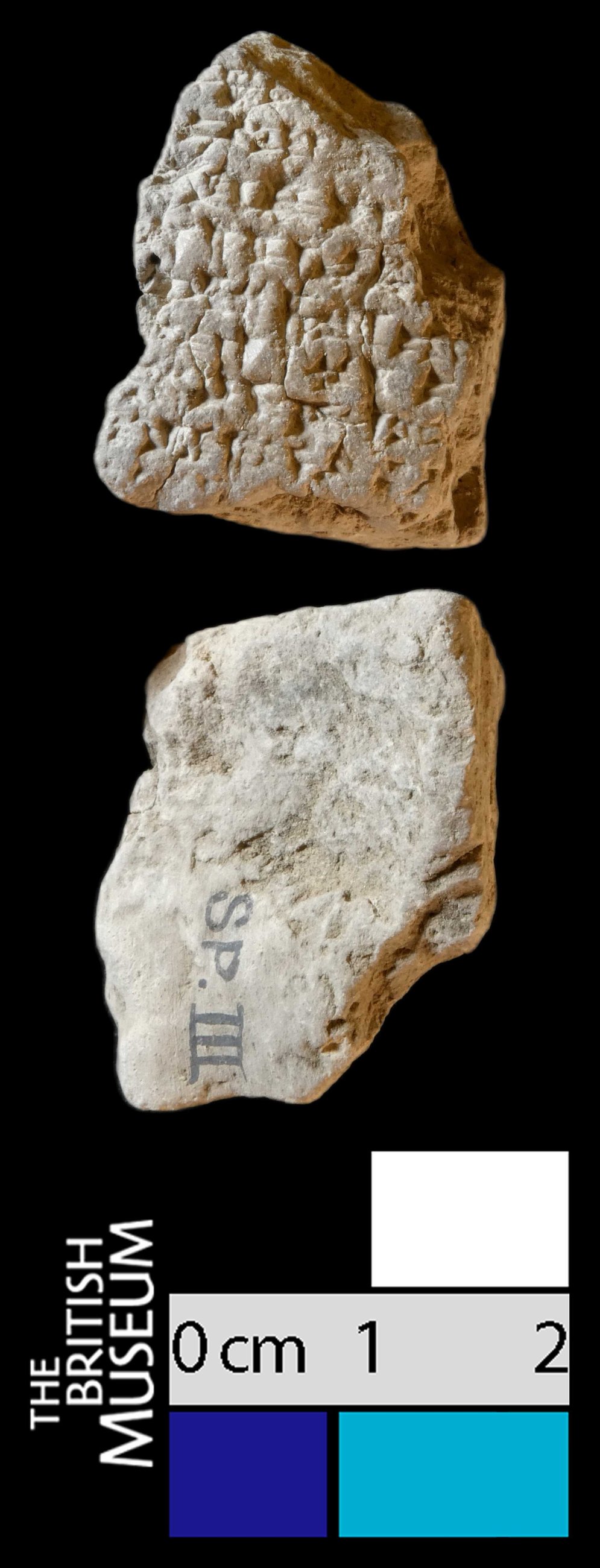
British Museum BM.35931: column i, the tablet's own lines 1 to 5. eBL's corpus edition (https://www.ebl.lmu.de/corpus/L/1/5/SB/I) attributes SB I 1-5 to this manuscript at these column and line numbers. Photograph checked: obverse, reverse and edges of a fragment about 3 cm wide, ink 35931 on two edges. About 10 lines of small script on the obverse and a blank reverse, consistent with eBL's column i (8). eBL treats BM.35931 + Sp-III.855 as one manuscript and holds a separate photograph of each of these pieces; it does not say which piece carries which line, so the photographs of BM.35931 + Sp-III.855 are linked, and the lines are on one or more of them. On this tablet lines 1-5 are partly broken (square brackets and x in the Akkadian). The English of these lines translates eBL's composite text, so it includes words that are not preserved on this tablet but are restored from other manuscripts or by the editors. Square brackets in the English mark eBL's restorations in its composite text; words that survive on other tablets carry no brackets even where this tablet is broken.
1[x] gi-mir da-ad₂-me ba-nu-u₂ kib-ra-a#-[ti x x x (x x x)]
2[{d}hen]dur-sag-ga₂ IBILA {d#}+en#-lil₂# reš-tu#-[u₂ x x x (x x x)]
3[n]a-aš₂# haṭ-ṭi# ṣir-ti na#-qid# ṣal#-mat# SAG.D[U x x x (x x)]
4{d#}i#-šum ṭa-bi-hu na#-aʾ#-du ša₂ ana na-š[e-e x x x x x x x]
5[a-n]a š[u]b-ruq ul-me#-šu₂# še-ru-tu# {d}er₃-ra# [x x x x x x x x x x]
1King of all settlements, creator of the universe, […]!
2Hendursanga, first-born son of Enlil, [...],
3Bearer of the august scepter, shepherd of the black-headed people, herdsman of [mankind]!
4Išum, zealous butcher whose hands are suited to bear his fierce weapons,
5And at the lightning of whose wrathful spears even Erra, the warrior of the gods, trembles in (his) abode!
Where on the image
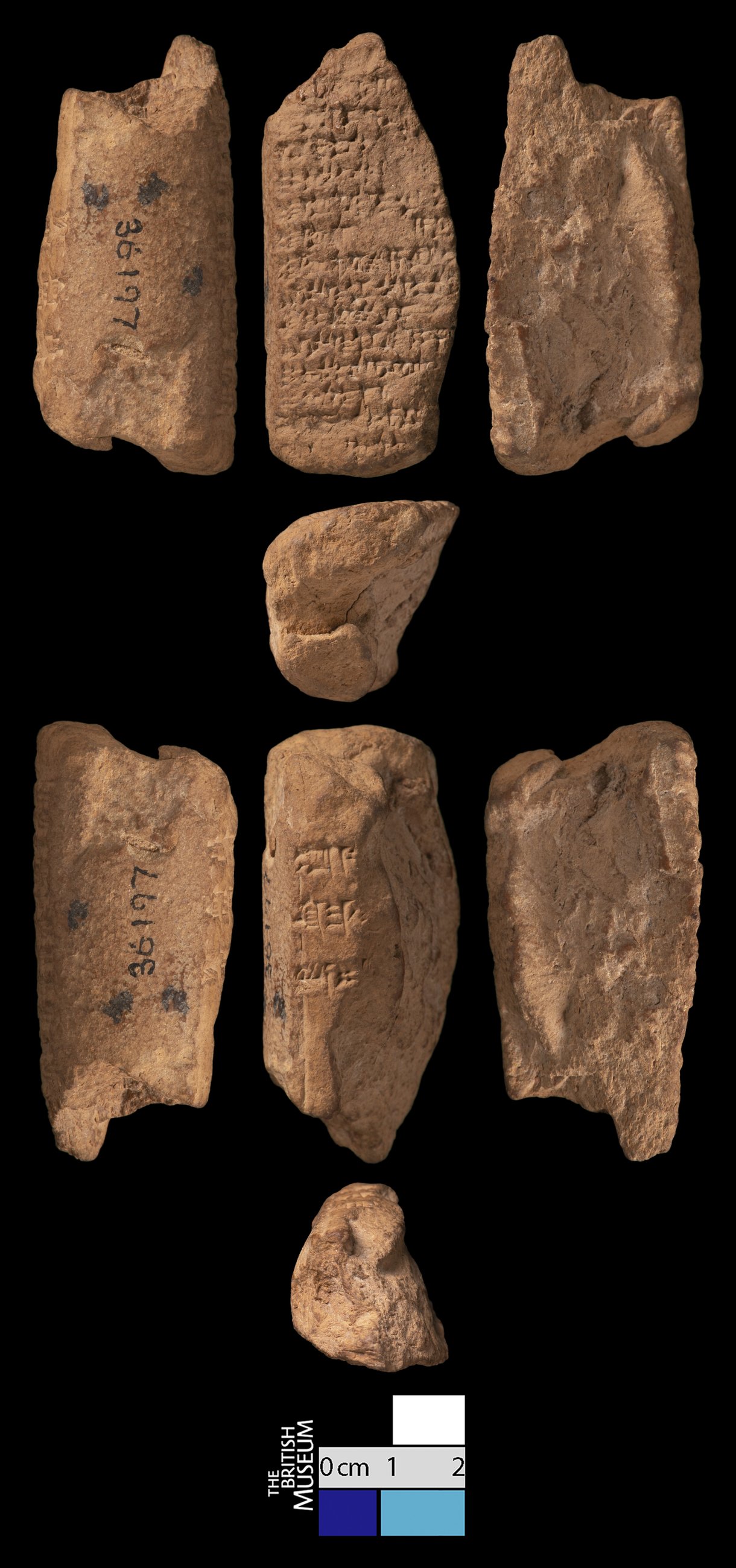
British Museum BM.36197: column i, the tablet's own lines 2' to 15'. eBL's corpus edition (https://www.ebl.lmu.de/corpus/L/1/5/SB/I) attributes SB I 6-19 to this manuscript at these column and line numbers. Photograph checked: obverse, reverse and edges of a narrow fragment, ink 36197 on the edge. About 15 lines on one face and only a few signs on the other, consistent with eBL's column i (15). On this tablet of line 19 only one to three signs survive and lines 6-18 are partly broken (square brackets and x in the Akkadian). The English of these lines translates eBL's composite text, so it includes words that are not preserved on this tablet but are restored from other manuscripts or by the editors. Square brackets in the English mark eBL's restorations in its composite text; words that survive on other tablets carry no brackets even where this tablet is broken.
6i#-ri#-iš#-su-m[a x x x x x x x x]
7i#-ta-me a-na# [x x x x x x x x x x x x]
8ana {d}IMIN-BI qa[r-rad x x x x x x x x x x x x]
9i-qab-bi-ma# [x x x x x x x x x x x]
10at-ta di-pa-ru#-u[m-ma x x x x x x x x]
11at-ta# a-l[ik x x x x x x x x (x x x)]
12at-ta nam-ṣa-ru-u[m-ma x x x x x x (x x)]
13{d}er₃-ra te-bi-m[a x x x x x x x]
14ki-i nam-rat [x x x x x x x x x x]
15{d}er₃-ra ki#-i ša₂ L[U₂? x x x x x x x x]
16i-qab-bi a-na lib#-b[i-šu₂ x x x x x x x]
17i-ta-ma a#-[na x x x x x x x x x x]
18a#-na# {d#}IMIN#-BI# qar#-rad l[a x x x x x x x x x x x x]
19[x x a]t-ta# t[a-de-ek-ku-šu₂ x x x x x x]
6His heart yearned for combat;
7To his weapons he exhorted, “Smear yourselves with deadly venom!”
8To the Seven, peerless warriors, “Gird your arms!”
9And he said to you, (Išum): “I shall head for the (battle) field!”
10You alone are the torch, it is your light they look to!
11You alone are the champion, the gods [march behind!]
12You alone are the sword, the butcher […]!
13Should Erra arise, when he destroys the country,
14Your mind will not rejoice, your heart will not be joyous.
15Erra, like a sleepless man, his limbs are weary,
16To his heart he said: “Shall I arise? Or shall I sleep on?”
17To his weapons he exhorted, “Keep leaning on the corners!”
18To the Seven, peerless warriors, “Return to your abode!”.
19Until you should wake him, he is asleep in his bed,
Where on the image
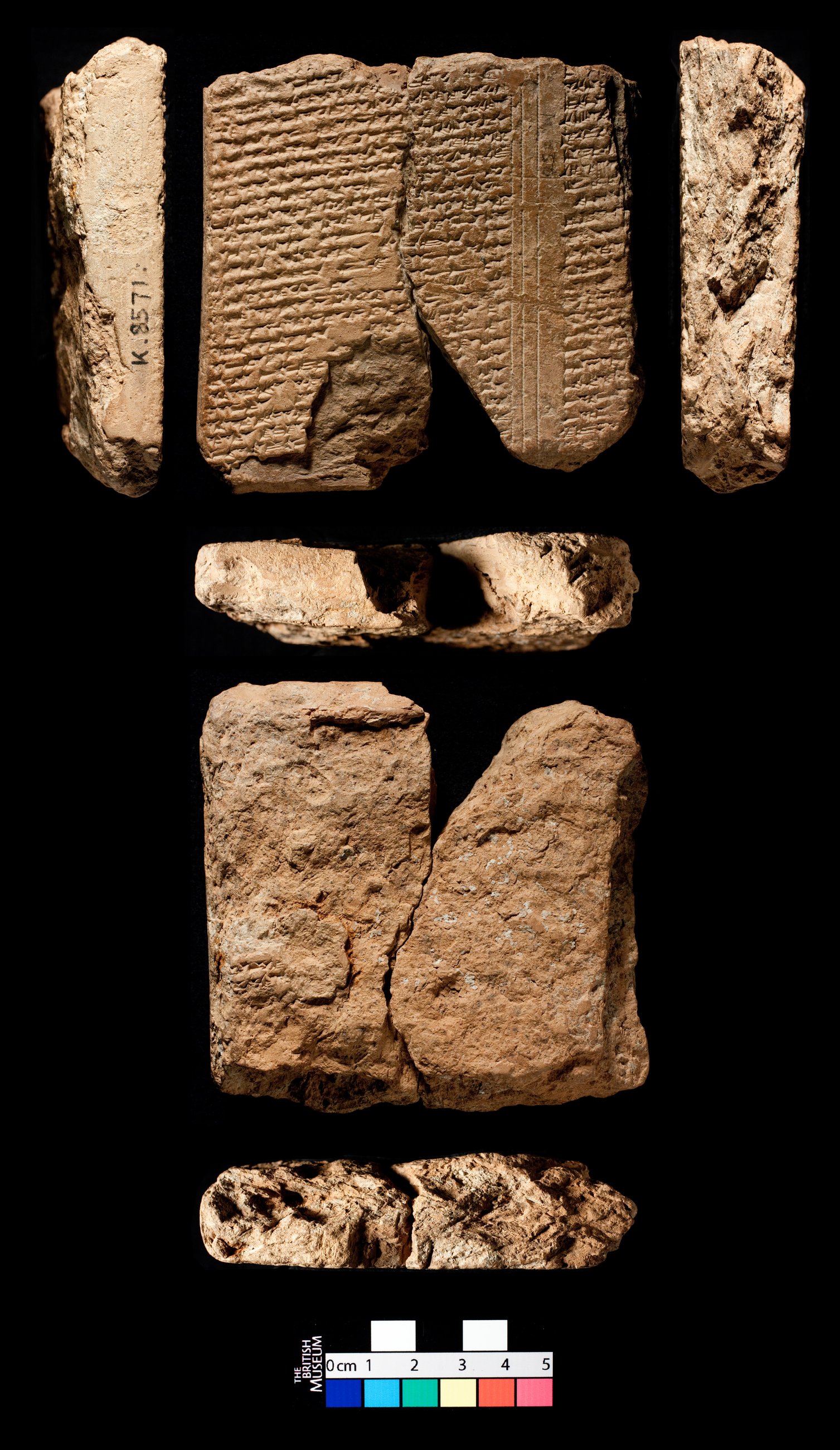
British Museum K.8571: column i, the tablet's own lines 1' to 25'. eBL's corpus edition (https://www.ebl.lmu.de/corpus/L/1/5/SB/I) attributes SB I 34-58 to this manuscript at these column and line numbers. Photograph checked: obverse, reverse and edges of two joined pieces, ink K.8571 on the left edge. Two obverse columns with a double ruling between them, about 27 and 25 lines, and a small patch of traces on the worn reverse; consistent with eBL's columns i (27), ii (25) and iv (2). K.8571 is joined to K.19050, photographed separately; eBL's own transliteration of the joined piece(s) does not include these lines, so only the photograph of K.8571 is linked. On this tablet of line 34 only one to three signs survive and lines 35-38, 40-44, 49-58 are partly broken (square brackets and x in the Akkadian). The English of these lines translates eBL's composite text, so it includes words that are not preserved on this tablet but are restored from other manuscripts or by the editors. Square brackets in the English mark eBL's restorations in its composite text; words that survive on other tablets carry no brackets even where this tablet is broken. Lines 39, 45-48 are complete on this tablet.
34[x x x x x zi-i]m? lab#-bi# [x x x x x x x x x x x x x]
35i#-qab#-bi# ana# LIMMU#-i# ana* ni-iš {giš#}TU[KUL-MEŠ-ka] ez?#-z[u?-ti x x x x x]
36a#-na# IA₂# iq#-ta#-bi ki-ma# IM# zi#-qi₂-i[m] k[ip]-pa-ta hi-i#-ṭu*
37AŠ₃#-šu₂ [u]m-ta*#-ʾi-ir# e-liš u šap#-liš ba-ʾa-[a]m-ma la*# ta-gam-mil mam-ma
38IMIN#-a# i*#-mat*# ba#-aš₂#-me# i#-ṣi-in-šu#-ma# š[u]m*-qi₂#-ta ZI-ta
39ul*#-tu*# ši-mat {d}IMIN-BI nap#-har#-šu₂-nu i-šim#-mu {d}a-num
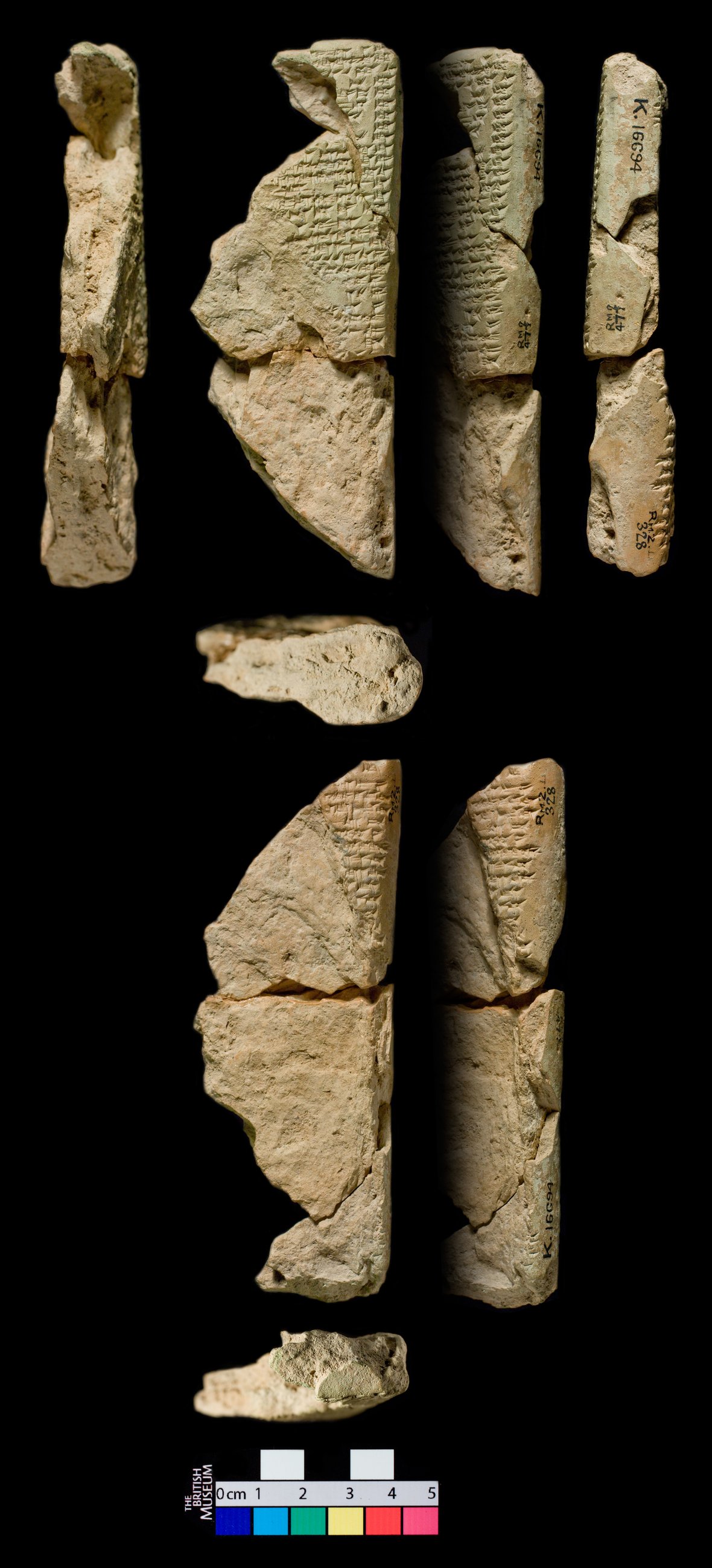
40id#-din#-šu#-nu-ti#-ma ana {d}er₃#-ra qar-rad DINGIR-[MEŠ l]il-li-ku i-da-ka
41ki#-i# ša₂# UN-MEŠ da#-ad₂-me hu-bur-ši-na [U]GU*-ka im-tar-ṣu*
42ub-lam-ma lib₃-ba-ka a-na ša₂-kan [k]a-mar-ri
43ṣal-mat SAG.DU a-na šu-mut-ti šum-q[u]-ut bu-ul {d}GIR₃
44[l]u-u {giš}TUKUL#-MEŠ-ka ez-zu#-ti šu#-nu-ma [li]l-li#-ku# i-da#-ka
45šu#-nu ez-zu-ma# te*#-bu-u {giš}TUKUL-MEŠ-šu₂-un
46i#-ta#-mu-u a-na {d}er₃-ra te-be₂# i-ziz-ma
47min₃#-su# ki#-i# ši-i#-bi muq*-qi₂ tu*#-šib ina a-li*#
48ki#-i# šer₃-ri la-ʾ-u₂*# | tu*#-šib ina E₂
49ki-i# la# a-lik# EDIN ni-ik-ka#-la a-k[a]l* sin-niš#
50ki#-i# ša₂ ta-ha-za la# ni-du-u ni-ip-la-h[a*] ni-ru*#-da*#
51a-lak EDIN ša₂ eṭ-lu-ti | ki-i# ša₂# i#-[s]in-nu-im-ma
52a#-šib URU lu NUN* ul*# i!?-šeb-b[i] ak#-la
53šum*-suk ina pi-i U[N-MEŠ-šu₂-ma x x qa]q-qad-su
54a-na a-lik EDIN a-ki-i!?# [x x x x Š]U-su
55ša₂ a-šib URU lu p[u!?-ug-gu-lat ku-bu-uk]-kuš
56a-na a-lik EDIN a-ki-i*# [x x x mi]-i!?#-na#
57a-kal URU lul-lu-u# [x x x x x x tum₃]-ri
58ši-kar# na-aš₂-pi [x x x x x x x x x x na]-a#-di#
34He exhorted the third: “Let your face be that of a lion so that whoever beholds you melts down!”
35He said to the fourth: “May the mountain be destroyed at the attack of your fiery weapons!”
36And then to the fifth he said: “Blow like the wind and overwhelm the world!”
37To the sixth he commanded: “sweep over above and below, sparing no one!”
38The seventh he filled with viper’s venom: “Finish (all) life!”.
39Once Anu had fixed the lot of all Seven,
40He handed them over to Erra, the warrior of the gods, (saying): “Let them march at your flank!
41“When the noise of the peoples in settlements becomes unbearable to you,
42“And your temper drives you to decimate them,
43“To ravage the black-headed and the wild beasts to destroy,
44“Let these be your wrathful weapons, that they march at your flank!”.
45They are furious, their weapons are raised,
46They turn to Erra: “Rise! Stand up!
47“Why, like a worn-out old man, do you reside in a city,
48“Like a little child do you reside in a house?
49“As one who knows not the (battle) field, will we eat the bread of women?
50“As if we did not know how to fight, should we tremble and fear?
51“Going to the (battle) field is becoming for manhood, like a festival!
52“The city dweller, be he a prince, bread does not satiate him,
53“Criticized by his own people, despised,
54“He will have to beg to the humblest soldier.
55“The city dweller, however mighty his strength,
56“In what does it advantage the humblest soldier?
57“The abundant bread of the city cannot compare with the cake baked in embers!
58“The fine, honeyed beer cannot compare with the water from a waterskin!
Where on the image
British Museum K.16694: column ii, the tablet's own lines 1 to 27. eBL's corpus edition (https://www.ebl.lmu.de/corpus/L/1/5/SB/I) attributes SB I 59-85 to this manuscript at these column and line numbers. Photograph checked: obverse, reverse and edges of a narrow fragment of joined pieces, inks K.16694 and two Rm 2 numbers (328 and, less clearly, 477), matching eBL's K.16694+Rm-II.328+Rm-II.477. About 25 lines in one column on one face and about 15 on the other, consistent with eBL's columns ii (27) and iii (14). On this tablet of lines 62-66, 79-85 only one to three signs survive and lines 59-61, 67-78 are partly broken (square brackets and x in the Akkadian). The English of these lines translates eBL's composite text, so it includes words that are not preserved on this tablet but are restored from other manuscripts or by the editors. Square brackets in the English mark eBL's restorations in its composite text; words that survive on other tablets carry no brackets even where this tablet is broken.
59[x x x x x x x x x m]a-ṣal-lu ša₂ SI[PA]
60[x x x x x x x x x x EDI]N tu-ruk kak-ki-ka
61[x x x x x x x x x x] e#-liš u šap-liš
62[x x x x x x x x x x] MU-ka
63[x x x x x x x x x x x s]i₃-qar-ka
64[x x x x x x x x x n]i-ri-ka
65[x x x x x x x x x ša₂-p]al-ka
66[x x x x x x x x x x x liš-ša₂-a]-ka
67[x x x x x x x x ra-ma-ni]-šu₂#-nu# l[i-m]u-tu
68[x x x x x liš-šu-r]u e-m[u-q]i₂-šu
69[x x x x x x x x x x li-tab-b]i-tu-ma liš-pi#-la# re-š[a₂-š]u-un
70[x x x x x x x x x lid-d]al-ha-ma li-hal#-li#-qa m[e-š]er₃-tu₂
71[x x x x x x lik-tap-p]i-ru gup-nu#-šu
72[x x x x x x x x x x lih]-ta#-aṣ-ṣi#-ṣu# GI-MEŠ!#-šu
73[x x x x x x lit-q]u-na# hu-bur#-šin#
74[x x x x x x x x] ana ṭi-iṭ#-ṭ[i]
75[x x x x x x x x x] li#-[n]a-du qur-di-k[a]
76[x x x x x x x x x tu-maš-šir₃-m]a tu-šib ina URU#
77[x x x x x x x x le-q]u-u še-ṭu-ut-ni
78[x x x x x x x x x x x x x li-i]m-ru#-uṣ# UGU-ka
79[x x x x x x x x x] UGU-ni
80[x x x x x x x x] a-mat-ni
81[x x x x x x x x x x x x x x S]IG₅ ep#-ša₂
82[x x x x x x x x x x x i-re-eh-hu]-u# šit-tu₄
83[x x x x x x x x ra-hi-i]ṣ bu-lu₄
84[x x x x x x (x) x x x x x ṣa]r-piš
85[x x x x x x x x x x bu-u]l {d#}G[IR₃]
59“The palace on the citadel cannot compare with the shepherd’s hut!
60“Warrior Erra, go out into the (battle) field, rattle your weapons!
61“Make your noise loud, so that those above and below tremble!
62“Let the Igigi hear it and extol your name!
63“Let the Anunnaki hear it and fear the mention of you!
64“Let the gods hear it and bend for your yoke!
65“Let the kings hear it and kneel before you!
66“Let the countries hear it and bring you their tribute!
67“Let the demons hear it and die for themselves!
68“Let the mighty one hear it and diminish his strength!
69“Let the tall mountains hear it and be destroyed, and their summits be leveled!
70“Let the rolling seas hear it and be troubled, and destroy (their) fauna!
71“From the thickest forests let its trunks be uprooted!
72“In the impenetrable reed-bed, let its reeds be snapped!
73“May the peoples fear and their noise be quieted!
74“Let the wild beasts shake and be brought to dust!
75“May your fathers the gods regard and praise your heroism!
76“Warrior Erra, why have you forsaken the (battle) field and reside in the city?
77“The wild cattle and the wild beasts have despised us.
78“Erra warrior, to you we address ourselves: Let our speech be unberable to you!
79“Before the whole country belittles us,
80“You must surely hear our advice!
81“Do a kindness to the Anunnaki, who love silence:
82“The Anunnaki, because of the noise of the people, are unable to fall asleep.
83“The pastures – the source of life of the country – are trodden by cattle.
84“The farmer, over his land, weeps bitterly.
85“The lion and the wolf destroy the wild cattle.
Where on the image
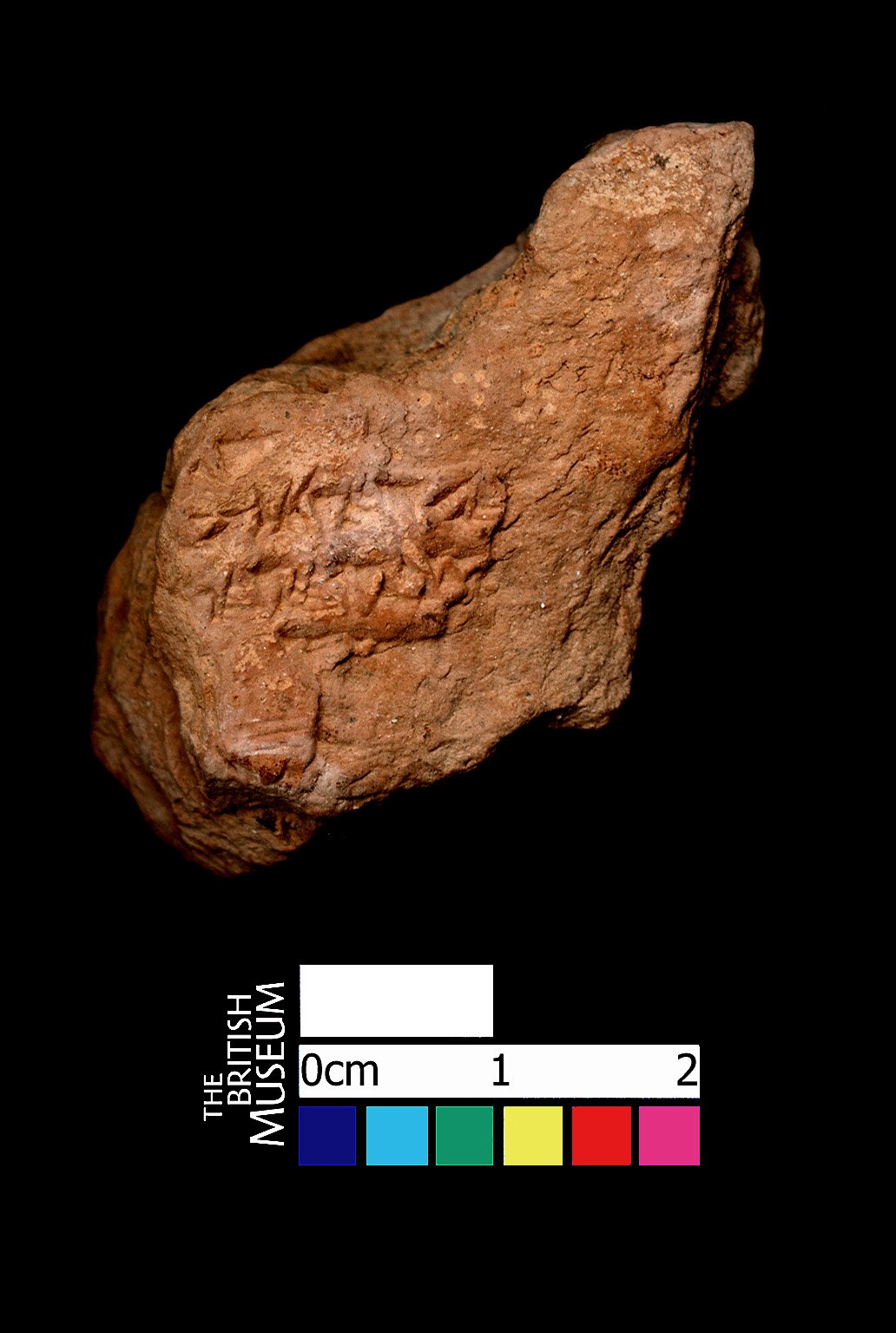
British Museum K.8571: column ii, the tablet's own lines 1' to 3'. eBL's corpus edition (https://www.ebl.lmu.de/corpus/L/1/5/SB/I) attributes SB I 92-94 to this manuscript at these column and line numbers. Photograph checked: obverse, reverse and edges of two joined pieces, ink K.8571 on the left edge. Two obverse columns with a double ruling between them, about 27 and 25 lines, and a small patch of traces on the worn reverse; consistent with eBL's columns i (27), ii (25) and iv (2). K.8571 is joined to K.19050, photographed separately; eBL's own transliteration of the joined piece(s) does not include these lines, so only the photograph of K.8571 is linked. On this tablet of lines 92, 94 only one to three signs survive and line 93 is partly broken (square brackets and x in the Akkadian). The English of these lines translates eBL's composite text, so it includes words that are not preserved on this tablet but are restored from other manuscripts or by the editors. Square brackets in the English mark eBL's restorations in its composite text; words that survive on other tablets carry no brackets even where this tablet is broken.
92iš#-m[e-šu-nu-ti-ma x x x x x x]
93a-mat {d}IM[IN-BI x x x x x x x x x x x x x]
94i-pu-u[š-ma x x x x x x x x x x]
92Warrior Erra heard them,
93The words of the Seven pleased him like the finest of oils.
94He prepared to speak, addressing Išum:
Where on the image
British Museum K.8571: column ii, the tablet's own lines 4' to 9'. eBL's corpus edition (https://www.ebl.lmu.de/corpus/L/1/5/SB/I) attributes SB I 95-101 to this manuscript at these column and line numbers. Photograph checked: obverse, reverse and edges of two joined pieces, ink K.8571 on the left edge. Two obverse columns with a double ruling between them, about 27 and 25 lines, and a small patch of traces on the worn reverse; consistent with eBL's columns i (27), ii (25) and iv (2). K.8571 is joined to K.19050, which the British Museum photographed separately. eBL's own transliteration of K.19050 and the notes of its edition place parts of these lines on K.19050, so its photograph is linked as well as that of K.8571. On this tablet of line 100 only one to three signs survive and lines 95-99, 101 are partly broken (square brackets and x in the Akkadian). The English of these lines translates eBL's composite text, so it includes words that are not preserved on this tablet but are restored from other manuscripts or by the editors. Square brackets in the English mark eBL's restorations in its composite text; words that survive on other tablets carry no brackets even where this tablet is broken.
95min₃-su še*#-[ma-ta-ma qa]-liš# [x x x]
96ṭu*-di p[i-te-ma lu-u]ṣ-ba-ta ha[r-ra-na]
97{d}IMIN-BI q[ar*-rad x x x x x x x x (x) x]
98[x x x x ez-zu-t]u šu-li-ka i?#-[da-a-a]
99u at-ta# a*#-[lik x x x] a-lik# [x x x]
100{d}i-šu[m x x x x x x]
101<i>-pu-uš!?# (x) [x x x (x x)] i?#-[x x x x x x x x]
95“Why, having heard this, are you sitting silent?
96“Open the path, I shall take to the road!
97“Let the Seven, the peerless warriors, make war!
98“Make my fierce weapons march to my flank!
99“And you, my champion, come before me!”.
100[When] Išum [heard] these words,
101Moved with compassion he said, [“alas!”]
Where on the image
British Museum K.8571: column ii, the tablet's own lines 10' to 24'. eBL's corpus edition (https://www.ebl.lmu.de/corpus/L/1/5/SB/I) attributes SB I 102-116 to this manuscript at these column and line numbers. Photograph checked: obverse, reverse and edges of two joined pieces, ink K.8571 on the left edge. Two obverse columns with a double ruling between them, about 27 and 25 lines, and a small patch of traces on the worn reverse; consistent with eBL's columns i (27), ii (25) and iv (2). K.8571 is joined to K.19050, photographed separately; eBL's own transliteration of the joined piece(s) does not include these lines, so only the photograph of K.8571 is linked. On this tablet of lines 102, 104, 106, 110, 116 only one to three signs survive and lines 103, 105, 107-109, 111-115 are partly broken (square brackets and x in the Akkadian). The English of these lines translates eBL's composite text, so it includes words that are not preserved on this tablet but are restored from other manuscripts or by the editors. Square brackets in the English mark eBL's restorations in its composite text; words that survive on other tablets carry no brackets even where this tablet is broken.
102qu#-ra#-du# [x x x x x x x x x x x]
103ana# sa*#-pan*# KUR*#.KUR!?# h[ul!?-lu-uq x x x x x x x x x x x x x x x]
104{d}er₃-ra [x x x x x x x x x]
105ana# {d#}i#-šum# a*#-[lik x x x x x x x x x]
106{d#}i#-šum# [x x x x x x x x]
107aš₂*#-šu₂*# UN#-ME[Š x x x x x x x x x x]
108a*#-lik*# mah#-ri# D[INGIR-MEŠ x x x x x x x x x x x]
109ina AN*#-e*# r[i*-ma-ku x x x x x x]
110ina KUR šar#-[ra-ku x x x x x x]
111ina {d}i₂-gi₃-gi₃ qar*#-d[a*-ku x x x x x x x x x]
112ina bu-li ma*#-hi*#-ṣ[a-ku x x x x x x]
113ina a-pi {d#}gi[ra₂-ku x x x x x x]
114ina a-lak* h[ar-ra-ni x x x x x]
115ki-i ša₂-a*#-r[i* x x x x x x x x x x x]
116ki*#-i*# [x x x x x x x x x x x x]
102“Warrior Erra, why have you devised insidious plots against the gods?
103“You have plotted to ravage the earth and destroy [its inhabitants]; will you not desist?”
104Erra prepared to speak,
105Addressing Išum, his champion, in these words:
106“Išum, pay attention, listen to my words!
107“Concerning the peoples in settlements, whose pardon you requested,
108“O champion of the gods, wise Išum, whose counsel is sweet!
109“In heaven I am a wild bull, on earth I am a lion,
110“In the land I am a king, among the gods a fury,
111“Among the Igigi I am a hero, among the Anunnaki a champion,
112“Among the beasts I am a bowhunter, in the mountain the pit-trap,
113“In the reedbed I am the fire, in the forest the axe,
114“In campaign I am the standard,
115“As the wind I blow, as Adad I thunder;
116“Like the sun god I oversee the whole orb.
Where on the image
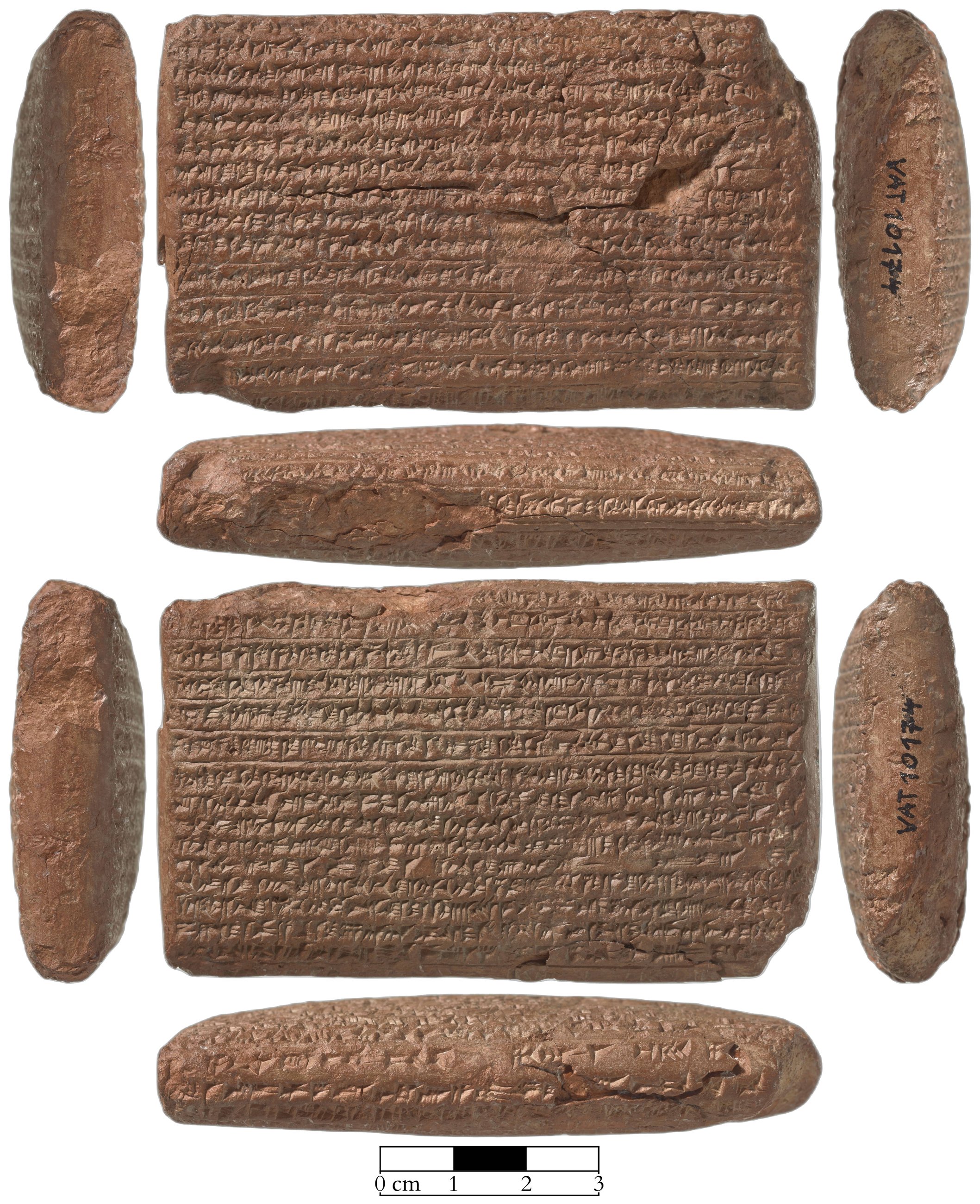
Vorderasiatisches Museum, Berlin VAT.10174: reverse, the tablet's own lines 7a to 14a. eBL's corpus edition (https://www.ebl.lmu.de/corpus/L/1/5/SB/I) attributes SB I 121-129 to this manuscript at these column and line numbers. Photograph checked (eBL photograph of the Vorderasiatisches Museum, Berlin): obverse, reverse and edges of a complete landscape tablet from Assur, ink VAT 10174 on the right edge; both faces are filled with about 17 to 20 long lines. Consistent with eBL's reverse lines 7a-15 (Erra I 121-131) on this school tablet, which also carries an excerpt of the Great Hymn to Shamash on the obverse. eBL classes VAT.10174 as a school tablet (a scribal exercise that copies an excerpt of the text), not a library copy of the whole work. It carries these lines as text (eBL's transliteration has no commentary or quotation markup), and it is used because no photographed library copy preserves these lines as well. Every line of this section is complete on this tablet; the English translates eBL's composite text, which may follow other manuscripts where they differ in wording.
121a-na-ku aš₂-šu₂ la iš-hu-tu₂ zik-ri :.
122u₃ ša₂ NUN {d}AMAR.UTU a-mat-su id-du-ma ep-pu-šu ki-i lib-bu-uš
123NUN-a {d}AMAR.UTU u₂-šag-gag-ma ina šub-ti#-šu₂ a-de-ke-ma UN#-MEŠ a-sa-ap-pan
124qu-ra-du {d}er₃-ra a-na šu-an-na URU LUGAL DINGIR.DINGIR# iš-ta-kan pa-ni-šu
125a-na e₂#-sag-il₂ E₂#.GAL AN-e KI-ti₃ i-ru-um#-ma it-ta-ziz pa-nu-uš-šu
126e-pu-uš-ma pa-a-šu a-na LUGAL DINGIR.DINGIR i-ta-ma
127min₃-su šu-kut-ta si-mat be-lu-ti-ka ša₂ GIM kak#-kab ša₂-ma-me lu-la#-a ma-la#-at₂# le-qa-ta ur#-šiš!?#
128a-ge-e be-lu-ti-ka ša!?# ki-ma (erased: DIŠ) e₂-te-me-na#-ak u₂-ša₂-an-ba-ṭu e₂-hal#-an#-ki pa-nu-šu kat₃-mu
129DU₃-uš-ma pa-a-šu₂ (erased: DIŠ) LUGAL DINGIR.DINGIR i-tam-ma :.
121“I — for they have not feared my name
122“And have neglected the orders of prince Marduk, I shall do as he pleases.
123“I shall make prince Marduk angry, I shall raise him from his throne and devastate mankind.”
124The warrior Erra set off to Šuʾanna, the city of the king of the gods,
125He entered the Esagil, the palace of heaven and earth, and presented himself before him.
126He prepared to speak, addressing the king of the gods:
127“The image, the ornament of your lordship, which, like the stars of heaven, was full of splendor, why is it covered with filth?
128“The diadem of your lordship, which used to make the Eḫalanki shine like the Etemenanki, why is it dimmed?
129The king of the gods prepared to speak,
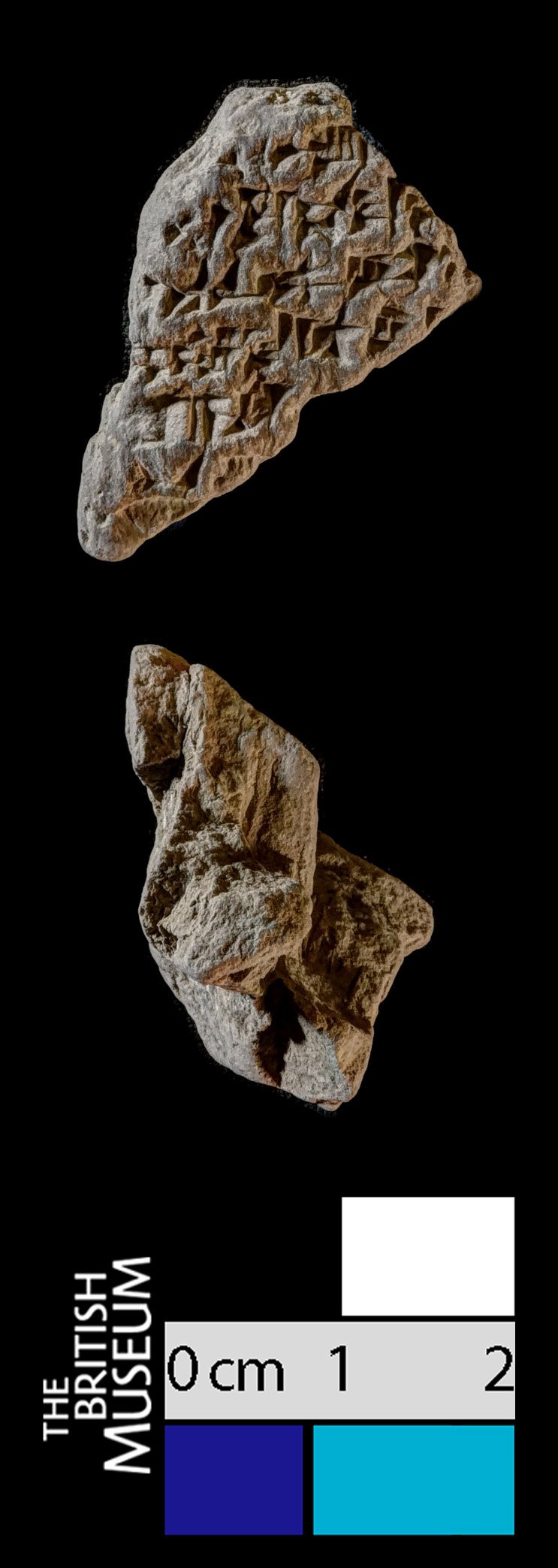
Where on the image
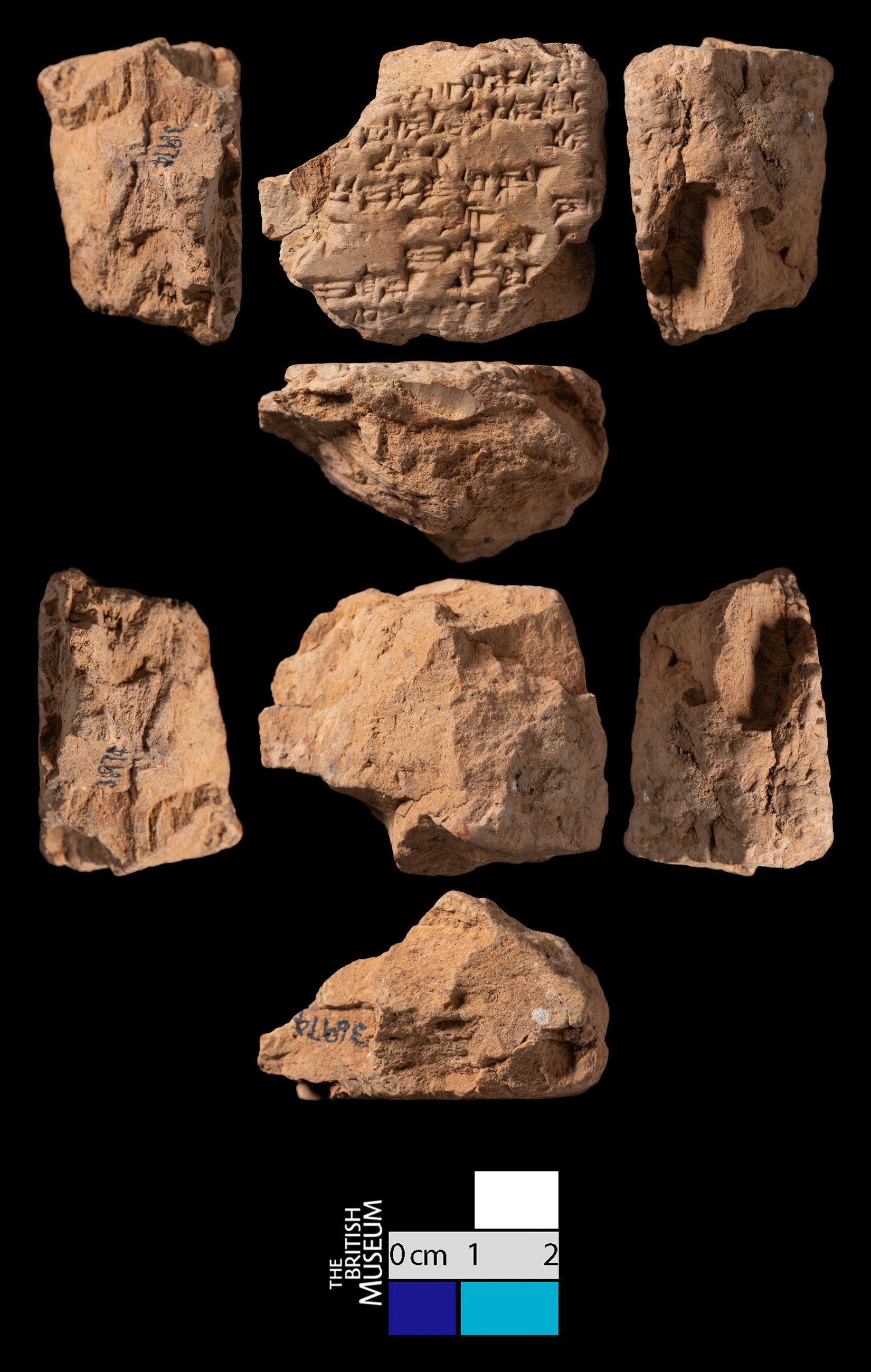
British Museum BM.36974: column iii?, the tablet's own lines 1' to 8'-9'. eBL's corpus edition (https://www.ebl.lmu.de/corpus/L/1/5/SB/I) attributes SB I 130-136 to this manuscript at these column and line numbers. Photograph checked: obverse, reverse and edges of a fragment about 2.5 cm across, ink 36974 on the edges. About 7 or 8 lines in large script on the obverse and a blank reverse; with the linked piece 1880,0617.2683 (about 5 lines) this fits eBL's column iii (12). eBL treats BM.36974 + 1880,0617.2683 as one manuscript and holds a separate photograph of each of these pieces; it does not say which piece carries which line, so the photographs of BM.36974 + 1880,0617.2683 are linked, and the lines are on one or more of them. On this tablet of lines 130-131 only one to three signs survive and lines 132-136 are partly broken (square brackets and x in the Akkadian). The English of these lines translates eBL's composite text, so it includes words that are not preserved on this tablet but are restored from other manuscripts or by the editors. Square brackets in the English mark eBL's restorations in its composite text; words that survive on other tablets carry no brackets even where this tablet is broken.
130[x x x x x x x x x a]-ma#-[tu₂ x x x]
131[x x x x x x x x x x x x x x taq]-bu#-u₂# [x x x]
132[x x x x x x x x x x x x a]-te-eb-bi-ma x [x x x x x]
133[x x x x x x x x x x x x K]I-ti₃ up-ta-a[ṭ-ṭi-ir]
134[x x x x x x x x x x x x man-z]a-as-su-nu uš#-[tan-ni-ma x x x x x x x x x]
135[x x x x x x x x x x x še-e]r?-ʾ[i? x x x] (line break) [im-ṭi-m]a a-di ul#-la# a#-na e-me₂-di aš₂#-ṭ[a]
136[x x x x x x nag]-bi# uh#-ta-aṭ-ṭi#-ma*# mi-li*# i[t-tah-su] (line break) (blank space) [x x x x x x x x x x] im-tar-ṣ[u]
130To Erra, the warrior of the gods, he addressed (his) word:
131“Warrior Erra! Regarding that action you suggested:
132“Once, in my anger, I arose from my throne, causing a flood;
133“I arose from my residence, and the seams of heaven and earth were rent asunder.
134“The heavens that were shaken: (for this cause,) the celestial bodies changed their positions, and I did not restore them to their places;
135“The netherworld that trembled: (for this cause,) the (production) of the furrow decreased to such an extent that it was forever difficult to levy (taxes on it);
136“The seams of heaven and earth that were rent asunder: the springs diminished and the floods receded. When I looked again, it was scarcely enough.
Where on the image
British Museum K.16694: column iii, the tablet's own lines 3' to 14'. eBL's corpus edition (https://www.ebl.lmu.de/corpus/L/1/5/SB/I) attributes SB I 137-148 to this manuscript at these column and line numbers. Photograph checked: obverse, reverse and edges of a narrow fragment of joined pieces, inks K.16694 and two Rm 2 numbers (328 and, less clearly, 477), matching eBL's K.16694+Rm-II.328+Rm-II.477. About 25 lines in one column on one face and about 15 on the other, consistent with eBL's columns ii (27) and iii (14). On this tablet of lines 139, 142, 144-148 only one to three signs survive and lines 137-138, 140-141, 143 are partly broken (square brackets and x in the Akkadian). The English of these lines translates eBL's composite text, so it includes words that are not preserved on this tablet but are restored from other manuscripts or by the editors. Square brackets in the English mark eBL's restorations in its composite text; words that survive on other tablets carry no brackets even where this tablet is broken.
137[x x x x x x x x x x x x u]l i-tur aš₂-ru-šun
138[x x x x x x x x x x aṣ-b]a-tu ina ŠU#-ia
139[x x x x x x x in]a lib₃-bi
140[x x x x x x x x x x x x x i-ki]-lu# ši-kin-ša₂
141[x x x x x x x x x x x x x x x x] {d#}gira₂ um!(TA)-ta-ʾi-ir
142[x x x x x x x x x x u₂-qat-tu]-u₂# šip-ri
143[x x x x x x x x x x x x x aš₂-r]i-ia a-tu-ru
144[x x x x x x x x x x ni-i]ṭ-li
145[x x x x x x x x x x x x x x e-pe]š šip-ri
146[x x x x x x x x x x x re-e]-ha#
147[x x x x x x x x x x x x x x x x x aq-b]i
148[x x x x x x x x x x x x x x x x x x ma]m-ma
137“The progeny of the living beings was scarce, but I did not restore things;
138“Till, like a farmer, I took their seedlings in my hand.
139“I built a(nother) house and settled therein.
140“My image, which by reason of the deluge was removed, whose appearance was tarnished;
141“I ordered the fire god to polish my face and cleanse my garments.
142“When he had polished my image and fulfilled the action,
143“And I had girded on the diadem of my lordship and returned to my place,
144“My countenance was haughty, terrifying was my glance!
145“The people that escaped the flood saw the action fulfilled:
146“If I should now lift up my weapons, I would destroy the rest.
147“Those craftsmen I brought down to the Apsû, and I have not yet decreed their return,
148“I changed the location of the mēsu-tree (and its) amber, and revealed it to none.
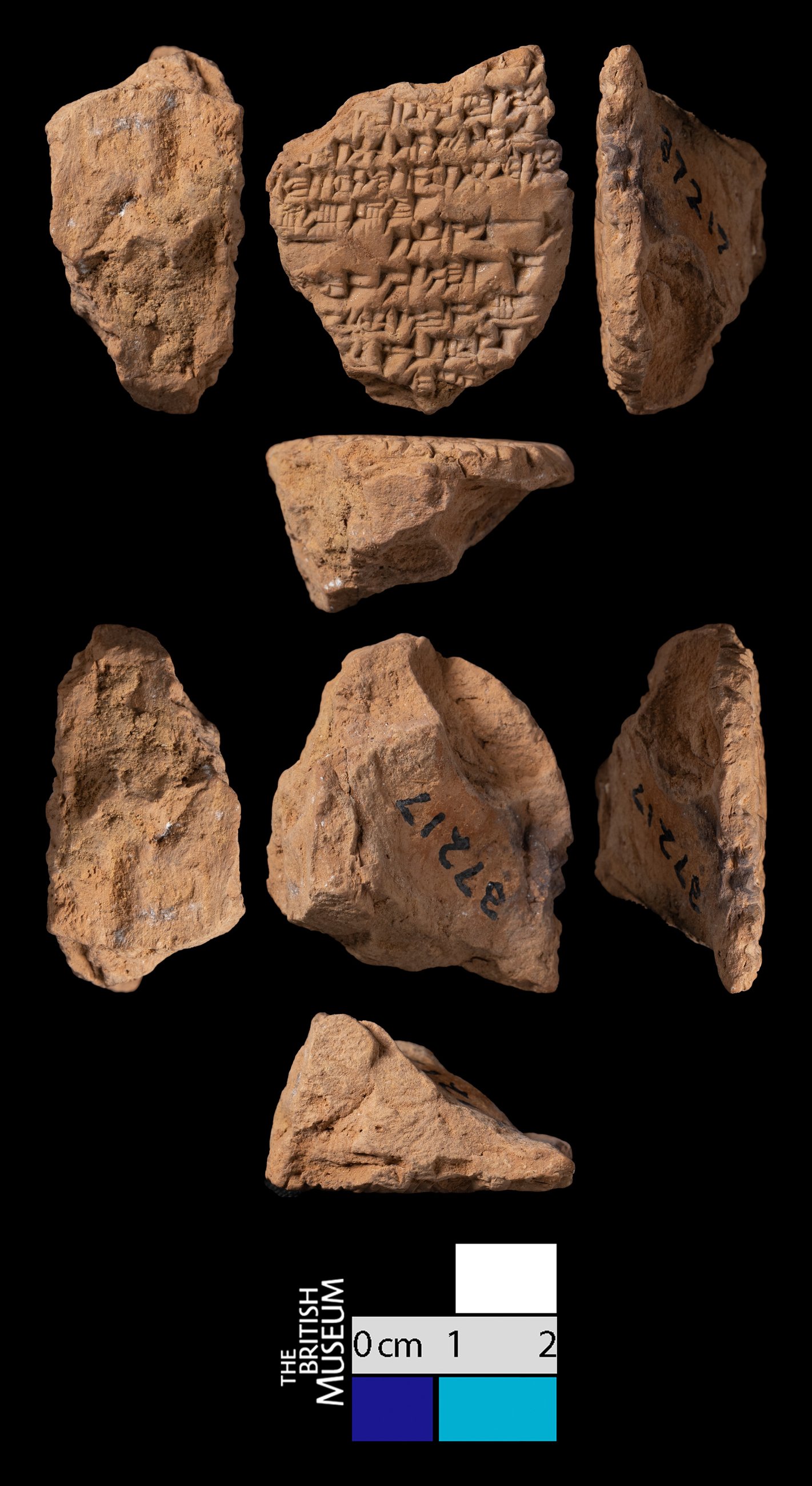
Where on the image
British Museum BM.37217: column iii, the tablet's own lines 1' to 4'b. eBL's corpus edition (https://www.ebl.lmu.de/corpus/L/1/5/SB/I) attributes SB I 149-153 to this manuscript at these column and line numbers. Photograph checked: obverse, reverse and edges, ink 37217 on the blank reverse and on an edge. About 12 lines in large script on the obverse, consistent with eBL's column iii (12). On this tablet line 150 is entirely broken, of line 149 only one to three signs survive and lines 151-153 are partly broken (square brackets and x in the Akkadian). The English of these lines translates eBL's composite text, so it includes words that are not preserved on this tablet but are restored from other manuscripts or by the editors. Square brackets in the English mark eBL's restorations in its composite text; words that survive on other tablets carry no brackets even where this tablet is broken.
149[x x x x x x x x x x x x x] UR!?#.S[AG x x x]
150[x x x x x x x x x x x]
151[G]IŠ-ṣi# el#-lu eṭ#-[lu (x x)] (line break) [x x x x x x x x x x x x]
152[x x tam-t]i₃ DAGAL#-ti₃ ina A-MEŠ 1# me# DAN[NA x x (x)] (line break) [x x x x x x x x x x]
153[qim-ma]t-su e-la-a-tu₂ en-de-e[t x x x x x x]
149“Now about that action you mentioned, O hero Erra!
150“Where is the mēsu-tree, the flesh of the gods, fitting for the king of the universe?
151“The pure tree, the splendid lad, which is meet for lordship;
152“That in the waters of the vast sea spreads its roots a hundred double-hours to reach the depths of the Netherworld;
153“Whose top in the heights touches the sky of Anu?
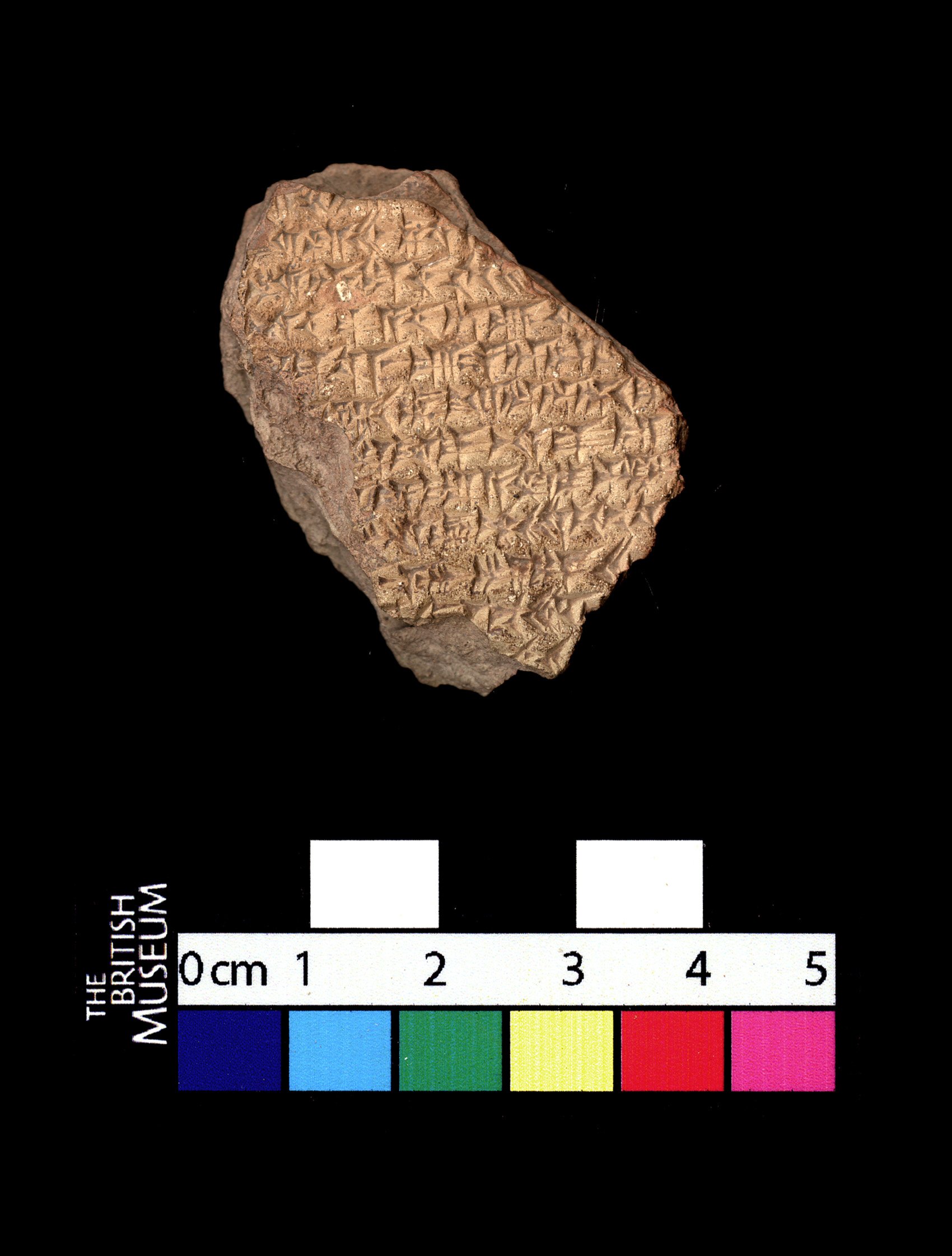
Where on the image
British Museum K.10023: column iii, the tablet's own lines 2' to 8'. eBL's corpus edition (https://www.ebl.lmu.de/corpus/L/1/5/SB/I) attributes SB I 154-160 to this manuscript at these column and line numbers. Photograph checked: one face only of a fragment about 4 cm high with about 12 lines; no ink number visible. Consistent with eBL's column iii (11). On this tablet lines 154-160 are partly broken (square brackets and x in the Akkadian). The English of these lines translates eBL's composite text, so it includes words that are not preserved on this tablet but are restored from other manuscripts or by the editors. Square brackets in the English mark eBL's restorations in its composite text; words that survive on other tablets carry no brackets even where this tablet is broken.
154[a]-li# eb-bu {na₄#}ZA#.[GIN₃.DURU₅ x x x x x x x (x x)]
155a#-li {d}nin-ild[u₂ x x x x x x x]
156(blank space) na-ši pa-a-ši {d}šam-š[i x x x x x x x x x x]
157[x k]i-ma u₄-me u₂-ša₂-an-ba-ṭ[u!-ma x x x x x x x x x]
158[x x] {d#}ku₃#-si₂₂-ban₃-da! ba-an DINGIR u L[U₂ x x x x x x]
159[x x {d}n]in-a₂-gal na-aš₂ se-[e x x x x x x]
160[x dan-n]a e-ra-a ki-i maš-ki i#-[le-mu x x x x x x]
154“Where is the pure blue pigment that was made (as) splendid (as) lapis lazuli?
155“Where is Ninildu, master carpenter of my sovereignty?
156“Bearer of the pure golden axe, skilled in the (carving of) that tree (scil. the mēsu-tree),
157“Who makes (it) shine like the noonday and places (it) at my feet?
158“Where is Kusibanda, the creator (of the images) of god and men, whose hands are choice?
159“Where is Ninagal, the bearer of the upper and lower millstones,
160“Who molds strong copper as (easily as) leather, the inventor of in[struments]?
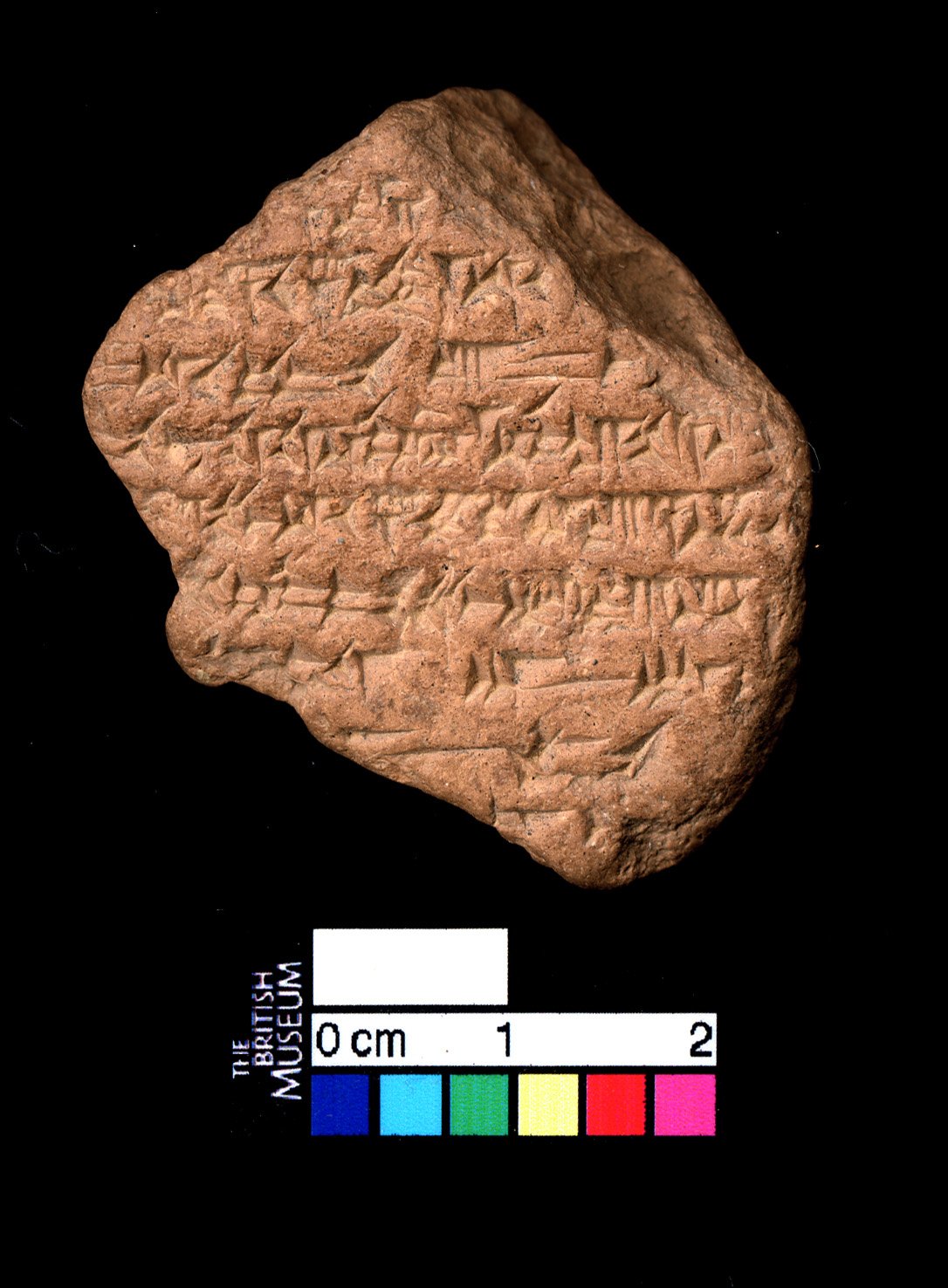
Where on the image
British Museum K.13361: column iii, the tablet's own lines 4' to 9'-10'. eBL's corpus edition (https://www.ebl.lmu.de/corpus/L/1/5/SB/I) attributes SB I 161-165 to this manuscript at these column and line numbers. Photograph checked: one face only of a fragment about 2.5 cm across with 8 or 9 lines; no ink number visible. Consistent with eBL's column iii (8). On this tablet of lines 164-165 only one to three signs survive and lines 161-163 are partly broken (square brackets and x in the Akkadian). The English of these lines translates eBL's composite text, so it includes words that are not preserved on this tablet but are restored from other manuscripts or by the editors. Square brackets in the English mark eBL's restorations in its composite text; words that survive on other tablets carry no brackets even where this tablet is broken.
161[x x x x x x x x b]i-nu-ut tam-ti₃ DAGAL-ti₃ si-mat a#-g[e-e]
162[x x x x x x x x x] eb#-bu-ti ša₂ ki-ma {d}e₂-a EN-šu₂-[nu] (line break) (blank space) [x x x x x x x m]u-ub-bi-bu zu!(SU)-um-ri-[ia]
163[x x x x qu]-ra#-du {d}er₃-r[a]
164[x x x x x x x x x x x x] {d#}AMAR.[UTU]
165[x x x x x x x x x (x x) a]p?-s[i?-i] (line break) [(x x x x x) x x x x x x x x]
161“Where the choice pearls, the fruit of the vast sea, fitting for a diadem?
162“Where the seven sages of the Apsû, pure carps, who like Ea their lord are perfect in their august wisdom, the purifiers of my body?
163Warrior Erra heard him.
164He prepared to speak, addressing prince Marduk:
165“[…] … from the Apsû […] … to the heights.
Where on the image
British Museum K.8571: column iv, the tablet's own lines 1'-2' to 3'. eBL's corpus edition (https://www.ebl.lmu.de/corpus/L/1/5/SB/I) attributes SB I 181-182 to this manuscript at these column and line numbers. Photograph checked: obverse, reverse and edges of two joined pieces, ink K.8571 on the left edge. Two obverse columns with a double ruling between them, about 27 and 25 lines, and a small patch of traces on the worn reverse; consistent with eBL's columns i (27), ii (25) and iv (2). K.8571 is joined to K.19050, photographed separately; eBL's own transliteration of the joined piece(s) does not include these lines, so only the photograph of K.8571 is linked. On this tablet lines 181-182 are partly broken (square brackets and x in the Akkadian). The English of these lines translates eBL's composite text, so it includes words that are not preserved on this tablet but are restored from other manuscripts or by the editors. Square brackets in the English mark eBL's restorations in its composite text; words that survive on other tablets carry no brackets even where this tablet is broken.
181[x] {d#}AMAR#.U[TU x x x x x x x x x x x x] (line break) (blank space) {d#}gira₂ ṣu-b[at-ka x x x x x x x x x x]
182[a-d]i ul#-la# a#-r[ad-di-ma x x x x x x x x x x]
181“Prince Marduk, until you enter that house and the fire god purifies your garment and so return to your temple,
182“Till that time I will assume command and strengthen the seams of heaven and earth.
Notes
- Akkadian: eBL transliteration of the signs on the photographed tablet (manuscript-level ATF), not a composite text.
- English: B. R. Foster's translation in the eBL edition; it renders eBL's composite text, including restorations from other tablets.
- Line numbers: eBL edition. Each section also gives the tablet's own column and line numbers.
- Signs in the Akkadian: [ ] broken away; x illegible sign; # damaged sign; ? uncertain reading; ! sign corrected by the editor; * collated sign; ( ) signs perhaps broken away; { } determinative; < > sign omitted by the scribe, supplied by the editor; : divider sign written on the tablet; | division between the parts of a line written in separate columns on the tablet; (line break) the line runs on to the next line of the tablet; (blank space) a space left by the scribe.
Cite
Sources
- Source: British Museum and Vorderasiatisches Museum, Berlin tablet photographs + eBL manuscript transliterations (eBL corpus edition L I.5, Erra and Ishum, SB I) + English of the eBL edition (B. R. Foster (eBL edition)) (holding institution)
- Critical edition: electronic Babylonian Library, Erra and Ishum, manuscript transliterations
← previous · → next · v cycle view · l back to library