Josephus, Jewish Antiquities 18.63-64 (Testimonium Flavianum)
Introduction
Around 93/94 AD the Jewish historian Flavius Josephus mentioned Jesus in book 18 of his Jewish Antiquities. The paragraph, known as the Testimonium Flavianum, is the oldest description of Jesus by a non-Christian writer. Its authenticity has been argued over for centuries: Niese's 1890 edition prints the whole passage in brackets as a suspected Christian insertion.
In Josephus and Jesus: New Evidence for the One Called Christ (Oxford University Press, 2025), T. C. Schmidt argues the passage is substantially authentic, and that Josephus may have drawn on people close to the trial of Jesus, most likely the high priest Ananus II, son of the Annas who questioned Jesus (John 18:13).
Below, the same passage appears three times, once for each Greek manuscript: two medieval excerpts (Vat. gr. 148 and Vat. gr. 342) and a complete copy of the Antiquities made in 1354 (Vat. gr. 984). The folio and line numbers come from Schmidt's published manuscript list and were checked against each page image.
How was this verified? (Provenance)
Where on the image
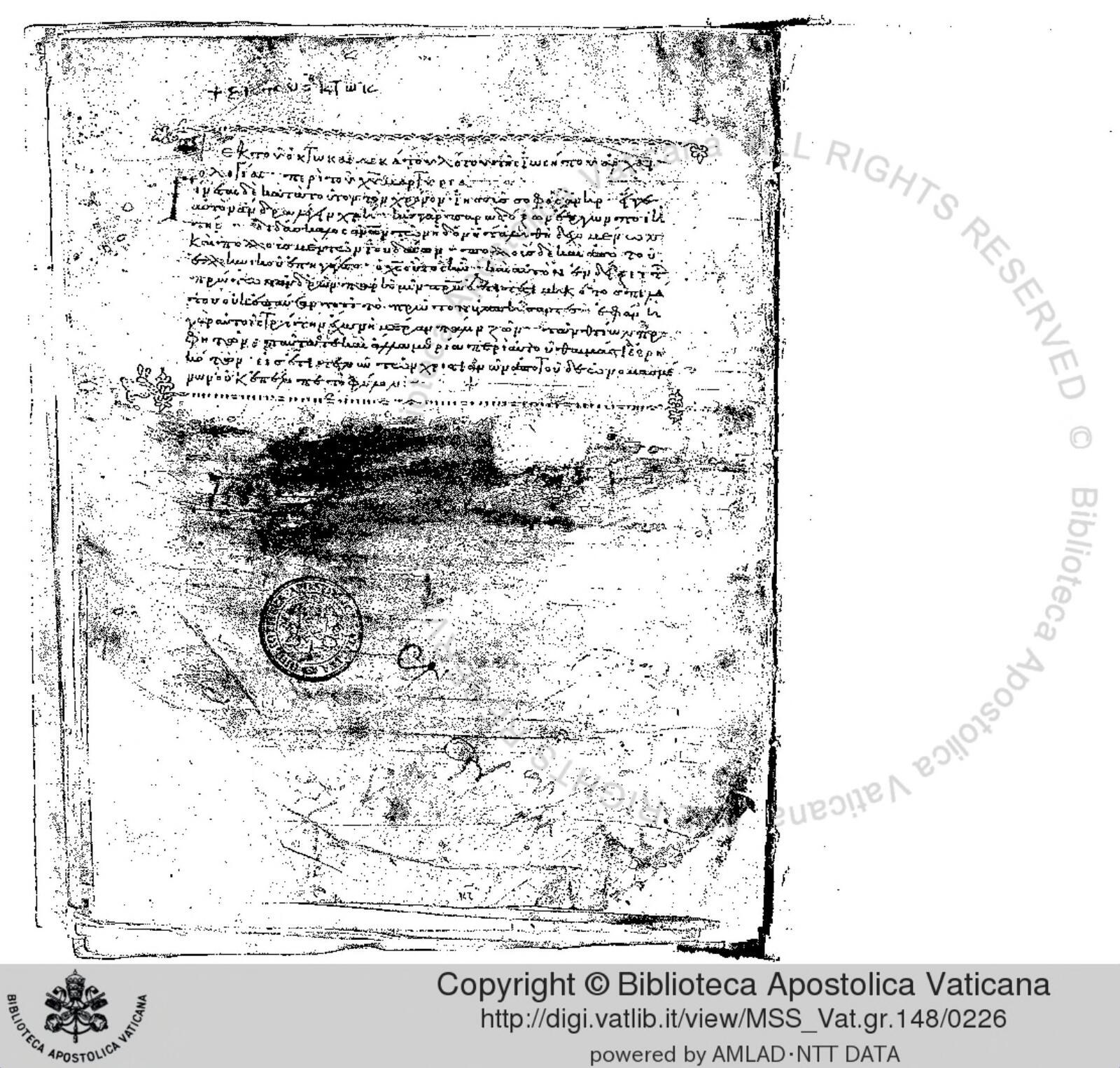
DigiVatLib image 226. Black-and-white microfilm scan, the only image the Vatican Library has published of this page. The heading reads ἐκ τοῦ ὀκτωκαιδεκάτου λόγου τῆς Ἰουδαϊκῆς ἀρχαιολογίας περὶ τοῦ Χριστοῦ μαρτυρία. Viewer: https://digi.vatlib.it/view/MSS_Vat.gr.148/0226 ; folio and lines per Schmidt, https://josephusandjesus.com/manuscript-images/ . Greek shown is Niese's critical text; the copyist's wording on this page differs in small details.
63Γίνεται δὲ κατὰ τοῦτον τὸν χρόνον Ἰησοῦς σοφὸς ἀνήρ, εἴγε ἄνδρα αὐτὸν λέγειν χρή· ἦν γὰρ παραδόξων ἔργων ποιητής, διδάσκαλος ἀνθρώπων τῶν ἡδονῇ τἀληθῆ δεχομένων, καὶ πολλοὺς μὲν Ἰουδαίους, πολλοὺς δὲ καὶ τοῦ Ἑλληνικοῦ ἐπηγάγετο· ὁ χριστὸς οὗτος ἦν. 64καὶ αὐτὸν ἐνδείξει τῶν πρώτων ἀνδρῶν παρʼ ἡμῖν σταυρῷ ἐπιτετιμηκότος Πιλάτου οὐκ ἐπαύσαντο οἱ τὸ πρῶτον ἀγαπήσαντες· ἐφάνη γὰρ αὐτοῖς τρίτην ἔχων ἡμέραν πάλιν ζῶν τῶν θείων προφητῶν ταῦτά τε καὶ ἄλλα μυρία περὶ αὐτοῦ θαυμάσια εἰρηκότων. εἰς ἔτι τε νῦν τῶν Χριστιανῶν ἀπὸ τοῦδε ὠνομασμένον οὐκ ἐπέλιπε τὸ φῦλον.
63Now there was about this time Jesus, a wise man, if it be lawful to call him a man; for he was a doer of wonderful works, a teacher of such men as receive the truth with pleasure. He drew over to him both many of the Jews and many of the Gentiles. He was [the] Christ. 64And when Pilate, at the suggestion of the principal men amongst us, had condemned him to the cross, those that loved him at the first did not forsake him; for he appeared to them alive again the third day; as the divine prophets had foretold these and ten thousand other wonderful things concerning him. And the tribe of Christians, so named from him, are not extinct at this day.
Where on the image
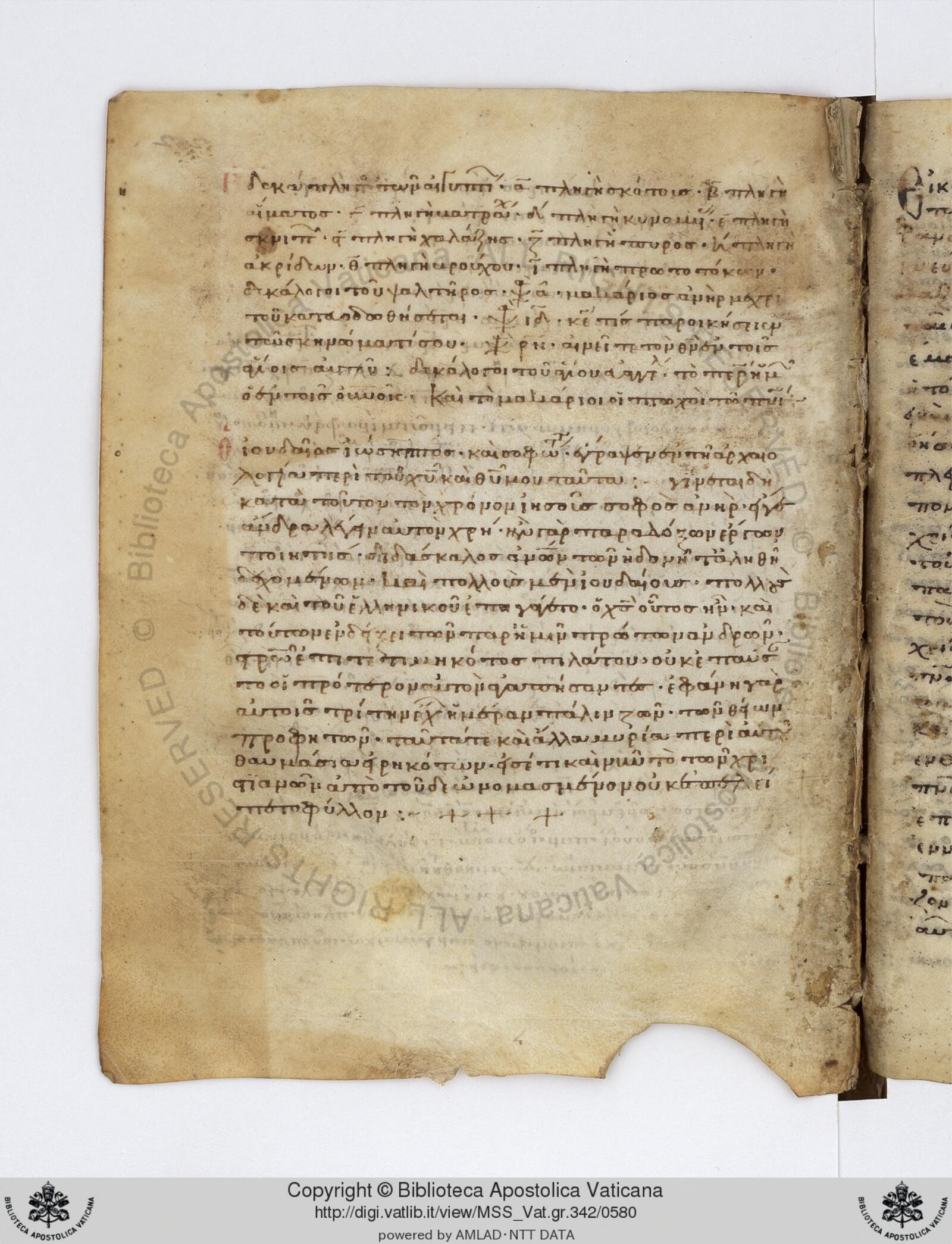
DigiVatLib image 580 (Polonsky Foundation digitization). Viewer: https://digi.vatlib.it/view/MSS_Vat.gr.342/0580 ; folio and lines per Schmidt, https://josephusandjesus.com/manuscript-images/ . Greek shown is Niese's critical text; the copyist's wording on this page differs in small details.
63Γίνεται δὲ κατὰ τοῦτον τὸν χρόνον Ἰησοῦς σοφὸς ἀνήρ, εἴγε ἄνδρα αὐτὸν λέγειν χρή· ἦν γὰρ παραδόξων ἔργων ποιητής, διδάσκαλος ἀνθρώπων τῶν ἡδονῇ τἀληθῆ δεχομένων, καὶ πολλοὺς μὲν Ἰουδαίους, πολλοὺς δὲ καὶ τοῦ Ἑλληνικοῦ ἐπηγάγετο· ὁ χριστὸς οὗτος ἦν. 64καὶ αὐτὸν ἐνδείξει τῶν πρώτων ἀνδρῶν παρʼ ἡμῖν σταυρῷ ἐπιτετιμηκότος Πιλάτου οὐκ ἐπαύσαντο οἱ τὸ πρῶτον ἀγαπήσαντες· ἐφάνη γὰρ αὐτοῖς τρίτην ἔχων ἡμέραν πάλιν ζῶν τῶν θείων προφητῶν ταῦτά τε καὶ ἄλλα μυρία περὶ αὐτοῦ θαυμάσια εἰρηκότων. εἰς ἔτι τε νῦν τῶν Χριστιανῶν ἀπὸ τοῦδε ὠνομασμένον οὐκ ἐπέλιπε τὸ φῦλον.
63Now there was about this time Jesus, a wise man, if it be lawful to call him a man; for he was a doer of wonderful works, a teacher of such men as receive the truth with pleasure. He drew over to him both many of the Jews and many of the Gentiles. He was [the] Christ. 64And when Pilate, at the suggestion of the principal men amongst us, had condemned him to the cross, those that loved him at the first did not forsake him; for he appeared to them alive again the third day; as the divine prophets had foretold these and ten thousand other wonderful things concerning him. And the tribe of Christians, so named from him, are not extinct at this day.
Where on the image
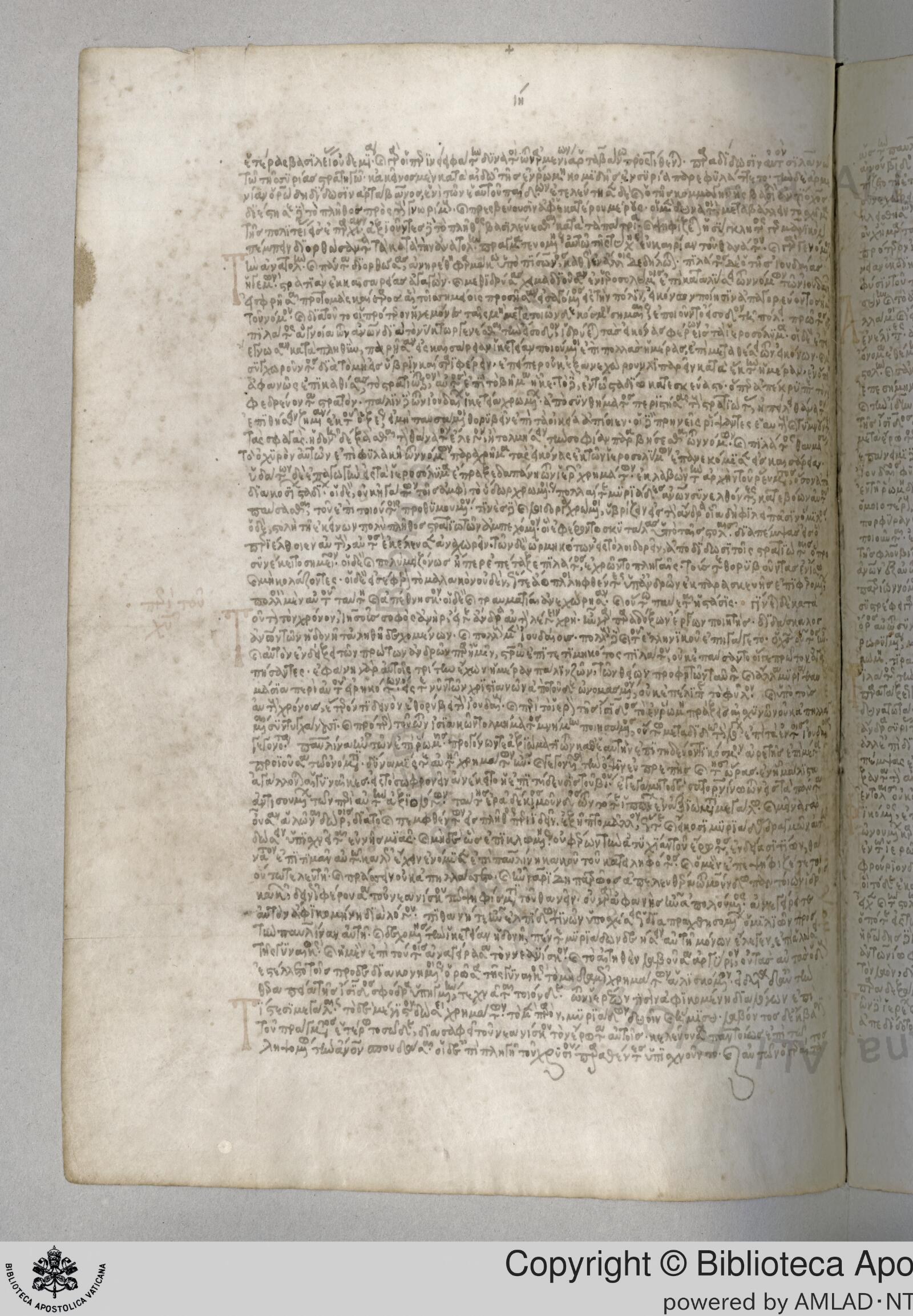
DigiVatLib image 311 (opening 152v-153r, left page cropped). The passage begins at the red initial Γ; a marginal note beside it reads περὶ τοῦ Χ(ριστο)ῦ. Viewer: https://digi.vatlib.it/view/MSS_Vat.gr.984/0311 ; folio and lines per Schmidt, https://josephusandjesus.com/manuscript-images/ . Greek shown is Niese's critical text; the copyist's wording on this page differs in small details.
63Γίνεται δὲ κατὰ τοῦτον τὸν χρόνον Ἰησοῦς σοφὸς ἀνήρ, εἴγε ἄνδρα αὐτὸν λέγειν χρή· ἦν γὰρ παραδόξων ἔργων ποιητής, διδάσκαλος ἀνθρώπων τῶν ἡδονῇ τἀληθῆ δεχομένων, καὶ πολλοὺς μὲν Ἰουδαίους, πολλοὺς δὲ καὶ τοῦ Ἑλληνικοῦ ἐπηγάγετο· ὁ χριστὸς οὗτος ἦν. 64καὶ αὐτὸν ἐνδείξει τῶν πρώτων ἀνδρῶν παρʼ ἡμῖν σταυρῷ ἐπιτετιμηκότος Πιλάτου οὐκ ἐπαύσαντο οἱ τὸ πρῶτον ἀγαπήσαντες· ἐφάνη γὰρ αὐτοῖς τρίτην ἔχων ἡμέραν πάλιν ζῶν τῶν θείων προφητῶν ταῦτά τε καὶ ἄλλα μυρία περὶ αὐτοῦ θαυμάσια εἰρηκότων. εἰς ἔτι τε νῦν τῶν Χριστιανῶν ἀπὸ τοῦδε ὠνομασμένον οὐκ ἐπέλιπε τὸ φῦλον.
63Now there was about this time Jesus, a wise man, if it be lawful to call him a man; for he was a doer of wonderful works, a teacher of such men as receive the truth with pleasure. He drew over to him both many of the Jews and many of the Gentiles. He was [the] Christ. 64And when Pilate, at the suggestion of the principal men amongst us, had condemned him to the cross, those that loved him at the first did not forsake him; for he appeared to them alive again the third day; as the divine prophets had foretold these and ten thousand other wonderful things concerning him. And the tribe of Christians, so named from him, are not extinct at this day.
Notes
- Greek is Benedikt Niese's critical text (Flavii Iosephi opera, 1885-1890), which brackets 18.63-64 as suspect. The brackets are editorial and are not shown in the text.
- English is William Whiston's 1737 translation; his '[the] Christ' brackets are his own.
- The oldest Greek manuscript of book 18 (Milan, Ambrosiana F 128 sup., 11th c., fol. 274r-v) is not included here.
- Source of the folio identifications and of the Ananus II argument: T. C. Schmidt, Josephus and Jesus (OUP 2025), chapter 'Ananus II and the Trial of Jesus', https://academic.oup.com/book/60034/chapter/513641763
Cite
Sources
- Source: Vatican Library manuscripts Vat. gr. 148, 342, 984 via DigiVatLib IIIF + folio identifications from T. C. Schmidt (OUP 2025) + Niese Greek (Perseus) + Whiston English (Perseus) (holding institution)
- Critical edition: Niese, Flavii Iosephi opera (1885-1890), via Perseus
← previous · → next · v cycle view · l back to library