1 Kingdoms (1 Samuel), Chapter 14 (Codex Alexandrinus)
Introduction
1 Kingdoms (1 Samuel) 14 in the Greek Old Testament (the Septuagint) as written in Codex Alexandrinus, a Greek Bible copied in the fifth century, probably in Egypt, and now in the British Library (Royal MS 1 D. V, the first of its four volumes). It is one of the three great early codices of the whole Greek Bible, with Codex Vaticanus and Codex Sinaiticus.
Lost in the manuscript: a leaf of the codex is lost after fol. 167v (1 Kgdms 12:18-14:8); the facsimile marks the gap. Verse(s) 1, 2, 3, 4, 5, 6, 7, 8 are therefore not published here.
Numbering: Swete's Greek and Brenton's English number or divide some verses of this chapter differently (Swete 14:22-23 = Brenton 14:22-23). Each column keeps its own verse numbers, and sections are cut only where the two texts agree, so each section holds the same passage in both languages.
This entry meets the strict three-criteria standard of the Theosis Library:
- Manuscript scan: the pages of Codex Alexandrinus carrying this chapter (fol. 169r, fol. 169v, fol. 170r), from the full-size photographic (autotype) facsimile published by the British Museum in 1879-1883, as digitised on the Internet Archive. The verse range of every page comes from the reduced photographic facsimile of 1930, which prints it beneath each plate, and the opening words of every page were read on the plate to confirm the page and the verse it begins with. Each section links to the page or pages that hold its verses. Folio numbers are those written at the head of each leaf and visible on the plates.
- Original text: Swete's edition, which here prints the text of Codex Vaticanus (Vat. gr. 1209), the base of his edition, and gives the readings of Alexandrinus only in his apparatus. The Greek column is therefore Vaticanus' text; where Alexandrinus differs, the plate shows what Alexandrinus reads.
- English translation: Sir Lancelot C. L. Brenton, The Septuagint Version of the Old Testament (1844; 1851 edition), a translation of the Greek, public domain, from the eBible.org text.
How was this verified? (Provenance)
Where on the image
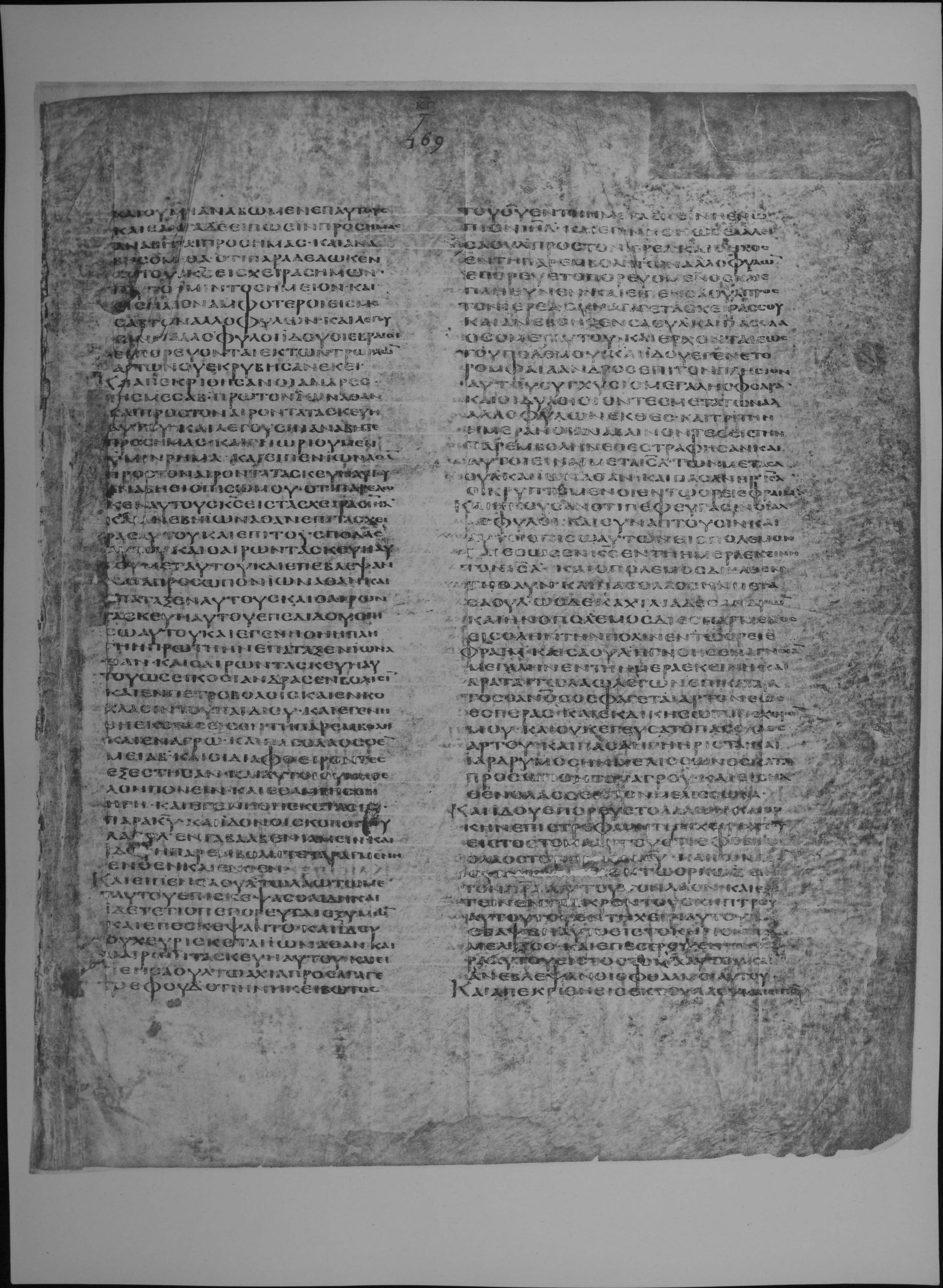
1 Kingdoms (1 Samuel) 14:9-16 is on fol. 169r (full-size facsimile of 1879-83, Internet Archive codex-alexandrinus leaf 356). The 1930 reduced facsimile prints beneath this page: 1 Sam. xiv. 9-28. Checked on the plate: the page begins inside 1 Kingdoms (1 Samuel) 14:9 (first words read: ΚΑΙ ΟΥ ΜΗ ΑΝΑΒΩΜΕΝ ΕΠ ΑΥΤΟΥΣ ΚΑΙ ΕΑΝ ΤΑΔΕ ΕΙΠΩΣΙΝ ΠΡΟΣ ΗΜΑΣ).
9ἐὰν τάδε εἴπωσιν πρὸς ἡμᾶς Ἀπόστητε ἐκεῖ ἕως ἂν ἀπαγγείλωμεν ὑμῖν, καὶ στησόμεθα ἐφ᾽ ἑαυτοῖς καὶ οὐ μὴ ἀναβῶμεν ἐπ᾽ αὐτούς· 10καὶ ἐὰν τάδε εἴπωσιν πρὸς ἡμᾶς Ἀνάβητε πρὸς ἡμᾶς, καὶ ἀναβησόμεθα, ὅτι παραδέδωκεν αὐτοὺς Κύριος εἰς τὰς χεῖρας ἡμῶν· τοῦτο ἡμῖν τὸ σημεῖον. 11καὶ εἰσῆλθον ἀμφότεροι εἰς Μεσσὰφ τῶν ἀλλοφύλων· καὶ λέγουσιν οἱ ἀλλόφυλοι Ἰδοὺ οἱ Ἐβραῖοι ἐκπορεύονται ἐκ τῶν τρωγλῶν αὐτῶν, οὗ ἐκρύβησαν ἐκεῖ. 12καὶ ἀπεκρίθησαν οἱ ἄνδρες Μεσσὰφ πρὸς Ἰωναθὰν καὶ πρὸς τὸν αἴροντα τὰ σκεύη αὐτοῦ καὶ λέγουσιν Ἀνάβητε πρὸς ἡμᾶς, καὶ γνωριοῦμεν ὑμῖν ῥῆμα. καὶ εἶπεν Ἰωναθὰν πρὸς τὸν αἴροντα τὰ σκεύη αὐτοῦ Ἀνάβηθι ὀπίσω μου, ὅτι παρέδωκεν αὐτοὺς Κύριος εἰς χεῖρας Ἰσραήλ. 13καὶ ἀνέβη Ἰωναθὰν ἐπὶ τὰς χεῖρας αὐτοῦ καὶ ἐπὶ τοὺς πόδας αὐτοῦ, καὶ ὁ αἴρων τὰ σκεύη αὐτοῦ μετ᾽ αὐτοῦ· καὶ ἐπέβλεψαν κατὰ πρόσωπον Ἰωναθάν, καὶ ἐπάταξεν αὐτούς, καὶ ὁ αἴρων τὰ σκεύη αὐτοῦ ἐπεδίδου ὀπίσω αὐτοῦ. 14καὶ ἐγενήθη ἡ πληγὴ ἡ πρώτη ἣν ἐπάταξεν Ἰωναθὰν καὶ ὁ αἴρων τὰ σκεύη αὐτοῦ ὡς εἴκοσι ἄνδρες, ἐν βολίσι καὶ κόχλαξιν τοῦ πεδίου. 15καὶ ἐγενήθη ἔκστασις ἐν τῇ παρεμβολῇ καὶ ἐν ἀγρῷ, καὶ πᾶς ὁ λαός, οἱ ἐν Μεσσὰφ καὶ οἱ διαφθείροντες, ἐξέστησαν, καὶ αὐτοὶ οὐκ ἤθελον ποιεῖν· καὶ ἐθάμβησεν ἡ γῆ, καὶ ἐγενήθη ἔκστασις παρὰ Κύριου. 16καὶ εἶδον οἱ σκοποὶ τοῦ Σαοὺλ ἐν Γαβεὲ Βενιαμείν, καὶ ἰδοὺ ἡ παρεμβολὴ τεταραγμένη ἔνθεν καὶ ἔνθεν.
9If they should say thus to us, Stand aloof there until we shall send you word; then we will stand still by ourselves, and will not go up against them. 10But if they should say thus to us, Come up to us; then will we go up, for the Lord has delivered them into our hands; this shall be a sign to us. 11And they both went in to Messab of the Philistines; and the Philistines said, Behold, the Hebrews come forth out of their caves, where they had hidden themselves. 12And the men of Messab answered Jonathan and his armour-bearer, and said, Come up to us, and we will shew you a thing: and Jonathan said to his armour-bearer, Come up after me, for the Lord has delivered them into the hands of Israel. 13And Jonathan went up on his hands and feet, and his armour-bearer with him; and they looked on the face of Jonathan, and he smote them, and his armour-bearer did smite them after him. 14And the first slaughter which Jonathan and his armour-bearer effected was twenty men, with darts and slings, and pebbles of the field. 15And there was dismay in the camp, and in the field; and all the people in Messab, and the spoilers were amazed; and they would not act, and the land was terror-struck, and there was dismay from the Lord. 16And the watchmen of Saul beheld in Gabaa of Benjamin, and, behold, the army was thrown into confusion on every side.
Where on the image
1 Kingdoms (1 Samuel) 14:17-24 is on fol. 169r (full-size facsimile of 1879-83, Internet Archive codex-alexandrinus leaf 356). The 1930 reduced facsimile prints beneath this page: 1 Sam. xiv. 9-28. Checked on the plate: the page begins inside 1 Kingdoms (1 Samuel) 14:9 (first words read: ΚΑΙ ΟΥ ΜΗ ΑΝΑΒΩΜΕΝ ΕΠ ΑΥΤΟΥΣ ΚΑΙ ΕΑΝ ΤΑΔΕ ΕΙΠΩΣΙΝ ΠΡΟΣ ΗΜΑΣ).
17καὶ εἶπεν Σαοὺλ τῷ λαῷ τῷ μετ᾽ αὐτοῦ Ἐπισκέψασθε δὴ καὶ ἴδετε τίς πεπόρευται ἐξ ὑμῶν· καὶ ἐπεσκέψαντο, καὶ ἰδοὺ οὐχ εὑρίσκετο Ἰωναθὰν καὶ ὁ αἴρων τὰ σκεύη αὐτοῦ. 18καὶ εἶπεν Σαοὺλ τῷ Ἀχειά Προσάγαγε τὸ ἐφούδ· ὅτι αὐτὸς ἦρεν τὸ ἐφοὺδ ἐν τῇ ἡμέρᾳ ἐκείνῃ ἐνώπιον Ἰσραήλ. 19καὶ ἐγενήθη ὡς ἐλάλει Σαοὺλ πρὸς τὸν ἱερέα, καὶ ὁ ἦχος ἐν τῇ παρεμβολῇ τῶν ἀλλοφύλων ἐπορεύετο πορευόμενος καὶ ἐπλήθυνεν· καὶ εἶπεν Σαοὺλ πρὸς τὸν ἱερέα Συνάγαγε τὰς χεῖράς σου. 20καὶ ἀνέβη Σαοὺλ καὶ πᾶς ὁ λαὸς ὁ μετ᾽ αὐτοῦ, καὶ ἔρχονται ἕως τοῦ πολέμου· καὶ ἰδοὺ ἐγένετο ῥομφαία ἀνδρὸς ἐπὶ τὸν πλησίον αὐτοῦ, σύγχυσις μεγάλη σφόδρα. 21καὶ οἱ δοῦλοι οἱ ὄντες ἐχθὲς καὶ τρίτην ἡμέραν μετὰ τῶν ἀλλοφύλων, οἱ ἀναβάντες εἰς τὴν παρεμβολήν, ἀνεστράφησαν καὶ αὐτοὶ εἶναι μετὰ Ἰσραὴλ τῶν μετὰ Σαοὺλ καὶ Ἰωναθάν. 22καὶ πᾶς Ἰσραὴλ οἱ κρυπτόμενοι ἐν τῷ ὄρει Ἐφράιμ, καὶ ἤκουσαν ὅτι πεφεύγασιν ἀλλόφυλοι, καὶ συνάπτουσιν καὶ αὐτοὶ ὀπίσω αὐτῶν εἰς πόλεμον. 23καὶ ἔσωσεν Κύριος ἐν τῇ ἡμέρᾳ ἐκείνῃ τὸν Ἰσραήλ· καὶ ὁ πόλεμος διῆλθεν τὴν Βαμώθ, καὶ πᾶς ὁ λαὸς ἦν μετὰ Σαοὺλ ὡς δέκα χιλιάδες ἀνδρῶν· καὶ ἦν ὁ πόλεμος διεσπαρμένος εἰς ὅλην πόλιν ἐν τῷ ὄρει τῷ Ἐφράιμ. 24καὶ Σαοὺλ ἠγνόησεν ἄγνοιαν μεγάλην ἐν τῇ ἡμέρᾳ ἐκείνῃ, καὶ ἀρᾶται τῷ λαῷ λέγων Ἐπικατάρατος ὁ ἄνθρωπος ὃς φάγεται ἄρτον ἕως ἑσπέρας, καὶ ἐκδικήσω τὸν ἐχθρόν μου· καὶ οὐκ ἐγεύσατο πᾶς ὁ λαὸς ἄρτου, καὶ πᾶσα ἡ γῆ ἠρίστα.
17And Saul said to the people with him, Number yourselves now, and see who has gone out from you: and they numbered themselves, and behold, Jonathan and his armour-bearer were not found. 18And Saul said to Achia, Bring the ephod; for he wore the ephod in that day before Israel. 19And it came to pass while Saul was speaking to the priest, that the sound in the camp of the Philistines continued to increase greatly; and Saul said to the priest, Withdraw thy hands. 20And Saul went up and all the people that were with him, and they come to the battle: and, behold, every man's sword was against his neighbour, a very great confusion. 21And the servants who had been before with the Philistines, who had gone up to the army, turned themselves also to be with the Israelites who were with Saul and Jonathan. 22And all the Israelites who were hidden in mount Ephraim heard also that the Philistines fled; and they also gather themselves after them to battle: and the Lord saved Israel in that day; and the war passed through Bamoth; and all the people with Saul were about ten thousand men. 23And the battle extended itself to every city in the mount Ephraim. 24And Saul committed a great trespass of ignorance in that day, and he lays a curse on the people, saying, Cursed is the man who shall eat bread before the evening; so I will avenge myself on my enemy: and none of the people tasted bread, though all the land was dining.
Where on the image
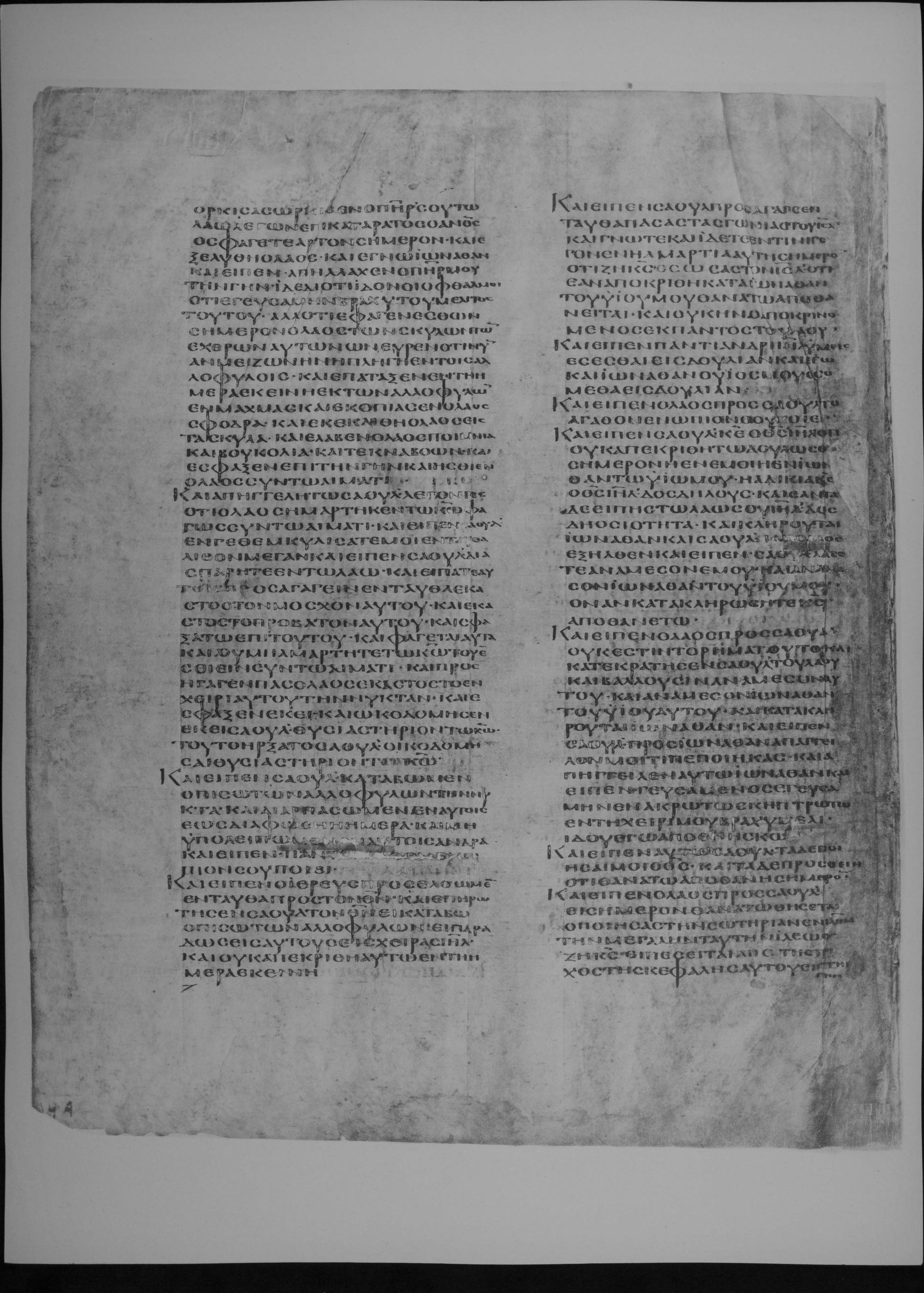
1 Kingdoms (1 Samuel) 14:25-28 is on fol. 169r (full-size facsimile of 1879-83, Internet Archive codex-alexandrinus leaf 356). The 1930 reduced facsimile prints beneath this page: 1 Sam. xiv. 9-28. Checked on the plate: the page begins inside 1 Kingdoms (1 Samuel) 14:9 (first words read: ΚΑΙ ΟΥ ΜΗ ΑΝΑΒΩΜΕΝ ΕΠ ΑΥΤΟΥΣ ΚΑΙ ΕΑΝ ΤΑΔΕ ΕΙΠΩΣΙΝ ΠΡΟΣ ΗΜΑΣ). 1 Kingdoms (1 Samuel) 14:28-32 is on fol. 169v (full-size facsimile of 1879-83, Internet Archive codex-alexandrinus leaf 357). The 1930 reduced facsimile prints beneath this page: 1 Sam. xiv. 28-45. Checked on the plate: the page begins inside 1 Kingdoms (1 Samuel) 14:28 (first words read: ΟΡΚΙΣΑΣ ΩΡΚΙΣΕΝ Ο ΠΗΡ ΣΟΥ ΤΟΝ ΛΑΟΝ ΛΕΓΩΝ ΕΠΙΚΑΤΑΡΑΤΟΣ Ο ΑΝΟΣ ΟΣ ΦΑΓΕΤΑΙ).
25καὶ Ἰάαλ δρυμὸς ἦν μελισσῶνος κατὰ πρόσωπον τοῦ ἀγροῦ. 26καὶ εἰσῆλθεν ὁ λαὸς εἰς τὸν μελισσῶνα, καὶ ἰδοὺ ἐπορεύετο λαλῶν· καὶ ἰδοὺ οὐκ ἦν ἐπιστρέφων τὴν χεῖρα αὐτοῦ εἰς τὸ στόμα αὐτοῦ, ὅτι ἐφοβήθη ὁ λαὸς τὸν ὅρκον Κυρίου. 27καὶ Ἰωναθὰν οὐκ ἀκηκόει ἐν τῷ ὁρκίζειν τὸν πατέρα αὐτοῦ τὸν λαόν· καὶ ἐξέτεινεν τὸ ἄκρον τοῦ σκήπτρου αὐτοῦ τοῦ ἐν τῇ χειρὶ αὐτοῦ καὶ ἔβαψεν αὐτὸ εἰς τὸ κηρίον τοῦ μέλιτος, καὶ ἐπέστρεψεν τὴν χεῖρα αὐτοῦ εἰς τὸ στόμα αὐτοῦ, καὶ ἀνέβλεψαν οἱ ὀφθαλμοὶ αὐτοῦ. 28καὶ ἀπεκρίθη εἷς ἐκ τοῦ λαοῦ καὶ εἶπεν Ὁρκίσας ὥρκισεν ὁ πατήρ σου τὸν λαὸν λέγων Ἐπικατάρατος ὁ ἄνθρωπος ὃς φάγεται ἄρτον σήμερον· καὶ ἐξελύθη ὁ λαός. 29καὶ ἔγνω Ἰωναθὰν καὶ εἶπεν Ἀπήλλαχεν ὁ πατήρ μου τὴν γῆν· ἴδε διότι εἶδον οἱ ὀφθαλμοί μου, ὅτι ἐγευσάμην βραχὺ τοῦ μέλιτος τούτου. 30ἀλλ᾽ ὅτι ἔφαγεν ἔσθων ὁ λαὸς σήμερον τῶν σκύλων τῶν ἐχθρῶν αὐτῶν ὧν εὗρεν, ὅτι νῦν ἂν μείζων ἡ πληγὴ ἡ ἐν τοῖς ἀλλοφύλοις. 31καὶ ἐπάταξεν ἐν τῇ ἡμέρᾳ ἐκείνῃ ἐκ τῶν ἀλλοφύλων ἐν Μαχεμάς, καὶ ἐκοπίασεν ὁ λαὸς σφόδρα. 32καὶ ἐκλίθη ὁ λαὸς εἰς τὰ σκῦλα· καὶ ἔλαβεν ὁ λαὸς ποίμνια καὶ βουκόλια καὶ τέκνα βοῶν, καὶ ἔσφαξεν ἐπὶ τὴν γῆν· καὶ ἤσθιεν ὁ λαὸς σὺν τῷ αἵματι.
25And Jaal was a wood abounding in swarms of bees on the face of the ground. 26And the people went into the place of the bees, and, behold, they continued speaking; and, behold, there was none that put his hand to his mouth, for the people feared the oath of the Lord. 27And Jonathan had not heard when his father adjured the people; and he reached forth the end of the staff that was in his hand, and dipped it into the honeycomb, and returned his hand to his mouth, and his eyes recovered their sight. 28And one of the people answered and said, Thy father solemnly adjured the people, saying, Cursed is the man who shall eat bread to-day. And the people were very faint, 29and Jonathan knew it, and said, My father has destroyed the land: see how my eyes have received sight now that I have tasted a little of this honey. 30Surely if the people had this day eaten freely of the spoils of their enemies which they found, the slaughter among the Philistines would have been greater. 31And on that day he smote some of the Philistines in Machmas; and the people were very weary. 32And the people turned to the spoil; and the people took flocks, and herds, and calves, and slew them on the ground, and the people ate with the blood.
Where on the image
1 Kingdoms (1 Samuel) 14:33-40 is on fol. 169v (full-size facsimile of 1879-83, Internet Archive codex-alexandrinus leaf 357). The 1930 reduced facsimile prints beneath this page: 1 Sam. xiv. 28-45. Checked on the plate: the page begins inside 1 Kingdoms (1 Samuel) 14:28 (first words read: ΟΡΚΙΣΑΣ ΩΡΚΙΣΕΝ Ο ΠΗΡ ΣΟΥ ΤΟΝ ΛΑΟΝ ΛΕΓΩΝ ΕΠΙΚΑΤΑΡΑΤΟΣ Ο ΑΝΟΣ ΟΣ ΦΑΓΕΤΑΙ).
33καὶ ἀπηγγέλη Σαοὺλ λέγοντες Ἡμάρτηκεν ὁ λαὸς τῷ κυρίῳ, φαγὼν σὺν τῷ αἵματι· καὶ εἶπεν Σαούλ Ἐν Γεθθάιμ κυλίσατέ μοι λίθον ἐνταῦθα μέγαν. 34καὶ εἶπεν Σαούλ Διασπάρητε ἐν τῷ λαῷ, καὶ εἴπατε αὐτοῖς προσάγειν ἐνταῦθα ἕκαστος τὸν μόσχον αὐτοῦ καὶ ἕκαστος τὸ πρόβατον ἑαυτοῦ, καὶ σφαζέτω ἐπὶ τούτου, καὶ οὐ μὴ ἁμάρτητε τῷ κυρίῳ τοῦ ἐσθίειν σὺν τῷ αἵματι· καὶ προσῆγεν πᾶς ὁ λαὸς ἕκαστος τὸ ἐν τῇ χειρὶ αὐτοῦ, καὶ ἔσφαζον ἐκεῖ. 35καὶ ᾠκοδόμησεν ἐκεῖ Σαοὺλ θυσιαστήριον τῷ κυρίῳ· τοῦτο ἤρξατο Σαοὺλ οἰκοδομῆσαι θυσιαστήριον τῷ κυρίῳ. 36Καὶ εἶπεν Σαούλ Καταβῶμεν ὀπίσω τῶν ἀλλοφύλων τὴν νύκτα, καὶ διαρπάσωμεν ἐν αὐτοῖς ἕως διαφαύσῃ ἡμέρα, καὶ μὴ ὑπολίπωμεν ἐν αὐτοῖς ἄνδρα· καὶ εἶπαν Πᾶν τὸ ἀγαθὸν ἐνώπιόν σου ποίει· καὶ εἶπεν ὁ ἱερεύς Προσέλθωμεν ἐνταῦθα πρὸς τὸν θεόν. 37καὶ ἐπηρώτησεν Σαοὺλ τὸν θεόν Εἰ καταβῶ ὀπίσω τῶν ἀλλοφύλων; εἰ παραδώσεις αὐτοὺς εἰς χεῖρας Ἰσραήλ; καὶ οὐκ ἀπεκρίθη αὐτῷ ἐν τῇ ἡμέρᾳ ἐκείνῃ. 38καὶ εἶπεν Σαούλ Προσαγάγετε ἐνταῦθα πάσας τὰς γωνίας τοῦ Ἰσραήλ, καὶ γνῶτε καὶ ἴδετε ἐν τίνι γέγονεν ἡ ἁμαρτία αὕτη σήμερον· 39ὅτι ζῇ Κύριος ὁ σώσας τὸν Ἰσραήλ, ὅτι ἐὰν ἀποκριθῇ κατὰ Ἰωναθὰν τοῦ υἱοῦ μου, θανάτῳ ἀποθανεῖται. καὶ οὐκ ἦν ὁ ἀποκρινόμενος ἐκ παντὸς τοῦ λαοῦ. 40καὶ εἶπεν παντὶ Ἰσραήλ Ὑμεῖς ἔσεσθε εἰς δουλείαν, καὶ ἐγὼ καὶ Ἰωναθὰν ὁ υἱός μου ἐσόμεθα εἰς δουλείαν· καὶ εἶπεν ὁ λαὸς πρὸς Σαούλ Τὸ ἀγαθὸν ἐνώπιόν σου ποίει.
33And it was reported to Saul, saying, The people have sinned against the Lord, eating with the blood: and Saul said, Out of Getthaim roll a great stone to me hither. 34And Saul said, Disperse yourselves among the people, and tell them to bring hither every one his calf, and every one his sheep: and let them slay it on this stone and sin not against the Lord in eating with the blood: and the people brought each one that which was in his hand, and they slew them there. 35And Saul built an altar there to the Lord: this was the first altar that Saul built to the Lord. 36And Saul said, Let us go down after the Philistines this night, and let us plunder among them till the day break, and let us not leave a man among them. And they said, Do all that is good in thy sight: and the priest said, Let us draw nigh hither to God. 37And Saul enquired of God, If I go down after the Philistines, wilt thou deliver them into the hands of Israel? And he answered him not in that day. 38And Saul said, Bring hither all the chiefs of Israel, and know and see by whom this sin has been committed this day. 39For as the Lord lives who has saved Israel, if answer should be against my son Jonathan, he shall surely die. And there was no one that answered out of all the people. 40And he said to all the men of Israel, Ye shall be under subjection, and I and Jonathan my son will be under subjection: and the people said to Saul, Do that which is good in thy sight.
Where on the image
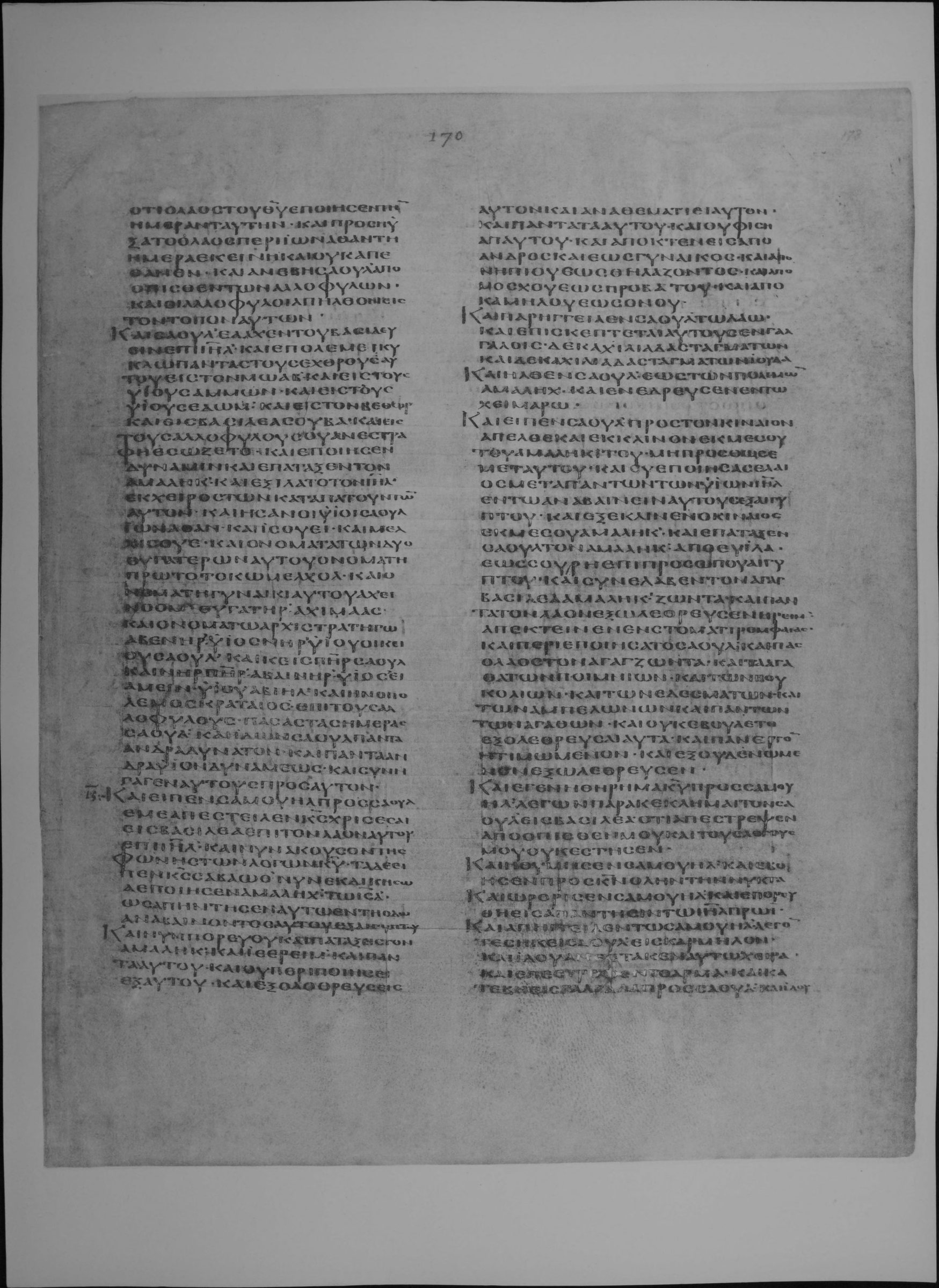
1 Kingdoms (1 Samuel) 14:41-45 is on fol. 169v (full-size facsimile of 1879-83, Internet Archive codex-alexandrinus leaf 357). The 1930 reduced facsimile prints beneath this page: 1 Sam. xiv. 28-45. Checked on the plate: the page begins inside 1 Kingdoms (1 Samuel) 14:28 (first words read: ΟΡΚΙΣΑΣ ΩΡΚΙΣΕΝ Ο ΠΗΡ ΣΟΥ ΤΟΝ ΛΑΟΝ ΛΕΓΩΝ ΕΠΙΚΑΤΑΡΑΤΟΣ Ο ΑΝΟΣ ΟΣ ΦΑΓΕΤΑΙ). 1 Kingdoms (1 Samuel) 14:45-48 is on fol. 170r (full-size facsimile of 1879-83, Internet Archive codex-alexandrinus leaf 358). The 1930 reduced facsimile prints beneath this page: 1 Sam. xiv. 45-xv. 13. Checked on the plate: the page begins inside 1 Kingdoms (1 Samuel) 14:45 (first words read: ΟΤΙ ΛΑΟΣ ΤΟΥ ΘΥ ΕΠΟΙΗΣΕΝ ΤΗΝ ΗΜΕΡΑΝ ΤΑΥΤΗΝ ΚΑΙ ΠΡΟΣΗΥΞΑΤΟ ΙΩΝΑΘΑΝ).
41καὶ εἶπεν Σαούλ Κύριε ὁ θεὸς Ἰσραήλ, τί ὅτι οὐκ ἀπεκρίθης τῷ δούλῳ σου σήμερον; ἢ ἐν ἐμοὶ ἢ ἐν Ἰωναθὰν τῷ υἱῷ μου ἡ ἀδικία; Κύριε ὁ θεὸς Ἰσραήλ, δὸς δήλους· καὶ ἐὰν τάδε εἴπῃ, δὸς δὴ τῷ λαῷ σου Ἰσραήλ, δὸς δὴ ὁσιότητα. καὶ κληροῦται Ἰωναθὰν καὶ Σαούλ, καὶ ὁ λαὸς ἐξῆλθεν. 42καὶ εἶπεν Σαούλ Βάλετε ἀνὰ μέσον ἐμοῦ καὶ ἀνὰ μέσον Ἰωναθὰν τοῦ υἱοῦ μου· ὃν ἂν κατακληρώσηται Κύριος, ἀποθανέτω. καὶ εἶπεν ὁ λαὸς πρὸς Σαούλ Οὐκ ἔστιν τὸ ῥῆμα τοῦτο. καὶ κατεκράτησεν Σαοὺλ τοῦ λαοῦ, καὶ βάλλουσιν ἀνὰ μέσον αὐτοῦ καὶ ἀνὰ μέσον Ἰωναθὰν τοῦ υἱοῦ αὐτοῦ, καὶ κατακληροῦται Ἰωναθάν. 43καὶ εἶπεν Σαοὺλ πρὸς Ἰωναθάν Ἀπάγγειλόν μοι τί πεποίηκας· καὶ ἀπήγγειλεν αὐτῷ Ἰωναθὰν καὶ εἶπεν Γευόμενος ἐγευσάμην ἐν ἄκρῳ τῷ σκήπτρῳ τῷ ἐν τῇ χειρί μου βραχὺ μέλι, ἰδοὺ ἐγὼ ἀποθνήσκω. 44καὶ εἶπεν αὐτῷ Σαούλ Τάδε ποιήσαι μοι ὁ θεὸς καὶ τάδε προσθείη, ὅτι θανάτῳ ἀποθανῇ σήμερον. 45καὶ εἶπεν ὁ λαὸς πρὸς Σαούλ Εἰ σήμερον θανατωθήσεται ὁ ποιήσας τὴν σωτηρίαν τὴν μεγάλην ταύτην ἐν Ἰσραήλ; ζῇ Κύριος, εἰ πεσεῖται τριχὸς τῆς κεφαλῆς αὐτοῦ ἐπὶ τὴν γῆν· ὅτι ὁ λαὸς τοῦ θεοῦ ἐποίησεν τὴν ἡμέραν ταύτην. καὶ προσηύξατο ὁ λαὸς περὶ Ἰωναθὰν ἐν τῇ ἡμέρᾳ ἐκείνῃ, καὶ οὐκ ἀπέθανεν. 46καὶ ἀνέβη Σαοὺλ ἀπὸ ὄπισθεν τῶν ἀλλοφύλων· καὶ οἱ ἀλλόφυλοι ἀπῆλθον εἰς τὸν τόπον αὐτῶν. 47Καὶ Σαοὺλ ἔλαχεν τοῦ βασιλεύειν, κατακληροῦται ἔργον ἐπὶ Ἰσραήλ· καὶ ἐπολέμει κύκλῳ πάντας τοὺς ἐχθροὺς αὐτοῦ, εἰς τὸν Μωὰβ καὶ εἰς τοὺς υἱοὺς Ἀμμὼν καὶ εἰς τοὺς υἱοὺς Ἐδὼμ καὶ εἰς τὸν Βαιθεὼρ καὶ εἰς βασιλέα Σουβὰ καὶ εἰς τοὺς ἀλλοφύλους· οὗ ἂν ἐστράφη ἐσώζετο. 48καὶ ἐποίησεν δύναμιν αὐνανείν, καὶ ἐπάταξεντὸν Ἀμαλήκ, καὶ ἐξείλατο τὸν Ἰσραὴλ ἐκ χειρὸς τῶν καταπατούντων αὐτόν.
41And Saul said, O Lord God of Israel, why hast thou not answered thy servant this day? is the iniquity in me, or in Jonathan my son? Lord God of Israel, give clear manifestations; and if the lot should declare this, give, I pray thee, to thy people Israel, give, I pray, holiness. And Jonathan and Saul are taken, and the people escaped. 42And Saul said, Cast lots between me and my son Jonathan: whomsoever the Lord shall cause to be taken by lot, let him die: and the people said to Saul, This thing is not to be done: and Saul prevailed against the people, and they cast lots between him and Jonathan his son, and Jonathan is taken by lot. 43And Saul said to Jonathan, Tell me what thou hast done: and Jonathan told him, and said, I did indeed taste a little honey, with the end of my staff that was in my hand, and, lo! I am to die. 44And Saul said to him, God do so to me, and more also, thou shalt surely die to-day. 45And the people said to Saul, Shall he that has wrought this great salvation in Israel be put to death this day? As the Lord lives, there shall not fall to the ground one of the hairs of his head; for the people of God have wrought successfully this day. And the people prayed for Jonathan in that day, and he died not. 46And Saul went up from following the Philistines; and the Philistines departed to their place. 47And Saul received the kingdom, by lot he inherits the office of ruling over Israel: and he fought against all his enemies round about, against Moab, and against the children of Ammon, and against the children of Edom, and against Bæthæor, and against the king of Suba, and against the Philistines: whithersoever he turned, he was victorious. 48And he wrought valiantly, and smote Amalec, and rescued Israel out of the hand of them that trampled on him.
Where on the image
1 Kingdoms (1 Samuel) 14:49-52 is on fol. 170r (full-size facsimile of 1879-83, Internet Archive codex-alexandrinus leaf 358). The 1930 reduced facsimile prints beneath this page: 1 Sam. xiv. 45-xv. 13. Checked on the plate: the page begins inside 1 Kingdoms (1 Samuel) 14:45 (first words read: ΟΤΙ ΛΑΟΣ ΤΟΥ ΘΥ ΕΠΟΙΗΣΕΝ ΤΗΝ ΗΜΕΡΑΝ ΤΑΥΤΗΝ ΚΑΙ ΠΡΟΣΗΥΞΑΤΟ ΙΩΝΑΘΑΝ).
49Καὶ ἦσαν υἱοὶ Σαοὺλ Ἰωναθὰν καὶ Ἰεσσιοὺλ καὶ Μελχεισά· καὶ ὀνόματα τῶν δύο θυγατέρων αὐτοῦ, ὄνομα τῇ πρωτοτόκῳ Μερόβ, καὶ ὄνομα τῇ δευτέρᾳ Μελχόλ. 50καὶ ὄνομα τῇ γυναικὶ αὐτοῦ Ἀχινόομ, θυγάτηρ Ἀχεινάας· καὶ ὄνομα τῷ ἀρχιστρατήγῳ Ἀβεννήρ, υἱὸς Νηρεὶ υἱοῦ οἰκείου Σαούλ. 51καὶ Κεὶς πατὴρ Σαούλ, καὶ Νὴρ πατὴρ Ἀβεννὴρ υἱὸς Ἰαμεὶν υἱοῦ Ἀβειήρ. 52Καὶ ἦν ὁ πόλεμος κραταιὸς ἐπὶ τοὺς ἀλλοφύλους πάσας τὰς ἡμέρας Σαούλ· καὶ ἰδὼν Σαοὺλ πάντα ἄνδρα δυνατὸν καὶ πάντα ἄνδρα υἱὸν δυνάμεως, καὶ συνήγαγεν αὐτοὺς πρὸς αὐτόν.
49And the sons of Saul were Jonathan, and Jessiu, and Melchisa: and these were the names of his two daughters, the name of the first-born Merob, and the name of the second Melchol. 50And the name of his wife was Achinoom, the daughter of Achimaa: and the name of his captain of the host was Abenner, the son of Ner, son of a kinsman of Saul. 51And Kis was the father of Saul, and Ner, the father of Abenner, was son of Jamin, son of Abiel. 52And the war was vehement against the Philistines all the days of Saul; and when Saul saw any mighty man, and any valiant man, then he took them to himself.
Cite
Sources
- Source: Codex Alexandrinus (British Library Royal MS 1 D. V) via the British Museum photographic facsimiles of 1879-83 and 1930 (Internet Archive) + Swete's Septuagint + Brenton's English (holding institution)
- Critical edition: H. B. Swete, The Old Testament in Greek according to the Septuagint (1909)
← previous · → next · v cycle view · l back to library