1 Kingdoms (1 Samuel), Chapter 2 (Codex Alexandrinus)
Introduction
1 Kingdoms (1 Samuel) 2 in the Greek Old Testament (the Septuagint) as written in Codex Alexandrinus, a Greek Bible copied in the fifth century, probably in Egypt, and now in the British Library (Royal MS 1 D. V, the first of its four volumes). It is one of the three great early codices of the whole Greek Bible, with Codex Vaticanus and Codex Sinaiticus.
Numbering: Swete's Greek and Brenton's English number or divide some verses of this chapter differently (Swete 2:8-9 = Brenton 2:8-9). Each column keeps its own verse numbers, and sections are cut only where the two texts agree, so each section holds the same passage in both languages.
This entry meets the strict three-criteria standard of the Theosis Library:
- Manuscript scan: the pages of Codex Alexandrinus carrying this chapter (fol. 161v, fol. 162r, fol. 162v), from the full-size photographic (autotype) facsimile published by the British Museum in 1879-1883, as digitised on the Internet Archive. The verse range of every page comes from the reduced photographic facsimile of 1930, which prints it beneath each plate, and the opening words of every page were read on the plate to confirm the page and the verse it begins with. Each section links to the page or pages that hold its verses. Folio numbers are those written at the head of each leaf and visible on the plates.
- Original text: Swete's edition, which here prints the text of Codex Vaticanus (Vat. gr. 1209), the base of his edition, and gives the readings of Alexandrinus only in his apparatus. The Greek column is therefore Vaticanus' text; where Alexandrinus differs, the plate shows what Alexandrinus reads.
- English translation: Sir Lancelot C. L. Brenton, The Septuagint Version of the Old Testament (1844; 1851 edition), a translation of the Greek, public domain, from the eBible.org text.
How was this verified? (Provenance)
Where on the image
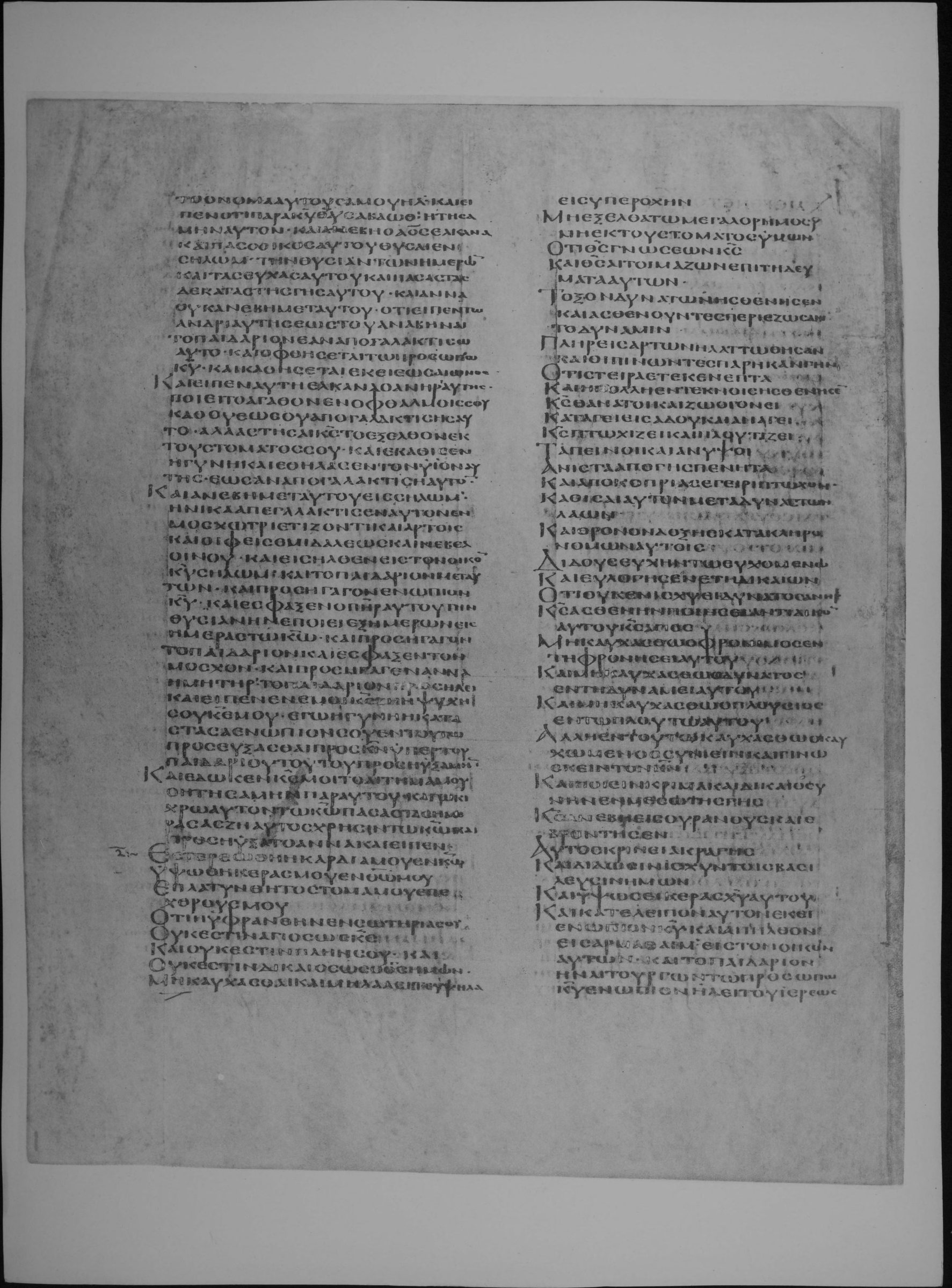
1 Kingdoms (1 Samuel) 2:1-9 is on fol. 161v (full-size facsimile of 1879-83, Internet Archive codex-alexandrinus leaf 343). The 1930 reduced facsimile prints beneath this page: 1 Sam. i. 20-ii. 11. Checked on the plate: the page begins inside 1 Kingdoms (1 Samuel) 1:20 (first words read: ΤΟ ΟΝΟΜΑ ΑΥΤΟΥ ΣΑΜΟΥΗΛ ΚΑΙ ΕΙΠΕΝ ΟΤΙ ΠΑΡΑ ΚΥ ΘΥ ΣΑΒΑΩΘ ΗΤΗΣΑΜΗΝ ΑΥΤΟΝ).
1Καὶ εἶπεν Ἐστερεώθη ἡ καρδία μου ἐν Κυρίῳ, ὑψώθη κέρας μου ἐν θεῷ μου· ἐπλατύνθη ἐπὶ ἐχθροὺς τὸ στόμα μου, εὐφράνθην ἐν σωτηρίᾳ σου. 2ὅτι οὐκ ἔστιν ἅγιος ὡς Κύριος, καὶ οὐκ ἔστιν δίκαιος ὡς ὁ θεὸς ἡμῶν, οὐκ ἔστιν ἅγιος πλὴν σοῦ. 3μὴ καυχᾶσθε καὶ μὴ λαλεῖτε ὑψηλά, μὴ ἐξελθάτω μεγαλορημοσύνη ἐκ τοῦ στόματος ὑμῶν· ὅτι θεὸς γνώσεως Κύριος, καὶ θεὸς ἑτοιμάζων ἐπιτηδεύματα αὐτοῦ. 4τόξον δυνατῶν ἠσθένησεν, καὶ ἀσθενοῦντες περιεζώσαντο δύναμιν· 5πλήρεις ἄρτων ἠλαττώθησαν, καὶ ἀσθενοῦντες παρῆκαν γῆν. ὅτι στεῖρα ἔτεκεν ἑπτά, καὶ ἡ πολλὴ ἐν τέκνοις ἠσθένησεν. 6Κύριος θανατοῖ καὶ ζωογονεῖ, κατάγει εἰς ᾅδου καὶ ἀνάγει· 7Κύριος πτωχίζει καὶ πλουτίζει, ταπεινοῖ καὶ ἀνυψοῖ. 8ἀνιστᾷ ἀπὸ γῆς πένητα, καὶ ἀπὸ κοπρίας ἐγείρει πτωχόν· καθίσαι μετὰ δυναστῶν λαῶν, καὶ θρόνον δόξης κατακληρονομῶν αὐτοῖς. διδοὺς εὐχὴν τῷ εὐχομένῳ, καὶ εὐλόγησεν ἔτη δικαίου. 9ὅτι οὐκ ἐν ἰσχύι δυνατὸς ἀνήρ·
1My heart is established in the Lord, my horn is exalted in my God; my mouth is enlarged over my enemies, I have rejoiced in thy salvation. 2For there is none holy as the Lord, and there is none righteous as our God: there is none holy beside thee. 3Boast not, and utter not high things; let not high-sounding words come out of your mouth, for the Lord is a God of knowledge, and God prepares his own designs. 4The bow of the mighty has waxed feeble, and the weak have girded themselves with strength. 5They that were full of bread are brought low; and the hungry have forsaken the land; for the barren has born seven, and she that abounded in children has waxed feeble. 6The Lord kills and makes alive; he brings down to the grave, and brings up. 7The Lord makes poor, and makes rich; he brings low, and lifts up. 8He lifts up the poor from the earth, and raises the needy from the dunghill; to seat him with the princes of the people, and causing them to inherit the throne of glory: 9granting his petition to him that prays; and he blesses the years of the righteous, for by strength cannot man prevail.
Where on the image
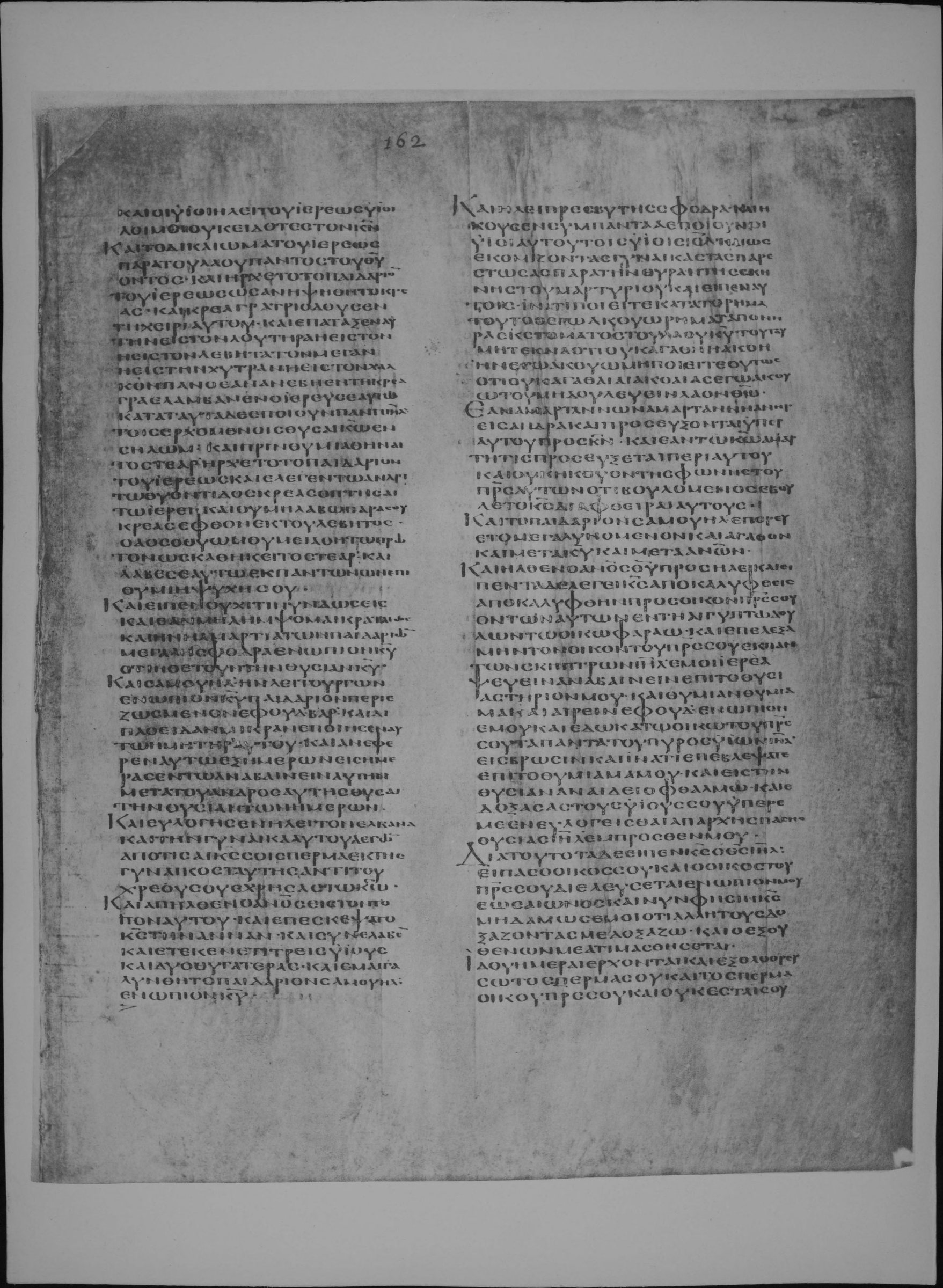
1 Kingdoms (1 Samuel) 2:10-11 is on fol. 161v (full-size facsimile of 1879-83, Internet Archive codex-alexandrinus leaf 343). The 1930 reduced facsimile prints beneath this page: 1 Sam. i. 20-ii. 11. Checked on the plate: the page begins inside 1 Kingdoms (1 Samuel) 1:20 (first words read: ΤΟ ΟΝΟΜΑ ΑΥΤΟΥ ΣΑΜΟΥΗΛ ΚΑΙ ΕΙΠΕΝ ΟΤΙ ΠΑΡΑ ΚΥ ΘΥ ΣΑΒΑΩΘ ΗΤΗΣΑΜΗΝ ΑΥΤΟΝ). 1 Kingdoms (1 Samuel) 2:12-17 is on fol. 162r (full-size facsimile of 1879-83, Internet Archive codex-alexandrinus leaf 344). The 1930 reduced facsimile prints beneath this page: 1 Sam. ii. 12-32. Checked on the plate: the page begins at the start of 1 Kingdoms (1 Samuel) 2:12 (first words read: ΚΑΙ ΟΙ ΥΙΟΙ ΗΛΕΙ ΤΟΥ ΙΕΡΕΩΣ ΥΙΟΙ ΛΟΙΜΟΙ ΟΥΚ ΕΙΔΟΤΕΣ ΤΟΝ ΚΝ).
10Κύριος ἀσθενῆ ποιήσει ἀντίδικον αὐτοῦ· Κύριος ἅγιος. [1] μὴ καυχάσθω ὁ φρόνιμος ἐν τῇ φρονήσει αὐτοῦ, καὶ μὴ καυχάσθω ὁ δυνατὸς ἐν τῇ δυνάμει αὐτοῦ, καὶ μὴ καυχάσθω ὁ πλούσιος ἐν τῷ πλούτῳ αὐτοῦ· [2] ἀλλ᾽ ἢ ἐν τούτῳ καυχάσθω ὁ καυχώμενος, συνίειν καὶ γινώσκειν τὸν κύριον, καὶ ποιεῖν κρίμα καὶ δικαιοσύνην ἐν μέσῳ τῆς γῆς. Κύριος ἀνέβη εἰς οὐρανούς, καὶ ἐβρόντησεν· αὐτὸς κρινεῖ ἄκρα γῆς. καὶ δίδωσιν ἰσχὺν τοῖς βασιλεῦσιν ἡμῶν, καὶ ὑψώσει κέρας χριστοῦ αὐτοῦ. 11Καὶ κατέλιπεν αὐτὸν ἐκεῖ ἐνώπιον Κυρίου, καὶ ἀπῆλθεν εἰς Ἁρμαθάιμ· καὶ τὸ παιδάριον ἦν λειτουργῶν τῷ προσώπῳ Κυρίου ἐνώπιον Ἠλεὶ τοῦ ἱερέως. 12Καὶ υἱοὶ Ἠλεὶ τοῦ ἱερέως υἱοὶ λοιμοί, οὐκ εἰδότες τὸν κύριον. καὶ τὸ δικαίωμα τοῦ ἱερέως παρὰ τοῦ λαοῦ παντὸς τοῦ θύοντος. 13καὶ ἤρχετο τὸ παιδάριον τοῦ ἱερέως ὡς ἂν ἡψήθη τὸ κρέας, καὶ κρεάγρα τριόδους ἐν τῇ χειρὶ αὐτοῦ· 14καὶ ἐπὰταξεν αὐτὴν εἰς τὸν λέβητα τόν μέγαν ἢ εἰς τὸ χαλκίον ἢ εἰς τὴν κύθραν· πᾶν ὃ ἐὰν ἀνέβη ἐν τῇ κρεάγρᾳ ἐλάμβανεν ἑαυτῷ ὁ ἱερεύς· κατὰ τάδε ἐποίουν παντὶ Ἰσραήλ, τοῖς ἐρχομένοις θῦσαι Κυρίῳ ἐν Σηλώμ. 15καὶ πρὶν θυμιαθῆναι τὸ στέαρ ἤρχετο τὸ παιδάριον τοῦ ἱερέως καὶ ἔλεγεν τῷ ἀνδρὶ τῷ θύοντι Δὸς κρέας ὀπτῆσαι τῷ ἱερεῖ, καὶ οὐ μὴ λάβω παρὰ σοῦ ἑφθὸν ἐκ τοῦ λέβητος. 16καὶ ἔλεγεν ὁ ἀνὴρ ὁ θύων Θυμιαθήτω πρῶτον ὡς καθήκει τὸ στέαρ, καὶ λάβε σεαυτῷ ἐκ πάντων ὧν ἐπιθυμεῖ ἡ ψυχή σου. καὶ εἶπεν Οὐχί, ὅτι νῦν δώσεις· καὶ ἐὰν μή, λήμψομαι κραταιῶς. 17καὶ ἦν ἡ ἁμαρτία ἐνώπιον Κυρίου τῶν παιδαρίων μεγάλη σφόδρα, ὅτι ἠθέτουν τὴν θυσίαν Κυρίου.
10The Lord will weaken his adversary; the Lord is holy. Let not the wise man boast in his wisdom, nor let the mighty man boast in his strength, and let not the rich man boast in his wealth; but let him that boasts boast in this, to understand and know the Lord, and to execute judgment and justice in the midst of the earth. The Lord has gone up to the heavens, and has thundered: he will judge the extremities of the earth, and he gives strength to our kings, and will exalt the horn of his Christ. 11and departed to Armathaim: and the child ministered in the presence of the Lord before Heli the priest. 12And the sons of Heli the priest were evil sons, not knowing the Lord. 13And the priest's claim from every one of the people that sacrificed was this: the servant of the priest came when the flesh was in seething, and a flesh-hook of three teeth was in his hand. 14And he struck it into the great caldron, or into the brazen vessel, or into the pot, and whatever came up with the flesh-hook, the priest took for himself: so they did to all Israel that came to sacrifice to the Lord in Selom. 15And before the fat was burnt for a sweet savour, the servant of the priest would come, and say to the man that sacrificed, Give flesh to roast for the priest, and I will by no means take of thee sodden flesh out of the caldron. 16And if the man that sacrificed said, First let the fat be burned, as it is fit, and take for thyself of all things which thy soul desires: then he would say, Nay, for thou shalt give it me now; and if not, I will take it by force. 17So the sin of the young men was very great before the Lord, for they set at nought the offering of the Lord.
Where on the image
1 Kingdoms (1 Samuel) 2:18-25 is on fol. 162r (full-size facsimile of 1879-83, Internet Archive codex-alexandrinus leaf 344). The 1930 reduced facsimile prints beneath this page: 1 Sam. ii. 12-32. Checked on the plate: the page begins at the start of 1 Kingdoms (1 Samuel) 2:12 (first words read: ΚΑΙ ΟΙ ΥΙΟΙ ΗΛΕΙ ΤΟΥ ΙΕΡΕΩΣ ΥΙΟΙ ΛΟΙΜΟΙ ΟΥΚ ΕΙΔΟΤΕΣ ΤΟΝ ΚΝ).
18καὶ Σαμουὴλ ἦν λειτουργῶν ἐνώπιον Κυρίου, παιδάριον περιεζωσμένον ἐφοὺδ βάρ. 19καὶ διπλοίδα μικρὰν ἐποίησεν αὐτῷ ἡ μήτηρ αὐτοῦ, καὶ ἀνέφερεν αὐτῷ ἐξ ἡμερῶν εἰς ἡμέρας ἐν τῷ ἀναβαίνειν αὐτήν μετὰ τοῦ ἀνδρὸς αὐτῆς θῦσαι τὴν θυσίαν τῶν ἡμερῶν. 20καὶ εὐλόγησεν Ἠλεὶ τὸν Ἐλκανὰ καὶ τὴν γυναῖκα αὐτοῦ λἐγων Ἀποτίσαι σοι Κύριος σπέρμα ἐκ τῆς γυναικὸς ταύτης ἀντὶ τοῦ χρέους οὗ ἔχρησας Κυρίῳ· καὶ ἀπῆλθεν ὁ ἄνθρωπος εἰς τὸν τὸπον αὐτοῦ. 21καὶ ἐπεσκέψατο Κύριος τὴν Ἅνναν, καὶ ἔτεκεν ἔτι τρεῖς υἱοὺς καὶ δύο θυγατέρας· καὶ ἐμεγαλύνθη τὸ παιδάριον Σαμουὴλ ἐνώπιον Κυρίου. 22Καὶ Ἠλεὶ πρεσβύτης σφόδρα, καὶ ἤκουσεν ἃ ἐποίουν οἱ υἱοὶ αὐτοῦ τοῖς υἱοῖς Ἰσραήλ· 23καὶ εἶπεν αὐτοῖς Ἵνα τί ποιεῖτε κατὰ τὸ ῥῆμα τοῦτο ὅ ἐγὼ ἀκούω ἐκ στόματος παντὸς τοῦ λαοῦ Κυρίου; 24μή, τέκνα, ὅτι οὐκ ἀγαθὴ ἡ ἀκοὴ ἣν ἐγὼ ἀκούω· μὴ ποιεῖτε οὕτως, ὅτι οὐκ ἀγαθαὶ αἱ ἀκοαὶ ἃς ἐγὼ ἀκοὺω, τοῦ μὴ δουλεύειν λαὸν θεῷ. 25ἐὰν ἁμαρτάνων ἁμάρτῃ ἀνὴρ εἰς ἄνδρα, καὶ προσεύξονται ὑπὲρ αὐτοῦ πρὸς Κύριον· καὶ ἐὰν τῷ κυρίῳ ἁμάρτῃ, τίς προσεύξεται ὑπὲρ αὐτοῦ; καὶ οὐκ ἤκουον τῆς φωνῆς τοῦ πατρὸς αὐτῶν, ὅτι βουλόμενος ἐβούλετο Κὺριος διαφθεῖραι αὐτούς.
18And Samuel ministered before the Lord, a child girt with a linen ephod. 19And his mother made him a little doublet, and brought it to him from year to year, in her going up in company with her husband to offer the yearly sacrifice. 20And Heli blessed Helcana and his wife, saying, The Lord recompense to thee seed of this woman, in return for the loan which thou hast lent to the Lord: and the man returned to his place. 21And the Lord visited Anna, and she bore yet three sons, and two daughters. And the child Samuel grew before the Lord. 22And Heli was very old, and he heard what his sons did to the children of Israel. 23And he said to them, Why do ye according to this thing, which I hear from the mouth of all the people of the Lord? 24Nay my sons, for the report which I hear is not good; do not so, for the reports which I hear are not good, so that the people do not serve God. 25If a man should at all sin against another, then shall they pray for him to the Lord; but if a man sin against the Lord, who shall intreat for him? But they hearkened not to the voice of their father, because the Lord would by all means destroy them.
Where on the image
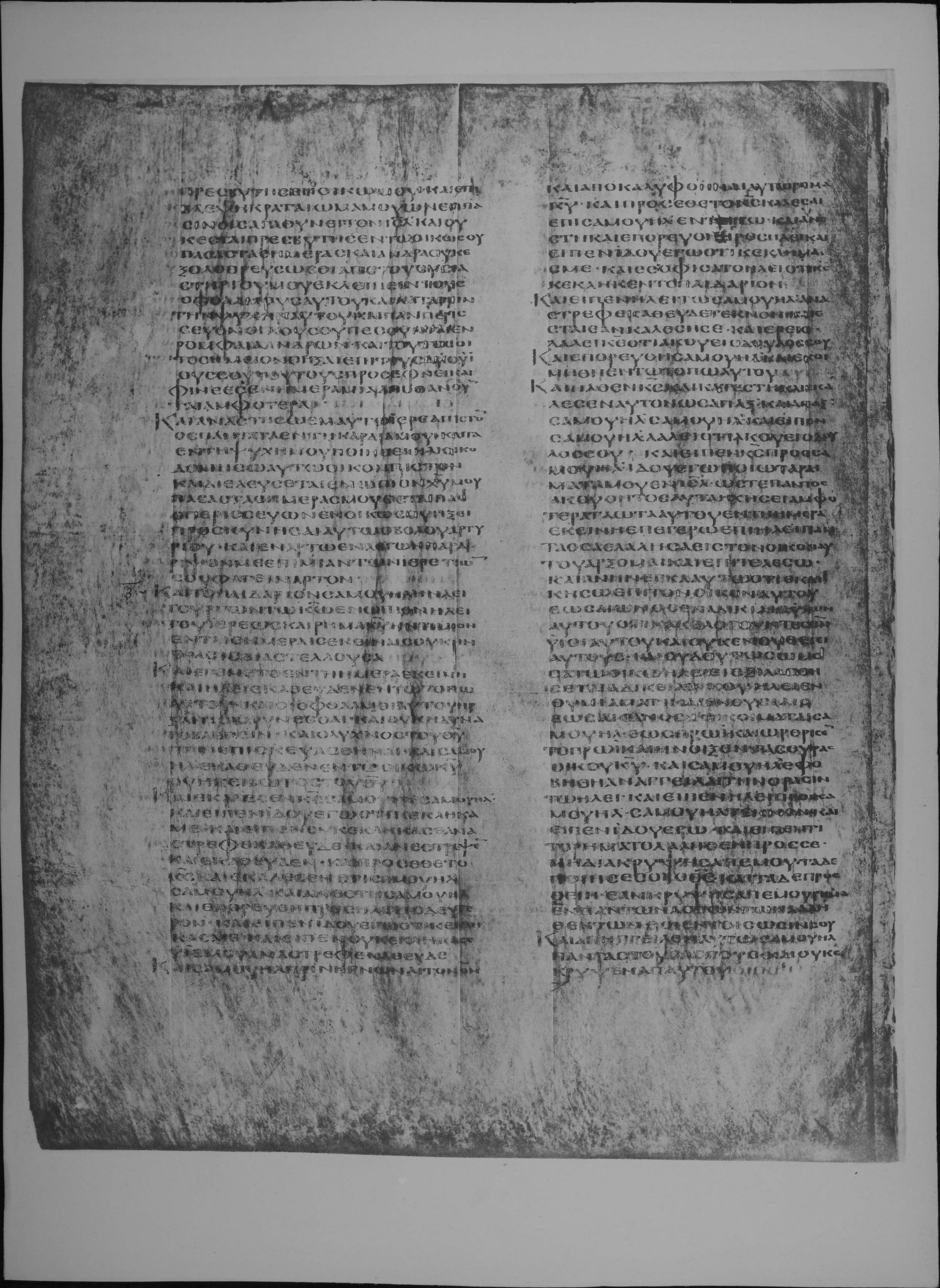
1 Kingdoms (1 Samuel) 2:26-32 is on fol. 162r (full-size facsimile of 1879-83, Internet Archive codex-alexandrinus leaf 344). The 1930 reduced facsimile prints beneath this page: 1 Sam. ii. 12-32. Checked on the plate: the page begins at the start of 1 Kingdoms (1 Samuel) 2:12 (first words read: ΚΑΙ ΟΙ ΥΙΟΙ ΗΛΕΙ ΤΟΥ ΙΕΡΕΩΣ ΥΙΟΙ ΛΟΙΜΟΙ ΟΥΚ ΕΙΔΟΤΕΣ ΤΟΝ ΚΝ). 1 Kingdoms (1 Samuel) 2:32-33 is on fol. 162v (full-size facsimile of 1879-83, Internet Archive codex-alexandrinus leaf 345). The 1930 reduced facsimile prints beneath this page: 1 Sam. ii. 32-iii. 18. Checked on the plate: the page begins inside 1 Kingdoms (1 Samuel) 2:32 (first words read: ΠΡΕΣΒΥΤΗΣ ΕΝ ΟΙΚΩ ΜΟΥ ΚΑΙ ΕΠΙΒΛΕΨΕΙ ΚΡΑΤΑΙΩΜΑ). Note: Codex Alexandrinus' wording here differs from Swete's (Codex Vaticanus) text, so the opening words were identified by eye in Alexandrinus' wording of this verse.
26καὶ τὸ παιδάριον Σαμουὴλ ἐπορεύετο, καὶ ἀγαθὸν καὶ μετὰ Κυρίου καὶ μετὰ ἀνθρώπων. 27Καὶ ἦλθεν ἄνθρωπος θεοῦ πρὸς Ἠλεὶ καὶ εἶπεν Τάδε λέγει Κύριος Ἀποκαλυφθεὶς ἀπεκαλύφθην πρὸς οἶκον πατρός σου, ὄντων αὐτῶν ἐν γῇ Αἰγύπτῳ δούλων τῷ οἴκῳ Φαραώ· 28καὶ ἐξελεξάμην τὸν οἶκον τοῦ πατρός σου ἐκ πάντων τῶν σκήπτρων Ἰσραὴλ ἐμοὶ ἱερατεύειν, καὶ ἀναβαίνειν ἐπὶ θυσιαστήριόν μου καὶ θυμιᾷν θυμίαμα καὶ αἴρειν ἐφούδ· καὶ ἔδωκα τῷ οἴκῳ τοῦ πατρός σου τὰ πάντα τοῦ πυρὸς υἱῶν Ἰσραὴλ εἰς βρῶσιν. 29καὶ ἵνα τί ἐπέβλεψας ἐπὶ τὸ θυμίαμά μου καὶ εἰς τὴν θυσίαν μου ἀναιδεῖ ὀφθαλμῷ; καὶ ἐδόξασας τοὺς υἱούς σου ὑπὲρ ἐμὲ ἐνευλογεῖσθαι ἀπαρχῆς πάσης θυσίας Ἰσραὴλ ἔμπροσθέν μου; 30διὰ τοῦτο τάδε εἶπεν Κύριος ὁ θεὸς Ἰσραήλ Εἶπα Ὁ οἶκός σου καὶ ὁ οἶκος τοῦ πατρός σου διελεύσεται ἐνώπιόν μου ἕως αἰῶνος. καὶ νῦν φησὶν Κὺριος Μηδαμῶς ἐμοί, ὅτι ἀλλ᾽ ἢ τοὺς δοξάζοντάς με δοξάσω, καὶ ὁ ἐξουθενῶν με ἀτιμωθήσεται. 31ἰδοὺ ἡμέραι ἔρχονται καὶ ἐξολεθρεύσω τὸ σπέρμα σου καὶ τὸ σπέρμα οἴκου πατρός σου, 32καὶ οὐκ ἔσται σου πρεσβύτης ἐν οἴκῳ μου πάσας τὰς ἡμέρας. 33καὶ ἄνδρα οὐκ ἐξολεθρεύσω ἀπὸ τοῦ θυσιαστηρίου μου, ἐκλιπεῖν τοὺς ὀφθαλμοὺς αὐτοῦ καὶ καταρρεῖν τὴν ψυχὴν αὐτοῦ· καὶ πᾶς περισσεύων οἴκου σου πεσοῦνται ἐν ῥομφαίᾳ ἀνδρῶν.
26And the child Samuel advanced, and was in favour with God and with men. 27And a man of God came to Heli, and said, Thus says the Lord, I plainly revealed myself to the house of thy father, when they were servants in Egypt to the house of Pharao. 28And I chose the house of thy father out of all the tribes of Israel to minister to me in the priest's office, to go up to my altar, and to burn incense, and to wear an ephod. And I gave to the house of thy father all the offerings by fire of the children of Israel for food. 29And wherefore hast thou looked upon my incense-offering and my meat-offering with a shameless eye, and hast honoured thy sons above me, so that they should bless themselves with the first-fruits of every sacrifice of Israel before me? 30Therefore thus says the Lord God of Israel, I said, Thy house and the house of thy father shall pass before me for ever: but now the Lord says, That be far from me; for I will only honour them that honour me, and he that sets me at nought shall be despised. 31Behold, the days come when I will destroy thy seed and the seed of thy father's house. 32And thou shalt not have an old man in my house for ever. 33And if I do not destroy a man of thine from my altar, it shall be that his eyes may fail and his soul may perish; and every one that remains in thy house shall fall by the sword of men.
Where on the image
1 Kingdoms (1 Samuel) 2:34-36 is on fol. 162v (full-size facsimile of 1879-83, Internet Archive codex-alexandrinus leaf 345). The 1930 reduced facsimile prints beneath this page: 1 Sam. ii. 32-iii. 18. Checked on the plate: the page begins inside 1 Kingdoms (1 Samuel) 2:32 (first words read: ΠΡΕΣΒΥΤΗΣ ΕΝ ΟΙΚΩ ΜΟΥ ΚΑΙ ΕΠΙΒΛΕΨΕΙ ΚΡΑΤΑΙΩΜΑ). Note: Codex Alexandrinus' wording here differs from Swete's (Codex Vaticanus) text, so the opening words were identified by eye in Alexandrinus' wording of this verse.
34καὶ τοῦτό σοι τὸ σημεῖον ὃ ἣξει ἐπὶ τοὺς δύο υἱούς σου τούτους, Ὁφνεὶ καὶ Φεινεές, ἐν ἡμέρᾳ μιᾷ ἀποθανοῦνται ἀμφότεροι. 35καὶ ἀναστήσω ἐμαυτῷ ἱερέα πιστόν, ὃς πάντα τὰ ἐν τῇ καρδίᾳ μου καὶ τὰ ἐν τῇ ψυχῇ μου ποιήσει· καὶ οἰκοδομήσω αὐτῷ οἶκον πιστόν, καὶ διελεύσεται ἐνώπιον χριστοῦ μου πάσας τὰς ἡμέρας. 36καὶ ἔσται ὁ περισσεύων ἐν οἴκῳ ἥξει προσκυνεῖν αὐτῷ ὀβολοῦ ἀργυρίου λέγων Παράριψόν με ἐπὶ μίαν τῶν ἱερατειῶν σου φαγεῖν ἄρτον.
34And this which shall come upon thy two sons Ophni and Phinees shall be a sign to thee; in one day they shall both die. 35And I will raise up to myself a faithful priest, who shall do all that is in my heart and in my soul; and I will build him a sure house, and he shall walk before my Christ for ever. 36And it shall come to pass that he that survives in thy house, shall come to do obeisance before him for a little piece of silver, saying, Put me into one of thy priests' offices to eat bread.
Cite
Sources
- Source: Codex Alexandrinus (British Library Royal MS 1 D. V) via the British Museum photographic facsimiles of 1879-83 and 1930 (Internet Archive) + Swete's Septuagint + Brenton's English (holding institution)
- Critical edition: H. B. Swete, The Old Testament in Greek according to the Septuagint (1909)
← previous · → next · v cycle view · l back to library