1 Kingdoms (1 Samuel), Chapter 20 (Codex Alexandrinus)
Introduction
1 Kingdoms (1 Samuel) 20 in the Greek Old Testament (the Septuagint) as written in Codex Alexandrinus, a Greek Bible copied in the fifth century, probably in Egypt, and now in the British Library (Royal MS 1 D. V, the first of its four volumes). It is one of the three great early codices of the whole Greek Bible, with Codex Vaticanus and Codex Sinaiticus.
Verses not in Swete's text: Swete's Greek (Codex Vaticanus) has no verse numbered 16 in this chapter. In the books of Kingdoms and Chronicles Codex Alexandrinus often follows the Hebrew text more closely and may have text at such points; any such lines on the pages shown have no Greek column here. Brenton, translating a Vaticanus-type text, mostly lacks them too.
Numbering: Swete's Greek and Brenton's English number or divide some verses of this chapter differently (Swete 20:15 = Brenton 20:15-16; Swete 20:21-22 = Brenton 20:21-22; Swete 20:43 = Brenton 21:1). Each column keeps its own verse numbers, and sections are cut only where the two texts agree, so each section holds the same passage in both languages.
This entry meets the strict three-criteria standard of the Theosis Library:
- Manuscript scan: the pages of Codex Alexandrinus carrying this chapter (fol. 174r, fol. 174v, fol. 175r), from the full-size photographic (autotype) facsimile published by the British Museum in 1879-1883, as digitised on the Internet Archive. The verse range of every page comes from the reduced photographic facsimile of 1930, which prints it beneath each plate, and the opening words of every page were read on the plate to confirm the page and the verse it begins with. Each section links to the page or pages that hold its verses. Folio numbers are those written at the head of each leaf and visible on the plates.
- Original text: Swete's edition, which here prints the text of Codex Vaticanus (Vat. gr. 1209), the base of his edition, and gives the readings of Alexandrinus only in his apparatus. The Greek column is therefore Vaticanus' text; where Alexandrinus differs, the plate shows what Alexandrinus reads.
- English translation: Sir Lancelot C. L. Brenton, The Septuagint Version of the Old Testament (1844; 1851 edition), a translation of the Greek, public domain, from the eBible.org text.
How was this verified? (Provenance)
Where on the image
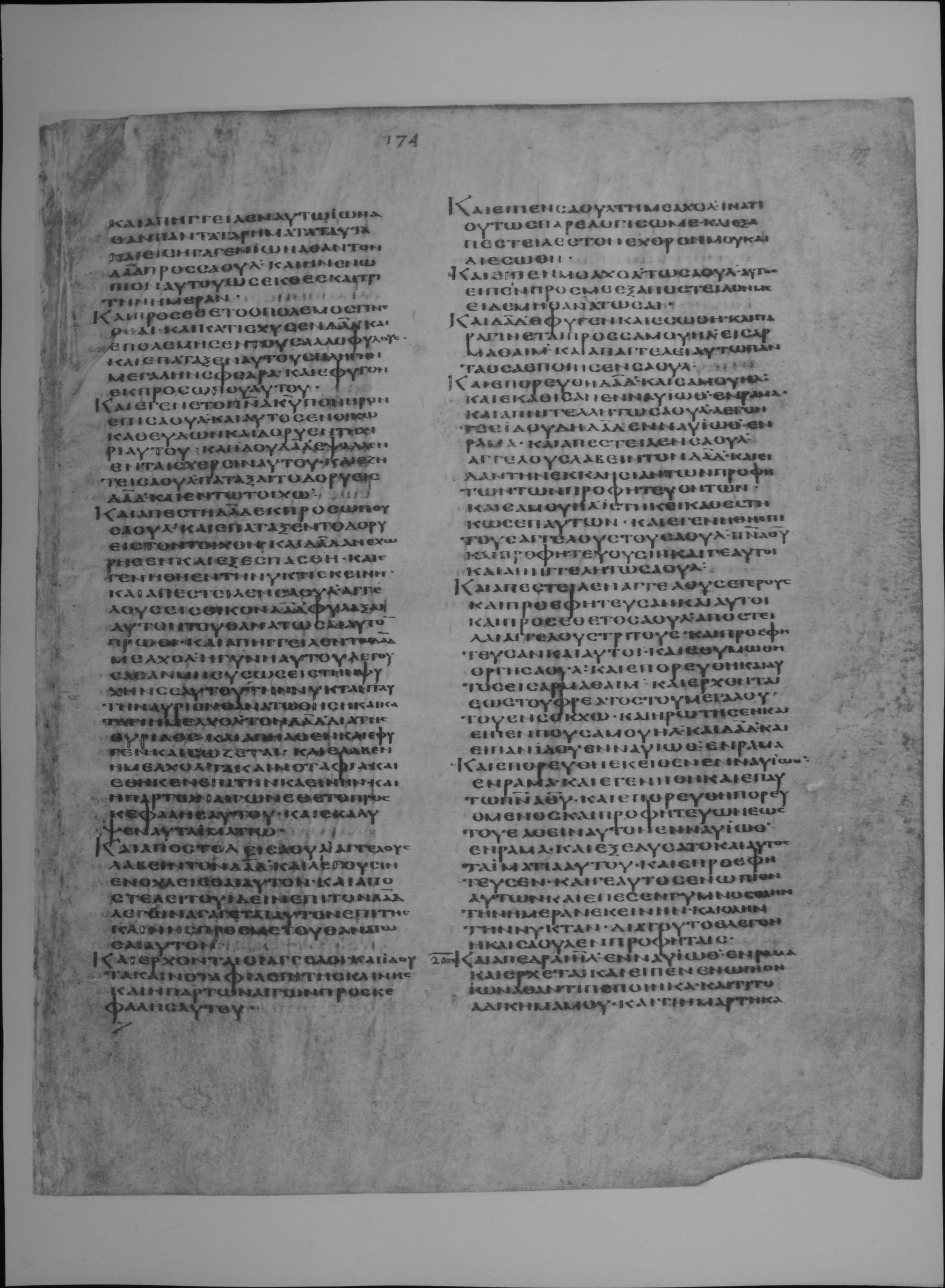
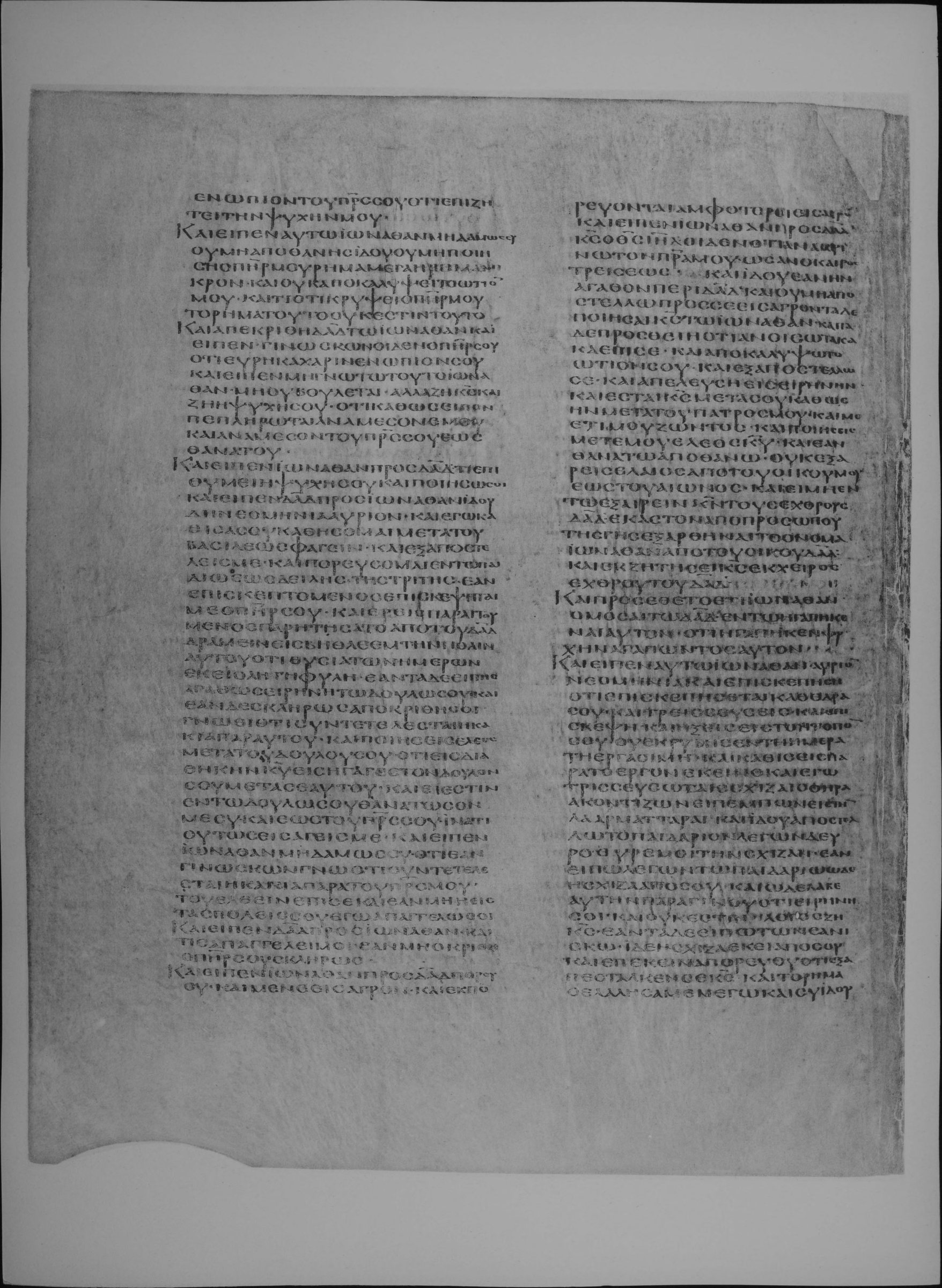
1 Kingdoms (1 Samuel) 20:1 is on fol. 174r (full-size facsimile of 1879-83, Internet Archive codex-alexandrinus leaf 366). The 1930 reduced facsimile prints beneath this page: 1 Sam. xix. 7-xx. 1. Checked on the plate: the page begins inside 1 Kingdoms (1 Samuel) 19:7 (first words read: ΚΑΙ ΑΠΗΓΓΕΙΛΕΝ ΑΥΤΩ ΙΩΝΑΘΑΝ ΠΑΝΤΑ ΤΑ ΡΗΜΑΤΑ ΤΑΥΤΑ ΚΑΙ ΕΙΣΗΓΑΓΕΝ ΙΩΝΑΘΑΝ ΤΟΝ ΔΑΥΕΙΔ). 1 Kingdoms (1 Samuel) 20:1-8 is on fol. 174v (full-size facsimile of 1879-83, Internet Archive codex-alexandrinus leaf 367). The 1930 reduced facsimile prints beneath this page: 1 Sam. xx. 1-23. Checked on the plate: the page begins inside 1 Kingdoms (1 Samuel) 20:1 (first words read: ΕΝΩΠΙΟΝ ΤΟΥ ΠΡΣ ΣΟΥ ΟΤΙ ΕΠΙΖΗΤΕΙ ΤΗΝ ΨΥΧΗΝ ΜΟΥ ΚΑΙ ΕΙΠΕΝ ΑΥΤΩ ΙΩΝΑΘΑΝ).
1Καὶ ἀπέδρα Δαυεὶδ ἐξ Ἀυὰθ ἐν Ῥαμά, καὶ ἔρχεται ἐνώπιον Ἰωναθὰν καὶ εἶπεν Τί πεποίηκα, καὶ τί τὸ ἀδίκημά μου, καὶ τί ἡμάρτηκα ἐνώπιον τοῦ πατρός σου ὅτι ἐπιζητεῖ τὴν ψυχήν μου; 2καὶ εἶπεν αὐτῷ Ἰωναθάν Μηδαμῶς σοι, οὐ μὴ ἀποθάνῃς· ἰδοὺ οὐ μὴ ποιήσῃ ὁ πατήρ μου ῥῆμα μικρὸν καὶ οὐκ ἀποκαλύψει τὸ ὠτίον μου· καὶ τί ὅτι κρύψει ὁ πατήρ μου τὸ ῥῆμα τοῦτο; οὐκ ἔστιν τοῦτο. 3καὶ ἀπεκρίθη Δαυεὶδ τῷ Ἰωναθὰν καὶ εἶπεν Γινώσκων οἶδεν ὁ πατήρ σου ὅτι εὕρηκα χάριν ἐν ὀφθαλμοῖς σου, καὶ εἶπεν μὴ γνῶναι τοῦτο Ἰωναθάν, μὴ οὐ βούληται· ἀλλὰ ζῇ Κύριος καὶ ζῇ ἡ ψυχή σου, ὅτι καθὼς εἶπεν, ἐμπέπλησται ἀνὰ μέσον μου καὶ τοῦ θανάτου. 4καὶ εἶπεν Ἰωναθὰν πρὸς Δαυείδ Τί ἐπιθυμεῖ ἡ ψυχή σου, καὶ τί ποιήσω σοι; 5καὶ εἶπεν Δαυεὶδ πρὸς Ἰωναθάν Ἰδοὺ δὴ νεομηνία αὔριον, καὶ ἐγὼ καθίσας οὐ καθήσομαι φαγεῖν, καὶ ἐξαποστελεῖς με καὶ κρυβήσομαι ἐν τῷ πεδίῳ ἕως δείλης. 6ἐὰν ἐπισκεπτόμενος ἐπισκέψηταί με ὁ πατήρ σου, καὶ ἐρεῖς Παραιτούμενος παρῃτήσατο ἀπ᾽ ἐμοῦ Δαυεὶδ δραμεῖν ἕως εἰς Βηθλέεμ τὴν πόλιν αὐτοῦ, ὅτι θυσία τῶν ἡμερῶν ἐκεῖ ὅλῃ τῇ φυλῇ. 7ἐὰν τάδε εἴπῃ Ἀγαθῶς, εἰρήνη τῷ δούλῳ σου· καὶ ἐὰν σκληρῶς ἀποκριθῇ σοι, γνῶθι ὅτι συντετέλεσται ἡ κακία παρ᾽ αὐτοῦ. 8καὶ ποιήσεις ἔλεος μετὰ τοῦ δούλου σου, ὅτι εἰσήγαγες εἰς διαθήκην Κυρίου τὸν δοῦλόν σου μετὰ σεαυτοῦ· καὶ εἰ ἔστιν ἀδικία ἐν τῷ δούλῳ σου, θανάτωσόν με σύ· καὶ ἕως τοῦ πατρός σου ἵνα τί οὕτως εἰσάγεις με;
1And David fled from Navath in Rama, and comes into the presence of Jonathan; and he said, What have I done, and what is my fault, and wherein have I sinned before thy father, that he seeks my life? 2And Jonathan said to him, Far be it from thee: thou shalt not die: behold, my father will not do any thing great or small without discovering it to me; and why should my father hide this matter from me? this thing is not so. 3And David answered Jonathan, and said, Thy father knows surely that I have found grace in thy sight, and he said, Let not Jonathan know this, lest he refuse his consent: but as the Lord lives and thy soul lives, as I said, the space is filled up between me and death. 4And Jonathan said to David, What does thy soul desire, and what shall I do for thee? 5And David said to Jonathan, Behold, to-morrow is the new moon, and I shall not on any account sit down to eat, but thou shalt let me go, and I will hide in the plain till the evening. 6And if thy father do in anywise enquire for me, then shalt thou say, David earnestly asked leave of me to run to Bethleem his city, for there is there a yearly sacrifice for all the family. 7If he shall say thus, Well,— all is safe for thy servant: but if he shall answer harshly to thee, know that evil is determined by him. 8And thou shalt deal mercifully with thy servant; for thou hast brought thy servant into a covenant of the Lord with thyself: and if there is iniquity in thy servant, slay me thyself; but why dost thou thus bring me to thy father?
Where on the image
1 Kingdoms (1 Samuel) 20:9-17 is on fol. 174v (full-size facsimile of 1879-83, Internet Archive codex-alexandrinus leaf 367). The 1930 reduced facsimile prints beneath this page: 1 Sam. xx. 1-23. Checked on the plate: the page begins inside 1 Kingdoms (1 Samuel) 20:1 (first words read: ΕΝΩΠΙΟΝ ΤΟΥ ΠΡΣ ΣΟΥ ΟΤΙ ΕΠΙΖΗΤΕΙ ΤΗΝ ΨΥΧΗΝ ΜΟΥ ΚΑΙ ΕΙΠΕΝ ΑΥΤΩ ΙΩΝΑΘΑΝ).
9καὶ εἶπεν Ἰωναθάν Μηδαμῶς σοι, ὅτι ἐὰν γινώσκων γνῶ ὅτι συντετέλεσται ἡ κακία παρὰ τοῦ πατρός μου τοῦ ἐλθεῖν ἐπὶ σέ, καὶ ἐὰν μὴ ᾖ εἰς τὰς πόλεις σου, ἐγὼ ἀπαγγέλλω σοι. 10καὶ εἶπεν Δαυεὶδ πρὸς Ἰωναθάν Τίς ἀπαγγείλῃ μοι ἐὰν ἀποκριθῇ ὁ πατήρ σου σκληρῶς; 11καὶ εἶπεν Ἰωναθὰν πρὸς Δαυείδ Πορεύου καὶ μένε εἰς ἀγρόν· καὶ ἐκπορεύονται ἀμφότεροι εἰς ἀγρόν. 12Καὶ εἶπεν Ἰωναθὰν πρὸς Δαυείδ Κύριος ὁ θεὸς Ἰσραὴλ οἶδεν ὅτι ἀνακρινῶ τὸν πατέρα μου ὡς ἂν ὁ καιρὸς τρισσῶς, καὶ ἰδοὺ ἀγαθὸν ᾖ περὶ Δαυείδ, καὶ οὐ μὴ ἀποστείλω πρὸς σὲ εἰς ἀγρόν· 13τάδε ποιήσαι ὁ θεὸς τῷ Ἰωναθὰν καὶ τάδε προσθείη· ὅτι ἀνοίσω τὰ κακὰ ἐπὶ σὲ καὶ ἀποκαλύψω τὸ ὠτίον σου, καὶ ἐξαποστελῶ σε καὶ ἀπελεύσῃ εἰς εἰρήνην, καὶ ἔσται Κύριος μετὰ σοῦ καθὼς ἦν μετὰ τοῦ πατρός μου. 14καὶ μὲν ἔτι μου ζῶντος, καὶ ποιήσεις ἔλεος μετ᾽ ἐμοῦ· καὶ ἐὰν θανάτῳ ἀποθάνω, 15οὐκ ἐξαρεῖς ἔλεός σου ἀπὸ τοῦ οἴκου μου ἕως τοῦ αἰῶνος· καὶ εἰ μὴ, ἐν τῷ ἐξαίρειν Κύριον τοὺς ἐχθροὺς Δαυεὶδ ἕκαστον ἀπὸ προσώπου τῆς γῆς, εὑρεθῆναι τὸ ὄνομα τοῦ Ἰωναθὰν ἀπὸ τοῦ οἴκου Δαυείδ· καὶ ἐκζητήσαι Κύριος ἐχθροὺς τοῦ Δαυείδ. 17καὶ προσέθετο ἔτι Ἰωναθὰν ὀμόσαι τῷ Δαυείδ, ὅτι ἠγάπησεν ψυχὴν ἀγαπῶντος αὐτόν.
9And Jonathan said, That be far from thee: for if I surely know that evil is determined by my father to come upon thee, although it should not be against thy cities, I will tell thee. 10And David said to Jonathan, Who can tell me if thy father should answer roughly? 11And Jonathan said to David, Go, and abide in the field. And they went out both into the field. 12And Jonathan said to David, The Lord God of Israel knows that I will sound my father as I have an opportunity, three several times, and, behold, if good should be determined concerning David, and I do not send to thee to the field, 13God do so to Jonathan and more also: as I shall also report the evil to thee, and make it known to thee, and I will let thee go; and thou shalt depart in peace, and the Lord shall be with thee, as he was with my father. 14And if indeed I continue to live, then shalt thou deal mercifully with me; and if I indeed die, 15thou shalt not withdraw thy mercy from my house for ever: and if thou doest not, when the Lord cuts off the enemies of David each from the face of the earth, 16should it happen that the name of Jonathan be discovered by the house of David, then let the Lord seek out the enemies of David. 17And Jonathan swore yet again to David, because he loved the soul of him that loved him.
Where on the image
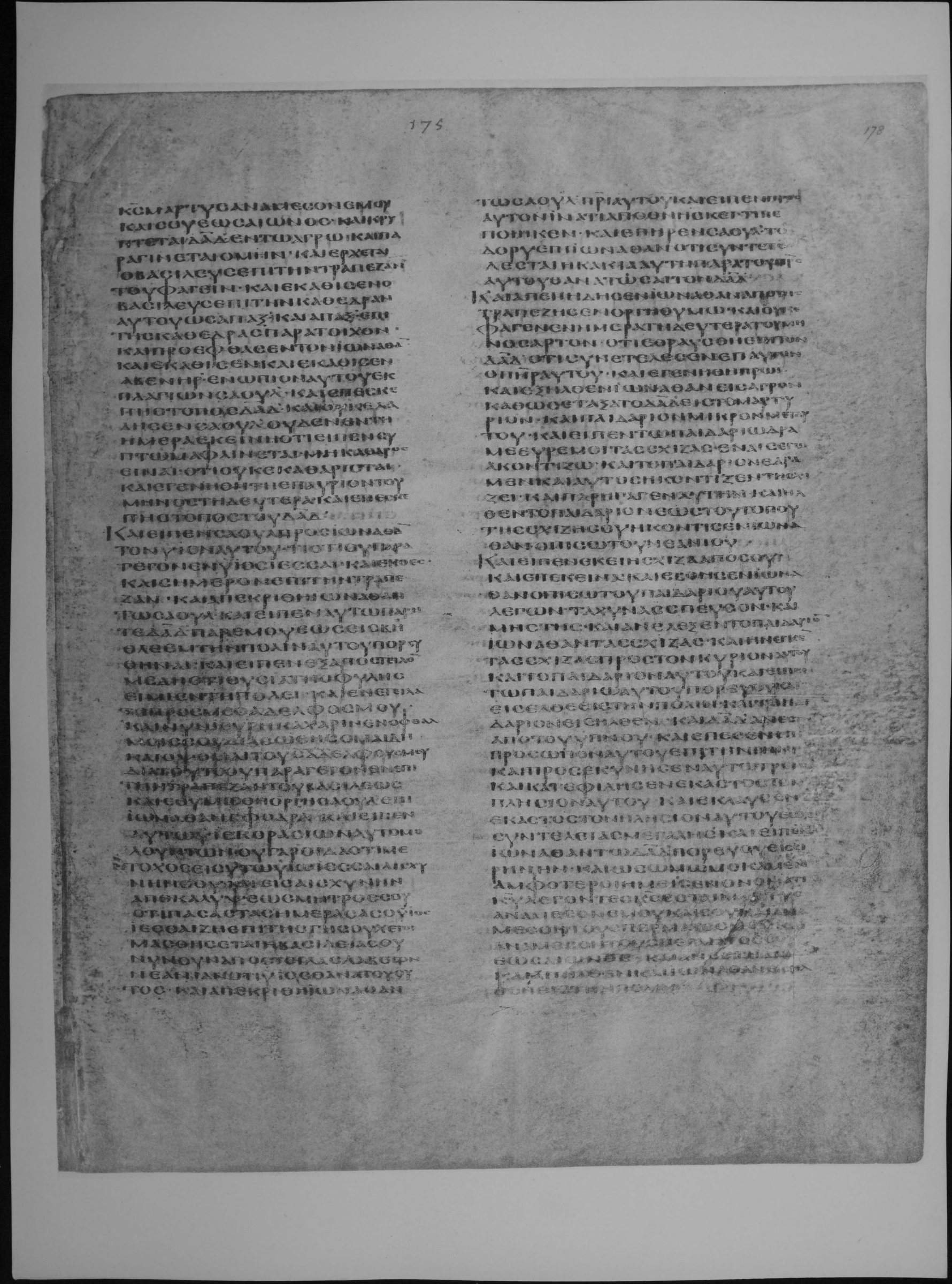
1 Kingdoms (1 Samuel) 20:18-23 is on fol. 174v (full-size facsimile of 1879-83, Internet Archive codex-alexandrinus leaf 367). The 1930 reduced facsimile prints beneath this page: 1 Sam. xx. 1-23. Checked on the plate: the page begins inside 1 Kingdoms (1 Samuel) 20:1 (first words read: ΕΝΩΠΙΟΝ ΤΟΥ ΠΡΣ ΣΟΥ ΟΤΙ ΕΠΙΖΗΤΕΙ ΤΗΝ ΨΥΧΗΝ ΜΟΥ ΚΑΙ ΕΙΠΕΝ ΑΥΤΩ ΙΩΝΑΘΑΝ). 1 Kingdoms (1 Samuel) 20:23-25 is on fol. 175r (full-size facsimile of 1879-83, Internet Archive codex-alexandrinus leaf 368). The 1930 reduced facsimile prints beneath this page: 1 Sam. xx. 23-43. Checked on the plate: the page begins inside 1 Kingdoms (1 Samuel) 20:23 (first words read: ΚΣ ΜΑΡΤΥΣ ΑΝΑ ΜΕΣΟΝ ΕΜΟΥ ΚΑΙ ΣΟΥ ΕΩΣ ΑΙΩΝΟΣ ΚΑΙ ΕΚΡΥΒΗ ΔΑΥΕΙΔ ΕΝ ΤΩ ΑΓΡΩ).
18καὶ εἶπεν Ἰωναθάν Αὔριον νουμηνία καὶ ἐπισκεπήσῃ, ὅτι ἐπισκεπήσεται καθέδρα σου. 19καὶ τρισσεύσεις καὶ ἐπισκέψῃ καὶ ἥξεις εἰς τὸν τόπον σου οὗ κρυβῇς ἐν τῇ ἡμέρᾳ τῇ ἐργασίμῃ, καὶ καθήσῃ παρὰ τὸ ἐργὰβ ἐκεῖνο. 20καὶ ἐγὼ τρισσεύσω ταῖς σχίζαις ἀκοντίζων, ἐκπέμπων εἰς τὴν Ἁρματταρεί. 21καὶ ἰδοὺ ἀποστέλλω τὸ παιδάριον λέγων Δεῦρο εὑρέ μοι τὴν γοῦζαν· ἐὰν εἴπω λέγων τῷ παιδαρίῳ Ὧδε ἡ σχίζα ἀπὸ σοῦ καὶ ὧδε, λάβε αὐτήν, παραγίνου· ὅτι εἰρήνη σοι καὶ οὐκ ἔστιν λόγος Κυρίου, ζῇ Κύριος. 22ἐὰν τάδε εἴπω τῷ νεανίσκῳ Ὧδε ἡ σχίζα ἀπὸ σοῦ καὶ ἐπέκεινα, πορεύου, ὅτι ἐξαπέσταλκέν σε Κύριος. 23καὶ τὸ ῥῆμα ὃ ἐλαλήσαμεν ἐγὼ καὶ σύ, ἰδοὺ Κύριος μάρτυς ἀνὰ μέσον ἐμοῦ καὶ σοῦ ἕως αἰῶνος. 24Καὶ κρύπτεται Δαυεὶδ ἐν ἀγρῷ, καὶ παραγίνεται ὁ μὴν καὶ ἔρχεται ὁ βασιλεὺς ἐπὶ τὴν τράπεζαν τοῦ φαγεῖν. 25καὶ ἐκάθισεν ἐπὶ τὴν καθέδραν αὐτοῦ ὡς ἅπαξ καὶ ἅπαξ ἐπὶ τῆς καθέδρας παρὰ τοῖχον, καὶ προέφθασεν τὸν Ἰωναθάν, καὶ ἐκάθισεν Ἀβεννὴρ ἐκ πλαγίων Σαούλ, καὶ ἐπεσκέπη ὁ τόπος Δαυείδ.
18And Jonathan said, To-morrow is the new moon, and thou wilt be enquired for, because thy seat will be observed as vacant. 19And thou shalt stay three days, and watch an opportunity, and shalt come to thy place where thou mayest hide thyself in the day of thy business, and thou shalt wait by that ergab. 20And I will shoot three arrows, aiming them at a mark. 21And behold, I will send a lad, saying, Go find me the arrow. 22If I should expressly say to the lad, The arrow is here, and on this side of thee, take it; then come, for it is well with thee, and there is no reason for fear, as the Lord lives: but if I should say thus to the young man, The arrow is on that side of thee, and beyond; go, for the Lord hath sent thee away. 23And as for the word which thou and I have spoken, behold, the Lord is witness between me and thee for ever. 24So David hides himself in the field, and the new month arrives, and the king comes to the table to eat. 25And he sat upon his seat as in former times, even on his seat by the wall, and he went before Jonathan; and Abenner sat on one side of Saul, and the place of David was empty.
Where on the image
1 Kingdoms (1 Samuel) 20:26-33 is on fol. 175r (full-size facsimile of 1879-83, Internet Archive codex-alexandrinus leaf 368). The 1930 reduced facsimile prints beneath this page: 1 Sam. xx. 23-43. Checked on the plate: the page begins inside 1 Kingdoms (1 Samuel) 20:23 (first words read: ΚΣ ΜΑΡΤΥΣ ΑΝΑ ΜΕΣΟΝ ΕΜΟΥ ΚΑΙ ΣΟΥ ΕΩΣ ΑΙΩΝΟΣ ΚΑΙ ΕΚΡΥΒΗ ΔΑΥΕΙΔ ΕΝ ΤΩ ΑΓΡΩ).
26καὶ οὐκ ἐλάλησεν Σαοὺλ ἐν τῇ ἡμέρᾳ ἐκείνῃ, ὅτι εἴρηκεν Σύμπτωμα φαίνεται μὴ καθαρὸς εἶναι, ὅτι οὐ κεκαθάρισται. 27καὶ ἐγενήθη τῇ ἐπαύριον τοῦ μηνὸς τῇ ἡμέρᾳ τῇ δευτέρᾳ καὶ ἐπεσκέπη ὁ τόπος τοῦ Δαυείδ, καὶ εἶπεν Σαοὺλ πρὸς Ἰωναθὰν τὸν υἱὸν αὐτοῦ Τί ὅτι οὐ παραγέγονεν ὁ υἱὸς Ἰεσσαὶ καὶ ἐχθὲς καὶ σήμερον ἐπὶ τὴν τράπεζαν; 28καὶ ἀπεκρίθη Ἰωναθὰν τῷ Σαοὺλ καὶ εἶπεν αὐτῷ Παρῄτηται Δαυεὶδ παρ᾽ ἐμοῦ ἕως εἰς Βηθλέεμ τὴν πόλιν αὐτοῦ πορευθῆναι, 29καὶ εἶπεν Ἐξαπόστειλον δή με, ὅτι θυσία τῆς φυλῆς ἡμῖν ἐν τῇ πόλει καὶ ἐνετείλαντο πρὸς μὲ οἱ ἀδελφοί μου· καὶ νῦν εἰ εὕρηκα χάριν ἐν ὀφθαλμοῖς σου, διασωθήσομαι δὴ καὶ ὄψομαι τοὺς ἀδελφούς μου· διὰ τοῦτο οὐ παραγέγονεν ἐπὶ τὴν τράπεζαν τοῦ βασιλέως. 30καὶ ἐθυμώθη ὀργῇ Σαοὺλ ἐπὶ Ἰωναθὰν σφόδρα καὶ εἶπεν αὐτῷ Υἱὲ κορασίων αὐτομολούντων, οὐ γὰρ οἶδα ὅτι μέτοχος εἶ σὺ τῷ υἱῷ Ἰεσσαὶ εἰς αἰσχύνην σου καὶ εἰς αἰσχύνην ἀποκαλύψεως μητρός σου; 31ὅτι πάσας τὰς ἡμέρας ἃς ὁ υἱὸς Ἰεσσαὶ ζῇ ἐπὶ τῆς γῆς οὐχ ἑτοιμασθήσεται ἡ βασιλεία σου· νῦν οὖν ἀποστείλας λάβε τὸν νεανίαν, ὅτι υἱὸς θανάτου οὗτος. 32καὶ ἀπεκρίθη Ἰωναθὰν τῷ Σαούλ Ἵνα τί ἀποθνήσκει; τί πεποίηκεν; 33καὶ ἐπῆρεν Σαοὺλ τὸ δόρυ ἐπὶ Ἰωναθὰν τοῦ θανατῶσαι αὐτόν, καὶ ἔγνω Ἰωναθὰν ὅτι συντετέλεσται ἡ κακία αὕτη παρὰ τοῦ πατρὸς αὐτοῦ θανατῶσαι τὸν Δαυείδ.
26And Saul said nothing on that day, for he said, It seems to have fallen out that he is not clean, because he has not purified himself. 27And it came to pass on the morrow, on the second day of the month, that the place of David was empty; and Saul said to Jonathan his son, Why has not the son of Jessæ attended both yesterday and to-day at the table? 28And Jonathan answered Saul, and said to him, David asked leave of me to go as far as Bethleem his city; 29and he said, Let me go, I pray thee, for we have a family sacrifice in the city, and my brethren have sent for me; and now, if I have found grace in thine eyes, I will even go over and see my brethren: therefore he is not present at the table of the king. 30And Saul was exceedingly angry with Jonathan, and said to him, Thou son of traitorous damsels! for do I not know that thou art an accomplice with the son of Jessæ to thy shame, and to the shame of thy mother's nakedness? 31For so long as the son of Jessæ lives upon the earth, thy kingdom shall not be established: now then send and take the young man, for he shall surely die. 32And Jonathan answered Saul, Why is he to die? what has he done? 33And Saul lifted up his spear against Jonathan to slay him: so Jonathan knew that this evil was determined on by his father to slay David.
Where on the image
1 Kingdoms (1 Samuel) 20:34-43 is on fol. 175r (full-size facsimile of 1879-83, Internet Archive codex-alexandrinus leaf 368). The 1930 reduced facsimile prints beneath this page: 1 Sam. xx. 23-43. Checked on the plate: the page begins inside 1 Kingdoms (1 Samuel) 20:23 (first words read: ΚΣ ΜΑΡΤΥΣ ΑΝΑ ΜΕΣΟΝ ΕΜΟΥ ΚΑΙ ΣΟΥ ΕΩΣ ΑΙΩΝΟΣ ΚΑΙ ΕΚΡΥΒΗ ΔΑΥΕΙΔ ΕΝ ΤΩ ΑΓΡΩ).
34καὶ ἀνεπήδησεν Ἰωναθὰν ἀπὸ τῆς τραπέζης ἐν ὀργῇ θυμοῦ, καὶ οὐκ ἔφαγεν ἐν τῇ δευτέρᾳ τοῦ μηνὸς ἄρτον, ὅτι συνετέλεσεν ἐπ᾽ αὐτὸν ὁ πατὴρ αὐτοῦ. 35Καὶ ἐγενήθη πρωὶ καὶ ἐξῆλθεν Ἰωναθὰν εἰς ἀγρόν, καθὼς ἐτάξατο εἰς τὸ μαρτύριον Δαυείδ, καὶ παιδάριον μικρὸν μετ᾽ αὐτοῦ. 36καὶ εἶπεν τῷ παιδαρίῳ Δράμε, εὑρέ μοι τὰς σχίζας ἐν αἷς ἐγὼ ἀκοντίζω· καὶ τὸ παιδάριον ἔδραμε, καὶ αὐτὸς ἠκόντιζε τῇ σχίζῃ, καὶ παρήγαγεν αὐτήν. 37καὶ ἦλθεν τὸ παιδάριον ἕως τοῦ τόπου τῆς σχίζης οὗ ἠκόντιζεν Ἰωναθάν· 38καὶ ἀνεβόησεν Ἰωναθὰν ὀπίσω τοῦ νεανίου καὶ εἶπεν Ἐκεῖ ἡ σχίζα ἀπὸ σοῦ καὶ ἐπέκεινα· καὶ ἀνεβόησεν Ἰωναθὰν ὀπίσω τοῦ παιδαρίου αὐτοῦ λέγων Ταχύνας σπεῦσον καὶ μὴ στῇς· καὶ ἀνέλεξε τὸ παιδάριον Ἰωναθὰν τὰς σχίζας πρὸς τὸν κύριον αὐτοῦ. 39καὶ τὸ παιδάριον οὐκ ἔγνω οὐθὲν παρὲξ Ἰωναθὰν καὶ Δαυείδ. 40καὶ Ἰωναθὰν ἔδωκεν τὰ σκεύη αὐτοῦ ἐπὶ τὸ παιδάριον αὐτοῦ, καὶ εἶπεν τῷ παιδαρίῳ αὐτοῦ Πορεύου, εἴσελθε εἰς τὴν πόλιν. 41καὶ ὡς εἰσῆλθεν τὸ παιδάριον, καὶ Δαυεὶδ ἀνέστη ἀπὸ τοῦ ἀργὰβ καὶ ἔπεσεν ἐπὶ πρόσωπον αὐτοῦ καὶ προσεκύνησεν αὐτῷ τρίς, καὶ κατεφίλησεν ἕκαστος τὸν πλησίον αὐτοῦ, καὶ ἔκλαυσεν ἕκαστος τῷ πλησίον αὐτοῦ ἕως συντελείας μεγάλης. 42καὶ εἶπεν Ἰωναθάν Πορεύου εἰς εἰρήνην, καὶ ὡς ὀμωμόκαμεν ἡμεῖς ἀμφότεροι ἐν ὀνόματι Κυρίου λέγοντες Κύριος ἔσται μάρτυς ἀνὰ μέσον ἐμοῦ καὶ σοῦ, καὶ ἀνὰ μέσον τοῦ σηέρματός σου ἕως αἰῶνος. 43καὶ ἀνέστη Δαυεὶδ καὶ ἀπῆλθεν, καὶ Ἰωναθὰν εἰσῆλθεν εἰς τὴν πόλιν.
34And Jonathan sprang up from the table in great anger, and did not eat bread on the second day of the month, for he grieved bitterly for David, because his father determined on mischief against him. 35And morning came, and Jonathan went out to the field, as he appointed to do for a signal to David, and a little boy was with him. 36And he said to the boy, Run, find me the arrows which I shoot: and the boy ran, and Jonathan shot an arrow, and sent it beyond him. 37And the boy came to the place where the arrow was which Jonathan shot; and Jonathan cried out after the lad, and said, The arrow is on that side of thee and beyond thee. 38And Jonathan cried out after his boy, saying, Make all speed, and stay not. And Jonathan's boy gathered up the arrows, and brought the arrows to his master. 39And the boy knew nothing, only Jonathan and David knew. 40And Jonathan gave his weapons to his boy, and said to his boy, Go, enter into the city. 41And when the lad went in, then David arose from the argab, and fell upon his face, and did obeisance to him three times, and they kissed each other, and wept for each other, for a great while. 42And Jonathan said to David, Go in peace, and as we have both sworn in the name of the Lord, saying, The Lord shall be witness between me and thee, and between my seed and thy seed for ever— even so let it be. 21:1And David arose and departed, and Jonathan went into the city.
Cite
Sources
- Source: Codex Alexandrinus (British Library Royal MS 1 D. V) via the British Museum photographic facsimiles of 1879-83 and 1930 (Internet Archive) + Swete's Septuagint + Brenton's English (holding institution)
- Critical edition: H. B. Swete, The Old Testament in Greek according to the Septuagint (1909)
← previous · → next · v cycle view · l back to library