1 Kingdoms (1 Samuel), Chapter 29 (Codex Alexandrinus)
Introduction
1 Kingdoms (1 Samuel) 29 in the Greek Old Testament (the Septuagint) as written in Codex Alexandrinus, a Greek Bible copied in the fifth century, probably in Egypt, and now in the British Library (Royal MS 1 D. V, the first of its four volumes). It is one of the three great early codices of the whole Greek Bible, with Codex Vaticanus and Codex Sinaiticus.
This entry meets the strict three-criteria standard of the Theosis Library:
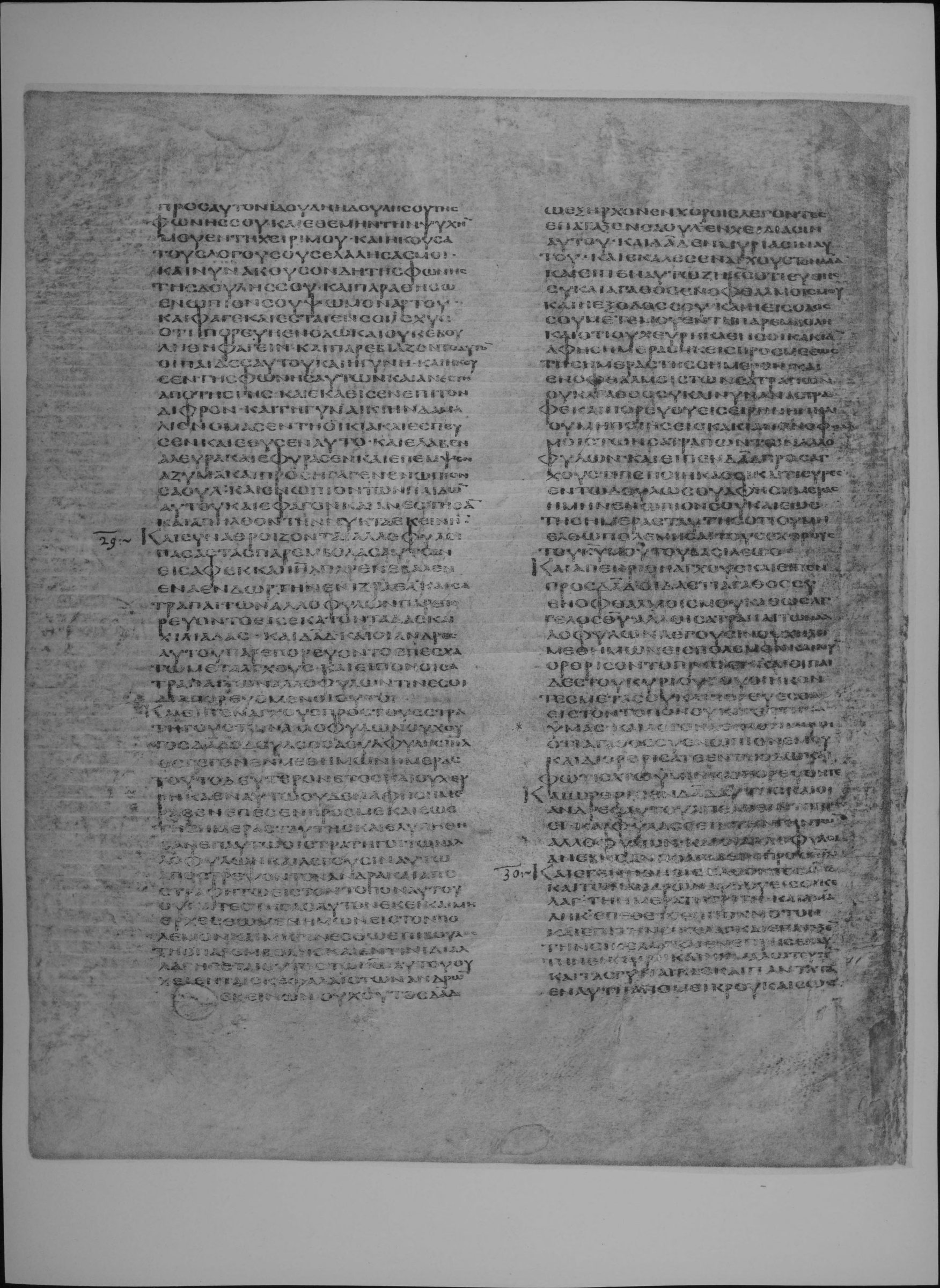
- Manuscript scan: the page of Codex Alexandrinus carrying this chapter (fol. 180v), from the full-size photographic (autotype) facsimile published by the British Museum in 1879-1883, as digitised on the Internet Archive. The verse range of every page comes from the reduced photographic facsimile of 1930, which prints it beneath each plate, and the opening words of every page were read on the plate to confirm the page and the verse it begins with. Each section links to the page or pages that hold its verses. Folio numbers are those written at the head of each leaf and visible on the plates.
- Original text: Swete's edition, which here prints the text of Codex Vaticanus (Vat. gr. 1209), the base of his edition, and gives the readings of Alexandrinus only in his apparatus. The Greek column is therefore Vaticanus' text; where Alexandrinus differs, the plate shows what Alexandrinus reads.
- English translation: Sir Lancelot C. L. Brenton, The Septuagint Version of the Old Testament (1844; 1851 edition), a translation of the Greek, public domain, from the eBible.org text.
How was this verified? (Provenance)
Where on the image
1 Kingdoms (1 Samuel) 29:1-8 is on fol. 180v (full-size facsimile of 1879-83, Internet Archive codex-alexandrinus leaf 379). The 1930 reduced facsimile prints beneath this page: 1 Sam. xxviii. 21-xxx. 2. Checked on the plate: the page begins inside 1 Kingdoms (1 Samuel) 28:21 (first words read: ΙΔΟΥ ΔΗ ΗΚΟΥΣΕΝ Η ΔΟΥΛΗ ΣΟΥ ΤΗΣ ΦΩΝΗΣ ΣΟΥ ΚΑΙ ΕΘΕΜΗΝ ΤΗΝ ΨΥΧΗΝ ΜΟΥ ΕΝ ΤΗ ΧΕΙΡΙ ΜΟΥ).
1Καὶ συναθροίζουσιν ἀλλόφυλοι πάσας τὰς παρεμβολὰς αὐτῶν εἰς Ἀφέκ, καὶ Ἰσραὴλ παρενέβαλεν ἐν Ἀεδδὼν τὴν ἐν Ἰσραήλ. 2καὶ σατράπαι ἀλλοφύλων παρεπορεύοντο εἰς ἑκατοντάδας καὶ χιλιάδας, καὶ Δαυεὶδ καὶ οἱ ἄνδρες αὐτοῦ παρεπορεύοντο ἐπ᾽ ἐσχάτων μετὰ Ἀγχούς. 3καὶ εἶπον οἱ σατράπαι τῶν ἀλλοφύλων Τίνες οἱ διαπορευόμενοι οὗτοι; καὶ εἶπεν Ἀγχοὺς πρὸς τοὺς στρατηγοὺς τῶν ἀλλοφύλων Οὐχ οὗτος Δαυεὶδ ὁ δοῦλος Σαοὺλ βασιλέως Ἰσραήλ; γέγονεν μεθ᾽ ἡμῶν ἡμέρας τοῦτο δεύτερον ἔτος, καὶ οὐχ εὕρηκα ἐν αὐτῷ οὐθὲν ἀφ᾽ ἧς ἡμέρας ἐνέπεσεν πρὸς μὲ καὶ ἕως τῆς ἡμέρας ταύτης. 4καὶ ἐλυπήθησαν ἐπ᾽ αὐτῷ οἱ στρατηγοὶ τῶν ἀλλοφύλων καὶ λέγουσιν αὐτῷ Ἀπόστρεψον τὸν ἄνδρα εἰς τὸν τόπον αὐτοῦ οὗ κατέστησας αὐτὸν ἐκεῖ, καὶ μὴ ἐρχέσθω μεθ᾽ ἡμῶν εἰς τὸν πόλεμον καὶ μὴ γινέσθω ἐπίβουλος τῆς παρεμβολῆς· καὶ ἐν τίνι διαλλαγήσεται οὗτος τῷ κυρίῳ αὐτοῦ; οὐχὶ ἐν ταῖς κεφαλαῖς τῶν ἀνδρῶν ἐκείνων; 5οὐχ οὗτος Δαυεὶδ ᾧ ἐξῆρχον ἐν χοροῖς λέγοντες Ἐπάταξεν Σαοὺλ ἐν χιλιάσιν αὐτοῦ, καὶ Δαυεὶδ ἐν μυριάσιν αὐτοῦ; 6καὶ ἐκάλεσεν Ἀγχοὺς τὸν Δαυεὶδ καὶ εἶπεν αὐτῷ Ζῇ Κύριος, ὅτι εὐθὴς σὺ καὶ ἀγαθὸς ἐν ὀφθαλμοῖς μου, καὶ ἡ ἔξοδός σου καὶ ἡ εἴσοδός σου μετ᾽ ἐμοῦ ἐν τῇ παρεμβολῇ· καὶ ὅτι οὐχ εὕρηκα κατὰ σοῦ κακίαν ἀφ᾽ ἧς ἡμέρας ἥκεις πρὸς μὲ ἕως τῆς σήμερον ἡμέρας, καὶ ἐν ὀφθαλμοῖς τῶν σατραπῶν ἀγαθὸς σύ. 7καὶ νῦν ἀνάστρεφε καὶ πορεύου εἰς εἰρήνην, καὶ οὐ μὴ ποιήσεις κακίαν ἐν ὀφθαλμοῖς τῶν σατραπῶν τῶν ἀλλοφύλων. 8καὶ εἶπεν Δαυεὶδ πρὸς Ἀγχούς Τί πεποίηκά σοι καὶ τί εὗρες ἐν τῷ δούλῳ σου ἀφ᾽ ἧς ἡμέρας ἤμην ἐνώπιόν σου καὶ ἕως τῆς ἡμέρας ταύτης, ὅτι οὐ μὴ ἔλθω πολεμῆσαι τοὺς ἐχθροὺς τοῦ κυρίου μου τοῦ βασιλέως;
1And the Philistines gather all their armies to Aphec, and Israel encamped in Aendor, which is in Jezrael. 2And the lords of the Philistines went on by hundreds and thousands, and David and his men went on in the rear with Anchus. 3And the lords of the Philistines said, Who are these that pass by? And Anchus said to the captains of the Philistines, Is not this David the servant of Saul king of Israel? he has been with us some time, even this second year, and I have not found any fault in him from the day that he attached himself to me even until this day. 4And the captains of the Philistines were displeased at him, and they say to him, Send the man away, and let him return to his place, where thou didst set him; and let him not come with us to the war, and let him not be a traitor in the camp: and wherewith will he be reconciled to his master? will it not be with the heads of those men? 5Is not this David whom they celebrated in dances, saying, Saul has smitten his thousands, and David his ten thousands? 6And Anchus called David, and said to him, As the Lord lives, thou art right and approved in my eyes, and so is thy going out and thy coming in with me in the army, and I have not found any evil to charge against thee from the day that thou camest to me until this day: but thou art not approved in the eyes of the lords. 7Now then return and go in peace, thus thou shalt not do evil in the sight of the lords of the Philistines. 8And David said to Anchus, What have I done to thee? and what hast thou found in thy servant from the first day that I was before thee even until this day, that I should not come and war against the enemies of the lord my king?
Where on the image
1 Kingdoms (1 Samuel) 29:9-11 is on fol. 180v (full-size facsimile of 1879-83, Internet Archive codex-alexandrinus leaf 379). The 1930 reduced facsimile prints beneath this page: 1 Sam. xxviii. 21-xxx. 2. Checked on the plate: the page begins inside 1 Kingdoms (1 Samuel) 28:21 (first words read: ΙΔΟΥ ΔΗ ΗΚΟΥΣΕΝ Η ΔΟΥΛΗ ΣΟΥ ΤΗΣ ΦΩΝΗΣ ΣΟΥ ΚΑΙ ΕΘΕΜΗΝ ΤΗΝ ΨΥΧΗΝ ΜΟΥ ΕΝ ΤΗ ΧΕΙΡΙ ΜΟΥ).
9καὶ ἀπεκρίθη Ἀγχοὺς πρὸς Δαυείδ Οἶδα ὅτι ἀγαθὸς σὺ ἐν ὀφθαλμοῖς μου, ἀλλ᾽ οἱ σατράπαι τῶν ἀλλοφύλων λέγουσιν Οὐχ ἥξει μεθ᾽ ἡμῶν εἰς πόλεμον. 10καὶ νῦν ὄρθρισον τὸ πρωὶ σὺ καὶ οἱ παῖδες τοῦ κυρίου σου οἱ ἥκοντες μετὰ σοῦ, καὶ πορεύεσθε εἰς τὸν τόπον οὗ κατέστησα ὑμᾶς ἐκεῖ· καὶ λόγον λοιμὸν μὴ θῇς ἐν καρδίᾳ σου, ὅτι ἀγαθὸς σὺ ἐνώπιόν μου· καὶ ὀρθρίσατε ἐν τῇ ὁδῷ καὶ φωτισάτω ὑμῖν, καὶ πορεύθητε. 11καὶ ὤρθρισεν Δαυεὶδ αὐτὸς καὶ οἱ ἄνδρες αὐτοῦ ἀπελθεῖν καὶ φυλάσσειν τὴν γῆν τῶν ἀλλοφύλων, καὶ οἱ ἀλλόφυλοι ἀνέβησαν πολεμεῖν ἐπὶ Ἰσραήλ.
9And Anchus answered David, I know that thou art good in my eyes, but the lords of the Philistines say, He shall not come with us to the war. 10Now then rise up early in the morning, thou and the servants of thy lord that are come with thee, and go to the place where I appointed you, and entertain no evil thought in thy heart, for thou art good in my sight: and rise early for your journey when it is light, and depart. 11So David arose early, he and his men, to depart and guard the land of the Philistines: and the Philistines went up to Jezrael to battle.
Cite
Sources
- Source: Codex Alexandrinus (British Library Royal MS 1 D. V) via the British Museum photographic facsimiles of 1879-83 and 1930 (Internet Archive) + Swete's Septuagint + Brenton's English (holding institution)
- Critical edition: H. B. Swete, The Old Testament in Greek according to the Septuagint (1909)
← previous · → next · v cycle view · l back to library