2 Chronicles, Chapter 18 (Codex Alexandrinus)
Introduction
2 Chronicles 18 in the Greek Old Testament (the Septuagint) as written in Codex Alexandrinus, a Greek Bible copied in the fifth century, probably in Egypt, and now in the British Library (Royal MS 1 D. V, the first of its four volumes). It is one of the three great early codices of the whole Greek Bible, with Codex Vaticanus and Codex Sinaiticus.
This entry meets the strict three-criteria standard of the Theosis Library:
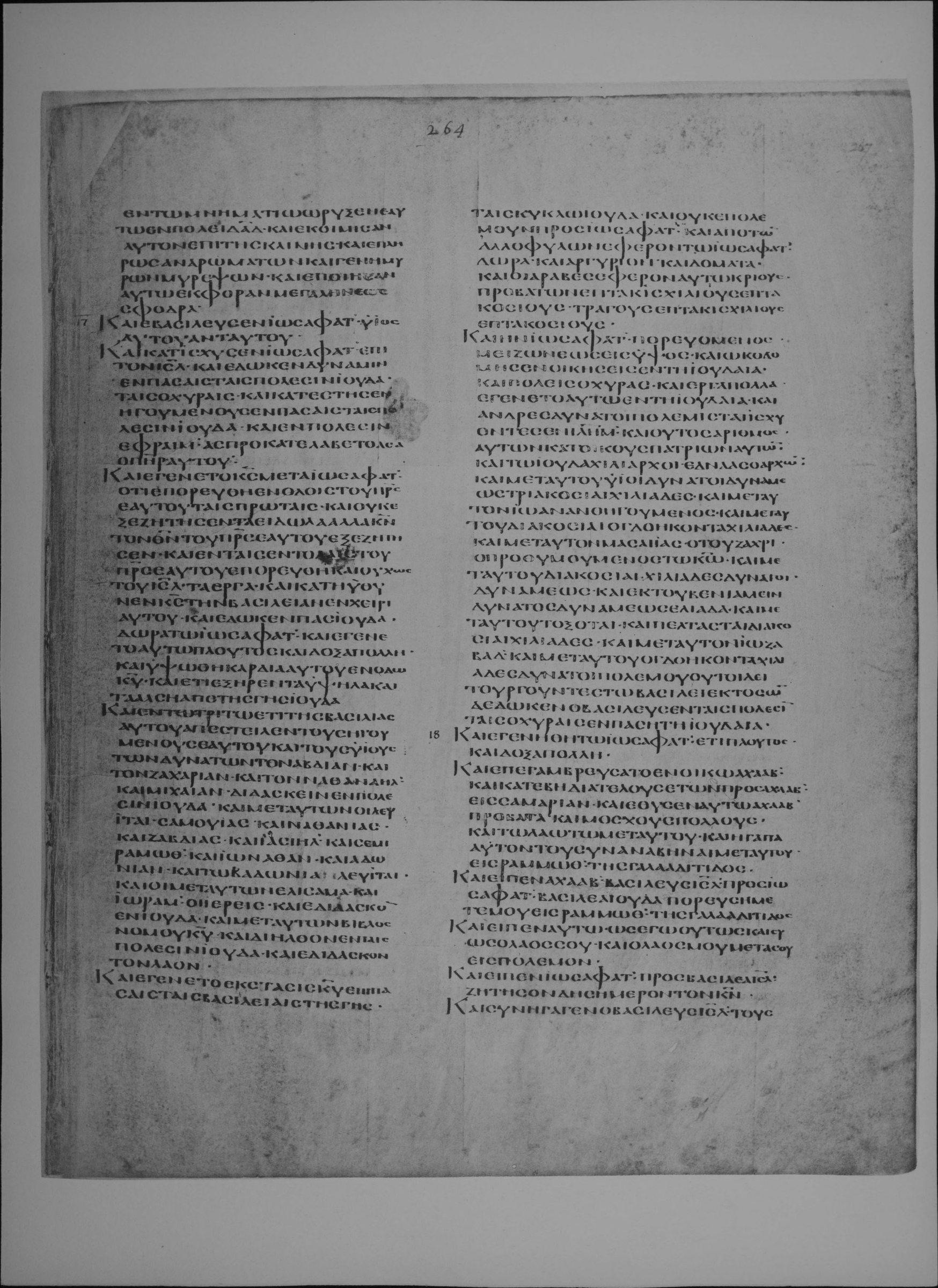
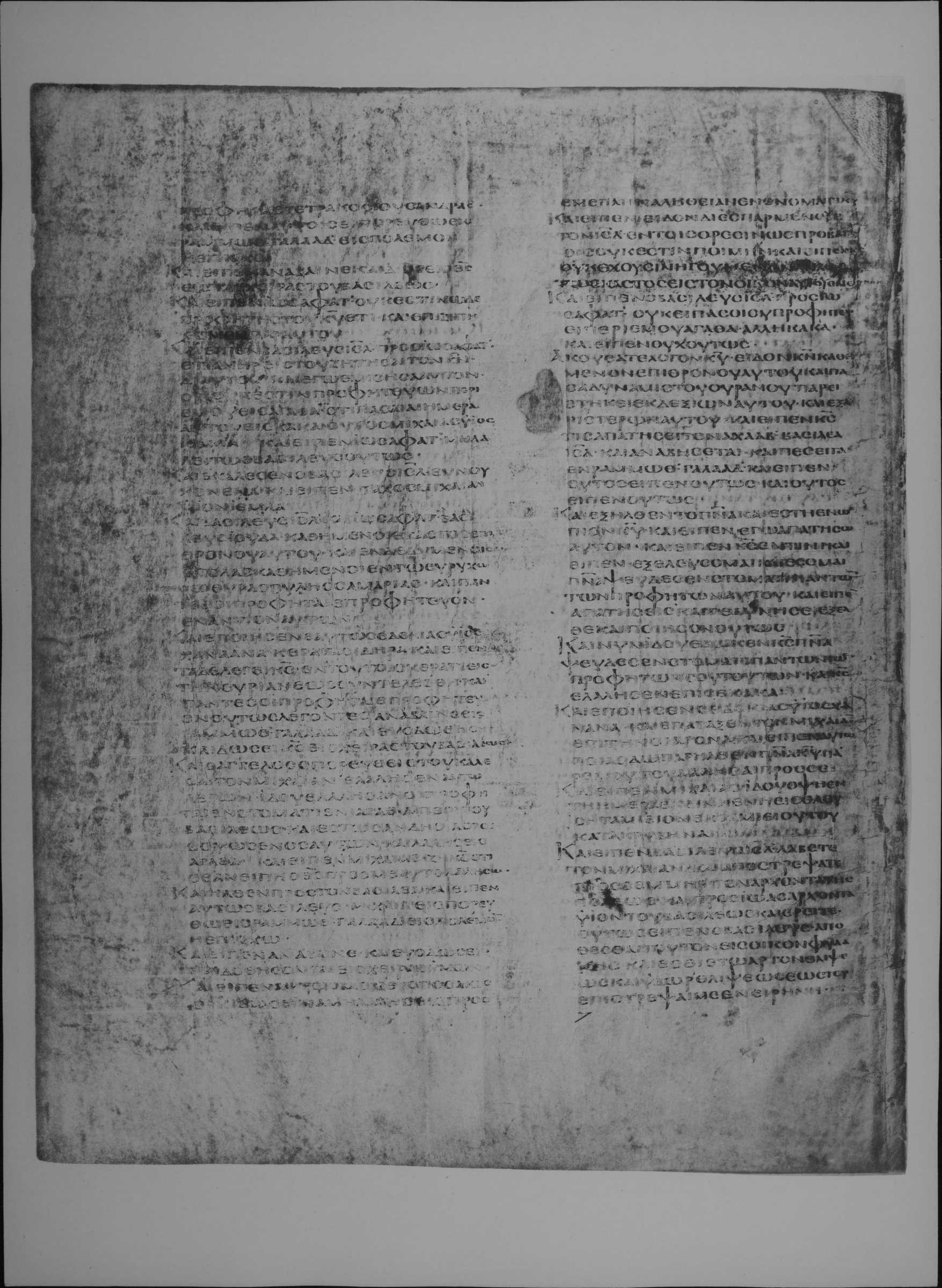
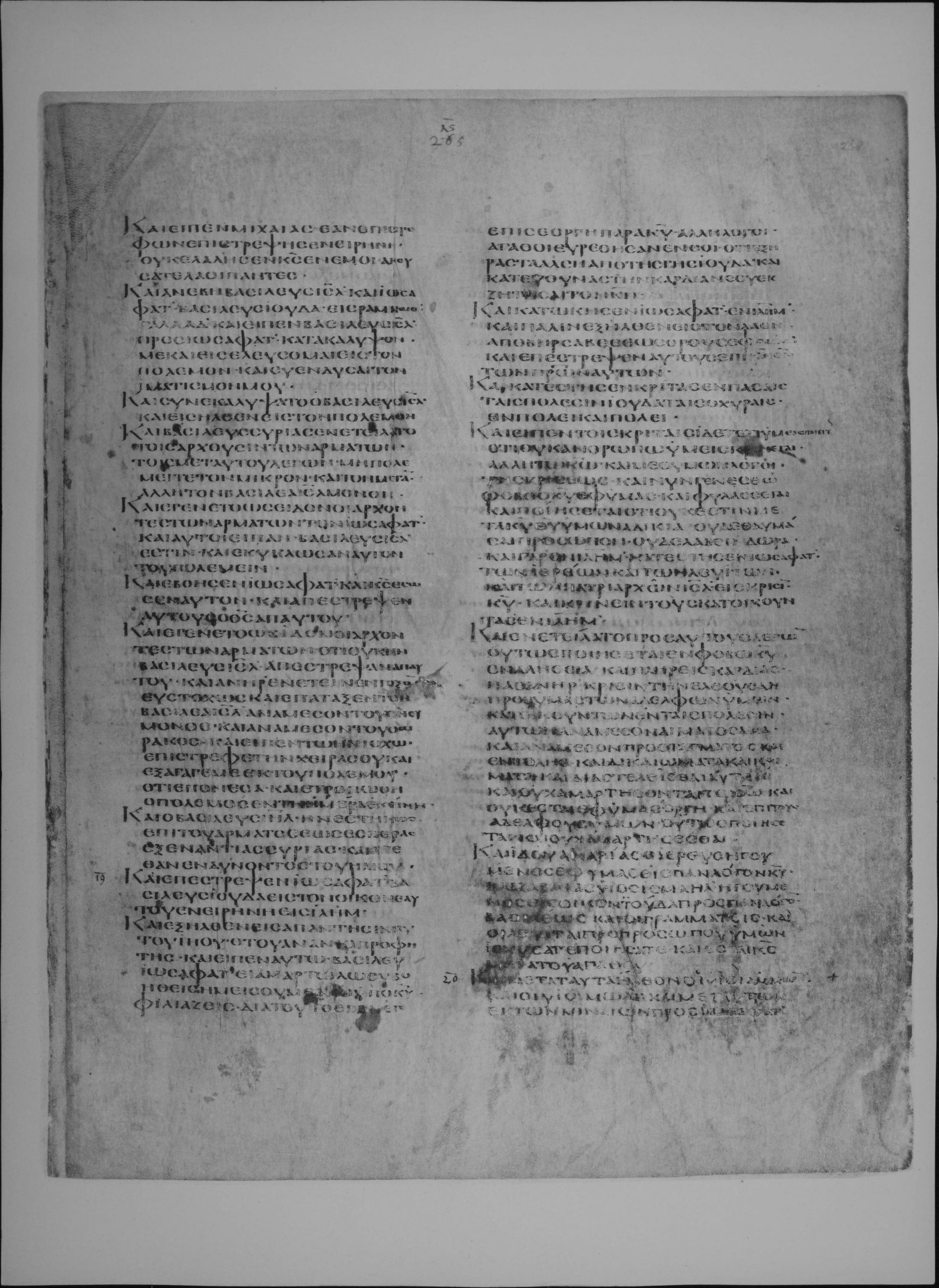
- Manuscript scan: the pages of Codex Alexandrinus carrying this chapter (fol. 264r, fol. 264v, fol. 265r), from the full-size photographic (autotype) facsimile published by the British Museum in 1879-1883, as digitised on the Internet Archive. The verse range of every page comes from the reduced photographic facsimile of 1930, which prints it beneath each plate, and the opening words of every page were read on the plate to confirm the page and the verse it begins with. Each section links to the page or pages that hold its verses. Folio numbers are those written at the head of each leaf and visible on the plates.
- Original text: Swete's edition, which here prints the text of Codex Vaticanus (Vat. gr. 1209), the base of his edition, and gives the readings of Alexandrinus only in his apparatus. The Greek column is therefore Vaticanus' text; where Alexandrinus differs, the plate shows what Alexandrinus reads.
- English translation: Sir Lancelot C. L. Brenton, The Septuagint Version of the Old Testament (1844; 1851 edition), a translation of the Greek, public domain, from the eBible.org text.
How was this verified? (Provenance)
Where on the image
2 Chronicles 18:1-5 is on fol. 264r (full-size facsimile of 1879-83, Internet Archive codex-alexandrinus leaf 546). The 1930 reduced facsimile prints beneath this page: 2 Chron. xvi. 14-xviii. 5. Checked on the plate: the page begins inside 2 Chronicles 16:14 (first words read: ΕΝ ΤΩ ΜΝΗΜΑΤΙ Ω ΩΡΥΞΕΝ ΕΑΥΤΩ ΕΝ ΠΟΛΕΙ ΔΑΥΕΙΔ ΚΑΙ ΕΚΟΙΜΙΣΑΝ ΑΥΤΟΝ ΕΠΙ ΤΗΣ ΚΛΙΝΗΣ). 2 Chronicles 18:5-8 is on fol. 264v (full-size facsimile of 1879-83, Internet Archive codex-alexandrinus leaf 547). The 1930 reduced facsimile prints beneath this page: 2 Chron. xviii. 5-26. Checked on the plate: the page begins inside 2 Chronicles 18:5 (first words read: ΠΡΟΦΗΤΑΣ ΤΕΤΡΑΚΟΣΙΟΥΣ ΑΝΔΡΑΣ).
1Καὶ ἐγενήθη τῷ Ἰωσαφὰτ ἔτι πλοῦτος καὶ δόξα πολλή, καὶ ἐπεγαμβρεύσατο ἐν οἴκῳ Ἀχαάβ. 2καὶ κατέβη διὰ τέλους ἐτῶν πρὸς Ἀχαὰβ εἰς Σαμάρειαν, καὶ ἔθυσεν αὐτῷ Ἀχαὰβ πρόβατα καὶ μόσχους πολλοὺς καὶ τῷ λαῷ τῷ μετ᾽ αὐτοῦ, καὶ ἠγάπα αὐτὸν τοῦ συναναβῆναι μετ᾽ αὐτοῦ εἰς Ῥαμὼθ τῆς Γαλααδείτιδος. 3καὶ εἶπεν Ἀχαὰβ βασιλεὺς Ἰσραὴλ πρὸς Ἰωσαφὰτ βασιλέα Ἰούδα Πορεύσῃ μετ᾽ ἐμοῦ εἰς Ῥαμὼθ τῆς Γαλααδείτιδος; καὶ εἶπεν αὐτῷ Ὡς ἐγώ, οὕτως καὶ σύ· ὡς ὁ λαός μου, καὶ ὁ λαός σου μετὰ σοῦ εἰς πόλεμον. 4καὶ εἶπεν Ἰωσαφὰτ πρὸς βασιλέα Ἰσραήλ Ζήτησον δὴ σήμερον τὸν κύριον. 5καὶ συνήγαγεν ὁ βασιλεὺς Ἰσραὴλ τοὺς προφήτας τετρακοσίους ἄνδρας καὶ εἶπεν αὐτοῖς Εἰ πορευθῶ εἰς Ῥαμὼθ Γαλαὰδ εἰς πόλεμον ἢ ἐπίσχω; καὶ εἶπαν Ἀνάβαινε, καὶ δώσει ὁ θεὸς εἰς τὰς χεῖρας τοῦ βασιλέως. 6καὶ εἶπεν Ἰωσαφάτ Οὐκ ἔστιν ὧδε προφήτης τοῦ κυρίου ἔτι καὶ ἐπιζητήσομεν παρ᾽ αὐτοῦ; 7καὶ εἶπεν βασιλεὺς Ἰσραὴλ πρὸς Ἰωσαφάτ Ἔτι ἀνὴρ εἷς τοῦ ζητῆσαι τὸν κύριον δι᾽ αὐτοῦ, καὶ ἐγὼ ἐμίσησα αὐτόν, ὅτι οὐκ ἔστιν προφητεύων περί ἐμοῦ εἰς ἀγαθά, ὅτι πᾶσαι αἱ ἡμέραι αὐτοῦ εἰς κακά, οὗτος Μειχαίας υἱὸς Ἰεμαάς. καὶ εἶπεν Ἰωσαφάτ Μὴ λαλείτω ὁ βασιλεὺς οὕτως. 8καὶ ἐκάλεσεν ὁ βασιλεὺς εὐνοῦχον ἕνα καὶ εἶπεν Τάχος Μειχαίαν υἱὸν Ἰεμαά.
1And Josaphat had yet great wealth and glory, and he connected himself by marriage with the house of Achaab. 2And he went down after a term of years to Achaab to Samaria: and Achaab slew for him sheep and calves, in abundance, and for the people with him, and he much desired him to go up with him to Ramoth of the country of Galaad. 3And Achaab king of Israel said to Josaphat king of Juda, Wilt thou go with me to Ramoth of the country of Galaad? And he said to him, As I am, so also art thou, as thy people, so also is my people with thee for the war. 4And Josaphat said to the king of Israel, Seek, I pray thee, the Lord to-day. 5And the king of Israel gathered the prophets, four hundred men, and said to them, Shall I go to Ramoth Galaad to battle, or shall I forbear? And they said, Go up, and God shall deliver it into the hands of the king. 6And Josaphat said, Is there not here a prophet of the Lord besides, that we may enquire of him? 7And the king of Israel said to Josaphat, There is yet one man by whom to enquire of the Lord; but I hate him, for he does not prophesy concerning me for good, for all his days are for evil: this is Michaias the son of Jembla. And Josaphat said, Let not the king say so. 8And the king called an eunuch, and said, Fetch quickly Michaias the son of Jembla.
Where on the image
2 Chronicles 18:9-16 is on fol. 264v (full-size facsimile of 1879-83, Internet Archive codex-alexandrinus leaf 547). The 1930 reduced facsimile prints beneath this page: 2 Chron. xviii. 5-26. Checked on the plate: the page begins inside 2 Chronicles 18:5 (first words read: ΠΡΟΦΗΤΑΣ ΤΕΤΡΑΚΟΣΙΟΥΣ ΑΝΔΡΑΣ).
9καὶ βασιλεὺς Ἰσραὴλ καὶ Ἰωσαφὰτ βασιλεὺς Ἰούδα καθήμενοι ἕκαστος ἐπὶ θρόνου αὐτοῦ καὶ ἐνδεδυμένοι στολάς, καθήμενοι ἐν τῷ εὐρυχώρῳ θύρας πύλης Σαμαρείας, καὶ πάντες οἱ προφῆται ἐπροφήτευον ἐναντίον αὐτῶν. 10καὶ ἐποίησεν ἑαυτῷ Σεδεκίας υἱὸς Χανάαν κέρατα σιδηρᾶ καὶ εἶπεν Τάδε λέγει Κύριος Ἐν τούτοις κερατιεῖς τὴν Συρίαν ἕως ἂν συντελεσθῇ. 11καὶ πάντες οἱ προφῆται ἐπροφήτευον οὕτως λέγοντες Ἀνάβαινε εἰς Ῥαμὼθ Γαλαάδ, καὶ εὐοδωθήσῃ, καὶ δώσει Κύριος εἰς χεῖρας τοῦ βασιλέως. 12καὶ ὁ ἄγγελος ὁ πορευθεὶς τοῦ καλέσαι τὸν Μειχαίαν ἐλάλησεν αὐτῷ λέγων Ἰδοὺ ἐλάλησαν οἱ προφῆται ἐν στόματι ἑνὶ ἀγαθὰ περὶ τοῦ βασιλέως, καὶ ἔστωσαν δὴ οἱ λόγοι σου ὡς ἑνὸς αὐτῶν, καὶ λαλήσεις ἀγαθά. 13καὶ εἶπεν Μειχαίας Ζῇ Κύριος ὅτι ὃ ἐὰν εἴπῃ ὁ θεὸς πρὸς μέ, αὐτὸ λαλήσω. 14καὶ ἦλθεν πρὸς τὸν βασιλέα· καὶ εἶπεν αὐτῷ ὁ βασιλεύς Μειχαία, εἰ πορευθῶ εἰς Ῥαμὼθ Γαλαὰδ εἰς πόλεμον ἢ ἐπίσχω; καὶ εἶπεν Ἀνάβαινε, καὶ εὐοδώσεις· καὶ δοθήσονται εἰς χεῖρας ὑμῶν. 15καὶ εἶπεν αὐτῷ ὁ βασιλεύς Ποσάκις ὁρκίζω σε ἵνα μὴ λαλήσῃς πρὸς μὲ πλὴν τὴν ἀλήθειαν ἐν ὀνόματι Κυρίου; 16καὶ εἶπεν Εἶδον τὸν Ἰσραὴλ διεσπαρμένους ἐν τοῖς ὄρεσιν ὡς πρόβατα οἷς οὐκ ἔστιν ποιμήν· καὶ εἶπεν Κύριος Οὐκ ἔχουσιν ἡγούμενον, ἀναστρεφέτωσαν ἕκαστος εἰς τὸν οἶκον αὐτοῦ ἐν εἰρήνῃ.
9And the king of Israel and Josaphat king of Juda were sitting each on his throne, and clothed in their robes, sitting in the open space at the entrance of the gate of Samaria: and all the prophets were prophesying before them. 10And Sedekias son of Chanaan made for himself iron horns, and said, Thus saith the Lord, With these thou shalt thrust Syria until it be consumed. 11And all the prophets prophesied so, saying, Go up to Ramoth Galaad, and thou shalt prosper; and the Lord shall deliver it into the hands of the king. 12And the messenger that went to call Michaias spoke to him, saying, Behold, the prophets have spoken favourably concerning the king with one mouth; let now, I pray thee, thy words be as the words of one of them, and do thou speak good things. 13And Michaias said, As the Lord lives, whatever God shall say to me, that will I speak. 14And he came to the king, and the king said to him, Michaias, shall I go up to Ramoth Galaad to battle, or shall I forbear? And he said, Go up, and thou shalt prosper, and they shall be given into your hands. 15And the king said to him, How often shall I solemnly charge thee that thou speak to me nothing but truth in the name of the Lord? 16And he said, I saw Israel scattered on the mountains, as sheep without a shepherd: and the Lord said, These have no commander; let each return to his home in peace.
Where on the image
2 Chronicles 18:17-24 is on fol. 264v (full-size facsimile of 1879-83, Internet Archive codex-alexandrinus leaf 547). The 1930 reduced facsimile prints beneath this page: 2 Chron. xviii. 5-26. Checked on the plate: the page begins inside 2 Chronicles 18:5 (first words read: ΠΡΟΦΗΤΑΣ ΤΕΤΡΑΚΟΣΙΟΥΣ ΑΝΔΡΑΣ).
17καὶ εἶπεν ὁ βασιλεὺν Ἰσραὴλ πρὸς Ἰωσαφάτ Οὐκ εἶπά σοι ὅτι οὐ προφητεύει περὶ ἐμοῦ ἀγαθὰ ἀλλ᾽ ἢ κακά; 18καὶ εἶπεν Οὐχ οὕτως· ἀκούσατε λόγον Κυρίου. εἶδον τὸν κύριον καθήμενον ἐπὶ θρόνου αὐτοῦ, καὶ πᾶσα δύναμις τοῦ οὐρανοῦ εἱστήκει ἐκ δεξιῶν αὐτοῦ καὶ ἐξ ἀριστερῶν αὐτοῦ. 19καὶ εἶπεν Κύριος Τίς ἀπατήσει τὸν Ἀχαὰβ βασιλέα Ἰσραήλ, καὶ ἀναβήσεται καὶ πεσεῖται ἐν Ῥαμὼθ Γαλαάδ; καὶ εἶπεν οὗτος οὕτως, καὶ οὗτος εἶπεν οὕτως. 20καὶ ἐξῆλθεν τὸ πνεῦμα καὶ ἔστη ἐνώπιον Κυρίου καὶ εἶπεν Ἐγὼ ἀπατήσω αὐτόν. καὶ εἶπεν Κύριος Ἐν τίνι; 21καὶ εἶπεν Ἐξελεύσομαι καὶ ἔσομαι πνεῦμα ψευδὲς ἐν στόματι πάντων τῶν προφητῶν αὐτοῦ. καὶ εἶπεν Ἀπατήσεις, δυνήσῃ· ἔξελθε καὶ ποίησον οὕτως. 22καὶ νῦν ἰδοὺ ἔδωκεν Κύριος πνεῦμα ψευδὲς ἐν στόματι τῶν προφητῶν σου τούτων, καὶ Κύριος ἐλάλησεν ἐπὶ σὲ κακά. 23καὶ ἤγγισεν Σεδεκίας υἱὸς Χανάαν καὶ ἐπάταξεν τὸν Μειχαίαν ἐπὶ τὴν σιαγόνα καὶ εἶπεν αὐτῷ Ποίᾳ τῇ ὁδῷ πνεῦμα παρ᾽ ἐμοῦ πνεῦμα πρὸς σέ, πνεῦμα Κυρίου παρ᾽ ἐμοῦ τοῦ λαλῆσαι πρὸς σέ; 24καὶ εἶπεν Μειχαίας Ἰδοὺ ὄψῃ ἐν τῇ ἡμέρᾳ ἐκείνῃ· εἰσελεύσεται ταμεῖον ἐκ ταμείου τοῦ κατακρυβῆναι.
17And the king of Israel said to Josaphat, Said I not to thee, that he would not prophesy concerning me good, but evil? 18But he said, Not so. Hear ye the word of the Lord: I saw the Lord sitting on his throne, and all the host of heaven stood by on his right hand and on his left. 19And the Lord said, Who will deceive Achaab king of Israel, that he may go up, and fall in Ramoth Galaad? And one spoke this way, and another spoke that way. 20And there came forth a spirit, and stood before the Lord, and said, I will deceive him. And the Lord said, Whereby? 21And he said, I will go forth, and will be a lying spirit in the mouth of all his prophets. And the Lord said, Thou shalt deceive him, and shalt prevail: go forth, and do so. 22And now, behold, the Lord has put a false spirit in the mouth of these thy prophets, and the Lord has spoken evil against thee. 23Then Sedekias the son of Chanaan drew near, and smote Michaias on the cheek, and said to him, By what way passed the Spirit of the Lord from me to speak to thee? 24And Michaias said, Behold, thou shalt see in that day, when thou shalt go from chamber to chamber to hide thyself.
Where on the image
2 Chronicles 18:25-26 is on fol. 264v (full-size facsimile of 1879-83, Internet Archive codex-alexandrinus leaf 547). The 1930 reduced facsimile prints beneath this page: 2 Chron. xviii. 5-26. Checked on the plate: the page begins inside 2 Chronicles 18:5 (first words read: ΠΡΟΦΗΤΑΣ ΤΕΤΡΑΚΟΣΙΟΥΣ ΑΝΔΡΑΣ). 2 Chronicles 18:27-34 is on fol. 265r (full-size facsimile of 1879-83, Internet Archive codex-alexandrinus leaf 548). The 1930 reduced facsimile prints beneath this page: 2 Chron. xviii. 27-xx. 1. Checked on the plate: the page begins at the start of 2 Chronicles 18:27 (first words read: ΚΑΙ ΕΙΠΕΝ ΜΙΧΑΙΑΣ ΕΑΝ ΕΠΙΣΤΡΕΦΩΝ ΕΠΙΣΤΡΕΨΗΣ ΕΝ ΕΙΡΗΝΗ ΟΥΚ ΕΛΑΛΗΣΕΝ ΚΣ ΕΝ ΕΜΟΙ).
25καὶ εἶπεν βασιλεὺς Ἰσραήλ Λάβετε τὸν Μειχαίαν καὶ ἀποστρέψατε πρὸς Ἐμὴρ ἄρχοντα τῆς πόλεως καὶ πρὸς Ἰωασὰ ἄρχοντα υἱὸν τοῦ βασιλέως, 26καὶ ἐρεῖς Οὕτως εἶπεν ὁ βασιλεύς Ἀποθέσθαι τοῦτον εἰς οἶκον φυλακῆς, καὶ ἐσθιέτω ἄρτον θλίψεως καὶ ὕδωρ θλίψεως ἕως τοῦ ἐπιστρέψαι με ἐν εἰρήνῃ. 27καὶ εἶπεν Μειχαίας Ἐὰν ἐπιστρέφων ἐπιστρέψῃς ἐν εἰρήνῃ, οὐκ ἐλάλησεν Κύριος ἐν ἐμοί· ἀκούσατε λαοὶ πάντες. 28Καὶ ἀνέβη βασιλεὺς Ἰσραὴλ καὶ Ἰωσαφὰτ βασιλεὺς Ἰούδα εἰς Ῥαμὼθ Γαλαάδ. 29καὶ εἶπεν βασιλεὺς Ἰσραὴλ πρὸς Ἰωσαφάτ Κατακάλυψόν με καὶ εἰσελεύσομαι εἰς τὸν πόλεμον, καὶ σὺ ἔνδυσαι τὸν ἱματισμόν μου· καὶ συνεκαλύψατο βασιλεὺς Ἰσραὴλ καὶ εἰσῆλθεν εἰς τὸν πόλεμον. 30καὶ βασιλεὺς Συρίας ἐνετείλατο τοῖς ἄρχουσιν τῶν ἁρμάτων τοῖς μετ᾽ αὐτοῦ λέγων Μὴ πολεμεῖτε τὸν μικρὸν καὶ τὸν μέγαν ἀλλ᾽ ἢ τὸν βασιλέα Ἰσραὴλ μόνον. 31καὶ ἐγένετο ὡς εἶδον οἱ ἄρχοντες τῶν ἁρμάτων τὸν Ἰωσαφάτ, καὶ αὐτοὶ εἶπαν Βασιλεὺς Ἰσραήλ ἐστιν, καὶ ἐκύκλωσαν αὐτὸν τοῦ πολεμεῖν· καὶ ἐβόησεν Ἰωσαφάτ, καὶ Κύριος ἔσωσεν αὐτόν, καὶ ἀπέστρεψεν αὐτοὺς ὁ θεὸς ἀπ᾽ αὐτοῦ. 32καὶ ἐγένετο ὡς εἶδον οἱ ἄρχοντες τῶν ἁρμάτων ὅτι οὐκ ἦν βασιλεὺς Ἰσραήλ, καὶ ἀπέστρεψαν ἀπ᾽ αὐτοῦ. 33καὶ ἀνὴρ ἔτεινεν τόξον εὐστόχως καὶ ἐπάταξεν τὸν βασιλέα Ἰσραὴλ ἀνὰ μέσον τοῦ πνεύμονος καὶ ἀνὰ μέσον τοῦ θώρακος· καὶ εἶπεν τῷ ἡνιόχῳ Ἐπίστρεφε τὴν χεῖρά σου καὶ ἐξάγαγέ με ἐκ τοῦ πολέμου, ὅτι ἐπόνεσα. 34καὶ ἐτροπώθη ὁ πόλεμος ἐν τῇ ἡμέρᾳ ἐκείνῃ· καὶ ὁ βασιλεὺς Ἰσραὴλ ἦν ἑστηκὼς ἐπὶ τοῦ ἅρματος ἕως ἑσπέρας ἐξ ἐναντίας Συρίας, καὶ ἀπέθανεν δύναντος τοῦ ἡλίου.
25And the king of Israel said, Take Michaias, and carry him back to Emer the governor of the city, and to Joas the captain, the king's son; 26and ye shall say, Thus said the king, Put this fellow into the prison-house, and let him eat the bread of affliction, and drink the water of affliction, until I return in peace. 27And Michaias said, If thou do at all return in peace, the Lord has not spoken by me. And he said, Hear, all ye people. 28So the king of Israel, and Josaphat king of Juda, went up to Ramoth Galaad. 29And the king of Israel said to Josaphat, Disguise me, and I will enter into the battle: and do thou put on my raiment. So the king of Israel disguised himself, and entered into the battle. 30Now the king of Syria had commanded the captains of the chariots that were with him, saying, Fight neither against small nor great, but only against the king of Israel. 31And it came to pass, when the captains of the chariots saw Josaphat, that they said, It is the king of Israel: and they compassed him about to fight against him: and Josaphat cried out, and the Lord delivered him; and God turned them away from him. 32And it came to pass, when the captains of the chariots saw that it was not the king of Israel, that they turned away from him. 33And a man drew a bow with a good aim, and smote the king of Israel between the lungs and the breastplate: and he said to the charioteer, Turn thine hand, drive me out of the battle, for I am wounded. 34And the battle turned in that day; and the king of Israel remained on the chariot against Syria until evening, and died at sunset.
Cite
Sources
- Source: Codex Alexandrinus (British Library Royal MS 1 D. V) via the British Museum photographic facsimiles of 1879-83 and 1930 (Internet Archive) + Swete's Septuagint + Brenton's English (holding institution)
- Critical edition: H. B. Swete, The Old Testament in Greek according to the Septuagint (1909)
← previous · → next · v cycle view · l back to library