2 Kingdoms (2 Samuel), Chapter 14 (Codex Alexandrinus)
Introduction
2 Kingdoms (2 Samuel) 14 in the Greek Old Testament (the Septuagint) as written in Codex Alexandrinus, a Greek Bible copied in the fifth century, probably in Egypt, and now in the British Library (Royal MS 1 D. V, the first of its four volumes). It is one of the three great early codices of the whole Greek Bible, with Codex Vaticanus and Codex Sinaiticus.
This entry meets the strict three-criteria standard of the Theosis Library:
- Manuscript scan: the pages of Codex Alexandrinus carrying this chapter (fol. 190r, fol. 190v), from the full-size photographic (autotype) facsimile published by the British Museum in 1879-1883, as digitised on the Internet Archive. The verse range of every page comes from the reduced photographic facsimile of 1930, which prints it beneath each plate, and the opening words of every page were read on the plate to confirm the page and the verse it begins with. Each section links to the page or pages that hold its verses. Folio numbers are those written at the head of each leaf and visible on the plates.
- Original text: Swete's edition, which here prints the text of Codex Vaticanus (Vat. gr. 1209), the base of his edition, and gives the readings of Alexandrinus only in his apparatus. The Greek column is therefore Vaticanus' text; where Alexandrinus differs, the plate shows what Alexandrinus reads.
- English translation: Sir Lancelot C. L. Brenton, The Septuagint Version of the Old Testament (1844; 1851 edition), a translation of the Greek, public domain, from the eBible.org text.
How was this verified? (Provenance)
Where on the image
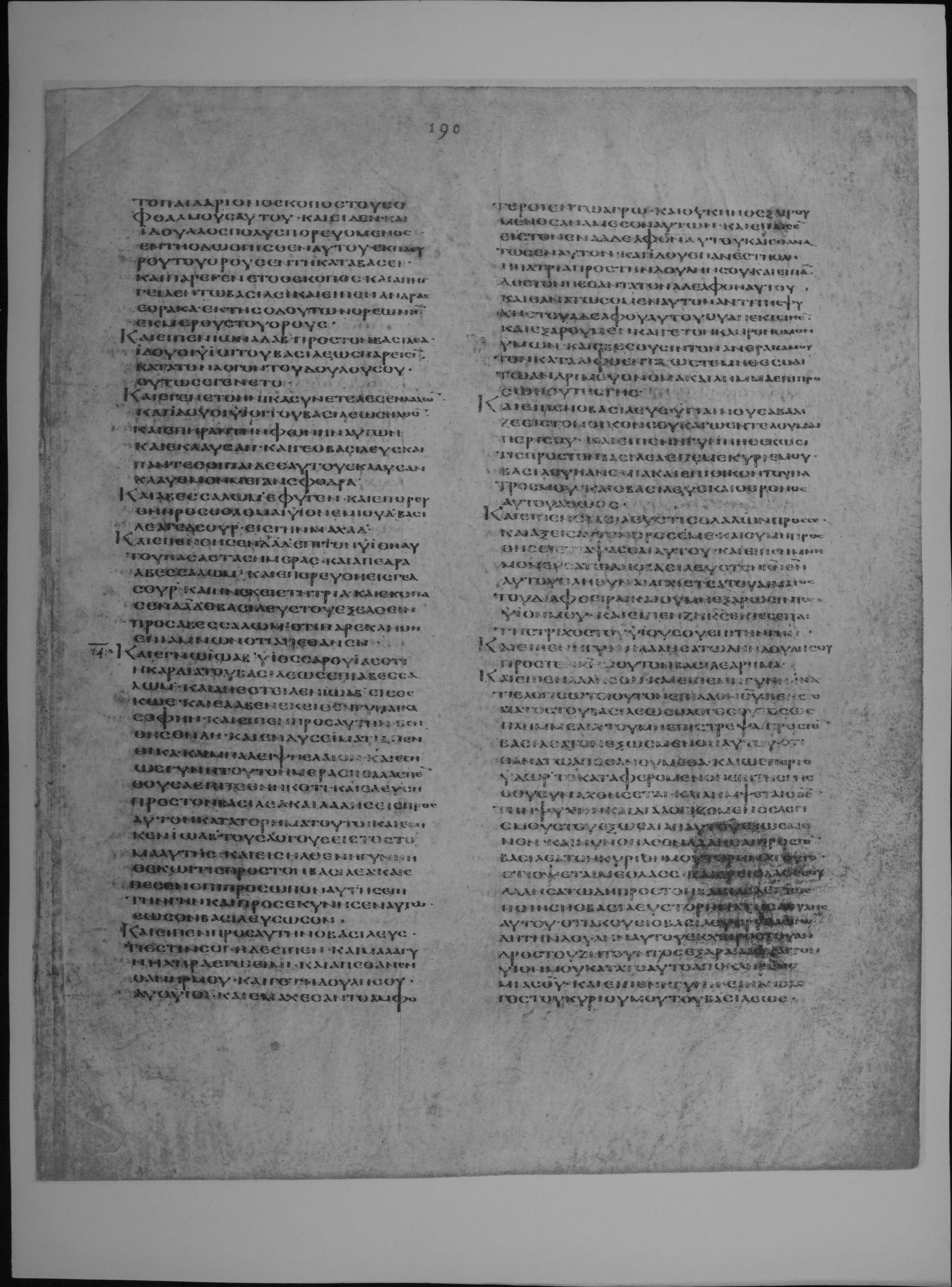
2 Kingdoms (2 Samuel) 14:1-8 is on fol. 190r (full-size facsimile of 1879-83, Internet Archive codex-alexandrinus leaf 398). The 1930 reduced facsimile prints beneath this page: 2 Sam. xiii. 34-xiv. 17. Checked on the plate: the page begins inside 2 Kingdoms (2 Samuel) 13:34 (first words read: ΤΟ ΠΑΙΔΑΡΙΟΝ Ο ΣΚΟΠΟΣ ΤΟΥΣ ΟΦΘΑΛΜΟΥΣ ΑΥΤΟΥ ΚΑΙ ΕΙΔΕΝ ΚΑΙ ΙΔΟΥ ΛΑΟΣ ΠΟΛΥΣ ΠΟΡΕΥΟΜΕΝΟΣ).
1καὶ ἔγνω Ἰωὰβ υἱὸς Σαρουίας ὅτι ἡ καρδία τοῦ βασιλέως ἐπὶ Ἀβεσσαλώμ. 2καὶ ἀπέστειλεν Ἰωὰβ εἰς Θεκῶε, καὶ ἔλαβεν ἐκεῖθεν γυναῖκα σοφὴν καὶ εἶπεν πρὸς αὐτήν Πένθησον δὴ καὶ ἔνδυσαι ἱμάτια πενθικὰ καὶ μὴ ἀλείψῃ ἔλαιον, καὶ ἔσῃ ὡς γυνὴ πενθοῦσα ἐπὶ τεθνηκότι, τοῦτο ἡμέρας πολλάς· 3καὶ ἐλεύσῃ πρὸς τὸν βασιλέα καὶ λαλήσεις πρὸς αὐτὸν κατὰ τὸ ῥῆμα τοῦτο. καὶ ἔθηκεν Ἰωὰβ τοὺς λόγους ἐν τῷ στόματι αὐτῆς. 4καὶ εἰσῆλθεν ἡ γυνὴ ἡ Θεκωεῖτις πρὸς τὸν βασιλέα, καὶ ἔπεσεν ἐπὶ πρόσωπον αὐτῆς εἰς τὴν γῆν καὶ προσεκύνησεν αὐτῷ καὶ εἶπεν Σῶσον, βασιλεῦ, σῶσον. 5καὶ εἶπεν πρὸς αὐτὴν ὁ βασιλεύς Τί ἔστιν σοι; ἡ δὲ εἶπεν Καὶ μάλα γυνὴ χήρα ἐγώ εἰμι, καὶ ἀπέθανεν ὁ ἀνήρ μου. 6καί γε τῇ δούλῃ σου δύο υἱοί, καὶ ἐμαχέσαντο ἀμφότεροι ἐν τῷ ἀγρῷ, καὶ οὐκ ἦν ὁ ἐξαιρούμενος ἀνὰ μέσον αὐτῶν, καὶ ἔπαισεν ὁ εἷς τὸν ἕνα ἀδελφὸν αὐτοῦ καὶ ἐθανάτωσεν αὐτόν. 7καὶ ἰδοὺ ἐπανέστη ὅλη ἡ πατριὰ πρὸς τὴν δούλην σου καὶ εἶπαν Δὸς τὸν παίσαντα τὸν ἀδελφὸν αὐτοῦ καὶ θανατώσομεν αὐτὸν ἀντὶ τῆς ψυχῆς τοῦ ἀδελφοῦ αὐτοῦ οὗ ἀπέκτεινεν, καὶ ἐξαροῦμεν καί γε τὸν κληρονόμον ὑμῶν· καὶ σβέσουσιν τὸν ἄνθρακά μου τὸν καταλειφθέντα ὥστε μὴ θέσθαι τῷ ἀνδρί μου κατάλειμμα καὶ ὄνομα ἐπὶ προσώπου τῆς γῆς. 8καὶ εἶπεν ὁ βασιλεύς Ὑγιαίνουσα βάδιζε εἰς τὸν οἶκόν σου, κἀγὼ ἐντελοῦμαι περὶ σοῦ.
1And Joab the son of Saruia knew that the heart of the king was toward Abessalom. 2And Joab sent to Thecoe, and took thence a cunning woman, and said to her, Mourn, I pray thee, and put on mourning apparel, and anoint thee not with oil, and thou shalt be as a woman mourning for one that is dead thus for many days. 3And thou shalt go to the king, and speak to him according to this word. And Joab put the words in her mouth. 4So the woman of Thecoe went in to the king and fell upon her face to the earth, and did him obeisance, and said, Help, O king, help. 5And the king said to her, What is the matter with thee? 6And moreover thy handmaid had two sons, and they fought together in the field, and there was no one to part them; and the one smote the other his brother, and slew him. 7And behold the whole family rose up against thine handmaid, and they said, Give up the one that smote his brother, and we will put him to death for the life of his brother, whom he slew, and we will take away even your heir: so they will quench my coal that is left, so as not to leave my husband remnant or name on the face of the earth. 8And the king said to the woman, Go in peace to thy house, and I will give commandment concerning thee.
Where on the image
2 Kingdoms (2 Samuel) 14:9-16 is on fol. 190r (full-size facsimile of 1879-83, Internet Archive codex-alexandrinus leaf 398). The 1930 reduced facsimile prints beneath this page: 2 Sam. xiii. 34-xiv. 17. Checked on the plate: the page begins inside 2 Kingdoms (2 Samuel) 13:34 (first words read: ΤΟ ΠΑΙΔΑΡΙΟΝ Ο ΣΚΟΠΟΣ ΤΟΥΣ ΟΦΘΑΛΜΟΥΣ ΑΥΤΟΥ ΚΑΙ ΕΙΔΕΝ ΚΑΙ ΙΔΟΥ ΛΑΟΣ ΠΟΛΥΣ ΠΟΡΕΥΟΜΕΝΟΣ).
9καὶ εἶπεν ἡ γυνὴ ἡ Θεκωεῖτις πρὸς τὸν βασιλέα Ἐπ᾽ ἐμέ, κύριέ μου βασιλεῦ, ἡ ἀνομία καὶ ἐπὶ τὸν οἶκον τοῦ πατρός μου, καὶ ὁ βασιλεὺς καὶ ὁ θρόνος αὐτοῦ ἀθῷος. 10καὶ εἶπεν ὁ βασιλεύς Τίς ὁ λαλῶν πρὸς σέ; καὶ ἄξεις αὐτὸν πρὸς ἐμέ, καὶ οὐ προσθήσει ἔτι ἅψασθαι αὐτοῦ. 11καὶ εἶπεν Μνημονευσάτω δὴ ὁ βασιλεὺς τὸν κύριον θεὸν αὐτοῦ, πληθυνθῆναι ἀγχιστέα τοῦ αἵματος τοῦ διαφθεῖραι, καὶ οὐ μὴ ἐξάρωσιν τὸν υἱόν μου· καὶ εἶπεν Ζῇ Κύριος, εἰ πεσεῖται ἀπὸ τῆς τριχὸς τοῦ υἱοῦ σου ἐπὶ τὴν γῆν. 12καὶ εἶπεν Λαλησάτω δὴ ἡ δούλη σου πρὸς τὸν κύριόν μου βασιλέα ῥῆμα· καὶ εἶπεν Λάλησον. 13καὶ εἶπεν ἡ γυνή Ἵνα τί ἐλογίσω τοιοῦτο ἐπὶ λαὸν θεοῦ; ἢ ἐκ στόματος τοῦ βασιλέως ὁ λόγος οὗτος ὡς πλημμέλεια, τοῦ μὴ ἐπιστρέψαι τὸν βασιλέα τὸν ἐξωσμένον αὐτοῦ; 14ὅτι θανάτῳ ἀποθανούμεθα, καὶ ὥσπερ τὸ ὕδωρ τὸ καταφθειρόμενον ἐπὶ τῆς γῆς ὃ οὐ συναχθήσεται· καὶ λήμψεται ὁ θεὸς ψυχήν, καὶ λογιζόμενος τοῦ ἐξῶσαι ἀπ᾽ αὐτοῦ ἐξεωσμένον. 15καὶ νῦν ὃ ἦλθον λαλῆσαι πρὸς τὸν βασιλέα κύριόν μου τὸ ῥῆμα τοῦτο, ὅτι ὄψεταί με ὁ λαός, καὶ ἐρεῖ ὁ λαός σου Λαλησάτω δὴ πρὸς τὸν βασιλέα, εἴ πως ποιήσει ὁ βασιλεὺς τὸ ῥῆμα τῆς δούλης αὐτοῦ· 16ὅτι ἀκούσει ὁ βασιλεύς· ῥυσάσθω τὴν δούλην αὐτοῦ ἐκ χειρὸς τοῦ ἀνδρὸς τοῦ ζητοῦντος ἐξᾶραί με καὶ τὸν υἱόν μου ἀπὸ κληρονομίας θεοῦ.
9And the woman of Thecoe said to the king, On me, my lord, O king, and on my father's house be the iniquity, and the king and his throne be guiltless. 10And the king said, Who was it that spoke to thee? thou shalt even bring him to me, and one shall not touch him any more. 11And she said, Let now the king remember concerning his Lord God in that the avenger of blood is multiplied to destroy, and let them not take away my son. And he said, As the Lord lives, not a hair of thy son shall fall to the ground. 12And the woman said, Let now thy servant speak a word to my lord the king. And he said, Say on. 13And the woman said, Why hast thou devised this thing against the people of God? or is this word out of the king's mouth as a transgression, so that the king should not bring back his banished? 14For we shall surely die, and be as water poured upon the earth, which shall not be gathered up, and God shall take the life, even as he devises to thrust forth from him his outcast. 15And now whereas I came to speak this word to my lord the king, the reason is that the people will see me, and thy handmaid will say, Let one now speak to my lord the king, if peradventure the king will perform the request of his handmaid; 16for the king will hear. Let him rescue his handmaid out of the hand of the man that seeks to cast out me and my son from the inheritance of God.
Where on the image
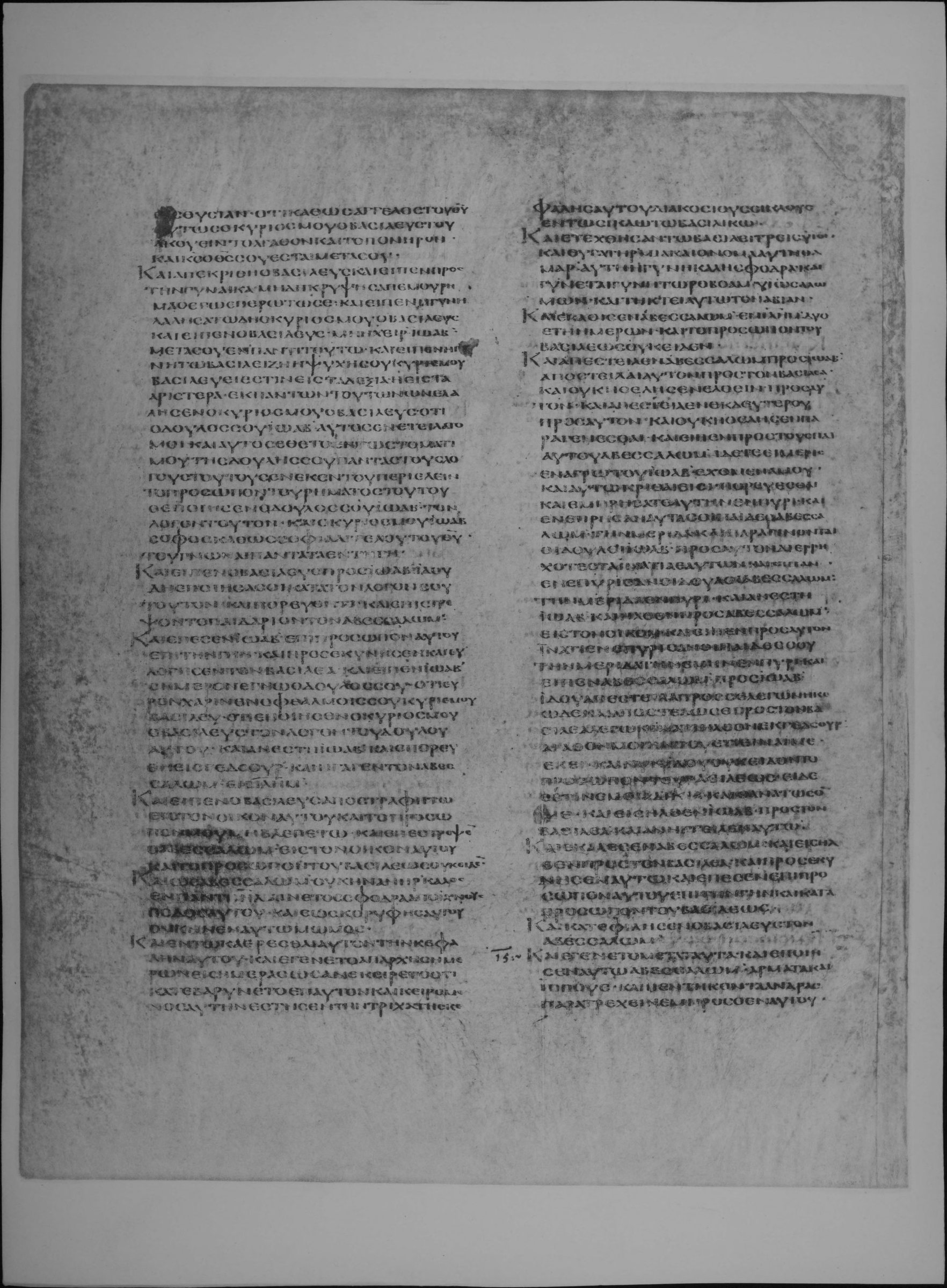
2 Kingdoms (2 Samuel) 14:17 is on fol. 190r (full-size facsimile of 1879-83, Internet Archive codex-alexandrinus leaf 398). The 1930 reduced facsimile prints beneath this page: 2 Sam. xiii. 34-xiv. 17. Checked on the plate: the page begins inside 2 Kingdoms (2 Samuel) 13:34 (first words read: ΤΟ ΠΑΙΔΑΡΙΟΝ Ο ΣΚΟΠΟΣ ΤΟΥΣ ΟΦΘΑΛΜΟΥΣ ΑΥΤΟΥ ΚΑΙ ΕΙΔΕΝ ΚΑΙ ΙΔΟΥ ΛΑΟΣ ΠΟΛΥΣ ΠΟΡΕΥΟΜΕΝΟΣ). 2 Kingdoms (2 Samuel) 14:17-24 is on fol. 190v (full-size facsimile of 1879-83, Internet Archive codex-alexandrinus leaf 399). The 1930 reduced facsimile prints beneath this page: 2 Sam. xiv. 17-xv. 1. Checked on the plate: the page begins inside 2 Kingdoms (2 Samuel) 14:17 (first words read: ΘΥΣΙΑΝ ΟΤΙ ΚΑΘΩΣ ΑΓΓΕΛΟΣ ΘΥ ΟΥΤΩΣ Ο ΚΥΡΙΟΣ ΜΟΥ Ο ΒΑΣΙΛΕΥΣ ΤΟΥ ΑΚΟΥΕΙΝ ΤΟ ΑΓΑΘΟΝ).
17καὶ εἶπεν ἡ γυνή Εἴη δὴ ὁ λόγος τοῦ κυρίου μου τοῦ βασιλέως εἰς θυσίας, ὅτι καθὼς ἄγγελος θεοῦ οὕτως ὁ κύριός μου ὁ βασιλεὺς τοῦ ἀκούειν τὸ ἀγαθὸν καὶ τὸ πονηρόν, καὶ Κύριος ὁ θεός σου ἔσται μετὰ σοῦ. 18καὶ ἀπεκρίθη ὁ βασιλεὺς καὶ εἶπεν πρὸς τὴν γυναῖκα Μὴ δὴ κρύψῃς ἀπ᾽ ἐμοῦ ῥῆμα ὃ ἐγὼ ἐπερωτῶ σε· καὶ εἶπεν ἡ γυνή Λαλησάτω δὴ ὁ κύριός μου ὁ βασιλεύς. 19καὶ εἶπεν ὁ βασιλεύς Μὴ ἡ χεὶρ Ἰωὰβ ἐν παντὶ τούτῳ μετὰ σοῦ; καὶ εἶπεν ἡ γυνὴ τῷ βασιλεῖ Ζῇ ἡ ψυχή σου, κύριέ μου βασιλεῦ, εἰ ἔστιν εἰς τὰ δεξιὰ ἢ εἰς τὰ ἀριστερὰ ἐκ πάντων ὧν ἐλάλησεν ὁ κύριός μου ὁ βασιλεύς· ὅτι ὁ δοῦλός σου Ἰωὰβ αὐτὸς ἐνετείλατό μοι, καὶ αὐτὸς ἔθετο ἐν τῷ στόματι τῆς δούλης σου πάντας τοὺς λόγους τούτους· 20ἕνεκεν τοῦ περιελθεῖν τὸ πρόσωπον τοῦ ῥήματος τούτου ὃ ἐποίησεν ὁ δοῦλός σου Ἰωάβ, τὸν δόλον τοῦτον· καὶ ὁ κύριός μου σοφὸς καθὼς σοφία ἀγγέλου τοῦ θεοῦ, τοῦ γνῶναι πάντα τὰ ἐν τῇ γῇ. 21καὶ εἶπεν ὁ βασιλεὺς πρὸς Ἰωάβ Ἰδοὺ δὴ ἐποίησά σοι κατὰ τὸν λόγον σου τοῦτον· ἐπίστρεψον τὸ παιδάριον τὸν Ἀβεσσαλώμ. 22καὶ ἔπεσεν Ἰωὰβ ἐπὶ πρόσωπον αὐτοῦ ἐπὶ τὴν γῆν καὶ προσεκύνησεν καὶ εὐλόγησεν τὸν βασιλέα, καὶ εἶπεν Ἰωάβ Σήμερον ἔγνω ὁ δοῦλός σου ὅτι εὗρον χάριν ἐν ὀφθαλμοῖς σου, κύριέ μου βασιλεῦ, ὅτι ἐποίησεν ὁ κύριός μου ὁ βασιλεὺς τὸν λόγον τοῦ δούλου αὐτοῦ. 23καὶ ἀνέστη Ἰωὰβ καὶ ἐπορεύθη εἰς Γεδσούρ, καὶ ἤγαγεν τὸν Ἀβεσσαλὼμ εἰς Ἰερουσαλήμ. 24καὶ εἶπεν ὁ βασιλεύς Ἀποστραφήτω εἰς τὸν οἶκον αὐτοῦ, καὶ τό πρόσωπόν μου μὴ βλεπέτω· καὶ ἀπέστρεψεν Ἀβεσσαλὼμ εἰς τὸν οἶκον αὐτοῦ, καὶ τὸ πρόσωπον τοῦ βασιλέως οὐκ εἶδεν.
17And the woman said, If now the word of my lord the king be gracious,— well: for as an angel of God, so is my lord the king, to hear good and evil: and the Lord thy God shall be with thee. 18And the king answered, and said to the woman, Hide not from me, I pray thee, the matter which I ask thee. And the woman said, Let my lord the king by all means speak. 19And the king said, Is not the hand of Joab in all this matter with thee? and the woman said to the king, As thy soul lives, my lord, O king, there is no turning to the right hand or to the left from all that my lord the king has spoken; for thy servant Joab himself charged me, and he put all these words in the mouth of thine handmaid. 20In order that this form of speech might come about it was that thy servant Joab has framed this matter: and my lord is wise as is the wisdom of an angel of God, to know all things that are in the earth. 21And the king said to Joab, Behold now, I have done to thee according to this thy word: go, bring back the young man Abessalom. 22And Joab fell on his face to the ground, and did obeisance, and blessed the king: and Joab said, To-day thy servant knows that I have found grace in thy sight, my lord, O king, for my lord the king has performed the request of his servant. 23And Joab arose, and went to Gedsur, and brought Abessalom to Jerusalem. 24And the king said, Let him return to his house, and not see my face. And Abessalom returned to his house, and saw not the king's face.
Where on the image
2 Kingdoms (2 Samuel) 14:25-33 is on fol. 190v (full-size facsimile of 1879-83, Internet Archive codex-alexandrinus leaf 399). The 1930 reduced facsimile prints beneath this page: 2 Sam. xiv. 17-xv. 1. Checked on the plate: the page begins inside 2 Kingdoms (2 Samuel) 14:17 (first words read: ΘΥΣΙΑΝ ΟΤΙ ΚΑΘΩΣ ΑΓΓΕΛΟΣ ΘΥ ΟΥΤΩΣ Ο ΚΥΡΙΟΣ ΜΟΥ Ο ΒΑΣΙΛΕΥΣ ΤΟΥ ΑΚΟΥΕΙΝ ΤΟ ΑΓΑΘΟΝ).
25καὶ ὡς Ἀβεσσαλὼμ οὐκ ἦν ἀνὴρ ἐν παντὶ Ἰσραὴλ αἰνετὸς σφόδρα· ἀπὸ ἴχνους ποδὸς αὐτοῦ καὶ ἕως κορυφῆς αὐτοῦ οὐκ ἦν ἐν αὐτῷ μῶμος. 26καὶ ἐν τῷ κείρεσθαι αὐτὸν τὴν κεφαλὴν αὐτοῦ, καὶ ἐγένετο ἀπ᾽ ἀρχῆς ἡμερῶν εἰς ἡμέρας ὡς ἂν ἐκείρετο, ὅτι κατεβαρύνετο ἐπ᾽ αὐτόν, καὶ κειρόμενος αὐτὴν ἔστησεν τὴν τρίχα τῆς κεφαλῆς αὐτοῦ διακοσίους σίκλους ἐν τῷ σίκλῳ τῷ βασιλικῷ. 27καὶ ἐτέχθησαν τῷ Ἀβεσσαλὼμ τρεῖς υἱοὶ καὶ θυγάτηρ μία, καὶ ὄνομα αὐτῇ Θημάρ· αὕτη ἦν γυνὴ καλὴ σφόδρα, καὶ γίνεται γυνὴ τῷ Ῥοβοὰμ υἱῷ Σαλωμὼν καὶ τίκτει αὐτῷ τὸν Ἀβιαθάρ. 28Καὶ ἐκάθισεν Ἀβεσσαλὼμ ἐν Ἰερουσαλὴμ δύο ἔτη ἡμερῶν καὶ τὸ πρόσωπον τοῦ βασιλέως οὐκ εἶδεν. 29καὶ ἀπέστειλεν Ἀβεσσαλὼμ πρὸς Ἰωὰβ ἀποστεῖλαι αὐτὸν πρὸς τὸν βασιλέα, καὶ οὐκ ἠθέλησεν ἐλθεῖν πρὸς αὐτόν· καὶ ἀπέστειλεν ἐκ δευτέρου πρὸς αὐτόν, καὶ οὐκ ἠθέλησεν παραγενέσθαι. 30καὶ εἶπεν πρὸς τοὺς παῖδας αὐτοῦ Ἀβεσσαλώμ Ἴδετε ἡ μερὶς ἐν ἀγρῷ τοῦ Ἰωὰβ ἐχόμενά μου, καὶ αὐτῷ κριθαὶ ἐκεῖ· πορεύεσθε καὶ ἐμπρήσατε αὐτὴν ἐν πυρί· καὶ ἐνέπρησαν αὐτὰς οἱ παῖδες Ἀβεσσαλώμ, τὴν μερίδα. καὶ παραγίνονται οἱ δοῦλοι Ἰωὰβ πρὸς αὐτὸν διερρηχότες τὰ ἱμάτια αὐτῶν καὶ εἶπαν Ἐνεπύρισαν οἱ δοῦλοι Ἀβεσσαλὼμ τὴν μερίδα ἐν πυρί. 31καὶ ἀνέστη Ἰωὰβ καὶ ἦλθεν πρὸς Ἀβεσσαλὼμ εἰς τὸν οἶκον, καὶ εἶπεν πρὸς αὐτόν Ἵνα τί οἱ παῖδές σου ἐνεπύρισαν τὴν μερίδα τὴν ἐμὴν ἐν πυρί; 32καὶ εἶπεν Ἀβεσσαλὼμ πρὸς Ἰωάβ Ἰδοὺ ἀπέστειλα πρὸς σὲ λέγων Ἧκε ὧδε καὶ ἀποστελῶ σε πρὸς τὸν βασιλέα λέγων Ἵνα τί ἦλθον ἐκ Γεδσούρ; ἀγαθόν μοι ἦν εἶναι ἐκεῖ· καὶ νῦν ἰδοὺ τὸ πρόσωπον τοῦ βασιλέως οὐκ εἶδον· εἰ δέ ἐστιν ἐν ἐμοὶ ἀδικία, καὶ θανάτωσόν με. 33καὶ εἰσῆλθεν Ἰωὰβ πρὸς τὸν βασιλέα καὶ ἀπήγγειλεν αὐτῷ, καὶ ἐκάλεσεν τὸν Ἀβεσσαλώμ. καὶ εἰσῆλθεν πρὸς τὸν βασιλέα καὶ προσεκύνησεν αὐτῷ, καὶ ἔπεσεν ἐπὶ πρόσωπον αὐτοῦ ἐπὶ τὴν γῆν καὶ κατὰ πρόσωπον τοῦ βασιλέως. καὶ κατεφίλησεν ὁ βασιλεὺς τὸν Ἀβεσσαλώμ.
25And there was not a man in Israel so very comely as Abessalom: from the sole of his foot even to the crown of his head there was no blemish in him. 26And when he polled his head, (and it was at the beginning of every year that he polled it, because it grew heavy upon him,) even when he polled it, he weighed the hair of his head, two hundred shekels according to the royal shekel. 27And there were born to Abessalom three sons and one daughter, and her name was Themar: she was a very beautiful woman, and she becomes the wife of Roboam son of Solomon, and she bears to him Abia. 28And Abessalom remained in Jerusalem two full years, and he saw not the king's face. 29And Abessalom sent to Joab to bring him in to the king, and he would not come to him: and he sent to him the second time, and he would not come. 30And Abessalom said to his servants, Behold, Joab's portion in the field is next to mine, and he has in it barley; go and set it on fire. And the servants of Abessalom set the field on fire: and the servants of Joab come to him with their clothes rent, and they said to him, The servants of Abessalom have set the field on fire. 31And Joab arose, and came to Abessalom into the house, and said to him, Why have thy servants set my field on fire? 32And Abessalom said to Joab, Behold, I sent to thee, saying, Come hither, and I will send thee to the king, saying, Why did I come out of Gedsur? it would have been better for me to have remained there: and now, behold, I have not seen the face of the king; but if there is iniquity in me, then put me to death. 33And Joab went in to the king, and brought him word: and he called Abessalom, and he went in to the king, and did him obeisance, and fell upon his face to the ground, even in the presence of the king; and the king kissed Abessalom.
Cite
Sources
- Source: Codex Alexandrinus (British Library Royal MS 1 D. V) via the British Museum photographic facsimiles of 1879-83 and 1930 (Internet Archive) + Swete's Septuagint + Brenton's English (holding institution)
- Critical edition: H. B. Swete, The Old Testament in Greek according to the Septuagint (1909)
← previous · → next · v cycle view · l back to library