2 Maccabees, Chapter 9 (Codex Alexandrinus)
Introduction
2 Maccabees 9 in the Greek Old Testament (the Septuagint) as written in Codex Alexandrinus, a Greek Bible copied in the fifth century, probably in Egypt, and now in the British Library (Royal MS 1 D. VI, the second of its four volumes). It is one of the three great early codices of the whole Greek Bible, with Codex Vaticanus and Codex Sinaiticus.
This entry meets the strict three-criteria standard of the Theosis Library:
- Manuscript scan: the pages of Codex Alexandrinus carrying this chapter (fol. 499v, fol. 500r), from the full-size photographic (autotype) facsimile published by the British Museum in 1879-1883, as digitised on the Internet Archive. The verse range of every page comes from the reduced photographic facsimile of 1957, which prints it beneath each plate, and the opening words of every page were read on the plate to confirm the page and the verse it begins with. Each section links to the page or pages that hold its verses. Folio numbers are those written at the head of each leaf and visible on the plates.
- Original text: Swete's edition, which in the books of Maccabees prints the text of Codex Alexandrinus itself (Codex Vaticanus does not contain these books), with the readings of other manuscripts in his apparatus. Swete adds accents, breathings and punctuation and expands the abbreviated sacred names, so the plate shows the same text in unaccented capitals.
- English translation: Sir Lancelot C. L. Brenton, The Septuagint Version of the Old Testament (1844; 1851 edition), a translation of the Greek, public domain, from the eBible.org text.
How was this verified? (Provenance)
Where on the image
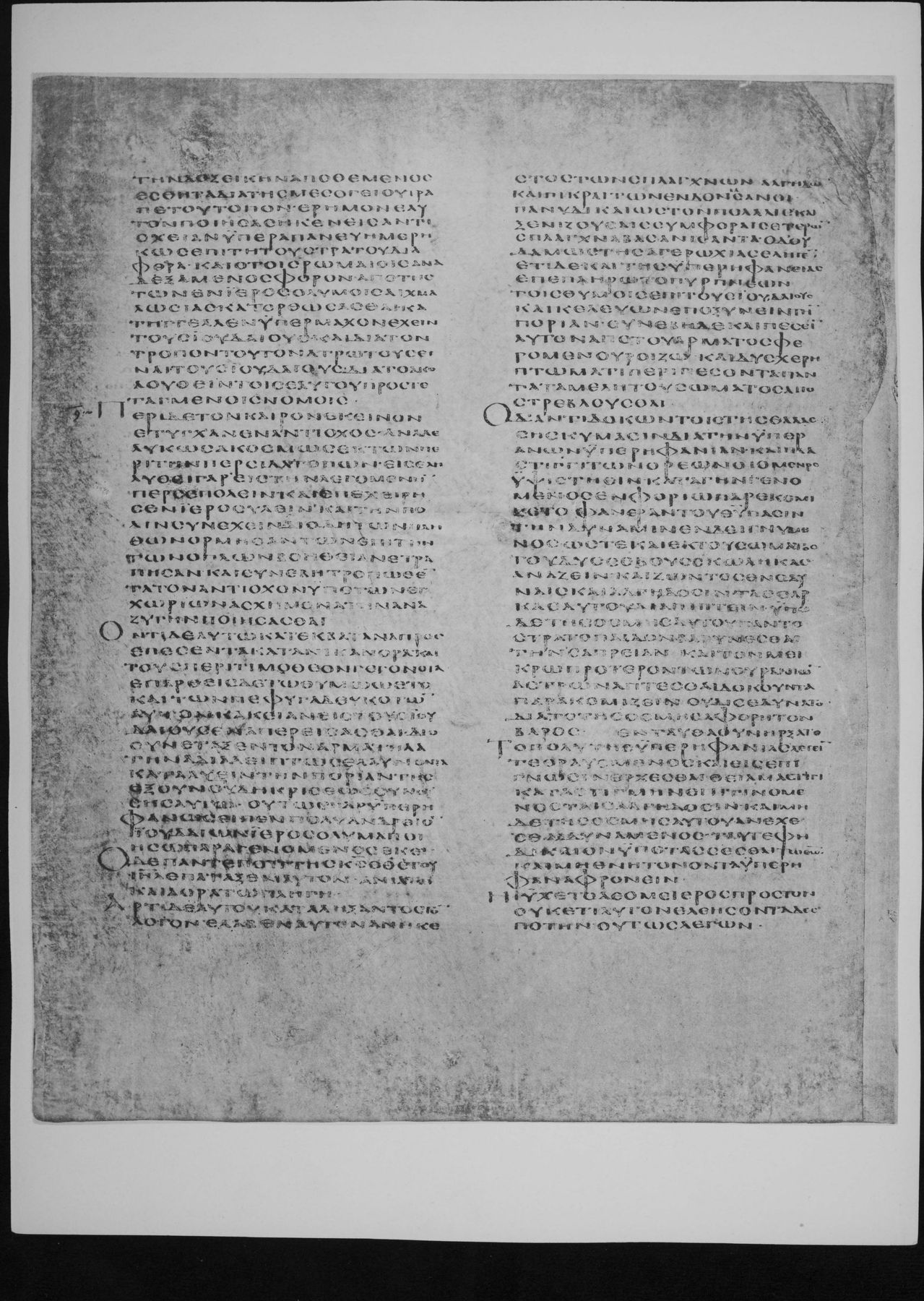
2 Maccabees 9:1-8 is on fol. 499v (full-size facsimile of 1879-83, Internet Archive codex-alexandrinus leaf 1005). The 1957 reduced facsimile prints beneath this page: 2 Maccabees viii. 35-ix. 13. Checked on the plate: the page begins inside 2 Maccabees 8:35 (first words read: ΤΗΝ ΔΟΞΙΚΗΝ ΑΠΟΘΕΜΕΝΟΣ ΕΣΘΗΤΑ ΔΙΑ ΤΗΣ ΜΕΣΟΓΕΙΟΥ ΔΡΑΠΕΤΟΥ ΤΡΟΠΟΝ).
1Περὶ δὲ τὸν καιρὸν ἐκεῖνον ἐτύγχανεν Ἀντίοχος ἀναλελυκὼς ἀκόσμως ἐκ τῶν περὶ τὴν Περσίδα τόπων. 2εἰσεληλύθει γὰρ εἰς τὴν λεγομένην Περσέπολιν, καὶ ἐπεχείρησεν ἱεροσυλεῖν καὶ τὴν πόλιν συνέχειν· διὸ δὴ τῶν πληθῶν ὁρμησάντων, ἐπὶ τὴν τῶν ὅπλων βοήθειαν ἐτράπησαν· καὶ συνέβη τροπωθέντα τὸν Ἀντίοχον ὑπὸ τῶν ἐγχωρίων ἀσχήμονα τὴν ἀναζυγὴν ποιήσασθαι. 3ὄντι δὲ αὐτῷ κατ᾽ Ἐκβάτανα προσέπεσεν τὰ κατὰ Νικάνορα καὶ τοὺς περὶ Τιμόθεον γεγονότα. 4ἐπαρθεὶς δὲ τῷ θυμῷ ᾤετο καὶ τῶν πεφυγαδευκότων αὐτὸν κακίαν εἰς τοὺς Ἰουδαίους ἐναπερείσασθαι· διὸ συνέταξεν τὸν ἁρματηλάτην ἀδιαλείπτως ἐλαύνοντα καταλύειν τὴν πορίαν, τῆς ἐξ οὐρανοῦ δὴ κρίσεως συνούσης αὐτῷ· οὕτως γὰρ ὑπερηφάνως εἶπεν Πολυάνδριον Ἰουδαίων Ἰεροσόλυμα ποιήσω, παραγενόμενος ἐκεῖ. 5ὁ δὲ παντεπόπτης κύριος ὁ θεὸς τοῦ Ἰσραὴλ ἐπάταξεν αὐτὸν ἀνιάτῳ καὶ ἀοράτῳ πληγῇ· ἄρτι δὲ αὐτοῦ καταλήξαντος τὸν λόγον, ἔλαβεν αὐτὸν ἀνήκεστος τῶν σπλάγχνων ἀλγηδὼν καὶ πικραὶ τῶν ἔνδον βάσανοι, 6πάνυ δικαίως, τὸν πολλαῖς καὶ ξενιζούσαις συμφοραῖς ἑτέρων σπλάγχνα βασανίσαντα. 7ὁ δ᾽ οὐδαμῶς τῆς ἀγερωχίας ἔληγεν, ἔτι δὲ καὶ τῆς ὑπερηφανίας ἐπεπλήρωτο, πῦρ πνέων τοῖς θυμοῖς ἐπὶ τοὺς Ἰουδαίους, καὶ κελεύων ἐποξύνειν τὴν πορίαν· συνέβη δὲ καὶ πεσεῖν αὐτὸν ἀπὸ τοῦ ἅρματος φερομένου ῥοίζῳ, καὶ δυσχερεῖ πτώματι περιπεσόντα πάντα τὰ μέλη τοῦ σώματος ἀποστρεβλοῦσθαι. 8ὁ δ᾽ ἀντιδοκῶν τοῖς τῆς θαλάσσης κύμασιν διὰ τὴν ὑπὲρ ἀνθρώπων ὑπερηφανίαν, καὶ πλάστιγγι τῶν ὀρέων οἰόμενος ὕψη στήσειν, κατὰ γῆν γενόμενος ἐν φορίῳ παρεκομίζετο, φανερὰν τοῦ θεοῦ πᾶσιν τὴν δύναμιν ἐνδεικνύμενος·
1About that time came Antiochus with dishonour out of the country of Persia. 2For he had entered the city called Persepolis, and went about to rob the temple, and to hold the city; whereupon the multitude running to defend themselves with their weapons put them to flight; and so it happened, that Antiochus being put to flight of the inhabitants returned with shame. 3Now when he came to Ecbatane, news was brought him what had happened unto Nicanor and Timotheus. 4Then swelling with anger, he thought to avenge upon the Jews the disgrace done unto him by those that made him flee. Therefore commanded he his chariotman to drive without ceasing, and to dispatch the journey, the judgment of God now following him. For he had spoken proudly in this sort, That he would come to Jerusalem, and make it a common burying place of the Jews. 5But the Lord Almighty, the God of Israel, smote him with an incurable and invisible plague: for as soon as he had spoken these words, a pain of the bowels that was remediless came upon him, and sore torments of the inner parts; 6and that most justly: for he had tormented other men's bowels with many and strange torments. 7Howbeit he nothing at all ceased from his bragging, but still was filled with pride, breathing out fire in his rage against the Jews, and commanding to haste the journey: but it came to pass that he fell down from his chariot, carried violently; so that having a sore fall, all the members of his body were much pained. 8And thus he that a little afore thought he might command the waves of the sea, (so proud was he beyond the condition of men) and weigh the high mountains in a balance, was now cast on the ground, and carried in an horselitter, shewing forth unto all the manifest power of God.
Where on the image
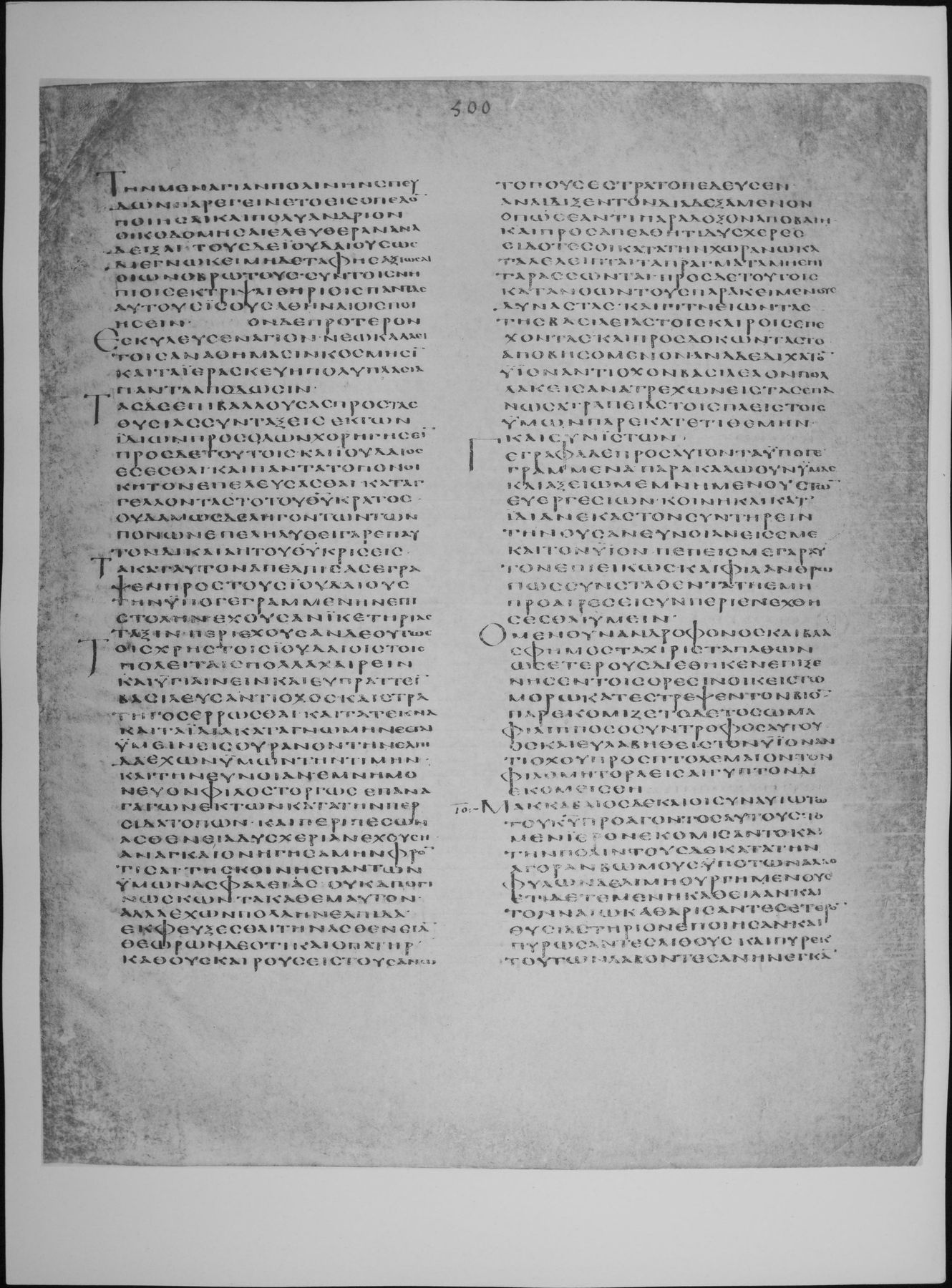
2 Maccabees 9:9-13 is on fol. 499v (full-size facsimile of 1879-83, Internet Archive codex-alexandrinus leaf 1005). The 1957 reduced facsimile prints beneath this page: 2 Maccabees viii. 35-ix. 13. Checked on the plate: the page begins inside 2 Maccabees 8:35 (first words read: ΤΗΝ ΔΟΞΙΚΗΝ ΑΠΟΘΕΜΕΝΟΣ ΕΣΘΗΤΑ ΔΙΑ ΤΗΣ ΜΕΣΟΓΕΙΟΥ ΔΡΑΠΕΤΟΥ ΤΡΟΠΟΝ). 2 Maccabees 9:14-16 is on fol. 500r (full-size facsimile of 1879-83, Internet Archive codex-alexandrinus leaf 1006). The 1957 reduced facsimile prints beneath this page: 2 Maccabees ix. 14-x. 3. Checked on the plate: the page begins at the start of 2 Maccabees 9:14 (first words read: ΤΗΝ ΜΕΝ ΑΓΙΑΝ ΠΟΛΙΝ ΗΝ ΣΠΕΥΔΩΝ ΠΑΡΕΓΕΙΝΕΤΟ ΙΣΟΠΕΔΟΝ ΠΟΙΗΣΑΙ).
9ὥστε καὶ ἐκ τοῦ σώματος τοῦ δυσσεβοῦς σκώληκας ἀναζεῖν, καὶ ζῶντος ἐν ὀδύναις καὶ ἀλγηδόσιν τὰς σάρκας αὐτοῦ διαπίπτειν, ὑπὸ δὲ τῆς ὀσμῆς αὐτοῦ πᾶν τὸ στρατόπεδον βαρύνεσθαι τὴν σαπρίαν. 10καὶ τὸν μικρῷ πρότερον τῶν οὐρανίων ἄστρων ἅπτεσθαι δοκοῦντα, παρακομίζειν οὐδεὶς ἐδύνατο, διά τό τῆς ὀσμῆς ἀφόρητον βάρος. 11ἐνταῦθα οὖν ἤρξατο τὸ πολὺ τῆς ὑπερηφανίας λήγειν τεθραυσμένος, καὶ εἰς ἐπίγνωσιν ἔρχεσθαι θείᾳ μάστιγι, κατὰ στιγμὴν ἐπιτεινόμενος ταῖς ἀλγηδόσιν. 12καὶ μηδὲ τῆς ὀσμῆς αὑτοῦ ἀνέχεσθαι δυνάμενος, ταῦτ᾽ ἔφη Δίκαιον ὑποτάσσεσθαι τῷ θεῷ, καὶ μὴ θνητὸν ὄντα ὑπερήφανα φρονεῖν. 13ηὔχετο δὲ ὁ μιερὸς πρὸς τὸν οὐκέτι αὐτὸν ἐλεήσοντα δεσπότην, οὕτως λέγων· 14τὴν μὲν ἁγίαν πόλιν, ἣν σπεύδων παρεγίνετο ἰσόπεδον ποιῆσαι καὶ πολυάνδριον οἰκοδομῆσαι, ἐλευθέραν ἀναδεῖξαι· 15τοὺς δὲ Ἰουδαίους, ὡς διεγνώκει μηδὲ ταφῆς ἀξιῶσαι, οἰωνοβρώτους σὺν τοῖς νηπίοις ἐκτρίψαι θηρίοις, πάντας αὐτοὺς ἴσους Ἀθηναίοις ποιήσειν· 16ὃν δὲ πρότερον ἐσκύλευσεν ἅγιον νεὼ καλλίστοις ἀναθήμασιν κοσμήσειν, καὶ τὰ ἱερὰ σκεύη πολυπλάσια πάντα ἀποδώσειν, τὰς δὲ ἐπιβαλλούσας πρὸς τὰς θυσίας συντάξεις ἐκ τῶν ἰδίων προσόδων χορηγήσειν·
9So that the worms rose up out of the body of this wicked man, and whiles he lived in sorrow and pain, his flesh fell away, and the filthiness of his smell was noisome to all his army. 10And the man, that thought a little afore he could reach to the stars of heaven, no man could endure to carry for his intolerable stink. 11Here therefore, being plagued, he began to leave off his great pride, and to come to the knowledge of himself by the scourge of God, his pain increasing every moment. 12And when he himself could not abide his own smell, he said these words, It is meet to be subject unto God, and that a man that is mortal should not proudly think of himself, as if he were God. 13This wicked person vowed also unto the Lord, who now no more would have mercy upon him, saying thus, 14That the holy city (to the which he was going in haste, to lay it even with the ground, and to make it a common burying place,) he would set at liberty: 15and as touching the Jews, whom he had judged not worthy so much as to be buried, but to be cast out with their children to be devoured of the fowls and wild beasts, he would make them all equals to the citizens of Athens: 16and the holy temple, which before he had spoiled, he would garnish with goodly gifts, and restore all the holy vessels with many more, and out of his own revenue defray the charges belonging to the sacrifices:
Where on the image
2 Maccabees 9:17-24 is on fol. 500r (full-size facsimile of 1879-83, Internet Archive codex-alexandrinus leaf 1006). The 1957 reduced facsimile prints beneath this page: 2 Maccabees ix. 14-x. 3. Checked on the plate: the page begins at the start of 2 Maccabees 9:14 (first words read: ΤΗΝ ΜΕΝ ΑΓΙΑΝ ΠΟΛΙΝ ΗΝ ΣΠΕΥΔΩΝ ΠΑΡΕΓΕΙΝΕΤΟ ΙΣΟΠΕΔΟΝ ΠΟΙΗΣΑΙ).
17πρὸς δὲ τούτοις καὶ Ἰουδαῖος ἔσεσθαι, καὶ πάντα τόπον οἰκητὸν ἐπελεύσεσθαι καταγγέλλοντα τὸ τοῦ θεοῦ κράτος. 18οὐδαμῶς δὲ ληγόντων τῶν πόνων, ἐπεληλύθει γὰρ ἐπ᾽ αὐτὸν δικαία ἡ τοῦ θεοῦ κρίσις, τὰ κατ᾽ αὐτὸν ἀπελπίσας ἔγραψεν πρὸς τοὺς Ἰουδαίους τὴν ὑπογεγραμμένην ἐπιστολήν, ἔχουσαν ἱκετηρίας τάξιν, περιέχουσαν δὲ οὕτως 19Τοῖς χρηστοῖς Ἰουδαίοις τοῖς πολίταις πολλὰ χαίρειν καὶ ὑγιαίνειν καὶ εὖ πράττειν βασιλεὺς Ἀντίοχος καὶ στρατηγός· 20ἔρρωσθε, καὶ τὰ τέκνα· καὶ τὰ ἴδια κατὰ γνώμην ἔσται ὑμῖν. εἰς οὐρανὸν τὴν ἐλπίδα ἔχων, 21ὑμῶν τὴν τιμὴν καὶ τὴν εὔνοιαν ἐμνημόνευον φιλοστόργως· ἐπαναγαγὼν ἐκ τῶν κατὰ τὴν Περσίδα τόπων, καὶ περιπεσὼν ἀσθενείᾳ δυσχερίαν ἐχούσῃ, ἀναγκαῖον ἡγησάμην φροντίσαι τῆς κοινῆς πάντων ὑμῶν ἀσφαλείας· 22οὐκ ἀπογινώσκων τὰ κατ᾽ ἐμαυτόν, ἀλλὰ ἔχων πολλὴν ἐλπίδα ἐκφεύξεσθαι τὴν ἀσθένειαν. 23θεωρῶν δὲ ὅτι καὶ ὁ πατήρ, καθ᾽ οὓς καιροὺς εἰς τοὺς ἄνω τόπους ἐστρατοπέδευσεν, ἀνέδειξεν τὸν διαδεξάμενον, 24ὅπως ἐάν τι παράδοξον ἀποβαίη καὶ προσαπέλθῃ τι δυσχερές, εἰδότες οἱ κατὰ τὴν χώραν ᾧ καταλέλειπται τὰ πράγματα, μὴ ἐπιταράσσωνται·
17yea, and that also he would become a Jew himself, and go through all the world that was inhabited, and declare the power of God. 18But for all this his pains would not cease: for the just judgment of God was come upon him: therefore despairing of his health, he wrote unto the Jews the letter underwritten, containing the form of a supplication, after this manner: 19Antiochus, king and governor, to the good Jews his citizens wisheth much joy, health, and prosperity: 20if ye and your children fare well, and your affairs be to your contentment, I give very great thanks to God, having my hope in heaven. 21As for me, I was weak, or else I would have remembered kindly your honour and good will. Returning out of Persia, and being taken with a grievous disease, I thought it necessary to care for the common safety of all: 22not distrusting mine health, but having great hope to escape this sickness. 23But considering that even my father, at what time he led an army into the high countries, appointed a successor, 24to the end that, if any thing fell out contrary to expectation, or if any tidings were brought that were grievous, they of the land, knowing to whom the state was left, might not be troubled:
Where on the image
2 Maccabees 9:25-29 is on fol. 500r (full-size facsimile of 1879-83, Internet Archive codex-alexandrinus leaf 1006). The 1957 reduced facsimile prints beneath this page: 2 Maccabees ix. 14-x. 3. Checked on the plate: the page begins at the start of 2 Maccabees 9:14 (first words read: ΤΗΝ ΜΕΝ ΑΓΙΑΝ ΠΟΛΙΝ ΗΝ ΣΠΕΥΔΩΝ ΠΑΡΕΓΕΙΝΕΤΟ ΙΣΟΠΕΔΟΝ ΠΟΙΗΣΑΙ).
25πρὸς δὲ τούτοις κατανοῶν τοὺς παρακειμένους δυνάστας καὶ γειτνιῶντας τῆς βασιλείας τοῖς καιροῖς ἐπέχοντας καὶ προσδοκῶντας τὸ ἀποβησόμενον, ἀναδέδειχα τὸν υἱὸν Ἀντίοχον βασιλέα, ὃν πολλάκις ἀνατρέχων εἰς τὰς ἐπάνω σατραπείας τοῖς πλείστοις ὑμῶν παρεκατετιθέμην καὶ συνίστων· γέγραφα δὲ πρὸς αὐτὸν τὰ ὑπογεγραμμένα. 26παρακαλῶ οὖν ὑμᾶς καὶ ἀξιῶ, μεμνημένους τῶν εὐεργεσιῶν κοινῇ καὶ κατ᾽ ἰδίαν, ἕκαστον συντηρεῖν τὴν οὖσαν εὔνοιαν εἰς ἐμὲ καὶ τὸν υἱόν· 27πέπεισμαι γὰρ αὐτὸν ἐπιεικῶς καὶ φιλανθρώπως συνσταθέντα τῇ ἐμῇ προαιρέσει συνπεριενεχθήσεσθαι ὑμῖν. 28Ὁ μὲν οὖν ἀνδροφόνος καὶ βλάσφημος τὰ χείριστα παθών, ὡς ἑτέρους διέθηκεν, ἐπὶ ξένης ἐν τοῖς ὄρεσιν οἰκτίστῳ μόρῳ κατέστρεψεν τὸν βίον. 29παρεκομίζετο δὲ τὸ σῶμα Φίλιππος ὁ σύντροφος αὐτοῦ· ὃς καὶ εὐλαβηθεὶς τὸν υἱὸν Ἀντιόχου πρὸς Πτολεμαῖον τὸν Φιλομήτορα εἰς Αἴγυπτον διεκομίσθη.
25Again, considering how that the princes that are borderers and neighbours unto my kingdom wait for opportunities, and expect what shall be the event, I have appointed my son Antiochus king, whom I often committed and commended unto many of you, when I went up into the high provinces; to whom I have written as followeth: 26Therefore I pray and request you to remember the benefits that I have done unto you generally, and in special, and that every man will be still faithful to me and my son. 27For I am persuaded that he understanding my mind will favourably and graciously yield to your desires. 28Thus the murderer and blasphemer having suffered most grievously, as he entreated other men, so died he a miserable death in a strange country in the mountains. 29And Philip, that was brought up with him, carried away his body, who also fearing the son of Antiochus went into Egypt to Ptolemeus Philometor.
Cite
Sources
- Source: Codex Alexandrinus (British Library Royal MS 1 D. VI) via the British Museum photographic facsimiles of 1879-83 and 1957 (Internet Archive) + Swete's Septuagint + Brenton's English (holding institution)
- Critical edition: H. B. Swete, The Old Testament in Greek according to the Septuagint (1909)
← previous · → next · v cycle view · l back to library