3 Kingdoms (1 Kings), Chapter 10 (Codex Alexandrinus)
Introduction
3 Kingdoms (1 Kings) 10 in the Greek Old Testament (the Septuagint) as written in Codex Alexandrinus, a Greek Bible copied in the fifth century, probably in Egypt, and now in the British Library (Royal MS 1 D. V, the first of its four volumes). It is one of the three great early codices of the whole Greek Bible, with Codex Vaticanus and Codex Sinaiticus.
Numbering: Swete's Greek and Brenton's English number or divide some verses of this chapter differently (Swete 10:22-25 = Brenton 10:22; Swete 10:26-28 = Brenton 10:23-25; Swete 10:29-30 = Brenton 10:26; Swete 10:31-33 = Brenton 10:27-29). Each column keeps its own verse numbers, and sections are cut only where the two texts agree, so each section holds the same passage in both languages.
This entry meets the strict three-criteria standard of the Theosis Library:
- Manuscript scan: the pages of Codex Alexandrinus carrying this chapter (fol. 209v, fol. 210r), from the full-size photographic (autotype) facsimile published by the British Museum in 1879-1883, as digitised on the Internet Archive. The verse range of every page comes from the reduced photographic facsimile of 1930, which prints it beneath each plate, and the opening words of every page were read on the plate to confirm the page and the verse it begins with. Each section links to the page or pages that hold its verses. Folio numbers are those written at the head of each leaf and visible on the plates.
- Original text: Swete's edition, which here prints the text of Codex Vaticanus (Vat. gr. 1209), the base of his edition, and gives the readings of Alexandrinus only in his apparatus. The Greek column is therefore Vaticanus' text; where Alexandrinus differs, the plate shows what Alexandrinus reads.
- English translation: Sir Lancelot C. L. Brenton, The Septuagint Version of the Old Testament (1844; 1851 edition), a translation of the Greek, public domain, from the eBible.org text.
How was this verified? (Provenance)
Where on the image
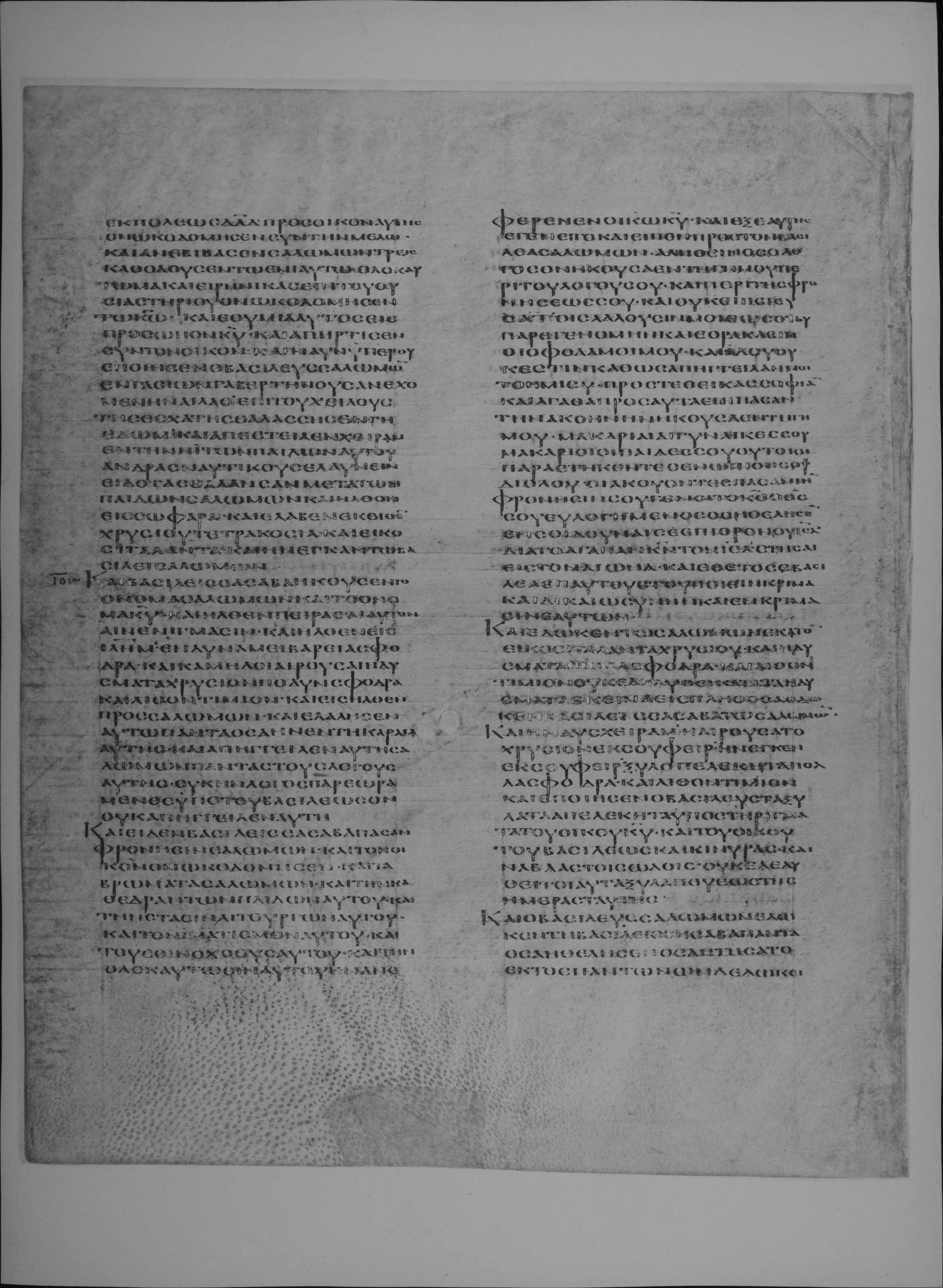
3 Kingdoms (1 Kings) 10:1-8 is on fol. 209v (full-size facsimile of 1879-83, Internet Archive codex-alexandrinus leaf 437). The 1930 reduced facsimile prints beneath this page: 1 Kings ix. 24-x. 13. Checked on the plate: the page begins at the start of 3 Kingdoms (1 Kings) 9:26 (first words read: ΕΚ ΠΟΛΕΩΣ ΔΑΥΕΙΔ ΠΡΟΣ ΟΙΚΟΝ ΑΥΤΗΣ ΟΝ ΩΚΟΔΟΜΗΣΕΝ ΑΥΤΗ ΚΑΙ ΑΝΕΒΙΒΑΣΕΝ ΣΑΛΩΜΩΝ ΤΡΕΙΣ ΕΝ ΤΩ ΕΝΙΑΥΤΩ ΟΛΟΚΑΥΤΩΜΑΤΑ). Note: this page begins inside 3 Kgdms 9:24 in Codex Alexandrinus, which has 9:15-25 here in the order of the Hebrew text; Swete's text (Codex Vaticanus) has no verses 9:15-25 at this point, so the first verse of Swete's text on this page is 9:26.
1Καὶ βασίλισσα Σαβὰ ἤκουσεν τὸ ὄνομα Σαλωμὼν καὶ τὸ ὄνομα Κυρίου, καὶ ἦλθεν πειράσαι αὐτὸν ἐν αἰνίγμασιν. 2καὶ ἦλθεν ἐν Ἰερουσαλὴμ ἐν δυνάμει βαρείᾳ σφόδρα· καὶ κάμηλοι αἴρουσαι ἡδύσματα καὶ χρυσὸν πολὺν σφόδρα καὶ λίθον τίμιον· καὶ εἰσῆλθεν πρὸς Σαλωμὼν καὶ ἐλάλησεν αὐτῷ πάντα ὅσα ἦν ἐν τῇ καρδίᾳ αὐτῆς. 3καὶ ἀπήγγειλεν αὐτῇ Σαλωμὼν πάντας τοὺς λόγους αὐτῆς· οὐκ ἦν λόγος παρεωραμένος παρὰ τοῦ βασιλέως ὃν οὐκ ἀπήγγειλεν αὐτῇ. 4καὶ εἶδεν βασίλισσα Σαβὰ πᾶσαν φρόνησιν Σαλωμών, καὶ τὸν οἶκον ὃν ᾠκοδόμησεν, 5καὶ τὰ βρώματα Σαλωμὼν καὶ τὴν καθέδραν παίδων αὐτοῦ καὶ τὴν στάσιν λειτουργῶν αὐτοῦ καὶ τὸν ἱματισμὸν αὐτοῦ καὶ τοὺς οἰνοχόους αὐτοῦ καὶ τὴν ὁλοκαύτωσιν αὐτοῦ ἣν ἀνέφερεν ἐν οἴκῳ Κυρίου, καὶ ἐξ ἑαυτῆς ἐγένετο. 6καὶ εἶπεν πρὸς τὸν βασιλέα Σαλωμών Ἀληθινὸς ὁ λόγος ὃν ἤκουσα ἐν τῇ γῇ μου 7περὶ τοῦ λόγου σου καὶ περὶ τῆς φρονήσεώς σου· καὶ οὐκ ἐπίστευσα τοῖς λαλοῦσίν μοι, ἕως ὅτου παρεγενόμην καὶ ἑωράκασιν οἱ ὀφθαλμοί μου, καὶ ἰδοὺ οὐκ εἰσὶν τὸ ἥμισυ καθὼς ἀπήγγειλάν μοι, προστέθεικας ἀγαθὰ πρὸς αὐτὰ ἐπὶ πᾶσαν τὴν ἀκοὴν ἣν ἤκουσα ἐν τῇ γῇ μου. 8μακάριαι αἱ γυναῖκές σου, μακάριοι οἱ παῖδές σου οὗτοι οἱ παρεστηκότες ἐνώπιόν σου δι᾽ ὅλου, οἱ ἀκούοντες πᾶσαν τὴν φρόνησίν σου.
1And the queen of Saba heard of the name of Solomon, and the name of the Lord, and she came to try him with riddles. 2And she came to Jerusalem with a very great train; and there came camels bearing spices, and very much gold, and precious stones: and she came in to Solomon, and told him all that was in her heart. 3And Solomon answered all her questions: and there was not a question overlooked by the king which he did not answer her. 4And the queen of Saba saw all the wisdom of Solomon, and the house which he built, 5and the provision of Solomon and the sitting of his attendants, and the standing of his servants, and his raiment, and his cup-bearers, and his whole-burnt-offering which he offered in the house of the Lord, and she was utterly amazed. 6And she said to king Solomon, It was a true report which I heard in my land of thy words and thy wisdom. 7But I believed not them that told me, until I came and my eyes saw: and, behold, the words as they reported to me are not the half: thou hast exceeded in goodness all the report which I heard in my land. 8Blessed are thy wives, blessed are these thy servants who stand before thee continually, who hear all thy wisdom.
Where on the image
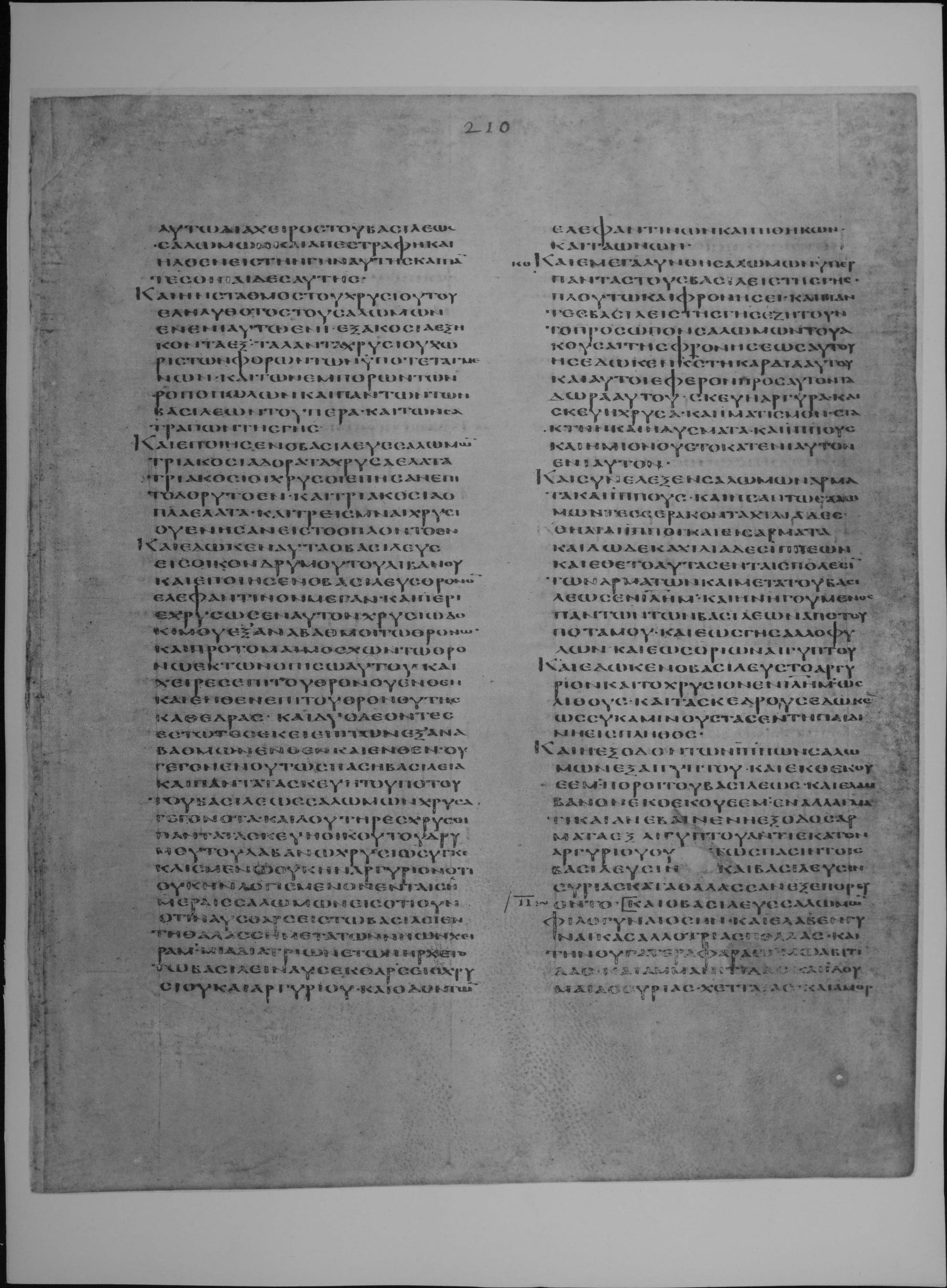
3 Kingdoms (1 Kings) 10:9-13 is on fol. 209v (full-size facsimile of 1879-83, Internet Archive codex-alexandrinus leaf 437). The 1930 reduced facsimile prints beneath this page: 1 Kings ix. 24-x. 13. Checked on the plate: the page begins at the start of 3 Kingdoms (1 Kings) 9:26 (first words read: ΕΚ ΠΟΛΕΩΣ ΔΑΥΕΙΔ ΠΡΟΣ ΟΙΚΟΝ ΑΥΤΗΣ ΟΝ ΩΚΟΔΟΜΗΣΕΝ ΑΥΤΗ ΚΑΙ ΑΝΕΒΙΒΑΣΕΝ ΣΑΛΩΜΩΝ ΤΡΕΙΣ ΕΝ ΤΩ ΕΝΙΑΥΤΩ ΟΛΟΚΑΥΤΩΜΑΤΑ). Note: this page begins inside 3 Kgdms 9:24 in Codex Alexandrinus, which has 9:15-25 here in the order of the Hebrew text; Swete's text (Codex Vaticanus) has no verses 9:15-25 at this point, so the first verse of Swete's text on this page is 9:26. 3 Kingdoms (1 Kings) 10:13-16 is on fol. 210r (full-size facsimile of 1879-83, Internet Archive codex-alexandrinus leaf 438). The 1930 reduced facsimile prints beneath this page: 1 Kings x. 13-xi. 1. Checked on the plate: the page begins inside 3 Kingdoms (1 Kings) 10:13 (first words read: ΑΥΤΩ ΔΙΑ ΧΕΙΡΟΣ ΤΟΥ ΒΑΣΙΛΕΩΣ ΣΑΛΩΜΩΝ ΚΑΙ ΑΠΕΣΤΡΑΦΗ ΚΑΙ ΗΛΘΕΝ ΕΙΣ ΤΗΝ ΓΗΝ ΑΥΤΗΣ).
9γένοιτο Κύριος ὁ θεός σου εὐλογημένος ὃς ἠθέλησεν ἐν σοὶ δοῦναί σε ἐπὶ θρόνου Ἰσραήλ, διὰ τὸ ἀγαπᾷν Κύριον τὸν Ἰσραὴλ στῆσαι εἰς τὸν αἰῶνα· καὶ ἔθετό σε βασιλέα ἐπ᾽ αὐτοὺς τοῦ ποιεῖν κρίμα ἐν δικαιοσύνῃ καὶ ἐν κρίμασιν αὐτῶν. 10καὶ ἔδωκεν τῷ Σαλωμὼν ἑκατὸν εἴκοσι τάλαντα χρυσίου καὶ ἡδύσματα πολλὰ σφόδρα καὶ λίθον τίμιον· οὐκ ἐληλύθει κατὰ τὰ ἡδύσματα ἐκεῖνα ἔτι εἰς πλῆθος ἃ ἔδωκεν βασίλισσα Σαβὰ τῷ βασιλεῖ Σαλωμών. 11καὶ ἡ ναῦς Χειρὰμ ἦν αἴρουσα τὸ χρυσίον ἐκ Σουφείρ· ἤνεγκεν ξύλα πελεκητὰ πολλὰ σφόδρα καὶ λίθον τίμιον. 12καὶ ἐποίησεν ὁ βασιλεὺς τὰ ξύλα τὰ πελεκητὰ ὑποστηρίγματα οἴκου Κυρίου καὶ τοῦ οἴκου τοῦ βασιλέως, καὶ νάβλας καὶ κινύρας τοῖς ᾠδοῖς· οὐκ ἐληλύθει τοιαῦτα ξύλα πελεκητὰ ἐπὶ τῆς γῆς, οὐδὲ ὤφθησάν που ἕως τῆς ἡμέρας ταύτης. 13καὶ ὁ βασιλεὺς Σαλωμὼν ἔδωκεν τῇ βασιλίσσῃ Σαβὰ πάντα ὅσα ἠθέλησεν, ὅσα ᾐτήσατο, ἐκτὸς πάντων ὧν δεδώκει αὐτῇ διὰ χειρὸς τοῦ βασιλέως Σαλωμών· καὶ ἀπεστράφη, καὶ ἦλθεν εἰς τὴν γῆν αὐτῆς, αὐτὴ καὶ πάντες οἱ παῖδες αὐτῆς. 14Καὶ ἦν ὁ σταθμὸς τοῦ χρυσίου τοῦ ἐληλυθότος τῷ Σαλωμὼν ἐν ἐνιαυτῷ ἑνὶ ἑξακόσια καὶ ἑξήκοντα ἓξ τάλαντα χρυσίου, 15χωρὶς τῶν φόρων τῶν ὑποτεταγμένων τῶν ἐμπόρων καὶ πάντων τῶν βασιλέων τοῦ πέραν καὶ τῶν σατραπῶν τῆς γῆς. 16καὶ ἐποίησεν Σαλωμὼν τριακόσια δόρατα χρυσᾶ ἐλατά· τριακόσιοι χρυσοῖ ἐπῆσαν ἐπὶ τὸ δόρυ τὸ ἕν·
9Blessed be the Lord thy God, who has taken pleasure in thee, to set thee upon the throne of Israel, because the Lord loved Israel to establish him for ever; and he has made thee king over them, to execute judgment with justice, and in their causes. 10And she gave to Solomon a hundred and twenty talents of gold, and very many spices, and precious stones: there had not come any other spices so abundant as those which the queen of Saba gave to king Solomon. 11And the ship of Chiram which brought the gold from Suphir, brought very much hewn timber and precious stones. 12And the king made the hewn timber into buttresses of the house of the Lord and the king's house, and lyres and harps for singers: such hewn timber had not come upon the earth, nor have been seen anywhere until this day. 13And king Solomon gave to the queen of Saba all that she desired, whatsoever she asked, besides all that he had given her by the hand of king Solomon: and she returned, and came into her own land, she and her servants. 14And the weight of gold that came to Solomon in one year was six hundred and sixty-six talents of gold. 15Besides the tributes of them that were subjects, both merchants and all the kings of the country beyond the river, and of the princes of the land. 16And Solomon made three hundred spears of beaten gold: three hundred shekels of gold were upon one spear.
Where on the image
3 Kingdoms (1 Kings) 10:17-25 is on fol. 210r (full-size facsimile of 1879-83, Internet Archive codex-alexandrinus leaf 438). The 1930 reduced facsimile prints beneath this page: 1 Kings x. 13-xi. 1. Checked on the plate: the page begins inside 3 Kingdoms (1 Kings) 10:13 (first words read: ΑΥΤΩ ΔΙΑ ΧΕΙΡΟΣ ΤΟΥ ΒΑΣΙΛΕΩΣ ΣΑΛΩΜΩΝ ΚΑΙ ΑΠΕΣΤΡΑΦΗ ΚΑΙ ΗΛΘΕΝ ΕΙΣ ΤΗΝ ΓΗΝ ΑΥΤΗΣ).
17καὶ τριακόσια ὅπλα χρυσᾶ ἐλατά· καὶ τρεῖς μναῖ ἐνῆσαν χρυσοῦ εἰς τὸ ὅπλον τὸ ἕν· καὶ ἔδωκεν αὐτὰ εἰς οἶκον δρυμοῦ τοῦ Λιβάνου. 18καὶ ἐποίησεν ὁ βασιλεὺς θρόνον ἐλεφάντινον μέγαν, καὶ περιεχρύσωσεν αὐτὸν χρυσίῳ δοκίμῳ. 19ἓξ ἀναβαθμοὶ τῷ θρόνῳ, καὶ προτομαὶ μόσχων τῷ θρόνῳ ἐκ τῶν ὀπίσω αὐτοῦ ἔνθεν καὶ ἔνθεν ἐπὶ τοῦ τόπου τῆς καθέδρας, καὶ δύο λέοντες ἑστηκότες παρὰ τὰς χεῖρας, 20καὶ δώδεκα λέοντες ἑστῶτες ἐπὶ τῶν ἓξ ἀναβαθμῶν ἔνθεν καὶ ἔνθεν· οὐ γέγονεν οὕτως πάσῃ βασιλείᾳ. 21καὶ πάντα τὰ σκεύη τὰ ὑπὸ τοῦ Σαλωμὼν γεγονότα χρυσᾶ, καὶ λουτῆρες χρυσοῖ, πάντα τὰ σκεύη δρυμοῦ οἴκου τοῦ Λιβάνου χρυσίῳ συνκεκλεισμένα· οὐκ ἦν ἀργύριον, ὅτι οὐκ ἦν λογιζόμενον ἐν ταῖς ἡμέραις Σαλωμών. 22ὅτι ναῦς Θαρσεὶς τῷ βασιλεῖ ἐν τῇ θαλάσσῃ μετὰ τῶν νηῶν Χειράμ· μία διὰ τριῶν ἐτῶν ἤρχετο τῷ βασιλεῖ ναῦς ἐκ Θαρσεὶς χρυσίου καὶ ἀργυρίου καὶ λίθων τορευτῶν καὶ πελεκητῶν. 23αὕτη ἦν ἡ πραγματεία τῆς προνομῆς ἧς ἀνήνεγκεν ὁ βασιλεὺς Σαλωμὼν οἰκοδομῆσαι τὸν οἶκον Κυρίου καὶ τὸν οἶκον τοῦ βασιλέως καὶ τὸ τεῖχος Ἰερουσαλὴμ καὶ τὴν ἄκραν, τοῦ περιφράξαι τὸν φραγμὸν τῆς πόλεως Δαυείδ, καὶ τὴν Ἀσσοὺρ καὶ τὴν Μαδιὰν καὶ τὴν Γάζερ καὶ τὴν Βαιθωρὰμ τὴν ἀνωτέρω καὶ τὴν Ἰεθερμάθ, καὶ πάσας τὰς πόλεις τῶν ἁρμάτων καὶ πάσας τὰς πόλεις τῶν ἱππέων· 24καὶ τὴν πραγματείαν Σαλωμὼν ἣν ἐπραγματεύσατο οἰκοδομῆσαι ἐν Ἰερουσαλὴμ καὶ ἐν πάσῃ τῇ γῇ τοῦ μὴ κατάρξαι αὐτοῦ πάντα τὸν λαὸν τὸν ὑποδεδειγμένον ὑπὸ τοῦ Χετταίου καὶ τοῦ Ἀμορραίου καὶ τοῦ Φερεζαίου καὶ τοῦ Χαναναίου καὶ τοῦ Εὑαίου καὶ τοῦ Ἰεβουσαίου καὶ τοῦ Γεργεσαίου, τῶν μὴ ἐκ τῶν υἱῶν Ἰσραὴλ ὄντων, τὰ τέκνα αὐτῶν τὰ ὑπολελιμμένα μετ᾽ αὐτοὺς ἐν τῇ γῇ οὓς οὐκ ἐδύναντο οἱ υἱοὶ Ἰσραὴλ ἐξολεθρεῦσαι αὐτούς, καὶ ἀνήγαγεν αὐτοὺς Σαλωμὼν εἰς φόρον ἕως τῆς ἡμέρας ταύτης. 25καὶ ἐκ τῶν υἱῶν Ἰσραὴλ οὐκ ἔδωκε Σαλωμὼν πρᾶγμα, ὅτι αὐτοὶ ἦσαν ἄνδρες οἱ πολεμισταὶ καὶ παῖδες αὐτοῦ καὶ ἄρχοντες τῶν ἁρμάτων αὐτοῦ καὶ ἱππεῖς αὐτοῦ.
17And three hundred shields of beaten gold: and three pounds of gold were in one shield: and the king put them in the house of the forest of Lebanon. 18And the king made a great ivory throne, and gilded it with pure gold. 19The throne had six steps, and calves in bold relief to the throne behind it, and side-pieces on either hand of the place of the seat, and two lions standing by the side-pieces, 20and twelve lions standing there on the six steps on either side: it was not so done in any other kingdom. 21And all the vessels made by Solomon were of gold, and the lavers were golden, and all the vessels of the house of the forest of Lebanon were of pure gold; there was no silver, for it was not accounted of in the days of Solomon. 22For Solomon had a ship of Tharsis in the sea with the ships of Chiram: one ship came to the king every three years out of Tharsis, laden with gold and silver, and wrought stones, and hewn stones. This was the arrangement of the provision which king Solomon fetched to build the house of the Lord, and the house of the king, and the wall of Jerusalem, and the citadel; to fortify the city of David, and Assur, and Magdal, and Gazer, and Bæthoron the upper, and Jethermath, and all the cities of the chariots, and all the cities of the horsemen, and the fortification of Solomon which he purposed to build in Jerusalem and in all the land, so that none of the people should rule over him that was left of the Chettite and the Amorite, and the Pherezite, and the Chananite, and the Evite, and the Jebusite, and the Gergesite, who were not of the children of Israel, their descendants who had been left with him in the land, whom the children of Israel could not utterly destroy; and Solomon made them tributaries until this day. But of the children of Israel Solomon made nothing; for they were the warriors, and his servants and rulers, and captains of the third order, and the captains of his chariots, and his horsemen.
Where on the image
3 Kingdoms (1 Kings) 10:26-33 is on fol. 210r (full-size facsimile of 1879-83, Internet Archive codex-alexandrinus leaf 438). The 1930 reduced facsimile prints beneath this page: 1 Kings x. 13-xi. 1. Checked on the plate: the page begins inside 3 Kingdoms (1 Kings) 10:13 (first words read: ΑΥΤΩ ΔΙΑ ΧΕΙΡΟΣ ΤΟΥ ΒΑΣΙΛΕΩΣ ΣΑΛΩΜΩΝ ΚΑΙ ΑΠΕΣΤΡΑΦΗ ΚΑΙ ΗΛΘΕΝ ΕΙΣ ΤΗΝ ΓΗΝ ΑΥΤΗΣ).
26καὶ ἐμεγαλύνθη Σαλωμὼν ὑπὲρ πάντας τοὺς βασιλεῖς πλούτῳ καὶ φρονήσει. 27καὶ πάντες βασιλεῖς τῆς γῆς ἐζήτουν τὸ πρόσωπον Σαλωμὼν τοῦ ἀκοῦσαι τῆς φρονήσεως αὐτοῦ ἧς ἔδωκεν Κύριος τῇ καρδίᾳ αὐτοῦ. 28καὶ αὐτοὶ ἔφερον ἕκαστος τὰ δῶρα αὐτοῦ, σκεύη χρυσᾶ καὶ ἱματισμόν, στακτὴν καὶ ἡδύσματα καὶ ἵππους καὶ ἡμιόνους τὸ κατ᾽ ἐνιαυτὸν ἐνιαυτῷ. 29καὶ ἦσαν τῷ Σαλωμὼν τέσσαρες χιλιάδες θήλειαι ἵπποι εἰς ἅρματα καὶ δώδεκα χιλιάδες ἱππέων, καὶ ἔθετο αὐτὰς ἐν ταῖς πόλεσι τῶν ἁρμάτων καὶ μετὰ τοῦ βασιλέως ἐν Ἰερουσαλήμ. 30καὶ ἦν ἡγούμενος πάντων τῶν βασιλέων ἀπὸ τοῦ ποταμοῦ καὶ ἕως γῆς ἀλλοφύλων καὶ ἕως ὁρίων Αἰγύπτου. 31καὶ ἔδωκεν ὁ βασιλεὺς τὸ χρυσίον καὶ τὸ ἀργύριον ἐν Ἰερουσαλὴμ ὡς λίθους, καὶ τὰς κέδρους ἔδωκεν ὡς συκαμίνους τὰς ἐν τῇ πεδινῇ εἰς πλῆθος. 32καὶ ἡ ἔξοδος Σαλωμὼν τῶν ἱππέων καὶ ἐξ Αἰγύπτου καὶ ἐκ Θεκοῦε ἔμποροι τοῦ βασιλέως, καὶ ἐλάμβανεν ἐκ Θεκοῦε ἐν ἀλλάγματι· 33καὶ ἀνέβαινεν ἡ ἔξοδος ἐξ Αἰγύπτου ἅρμα ἀντὶ ἑκατὸν ἀργυρίου, καὶ ἵππος ἀντὶ πεντήκοντα ἀργυρίου· καὶ οὕτω τοῖς βασιλεῦσιν πᾶσιν Χεττιεὶν καὶ βασιλεῦσιν Συρίας κατὰ θάλασσαν ἐξεπορεύοντο.
23And Solomon increased beyond all the kings of the earth in wealth and wisdom. 24And all the kings of the earth sought the presence of Solomon, to hear his wisdom which the Lord had put into his heart. 25And they brought every one their gifts, vessels of gold, and raiment, and stacte, and spices, and horses, and mules, a rate year by year. 26And Solomon had four thousand mares for his chariots, and twelve thousand horsemen: and he put them in the cities of his chariots, and with the king in Jerusalem: and he ruled over all the kings from the river to the land of the Philistines, and to the borders of Egypt. 27And the king made gold and silver in Jerusalem as stones, and he made cedars as the sycamores in the plain for multitude. 28And the goings forth of Solomon's horsemen was also out of Egypt, and the king's merchants were of Thecue; and they received them out of Thecue at a price. 29And that which proceeded out of Egypt went up thus, even a chariot for a hundred shekels of silver, and a horse for fifty shekels of silver: and thus for all the kings of the Chettians, and the kings of Syria, they came out by sea.
Cite
Sources
- Source: Codex Alexandrinus (British Library Royal MS 1 D. V) via the British Museum photographic facsimiles of 1879-83 and 1930 (Internet Archive) + Swete's Septuagint + Brenton's English (holding institution)
- Critical edition: H. B. Swete, The Old Testament in Greek according to the Septuagint (1909)
← previous · → next · v cycle view · l back to library