3 Kingdoms (1 Kings), Chapter 17 (Codex Alexandrinus)
Introduction
3 Kingdoms (1 Kings) 17 in the Greek Old Testament (the Septuagint) as written in Codex Alexandrinus, a Greek Bible copied in the fifth century, probably in Egypt, and now in the British Library (Royal MS 1 D. V, the first of its four volumes). It is one of the three great early codices of the whole Greek Bible, with Codex Vaticanus and Codex Sinaiticus.
This entry meets the strict three-criteria standard of the Theosis Library:
- Manuscript scan: the pages of Codex Alexandrinus carrying this chapter (fol. 216r, fol. 216v), from the full-size photographic (autotype) facsimile published by the British Museum in 1879-1883, as digitised on the Internet Archive. The verse range of every page comes from the reduced photographic facsimile of 1930, which prints it beneath each plate, and the opening words of every page were read on the plate to confirm the page and the verse it begins with. Each section links to the page or pages that hold its verses. Folio numbers are those written at the head of each leaf and visible on the plates.
- Original text: Swete's edition, which here prints the text of Codex Vaticanus (Vat. gr. 1209), the base of his edition, and gives the readings of Alexandrinus only in his apparatus. The Greek column is therefore Vaticanus' text; where Alexandrinus differs, the plate shows what Alexandrinus reads.
- English translation: Sir Lancelot C. L. Brenton, The Septuagint Version of the Old Testament (1844; 1851 edition), a translation of the Greek, public domain, from the eBible.org text.
How was this verified? (Provenance)
Where on the image
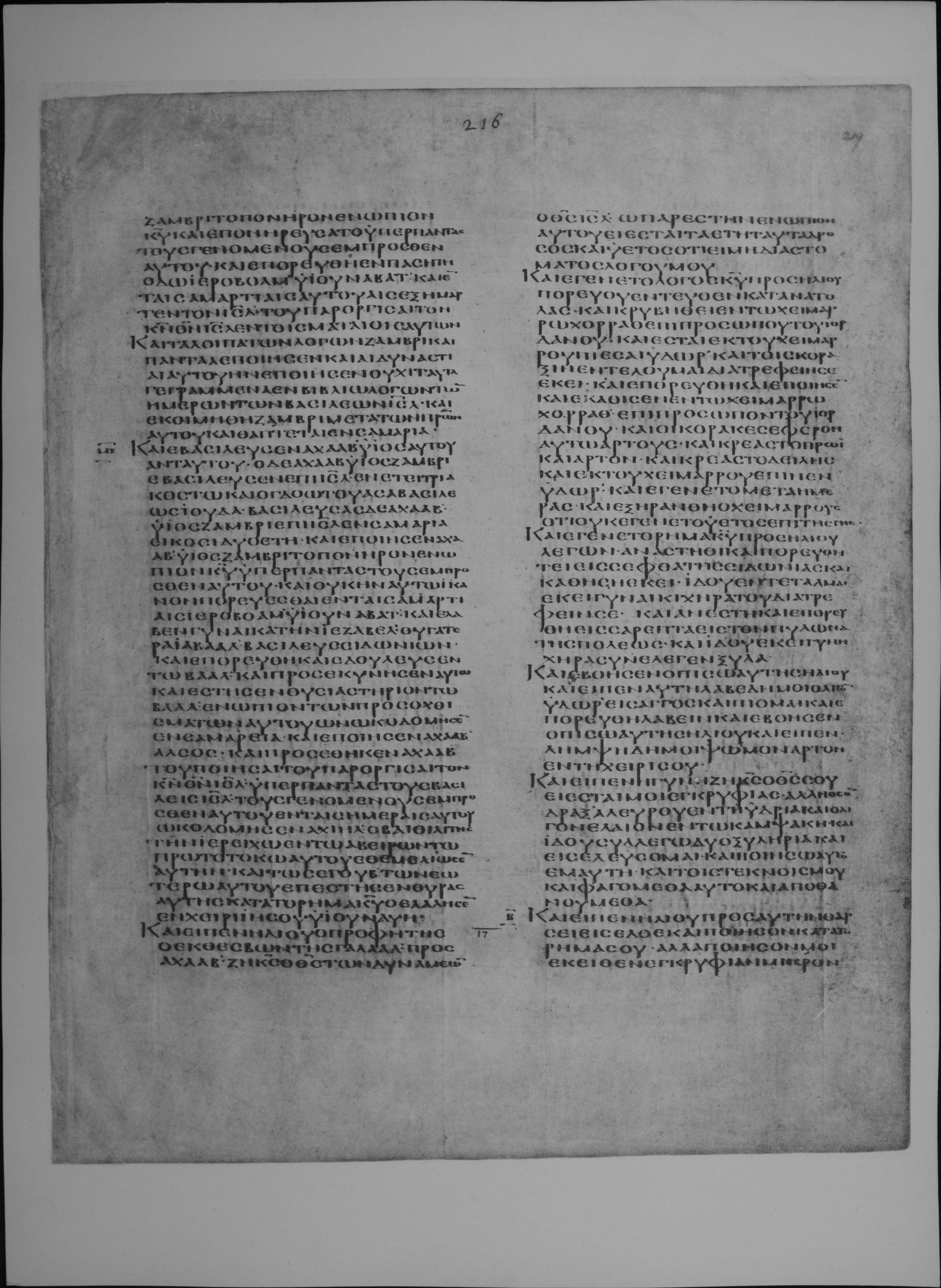
3 Kingdoms (1 Kings) 17:1-8 is on fol. 216r (full-size facsimile of 1879-83, Internet Archive codex-alexandrinus leaf 450). The 1930 reduced facsimile prints beneath this page: 1 Kings xvi. 25-xvii. 13. Checked on the plate: the page begins inside 3 Kingdoms (1 Kings) 16:25 (first words read: ΖΑΜΒΡΕΙ ΤΟ ΠΟΝΗΡΟΝ ΕΝΩΠΙΟΝ ΚΥ ΚΑΙ ΕΠΟΝΗΡΕΥΣΑΤΟ ΥΠΕΡ ΠΑΝΤΑΣ ΤΟΥΣ ΓΕΝΟΜΕΝΟΥΣ).
1Καὶ εἶπεν Ἠλειοὺ ὁ προφήτης ὁ Θεσβείτης ἐκ Θεσβὼν τῆς Γαλαὰδ πρὸς Ἀχαάβ Ζῇ Κύριος ὁ θεὸς τῶν δυνάμεων, ὁ θεὸς Ἰσραὴλ ᾧ παρέστην ἐνώπιον αὐτοῦ, εἰ ἔσται τὰ ἔτη ταῦτα δρόσος καὶ ὑετός· ὅτι εἰ μὴ διὰ στόματος λόγου μου. 2Καὶ ἐγένετο ῥῆμα Κυρίου πρὸς Ἠλειού 3Πορεύου ἐντεῦθεν κατὰ ἀνατολὰς, καὶ κρύβηθι ἐν τῷ χειμάρρῳ Χορρὰθ τοῦ ἐπὶ προσώπου τοῦ Ἰορδάνου. 4καὶ ἔσται ἐκ τοῦ χειμάρρου πίεσαι ὕδωρ, καὶ τοῖς κόραξιν ἐντελοῦμαι διατρέφειν σε ἐκεῖ. 5καὶ ἐποίησεν Ἠλειοὺ κατὰ τὸ ῥῆμα Κυρίου, καὶ ἐκάθισεν ἐν τῷ χειμάρρῳ Χορρὰθ ἐπὶ προσώπου τοῦ Ἰορδάνου. 6καὶ οἱ κόρακες ἔφερον αὐτῷ ἄρτους τὸ πρωὶ καὶ κρέα τὸ δείλης, καὶ ἐκ τοῦ χειμάρρου ἔπινεν ὕδωρ. 7καὶ ἐγένετο μετὰ ἡμέρας καὶ ἐξηράνθη ὁ χειμάρρους, ὅτι οὐκ ἐγένετο ὑετὸς ἐπὶ τῆς γῆς. 8Καὶ ἐγένετο ῥῆμα Κυρίου πρὸς Ἠλειού
1And Eliu the prophet, the Thesbite of Thesbæ of Galaad, said to Achaab, As the Lord God of hosts, the God of Israel, lives, before whom I stand, there shall not be these years dew nor rain, except by the word of my mouth. 2And the word of the Lord came to Eliu, saying, 3Depart hence eastward, and hide thee by the brook of Chorrath, that is before Jordan. 4And it shall be that thou shalt drink water of the brook, and I will charge the ravens to feed thee there. 5And Eliu did according to the word of the Lord, and he sat by the brook of Chorrath before Jordan. 6And the ravens brought him loaves in the morning, and flesh in the evening, and he drank water of the brook. 7And it came to pass after some time, that the brook was dried up, because there had been no rain upon the earth. 8And the word of the Lord came to Eliu, saying,
Where on the image
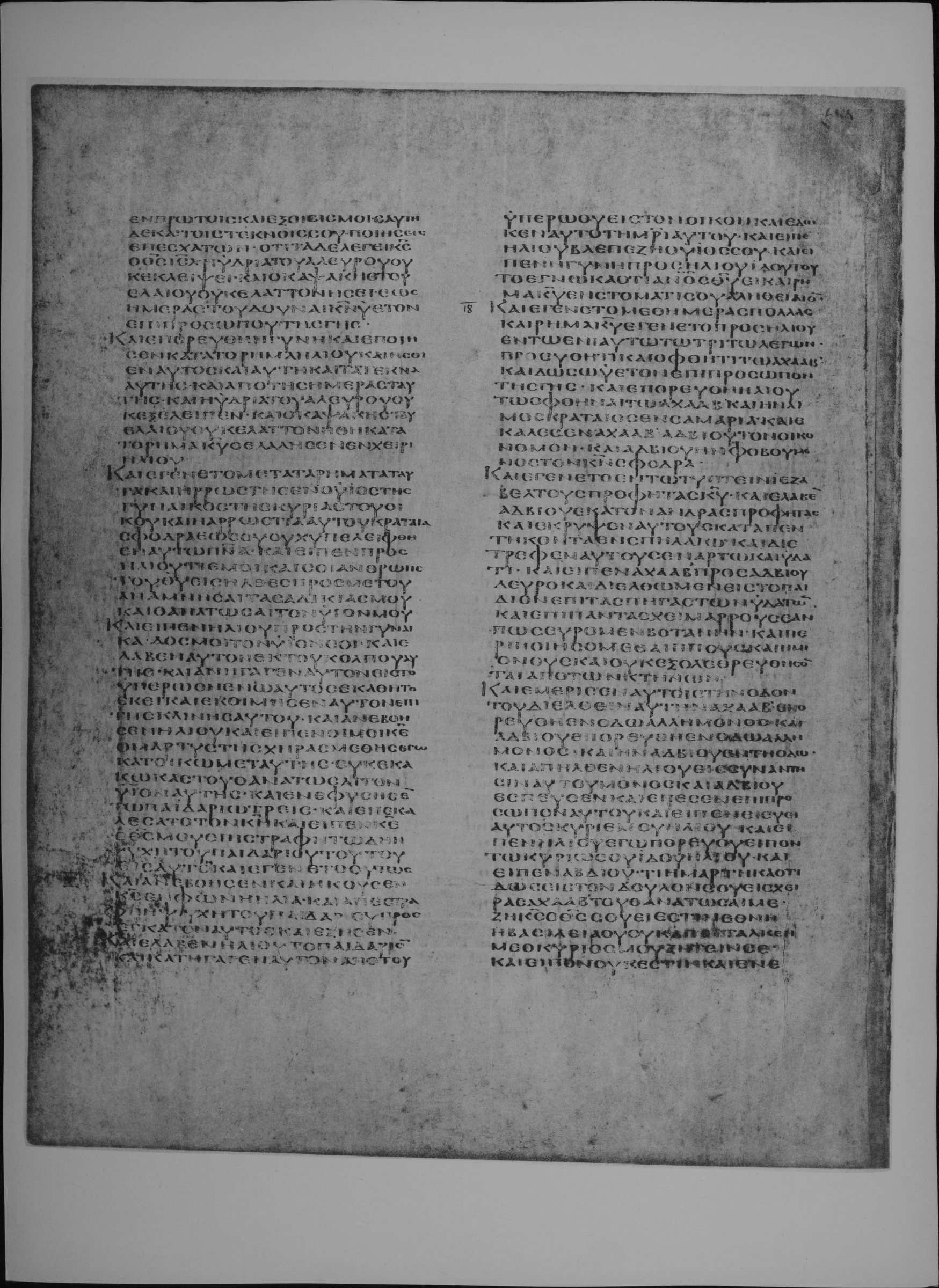
3 Kingdoms (1 Kings) 17:9-13 is on fol. 216r (full-size facsimile of 1879-83, Internet Archive codex-alexandrinus leaf 450). The 1930 reduced facsimile prints beneath this page: 1 Kings xvi. 25-xvii. 13. Checked on the plate: the page begins inside 3 Kingdoms (1 Kings) 16:25 (first words read: ΖΑΜΒΡΕΙ ΤΟ ΠΟΝΗΡΟΝ ΕΝΩΠΙΟΝ ΚΥ ΚΑΙ ΕΠΟΝΗΡΕΥΣΑΤΟ ΥΠΕΡ ΠΑΝΤΑΣ ΤΟΥΣ ΓΕΝΟΜΕΝΟΥΣ). 3 Kingdoms (1 Kings) 17:13-16 is on fol. 216v (full-size facsimile of 1879-83, Internet Archive codex-alexandrinus leaf 451). The 1930 reduced facsimile prints beneath this page: 1 Kings xvii. 13-xviii. 10. Checked on the plate: the page begins inside 3 Kingdoms (1 Kings) 17:13 (first words read: ΕΝ ΠΡΩΤΟΙΣ ΚΑΙ ΕΞΟΙΣΕΙΣ ΜΟΙ ΣΑΥΤΗ ΔΕ ΚΑΙ ΤΟΙΣ ΤΕΚΝΟΙΣ ΣΟΥ ΠΟΙΗΣΕΙΣ ΕΠ ΕΣΧΑΤΩ).
9Ἀνάστηθι καὶ πορεύου εἰς Σάρεπτα τῆς Σειδωνίας· ἰδοὺ ἐντέταλμαι ἐκεῖ γυναικὶ χήρᾳ τοῦ διατρέφειν σε. 10καὶ ἀνέστη καὶ ἐπορεύθη εἰς Σάρεπτα, εἰς τόν πυλῶνα τῆς πόλεως· καὶ ἰδοὺ ἐκεῖ γυνὴ χήρα συνέλεγεν ξύλα, καὶ ἐβόησεν ὀπίσω αὐτῆς Ἠλειοὺ καὶ εἶπεν αὐτῇ Λάβε δὴ ὀλίγον ὕδωρ εἰς ἄγγος καὶ πίομαι. 11καὶ ἐπορεύθη λαβεῖν, καὶ ἐβόησεν ὀπίσω αὐτῆς Ἠλειοὺ καὶ εἶπεν Λήμψῃ δή μοι ψωμὸν ἄρτου τοῦ ἐν τῇ χειρί σου. 12καὶ εἶπεν ἡ γυνή Ζῇ Κύριος ὁ θεὸς σου, εἰ ἔστιν μοι ἐνκρυφίας ἀλλ᾽ ἢ ὅσον δρὰξ ἀλεύρου ἐν τῇ ὑδρίᾳ, καὶ ὀλίγον ἔλαιον ἐν τῷ καψάκῃ· καὶ ἰδοὺ συλλέγω δύο ξυλάρια, καὶ εἰσελεύσομαι καὶ ποιήσω αὐτὸ ἐμαυτῇ καὶ τοῖς τέκνοις μου, καὶ φαγόμεθα, καὶ ἀποθανούμεθα. 13καὶ εἶπεν πρὸς αὐτὴν Ἠλειού Θάρσει, εἴσελθε καὶ ποίησον κατὰ τὸ ῥῆμά σου. ἀλλὰ ποίησον ἐμοὶ ἐκεῖθεν ἐνκρυφίαν μικρὸν ἐν πρώτοις καὶ ἐξοίσεις μοι, σαυτῇ δὲ καὶ τοῖς τέκνοις σου ποιήσεις ἐπ᾽ ἐσχάτου, 14ὅτι τάδε λέγει Κύριος Ἡ ὑδρία τοῦ ἀλεύρου οὐκ ἐκλείψει καὶ ὁ καψάκης τοῦ ἐλαίου οὐκ ἐλαττονήσει ἕως ἡμέρας τοῦ δοῦναι Κύριον τὸν ὑετὸν ἐπὶ τῆς γῆς. 15καὶ ἐπορεύθη ἡ γυνὴ καὶ ἐποίησεν· καὶ ἤσθιεν αὐτὴ καὶ αὐτὸς καὶ τὰ τέκνα αὐτῆς. 16καὶ ἡ ὑδρία τοῦ ἀλεύρου οὐκ ἐξέλιπεν καὶ ὁ καψάκης τοῦ ἐλαίου οὐκ ἐλαττονώθη, κατὰ τὸ ῥῆμα Κυρίου ὃ ἐλάλησεν ἐν χειρὶ Ἠλειού.
9Arise, and go to Sarepta of the Sidonian land: behold, I have there commanded a widow-woman to maintain thee. 10And he arose and went to Sarepta, and came to the gate of the city: and, behold, a widow-woman was there gathering sticks; and Eliu cried after her, and said to her, Fetch me, I pray thee, a little water in a vessel, that I may drink. 11And she went to fetch it; and Eliu cried after her, and said, Bring me, I pray thee, a morsel of the bread that is in thy hand. 12And the woman said, As the Lord thy God lives, I have not a cake, but only a handful of meal in the pitcher, and a little oil in a cruse, and, behold, I am going to gather two sticks, and I shall go in and dress it for myself and my children, and we shall eat it and die. 13And Eliu said to her, Be of good courage, go in and do according to thy word: but make me thereof a little cake, and thou shalt bring it out to me first, and thou shalt make some for thyself and thy children last. 14For thus saith the Lord, The pitcher of meal shall not fail, and the cruse of oil shall not diminish, until the day that the Lord gives rain upon the earth. 15And the woman went and did so, and did eat, she, and he, and her children. 16And the pitcher of meal failed not, and the cruse of oil was not diminished, according to the word of the Lord which he spoke by the hand of Eliu.
Where on the image
3 Kingdoms (1 Kings) 17:17-24 is on fol. 216v (full-size facsimile of 1879-83, Internet Archive codex-alexandrinus leaf 451). The 1930 reduced facsimile prints beneath this page: 1 Kings xvii. 13-xviii. 10. Checked on the plate: the page begins inside 3 Kingdoms (1 Kings) 17:13 (first words read: ΕΝ ΠΡΩΤΟΙΣ ΚΑΙ ΕΞΟΙΣΕΙΣ ΜΟΙ ΣΑΥΤΗ ΔΕ ΚΑΙ ΤΟΙΣ ΤΕΚΝΟΙΣ ΣΟΥ ΠΟΙΗΣΕΙΣ ΕΠ ΕΣΧΑΤΩ).
17καὶ ἐγένετο μετὰ ταῦτα καὶ ἠρρώστησεν ὁ υἱὸς τῆς γυναικὸς τῆς κυρίας τοῦ οἴκου· καὶ ἦν ἡ ἀρρωστία αὐτοῦ κραταιὰ σφόδρα ἕως οὗ οὐχ ὑπελείφθη ἐν αὐτῷ πνεῦμα. 18καὶ εἶπεν πρὸς Ἠλειού Τί ἐμοὶ καὶ σοί, ὁ ἄνθρωπος τοῦ θεοῦ; εἰσῆλθες πρὸς μὲ τοῦ ἀναμνῆσαι ἀδικίας μου καὶ θανατῶσαι τὸν υἱόν μου; 19καὶ εἶπεν Ἠλειοὺ πρὸς τὴν γυναῖκα Δός μοι τὸν υἱόν σου. καὶ ἔλαβεν αὐτὸν ἐκ τοῦ κόλπου αὐτῆς καὶ ἀνήνεγκεν αὐτὸν εἰς τὸ ὑπερῷον ἐν ᾧ αὐτὸς ἐκάθητο ἐκεῖ, καὶ ἐκοίμισεν αὐτὸν ἐπὶ τῆς κλίνης. 20καὶ ἀνεβόησεν Ἠλειοὺ καὶ εἶπεν Οἴμοι Κύριε, ὁ μάρτυς τῆς χήρας μεθ᾽ ἧς ἐγὼ κατοικῶ μετ᾽ αὐτῆς, σὺ κεκάκωκας τοῦ θανατῶσαι τὸν υἱὸν αὐτῆς. 21καὶ ἐνεφύσησεν τῷ παιδαρίῳ τρίς, καὶ ἐπεκαλέσατο τὸν κύριον καὶ εἶπεν Κύριε ὁ θεός μου, ἐπιστραφήτω δὴ ἡ ψυχὴ τοῦ παιδαρίου τούτου εἰς αὐτόν. 22καὶ ἐγένετο οὕτως, καὶ ἀνεβόησεν τὸ παιδάριον. 23καὶ κατήγαγεν αὐτὸν ἀπὸ τοῦ ὑπερῴου εἰς τὸν οἶκον καὶ ἔδωκεν αὐτὸν τῇ μητρὶ αὐτοῦ· καὶ εἶπεν Ἠλειού Βλέπε, ζῇ ὁ υἱός σου. 24καὶ εἶπεν ἡ γυνὴ πρὸς Ἠλειού Ἰδοὺ ἔγνωκα ὅτι σὺ ἄνθρωπος θεοῦ, καὶ ῥῆμα Κυρίου ἐν στόματί σου ἀληθινόν.
17And it came to pass afterward, that the son of the woman the mistress of the house was sick; and his sickness was very severe, until there was no breath left in him. 18And she said to Eliu, What have I to do with thee, O man of God? hast thou come in to me to bring my sins to remembrance, and to slay my son? 19And Eliu said to the woman, Give me thy son. And he took him out of her bosom, and took him up to the chamber in which he himself lodged, and laid him on the bed. 20And Eliu cried aloud, and said, Alas, O Lord, the witness of the widow with whom I sojourn, thou hast wrought evil for her in slaying her son. 21And he breathed on the child thrice, and called on the Lord, and said, O Lord my God, let, I pray thee, the soul of this child return to him. 22And it was so, and the child cried out, 23and he brought him down from the upper chamber into the house, and gave him to his mother; and Eliu said, See, thy son lives. 24And the woman said to Eliu, Behold, I know that thou art a man of God, and the word of the Lord in thy mouth is true.
Cite
Sources
- Source: Codex Alexandrinus (British Library Royal MS 1 D. V) via the British Museum photographic facsimiles of 1879-83 and 1930 (Internet Archive) + Swete's Septuagint + Brenton's English (holding institution)
- Critical edition: H. B. Swete, The Old Testament in Greek according to the Septuagint (1909)
← previous · → next · v cycle view · l back to library