4 Kingdoms (2 Kings), Chapter 1 (Codex Alexandrinus)
Introduction
4 Kingdoms (2 Kings) 1 in the Greek Old Testament (the Septuagint) as written in Codex Alexandrinus, a Greek Bible copied in the fifth century, probably in Egypt, and now in the British Library (Royal MS 1 D. V, the first of its four volumes). It is one of the three great early codices of the whole Greek Bible, with Codex Vaticanus and Codex Sinaiticus.
This entry meets the strict three-criteria standard of the Theosis Library:
- Manuscript scan: the pages of Codex Alexandrinus carrying this chapter (fol. 222r, fol. 222v), from the full-size photographic (autotype) facsimile published by the British Museum in 1879-1883, as digitised on the Internet Archive. The verse range of every page comes from the reduced photographic facsimile of 1930, which prints it beneath each plate, and the opening words of every page were read on the plate to confirm the page and the verse it begins with. Each section links to the page or pages that hold its verses. Folio numbers are those written at the head of each leaf and visible on the plates.
- Original text: Swete's edition, which here prints the text of Codex Vaticanus (Vat. gr. 1209), the base of his edition, and gives the readings of Alexandrinus only in his apparatus. The Greek column is therefore Vaticanus' text; where Alexandrinus differs, the plate shows what Alexandrinus reads.
- English translation: Sir Lancelot C. L. Brenton, The Septuagint Version of the Old Testament (1844; 1851 edition), a translation of the Greek, public domain, from the eBible.org text.
How was this verified? (Provenance)
Where on the image
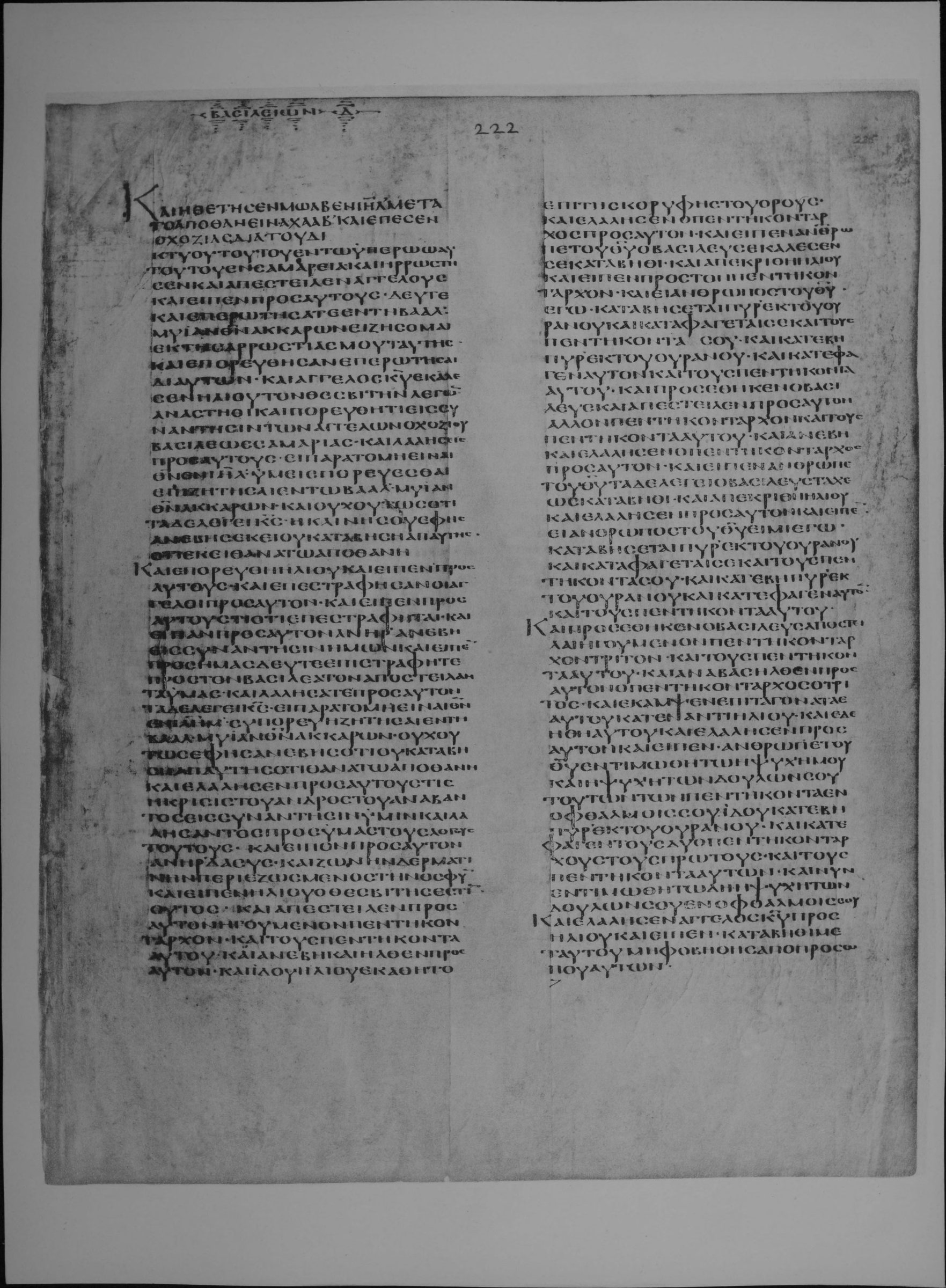
4 Kingdoms (2 Kings) 1:1-8 is on fol. 222r (full-size facsimile of 1879-83, Internet Archive codex-alexandrinus leaf 462). The 1930 reduced facsimile prints beneath this page: 2 Kings i. 1-15. Checked on the plate: the page begins at the start of 4 Kingdoms (2 Kings) 1:1 (first words read: ΚΑΙ ΗΘΕΤΗΣΕΝ ΜΩΑΒ ΕΝ ΙΣΡΑΗΛ ΜΕΤΑ ΤΟ ΑΠΟΘΑΝΕΙΝ ΑΧΑΑΒ ΚΑΙ ΕΠΕΣΕΝ ΟΧΟΖΙΑΣ).
1ΚΑΙ ἠθέτησεν Μωὰβ ἐν Ἰσραὴλ μετὰ τὸ ἀποθανεῖν Ἀχαάβ. 2καὶ ἔπεσεν Ὀχοζείας διὰ τοῦ δικτυωτοῦ τοῦ ἐν τῷ ὑπερῴῳ αὐτοῦ τῷ ἐν Σαμαρείᾳ, καὶ ἠρρώστησεν· καὶ ἀπέστειλεν ἀγγέλους καὶ εἶπεν πρὸς αὐτούς Δεῦτε καὶ ἐπιζητήσατε ἐν τῷ Βάαλ μυῖαν θεὸν Ἀκκαρών, εἰ ζήσομαι ἐκ τῆς ἀρρωστίας μου ταύτης· καὶ ἐπορεύθησαν ἐπερωτῆσαι δι᾽ αὐτοῦ. 3καὶ ἄγγελος Κυρίου ἐκάλεσεν Ἠλειοὺ τὸν Θεσβείτην λέγων Ἀναστὰς δεῦρο εἰς συνάντησιν τῶν ἀγγέλων Ὀχοζείου βασιλέως Σαμαρείας καὶ λαλήσεις πρὸς αὐτούς Εἰ παρὰ τὸ μὴ εἶναι θεὸν ἐν Ἰσραὴλ ὑμεῖς πορεύεσθε ἐπιζητῆσαι ἐν τῷ Βάαλ μυῖαν θεὸν Ἀκκαρών; καὶ οὐχ οὕτως· 4ὅτι τάδε λέγει Κύριος Ἡ κλίνη ἐφ᾽ ἧς ἀνέβης ἐκεῖ οὐ καταβήσῃ ἀπ᾽ αὐτῆς, ὅτι θανάτῳ ἀποθανῇ. καὶ ἐπορεύθη Ἠλειοὺ καὶ εἶπεν πρὸς αὐτούς. 5καὶ ἐπεστράφησαν οἱ ἄγγελοι πρὸς αὐτόν, καὶ εἶπεν πρὸς αὐτούς Τί ὅτι ἐπεστρέψατε; 6καὶ εἶπαν πρὸς αὐτόν Ἀνὴρ ἀνέβη εἰς συνάντησιν ἡμῶν καὶ εἶπεν πρὸς ἡμᾶς Δεῦτε ἐπιστράφητε πρὸς τὸν βασιλέα τὸν ἀποστείλαντα ὑμᾶς καὶ λαλήσατε πρὸς αὐτόν Τάδε λέγει Κύριος Εἰ παρὰ τὸ μὴ εἶναι θεὸν ἐν Ἰσραὴλ σὺ πορεύῃ ζητῆσαι ἐν τῇ Βάαλ μυῖαν θεὸν Ἀκκαρών; οὐχ οὕτως· ἡ κλίνη ἐφ᾽ ἧς ἀνέβης ὅτι οὐ καταβήσῃ ἀπ᾽ αὐτῆς, ὅτι θανάτῳ ἀποθανῇ. 7καὶ ἐλάλησεν πρὸς αὐτούς Τίς ἡ κρίσις τοῦ ἀνδρὸς τοῦ ἀναβάντος εἰς συνάντησιν ὑμῖν καὶ λαλήσαντος πρὸς ὑμᾶς τοὺς λόγους τούτους; 8καὶ εἶπον πρὸς αὐτόν Ἀνὴρ δασὺς καὶ ζώνην δερματίνην περιεζωσμένος τὴν ὀσφὺν αὐτοῦ· καὶ εἶπεν Ἠλειοὺ ὁ Θεσβείτης οὗτός ἐστιν.
1And Moab rebelled against Israel after the death of Achaab. 2And Ochozias fell through the lattice that was in his upper chamber in Samaria, and was sick; and he sent messengers, and said to them, Go and enquire of Baal fly, the god of Accaron, whether I shall recover of this my sickness. And they went to enquire of him. 3And an angel of the Lord called Eliu the Thesbite, saying, Arise, and go to meet the messengers of Ochozias king of Samaria, and thou shalt say to them, Is it because there is no God in Israel, that ye go to enquire of Baal fly, the god of Accaron? but it shall not be so. 4For thus saith the Lord, The bed on which thou art gone up, thou shalt not come down from it, for thou shalt surely die. And Eliu went, and said so to them. 5And the messengers returned to him, and he said to them, Why have ye returned? 6And they said to him, A man came up to meet us, and said to us, Go, return to the king that sent you, and say to him, Thus saith the Lord, Is it because there is no God in Israel, that thou goest to enquire of Baal fly, the god of Accaron? it shall not be so: the bed on which thou art gone up, thou shalt not come down from it, for thou shalt surely die. 7So they returned and reported to the king as Eliu said: and he said to them, What was the manner of the man who went up to meet you, and spoke to you these words? 8And they said to him, He was a hairy man, and girt with a leathern girdle about his loins. And he said, This is Eliu the Thesbite.
Where on the image
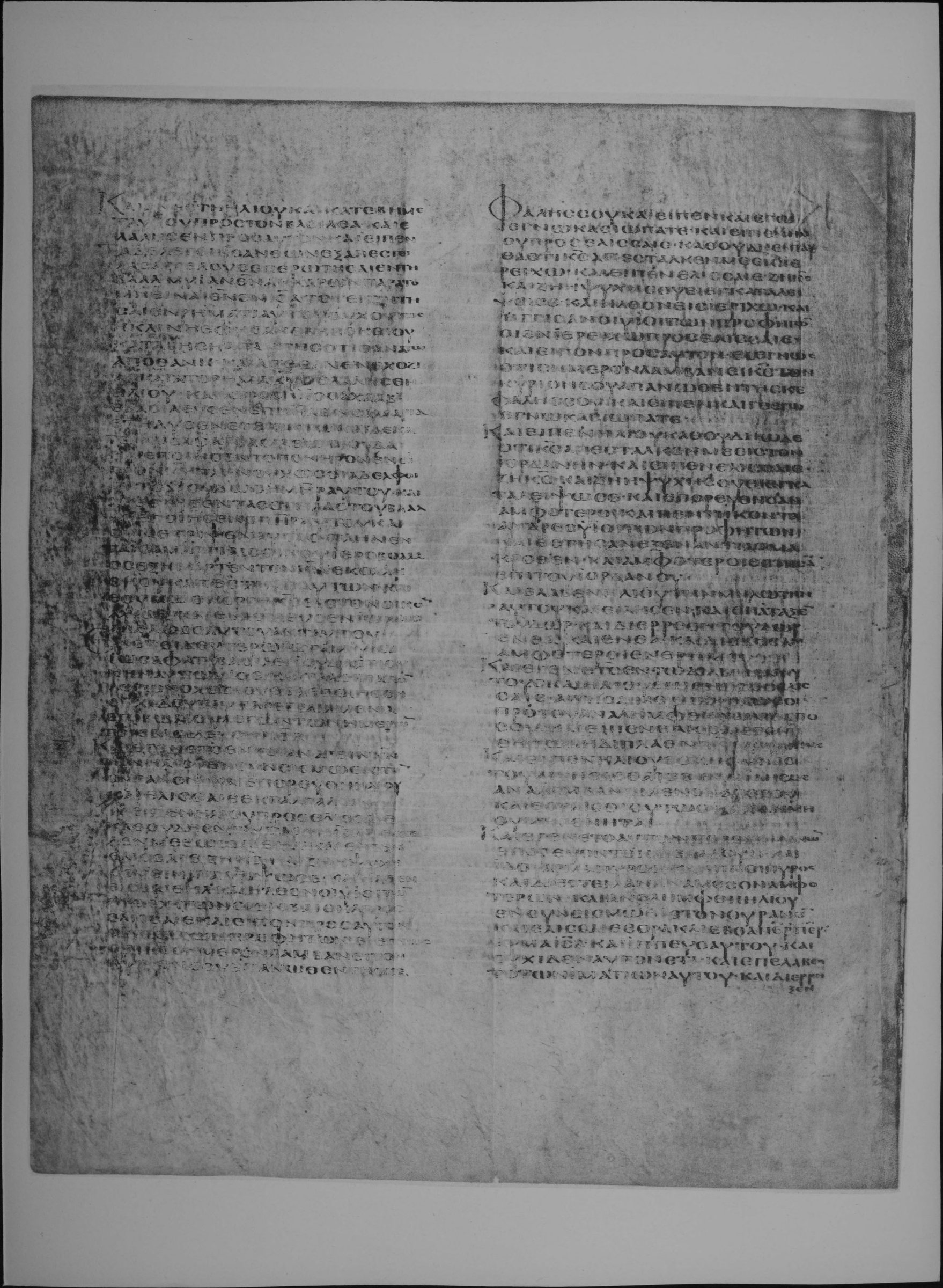
4 Kingdoms (2 Kings) 1:9-15 is on fol. 222r (full-size facsimile of 1879-83, Internet Archive codex-alexandrinus leaf 462). The 1930 reduced facsimile prints beneath this page: 2 Kings i. 1-15. Checked on the plate: the page begins at the start of 4 Kingdoms (2 Kings) 1:1 (first words read: ΚΑΙ ΗΘΕΤΗΣΕΝ ΜΩΑΒ ΕΝ ΙΣΡΑΗΛ ΜΕΤΑ ΤΟ ΑΠΟΘΑΝΕΙΝ ΑΧΑΑΒ ΚΑΙ ΕΠΕΣΕΝ ΟΧΟΖΙΑΣ). 4 Kingdoms (2 Kings) 1:15-18 is on fol. 222v (full-size facsimile of 1879-83, Internet Archive codex-alexandrinus leaf 463). The 1930 reduced facsimile prints beneath this page: 2 Kings i. 15-ii. 12. Checked on the plate: the page begins inside 4 Kingdoms (2 Kings) 1:15 (first words read: ΚΑΙ ΑΝΕΣΤΗ ΗΛΙΟΥ ΚΑΙ ΚΑΤΕΒΗ ΜΕΤ ΑΥΤΟΥ ΠΡΟΣ ΤΟΝ ΒΑΣΙΛΕΑ).
9καὶ ἀπέστειλεν πρὸς αὐτὸν πεντηκόνταρχον καὶ τοὺς πεντήκοντα αὐτοῦ, καὶ ἀνέβη πρὸς αὐτόν· καὶ ἰδοὺ Ἠλειοὺ ἐκάθητο ἐπὶ τῆς κορυφῆς τοῦ ὄρους. καὶ ἐλάλησεν ὁ πεντηκόνταρχος πρὸς αὐτὸν καὶ εἶπεν Ἄνθρωπε τοῦ θεοῦ, ὁ βασιλεὺς ἐκάλεσέν σε, κατάβηθι. 10καὶ ἀπεκρίθη Ἠλειοὺ καὶ εἶπεν πρὸς τὸν πεντηκόνταρχον Καὶ εἰ ἄνθρωπος θεοῦ ἐγώ, καταβήσεται πῦρ ἐκ τοῦ οὐρανοῦ καὶ καταφάγεται σὲ καὶ τοὺς πεντήκοντά σου· καὶ κατέβη πῦρ ἐκ τοῦ οὐρανοῦ καὶ κατέφαγεν αὐτὸν καὶ τοὺς πεντήκοντα αὐτοῦ. 11καὶ προσέθετο ὁ βασιλεὺς καὶ ἀπέστειλεν πρὸς αὐτὸν ἄλλον πεντηκόνταρχον καὶ τοὺς πεντήκοντα αὐτοῦ· καὶ ἐλάλησεν ὁ πεντηκόνταρχος πρὸς αὐτὸν καὶ εἶπεν Ἄνθρωπε τοῦ θεοῦ, τάδε λέγει ὁ βασιλεύς Ταχέως κατάβηθι. 12καὶ ἀπεκρίθη Ἠλειοὺ καὶ ἐλάλησεν πρὸς αὐτὸν καὶ εἶπεν Εἰ ἄνθρωπος θεοῦ ἐγώ, καταβήσεται πῦρ ἐκ τοῦ οὐρανοῦ καὶ καταφάγεταί σε καὶ τοὺς πεντήκοντά σου· καὶ κατέβη πῦρ ἐκ τοῦ οὐρανοῦ καὶ κατέφαγεν αὐτὸν καὶ τοὺς πεντήκοντα αὐτοῦ. 13καὶ προσέθετο ὁ βασιλεὺς ἔτι ἀποστεῖλαι ἡγούμενον καὶ τοὺς πεντήκοντα αὐτοῦ· καὶ ἦλθεν ὁ πεντηκόνταρχος ὁ τρίτος καὶ ἔκαμψεν ἐπὶ τὰ γόνατα αὐτοῦ κατέναντι Ἠλειού, καὶ ἐδεήθη αὐτοῦ καὶ ἐλάλησεν πρὸς αὐτὸν καὶ εἶπεν Ἄνθρωπε τοῦ θεοῦ, ἐντιμωθήτω ἡ ψυχή μου καὶ ἡ ψυχὴ τῶν δούλων σου τούτων ἐν ὀφθαλμοῖς σου· 14ἰδοὺ κατέβη πῦρ ἐκ τοῦ οὐρανοῦ καὶ κατέφαγεν τοὺς δύο πεντηκοντάρχους τοὺς πρώτους· καὶ νῦν ἐντιμωθήτω δὴ ἡ ψυχή μου ἐν ὀφθαλμοῖς σου. 15καὶ ἐλάλησεν ἄγγελος Κυρίου πρὸς Ἠλειοὺ καὶ εἶπεν Κατάβηθι μετ᾽ αὐτοῦ, μὴ φοβηθῇς ἀπὸ προσώπου αὐτῶν· καὶ ἀνέστη Ἠλειοὺ καὶ κατέβη μετ᾽ αὐτοῦ πρὸς τὸν βασιλέα. 16καὶ ἐλάλησεν πρὸς αὐτὸν καὶ εἶπεν Ἠλειού Τάδε λέγει Κύριος Τί ὅτι ἀπέστειλας ζητῆσαι ἐν τῇ Βάαλ μυῖαν θεὸν Ἀκκαρών; οὐχ οὕτως· ἡ κλίνη ἐφ᾽ ἧς ἀνέβης ἐκεῖ οὐ καταβήσῃ ἀπ᾽ αὐτῆς, ὅτι θανάτῳ ἀποθανῇ. 17καὶ ἀπέθανεν κατὰ τὸ ῥῆμα Κυρίου ὃ ἐλάλησεν Ἠλειού. 18καὶ τὰ λοιπὰ τῶν λόγων Ὀχοζείου ἃ ἐποίησεν, οὐκ ἰδοὺ ταῦτα γεγραμμένα ἐπὶ βιβλίῳ λόγων τῶν ἡμερῶν τοῖς βασιλεῦσιν Ἰσραήλ; [1] καὶ Ἰωρὰμ υἱὸς Ἀχαὰβ βασιλεύει ἐπὶ Ἰσραὴλ ἐν Σαμαρείᾳ ἔτη δέκα δύο, ἐν ἔτει ὀκτωκαιδεκάτῳ Ἰωσαφὰθ βασιλέως Ἰούδα. [2] καὶ ἐποίησεν τὸ πονηρὸν ἐνώπιον Κυρίου, πλὴν οὐχ ὡς οἱ ἀδελφοὶ αὐτοῦ οὐδὲ ὡς ἡ μήτηρ αὐτοῦ· [3] καὶ ἀπέστειλεν τὰς στήλας τοῦ Βάαλ ἃς ἐποίησεν ὁ πατὴρ αὐτοῦ καὶ συνέτριψεν αὐτάς· πλὴν ἐν ταῖς ἁμαρτίαις οἴκου Ἰεροβοὰμ ὃς ἐξήμαρτεν τὸν Ἰσραὴλ ἐκολλήθη, οὐκ ἀπέστη ἀπ᾽ αὐτῶν. [4] καὶ ἐθυμώθη ὀργῇ Κύριος εἰς τὸν οἶκον Ἀχαάβ.
9And he sent to him a captain of fifty and his fifty; and he went up to him: and, behold, Eliu sat on the top of a mountain. And the captain of fifty spoke to him, and said, O man of God, the king has called thee, come down. 10And Eliu answered and said to the captain of fifty, And if I am a man of God, fire shall come down out of heaven, and devour thee and thy fifty. And fire came down out of heaven, and devoured him and his fifty. 11And the king sent a second time to him another captain of fifty, and his fifty. And the captain of fifty spoke to him, and said, O man of God, thus says the king, Come down quickly. 12And Eliu answered and spoke to him, and said, If I am a man of God, fire shall come down out of heaven, and devour thee and thy fifty. And fire came down out of heaven, and devoured him and his fifty. 13And the king sent yet again a captain and his fifty. And the third captain of fifty came, and knelt on his knees before Eliu, and entreated him, and spoke to him and said, O man of God, let my life, and the life of these fifty thy servants, be precious in thine eyes. 14Behold, fire came down from heaven, and devoured the two first captains of fifty: and now, I pray, let my life be precious in thine eyes. 15And the angel of the Lord spoke to Eliu, and said, Go down with him, be not afraid of them. And Eliu rose up, and went down with him to the king. 16And Eliu spoke to him, and said, Thus saith the Lord, Why hast thou sent messengers to enquire of Baal fly, the god of Accaron? it shall not be so: the bed on which thou art gone up, thou shalt not come down from it, for thou shalt surely die. 17So he died according to the word of the Lord which Eliu had spoken. 18And the rest of the acts of Ochozias which he did, behold, are they not written in the book of the chronicles of the kings of Israel? And Joram son of Achaab reigns over Israel in Samaria twelve years beginning in the eighteenth year of Josaphat king of Juda: and he did that which was evil in the sight of the Lord, only not as his brethren, nor as his mother: and he removed the pillars of Baal which his father made, and broke them in pieces: only he was joined to the sins of the house of Jeroboam, who led Israel to sin; he departed not from them. And the Lord was very angry with the house of Achaab.
Cite
Sources
- Source: Codex Alexandrinus (British Library Royal MS 1 D. V) via the British Museum photographic facsimiles of 1879-83 and 1930 (Internet Archive) + Swete's Septuagint + Brenton's English (holding institution)
- Critical edition: H. B. Swete, The Old Testament in Greek according to the Septuagint (1909)
← previous · → next · v cycle view · l back to library