4 Kingdoms (2 Kings), Chapter 23 (Codex Alexandrinus)
Introduction
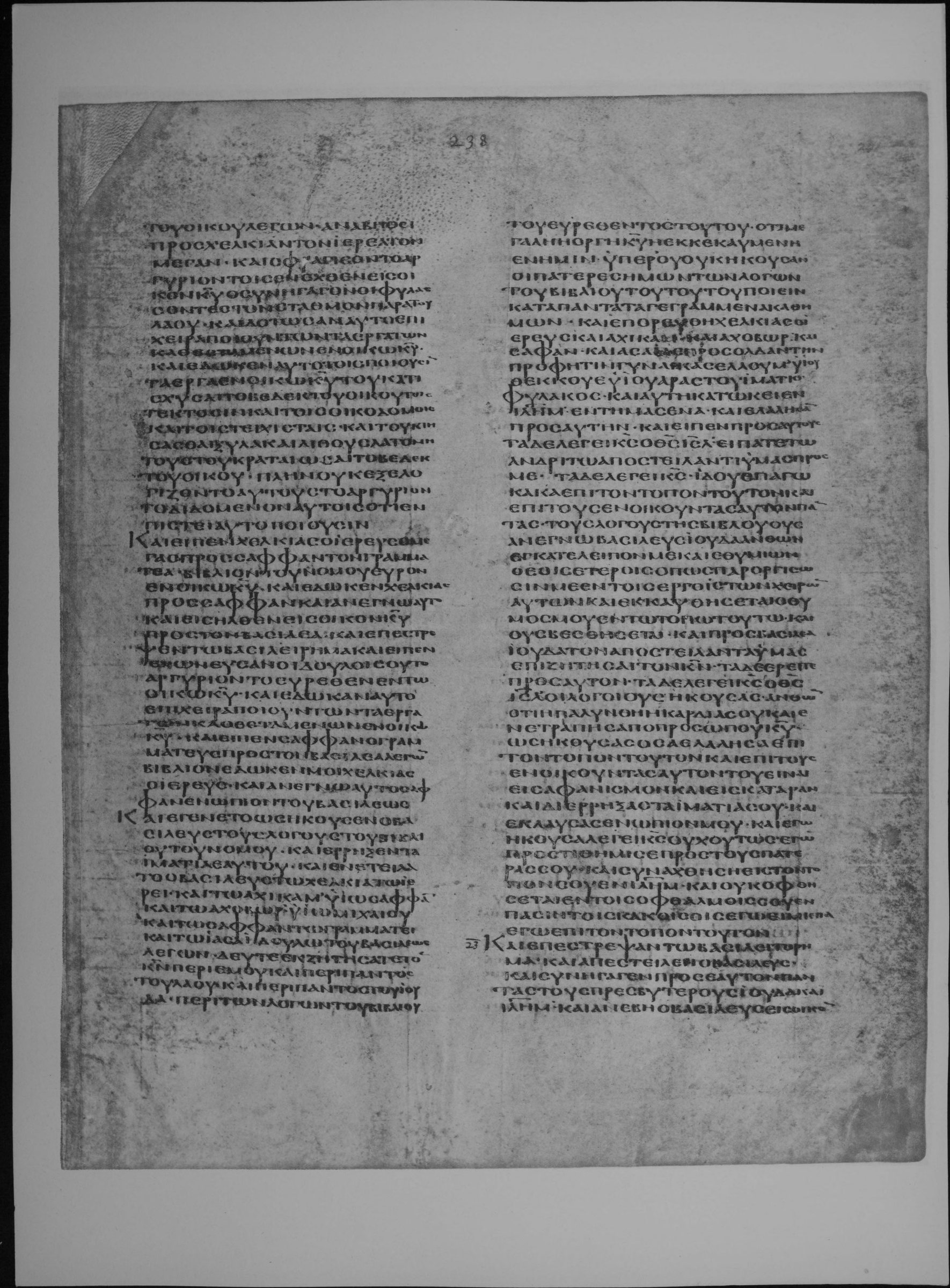
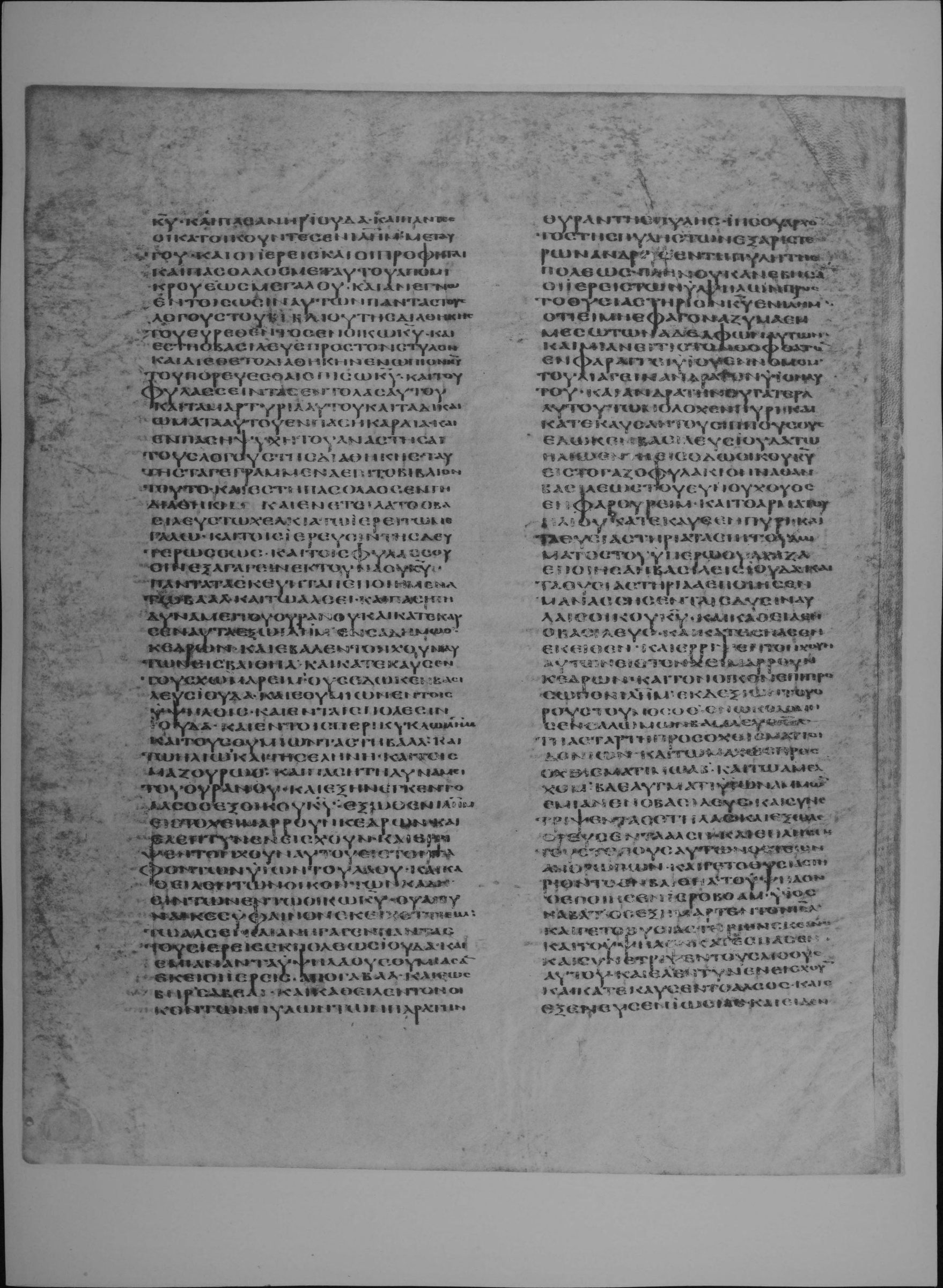
4 Kingdoms (2 Kings) 23 in the Greek Old Testament (the Septuagint) as written in Codex Alexandrinus, a Greek Bible copied in the fifth century, probably in Egypt, and now in the British Library (Royal MS 1 D. V, the first of its four volumes). It is one of the three great early codices of the whole Greek Bible, with Codex Vaticanus and Codex Sinaiticus.
This entry meets the strict three-criteria standard of the Theosis Library:
- Manuscript scan: the pages of Codex Alexandrinus carrying this chapter (fol. 238r, fol. 238v, fol. 239r, fol. 239v), from the full-size photographic (autotype) facsimile published by the British Museum in 1879-1883, as digitised on the Internet Archive. The verse range of every page comes from the reduced photographic facsimile of 1930, which prints it beneath each plate, and the opening words of every page were read on the plate to confirm the page and the verse it begins with. Each section links to the page or pages that hold its verses. Folio numbers are those written at the head of each leaf and visible on the plates.
- Original text: Swete's edition, which here prints the text of Codex Vaticanus (Vat. gr. 1209), the base of his edition, and gives the readings of Alexandrinus only in his apparatus. The Greek column is therefore Vaticanus' text; where Alexandrinus differs, the plate shows what Alexandrinus reads.
- English translation: Sir Lancelot C. L. Brenton, The Septuagint Version of the Old Testament (1844; 1851 edition), a translation of the Greek, public domain, from the eBible.org text.
How was this verified? (Provenance)
Where on the image
4 Kingdoms (2 Kings) 23:1-2 is on fol. 238r (full-size facsimile of 1879-83, Internet Archive codex-alexandrinus leaf 494). The 1930 reduced facsimile prints beneath this page: 2 Kings xxii. 3-xxiii. 2. Checked on the plate: the page begins inside 4 Kingdoms (2 Kings) 22:3 (first words read: ΤΟΥ ΟΙΚΟΥ ΛΕΓΩΝ ΑΝΑΒΗΘΙ ΠΡΟΣ ΧΕΛΚΙΑΝ ΤΟΝ ΙΕΡΕΑ ΤΟΝ ΜΕΓΑΝ ΚΑΙ ΣΦΡΑΓΙΣΟΝ ΤΟ ΑΡΓΥΡΙΟΝ). 4 Kingdoms (2 Kings) 23:2-8 is on fol. 238v (full-size facsimile of 1879-83, Internet Archive codex-alexandrinus leaf 495). The 1930 reduced facsimile prints beneath this page: 2 Kings xxiii. 2-16. Checked on the plate: the page begins inside 4 Kingdoms (2 Kings) 23:2 (first words read: ΚΥ ΚΑΙ ΠΑΣ ΑΝΗΡ ΙΟΥΔΑ ΚΑΙ ΠΑΝΤΕΣ ΟΙ ΚΑΤΟΙΚΟΥΝΤΕΣ ΙΕΡΟΥΣΑΛΗΜ ΜΕΤ ΑΥΤΟΥ ΚΑΙ ΟΙ ΙΕΡΕΙΣ ΚΑΙ ΟΙ ΠΡΟΦΗΤΑΙ).
1Καὶ ἐπέστρεψαν οἱ βασιλεῖς τὸ ῥῆμα· καὶ ἀπέστειλεν ὁ βασιλεὺς καὶ συνήγαγεν πρὸς ἑαυτὸν πάντας τοὺς πρεσβυτέρους Ἰούδα καὶ Ἰερουσαλήμ. 2καὶ ἀνέβη ὁ βασιλεὺς εἰς οἶκον Κυρίου, καὶ πᾶς ἀνὴρ Ἰούδα καὶ οἱ κατοικοῦντες ἐν Ἰερουσαλὴμ μετ᾽ αὐτοῦ καὶ οἱ ἱερεῖς καὶ οἱ προφῆται καὶ πᾶς ὁ λαὸς ἀπὸ μικροῦ καὶ ἕως μεγάλου, καὶ ἀνέγνω ἐνώπιον αὐτῶν πάντας τοὺς λόγους τοῦ βιβλίου τῆς διαθήκης τοῦ εὑρεθέντος ἐν οἴκῳ Κυρίου. 3καὶ ἔστη ὁ βασιλεὺς πρὸς τὸν στύλον, καὶ διέθετο διαθήκην ἐνώπιον Κυρίου, τοῦ πορεύεσθαι ὀπίσω Κυρίου, τοῦ φυλάσσειν τὰς ἐντολὰς αὐτοῦ καὶ τὰ μαρτύρια αὐτοῦ καὶ τὰ δικαιώματα αὐτοῦ ἐν πάσῃ καρδίᾳ καὶ ἐν πάσῃ ψυχῇ, τοῦ ἀναστῆσαι τοὺς λόγους τῆς διαθήκης ταύτης, τὰ γεγραμμένα ἐπὶ τὸ βιβλίον τοῦτο· καὶ ἔστη πᾶς ὁ λαὸς ἐν τῇ διαθήκῃ. 4καὶ ἐνετείλατο ὁ βασιλεὺς τῷ Χελκείᾳ τῷ ἱερεῖ τῷ μεγάλῳ καὶ τοῖς ἱερεῦσιν τῆς δευτερώσεως καὶ τοῖς φυλάσσουσιν τὸν σταθμὸν ἐξαγαγεῖν ἐκ τοῦ ναοῦ Κυρίου πάντα τὰ σκεύη τὰ πεποιημένα τῷ Βάαλ καὶ τῷ ἄλσει καὶ πάσῃ τῇ δυνάμει τοῦ οὐρανοῦ· καὶ κατέκαυσεν αὐτὰ ἔξω Ἰερουσαλὴμ ἐν σαλημὼθ Κεδρών, καὶ ἔλαβεν τὸν χοῦν αὐτῶν εἰς Βαιθήλ. 5καὶ κατέκαυσεν τοὺς χωμαρεὶμ οὓς ἔδωκαν βασιλεῖ Ἰούδα, καὶ ἐθυμίων ἐν τοῖς ὑψηλοῖς καὶ ἐν ταῖς πόλεσιν Ἰούδα καὶ τοῖς περικύκλῳ Ἰερουσαλήμ, καὶ τοὺς θυμιῶντας τῷ Βάαλ καὶ τῷ ἡλίῳ καὶ τῇ σελήνῃ καὶ τοῖς μαζουρὼθ καὶ πάσῃ τῇ δυνάμει τοῦ οὐρανοῦ. 6καὶ ἐξήνεγκεν τὸ ἄλσος ἐξ οἴκου Κυρίου ἔξωθεν Ἰερουσαλὴμ εἰς τὸν χειμάρρουν Κεδρών, καὶ κατέκαυσεν αὐτὸν ἐν τῷ χειμάρρῳ Κεδρὼν καὶ ἐλέπτυνεν εἰς χοῦν, καὶ ἔριψεν τὸν χοῦν αὐτοῦ εἰς τὸν τάφον τῶν υἱῶν τοῦ λαοῦ. 7καὶ καθεῖλεν τὸν οἶκον τῶν καδησεὶμ τῶν ἐν τῷ οἴκῳ Κυρίου, οὗ αἱ γυναῖκες ὕφαινον ἐκεῖ χεττιεὶν τῷ ἄλσει. 8καὶ ἀνήγαγεν πάντας τοὺς ἱερεῖς ἐκ πόλεων Ἰούδα, καὶ ἐμίανεν τὰ ὑψηλὰ οὗ ἐθυμίασαν ἐκεῖ οἱ ἱερεῖς ἀπὸ Γαιβὰλ καὶ ἕως Βηρσάβεε· καὶ καθεῖλεν τὸν οἶκον τῶν πυλῶν τὸν παρὰ τὴν θύραν τῆς πύλης Ἰησοῦ ἄρχοντος τῆς πύλης, τῶν ἐξ ἀριστερῶν ἀνδρὸς ἐν τῇ πύλῃ τῆς πόλεως.
1So they reported the word to the king: and the king sent and gathered all the elders of Juda and Jerusalem to himself. 2And the king went up to the house of the Lord, and every man of Juda and all who dwelt in Jerusalem with him, and the priests, and the prophets, and all the people small and great; and he read in their ears all the words of the book of the covenant that was found in the house of the Lord. 3And the king stood by a pillar, and made a covenant before the Lord, to walk after the Lord, to keep his commandments and his testimonies and his ordinances with all the heart and with all the soul, to confirm the words of this covenant; even the things written in this book. And all the people stood to the covenant. 4And the king commanded Chelcias the high priest, and the priests of the second order, and them that kept the door, to bring out of the temple of the Lord all the vessels that were made for Baal, and for the grove, and all the host of heaven, and he burned them without Jerusalem in the fields of Kedron, and took the ashes of them to Bæthel. 5And he burned the idolatrous priests, whom the kings of Juda had appointed, (and they burned incense in the high places and in the cities of Juda, and the places round about Jerusalem); and them that burned incense to Baal, and to the sun, and to the moon, and to Mazuroth, and to all the host of heaven. 6And he carried out the grove from the house of the Lord to the brook Kedron, and burned it at the brook Kedron, and reduced it to powder, and cast its powder on the sepulchres of the sons of the people. 7And he pulled down the house of the sodomites that were by the house of the Lord, where the women wove tents for the grove. 8And he brought up all the priests from the cities of Juda, and defiled the high places where the priests burned incense, from Gæbal even to Bersabee; and he pulled down the house of the gates that was by the door of the gate of Joshua the ruler of the city, on a man's left hand at the gate of the city.
Where on the image
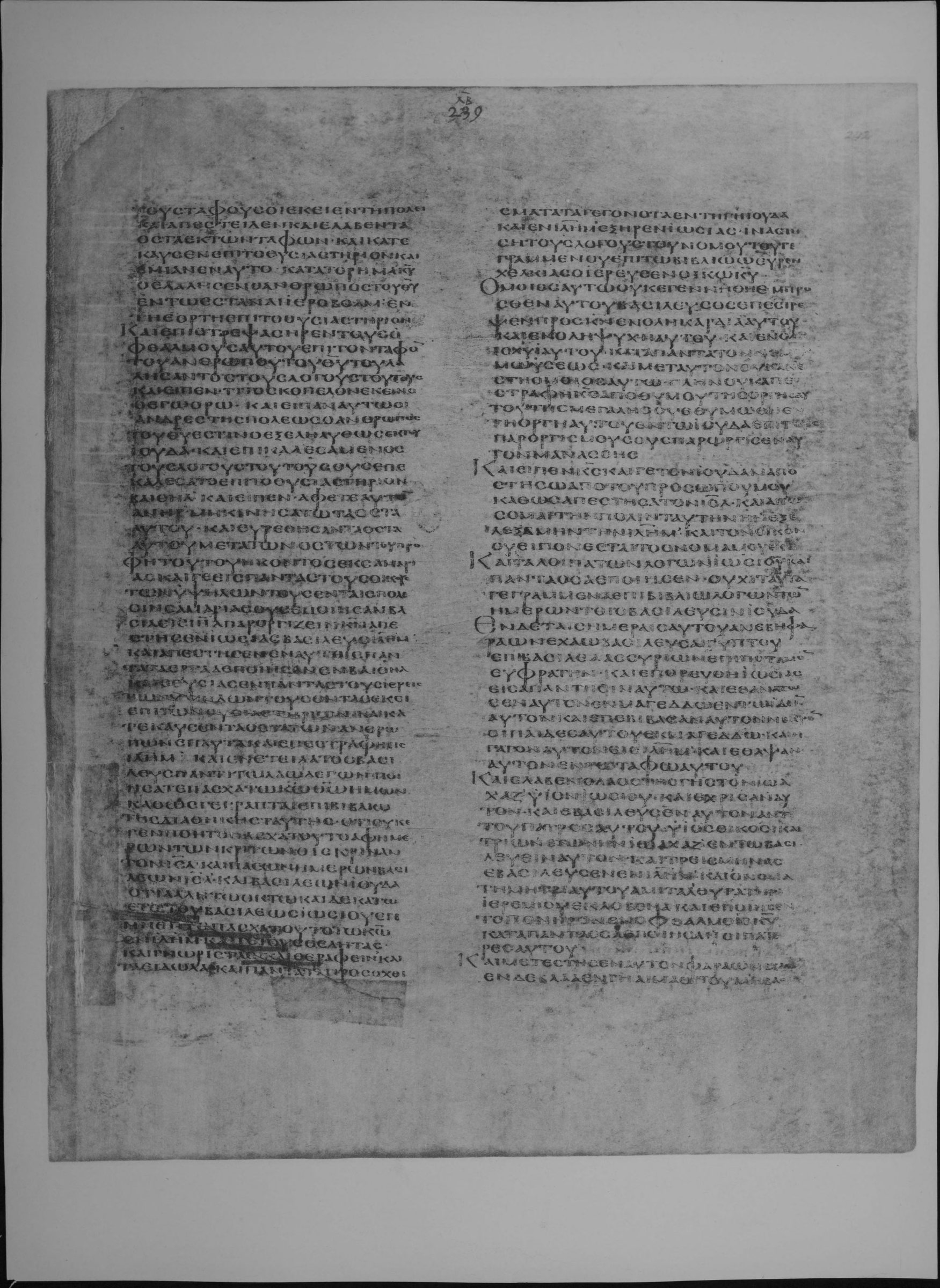
4 Kingdoms (2 Kings) 23:9-16 is on fol. 238v (full-size facsimile of 1879-83, Internet Archive codex-alexandrinus leaf 495). The 1930 reduced facsimile prints beneath this page: 2 Kings xxiii. 2-16. Checked on the plate: the page begins inside 4 Kingdoms (2 Kings) 23:2 (first words read: ΚΥ ΚΑΙ ΠΑΣ ΑΝΗΡ ΙΟΥΔΑ ΚΑΙ ΠΑΝΤΕΣ ΟΙ ΚΑΤΟΙΚΟΥΝΤΕΣ ΙΕΡΟΥΣΑΛΗΜ ΜΕΤ ΑΥΤΟΥ ΚΑΙ ΟΙ ΙΕΡΕΙΣ ΚΑΙ ΟΙ ΠΡΟΦΗΤΑΙ). 4 Kingdoms (2 Kings) 23:16 is on fol. 239r (full-size facsimile of 1879-83, Internet Archive codex-alexandrinus leaf 496). The 1930 reduced facsimile prints beneath this page: 2 Kings xxiii. 16-33. Checked on the plate: the page begins inside 4 Kingdoms (2 Kings) 23:16 (first words read: ΤΟΥΣ ΤΑΦΟΥΣ ΤΟΥΣ ΕΚΕΙ ΕΝ ΤΗ ΠΟΛΕΙ ΚΑΙ ΑΠΕΣΤΕΙΛΕΝ ΚΑΙ ΕΛΑΒΕΝ ΤΑ ΟΣΤΑ ΕΚ ΤΩΝ ΤΑΦΩΝ ΚΑΙ ΚΑΤΕΚΑΥΣΕΝ).
9πλὴν οὐκ ἀνέβησαν οἱ ἱερεῖς τῶν ὑψηλῶν πρὸς τὸ θυσιαστήριον Κυρίου ἐν Ἰερουσαλήμ, ὅτι εἰ μὴ ἔφαγον ἄζυμα ἐν μέσῳ τῶν ἀδελφῶν αὐτῶν. 10καὶ μιανεῖτε τὸν Τάφεθ ἐν φάραγγι υἱοῦ Ἑννόμ, τοῦ διαγαγεῖν ἄνδρα τὸν υἱὸν αὐτοῦ καὶ ἄνδρα τὴν θυγατέρα αὐτοῦ τῷ Μόλοχ ἐν πυρί. 11καὶ κατέκαυσεν τοὺς ἵππους οὓς ἔδωκαν βασιλεῖς Ἰούδα τῷ ἡλίῳ ἐν τῇ εἰσόδῳ οἴκου Κυρίου εἰς τὸ γαζοφυλάκιον Ναθὰν βασιλέως τοῦ εὐνούχου ἐν φαρουρείμ· καὶ τὸ ἅρμα τοῦ ἡλίου κατέκαυσεν πυρί. 12καὶ τὰ θυσιαστήρια τὰ ἐπὶ τοῦ δώματος τοῦ ὑπερῴου Ἀχάζ, ἃ ἐποίησεν βασιλεὺς Ἰούδα, καὶ τὰ θυσιαστήρια ἃ ἐποίησεν Μανασσῆς ἐν ταῖς δυσὶν αὐλαῖς οἴκου Κυρίου, καὶ καθεῖλεν ὁ βασιλεὺς καὶ κατέσπασεν ἐκεῖθεν, καὶ ἔρριψεν τὸν χοῦν αὐτῶν εἰς τὸν χειμάρρουν Κεδρών. 13καὶ τὸν οἶκον τὸν ἐπὶ πρόσωπον Ἰερουσαλὴμ τὸν ἐκ δεξιῶν τοῦ ὄρους τοῦ Μοσοάθ, ὃν ᾠκοδόμησεν Σαλωμὼν βασιλεὺς Ἰσραὴλ τῇ Ἀστάρτῃ προσοχθίσματι Σιδωνίων καὶ τῷ Χαμὼς προσοχθίσματι Μωὰβ καὶ τῷ Μολχὸλ βδελύγματι υἱῶν Ἀμμών, ἐμίανεν ὁ βασιλεύς. 14καὶ συνέτριψεν τὰς στήλας καὶ ἐξωλέθρευσεν τὰ ἄλση καὶ ἔπλησεν τοὺς τόπους αὐτῶν ὀστέων ἀνθρώπων. 15Καί γε τὸ θυσιαστήριον τὸ ἐν Βαιθὴλ τὸ ὑψηλὸν ὃ ἐποίησεν Ἰεροβοὰμ υἱὸς Ναβὰτ ὃς ἐξήμαρτεν τὸν Ἰσραήλ, καί γε τὸ θυσιαστήριον ἐκεῖνο τὸ ὑψηλὸν κατέσπασεν, καὶ συνέτριψεν τοὺς λίθους αὐτοῦ καὶ ἐλέπτυνεν εἰς χοῦν, καὶ κατέκαυσεν τὸ ἄλσος. 16καὶ ἐξένευσεν Ἰωσείας καὶ εἶδεν τοὺς τάφους ἐκεῖ ἐν τῇ πόλει, καὶ ἀπέστειλεν καὶ ἔλαβεν τὰ ὀστᾶ ἐκ τῶν τάφων καὶ κατέκαυσεν ἐπὶ τὸ θυσιαστήριον, καὶ ἐμίανεν αὐτὸ κατὰ τὸ ῥῆμα Κυρίου ὃ ἐλάλησεν ὁ ἄνθρωπος τοῦ θεοῦ ἐν τῷ ἑστάναι Ἰεροβοὰμ ἐν τῇ ἑορτῇ ἐπὶ τὸ θυσιαστήριον. καὶ ἐπιστρέψας ἦρεν τοὺς ὀφθαλμοὺς αὐτοῦ ἐπὶ τὸν τάφον τοῦ ἀνθρώπου τοῦ θεοῦ τοῦ λαλήσαντος τοὺς λόγους τούτους,
9Only the priests of the high places went not up to the altar of the Lord in Jerusalem, for they only ate leavened bread in the midst of their brethren. 10And he defiled Tapheth which is in the valley of the son of Ennom, constructed for a man to cause his son or his daughter to pass through fire to Moloch. 11And he burned the horses which the kings of Juda had given to the sun in the entrance of the house of the Lord, by the treasury of Nathan the king's eunuch, in the suburbs; and he burned the chariot of the sun with fire. 12And the altars that were on the roof of the upper chamber of Achaz, which the kings of Juda had made, and the altars which Manasses had made in the two courts of the house of the Lord, did the king pull down and forcibly remove from thence, and cast their dust into the brook of Kedron. 13And the king defiled the house that was before Jerusalem, on the right hand of the mount of Mosthath, which Solomon king of Israel built to Astarte the abomination of the Sidonians, and to Chamos the abomination of Moab, and to Moloch the abomination of the children of Ammon. 14And he broke in pieces the pillars, and utterly destroyed the groves, and filled their places with the bones of men. 15Also the high altar in Bæthel, which Jeroboam the son of Nabat, who made Israel to sin, had made, even that high altar he tore down, and broke in pieces the stones of it, and reduced it to powder, and burnt the grove. 16And Josias turned aside, and saw the tombs that were there in the city, and sent, and took the bones out of the tombs, and burnt them on the altar, and defiled it, according to the word of the Lord which the man of God spoke, when Jeroboam stood by the altar at the feast: and he turned and raised his eyes to the tomb of the man of God that spoke these words.
Where on the image
4 Kingdoms (2 Kings) 23:17-24 is on fol. 239r (full-size facsimile of 1879-83, Internet Archive codex-alexandrinus leaf 496). The 1930 reduced facsimile prints beneath this page: 2 Kings xxiii. 16-33. Checked on the plate: the page begins inside 4 Kingdoms (2 Kings) 23:16 (first words read: ΤΟΥΣ ΤΑΦΟΥΣ ΤΟΥΣ ΕΚΕΙ ΕΝ ΤΗ ΠΟΛΕΙ ΚΑΙ ΑΠΕΣΤΕΙΛΕΝ ΚΑΙ ΕΛΑΒΕΝ ΤΑ ΟΣΤΑ ΕΚ ΤΩΝ ΤΑΦΩΝ ΚΑΙ ΚΑΤΕΚΑΥΣΕΝ).
17καὶ εἶπεν Τί τὸ σκόπελον ἐκεῖνο ὃ ἐγὼ ὁρῶ; καὶ εἶπον αὐτῷ οἱ ἄνδρες τῆς πόλεως Ὁ ἄνθρωπος τοῦ θεοῦ ὁ ἐξεληλυθὼς ἐξ Ἰούδα καὶ ἐπικαλεσάμενος τοὺς λόγους τούτους οὓς ἐπεκαλέσατο ἐπὶ τὸ θυσιαστήριον Βαιθήλ. 18καὶ εἶπεν Ἄφετε αὐτό, ἀνὴρ μὴ κινησάτωσαν τὰ ὀστᾶ αὐτοῦ· καὶ ἐρύσθησαν τὰ ὀστᾶ αὐτοῦ μετὰ τῶν ὀστῶν τοῦ προφήτου τοῦ ἥκοντος ἐκ Σαμαρείας. 19καί γε πάντας τοὺς οἴκους τῶν ὑψηλῶν τοὺς ἐν ταῖς πόλεσιν Σαμαρείας, οὓς ἐποίησαν βασιλεῖς Ἰσραὴλ παροργίζειν Κύριον, ἀπέστησεν Ἰωσείας, καὶ ἐποίησεν ἐν αὐτοῖς πάντα τὰ ἔργα ἃ ἐποίησεν ἐν Βαιθήλ. 20καὶ ἐθυσίασεν πάντας τοὺς ἱερεῖς τῶν ὑψηλῶν τοὺς ὄντας ἐκεῖ ἐπὶ τῶν θυσιαστηρίων, καὶ κατέκαυσεν τὰ ὀστᾶ τῶν ἀνθρώπων ἐπ᾽ αὐτά, καὶ ἐπεστράφη εἰς Ἰερουσαλήμ. 21Καὶ ἐνετείλατο ὁ βασιλεὺς παντὶ τῷ λαῷ λέγων Ποιήσατε πάσχα τῷ κυρίῳ θεῷ ἡμῶν, καθὼς γέγραπται ἐπὶ βιβλίου τῆς διαθήκης ταύτης. 22ὅτι οὐκ ἐγενήθη τὸ πάσχα τοῦτο ἀφ᾽ ἡμερῶν τῶν κριτῶν οἳ ἔκρινον τὸν Ἰσραὴλ καὶ πάσας τὰς ἡμέρας βασιλέων Ἰσραὴλ καὶ βασιλέων Ἰούδα· 23ὅτι ἀλλ᾽ ἢ τῷ ὀκτωκαιδεκάτῳ ἔτει τοῦ βασιλέως Ἰωσεία ἐγενήθη τὸ πάσχα τῷ κυρίῳ ἐν Ἰερουσαλήμ. 24καί γε τοὺς θελητὰς καὶ τοὺς γνωριστὰς καὶ τὰ θεραφεὶν καὶ τὰ εἴδωλα καὶ πάντα τὰ προσοχθίσματα τὰ γεγονότα ἐν γῇ Ἰούδα καὶ ἐν Ἰερουσαλὴμ ἐξῆρεν Ἰωσείας, ἵνα στήσῃ τοὺς λόγους τοῦ νόμου τοὺς γεγραμμένους ἐπὶ τῷ βιβλίῳ οὗ εὗρεν Χελκείας ὁ ἱερεὺς ἐν οἴκῳ Κυρίου.
17And he said, What is that mound which I see? And the men of the city said to him, It is the grave of the man of God that came out of Juda, and uttered these imprecations which he imprecated upon the altar of Bæthel. 18And he said, Let him alone; let no one disturb his bones. So his bones were spared, together with the bones of the prophet that came out of Samaria. 19Moreover Josias removed all the houses of the high places that were in the cities of Samaria, which the kings of Israel made to provoke the Lord, and did to them all that he did in Bæthel. 20And he sacrificed all the priests of the high places that were there on the altars, and burnt the bones of men upon them, and returned to Jerusalem. 21And the king commanded all the people, saying, Keep the passover to the Lord your God, as it is written in the book of this covenant. 22For a passover such as this had not been kept from the days of the judges who judged Israel, even all the days of the kings of Israel, and of the kings of Juda. 23But in the eighteenth year of king Josias, was the passover kept to the Lord in Jerusalem. 24Moreover Josias removed the sorcerers, and the wizards, and the theraphin, and the idols, and all the abominations that had been set up in the land of Juda and in Jerusalem, that he might keep the words of the law that were written in the book, which Chelcias the priest found in the house of the Lord.
Where on the image
4 Kingdoms (2 Kings) 23:25-32 is on fol. 239r (full-size facsimile of 1879-83, Internet Archive codex-alexandrinus leaf 496). The 1930 reduced facsimile prints beneath this page: 2 Kings xxiii. 16-33. Checked on the plate: the page begins inside 4 Kingdoms (2 Kings) 23:16 (first words read: ΤΟΥΣ ΤΑΦΟΥΣ ΤΟΥΣ ΕΚΕΙ ΕΝ ΤΗ ΠΟΛΕΙ ΚΑΙ ΑΠΕΣΤΕΙΛΕΝ ΚΑΙ ΕΛΑΒΕΝ ΤΑ ΟΣΤΑ ΕΚ ΤΩΝ ΤΑΦΩΝ ΚΑΙ ΚΑΤΕΚΑΥΣΕΝ).
25ὅμοιος αὐτῷ οὐκ ἐγενήθη ἔμπροσθεν αὐτοῦ βασιλεὺς ὃς ἐπέστρεψεν πρὸς Κύριον ἐν ὅλῃ καρδίᾳ αὐτοῦ καὶ ἐν ὅλῃ ἰσχύι αὐτοῦ καὶ ἐν ὅλῃ ψυχῇ αὐτοῦ κατὰ πάντα τὸν νόμον Μωυσῆ, καὶ μετ᾽ αὐτὸν οὐκ ἀνέστη ὅμοιος αὐτῷ. 26πλὴν οὐκ ἀπεστράφη Κύριος ἀπὸ θυμοῦ τῆς ὀργῆς αὐτοῦ τοῦ μεγάλου οὗ ἐθυμώθη ὀργῇ αὐτοῦ ἐν τῷ Ἰούδᾳ ἐπὶ τοὺς παροργισμοὺς οὓς παρώργισεν αὐτὸν Μανασσῆς. 27καὶ εἶπεν Κύριος Καί γε τὸν Ἰουδὰ ἀποστήσω ἀπὸ τοῦ προσώπου αὐτοῦ, καθὼς ἀπέστησα τὸν Ἰσραήλ, καὶ ἀπεώσομαι τὴν πόλιν ταύτην ἣν ἐξελεξάμην, τὴν Ἰερουσαλήμ, καὶ τὸν οἶκον οὗ εἶπον Ἔσται τὸ ὄνομά μου ἐκεῖ. 28καὶ τὰ λοιπὰ τῶν λόγων Ἰωσείου καὶ πάντα ὅσα ἐποίησεν, οὐχὶ ταῦτα γεγραμμένα ἐπὶ βιβλίῳ λόγων τῶν ἡμερῶν τοῖς βασιλεῦσιν Ἰούδα; 29ἐν δὲ ταῖς ἡμέραις αὐτοῦ ἀνέβη Φαραὼ Νεχαὼ βασιλεὺς Αἰγύπτου ἐπὶ βασιλέα Ἀσσυρίων ἐπὶ ποταμὸν Εὐφράτην, καὶ ἐπορεύθη Ἰωσείας εἰς ἀπαντὴν αὐτοῦ· καὶ ἐθανάτωσεν αὐτὸν Νεχαὼ ἐν Μαγεδὼ ἐν τῷ ἰδεῖν αὐτόν. 30καὶ ἐπεβίβασαν αὐτὸν οἱ παῖδες αὐτοῦ νεκρὸν ἐκ Μακεδών, καὶ ἤγαγον αὐτὸν εἰς Ἰερουσαλήμ, καὶ ἔθαψαν αὐτὸν ἐν τῷ τάφῳ αὐτοῦ· καὶ ἔλαβεν ὁ λαὸς τῆς γῆς τὸν Ἰωαχὰς υἱὸν Ἰωσείου καὶ ἔχρισαν αὐτόν, καὶ ἐβασίλευσαν αὐτὸν ἀντὶ τοῦ πατρὸς αὐτοῦ. 31Υἱὸς εἴκοσι καὶ τριῶν ἐτῶν ἦν Ἰωαχὰς ἐν τῷ βασιλεύειν αὐτόν, καὶ τρίμηνον ἐβασίλευσεν ἐν Ἰερουσαλήμ, καὶ ὄνομα τῇ μητρὶ αὐτοῦ Ἁμειταί, θυγάτηρ Ἰερεμίου ἐκ Λημνά. 32καὶ ἐποίησεν τὸ πονηρὸν ἐν ὀφθαλμοῖς Κυρίου κατὰ πάντα ὅσα ἐποίησαν οἱ πατέρες αὐτοῦ.
25There was no king like him before him, who turned to the Lord with all his heart, and with all his soul, and with all his strength, according to all the law of Moses; and after him there rose not one like him. 26Nevertheless the Lord turned not from the fierceness of his great anger, wherewith he was wroth in his anger against Juda, because of the provocations, wherewith Manasses provoked him. 27And the Lord said, I will also remove Juda from my presence, as I removed Israel, and will reject this city which I have chosen, even Jerusalem, and the house of which I said, My name shall be there. 28And the rest of the acts of Josias, and all that he did, are not these things written in the book of the chronicles of the kings of Juda? 29And in his days went up Pharao Nechao king of Egypt against the king of the Assyrians to the river Euphrates: and Josias went out to meet him: and Nechao slew him in Mageddo when he saw him. 30And his servants carried him dead from Mageddo, and brought him to Jerusalem, and buried him in his sepulchre: and the people of the land took Joachaz the son of Josias, and anointed him, and made him king in the room of his father. 31Twenty and three years old was Joachaz when he began to reign, and he reigned three months in Jerusalem: and his mother's name was Amital, daughter of Jeremias of Lobna. 32And he did that which was evil in the sight of the Lord, according to all that his fathers did.
Where on the image
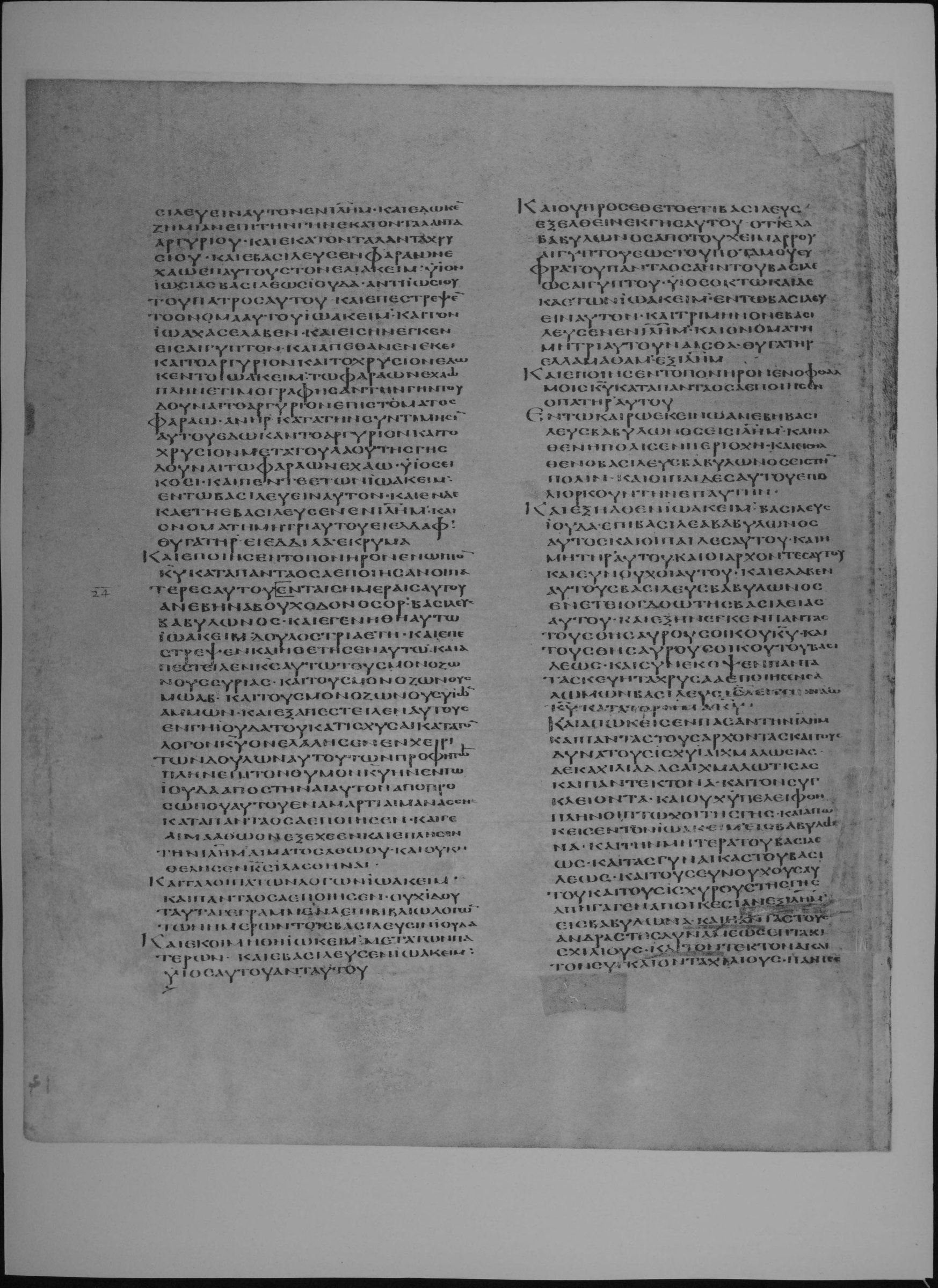
4 Kingdoms (2 Kings) 23:33 is on fol. 239r (full-size facsimile of 1879-83, Internet Archive codex-alexandrinus leaf 496). The 1930 reduced facsimile prints beneath this page: 2 Kings xxiii. 16-33. Checked on the plate: the page begins inside 4 Kingdoms (2 Kings) 23:16 (first words read: ΤΟΥΣ ΤΑΦΟΥΣ ΤΟΥΣ ΕΚΕΙ ΕΝ ΤΗ ΠΟΛΕΙ ΚΑΙ ΑΠΕΣΤΕΙΛΕΝ ΚΑΙ ΕΛΑΒΕΝ ΤΑ ΟΣΤΑ ΕΚ ΤΩΝ ΤΑΦΩΝ ΚΑΙ ΚΑΤΕΚΑΥΣΕΝ). 4 Kingdoms (2 Kings) 23:33-37 is on fol. 239v (full-size facsimile of 1879-83, Internet Archive codex-alexandrinus leaf 497). The 1930 reduced facsimile prints beneath this page: 2 Kings xxiii. 33-xxiv. 16. Checked on the plate: the page begins inside 4 Kingdoms (2 Kings) 23:33 (first words read: ΒΑΣΙΛΕΥΕΙΝ ΑΥΤΟΝ ΕΝ ΙΕΡΟΥΣΑΛΗΜ ΚΑΙ ΕΔΩΚΕ ΖΗΜΙΑΝ ΕΠΙ ΤΗΝ ΓΗΝ ΕΚΑΤΟΝ ΤΑΛΑΝΤΑ ΑΡΓΥΡΙΟΥ).
33καὶ μετέστησεν αὐτὸν Φαραὼ Νεχαὼ ἐν Ἀβλαὰ ἐν γῇ Ἑμὰτ τοῦ μὴ βασιλεύειν ἐν Ἰερουσαλήμ, καὶ ἔδωκεν ἑκατὸν τάλαντα ἀργυρίου καὶ ἑκατὸν τάλαντα χρυσίου. 34καὶ ἐβασίλευσεν Θαραὼ Νεχαὼ ἐπ᾽ αὐτοὺς τὸν Ἐλιακεὶμ υἱὸν Ἰωσείου βασιλέως Ἰούδα ἀντὶ Ἰωσείου τοῦ πατρὸς αὐτοῦ, καὶ ἐπέστρεψεν τὸ ὄνομα αὐτοῦ Ἰωακείμ· καὶ τὸν Ἰωαχὰς ἔλαβεν καὶ εἰσήνεγκεν εἰς Αἴγυπτον, καὶ ἀπέθανεν ἐκεῖ. 35καὶ τὸ ἀργύριον καὶ τὸ χρυσίον ἔδωκεν Ἰωακεὶμ τῷ Φαραώ· πλὴν ἐτιμογράφησαν γὴν γῆν τοῦ δοῦναι τὸ ἀργύριον ἐπὶ στόματος Θαραώ· ἀνὴρ κατὰ τὴν γῆν τοῦ δοῦναι τὸ ἀργύριον ἐπὶ στόματος Θαραώ· ἀνὴρ κατὰ τὴν συντίμησιν αὐτοῦ ἔδωκαν τὸ ἀργύριον καὶ τὸ χρυσίον μετὰ τοῦ λαοῦ τῆς γῆς, δοῦναι τῷ Θαραὼ Νεχαώ. 36Υἱὸς εἴκοσι καὶ πέντε ἐτῶν Ἰωακεὶμ ἐν τῷ βασιλεύειν αὐτόν, καὶ ἕνδεκα ἔτη ἐβασίλευσεν ἐν Ἰερουσαλήμ, καὶ ὄνομα τῇ μητρὶ αὐτοῦ Ἰελλὰ θυγάτηρ Ἐδεὶλ ἐκ Κρουμά. 37καὶ ἐποίησεν τὸ πονηρὸν ἐν ὀφθαλμοῖς Κυρίου κατὰ πάντα ὅσα ἐποίησαν οἱ πατέρες αὐτοῦ.
33And Pharao Nechao removed him to Rablaam in the land of Emath, so that he should not reign in Jerusalem; and imposed a tribute on the land, a hundred talents of silver, and a hundred talents of gold. 34And Pharao Nechao made Eliakim son of Josias king of Juda king over them in the place of his father Josias, and he changed his name to Joakim, and he took Joachaz and brought him to Egypt, and he died there. 35And Joakim gave the silver and the gold to Pharao; but he assessed the land to give the money at the command of Pharao: they gave the silver and the gold each man according to his assessment together with the people of the land to give to Pharao Nechao. 36Twenty-five years old was Joakim when he began to reign, and he reigned eleven years in Jerusalem: and his mother's name was Jeldaph, daughter of Phadaïl of Ruma. 37And he did that which was evil in the eyes of the Lord, according to all that his fathers had done.
Cite
Sources
- Source: Codex Alexandrinus (British Library Royal MS 1 D. V) via the British Museum photographic facsimiles of 1879-83 and 1930 (Internet Archive) + Swete's Septuagint + Brenton's English (holding institution)
- Critical edition: H. B. Swete, The Old Testament in Greek according to the Septuagint (1909)
← previous · → next · v cycle view · l back to library