Baruch, Chapter 4 (Codex Alexandrinus)
Introduction
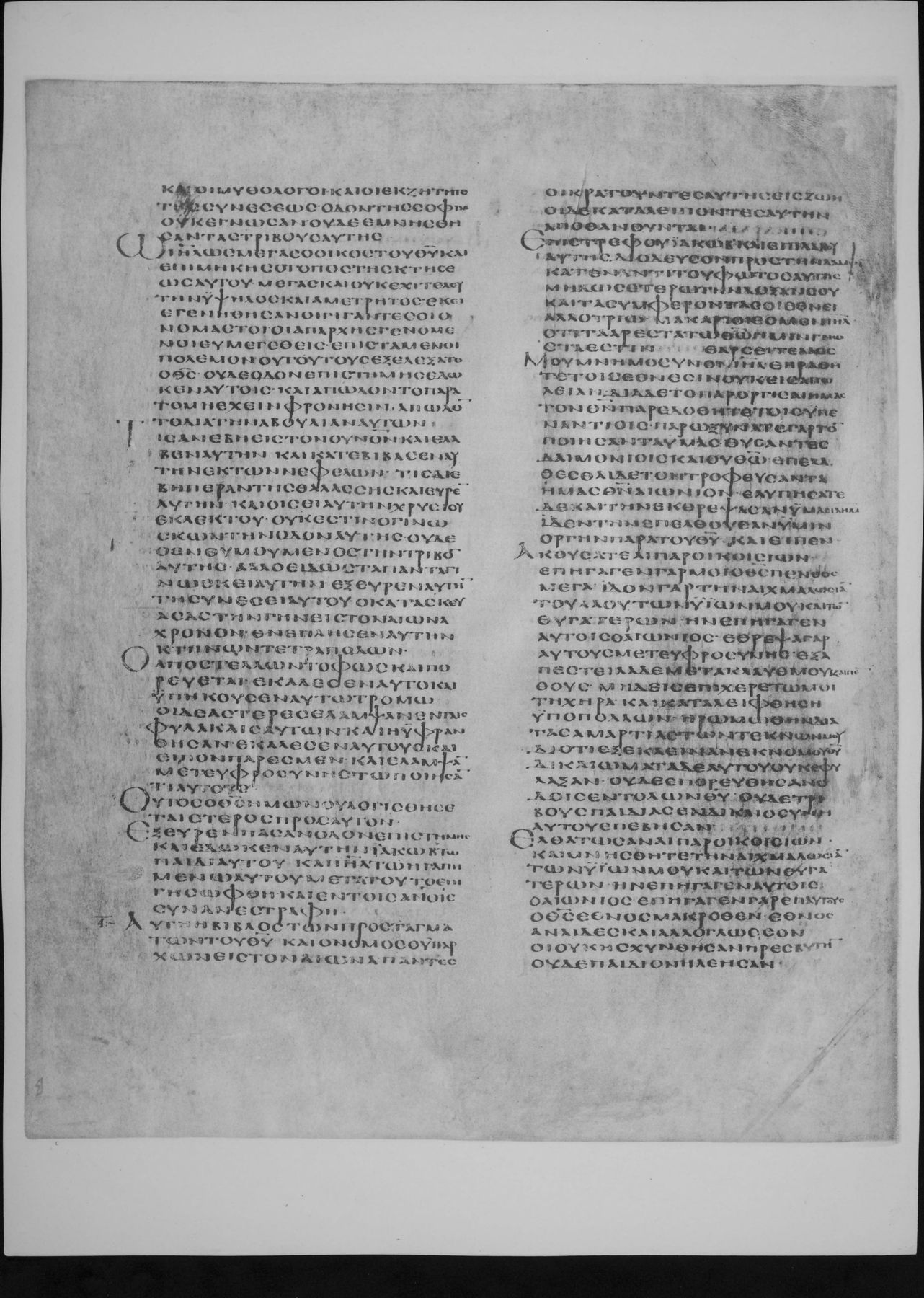
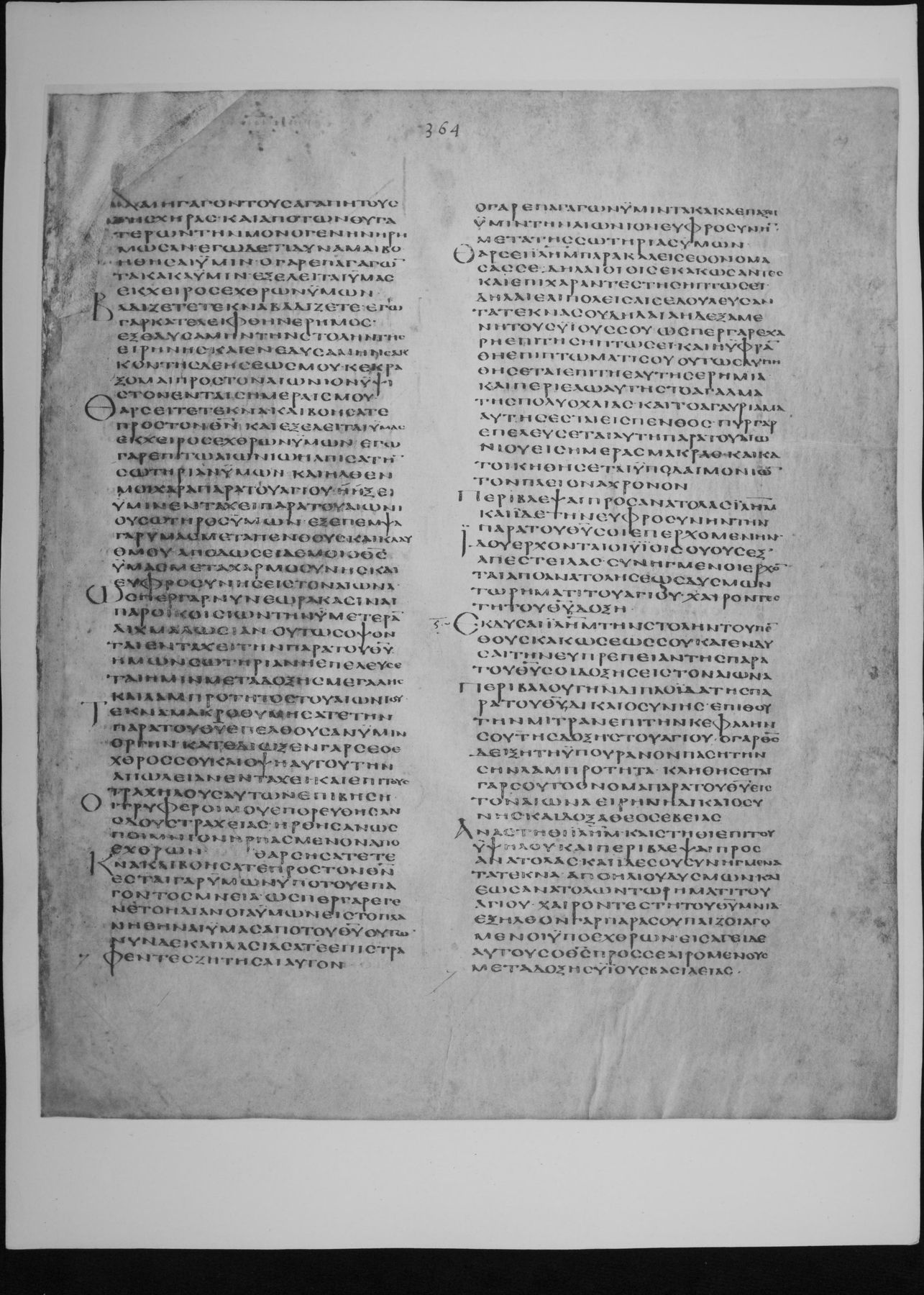
Baruch 4 in the Greek Old Testament (the Septuagint) as written in Codex Alexandrinus, a Greek Bible copied in the fifth century, probably in Egypt, and now in the British Library (Royal MS 1 D. VI, the second of its four volumes). It is one of the three great early codices of the whole Greek Bible, with Codex Vaticanus and Codex Sinaiticus.
This entry meets the strict three-criteria standard of the Theosis Library:
- Manuscript scan: the pages of Codex Alexandrinus carrying this chapter (fol. 363v, fol. 364r), from the full-size photographic (autotype) facsimile published by the British Museum in 1879-1883, as digitised on the Internet Archive. The verse range of every page comes from the reduced photographic facsimile of 1936, which prints it beneath each plate, and the opening words of every page were read on the plate to confirm the page and the verse it begins with. Each section links to the page or pages that hold its verses. Folio numbers are those written at the head of each leaf and visible on the plates.
- Original text: Swete's edition, which here prints the text of Codex Vaticanus (Vat. gr. 1209), the base of his edition, and gives the readings of Alexandrinus only in his apparatus. The Greek column is therefore Vaticanus' text; where Alexandrinus differs, the plate shows what Alexandrinus reads.
- English translation: Sir Lancelot C. L. Brenton, The Septuagint Version of the Old Testament (1844; 1851 edition), a translation of the Greek, public domain, from the eBible.org text.
How was this verified? (Provenance)
Where on the image
Baruch 4:1-8 is on fol. 363v (full-size facsimile of 1879-83, Internet Archive codex-alexandrinus leaf 751). The 1936 reduced facsimile prints beneath this page: Bar. iii. 23-iv. 15. Checked on the plate: the page begins inside Baruch 3:23 (first words read: ΚΑΙ ΟΙ ΜΥΘΟΛΟΓΟΙ ΚΑΙ ΟΙ ΕΚΖΗΤΗΤΑΙ ΤΗΣ ΣΥΝΕΣΕΩΣ ΟΔΟΝ ΤΗΣ ΣΟΦΙΑΣ).
1Αὕτη ἡ βίβλος τῶν προσταγμάτων τοῦ θεοῦ, καὶ ὁ νόμος ὁ ὑπάρχων εἰς τὸν αἰῶνα· πάντες οἱ κρατοῦντες αὐτήν, εἰς ζωήν· οἱ δὲ καταλείποντες αὐτὴν ἀποθανοῦνται. 2ἐπιστρέφου, Ἰακώβ, καὶ ἐπιλαβοῦ αὐτῆς, διόδευσον πρὸς τὴν λάμψιν κατέναντι τοῦ φωτὸς αὐτῆς. 3μὴ δῷς ἑτέρῳ τὴν δόξαν σου, καὶ τὰ συμφέροντά σοι ἔθνει ἀλλοτρίῳ. 4μακάριοί ἐσμεν, Ἰσραήλ, ὅτι τὰ ἀρεστὰ τοῦ θεοῦ ἡμῖν γνωστά ἐστιν. 5Θαρσεῖτε, λαός μου, μνημόσυνον Ἰσραήλ. 6ἐπράθητε τοῖς ἔθνεσιν οὐκ εἰς ἀπώλειαν, διὰ δὲ τὸ παροργίσαι ὑμᾶς τὸν θεόν, παρεδόθητε τοῖς ὑπεναντίοις. 7παροξύνατε γὰρ τὸν ποιήσαντα ὑμᾶς θύσαντες δαιμονίοις καὶ οὐ θεῷ. 8ἐπελάθεσθε τὸν τροφεύσαντα ὑμᾶς θεὸν αἰώνιον, ἐλυπήσατε δὴ καὶ τὴν ἐκθρέψασαν ὑμᾶς Ἰερουσαλήμ.
1This is the book of the commandments of God, and the law that endureth for ever: all they that keep it shall come to life; but such as leave it shall die. 2Turn thee, O Jacob, and take hold of it: walk in the presence of the light thereof, that thou mayest be illuminated. 3Give not thine honour to another, nor the things that are profitable unto thee to a strange nation. 4O Israel, happy are we: for things that are pleasing to God are made known unto us. 5Be of good cheer, my people, the memorial of Israel. 6Ye were sold to the nations, not for [your] destruction: but because ye moved God to wrath, ye were delivered unto the enemies. 7For ye provoked him that made you by sacrificing unto devils and not to God. 8Ye have forgotten the everlasting God, that brought you up; and ye have grieved Jerusalem, that nursed you.
Where on the image
Baruch 4:9-15 is on fol. 363v (full-size facsimile of 1879-83, Internet Archive codex-alexandrinus leaf 751). The 1936 reduced facsimile prints beneath this page: Bar. iii. 23-iv. 15. Checked on the plate: the page begins inside Baruch 3:23 (first words read: ΚΑΙ ΟΙ ΜΥΘΟΛΟΓΟΙ ΚΑΙ ΟΙ ΕΚΖΗΤΗΤΑΙ ΤΗΣ ΣΥΝΕΣΕΩΣ ΟΔΟΝ ΤΗΣ ΣΟΦΙΑΣ). Baruch 4:16 is on fol. 364r (full-size facsimile of 1879-83, Internet Archive codex-alexandrinus leaf 752). The 1936 reduced facsimile prints beneath this page: Bar. iv. 16-v. 6. Checked on the plate: the page begins at the start of Baruch 4:16 (first words read: ΚΑΙ ΗΓΑΓΟΝ ΤΟΥΣ ΑΓΑΠΗΤΟΥΣ ΤΗΣ ΧΗΡΑΣ ΚΑΙ ΑΠΟ ΤΩΝ ΘΥΓΑΤΕΡΩΝ).
9ἴδεν γὰρ τὴν ἐπελθοῦσαν ὑμῖν ὀργὴν παρὰ τοῦ θεοῦ, καὶ εἶπεν Ἀκούσατε, αἱ πάροικοι Σειών, ἐπήγαγέν μοι ὁ θεὸς πένθος μέγα. 10ἴδον γὰρ τὴν αἰχμαλωσίαν τῶν υἱῶν μου καὶ τῶν θυγατέρων, ἣν ἐπήγαγεν αὐτοῖς ὁ αἰώνιος. 11ἔθρεψα γὰρ αὐτοὺς μετ᾽ εὐφροσύνης, ἐξαπέστειλα δὲ μετὰ κλαυθμοῦ καὶ πένθους. 12μηδεὶς ἐπιχαιρέτω μοι τῇ χήρᾳ καὶ καταλειφθείσῃ ὑπὸ πολλῶν· ἠρημώθην διὰ τὰς ἁμαρτίας τῶν τέκνων μου, διότι ἐξέκλιναν ἐκ νόμου θεοῦ 13καὶ δικαιώματα αὐτοῦ οὐκ ἔγνωσαν, οὐδὲ ἐπορεύθησαν ὁδοῖς ἐντολῶν θεοῦ, οὐδὲ τρίβους παιδίας ἐν δικαιοσύνῃ αὐτοῦ ἐπέβησαν. 14ἐλθάτωσαν αἱ πάροικοι Σειών, καὶ μνήσθητε τὴν αἰχμαλωσίαν τῶν υἱῶν μου καὶ θυγατέρων, ἣν ἐπήγαγεν αὐτοῖς ὁ αἰώνιος. 15ἐπήγαγεν γὰρ ἐπ᾽ αὐτοὺς ἔθνος μακρόθεν, ἔθνος ἀναιδὲς καὶ ἀλλόγλωσσον· ὅτι οὐκ ᾐσχύνθησαν πρεσβύτην οὐδὲ παιδίον ἠλέησαν, 16καὶ ἀπήγαγον τοὺς ἀγαπητοὺς τῆς χήρας, καὶ ἀπὸ τῶν θυγατέρων τὴν μόνην ἠρήμωσαν.
9For when she saw the wrath of God coming upon you, she said, Hearken, O ye that dwell about Sion: God hath brought upon me great mourning; 10for I saw the captivity of my sons and daughters, which the Everlasting brought upon them. 11With joy did I nourish them; but sent them away with weeping and mourning. 12Let no man rejoice over me, a widow, and forsaken of many, who for the sins of my children am left desolate; because they departed from the law of God. 13They knew not his statutes, nor walked in the ways of his commandments, nor trod in the paths of discipline in his righteousness. 14Let them that dwell about Sion come, and remember ye the captivity of my sons and daughters, which the Everlasting hath brought upon them. 15For he hath brought a nation upon them from far, a shameless nation, and of a strange language, who neither reverenced old man, nor pitied child, 16and they have carried away the dear beloved children of the widow, and left her that was alone desolate without daughters.
Where on the image
Baruch 4:17-24 is on fol. 364r (full-size facsimile of 1879-83, Internet Archive codex-alexandrinus leaf 752). The 1936 reduced facsimile prints beneath this page: Bar. iv. 16-v. 6. Checked on the plate: the page begins at the start of Baruch 4:16 (first words read: ΚΑΙ ΗΓΑΓΟΝ ΤΟΥΣ ΑΓΑΠΗΤΟΥΣ ΤΗΣ ΧΗΡΑΣ ΚΑΙ ΑΠΟ ΤΩΝ ΘΥΓΑΤΕΡΩΝ).
17ἐγὼ δὲ τί δυνατὴ βοηθῆσαι ὑμῖν; 18ὁ γὰρ ἐπαγαγὼν τὰ κακὰ ἐξελεῖται ὑμᾶς ἐκ χειρὸς ἐχθρῶν ὑμῶν. 19βαδίζετε, τέκνα, βαδίζετε, ἐγὼ γὰρ κατελείφθην ἔρημος. 20ἐξεδυσάμην τὴν στολὴν τῆς εἰρήνης, ἐνεδυσάμην δὲ σάκκον τῆς δεήσεώς μου· κεκράξομαι πρὸς τὸν αἰώνιον ἐν ταῖς ἡμέραις μου. 21Θαρρεῖτε, τέκνα, βοήσατε πρὸς τὸν θεὸν, καὶ ἐξελεῖται ὑμᾶς ἐκ δυναστείας, ἐκ χειρὸς ἐχθρῶν. 22ἐγὼ γὰρ ἤλπισα ἐπὶ τῷ αἰωνίῳ τὴν σωτηρίαν ὑμῶν, καὶ ἦλθέν μοι χαρὰ παρὰ τοῦ ἁγίου ἐπὶ τῇ ἐλεημοσύνῃ, ἣ ἥξει ὑμῖν ἐν τάχει παρὰ τοῦ αἰωνίου σωτῆρος ὑμῶν. 23ἐξέπεμψα γὰρ ὑμᾶς μετὰ πένθους καὶ κλαυθμοῦ, ἀποδώσει δέ μοι ὁ θεὸς ὑμᾶς μετὰ χαρμοσύνης καὶ εὐφροσύνης εἰς τὸν αἰῶνα. 24ὥσπερ γὰρ νῦν ἑωράκασιν αἱ πάροικοι Σειὼν τὴν ὑμετέραν αἰχμαλωσίαν, οὕτως ὄψονται ἐν τάχει τὴν παρὰ τοῦ θεοῦ ὑμῶν σωτηρίαν, ἣ ἐπελεύσεται ὑμῖν μετὰ δόξης μεγάλης καὶ λαμπρότητος τοῦ αἰωνίου.
17But what can I help you? 18For he that brought these plagues upon you will deliver you from the hands of your enemies. 19Go your way, O my children, go your way: for I am left desolate. 20I have put off the clothing of peace, and put upon me the sackcloth of my prayer: I will cry unto the Everlasting in my days. 21Be of good cheer, O my children, cry unto the Lord, and he shall deliver you from the power and hand of the enemies. 22For my hope is in the Everlasting, that he will save you: and joy is come unto me from the Holy One, because of the mercy which shall soon come unto you from the Everlasting your Saviour. 23For I sent you out with mourning and weeping: but God will give you to me again with joy and gladness for ever. 24Like as now the neighbours of Sion have seen your captivity: so shall they see shortly your salvation from your God, which shall come upon you with great glory, and brightness of the Everlasting.
Where on the image
Baruch 4:25-32 is on fol. 364r (full-size facsimile of 1879-83, Internet Archive codex-alexandrinus leaf 752). The 1936 reduced facsimile prints beneath this page: Bar. iv. 16-v. 6. Checked on the plate: the page begins at the start of Baruch 4:16 (first words read: ΚΑΙ ΗΓΑΓΟΝ ΤΟΥΣ ΑΓΑΠΗΤΟΥΣ ΤΗΣ ΧΗΡΑΣ ΚΑΙ ΑΠΟ ΤΩΝ ΘΥΓΑΤΕΡΩΝ).
25τέκνα, μακροθυμήσατε τὴν παρὰ τοῦ θεοῦ ἐπελθοῦσαν ὑμῖν ὀργήν· κατεδίωξέν σε ὁ ἐχθρός, καὶ ὄψει αὐτοῦ τὴν ἀπώλειαν ἐν τάχει, καὶ ἐπὶ τραχήλους αὐτῶν ἐπιβήσῃ. 26οἱ τρυφεροί μου ἐπορεύθησαν ὁδοὺς τραχείας, ἤρθησαν ὡς ποίμνιον ἡρπασμένον ὑπὸ ἐχθρῶν. 27Θαρρήσατε, τέκνα, καὶ βοήσατε πρὸς τὸν θεόν, ἔσται γὰρ ὑμῶν ὑπὸ τοῦ ἐπάγοντος μνεία. 28ὥσπερ γὰρ ἐγένετο ἡ διάνοια ὑμῶν εἰς τὸ πλανηθῆναι ἀπὸ τοῦ θεοῦ, δεκαπλασιάσατε ἐπιστραφέντες ζητῆσαι αὐτόν. 29ὁ γὰρ ἐπαγαγὼν ὑμῖν τὰ κακὰ ἐπάξει ὑμῖν τὴν αἰώνιον εὐφροσύνην μετὰ τῆς σωτηρίας ὑμῶν. 30Θάρσει, Ἰερουσαλήμ, παρακαλέσει σε ὁ ὀνομάσας σε. 31δείλαιοι οἱ σὲ κακώσαντες καὶ ἐπιχαρέντες τῇ σῇ πτώσει, 32δείλαιαι αἱ πόλεις αἷς ἐδούλευσαν τὰ τέκνα σου, δειλαία ἡ δεξαμένη τοὺς υἱούς σου.
25My children, suffer patiently the wrath that is come upon you from God: for thine enemy hath persecuted thee; but shortly thou shalt see his destruction, and shalt tread upon his neck. 26My delicate ones have gone rough ways, and were taken away as a flock caught of the enemies. 27Be of good comfort, O my children, and cry unto God: for ye shall be remembered of him that brought these things upon you. 28For as it was your mind to go astray from God: so, being returned, seek him ten times more. 29For he that hath brought these plagues upon you shall bring you everlasting joy again with your salvation. 30Take a good heart, O Jerusalem: for he that gave thee that name will comfort thee. 31Miserable are they that afflicted thee, and rejoiced at thy fall. 32Miserable are the cities which thy children served: miserable is she that received thy sons.
Where on the image
Baruch 4:33-37 is on fol. 364r (full-size facsimile of 1879-83, Internet Archive codex-alexandrinus leaf 752). The 1936 reduced facsimile prints beneath this page: Bar. iv. 16-v. 6. Checked on the plate: the page begins at the start of Baruch 4:16 (first words read: ΚΑΙ ΗΓΑΓΟΝ ΤΟΥΣ ΑΓΑΠΗΤΟΥΣ ΤΗΣ ΧΗΡΑΣ ΚΑΙ ΑΠΟ ΤΩΝ ΘΥΓΑΤΕΡΩΝ).
33ὥσπερ γὰρ ἐχάρη ἐπὶ τῇ σῇ πτώσει καὶ εὐφράνθη ἐπὶ τῷ πτώματί σου, οὕτως λυπηθήσεται ἐπὶ τῇ ἑαυτῆς ἐρημίᾳ. 34καὶ περιελῶ αὐτῆς τὸ ἀγαλλίαμα τῆς πολυοχλίας, καὶ τὸ ἀγαυρίαμα αὐτῆς εἰς πένθος. 35πῦρ γὰρ ἐπελεύσεται αὐτῇ παρὰ τοῦ αἰωνίου εἰς ἡμέρας μακράς, καὶ κατοικηθήσεται ὑπὸ δαιμονίων τὸν πλείονα χρόνον. 36περίβλεψαι πρὸς ἀνατολάς, Ἰερουσαλήμ, καὶ ἴδε τὴν εὐφροσύνην τὴν παρὰ τοῦ θεοῦ σοι ἐρχομένην. 37ἰδοὺ ἔρχονται οἱ υἱοί σου οὓς ἐξαπέστειλας, ἔρχονται συνηγμένοι ἀπ᾽ ἀνατολῶν ἕως δυσμῶν τῷ ῥήματι τοῦ ἁγίου, χαίροντες τῇ τοῦ θεοῦ δόξῃ.
33For as she rejoiced at thy ruin, and was glad of thy fall: so shall she be grieved for her own desolation. 34For I will take away the rejoicing of her great multitude, and her pride shall be turned into mourning. 35For fire shall come upon her from the Everlasting, long to endure; and she shall be inhabited of devils for a great time. 36O Jerusalem, look about thee toward the east, and behold the joy that cometh unto thee from God. 37Lo, thy sons come, whom thou sentest away, they come gathered together from the east to the west by the word of the Holy One, rejoicing in the glory of God.
Cite
Sources
- Source: Codex Alexandrinus (British Library Royal MS 1 D. VI) via the British Museum photographic facsimiles of 1879-83 and 1936 (Internet Archive) + Swete's Septuagint + Brenton's English (holding institution)
- Critical edition: H. B. Swete, The Old Testament in Greek according to the Septuagint (1909)
← previous · → next · v cycle view · l back to library