Daniel (Theodotion), Chapter 12 (Codex Alexandrinus)
Introduction
Daniel (Theodotion) 12 in the Greek Old Testament (the Septuagint) as written in Codex Alexandrinus, a Greek Bible copied in the fifth century, probably in Egypt, and now in the British Library (Royal MS 1 D. VI, the second of its four volumes). It is one of the three great early codices of the whole Greek Bible, with Codex Vaticanus and Codex Sinaiticus.
This entry meets the strict three-criteria standard of the Theosis Library:
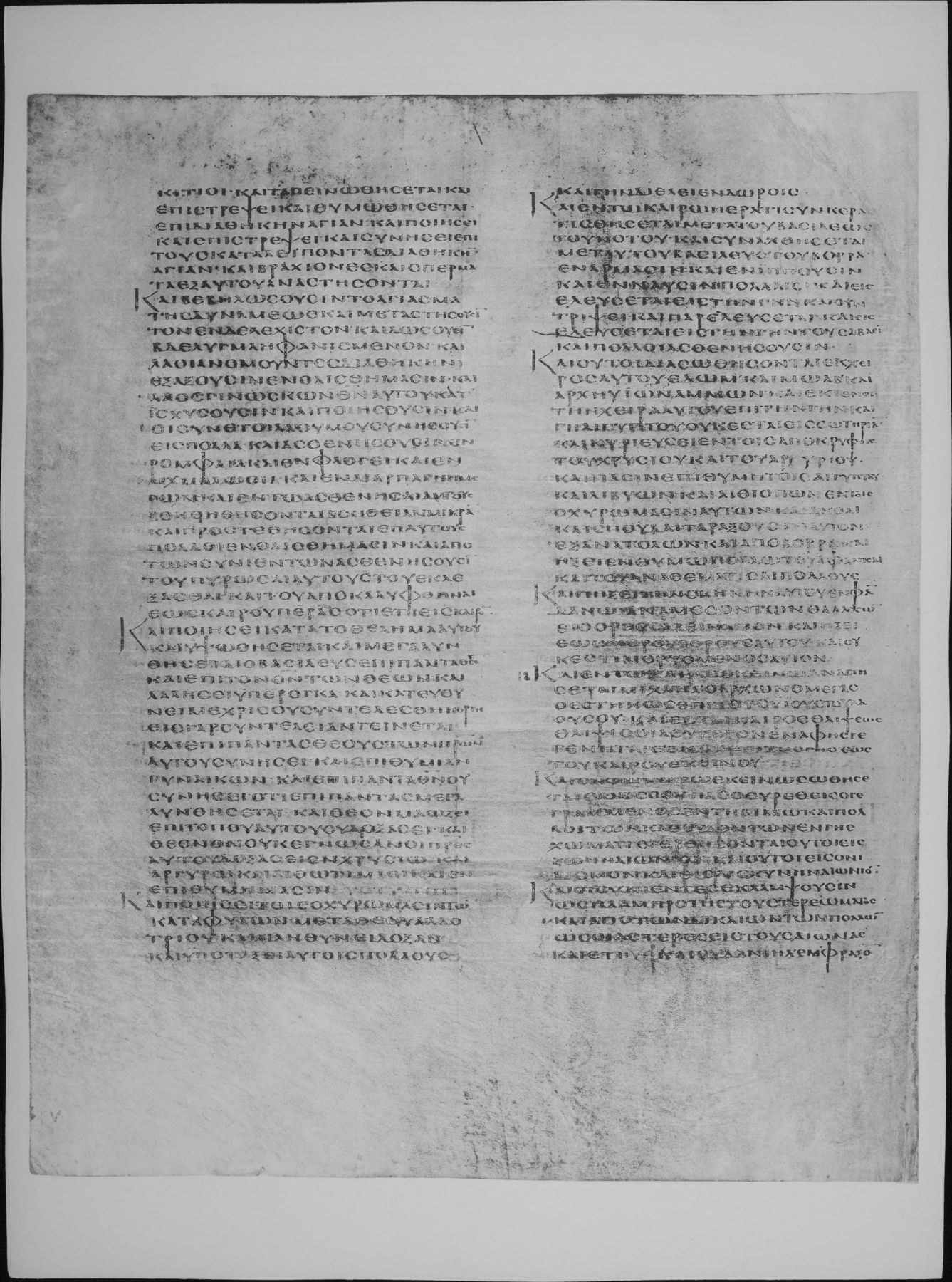
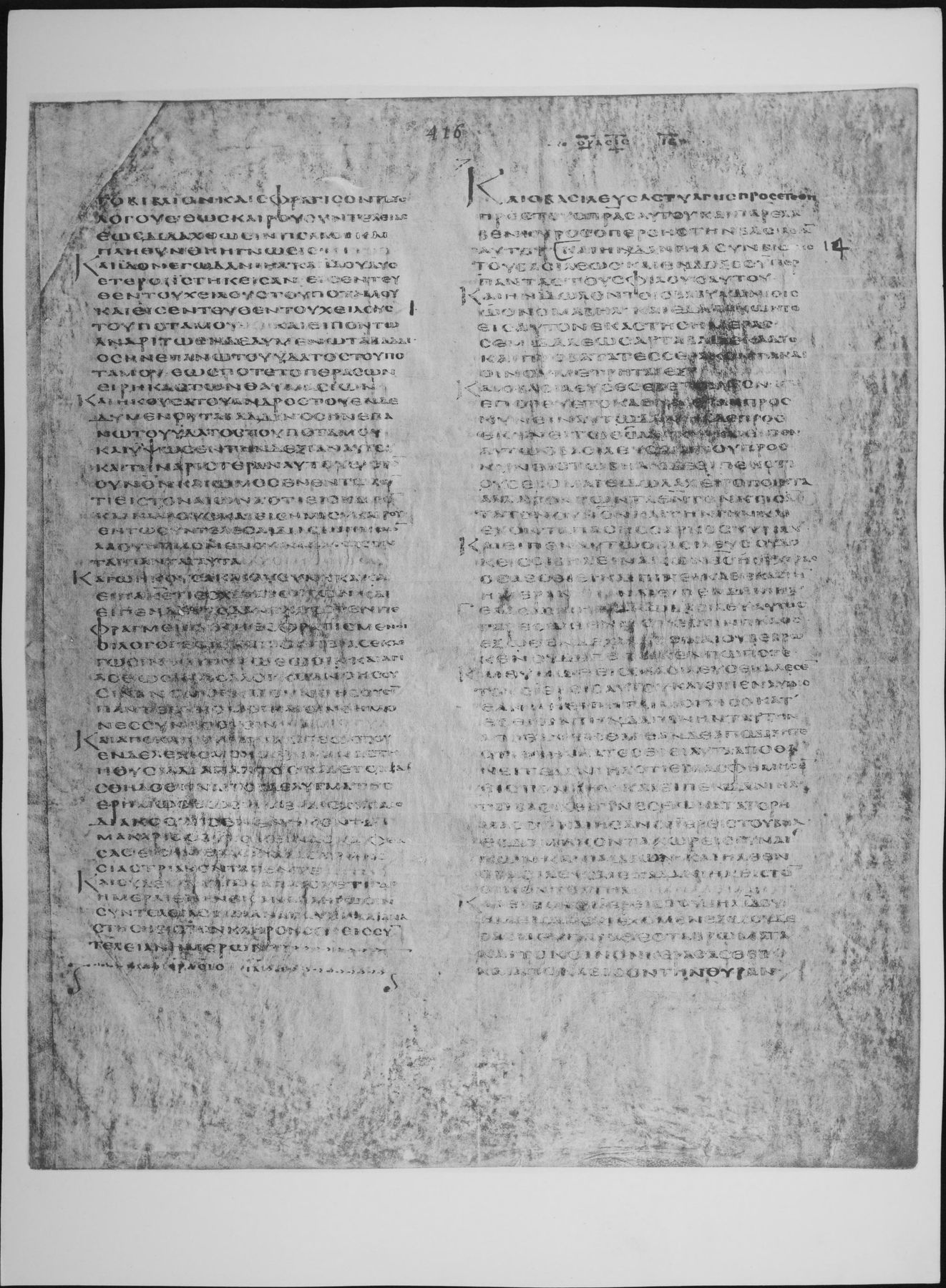
- Manuscript scan: the pages of Codex Alexandrinus carrying this chapter (fol. 415v, fol. 416r), from the full-size photographic (autotype) facsimile published by the British Museum in 1879-1883, as digitised on the Internet Archive. The verse range of every page comes from the reduced photographic facsimile of 1936, which prints it beneath each plate, and the opening words of every page were read on the plate to confirm the page and the verse it begins with. Each section links to the page or pages that hold its verses. Folio numbers are those written at the head of each leaf and visible on the plates.
- Original text: Swete's edition of the Greek version of Daniel ascribed to Theodotion, which Codex Alexandrinus carries, as almost all Greek manuscripts do, in place of the older Septuagint version (Swete prints that older version, known from the Chigi manuscript, on facing pages; it is not used here). Swete's text of Theodotion is that of Codex Vaticanus (Vat. gr. 1209), with Alexandrinus' readings in his apparatus, so the Greek column is Vaticanus' text; where Alexandrinus differs, the plate shows what Alexandrinus reads. Brenton's English also translates Theodotion's version.
- English translation: Sir Lancelot C. L. Brenton, The Septuagint Version of the Old Testament (1844; 1851 edition), a translation of the Greek, public domain, from the eBible.org text.
How was this verified? (Provenance)
Where on the image
Daniel (Theodotion) 12:1-4 is on fol. 415v (full-size facsimile of 1879-83, Internet Archive codex-alexandrinus leaf 855). The 1936 reduced facsimile prints beneath this page: Dan. xi. 30-xii. 4. Checked on the plate: the page begins inside Daniel (Theodotion) 11:30 (first words read: ΚΙΤΙΟΙ ΚΑΙ ΤΑΠΕΙΝΩΘΗΣΕΤΑΙ ΚΑΙ ΕΠΙΣΤΡΕΨΕΙ ΚΑΙ ΘΥΜΩΘΗΣΕΤΑΙ ΕΠΙ ΔΙΑΘΗΚΗΝ ΑΓΙΑΝ). Daniel (Theodotion) 12:4-8 is on fol. 416r (full-size facsimile of 1879-83, Internet Archive codex-alexandrinus leaf 856). The 1936 reduced facsimile prints beneath this page: Dan. xii. 4-13, Bel and the Dragon 1-11. Checked on the plate: the page begins inside Daniel (Theodotion) 12:4 (first words read: ΤΟ ΒΙΒΛΙΟΝ ΚΑΙ ΣΦΡΑΓΙΣΟΝ ΤΟΥΣ ΛΟΓΟΥΣ ΕΩΣ ΚΑΙΡΟΥ ΣΥΝΤΕΛΕΙΑΣ ΕΩΣ ΔΙΔΑΧΘΩΣΙΝ ΠΟΛΛΟΙ). Note: Codex Alexandrinus reads ΤΟ ΒΙΒΛΙΟΝ ΚΑΙ ΣΦΡΑΓΙΣΟΝ ΤΟΥΣ ΛΟΓΟΥΣ where Swete's text (Codex Vaticanus) has τοὺς λοιποὺς καὶ σφράγισον τὸ βιβλίον; the words that follow (ΕΩΣ ΚΑΙΡΟΥ ΣΥΝΤΕΛΕΙΑΣ ΕΩΣ ΔΙΔΑΧΘΩΣΙΝ ΠΟΛΛΟΙ) are those of Dan. 12:4.
1Καὶ ἐν τῷ καιρῷ ἐκείνῳ ἀναστήσεται Μιχαὴλ ὁ ἄρχων ὁ μέγας, ὁ ἑστηκὼς ἐπὶ τοὺς υἱοὺς τοῦ λαοῦ σου· καὶ ἔσται καιρὸς θλίψεως, θλίψις οἵα οὐ γέγονεν ἀφ᾽ ἧς γεγένηται ἔθνος ἐν τῇ γῇ ἕως τοῦ καιροῦ ἐκείνου· ἐν τῷ καιρῷ ἐκείνῳ σωθήσεται ὁ λαός σου πᾶς ὁ γεγραμμένος ἐν τῇ βίβλῳ. 2καὶ πολλοὶ τῶν καθευδόντων ἐν γῆς χώματι ἐξεγερθήσονται, οὗτοι εἰς ζωὴν αἰώνιον, καὶ οὗτοι εἰς ὀνειδισμὸν καὶ εἰς αἰσχύνην αἰώνιον· 3καὶ οἱ συνιέντες λάμψουσιν ὡς ἡ λαμπρότης τοῦ στερεώματος, καὶ ἀπὸ τῶν δικαίων τῶν πολλῶν ὡς οἱ ἀστέρες εἰς τοὺς αἰῶνας καὶ ἔτι. 4καὶ σύ, Δανιήλ, ἔμφραξον τοὺς λοιποὺς καὶ σφράγισον τὸ βιβλίον ἕως καιροῦ συντελείας, ἕως διδαχθῶσιν πολλοὶ καὶ πληθυνθῇ ἡ γνῶσις. 5Καὶ ἴδον ἐγὼ Δανιήλ, καὶ ἰδοὺ δύο ἕτεροι ἱστήκεισαν, εἷς ἐντεῦθεν τοῦ χείλους τοῦ ποταμοῦ καὶ εἷς ἐντεῦθεν τοῦ χείλους τοῦ ποταμοῦ. 6καὶ εἶπεν τῷ ἀνδρὶ τῷ ἐνδεδυμένῳ τὰ βαδδείν, ὃς ἦν ἐπάνω τοῦ ὕδατος τοῦ ποταμοῦ Ἕως πότε τὸ πέρας ὧν εἴρηκας τῶν θαυμασίων; 7καὶ ἤκουσα τοῦ ἀνδρὸς τοῦ ἐνδεδυμένου τὰ βαδδείν, ὃς ἦν ἐπάνω τοῦ ὕδατος τοῦ ποταμοῦ, καὶ ὕψωσεν τὴν δεξιὰν αὐτοῦ καὶ τὴν ἀριστερὰν αὐτοῦ εἰς τὸν οὐρανόν, καὶ ὤμοσεν ἐν τῷ ζῶντι τὸν αἰῶνα ὅτι εἰς καιρὸν καιρῶν καὶ ἥμισυ καιροῦ· ἐν τῷ συντελεσθῆναι διασκορπισμόν, γνώσονται πάντα ταῦτα. 8καὶ ἐγὼ ἤκουσα καὶ οὐ συνῆκα, καὶ εἶπα Κύριε, τί τὰ ἔσχατα τούτων;
1And at that time Michael the great prince shall stand up, that stands over the children of thy people: and there shall be a time of tribulation, such tribulation as has not been from the time that there was a nation on the earth until that time: at that time thy people shall be delivered, even every one that is written in the book. 2And many of them that sleep in the dust of the earth shall awake, some to everlasting life, and some to reproach and everlasting shame. 3And the wise shall shine as the brightness of the firmament, and some of the many righteous as the stars for ever and ever. 4And thou, Daniel, close the words, and seal the book to the time of the end; until many are taught, and knowledge is increased. 5And I Daniel saw, and, behold, two others stood, one on one side of the bank of the river, and the other on the other side of the bank of the river. 6And one said to the man clothed in linen, who was over the water of the river, When will be the end of the wonders which thou hast mentioned? 7And I heard the man clothed in linen, who was over the water of the river, and he lifted up his right hand and his left hand to heaven, and sware by him that lives for ever, that it should be for a time of times and half a time: when the dispersion is ended they shall know all these things. 8And I heard, but I understood not: and I said, O Lord, what will be the end of these things?
Where on the image
Daniel (Theodotion) 12:9-13 is on fol. 416r (full-size facsimile of 1879-83, Internet Archive codex-alexandrinus leaf 856). The 1936 reduced facsimile prints beneath this page: Dan. xii. 4-13, Bel and the Dragon 1-11. Checked on the plate: the page begins inside Daniel (Theodotion) 12:4 (first words read: ΤΟ ΒΙΒΛΙΟΝ ΚΑΙ ΣΦΡΑΓΙΣΟΝ ΤΟΥΣ ΛΟΓΟΥΣ ΕΩΣ ΚΑΙΡΟΥ ΣΥΝΤΕΛΕΙΑΣ ΕΩΣ ΔΙΔΑΧΘΩΣΙΝ ΠΟΛΛΟΙ). Note: Codex Alexandrinus reads ΤΟ ΒΙΒΛΙΟΝ ΚΑΙ ΣΦΡΑΓΙΣΟΝ ΤΟΥΣ ΛΟΓΟΥΣ where Swete's text (Codex Vaticanus) has τοὺς λοιποὺς καὶ σφράγισον τὸ βιβλίον; the words that follow (ΕΩΣ ΚΑΙΡΟΥ ΣΥΝΤΕΛΕΙΑΣ ΕΩΣ ΔΙΔΑΧΘΩΣΙΝ ΠΟΛΛΟΙ) are those of Dan. 12:4.
9καὶ εἶπεν Δεῦρο Δανιήλ, ὅτι ἐνπεφραγμένοι καὶ ἐσφραγισμένοι οἱ λόγοι, ἕως καιροῦ πέρας 10ἐκλεγῶσιν καὶ ἐκλευκανθῶσιν καὶ πυρωθῶσιν πολλοί, καὶ ἀνομήσωσιν ἄνομοι· καὶ οὐ συνήσουσιν ἄνομοι, καὶ οἱ νοήμονες συνήσουσιν. 11καὶ ἀπὸ καιροῦ παραλλάξεως τοῦ ἐνδελεχισμοῦ καὶ δοθήσεται βδέλυγμα ἐρημώσεως, ἡμέραι χίλιαι διακόσιαι ἐνενήκοντα. 12μακάριος ὁ ὑπομένων καὶ φθάσας εἰς ἡμέρας χιλίας τριακοσίας τριάκοντα πέντε. 13καὶ σὺ δεῦρο καὶ ἀναπαύου· ἔτι γὰρ ἡμέραι εἰς ἀναπλήρωσιν συντελείας, καὶ ἀναστήσῃ εἰς τὸν κλῆρόν σου εἰς συντέλειαν ἡμερῶν.
9And he said, Go, Daniel: for the words are closed and sealed up to the time of the end. 10Many must be tested, and thoroughly whitened, and tried with fire, and sanctified; but the transgressors shall transgress: and none of the transgressors shall understand; but the wise shall understand. 11And from the time of the removal of the perpetual sacrifice, when the abomination of desolation shall be set up, there shall be a thousand two hundred and ninety days. 12Blessed is he that waits, and comes to the thousand three hundred and thirty-five days. 13But go thou, and rest; for there are yet days and seasons to the fulfilment of the end; and thou shalt stand in thy lot at the end of the days.
Cite
Sources
- Source: Codex Alexandrinus (British Library Royal MS 1 D. VI) via the British Museum photographic facsimiles of 1879-83 and 1936 (Internet Archive) + Swete's Septuagint + Brenton's English (holding institution)
- Critical edition: H. B. Swete, The Old Testament in Greek according to the Septuagint (1909)
← previous · → next · v cycle view · l back to library