Daniel (Theodotion), Chapter 2 (Codex Alexandrinus)
Introduction
Daniel (Theodotion) 2 in the Greek Old Testament (the Septuagint) as written in Codex Alexandrinus, a Greek Bible copied in the fifth century, probably in Egypt, and now in the British Library (Royal MS 1 D. VI, the second of its four volumes). It is one of the three great early codices of the whole Greek Bible, with Codex Vaticanus and Codex Sinaiticus.
This entry meets the strict three-criteria standard of the Theosis Library:
- Manuscript scan: the pages of Codex Alexandrinus carrying this chapter (fol. 405r, fol. 405v, fol. 406r), from the full-size photographic (autotype) facsimile published by the British Museum in 1879-1883, as digitised on the Internet Archive. The verse range of every page comes from the reduced photographic facsimile of 1936, which prints it beneath each plate, and the opening words of every page were read on the plate to confirm the page and the verse it begins with. Each section links to the page or pages that hold its verses. Folio numbers are those written at the head of each leaf and visible on the plates.
- Original text: Swete's edition of the Greek version of Daniel ascribed to Theodotion, which Codex Alexandrinus carries, as almost all Greek manuscripts do, in place of the older Septuagint version (Swete prints that older version, known from the Chigi manuscript, on facing pages; it is not used here). Swete's text of Theodotion is that of Codex Vaticanus (Vat. gr. 1209), with Alexandrinus' readings in his apparatus, so the Greek column is Vaticanus' text; where Alexandrinus differs, the plate shows what Alexandrinus reads. Brenton's English also translates Theodotion's version.
- English translation: Sir Lancelot C. L. Brenton, The Septuagint Version of the Old Testament (1844; 1851 edition), a translation of the Greek, public domain, from the eBible.org text.
How was this verified? (Provenance)
Where on the image
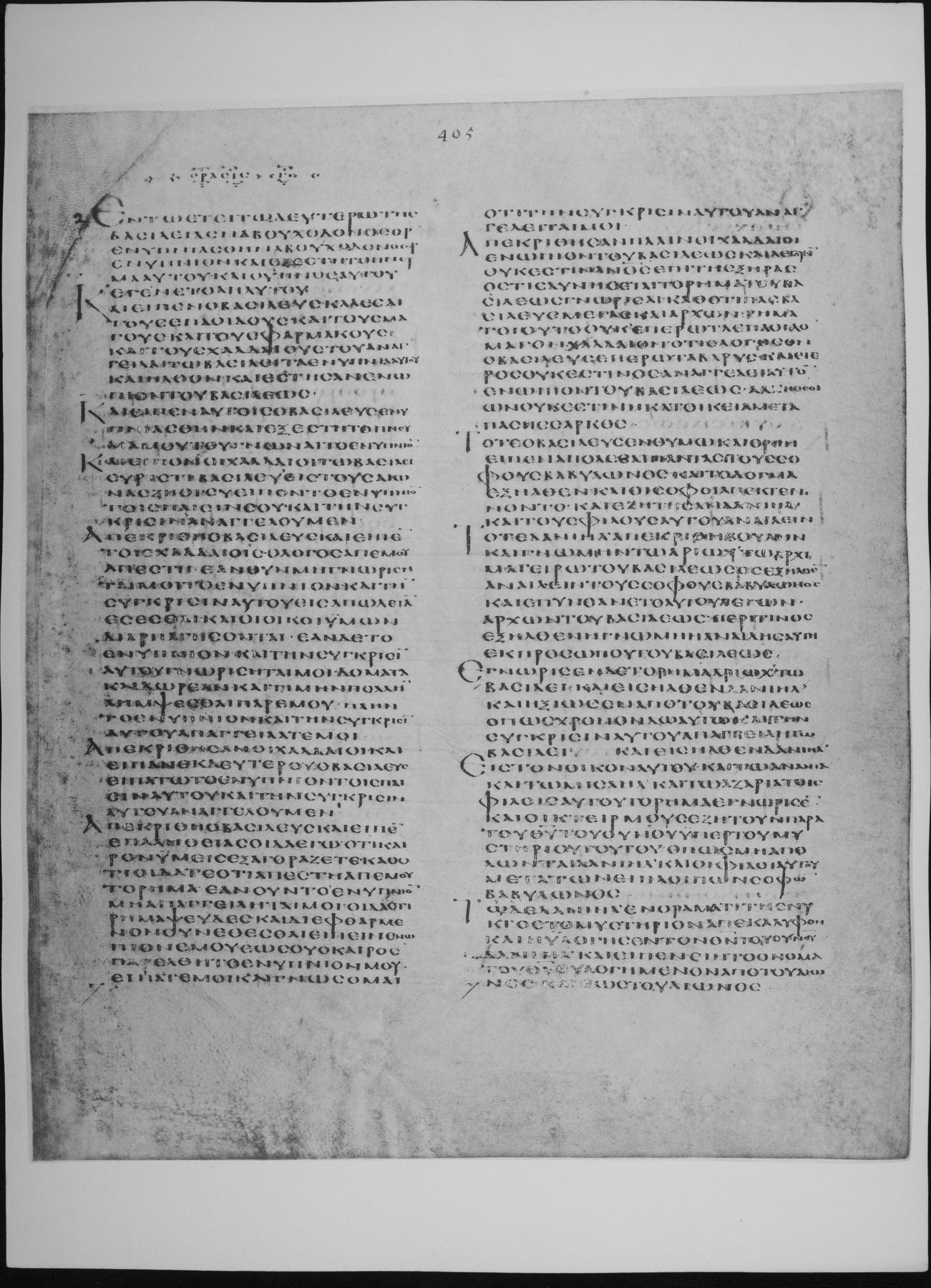
Daniel (Theodotion) 2:1-8 is on fol. 405r (full-size facsimile of 1879-83, Internet Archive codex-alexandrinus leaf 834). The 1936 reduced facsimile prints beneath this page: Dan. ii. 1-20. Checked on the plate: the page begins at the start of Daniel (Theodotion) 2:1 (first words read: ΕΝ ΤΩ ΕΤΕΙ ΤΩ ΔΕΥΤΕΡΩ ΤΗΣ ΒΑΣΙΛΕΙΑΣ ΝΑΒΟΥΧΟΔΟΝΟΣΟΡ ΕΝΥΠΝΙΑΣΘΗ ΝΑΒΟΥΧΟΔΟΝΟΣΟΡ ΕΝΥΠΝΙΟΝ).
1Ἐν τῷ ἔτει τῷ δευτέρῳ τῆς βασιλείας ἠνυπνιάσθη Ναβουχοδονοσὸρ ἐνύπνιον, καὶ ἐξέστη τὸ πνεῦμα αὐτοῦ, καὶ ὁ ὕπνος αὐτοῦ ἐγένετο ἀπ᾽ αὐτοῦ. 2καὶ εἶπεν ὁ βασιλεὺς καλέσαι τοὺς ἐπαοιδοὺς καὶ τοὺς μάγους καὶ τοὺς φαρμακοὺς καὶ τοὺς Χαλδαίους τοῦ ἀναγγεῖλαι τῷ βασιλεῖ τὰ ἐνύπνια αὐτοῦ· καὶ ἦλθαν καὶ ἔστησαν ἐνώπιον τοῦ βασιλέως. 3καὶ εἶπεν αὐτοῖς ὁ βασιλεύς Ἠνυπνιάσθην, καὶ ἐξέστη τὸ πνεῦμά μου τοῦ γνῶναι τὸ ἐνύπνιον. 4καὶ ἐλάλησαν οἱ Χαλδαῖοι τῷ βασιλεῖ Συριστί Βασιλεῦ, εἰς τοὺς αἰῶνας ζῆθι· σὺ εἰπὸν τὸ ἐνύπνιον τοῖς παισίν σου, καὶ τὴν σύγκρισιν ἀναγγελοῦμεν. 5ἀπεκρίθη ὁ βασιλεὺς τοῖς Χαλδαίοις Ὁ λόγος ἀπ᾽ ἐμοῦ ἀπέστη· ἐὰν μὴ γνωρίσητέ μοι τὸ ἐνύπνιον καὶ τὴν σύγκρισιν, εἰς ἀπωλίαν ἔσεσθε, καὶ οἱ οἶκοι ὑμῶν διαρπαγήσονται. 6ἐὰν δὲ τὸ ἐνύπνιον καὶ τὴν σύγκρισιν αὐτοῦ γνωρίσητέ μοι, δόματα καὶ δωρεὰς καὶ τιμὴν πολλὴν λήμψεσθε παρ᾽ ἐμοῦ· πλὴν τὸ ἐνύπνιον καὶ τὴν σύγκρισιν αὐτοῦ ἀπαγγείλατέ μοι. 7ἀπεκρίθησαν δεύτερον καὶ εἶπαν Ὁ βασιλεὺς εἰπάτω τὸ ἐνύπνιον τοῖς παισὶν αὐτοῦ, καὶ τὴν σύγκρισιν αὐτοῦ ἀναγγελοῦμεν. 8καὶ ἀπεκρίθη ὁ βασιλεὺς καὶ εἶπεν Ἐπ᾽ ἀληθείας οἶδα ἐγὼ ὅτι καιρὸν ὑμεῖς ἐξαγοράζετε, καθότι εἴδετε ὅτι ἀπέστη ἀπ᾽ ἐμοῦ τὸ ῥῆμα.
1In the second year of his reign Nabuchodonosor dreamed a dream, and his spirit was amazed, and his sleep departed from him. 2And the king gave orders to call the enchanters, and the magicians, and the sorcerers, and the Chaldeans, to declare to the king his dreams. And they came and stood before the king. 3And the king said to them, I have dreamed, and my spirit was troubled to know the dream. 4And the Chaldeans spoke to the king in the Syrian language, saying, O king, live for ever: do thou tell the dream to thy servants, and we will declare the interpretation. 5The king answered the Chaldeans, The thing has departed from me: if ye do not make known to me the dream and the interpretation, ye shall be destroyed, and your houses shall be spoiled. 6But if ye make known to me the dream, and the interpretation thereof, ye shall receive of me gifts and presents and much honour: only tell me the dream, and the interpretation thereof. 7They answered the second time, and said, Let the king tell the dream to his servants, and we will declare the interpretation. 8And the king answered and said, I verily know that ye are trying to gain time, because ye see that the thing has gone from me.
Where on the image
Daniel (Theodotion) 2:9-16 is on fol. 405r (full-size facsimile of 1879-83, Internet Archive codex-alexandrinus leaf 834). The 1936 reduced facsimile prints beneath this page: Dan. ii. 1-20. Checked on the plate: the page begins at the start of Daniel (Theodotion) 2:1 (first words read: ΕΝ ΤΩ ΕΤΕΙ ΤΩ ΔΕΥΤΕΡΩ ΤΗΣ ΒΑΣΙΛΕΙΑΣ ΝΑΒΟΥΧΟΔΟΝΟΣΟΡ ΕΝΥΠΝΙΑΣΘΗ ΝΑΒΟΥΧΟΔΟΝΟΣΟΡ ΕΝΥΠΝΙΟΝ).
9ἐὰν οὖν τὸ ἐνύπνιον μὴ ἀναγγείλητέ μοι, οἶδα ὅτι ῥῆμα ψευδὲς καὶ διεφθαρμένον συνέθεσθε εἰπεῖν ἐνώπιόν μου, ἕως οὗ ὁ καιρὸς παρέλθῃ· τὸ ἐνύπνιόν μου εἴπατέ μοι, καὶ γνώσομαι ὅτι τὴν σύγκρισιν αὐτοῦ ἀναγγελεῖτέ μοι. 10ἀπεκρίθησαν οἱ Χαλδαῖοι ἐνώπιον τοῦ βασιλέως καὶ λέγουσιν Οὐκ ἔστιν ἄνθρωπος ἐπὶ τῆς ξηρᾶς ὅστις τὸ ῥῆμα τοῦ βασιλέως δυνήσεται γνωρίσαι, καθότι πᾶς βασιλεὺς μέγας καὶ ἄρχων ῥῆμα τοιοῦτο οὐκ ἐπερωτᾷ ἐπαοιδόν, μάγον καὶ Χαλδαῖον· 11ὅτι ὁ λόγος ὃν ὁ βασιλεὺς ἐπερωτᾷ βαρύς, καὶ ἕτερος οὐκ ἔστιν ὃς ἀναγγελεῖ αὐτὸν ἐνώπιον τοῦ βασιλέως ἀλλ᾽ ἢ θεοί, ὧν οὐκ ἔστιν ἡ κατοικία μετὰ πάσης σαρκός. 12τότε ὁ βασιλεὺς ἐν θυμῷ καὶ ὀργῇ εἶπεν ἀπολέσαι πάντας τοὺς σοφοὺς Βαβυλῶνος. 13καὶ τὸ δόγμα ἐξῆλθεν, καὶ οἱ σοφοὶ ἀπεκτέννοντο· καὶ ἐζήτησαν Δανιὴλ καὶ τοὺς φίλους αὐτοῦ ἀνελεῖν. 14τότε Δανιὴλ ἀπεκρίθη βουλὴν καὶ γνώμην τῷ Ἀριὼχ τῷ ἀρχιμαγείρῳ τοῦ βασιλέως, ὃς ἐξῆλθεν ἀναιρεῖν τοὺς σοφοὺς Βαβυλῶνος 15Ἄρχων τοῦ βασιλέως, περὶ τίνος ἐξῆλθεν ἡ γνώμη ἡ ἀναιδὴς ἐκ προσώπου τοῦ βασιλέως; ἐγνώρισεν δὲ τὸ ῥῆμα Ἀριὼχ τῷ Δανιήλ. 16καὶ Δανιὴλ ἠξίωσεν τὸν βασιλέα ὅπως χρόνον δῷ αὐτῷ, καὶ τὴν σύγκρισιν αὐτοῦ ἀναγγείλῃ τῷ βασιλεῖ.
9If then ye do not tell me the dream, I know that ye have concerted to utter before me a false and corrupt tale, until the time shall have past: tell me my dream, and I shall know that ye will also declare to me the interpretation thereof. 10The Chaldeans answered before the king, and said, There is no man upon the earth, who shall be able to make known the king's matter: forasmuch as no great king or ruler asks such a question of an enchanter, magician, or Chaldean. 11For the question which the king asks is difficult, and there is no one else who shall answer it before the king, but the gods, whose dwelling is not with any flesh. 12Then the king in rage and anger commanded to destroy all the wise men of Babylon. 13So the decree went forth, and they began to slay the wise men; and they sought Daniel and his fellows to slay them. 14Then Daniel answered with counsel and prudence to Arioch the captain of the royal guard, who was gone forth to kill the wise men of Babylon; saying, 15Chief magistrate of the king, wherefore has the peremptory command proceeded from the king? So Arioch made known the matter to Daniel. 16And Daniel intreated the king to give him time, and that he might thus declare to the king the interpretation of it.
Where on the image
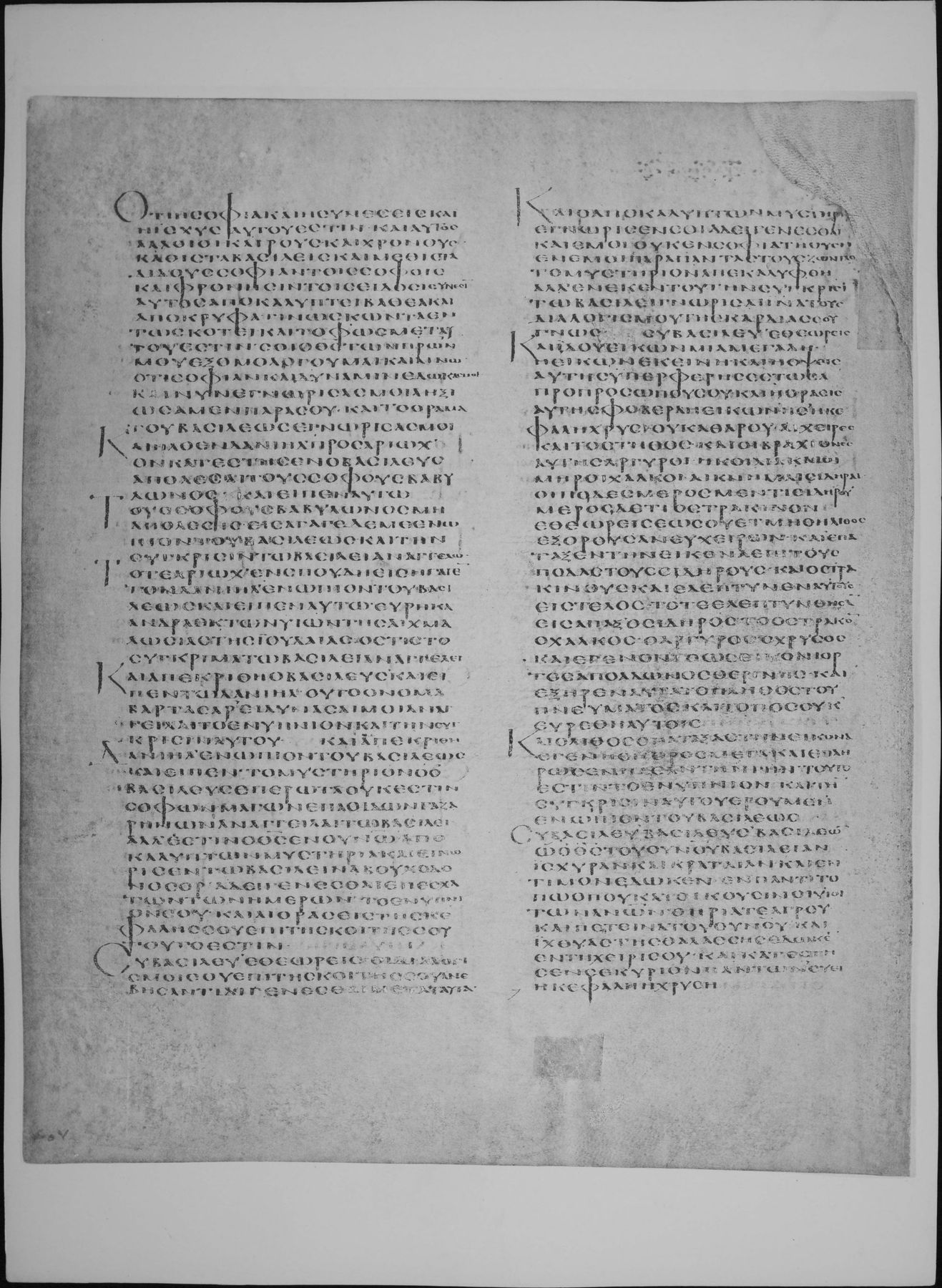
Daniel (Theodotion) 2:17-20 is on fol. 405r (full-size facsimile of 1879-83, Internet Archive codex-alexandrinus leaf 834). The 1936 reduced facsimile prints beneath this page: Dan. ii. 1-20. Checked on the plate: the page begins at the start of Daniel (Theodotion) 2:1 (first words read: ΕΝ ΤΩ ΕΤΕΙ ΤΩ ΔΕΥΤΕΡΩ ΤΗΣ ΒΑΣΙΛΕΙΑΣ ΝΑΒΟΥΧΟΔΟΝΟΣΟΡ ΕΝΥΠΝΙΑΣΘΗ ΝΑΒΟΥΧΟΔΟΝΟΣΟΡ ΕΝΥΠΝΙΟΝ). Daniel (Theodotion) 2:20-24 is on fol. 405v (full-size facsimile of 1879-83, Internet Archive codex-alexandrinus leaf 835). The 1936 reduced facsimile prints beneath this page: Dan. ii. 20-38. Checked on the plate: the page begins inside Daniel (Theodotion) 2:20 (first words read: ΟΤΙ Η ΣΟΦΙΑ ΚΑΙ Η ΣΥΝΕΣΙΣ ΚΑΙ Η ΙΣΧΥΣ ΑΥΤΟΥ ΕΣΤΙΝ ΚΑΙ ΑΥΤΟΣ ΑΛΛΟΙΟΙ ΚΑΙΡΟΥΣ ΚΑΙ ΧΡΟΝΟΥΣ).
17Καὶ εἰσῆλθεν Δανιὴλ εἰς τὸν οἶκον αὐτοῦ, καὶ τῷ Ἁνανίᾳ καὶ τῷ Μεισαὴλ καὶ τῷ Ἀζαρίᾳ τοῖς φίλοις αὐτοῦ ἐγνώρισεν τὸ ῥῆμα. 18καὶ οἰκτειρμοὺς ἐζήτουν παρὰ τοῦ θεοῦ τοῦ οὐρανοῦ ὑπὲρ τοῦ μυστηρίου τούτου, ὅπως ἂν μὴ ἀπόλωνται Δανιὴλ καὶ οἱ φίλοι αὐτοῦ μετὰ τῶν ἐπιλοίπων σοφῶν Βαβυλῶνος. 19τότε τῷ Δανιὴλ ἐν ὁράματι τῆς νυκτὸς τὸ μυστήριον ἀπεκαλύφθη. καὶ εὐλόγησεν τὸν θεὸν τοῦ οὐρανοῦ Δανιὴλ 20καὶ εἶπεν Εἴη τὸ ὄνομα τοῦ θεοῦ εὐλογημένον ἀπὸ τοῦ αἰῶνος καὶ ἕως τοῦ αἰῶνος, ὅτι ἡ σοφία καὶ ἡ σύνεσις αὐτοῦ ἐστιν· 21καὶ αὐτὸς ἀλλοιοῖ καιροὺς καὶ χρόνους, καθιστᾷ βασιλεῖς καὶ μεθιστᾷ, διδοὺς σοφίαν τοῖς σοφοῖς καὶ φρόνησιν τοῖς εἰδόσιν σύνεσιν· 22αὐτὸς ἀποκαλύπτει βαθέα καὶ ἀπόκρυφα, γινώσκων τὰ ἐν τῷ σκότει, καὶ τὸ φῶς μετ᾽ αὐτοῦ ἐστιν. 23σοί, ὁ θεὸς τῶν πατέρων μου, ἐξομολογοῦμαι καὶ αἰνῶ, ὅτι σοφίαν καὶ δύναμιν δέδωκάς μοι, καὶ ἐγνώρισάς μοι ἃ ἠξιώσαμεν παρὰ σοῦ, καὶ τὸ ὅραμα τοῦ βασιλέως ἐγνώρισάς μοι. 24καὶ ἦλθεν Δανιὴλ πρὸς Ἀριώχ, ὃν κατέστησεν ὁ βασιλεὺς ἀπολέσαι τοὺς σοφοὺς Βαβυλῶνος, καὶ εἶπεν αὐτῷ Τοὺς σοφοὺς Βαβυλῶνος μὴ ἀπολέσῃς, εἰσάγαγε δέ με ἐνώπιον τοῦ βασιλέως, καὶ τὴν σύγκρισιν τῷ βασιλεῖ ἀναγγελῶ.
17So Daniel went into his house, and made known the matter to Ananias, and Misael, and Azarias, his friends. 18And they sought mercies from the God of heaven concerning this mystery; that Daniel and his friends might not perish with the rest of the wise men of Babylon. 19Then the mystery was revealed to Daniel in a vision of the night: and Daniel blessed the God of heaven, and said, 20May the name of God be blessed from everlasting and to everlasting: for wisdom and understanding are his. 21And he changes times and seasons: he appoints kings, and removes them, giving wisdom to the wise, and prudence to them that have understanding: 22he reveals deep and secret matters; knowing what is in darkness, and the light is with him. 23I give thanks to thee, and praise thee, O God of my fathers, for thou hast given me wisdom and power, and hast made known to me the things which we asked of thee; and thou hast made known to me the king's vision. 24And Daniel came to Arioch, whom the king had appointed to destroy the wise men of Babylon, and said to him; Destroy not the wise men of Babylon, but bring me in before the king, and I will declare the interpretation to the king.
Where on the image
Daniel (Theodotion) 2:25-32 is on fol. 405v (full-size facsimile of 1879-83, Internet Archive codex-alexandrinus leaf 835). The 1936 reduced facsimile prints beneath this page: Dan. ii. 20-38. Checked on the plate: the page begins inside Daniel (Theodotion) 2:20 (first words read: ΟΤΙ Η ΣΟΦΙΑ ΚΑΙ Η ΣΥΝΕΣΙΣ ΚΑΙ Η ΙΣΧΥΣ ΑΥΤΟΥ ΕΣΤΙΝ ΚΑΙ ΑΥΤΟΣ ΑΛΛΟΙΟΙ ΚΑΙΡΟΥΣ ΚΑΙ ΧΡΟΝΟΥΣ).
25Τότε Ἀριὼχ ἐν σπουδῇ εἰσήγαγεν τὸν Δανιὴλ ἐνώπιον τοῦ βασιλέως καὶ εἶπεν αὐτῷ Εὕρηκα ἄνδρα ἐκ τῶν υἱῶν τῆς αἰχμαλωσίας τῆς Ἰουδαίας, ὅστις τὸ σύγκριμα τῷ βασιλεῖ ἀναγγελεῖ. 26καὶ ἀπεκρίθη ὁ βασιλεὺς καὶ εἶπεν τῷ Δανιήλ, οὗ τὸ ὄνομα Βαλτασάρ Εἰ δύνασαί μοι ἀναγγεῖλαι τὸ ἐνύπνιον ὃ ἴδον καὶ τὴν σύγκρισιν αὐτοῦ; 27καὶ ἀπεκρίθη Δανιὴλ ἐνώπιον τοῦ βασιλέως καὶ λέγει Τὸ μυστήριον ὃ ὁ βασιλεὺς ἐρωτᾷ οὐκ ἔστιν σοφῶν, μάγων, ἐπαοιδῶν, γαζαρηνῶν ἀναγγεῖλαι τῷ βασιλεῖ· 28ἀλλ᾽ ἢ ἔστιν θεὸς ἐν οὐρανῷ ἀποκαλύπτων μυστήρια, καὶ ἐγνώρισεν τῷ βασιλεῖ Ναβουχοδονοσὸρ ἃ δεῖ γενέσθαι ἐπ᾽ ἐσχάτων τῶν ἡμερῶν. τὸ ἐνύπνιόν σου καὶ αἱ ὁράσεις τῆς κεφαλῆς σου ἐπὶ τῆς κοίτης σου τοῦτό ἐστιν. 29βασιλεῦ, οἱ διαλογισμοί σου ἐπὶ τῆς κοίτης σου ἀνέβησαν τί δεῖ γενέσθαι μετὰ ταῦτα, καὶ ὁ ἀποκαλύπτων μυστήρια ἐγνώρισέν σοι ἃ δεῖ γενέσθαι. 30καὶ ἐμοὶ δὲ οὐκ ἐν σοφίᾳ τῇ οὔσῃ ἐν ἐμοὶ παρὰ πάντας τοὺς ζῶντας τὸ μυστήριον τοῦτο ἀπεκαλύφθη, ἀλλ᾽ ἕνεκεν τοῦ τὴν σύγκρισιν γνωρίσαι τῷ βασιλεῖ, ἵνα τοὺς διαλογισμοὺς τῆς καρδίας σου γνῷς. 31σύ, βασιλεῦ, ἐθεώρεις, καὶ ἰδοὺ εἰκὼν μία, μεγάλη ἡ εἰκὼν ἐκείνη, καὶ ἡ πρόσοψις αὐτῆς ὑπερφερής, ἑστῶσα πρὸ προσώπου σου· καὶ ἡ ὅρασις αὐτῆς φοβερά. 32εἰκὼν ἧς ἡ κεφαλὴ χρυσίου χρηστοῦ, αἱ χεῖρες καὶ τὸ στῆθος καὶ οἱ βραχίονες αὐτῆς ἀργυροῖ, ἡ κοιλία καὶ οἱ μηροὶ χαλκοῖ,
25Then Arioch in haste brought in Daniel before the king, and said to him, I have found a man of the children of the captivity of Judea, who will declare the interpretation to the king. 26And the king answered and said to Daniel, whose name was Baltasar, Canst thou declare to me the dream which I saw, and the interpretation thereof? 27And Daniel answered before the king, and said, The mystery which the king asks the explanation of is not in the power of the wise men, magicians, enchanters, or soothsayers to declare to the king. 28But there is a God in heaven revealing mysteries, and he has made known to king Nabuchodonosor what things must come to pass in the last days. Thy dream, and the visions of thy head upon thy bed, are as follows, 29O king: thy thoughts upon thy bed arose as to what must come to pass hereafter: and he that reveals mysteries has made known to thee what must come to pass. 30Moreover, this mystery has not been revealed to me by reason of wisdom which is in me beyond all others living, but for the sake of making known the interpretation to the king, that thou mightest know the thoughts of thine heart. 31Thou, O king, sawest, and behold an image: that image was great, and the appearance of it excellent, standing before thy face; and the form of it was terrible. 32It was an image, the head of which was of fine gold, its hands and breast and arms of silver, its belly and thighs of brass,
Where on the image
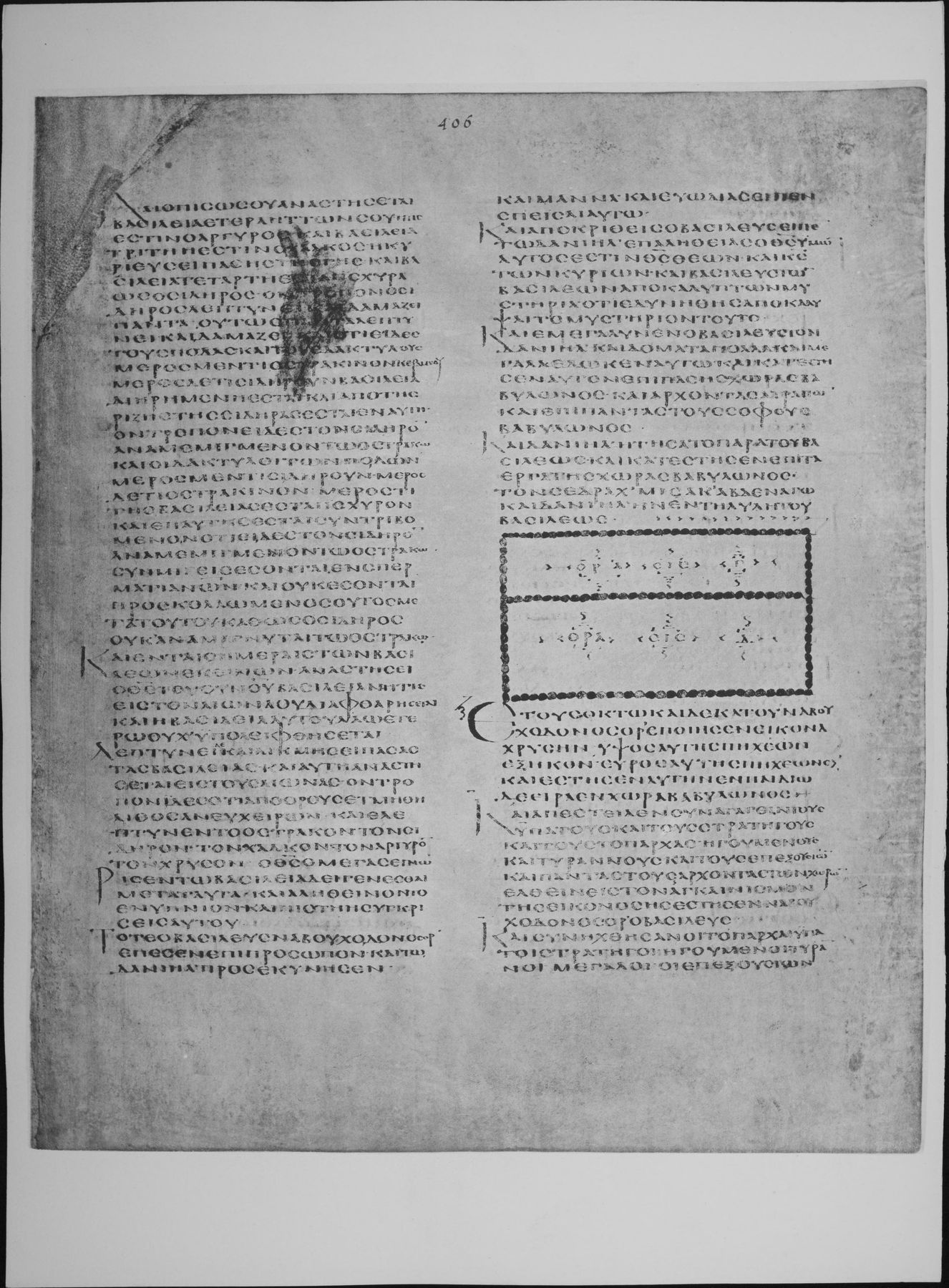
Daniel (Theodotion) 2:33-38 is on fol. 405v (full-size facsimile of 1879-83, Internet Archive codex-alexandrinus leaf 835). The 1936 reduced facsimile prints beneath this page: Dan. ii. 20-38. Checked on the plate: the page begins inside Daniel (Theodotion) 2:20 (first words read: ΟΤΙ Η ΣΟΦΙΑ ΚΑΙ Η ΣΥΝΕΣΙΣ ΚΑΙ Η ΙΣΧΥΣ ΑΥΤΟΥ ΕΣΤΙΝ ΚΑΙ ΑΥΤΟΣ ΑΛΛΟΙΟΙ ΚΑΙΡΟΥΣ ΚΑΙ ΧΡΟΝΟΥΣ). Daniel (Theodotion) 2:39-40 is on fol. 406r (full-size facsimile of 1879-83, Internet Archive codex-alexandrinus leaf 836). The 1936 reduced facsimile prints beneath this page: Dan. ii. 39-iii. 3. Checked on the plate: the page begins at the start of Daniel (Theodotion) 2:39 (first words read: ΚΑΙ ΟΠΙΣΩ ΣΟΥ ΑΝΑΣΤΗΣΕΤΑΙ ΒΑΣΙΛΕΙΑ ΕΤΕΡΑ ΗΤΤΩΝ ΣΟΥ ΚΑΙ ΒΑΣΙΛΕΙΑ ΤΡΙΤΗ).
33αἱ κνῆμαι σιδηραῖ, οἱ πόδες μέρος τι σιδηροῦν καὶ μέρος ὀστράκινον. 34ἐθεώρεις ἕως ἀπεσχίσθη λίθος ἐξ ὄρους ἄνευ χειρῶν, καὶ ἐπάταξεν τὴν εἰκόνα ἐπὶ τοὺς πόδας τοὺς σιδηροῦς καὶ ὀστρακίνους, καὶ ἐλέπτυνεν εἰς τέλος. 35τότε ἐλεπτύνθησαν εἰς ἅπαξ τὸ ὄστρακον, ὁ σίδηρος, ὁ χαλκός, ὁ ἄργυρος, ὁ χρυσός, καὶ ἐγένετο ὡσεὶ κονιορτὸς ἀπὸ ἅλωνος θερινῆς· καὶ ἐξῆρεν τὸ πλῆθος τοῦ πνεύματος, καὶ τόπος οὐχ εὑρέθη αὐτοῖς· καὶ ὁ λίθος ὁ πατάξας τὴν εἰκόνα ἐγενήθη ὄρος μέγα, καὶ ἐπλήρωσεν πᾶσαν τὴν γῆν. 36τοῦτό ἐστιν τὸ ἐνύπνιον· καὶ τὴν σύγκρισιν αὐτοῦ ἐροῦμεν ἐνώπιον τοῦ βασιλέως. 37σύ, βασιλεῦ, βασιλεὺς βασιλέων, ᾧ ὁ θεὸς τοῦ οὐρανοῦ βασιλείαν ἰσχυρὰν καὶ κραταιὰν καὶ ἔντιμον ἔδωκεν 38ἐν παντὶ τόπῳ ὅπου κατοικοῦσιν οἱ υἱοὶ τῶν ἀνθρώπων· θηρία τε ἀγροῦ καὶ πετεινὰ οὐρανοῦ ἔδωκεν ἐν τῇ χειρί σου, καὶ κατέστησεν κύριον πάντων· σὺ εἶ ἡ κεφαλὴ ἡ χρυσῆ. 39καὶ ὀπίσω σου ἀναστήσεται ἑτέρα βασιλεία ἥττων σου, καὶ βασιλεία τρίτη ἥτις ἐστὶν ὁ χαλκός, ἣ κυριεύσει πάσης τῆς γῆς· 40καὶ βασιλεία τετάρτη ἔσται ἰσχυρὰ ὡς ὁ σίδηρος· ὃν τρόπον ὁ σίδηρος λεπτύνει καὶ δαμάζει πάντα, οὕτως πάντα λεπτυνεῖ καὶ δαμάσει.
33its legs of iron, its feet, part of iron and part of earthenware. 34Thou sawest until a stone was cut out of a mountain without hands, and it smote the image upon its feet of iron and earthenware, and utterly reduced them to powder. 35Then once for all the earthenware, the iron, the brass, the silver, the gold, were ground to powder, and became as chaff from the summer threshingfloor; and the violence of the wind carried them away, and no place was found for them: and the stone which had smitten the image became a great mountain, and filled all the earth. 36This is the dream; and we will tell the interpretation thereof before the king. 37Thou, O king, art a king of kings, to whom the God of heaven has given a powerful and strong and honourable kingdom, 38in every place where the children of men dwell: and he has given into thine hand the wild beasts of the field, and the birds of the sky and the fish of the sea, and he has made thee lord of all. 39Thou art the head of gold. And after thee shall arise another kingdom inferior to thee, and a third kingdom which is the brass, which shall have dominion over all the earth; 40and a fourth kingdom, which shall be strong as iron: as iron beats to powder and subdues all things, so shall it beat to powder and subdue.
Where on the image
Daniel (Theodotion) 2:41-49 is on fol. 406r (full-size facsimile of 1879-83, Internet Archive codex-alexandrinus leaf 836). The 1936 reduced facsimile prints beneath this page: Dan. ii. 39-iii. 3. Checked on the plate: the page begins at the start of Daniel (Theodotion) 2:39 (first words read: ΚΑΙ ΟΠΙΣΩ ΣΟΥ ΑΝΑΣΤΗΣΕΤΑΙ ΒΑΣΙΛΕΙΑ ΕΤΕΡΑ ΗΤΤΩΝ ΣΟΥ ΚΑΙ ΒΑΣΙΛΕΙΑ ΤΡΙΤΗ).
41καὶ ὅτι ἴδες τοὺς πόδας καὶ τοὺς δακτύλους μέρος μέν τι ὀστράκινον, μέρος δέ τι σιδηροῦν, βασιλεία διῃρημένη ἔσται, καὶ ἀπὸ τῆς ῥίζης τῆς σιδηρᾶς ἔσται ἐν αὐτῇ, ὃν τρόπον ἴδες τὸν σίδηρον ἀναμεμιγμένον τῷ ὀστράκῳ. 42καὶ οἱ δάκτυλοι τῶν ποδῶν μέρος μέν τι σιδηροῦν, μέρος δέ τι ὀστράκινον, μέρος τι τῆς βασιλείας ἔσται ἰσχυρόν, καὶ ἀπ᾽ αὐτῆς ἔσται συντριβόμενον. 43ὅτι ἴδες τὸν σίδηρον ἀναμεμιγμένον τῷ ὀστράκῳ, συνμιγεῖς ἔσονται ἐν σπέρματι ἀνθρώπων· καὶ οὐκ ἔσονται προσκολλώμενοι οὗτος μετὰ τούτου, καθὼς ὁ σίδηρος οὐκ ἀναμίγνυται μετὰ τοῦ ὀστράκου. 44καὶ ἐν ταῖς ἡμέραις τῶν βασιλέων ἐκείνων ἀναστήσει ὁ θεὸς τοῦ οὐρανοῦ βασιλείαν, ἥτις εἰς τοὺς αἰῶνας οὐ διαφθαρήσεται, καὶ ἡ βασιλεία αὐτοῦ λαῷ ἑτέρῳ οὐχ ὑπολειφθήσεται· λεπτυνεῖ καὶ λικμήσει πάσας τὰς βασιλείας, καὶ αὐτὴ ἀναστήσεται εἰς τοὺς αἰῶνας· 45ὃν τρόπον ἴδες ὅτι ἀπὸ ὄρους ἐτμήθη λίθος ἄνευ χειρῶν, καὶ ἐλέπτυνεν τὸ ὄστρακον τὸν σίδηρον, τὸν χαλκόν, τὸν ἄργυρον, τὸν χρυσόν. ὁ θεὸς ὁ μέγας ἐγνώρισεν τῷ βασιλεῖ ἃ δεῖ γενέσθαι μετὰ ταῦτα· καὶ ἀληθινὸν τὸ ἐνύπνιον, καὶ πιστὴ ἡ σύγκρισις αὐτοῦ. 46Τότε ὁ βασιλεὺς Ναβουχοδονοσὸρ ἔπεσεν ἐπὶ πρόσωπον καὶ τῷ Δανιὴλ προσεκύνησεν καὶ μαννὰ καὶ εὐωδίας εἶπεν σπεῖσαι αὐτῷ. 47καὶ ἀποκριθεὶς ὁ βασιλεὺς εἶπεν τῷ Δανιήλ Ἐπ᾽ ἀληθείας ὁ θεὸς ὑμῶν αὐτός ἐστιν θεὸς θεῶν καὶ κύριος τῶν βασιλέων καὶ ἀποκαλύπτων μυστήρια· ὅτι ἠδυνήθης ἀποκαλύψαι τὸ μυστήριον τοῦτο. 48καὶ ἐμεγάλυνεν ὁ βασιλεὺς τὸν Δανιήλ, καὶ δόματα μεγάλα καὶ πολλὰ ἔδωκεν αὐτῷ, καὶ κατέστησεν αὐτὸν ἐπὶ πάσης χώρας Βαβυλῶνος καὶ ἄρχοντα σατραπῶν ἐπὶ πάντας τοὺς σοφοὺς Βαβυλῶνος. 49καὶ Δανιὴλ ᾐτήσατο παρὰ τοῦ βασιλέως, καὶ κατέστησεν ἐπὶ τὰ ἔργα τῆς χώρας Βαβυλῶνος τὸν Σεδράχ, Μεισάχ, Ἀβδεναγώ· καὶ Δανιὴλ ἦν ἐν τῇ αὐλῇ τοῦ βασιλέως.
41And whereas thou sawest the feet and the toes, part of earthenware and part of iron, the kingdom shall be divided; yet there shall be in it of the strength of iron, as thou sawest the iron mixed with earthenware. 42And whereas the toes of the feet were part of iron and part of earthenware, part of the kingdom shall be strong, and part of it shall be broken. 43Whereas thou sawest the iron mixed with earthenware, they shall be mingled with the seed of men: but they shall not cleave together, as the iron does not mix itself with earthenware. 44And in the days of those kings the God of heaven shall set up a kingdom which shall never be destroyed: and his kingdom shall not be left to another people, but it shall beat to pieces and grind to powder all other kingdoms, and it shall stand for ever. 45Whereas thou sawest that a stone was cut out of a mountain without hands, and it beat to pieces the earthenware, the iron, the brass, the silver, the gold; the great God has made known to the king what must happen hereafter: and the dream is true, and the interpretation thereof sure. 46Then king Nabuchodonosor fell upon his face, and worshipped Daniel, and gave orders to offer to him gifts and incense. 47And the king answered and said to Daniel, Of a truth your God is a God of gods, and Lord of kings, who reveals mysteries; for thou hast been able to reveal this mystery. 48And the king promoted Daniel, and gave him great and abundant gifts, and set him over the whole province of Babylon, and made him chief satrap over all the wise men of Babylon. 49And Daniel asked of the king, and he appointed Sedrach, Misach, and Abdenago, over the affairs of the province of Babylon: but Daniel was in the king's palace.
Cite
Sources
- Source: Codex Alexandrinus (British Library Royal MS 1 D. VI) via the British Museum photographic facsimiles of 1879-83 and 1936 (Internet Archive) + Swete's Septuagint + Brenton's English (holding institution)
- Critical edition: H. B. Swete, The Old Testament in Greek according to the Septuagint (1909)
← previous · → next · v cycle view · l back to library