Daniel (Theodotion), Chapter 5 (Codex Alexandrinus)
Introduction
Daniel (Theodotion) 5 in the Greek Old Testament (the Septuagint) as written in Codex Alexandrinus, a Greek Bible copied in the fifth century, probably in Egypt, and now in the British Library (Royal MS 1 D. VI, the second of its four volumes). It is one of the three great early codices of the whole Greek Bible, with Codex Vaticanus and Codex Sinaiticus.
Numbering: Swete's Greek and Brenton's English number or divide some verses of this chapter differently (Swete 5:31 = Brenton 6:1). Each column keeps its own verse numbers, and sections are cut only where the two texts agree, so each section holds the same passage in both languages.
This entry meets the strict three-criteria standard of the Theosis Library:
- Manuscript scan: the pages of Codex Alexandrinus carrying this chapter (fol. 409v, fol. 410r, fol. 410v), from the full-size photographic (autotype) facsimile published by the British Museum in 1879-1883, as digitised on the Internet Archive. The verse range of every page comes from the reduced photographic facsimile of 1936, which prints it beneath each plate, and the opening words of every page were read on the plate to confirm the page and the verse it begins with. Each section links to the page or pages that hold its verses. Folio numbers are those written at the head of each leaf and visible on the plates.
- Original text: Swete's edition of the Greek version of Daniel ascribed to Theodotion, which Codex Alexandrinus carries, as almost all Greek manuscripts do, in place of the older Septuagint version (Swete prints that older version, known from the Chigi manuscript, on facing pages; it is not used here). Swete's text of Theodotion is that of Codex Vaticanus (Vat. gr. 1209), with Alexandrinus' readings in his apparatus, so the Greek column is Vaticanus' text; where Alexandrinus differs, the plate shows what Alexandrinus reads. Brenton's English also translates Theodotion's version.
- English translation: Sir Lancelot C. L. Brenton, The Septuagint Version of the Old Testament (1844; 1851 edition), a translation of the Greek, public domain, from the eBible.org text.
How was this verified? (Provenance)
Where on the image
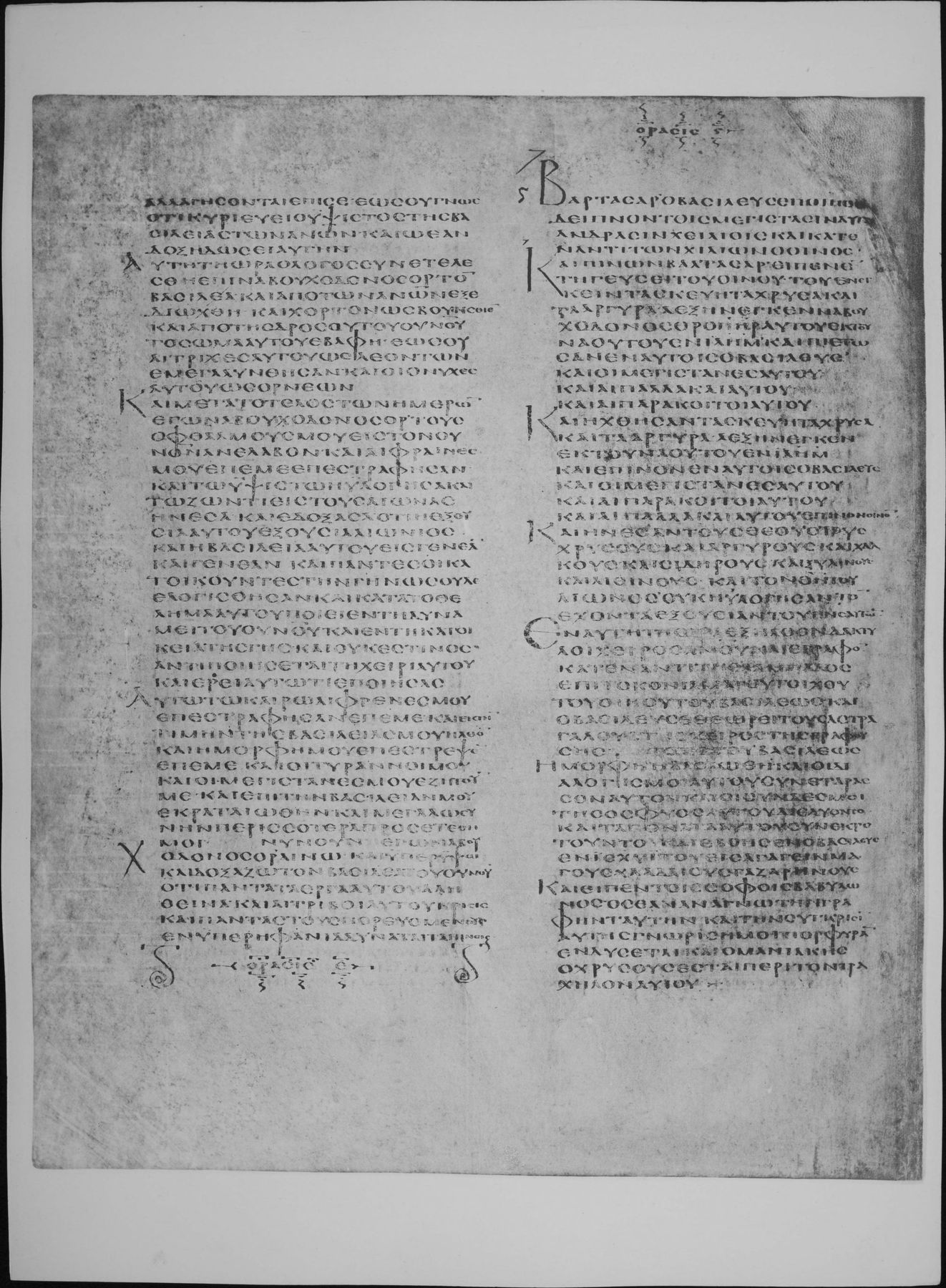
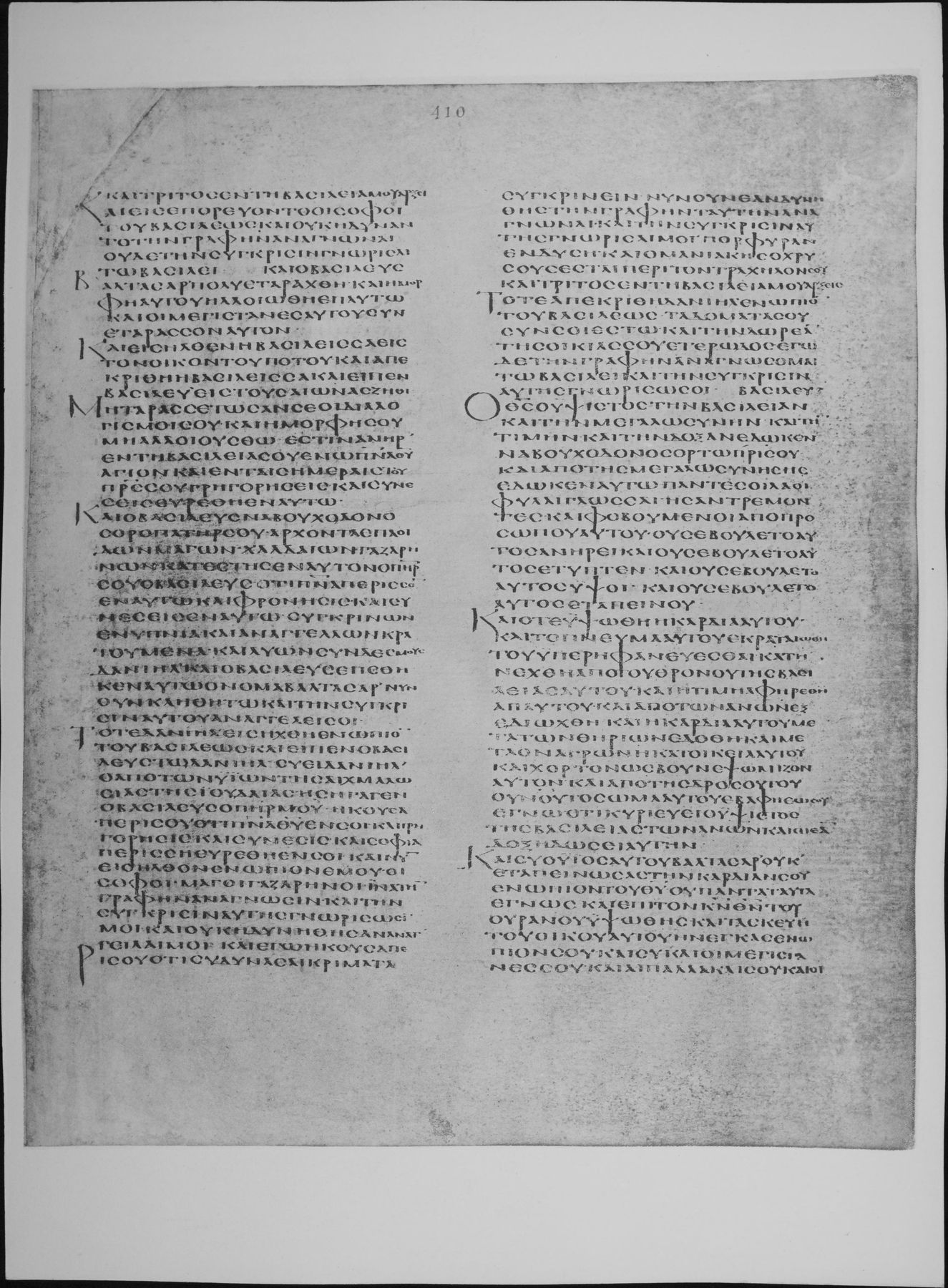
Daniel (Theodotion) 5:1-7 is on fol. 409v (full-size facsimile of 1879-83, Internet Archive codex-alexandrinus leaf 843). The 1936 reduced facsimile prints beneath this page: Dan. iv. 23-v. 7. Checked on the plate: the page begins inside Daniel (Theodotion) 4:22 (first words read: ΑΛΛΑΓΗΣΟΝΤΑΙ ΕΠΙ ΣΕ ΕΩΣ ΟΥ ΓΝΩΣ ΟΤΙ ΚΥΡΙΕΥΕΙ Ο ΥΨΙΣΤΟΣ ΤΗΣ ΒΑΣΙΛΕΙΑΣ ΤΩΝ ΑΝΩΝ). Note: the caption gives iv. 23, but the page begins inside Swete's verse 4:22 (its last clause, ΑΛΛΑΓΗΣΟΝΤΑΙ ΕΠΙ ΣΕ ΕΩΣ ΟΥ ΓΝΩΣ...), so the caption divides these verses differently; verse 4:22 is credited to both pages. Daniel (Theodotion) 5:7-8 is on fol. 410r (full-size facsimile of 1879-83, Internet Archive codex-alexandrinus leaf 844). The 1936 reduced facsimile prints beneath this page: Dan. v. 7-23. Checked on the plate: the page begins inside Daniel (Theodotion) 5:7 (first words read: ΚΑΙ ΤΡΙΤΟΣ ΕΝ ΤΗ ΒΑΣΙΛΕΙΑ ΜΟΥ ΑΡΞΕΙ ΚΑΙ ΕΙΣΕΠΟΡΕΥΟΝΤΟ ΠΑΝΤΕΣ ΟΙ ΣΟΦΟΙ).
1Βαλτασὰρ ὁ βασιλεὺς ἐποίησεν δεῖπνον μέγα τοῖς μεγιστᾶσιν αὐτοῦ χιλίοις, καὶ κατέναντι τῶν χιλίων ὁ οἶνος. 2καὶ πίνων Βαλτασὰρ εἶπεν ἐν τῇ γεύσει τοῦ οἴνου αὐτοῦ ἐνεγκεῖν τὰ σκεύη τὰ χρυσᾶ καὶ τὰ ἀργυρᾶ ἃ ἐξήνεγκεν Ναβουχοδονοσὸρ ὁ πατὴρ αὐτοῦ ἐκ τοῦ ναοῦ τοῦ ἐν Ἰερουσαλήμ, καὶ πιέτωσαν ἐν αὐτοῖς ὁ βασιλεὺς καὶ οἱ μεγιστᾶνες αὐτοῦ καὶ αἱ παλλακαὶ αὐτοῦ καὶ αἱ παράκοιτοι αὐτοῦ. 3καὶ ἠνέχθησαν τὰ σκεύη τὰ χρυσᾶ καὶ τὰ ἀργυρᾶ ἃ ἐξήνεγκεν ἐκ τοῦ ναοῦ τοῦ θεοῦ τοῦ ἐν Ἰερουσαλήμ, καὶ ἔπινον ἐν αὐτοῖς ὁ βασιλεὺς καὶ οἱ μεγιστᾶνες αὐτοῦ καὶ αἱ παλλακαὶ αὐτοῦ καὶ αἱ παράκοιτοι αὐτοῦ· 4ἔπινον οἶνον, καὶ ᾔνεσαν τοὺς θεοὺς τοὺς χρυσοῦς καὶ ἀργυροῦς καὶ χαλκοῦς καὶ σιδηροῦς καὶ ξυλίνους καὶ λιθίνους. 5ἐν αὐτῇ τῇ ὥρᾳ ἐξῆλθον δάκτυλοι χειρὸς ἀνθρώπου καὶ ἔγραφον κατέναντι τῆς λαμπάδος ἐπὶ τὸ κονίαμα τοῦ τοίχου καὶ οἴκου τοῦ βασιλέως, καὶ ὁ βασιλεὺς ἐθεώρει τοὺς ἀστραγάλους τῆς χειρὸς τῆς γραφούσης. 6τότε τοῦ βασιλέως ἡ μορφὴ ἠλλοιώθη, καὶ οἱ διαλογισμοὶ αὐτοῦ συνετάρασσον αὐτόν, καὶ οἱ σύνδεσμοι τῆς ὀσφύος αὐτοῦ διελύοντο, καὶ τὰ γόνατα αὐτοῦ συνεκροτοῦντο. 7καὶ ἐβόησεν ὁ βασιλεὺς ἐν ἰσχύι τοῦ εἰσαγαγεῖν μάγους, Χαλδαίους, γαζαρηνούς, καὶ εἶπεν τοῖς σοφοῖς Βαβυλῶνος Ὃς ἂν ἀναγνῷ τὴν γραφὴν ταύτην καὶ τὴν σύγκρισιν γνωρίσῃ μοι, πορφύραν ἐνδύσεται, καὶ ὁ μανιάκης ὁ χρυσοῦς ἐπὶ τὸν τράχηλον αὐτοῦ, καὶ τρίτος ἐν τῇ βασιλείᾳ μου ἄρξει. 8καὶ εἰσεπορεύοντο πάντες οἱ σοφοὶ τοῦ βασιλέως, καὶ οὐκ ἠδύναντο τὴν γραφὴν ἀναγνῶναι οὐδὲ τὴν σύγκρισιν γνωρίσαι τῷ βασιλεῖ.
1Baltasar the king made a great supper for his thousand nobles, and there was wine before the thousand. 2And Baltasar drinking gave orders as he tasted the wine that they should bring the gold and silver vessels, which Nabuchodonosor his father had brought forth from the temple in Jerusalem; that the king, and his nobles, and his mistresses, and his concubines, should drink out of them. 3So the gold and silver vessels were brought which Nabuchodonosor had taken out of the temple of God in Jerusalem; and the king, and his nobles, and his mistresses, and his concubines, drank out of them. 4They drank wine, and praised the gods of gold, and of silver, and of brass, and of iron, and of wood, and of stone. 5In the same hour came forth fingers of a man's hand, and wrote in front of the lamp on the plaster of the wall of the king's house: and the king saw the knuckles of the hand that wrote. 6Then the king's countenance changed, and his thoughts troubled him, and the joints of his loins were loosed, and his knees smote one another. 7And the king cried aloud to bring in the magicians, Chaldeans, and soothsayers; and he said to the wise men of Babylon, Whosoever shall read this writing, and make known to me the interpretation, shall be clothed with scarlet, and there shall be a golden chain upon his neck, and he shall be the third ruler in my kingdom. 8Then came in all the king's wise men: but they could not read the writing, nor make known the interpretation to the king.
Where on the image
Daniel (Theodotion) 5:9-16 is on fol. 410r (full-size facsimile of 1879-83, Internet Archive codex-alexandrinus leaf 844). The 1936 reduced facsimile prints beneath this page: Dan. v. 7-23. Checked on the plate: the page begins inside Daniel (Theodotion) 5:7 (first words read: ΚΑΙ ΤΡΙΤΟΣ ΕΝ ΤΗ ΒΑΣΙΛΕΙΑ ΜΟΥ ΑΡΞΕΙ ΚΑΙ ΕΙΣΕΠΟΡΕΥΟΝΤΟ ΠΑΝΤΕΣ ΟΙ ΣΟΦΟΙ).
9καὶ ὁ βασιλεὺς Βαλτασὰρ ἐταράχθη, καὶ ἡ μορφὴ αὐτοῦ ἠλλοιώθη ἐν αὐτῷ, καὶ οἱ μεγιστᾶνες αὐτοῦ συνεταράσσοντο. 10καὶ εἰσῆλθεν ἡ βασίλισσα εἰς τὸν οἶκον τοῦ πότου καὶ εἶπεν Βασιλεῦ, εἰς τὸν αἰῶνα ζῆθι· μὴ ταρασσέτωσάν σε οἱ διαλογισμοί σου, καὶ ἡ μορφή σου μὴ ἀλλοιούσθω. 11ἔστιν ἀνὴρ ἐν τῇ βασιλείᾳ σου ἐν ᾧ πνεῦμα θεοῦ, καὶ ἐν ταῖς ἡμέραις τοῦ πατρός σου γρηγόρησις καὶ σύνεσις εὑρέθη ἐν αὐτῷ, καὶ ὁ βασιλεὺς Ναβουχοδονοσὸρ ὁ πατήρ σου ἄρχοντα ἐπαοιδῶν, μάγων, Χαλδαίων, γαζαρηνῶν, κατέστησεν αὐτόν, 12ὅτι πνεῦμα περισσὸν ἐν αὐτῷ καὶ φρόνησις καὶ σύνεσις· συνκρίνων ἐνύπνια καὶ ἀναγγέλλων κρατούμενα καὶ λύων συνδέσμους Δανιήλ, καὶ ὁ βασιλεὺς ἐπέθηκεν αὐτῷ ὄνομα Βαλτασάρ· νῦν οὖν κληθήτω, καὶ τὴν σύγκρισιν αὐτοῦ ἀναγγελεῖ σοι. 13Τότε Δανιὴλ εἰσήχθη ἐνώπιον τοῦ βασιλέως, καὶ εἶπεν ὁ βασιλεὺς τῷ Δανιήλ Σὺ εἶ Δανιὴλ ὁ ἀπὸ τῶν υἱῶν τῆς αἰχμαλωσίας τῆς Ἰουδαίας ἧς ἤγαγεν ὁ βασιλεὺς ὁ πατήρ μου; 14ἤκουσα περὶ σοῦ ὅτι πνεῦμα θεοῦ ἐν σοί, καὶ γρηγόρησις καὶ σοφία περισσὴ εὑρέθη ἐν σοί. 15καὶ νῦν εἰσῆλθον ἐνώπιόν μου οἱ σοφοί, μάγοι, γαζαρηνοί, ἵνα τὴν γραφὴν ταύτην ἀναγνῶσιν καὶ τὴν σύγκρισιν αὐτῆς γνωρίσωσίν μοι, καὶ οὐκ ἠδυνήθησαν ἀναγγεῖλαί μοι. 16καὶ ἐγὼ ἤκουσα περὶ σοῦ ὅτι δύνασαι κρίματα συνκρῖναι· νῦν οὖν ἐὰν δυνηθῇς τὴν γραφὴν ἀναγνῶναι καὶ τὴν σύγκρισιν αὐτῆς γνωρίσῃς μοι, πορφύραν ἐνδύσῃ, καὶ ὁ μανιάκης ὁ χρυσοῦς ἔσται ἐπὶ τῷ τραχήλῳ σου, καὶ τρίτος ἐν τῇ βασιλείᾳ μου ἄρξεις.
9And king Baltasar was troubled, and his countenance changed upon him, and his nobles were troubled with him. 10Then the queen came into the banquet house, and said, O king, live for ever: let not thy thoughts trouble thee, and let not thy countenance be changed. 11There is a man in thy kingdom, in whom is the Spirit of God; and in the days of thy father watchfulness and understanding were found in him; and king Nabuchodonosor thy father made him chief of the enchanters, magicians, Chaldeans, and soothsayers. 12For there is an excellent spirit in him, and sense and understanding are in him, interpreting dreams as he does, and answering hard questions, and solving difficulties: it is Daniel, and the king gave him the name of Baltasar: now then let him be called, and he shall tell thee the interpretation of the writing. 13Then Daniel was brought in before the king: and the king said to Daniel, Art thou Daniel, of the children of the captivity of Judea, which the king my father brought? 14I have heard concerning thee, that the Spirit of God is in thee, and that watchfulness and understanding and excellent wisdom have been found in thee. 15And now the wise men, magicians, and soothsayers have come in before me, to read the writing, and make known to me the interpretation: but they could not tell it me. 16And I have heard concerning thee, that thou art able to make interpretations: now then if thou shalt be able to read the writing, and to make known to me the interpretation of it, thou shalt be clothed with purple, and there shall be a golden chain upon thy neck, and thou shalt be third ruler in my kingdom.
Where on the image
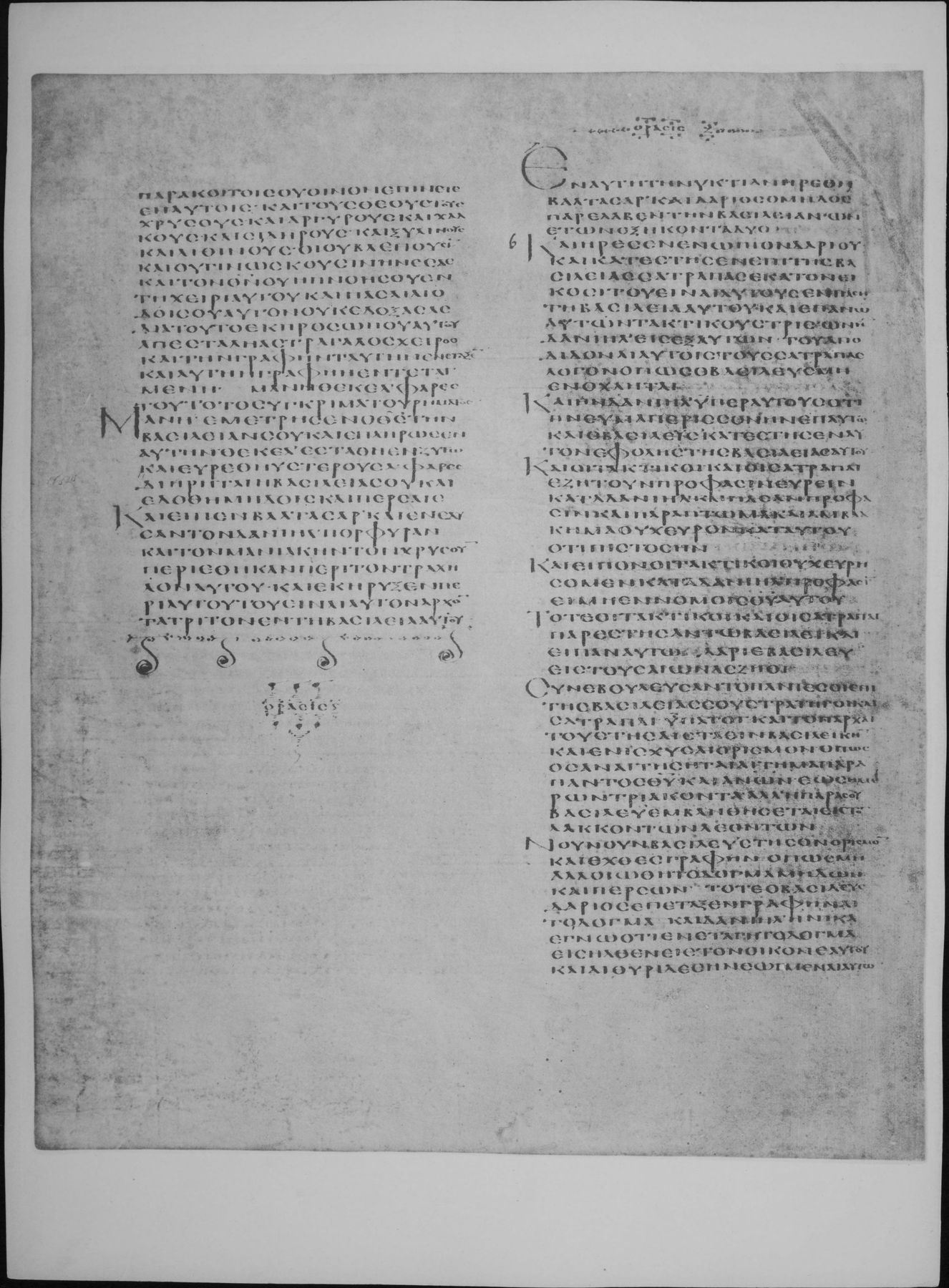
Daniel (Theodotion) 5:17-23 is on fol. 410r (full-size facsimile of 1879-83, Internet Archive codex-alexandrinus leaf 844). The 1936 reduced facsimile prints beneath this page: Dan. v. 7-23. Checked on the plate: the page begins inside Daniel (Theodotion) 5:7 (first words read: ΚΑΙ ΤΡΙΤΟΣ ΕΝ ΤΗ ΒΑΣΙΛΕΙΑ ΜΟΥ ΑΡΞΕΙ ΚΑΙ ΕΙΣΕΠΟΡΕΥΟΝΤΟ ΠΑΝΤΕΣ ΟΙ ΣΟΦΟΙ). Daniel (Theodotion) 5:23-24 is on fol. 410v (full-size facsimile of 1879-83, Internet Archive codex-alexandrinus leaf 845). The 1936 reduced facsimile prints beneath this page: Dan. v. 23-vi. 10. Checked on the plate: the page begins inside Daniel (Theodotion) 5:23 (first words read: ΠΑΡΑΚΟΙΤΟΙ ΣΟΥ ΟΙΝΟΝ ΕΠΙΝΕΤΕ ΕΝ ΑΥΤΟΙΣ ΚΑΙ ΤΟΥΣ ΘΕΟΥΣ ΤΟΥΣ ΧΡΥΣΟΥΣ).
17καὶ εἶπεν Δανιὴλ ἐνώπιον τοῦ βασιλέως Τὰ δόματά σού σοι ἔστω, καὶ τὴν δωρεὰν τῆς οἰκίας σου ἑτέρῳ δός· ἐγὼ δὲ τὴν γραφὴν ἀναγνώσομαι καὶ τὴν σύγκρισιν αὐτῆς γνωρίσω σοι. 18βασιλεῦ, ὁ θεὸς ὁ ὕψιστος τὴν βασιλείαν καὶ τὴν μεγαλωσύνην καὶ τὴν τιμὴν καὶ τὴν δόξαν ἔδωκεν Ναβουχοδονοσὸρ τῷ πατρί σου, 19καὶ ἀπὸ τῆς μεγαλωσύνης ἧς ἔδωκεν αὐτῷ πάντες οἱ λαοί, φυλαί, γλῶσσαι, ἦσαν τρέμοντες καὶ φοβούμενοι ἀπὸ προσώπου αὐτοῦ· οὓς ἠβούλετο αὐτὸς ἀνῄρει, καὶ οὓς ἠβούλετο αὐτὸς ἔτυπτεν, καὶ οὓς ἠβούλετο αὐτὸς ὑψοῖ, καὶ οὓς ἠβούλετο αὐτὸς ἐταπείνου. 20καὶ ὅτε ὑψώθη ἡ καρδία αὐτοῦ καὶ τὸ πνεῦμα αὐτοῦ ἐκραταιώθη τοῦ ὑπερηφανεύσασθαι, κατηνέχθη ἀπὸ τοῦ θρόνου τῆς βασιλείας καὶ ἡ τιμὴ ἀφῃρέθη ἀπ᾽ αὐτοῦ, 21καὶ ἀπὸ τῶν ἀνθρώπων ἐξεδιώχθη, καὶ ἡ καρδία αὐτοῦ μετὰ τῶν θηρίων ἐδόθη, καὶ μετὰ ὀνάγρων ἡ κατοικία αὐτοῦ, καὶ χόρτον ὡς βοῦν ἐψώμιζον αὐτόν, καὶ ἀπὸ τῆς δρόσου τοῦ οὐρανοῦ τὸ σῶμα αὐτοῦ ἐβάφη, ἕως οὗ γνῷ ὅτι κυριεύει ὁ θεὸς ὁ ὕψιστος τῆς βασιλείας τῶν ἀνθρώπων, καὶ ᾧ ἂν δόξῃ δώσει αὐτήν. 22καὶ σὺ οὖν ὁ υἱὸς αὐτοῦ Βαλτασὰρ οὐκ ἐταπείνωσας τὴν καρδίαν σου κατενώπιον τοῦ θεοῦ· οὐ πάντα ταῦτα ἔγνως· 23καὶ ἐπὶ τὸν κύριον θεὸν τοῦ οὐρανοῦ ὑψώθης, καὶ τὰ σκεύη τοῦ οἴκου αὐτοῦ ἤνεγκας ἐνώπιόν σου, καὶ σὺ καὶ οἱ μεγιστᾶνές σου καὶ αἱ παλλακαί σου καὶ αἱ παράκοιτοί σου οἶνον ἐπίνετε ἐν αὐτοῖς· καὶ τοὺς θεοὺς τοὺς χρυσοῦς καὶ ἀργυροῦς καὶ χαλκοῦς καὶ σιδηροῦς καὶ ξυλίνους καὶ λιθίνους, οἳ οὐ βλέπουσιν καὶ οἳ οὐκ ἀκούουσιν καὶ οὐ γινώσκουσιν, ᾔνεσας, καὶ τὸν θεὸν οὗ ἡ πνοή σου ἐν χειρὶ αὐτοῦ καὶ πᾶσαι αἱ ὁδοί σου, αὐτὸν οὐκ ἐδόξασας. 24διὰ τοῦτο ἐκ προσώπου αὐτοῦ ἀπεστάλη ἀστράγαλος χειρὸς καὶ τὴν γραφὴν ταύτην ἐνέταξεν.
17And Daniel said before the king, Let thy gifts be to thyself, and give the present of thine house to another; but I will read the writing, and will make known to thee the interpretation of it. 18O king, the most high God gave to thy father Nabuchodonosor a kingdom, and majesty, and honour, and glory: 19and by reason of the majesty which he gave to him, all nations, tribes and languages trembled and feared before him: whom he would he slew; and whom he would he smote; and whom he would he exalted; and whom he would he abased. 20But when his heart was lifted up, and his spirit was emboldened to act proudly, he was deposed from his royal throne, and his honour was taken from him. 21And he was driven forth from men; and his heart was given him after the nature of wild beasts, and his dwelling was with the wild asses; and they fed him with grass as an ox, and his body was bathed with the dew of heaven; until he knew that the most high God is Lord of the kingdom of men, and will give it to whomsoever he shall please. 22And thou accordingly, his son, O Baltasar, hast not humbled thine heart before God: knowest thou not all this? 23And thou hast been exalted against the Lord God of heaven; and they have brought before thee the vessels of his house, and thou, and thy nobles, and thy mistresses, and thy concubines, have drunk wine out of them; and thou hast praised the gods of gold, and silver, and brass, and iron, and wood, and stone, which see not, and which hear not, and know not: and the God in whose hand are thy breath and all thy ways hast thou not glorified. 24Therefore from his presence has been sent forth the knuckle of a hand; and he has ordered this writing.
Where on the image
Daniel (Theodotion) 5:25-31 is on fol. 410v (full-size facsimile of 1879-83, Internet Archive codex-alexandrinus leaf 845). The 1936 reduced facsimile prints beneath this page: Dan. v. 23-vi. 10. Checked on the plate: the page begins inside Daniel (Theodotion) 5:23 (first words read: ΠΑΡΑΚΟΙΤΟΙ ΣΟΥ ΟΙΝΟΝ ΕΠΙΝΕΤΕ ΕΝ ΑΥΤΟΙΣ ΚΑΙ ΤΟΥΣ ΘΕΟΥΣ ΤΟΥΣ ΧΡΥΣΟΥΣ).
25καὶ αὕτη ἡ γραφὴ ἡ ἐντεταγμένη Μανή, θεκέλ, φαρές. 26τοῦτο τὸ σύγκριμα τοῦ ῥήματος· μανή, ἐμέτρησεν ὁ θεὸς τὴν βασιλείαν σου καὶ ἐπλήρωσεν αὐτήν· 27θεκέλ, ἐστάθη ἐν ζυγῷ καὶ εὑρέθη ὑστεροῦσα· 28φαρές, διῄρηται ἡ βασιλεία σου καὶ ἐδόθη Μήδοις καὶ Πέρσαις. 29καὶ εἶπεν Βαλτασάρ, καὶ ἐνέδυσαν τὸν Δανιὴλ πορφύραν, καὶ τὸν μανιάκην τὸν χρυσοῦν περιέθηκαν περὶ τὸν τράχηλον αὐτοῦ, καὶ ἐκήρυξεν περὶ αὐτοῦ εἶναι αὐτὸν ἄρχοντα τρίτον ἐν τῇ βασιλείᾳ. 30ἐν αὐτῇ τῇ νυκτὶ ἀναιρέθη Βαλτασὰρ ὁ βασιλεὺς ὁ Χαλδαίων, 31καὶ Δαρεῖος ὁ Μῆδος παρέλαβεν τὴν βασιλείαν, ὢν ἐτῶν ἑξήκοντα δύο.
25And this is the ordered writing, Mane, Thekel, Phares. 26This is the interpretation of the sentence: Mane; God has measured thy kingdom, and finished it. 27Thekel; it has been weighed in the balance, and found wanting. 28Phares; thy kingdom is divided, and given to the Medes and Persians. 29Then Baltasar commanded, and they clothed Daniel with scarlet, and put the golden chain about his neck, and proclaimed concerning him that he was the third ruler in the kingdom. 30In the same night was Baltasar the Chaldean king slain. 6:1And Darius the Mede succeeded to the kingdom, being sixty-two years old.
Cite
Sources
- Source: Codex Alexandrinus (British Library Royal MS 1 D. VI) via the British Museum photographic facsimiles of 1879-83 and 1936 (Internet Archive) + Swete's Septuagint + Brenton's English (holding institution)
- Critical edition: H. B. Swete, The Old Testament in Greek according to the Septuagint (1909)
← previous · → next · v cycle view · l back to library