Deuteronomy, Chapter 25 (Codex Alexandrinus)
Introduction
Deuteronomy 25 in the Greek Old Testament (the Septuagint) as written in Codex Alexandrinus, a Greek Bible copied in the fifth century, probably in Egypt, and now in the British Library (Royal MS 1 D. V, the first of its four volumes). It is one of the three great early codices of the whole Greek Bible, with Codex Vaticanus and Codex Sinaiticus, and for Genesis 1:1-46:28, which Codex Vaticanus has lost, it is the oldest surviving complete Greek text (older papyri such as the Berlin Genesis papyrus and Chester Beatty 961 survive only in part).
Numbering: Swete's Greek and Brenton's English number or divide some verses of this chapter differently (Swete 25:15 = Brenton 25:15-16). Each column keeps its own verse numbers, and sections are cut only where the two texts agree, so each section holds the same passage in both languages.
This entry meets the strict three-criteria standard of the Theosis Library:
- Manuscript scan: the pages of Codex Alexandrinus carrying this chapter (fol. 117v, fol. 118r), from the full-size photographic (autotype) facsimile published by the British Museum in 1879-1883, as digitised on the Internet Archive. The verse range of every page comes from the reduced photographic facsimile of 1915, which prints it beneath each plate, and the opening words of every page were read on the plate to confirm the page and the verse it begins with. Each section links to the page or pages that hold its verses. Folio numbers are those written at the head of each leaf and visible on the plates.
- Original text: Swete's edition, which here prints the text of Codex Vaticanus (Vat. gr. 1209), the base of his edition, and gives the readings of Alexandrinus only in his apparatus. The Greek column is therefore Vaticanus' text; where Alexandrinus differs, the plate shows what Alexandrinus reads.
- English translation: Sir Lancelot C. L. Brenton, The Septuagint Version of the Old Testament (1844; 1851 edition), a translation of the Greek, public domain, from the eBible.org text.
How was this verified? (Provenance)
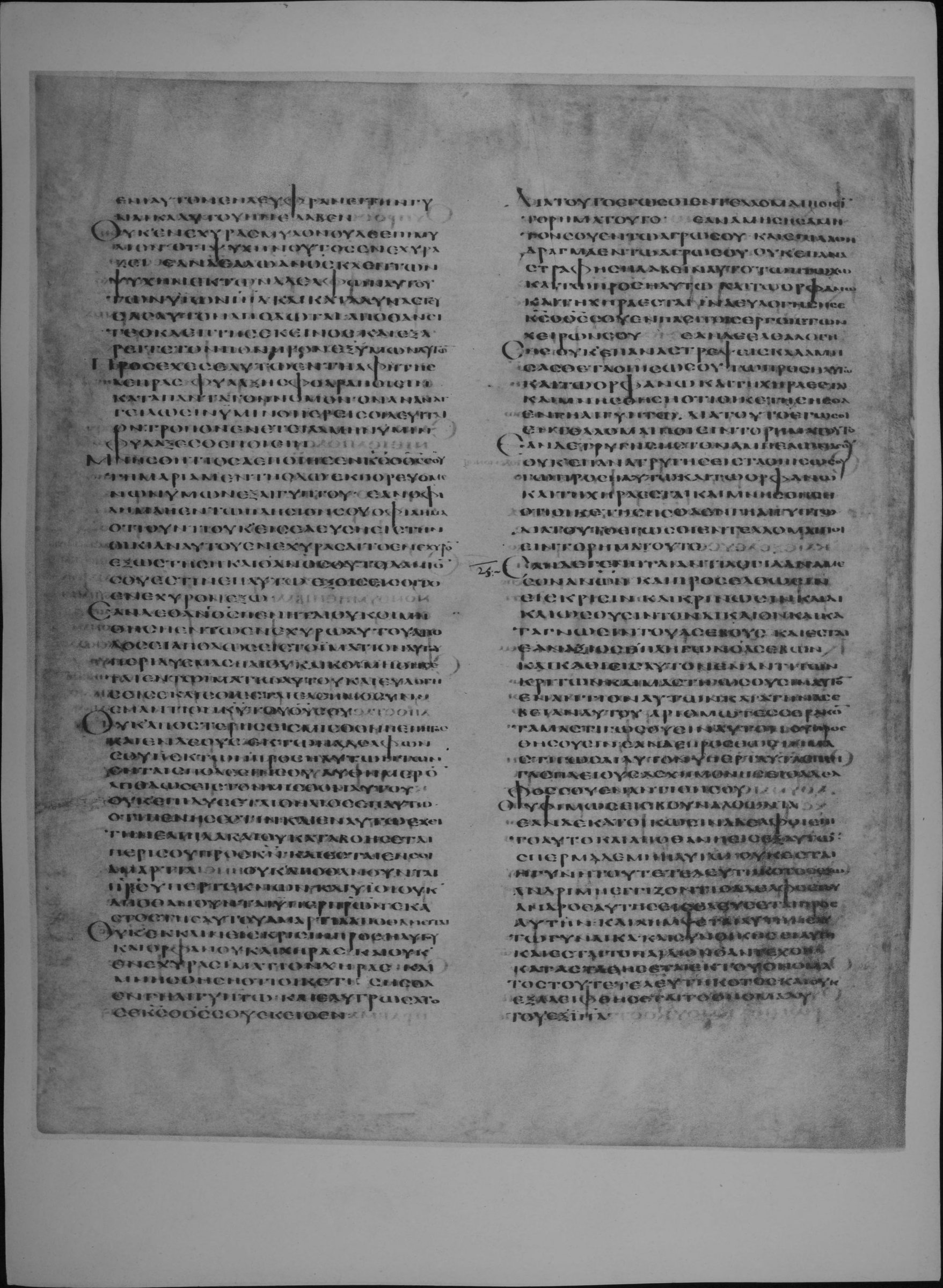
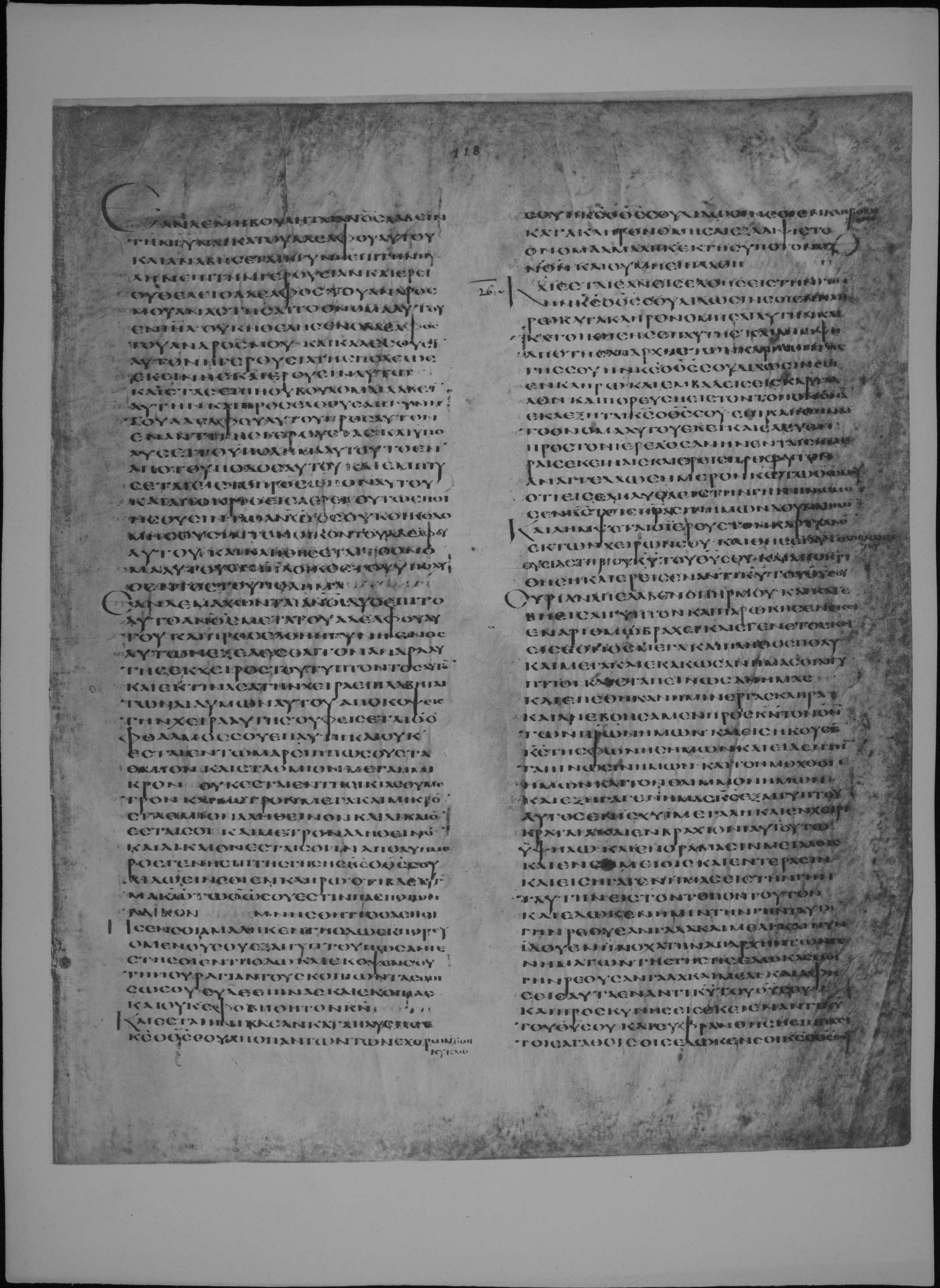
Where on the image
Deuteronomy 25:1-6 is on fol. 117v (full-size facsimile of 1879-83, Internet Archive codex-alexandrinus leaf 255). The 1915 reduced facsimile prints beneath this page: Deut. xxiv. 5-xxv. 6. Checked on the plate: the page begins inside Deuteronomy 24:5 (first words read: ΕΝΙΑΥΤΟΝ ΕΥΦΡΑΝΕΙ ΤΗΝ ΓΥΝΑΙΚΑ ΑΥΤΟΥ ΗΝ ΕΛΑΒΕΝ ΟΥΚ ΕΝΕΧΥΡΑΣΕΙΣ ΜΥΛΟΝ). Deuteronomy 25:7-8 is on fol. 118r (full-size facsimile of 1879-83, Internet Archive codex-alexandrinus leaf 256). The 1915 reduced facsimile prints beneath this page: Deut. xxv. 7-xxvi. 11. Checked on the plate: the page begins at the start of Deuteronomy 25:7 (first words read: ΕΑΝ ΔΕ ΜΗ ΒΟΥΛΗΤΑΙ Ο ΑΝΘΡΩΠΟΣ ΛΑΒΕΙΝ ΤΗΝ ΓΥΝΑΙΚΑ ΤΟΥ ΑΔΕΛΦΟΥ ΑΥΤΟΥ).
1Ἐὰν δὲ γένηται ἀντιλογία ἀνὰ μέσον ἀνθρώπων, καὶ προσέλθωσιν εἰς κρίσιν, καὶ δικαιώσωσιν τὸ δίκαιον καὶ καταγνῶσιν τοῦ ἀσεβοῦς· 2καὶ ἔσται ἐὰν ἄξιος ᾖ πληγῶν ὁ ἀσεβῶν, καθιεῖς αὐτὸν ἐναντίον αὐτῶν. 3καὶ ἀριθμῷ τεσσεράκοντα μαστιγώσουσιν αὐτόν, οὐ προσθήσουσιν· ἐὰν δὲ προσθῇς μαστιγῶσαι ὑπὲρ ταύτας τὰς πληγὰς πλείους, ἀσχημονήσει ὁ ἀδελφός σου ἐναντίον σου. 4Οὐ φιμώσεις βοῦν ἀλοῶντα. 5Ἐὰν δὲ κατοικῶσιν ἀδελφοὶ ἐπὶ τὸ αὐτό, καὶ ἀποθάνῃ εἷς αὐτῶν, σπέρμα δὲ μὴ ἦν αὐτῷ, οὐκ ἔσται ἡ γυνὴ τοῦ τεθνηκότος ἔξω ἀνδρὶ μὴ ἐγγίζοντι· ὁ ἀδελφὸς τοῦ ἀνδρὸς αὐτῆς εἰσελεύσεται πρὸς αὐτὴν καὶ λήμψεται αὐτὴν ἑαυτῷ γυναῖκα καὶ συνοικήσει αὐτῇ. 6καὶ ἔσται τὸ παιδίον ὃ ἐὰν τέκῃ κατασταθήσεται ἐκ τοῦ ὀνόματος τοῦ τετελευτηκότος, καὶ οὐκ ἐξαλειφθήσεται τὸ ὄνομα αὐτοῦ ἐξ Ἰσραήλ. 7ἐὰν δὲ μὴ βούληται ὁ ἄνθρωπος λαβεῖν τὴν γυναῖκα τοῦ ἀδελφοῦ αὐτοῦ, καὶ ἀναβήσεται ἡ γυνὴ ἐπὶ τὴν πύλην ἐπὶ τὴν γερουσίαν καὶ ἐρεῖ Οὐ θέλει ὁ ἀδελφὸς τοῦ ἀνδρός μου ἀναστῆσαι τὸ ὄνομα τοῦ ἀδελφοῦ αὐτοῦ ἐν Ἰσραήλ· οὐκ ἠθέλησεν ὁ ἀδελφὸς τοῦ ἀνδρός μου. 8καὶ καλέσουσιν αὐτὸν ἡ γερουσία τῆς πόλεως αὐτοῦ καὶ ἐροῦσιν αὐτῷ, καὶ στὰς εἴπῃ Οὐ βούλομαι λαβεῖν αὐτήν·
1And if there should be a dispute between men, and they should come forward to judgment, and the judges judge, and justify the righteous, and condemn the wicked: 2then it shall come to pass, if the unrighteous should be worthy of stripes, thou shalt lay him down before the judges, and they shall scourge him before them according to his iniquity. 3And they shall scourge him with forty stripes in number, they shall not inflict more; for if thou shouldest scourge him with more stripes beyond these stripes, thy brother will be disgraced before thee. 4Thou shalt not muzzle the ox that treads out the corn. 5And if brethren should live together, and one of them should die, and should not have seed, the wife of the deceased shall not marry out of the family to a man not related: her husband's brother shall go in to her, and shall take her to himself for a wife, and shall dwell with her. 6And it shall come to pass that the child which she shall bear, shall be named by the name of the deceased, and his name shall not be blotted out of Israel. 7And if the man should not be willing to take his brother's wife, then shall the woman go up to the gate to the elders, and she shall say, My husband's brother will not raise up the name of his brother in Israel, my husband's brother has refused. 8And the elders of his city shall call him, and speak to him; and if he stand and say, I will not take her:
Where on the image
Deuteronomy 25:9-19 is on fol. 118r (full-size facsimile of 1879-83, Internet Archive codex-alexandrinus leaf 256). The 1915 reduced facsimile prints beneath this page: Deut. xxv. 7-xxvi. 11. Checked on the plate: the page begins at the start of Deuteronomy 25:7 (first words read: ΕΑΝ ΔΕ ΜΗ ΒΟΥΛΗΤΑΙ Ο ΑΝΘΡΩΠΟΣ ΛΑΒΕΙΝ ΤΗΝ ΓΥΝΑΙΚΑ ΤΟΥ ΑΔΕΛΦΟΥ ΑΥΤΟΥ).
9καὶ προσελθοῦσα ἡ γυνὴ τοῦ ἀδελφοῦ αὐτοῦ ἔναντι τῆς γερουσίας, καὶ ὑπολύσει τὸ ὑπόδημα αὐτοῦ τὸ ἓν ἀπὸ τοῦ ποδὸς αὐτοῦ, καὶ ἐμπτύσεται κατὰ πρόσωπον αὐτοῦ, καὶ ἀποκριθεῖσα ἐρεῖ Οὕτως ποιήσουσιν τῷ ἀνθρώπῳ ὃς οὐκ οἰκοδομήσει τὸν οἶκον τοῦ ἀδελφοῦ αὐτοῦ ἐν Ἰσραήλ· 10καὶ κληθήσεται τὸ ὄνομα αὐτοῦ ἐν Ἰσραὴλ Οἶκος τοῦ ὑπολυθέντος τὸ ὑπόδημα. 11Ἐὰν δὲ μάχωνται ἄνθρωποι ἐπὶ τὸ αὐτό, ἄνθρωπος μετὰ τοῦ ἀδελφοῦ αὐτοῦ, καὶ προσέλθῃ γυνὴ ἑνὸς αὐτῶν ἐξελέσθαι τὸν ἄνδρα αὐτῆς ἐκ χειρὸς τοῦ τύπτοντος αὐτόν, καὶ ἐκτείνασα τὴν χεῖρα ἐπιλάβηται τῶν διδύμων αὐτοῦ, 12ἀποκόψεις τὴν χεῖρα· οὐ φείσεται ὁ ὀφθαλμός σου ἐπ᾽ αὐτῇ. 13Οὐκ ἔσται σοι ἐν τῷ μαρσίππῳ στάθμιον καὶ στάθμιον, μέγα ἢ μικρόν· 14οὐκ ἔσται ἐν τῇ οἰκίᾳ σου μέτρον καὶ μέτρον, μέγα ἢ μικρόν· 15στάθμιον ἀληθινὸν καὶ δίκαιον ἔσται σοι, ἵνα πολυήμερος γένῃ ἐπὶ τῆς γῆς ἧς Κύριος ὁ θεός σου δίδωσίν σοι ἐν κλήρῳ. 17Μνήσθητι ὅσα ἐποίησέν σοι Ἀμαλὴκ ἐν τῇ ὁδῷ ἐκπορευομένου σου ἐκ γῆς Αἰγύπτου, 18πῶς ἀντέστη σοι ἐν τῇ ὁδῷ καὶ ἔκοψέν σου τὴν οὐραγίαν, τοὺς κοπιῶντας ὀπίσω σου, σὺ δὲ ἐπείνας καὶ ἐκοπίας, καὶ οὐκ ἐφοβήθη τὸν θεόν· 19καὶ ἔσται ἡνίκα ἐὰν καταπαύσῃ σε Κύριος ὁ θεός σου ἀπὸ πάντων τῶν ἐχθρῶν σου τῶν κύκλῳ σου ἐν τῇ γῇ ᾗ Κύριος ὁ θεός σου δίδωσίν σοι κληρονομῆσαι, ἐξαλείψεις τὸ ὄνομα Ἀμαλὴκ ἐκ τῆς ὑπὸ τὸν οὐρανόν, καὶ οὐ μὴ ἐπιλάθῃ.
9then his brother's wife shall come forward before the elders, and shall loose one shoe from off his foot, and shall spit in his face, and shall answer and say, Thus shall they do to the man who will not build his brother's house in Israel. 10And his name shall be called in Israel, The house of him that has had his shoe loosed. 11And if men should strive together, a man with his brother, and the wife of one of them should advance to rescue her husband out of the hand of him that smites him, and she should stretch forth her hand, and take hold of his private parts; 12thou shalt cut off her hand; thine eye shall not spare her. 13Thou shalt not have in thy bag divers weights, a great and a small. 14Thou shalt not have in thine house divers measures, a great and a small. 15Thou shalt have a true and just weight, and a true and just measure, that thou mayest live long upon the land which the Lord thy God gives thee for an inheritance. 16For every one that does this is an abomination to the Lord thy God, even every one that does injustice. 17Remember what things Amalec did to thee by the way, when thou wentest forth out of the land of Egypt: 18how he withstood thee in the way, and harassed thy rear, even those that were weary behind thee, and thou didst hunger and wast weary; and he did not fear God. 19And it shall come to pass whenever the Lord thy God shall have given thee rest from all thine enemies round about thee, in the land which the Lord thy God gives thee to inherit, thou shalt blot out the name of Amalec from under heaven, and shalt not forget to do it.
Cite
Sources
- Source: Codex Alexandrinus (British Library Royal MS 1 D. V) via the British Museum photographic facsimiles of 1879-83 and 1915 (Internet Archive) + Swete's Septuagint + Brenton's English (holding institution)
- Critical edition: H. B. Swete, The Old Testament in Greek according to the Septuagint (1909)
← previous · → next · v cycle view · l back to library