Deuteronomy, Chapter 5 (Codex Alexandrinus)
Introduction
Deuteronomy 5 in the Greek Old Testament (the Septuagint) as written in Codex Alexandrinus, a Greek Bible copied in the fifth century, probably in Egypt, and now in the British Library (Royal MS 1 D. V, the first of its four volumes). It is one of the three great early codices of the whole Greek Bible, with Codex Vaticanus and Codex Sinaiticus, and for Genesis 1:1-46:28, which Codex Vaticanus has lost, it is the oldest surviving complete Greek text (older papyri such as the Berlin Genesis papyrus and Chester Beatty 961 survive only in part).
This entry meets the strict three-criteria standard of the Theosis Library:
- Manuscript scan: the pages of Codex Alexandrinus carrying this chapter (fol. 106v, fol. 107r), from the full-size photographic (autotype) facsimile published by the British Museum in 1879-1883, as digitised on the Internet Archive. The verse range of every page comes from the reduced photographic facsimile of 1915, which prints it beneath each plate, and the opening words of every page were read on the plate to confirm the page and the verse it begins with. Each section links to the page or pages that hold its verses. Folio numbers are those written at the head of each leaf and visible on the plates.
- Original text: Swete's edition, which here prints the text of Codex Vaticanus (Vat. gr. 1209), the base of his edition, and gives the readings of Alexandrinus only in his apparatus. The Greek column is therefore Vaticanus' text; where Alexandrinus differs, the plate shows what Alexandrinus reads.
- English translation: Sir Lancelot C. L. Brenton, The Septuagint Version of the Old Testament (1844; 1851 edition), a translation of the Greek, public domain, from the eBible.org text.
How was this verified? (Provenance)
Where on the image
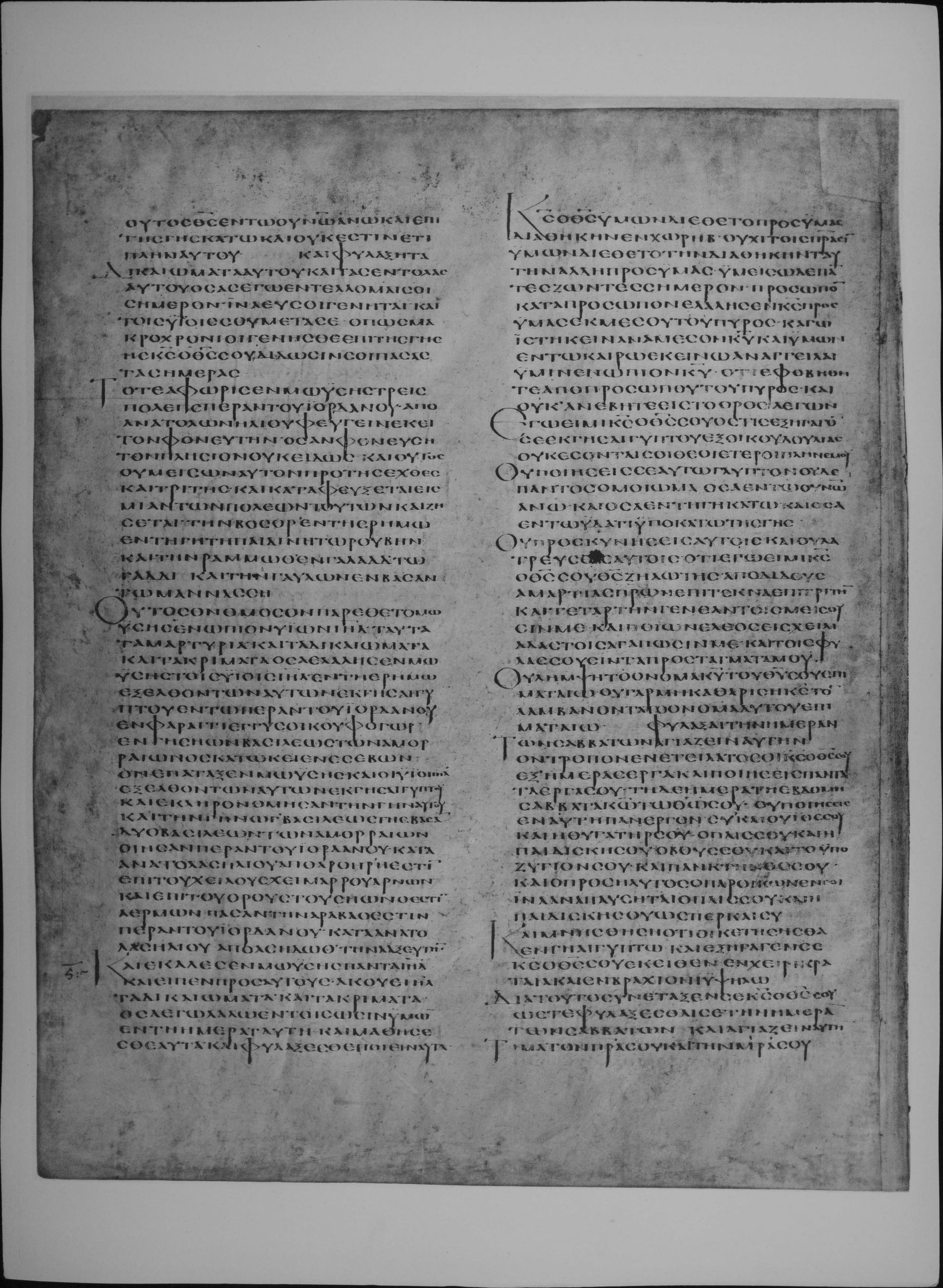
Deuteronomy 5:1-8 is on fol. 106v (full-size facsimile of 1879-83, Internet Archive codex-alexandrinus leaf 233). The 1915 reduced facsimile prints beneath this page: Deut. iv. 39-v. 16. Checked on the plate: the page begins inside Deuteronomy 4:39 (first words read: ΟΥΤΟΣ ΘΣ ΕΝ ΤΩ ΟΥΡΑΝΩ ΑΝΩ ΚΑΙ ΕΠΙ ΤΗΣ ΓΗΣ ΚΑΤΩ ΚΑΙ ΟΥΚ ΕΣΤΙΝ ΕΤΙ ΠΛΗΝ ΑΥΤΟΥ).
1Καὶ ἐκάλεσεν Μωυσῆς πάντα Ἰσραὴλ καὶ εἶπεν πρὸς αὐτούς Ἄκουε Ἰσραὴλ τὰ δικαιώματα καὶ τὰ κρίματα ὅσα ἐγὼ λαλῶ ἐν τοῖς ὠσὶν ὑμῶν ἐν τῇ ἡμέρᾳ ταύτῃ, καὶ μαθήσεσθε αὐτὰ καὶ φυλάξεσθε ποιεῖν αὐτά. 2Κύριος ὁ θεὸς ὑμῶν διέθετο πρὸς ὑμᾶς διαθήκην ἐν Χωρήβ. 3οὐχὶ τοῖς πατράσιν ὑμῶν διέθετο Κύριος τὴν διαθήκην ταύτην ἀλλ᾽ ἢ πρὸς ὑμᾶς· ὑμεῖς ὧδε πάντες ζῶντες σήμερον. 4πρόσωπον κατὰ πρόσωπον ἐλάλησεν Κύριος πρὸς ὑμᾶς ἐν τῷ ὄρει ἐκ μέσου τοῦ πυρός, 5κἀγὼ εἱστήκειν ἀνὰ μέσον Κυρίου καὶ ὑμῶν ἐν τῷ καιρῷ ἐκείνῳ, ἀναγγεῖλαι ὑμῖν τὰ ῥήματα Κυρίου, ὅτι ἐφοβήθητε ἀπὸ προσώπου τοῦ πυρὸς καὶ οὐκ ἀνέβητε εἰς τὸ ὄρος, λέγων 6Ἐγώ Κύριος ὁ θεός σου ὁ ἐξαγαγών σε ἐκ γῆς Αἰγύπτου, ἐξ οἴκου δουλίας. 7Οὐκ ἔσονταί σοι θεοὶ ἕτεροι πρὸ προσώπου μου. 8Οὐ ποιήσεις σεαυτῷ εἴδωλον οὐδὲ παντὸς ὁμοίωμα, ὅσα ἐν τῷ οὐρανῷ ἄνω καὶ ὅσα ἐν τῇ γῇ κάτω καὶ ὅσα ἐν τοῖς ὕδασιν ὑποκάτω τῆς γῆς.
1And Moses called all Israel, and said to them, Hear, Israel, the ordinances and judgments, all that I speak in your ears this day, and ye shall learn them, and observe to do them. 2The Lord your God made a covenant with you in Choreb. 3The Lord did not make this covenant with your fathers, but with you: ye are all here alive this day. 4The Lord spoke to you face to face in the mountain out of the midst of the fire. 5And I stood between the Lord and you at that time to report to you the words of the Lord, (because ye were afraid before the fire, and ye went not up to the mountain,) saying, 6I am the Lord thy God, who brought thee out of the land of Egypt, out of the house of bondage. 7Thou shalt have no other gods before my face. 8Thou shalt not make to thyself an image, nor likeness of any thing, whatever things are in the heaven above, and whatever are in the earth beneath, and whatever are in the waters under the earth.
Where on the image
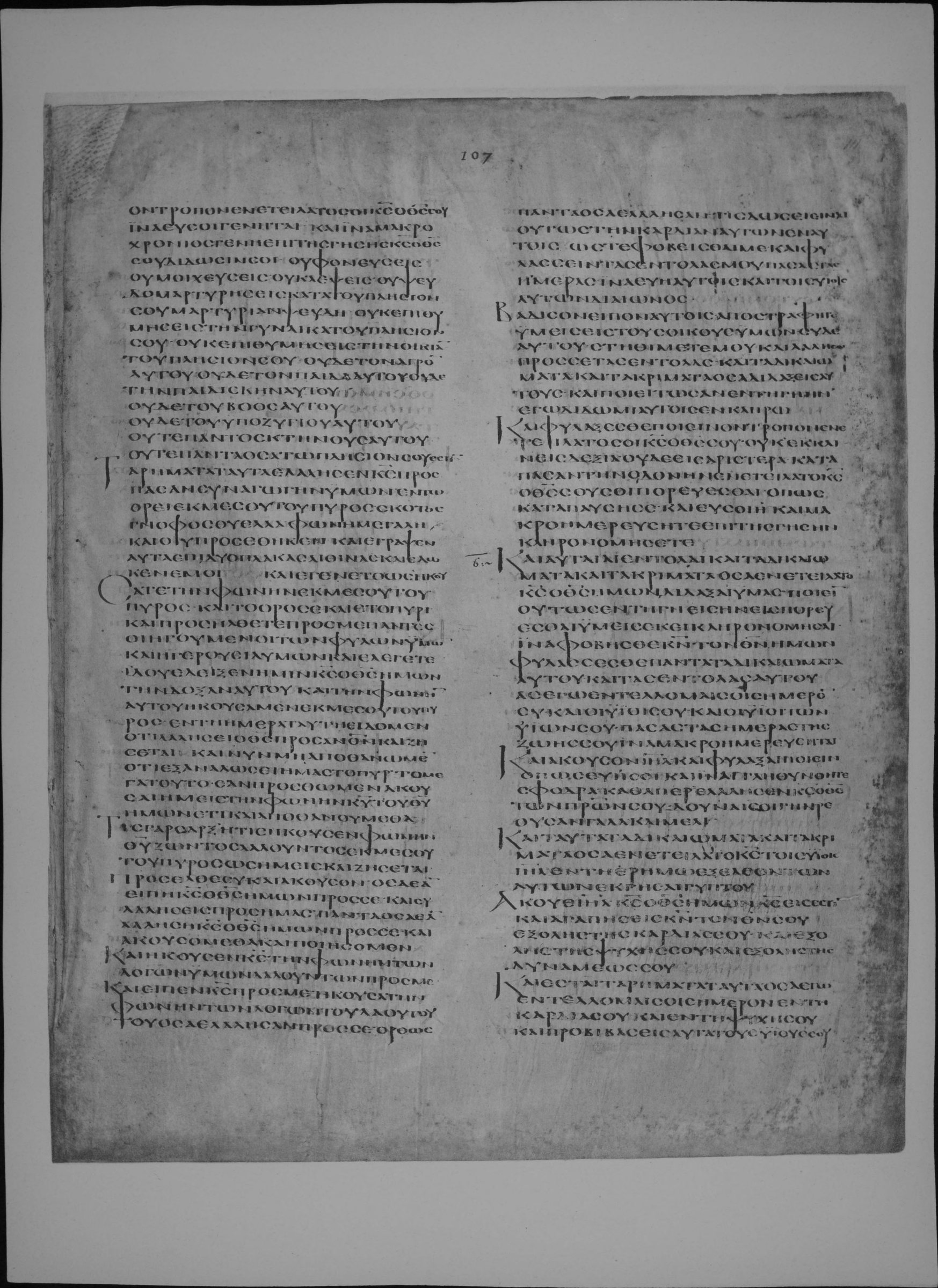
Deuteronomy 5:9-16 is on fol. 106v (full-size facsimile of 1879-83, Internet Archive codex-alexandrinus leaf 233). The 1915 reduced facsimile prints beneath this page: Deut. iv. 39-v. 16. Checked on the plate: the page begins inside Deuteronomy 4:39 (first words read: ΟΥΤΟΣ ΘΣ ΕΝ ΤΩ ΟΥΡΑΝΩ ΑΝΩ ΚΑΙ ΕΠΙ ΤΗΣ ΓΗΣ ΚΑΤΩ ΚΑΙ ΟΥΚ ΕΣΤΙΝ ΕΤΙ ΠΛΗΝ ΑΥΤΟΥ). Deuteronomy 5:16 is on fol. 107r (full-size facsimile of 1879-83, Internet Archive codex-alexandrinus leaf 234). The 1915 reduced facsimile prints beneath this page: Deut. v. 16-vi. 7. Checked on the plate: the page begins inside Deuteronomy 5:16 (first words read: ΟΝ ΤΡΟΠΟΝ ΕΝΕΤΕΙΛΑΤΟ ΣΟΙ ΚΣ Ο ΘΣ ΣΟΥ ΙΝΑ ΕΥ ΣΟΙ ΓΕΝΗΤΑΙ ΚΑΙ ΙΝΑ ΜΑΚΡΟΧΡΟΝΙΟΣ).
9οὐ προσκυνήσεις αὐτοῖς οὐδὲ μὴ λατρεύσῃς αὐτοῖς· ἐγὼ γάρ εἰμι Κύριος ὁ θεός σου, θεὸς ζηλωτής, ἀποδιδοὺς ἁμαρτίας πατέρων ἐπὶ τέκνα ἐπὶ τρίτην καὶ τετάρτην γενεὰν τοῖς μισοῦσίν με, 10καὶ ποιῶν ἔλεος εἰς χιλιάδας τοῖς ἀγαπῶσίν με καὶ τοῖς φυλάσσουσιν τὰ προστάγματά μου. 11Οὐ λήμψῃ τὸ ὄνομα Κυρίου τοῦ θεοῦ σου ἐπὶ ματαίῳ· οὐ γὰρ μὴ καθαρίσῃ Κύριος τὸν λαμβάνοντα τὸ ὄνομα αὐτοῦ ἐπὶ ματαίῳ. 12Φύλαξαι τὴν ἡμέραν τῶν σαββάτων ἁγιάζειν αὐτήν, ὃν τρόπον ἐνετείλατό σοι Κύριος ὁ θεός σου. 13ἓξ ἡμέρας ἐργᾷ καὶ ποιήσεις πάντα τὰ ἔργα σου, 14τῇ δὲ ἡμέρᾳ τῇ ἑβδόμῃ σάββατα Κυρίῳ τῷ θεῷ σου· οὐ ποιήσεις ἐν αὐτῇ πᾶν ἔργον, σὺ καὶ οἱ υἱοί σου καὶ ἡ θυγάτηρ σου, ὁ παῖς σου καὶ ἡ παιδίσκη σου, ὁ βοῦς σου καὶ τὸ ὑποζύγιόν σου καὶ πᾶν κτῆνός σου, ὁ προσήλυτος ὁ παροικῶν ἐν σοί· ἐν γὰρ ἓξ ἡμέραις ἐποίησεν Κύριος τόν τε οὐρανὸν καὶ τὴν γῆν καὶ τὴν θάλασσαν καὶ πάντα τὰ ἐν αὐτοῖς· ἵνα ἀναπαύσηται ὁ παῖς σου καὶ ἡ παιδίσκη σου ὥσπερ καὶ σύ. 15καὶ μνησθήσῃ ὅτι οἰκέτης ἦσθα ἐν γῇ Αἰγύπτῳ, καὶ ἐξήγαγέν σε Κύριος ὁ θεός σου ἐκεῖθεν ἐν χειρὶ κραταιᾷ καὶ ἐν βραχίονι ὑψηλῷ· διὰ τοῦτο συνέταξέν σοι Κύριος ὁ θεός σου ὥστε φυλάσσεσθαι τὴν ἡμέραν τῶν σαββάτων καὶ ἁγιάζειν αὐτήν. 16Τίμα τὸν πατέρα σου καὶ τὴν μητέρα σου, ὃν τρόπον ἐνετείλατο Κύριος ὁ θεός σου, ἵνα εὖ σοι γένηται, καὶ ἵνα μακροχρόνιοι ἦτε ἐπὶ τῆς γῆς ἧς Κύριος ὁ θεός σου δίδωσίν σοι.
9Thou shalt not bow down to them, nor shalt thou serve them; for I am the Lord thy God, a jealous God, visiting the sins of the fathers upon the children to the third and fourth generation to them that hate me, 10and doing mercifully to thousands of them that love me, and that keep my commandments. 11Thou shalt not take the name of the Lord thy God in vain, for the Lord thy God will certainly not acquit him that takes his name in vain. 12Keep the sabbath day to sanctify it, as the Lord thy God commanded thee. 13Six days thou shalt work, and thou shalt do all thy works; 14but on the seventh day is the sabbath of the Lord thy God: thou shalt do in it no work, thou, and thy son, and thy daughter, thy man-servant, and thy maid-servant, thine ox, and thine ass, and all thy cattle, and the stranger that sojourns in the midst of thee; that thy man-servant may rest, and thy maid, and thine ox, as well as thou. 15And thou shalt remember that thou wast a slave in the land of Egypt, and the Lord thy God brought thee out thence with a mighty hand, and a high arm: therefore the Lord appointed thee to keep the sabbath day and to sanctify it. 16Honour thy father and thy mother, as the Lord thy God commanded thee; that it may be well with thee, and that thou mayest live long upon the land, which the Lord thy God gives thee.
Where on the image
Deuteronomy 5:17-24 is on fol. 107r (full-size facsimile of 1879-83, Internet Archive codex-alexandrinus leaf 234). The 1915 reduced facsimile prints beneath this page: Deut. v. 16-vi. 7. Checked on the plate: the page begins inside Deuteronomy 5:16 (first words read: ΟΝ ΤΡΟΠΟΝ ΕΝΕΤΕΙΛΑΤΟ ΣΟΙ ΚΣ Ο ΘΣ ΣΟΥ ΙΝΑ ΕΥ ΣΟΙ ΓΕΝΗΤΑΙ ΚΑΙ ΙΝΑ ΜΑΚΡΟΧΡΟΝΙΟΣ).
17Οὐ μοιχεύσεις. 18Οὐ φονεύσεις. 19Οὐ κλέψεις. 20Οὐ ψευδομαρτυρήσεις κατὰ τοῦ πλησίον σου μαρτυρίαν ψευδῆ. 21Οὐκ ἐπιθυμήσεις τὴν γυναῖκα τοῦ πλησίον σου· οὐκ ἐπιθυμήσεις τὴν οἰκίαν τοῦ πλησίον σου οὔτε τὸν ἀγρὸν αὐτοῦ οὔτε τὸν παῖδα αὐτοῦ οὔτε τὴν παιδίσκην αὐτοῦ, οὔτε τοῦ βοὸς αὐτοῦ οὔτε τοῦ ὑποζυγίου αὐτοῦ οὔτε παντὸς κτήνους αὐτοῦ, οὔτε ὅσα τῷ πλησίον σού ἐστιν. 22Τὰ ῥήματα ταῦτα ἐλάλησεν Κύριος πρὸς πᾶσαν συναγωγὴν ὑμῶν ἐν τῷ ὄρει ἐκ μέσου τοῦ πυρός· σκότος, γνόφος, θύελλα, φωνὴ μεγάλη· καὶ οὐ προσέθηκεν· καὶ ἔγραψεν αὐτὰ ἐπὶ δύο πλάκας, καὶ ἔδωκέν μοι. 23καὶ ἐγένετο ὡς ἠκούσατε τὴν φωνὴν ἐκ μέσου τοῦ πυρός, καὶ τὸ ὄρος ἐκαίετο πυρί, καὶ προσήλθετε πρὸς μὲ πάντες οἱ ἡγούμενοι τῶν φυλῶν ὑμῶν καὶ ἡ γερουσία ὑμῶν· 24καὶ ἐλέγετε Ἰδοὺ ἔδειξεν Κύριος ὁ θεὸς ἡμῶν τὴν δόξαν αὐτοῦ, καὶ τὴν φωνὴν αὐτοῦ ἠκούσαμεν ἐκ μέσου τοῦ πυρός· ἐν τῇ ἡμέρᾳ ταύτῃ ἴδομεν ὅτι λαλήσει θεὸς πρὸς ἄνθρωπον, καὶ ζήσεται.
17Thou shalt not commit murder. 18Thou shalt not commit adultery. 19Thou shalt not steal. 20Thou shalt not bear false witness against thy neighbour. 21Thou shalt not covet thy neighbour's wife; thou shalt not covet thy neighbour's house, nor his field, nor his man-servant, nor his maid, nor his ox, nor his ass, nor any beast of his, nor any thing that is thy neighbour's. 22These words the Lord spoke to all the assembly of you in the mountain out of the midst of the fire— there was darkness, blackness, storm, a loud voice—and he added no more, and he wrote them on two tables of stone, and he gave them to me. 23And it came to pass when ye heard the voice out of the midst of the fire, for the mountain burned with fire, that ye came to me, even all the heads of your tribes, and your elders: 24and ye said, Behold, the Lord our God has shewn us his glory, and we have heard his voice out of the midst of the fire: this day we have seen that God shall speak to man, and he shall live.
Where on the image
Deuteronomy 5:25-33 is on fol. 107r (full-size facsimile of 1879-83, Internet Archive codex-alexandrinus leaf 234). The 1915 reduced facsimile prints beneath this page: Deut. v. 16-vi. 7. Checked on the plate: the page begins inside Deuteronomy 5:16 (first words read: ΟΝ ΤΡΟΠΟΝ ΕΝΕΤΕΙΛΑΤΟ ΣΟΙ ΚΣ Ο ΘΣ ΣΟΥ ΙΝΑ ΕΥ ΣΟΙ ΓΕΝΗΤΑΙ ΚΑΙ ΙΝΑ ΜΑΚΡΟΧΡΟΝΙΟΣ).
25καὶ νῦν μὴ ἀποθάνωμεν, ὅτι ἐξαναλώσει ἡμᾶς τὸ πῦρ τὸ μέγα τοῦτο, ἐὰν προσθώμεθα ἡμεῖς ἀκοῦσαι τὴν φωνὴν Κυρίου τοῦ θεοῦ ἡμῶν ἔτι, καὶ ἀποθανούμεθα. 26τίς γὰρ σὰρξ ἥτις ἤκουσεν φωνὴν θεοῦ ζῶντος λαλοῦντος ἐκ μέσου τοῦ πυρὸς ὡς ἡμεῖς, καὶ ζήσεται; 27πρόσελθε σὺ καὶ ἄκουσον ὅσα ἐὰν εἴπῃ Κύριος ὁ θεὸς ἡμῶν, καὶ σὺ λαλήσεις πρὸς ἡμᾶς πάντα ὅσα ἂν λαλήσῃ Κύριος ὁ θεὸς ἡμῶν πρὸς σέ, καὶ ἀκουσόμεθα καὶ ποιήσομεν. 28καὶ ἤκουσεν Κύριος τὴν φωνὴν τῶν λόγων ὑμῶν λαλούντων πρὸς μέ, καὶ εἶπεν Κύριος πρὸς μέ Ἤκουσα τὴν φωνὴν τῶν λόγων τοῦ λαοῦ τούτου ὅσα ἐλάλησαν πρὸς σέ· ὀρθῶς πάντα ὅσα ἐλάλησαν. 29τίς δώσει οὕτως εἶναι τὴν καρδίαν αὐτῶν ἐν αὐτοῖς ὥστε φοβεῖσθαί με καὶ φυλάσσεσθαι τὰς ἐντολάς μου πάσας τὰς ἡμέρας, ἵνα εὖ ᾖ αὐτοῖς καὶ τοῖς υἱοῖς αὐτῶν δι᾽ αἰῶνος; 30βάδισον εἰπὸν αὐτοῖς Ἀποστράφητε ὑμεῖς εἰς τοὺς οἴκους ὑμῶν. 31σὺ δὲ αὐτοῦ στῆθι μετ᾽ ἐμοῦ, καὶ λαλήσω πρὸς σὲ τὰς ἐντολὰς καὶ τὰ δικαιώματα καὶ τὰ κρίματα ὅσα διδάξεις αὐτούς· καὶ ποιείτωσαν ἐν τῇ γῇ ἣν ἐγὼ δίδωμι αὐτοῖς ἐν κλήρῳ. 32καὶ φυλάξεσθε ποιεῖν ὃν τρόπον ἐνετείλατό σοι Κύριος ὁ θεός σου· οὐκ ἐκκλινεῖτε εἰς δεξιὰ οὐδὲ εἰς ἀριστερά, 33κατὰ πᾶσαν τὴν ὁδὸν ἣν ἐνετείλατό σοι Κύριος ὁ θεός σου πορεύεσθαι ἐν αὐτῇ· ὅπως καταπαύσῃ σε, καὶ εὖ σοι ᾖ, καὶ μακροημερεύσητε ἐπὶ τῆς γῆς ἧς κληρονομήσετε.
25And now let us not die, for this great fire will consume us, if we shall hear the voice of the Lord our God any more, and we shall die. 26For what flesh is there which has heard the voice of the living God, speaking out of the midst of the fire, as we have heard, and shall live? 27Do thou draw near, and hear all that the Lord our God shall say, and thou shalt speak to us all things whatsoever the Lord our God shall speak to thee, and we will hear, and do. 28And the Lord heard the voice of your words as ye spoke to me; and the Lord said to me, I have heard the voice of the words of this people, even all things that they have said to thee. They have well said all that they have spoken. 29O that there were such a heart in them, that they should fear me and keep my commands always, that it might be well with them and with their sons for ever. 30Go, say to them, Return ye to your houses; 31but stand thou here with me, and I will tell thee all the commands, and the ordinances, and the judgments, which thou shalt teach them, and let them do so in the land which I give them for an inheritance. 32And ye shall take heed to do as the Lord thy God commanded thee; ye shall not turn aside to the right hand or to the left, 33according to all the way which the Lord thy God commanded thee to walk in it, that he may give thee rest; and that it may be well with thee, and ye may prolong your days on the land which ye shall inherit.
Cite
Sources
- Source: Codex Alexandrinus (British Library Royal MS 1 D. V) via the British Museum photographic facsimiles of 1879-83 and 1915 (Internet Archive) + Swete's Septuagint + Brenton's English (holding institution)
- Critical edition: H. B. Swete, The Old Testament in Greek according to the Septuagint (1909)
← previous · → next · v cycle view · l back to library