Deuteronomy, Chapter 8 (Codex Alexandrinus)
Introduction
Deuteronomy 8 in the Greek Old Testament (the Septuagint) as written in Codex Alexandrinus, a Greek Bible copied in the fifth century, probably in Egypt, and now in the British Library (Royal MS 1 D. V, the first of its four volumes). It is one of the three great early codices of the whole Greek Bible, with Codex Vaticanus and Codex Sinaiticus, and for Genesis 1:1-46:28, which Codex Vaticanus has lost, it is the oldest surviving complete Greek text (older papyri such as the Berlin Genesis papyrus and Chester Beatty 961 survive only in part).
This entry meets the strict three-criteria standard of the Theosis Library:
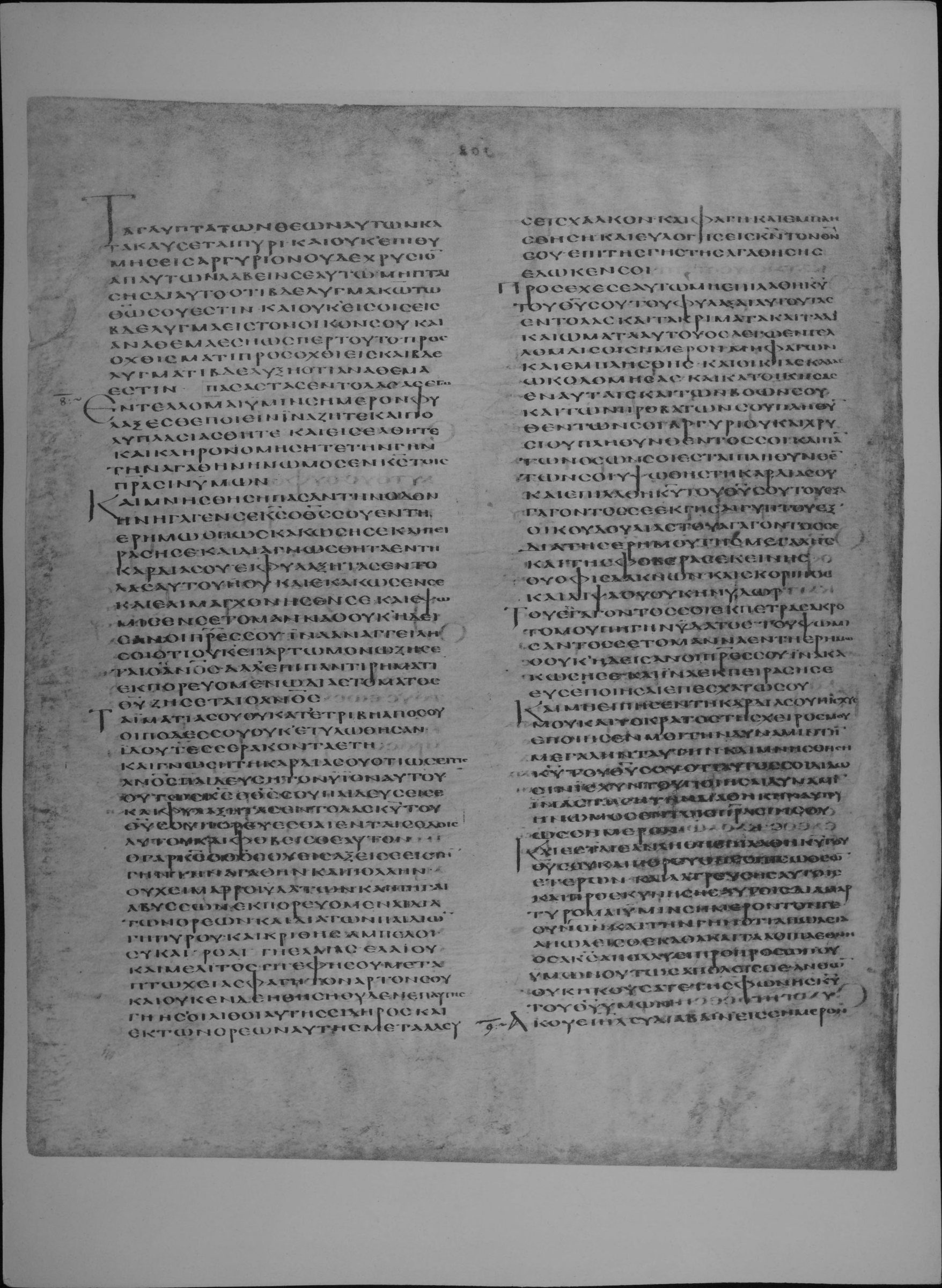
- Manuscript scan: the page of Codex Alexandrinus carrying this chapter (fol. 108v), from the full-size photographic (autotype) facsimile published by the British Museum in 1879-1883, as digitised on the Internet Archive. The verse range of every page comes from the reduced photographic facsimile of 1915, which prints it beneath each plate, and the opening words of every page were read on the plate to confirm the page and the verse it begins with. Each section links to the page or pages that hold its verses. Folio numbers are those written at the head of each leaf and visible on the plates.
- Original text: Swete's edition, which here prints the text of Codex Vaticanus (Vat. gr. 1209), the base of his edition, and gives the readings of Alexandrinus only in his apparatus. The Greek column is therefore Vaticanus' text; where Alexandrinus differs, the plate shows what Alexandrinus reads.
- English translation: Sir Lancelot C. L. Brenton, The Septuagint Version of the Old Testament (1844; 1851 edition), a translation of the Greek, public domain, from the eBible.org text.
How was this verified? (Provenance)
Where on the image
Deuteronomy 8:1-8 is on fol. 108v (full-size facsimile of 1879-83, Internet Archive codex-alexandrinus leaf 237). The 1915 reduced facsimile prints beneath this page: Deut. vii. 25-ix. 1. Checked on the plate: the page begins at the start of Deuteronomy 7:25 (first words read: ΤΑ ΓΛΥΠΤΑ ΤΩΝ ΘΕΩΝ ΑΥΤΩΝ ΚΑΤΑΚΑΥΣΕΤΑΙ ΠΥΡΙ ΚΑΙ ΟΥΚ ΕΠΙΘΥΜΗΣΕΙΣ ΑΡΓΥΡΙΟΝ).
1Πάσας τὰς ἐντολὰς ἃς ἐγὼ ἐντέλλομαι ὑμῖν σήμερον φυλάξεσθε ποιεῖν, ἵνα ζῆτε καὶ πολυπλασιασθῆτε, καὶ εἰσελθόντες κληρονομήσητε τὴν γῆν ἣν Κύριος ὁ θεὸς ὑμῶν ὤμοσεν τοῖς πατράσιν ὑμῶν. 2καὶ μνησθήσῃ πᾶσαν τὴν ὁδὸν ἣν ἤγαγέν σε Κύριος ὁ θεός σου ἐν τῇ ἐρήμῳ, ὡς ἂν κακώσῃ σε καὶ ἐκπειράσῃ σε, καὶ διαγνωσθῇ τὰ ἐν τῇ καρδίᾳ σου, εἰ φυλάξῃ τὰς ἐντολὰς αὐτοῦ ἢ οὔ. 3καὶ ἐκάκωσέν σε καὶ ἐλιμαγχόνησέν σε, καὶ ἐψώμισέν σε τὸ μάννα ὃ οὐκ εἴδησαν οἱ πατέρες σου· ἵνα ἀναγγείλῃ σοι ὅτι οὐκ ἐπ᾽ ἄρτῳ μόνῳ ζήσεται ὁ ἄνθρωπος, ἀλλ᾽ ἐπὶ παντὶ ῥήματι τῷ ἐκπορευομένῳ διὰ στόματος θεοῦ ζήσεται ὁ ἄνθρωπος. 4τὰ ἱμάτιά σου οὐκ ἐπαλαιώθη ἀπὸ σοῦ, τὰ ὑποδήματά σου οὐ κατετρίβη ἀπὸ σοῦ, οἱ πόδες σου οὐκ ἐτυλώθησαν ἰδοὺ τεσσεράκοντα ἔτη. 5καὶ γνώσῃ τῇ καρδίᾳ σου ὅτι ὡς εἴ τις παιδεύσαι ἄνθρωπος τὸν υἱὸν αὐτοῦ, οὕτως Κύριος ὁ θεός σου παιδεύσει σε· 6καὶ φυλάξῃ τὰς ἐντολὰς Κυρίου τοῦ θεοῦ σου, πορεύεσθαι ταῖς ὁδοῖς αὐτοῦ καὶ φοβεῖσθαι αὐτόν. 7ὁ γὰρ Κύριος ὁ θεός σου εἰσάγει σε εἰς γῆν ἀγαθὴν καὶ πολλήν, οὗ χείμαρροι ὑδάτων, πηγαὶ ἀβύσσων ἐκπορευόμεναι διὰ τῶν πεδίων καὶ διά τῶν ὀρέων· 8γῆ πυροῦ καὶ κριθῆς, ἄμπελοι, συκαῖ, ῥόαι, γῆ ἐλαίας ἐλαίου καὶ μέλιτος·
1Ye shall observe to do all the commands which I charge you to-day, that ye may live and be multiplied, and enter in and inherit the land, which the Lord your God sware to give to your fathers. 2And thou shalt remember all the way which the Lord thy God led thee in the wilderness, that he might afflict thee, and try thee, and that the things in thine heart might be made manifest, whether thou wouldest keep his commandments or no. 3And he afflicted thee and straitened thee with hunger, and fed thee with manna, which thy fathers knew not; that he might teach thee that man shall not live by bread alone, but by every word that proceeds out of the mouth of God shall man live. 4Thy garments grew not old from off thee, thy shoes were not worn from off thee, thy feet were not painfully hardened, lo! these forty years. 5And thou shalt know in thine heart, that as if any man should chasten his son, so the Lord thy God will chasten thee. 6And thou shalt keep the commands of the Lord thy God, to walk in his ways, and to fear him. 7For the Lord thy God will bring thee into a good and extensive land, where there are torrents of waters, and fountains of deep places issuing through the plains and through the mountains: 8a land of wheat and barley, wherein are vines, figs, pomegranates; a land of olive oil and honey;
Where on the image
Deuteronomy 8:9-16 is on fol. 108v (full-size facsimile of 1879-83, Internet Archive codex-alexandrinus leaf 237). The 1915 reduced facsimile prints beneath this page: Deut. vii. 25-ix. 1. Checked on the plate: the page begins at the start of Deuteronomy 7:25 (first words read: ΤΑ ΓΛΥΠΤΑ ΤΩΝ ΘΕΩΝ ΑΥΤΩΝ ΚΑΤΑΚΑΥΣΕΤΑΙ ΠΥΡΙ ΚΑΙ ΟΥΚ ΕΠΙΘΥΜΗΣΕΙΣ ΑΡΓΥΡΙΟΝ).
9γῆ ἐφ᾽ ἧς οὐ μετὰ πτωχίας φάγῃ τὸν ἄρτον σου, καὶ οὐκ ἐνδεηθήσῃ ἐπ᾽ αὐτῆς οὐδέν· γῆ ἧς οἱ λίθοι σίδηρος, καὶ ἐκ τῶν ὀρέων αὐτῆς μεταλλεύσεις χαλκόν· 10καὶ φάγῃ καὶ ἐμπλησθήσῃ, καὶ εὐλογήσεις Κύριον τὸν θεόν σου ἐπὶ τῆς γῆς τῆς ἀγαθῆς ἧς ἔδωκέν σοι. 11πρόσεχε σεαυτῷ μὴ ἐπιλάθῃ Κυρίου τοῦ θεοῦ σου, τοῦ μὴ φυλάξαι τὰς ἐντολὰς αὐτοῦ καὶ τὰ κρίματα καὶ τὰ δικαιώματα αὐτοῦ, ὅσα ἐγὼ ἐντέλλομαί σοι σήμερον· 12μὴ φαγὼν καὶ ἐμπλησθείς, καὶ οἰκίας καλὰς οἰκοδομήσας καὶ κατοικήσας ἐν αὐταῖς, 13καὶ τῶν βοῶν σου πληθυνθέντων καὶ τῶν προβάτων σου πληθυνθέντων, ἀργυρίου καὶ χρυσίου πληθυνθέντος σοι, καὶ πάντων ὅσων ἔσται σοι πληθυνθέντων σοι, 14ὑψωθῇς τῇ καρδίᾳ καὶ ἐπιλάθῃ Κυρίου τοῦ θεοῦ σου τοῦ ἐξαγαγόντος σε ἐκ γῆς Αἰγύπτου, ἐξ οἴκου δουλίας· 15τοῦ ἀγαγόντος σε διὰ τῆς ἐρήμου τῆς μεγάλης καὶ τῆς φοβερᾶς ἐκείνης, οὗ ὄφις δάκνων καὶ σκορπίος καὶ δίψα, οὗ οὐκ ἦν ὕδωρ. τοῦ ἐξαγαγόντος σοι ἐκ πέτρας ἀκροτόμου πηγὴν ὕδατος· 16τοῦ ψωμίσαντός σε τὸ μάννα ἐν τῇ ἐρήμῳ, ὃ οὐκ ᾔδεισαν οἱ πατέρες σου, ἵνα κακώσῃ σε καὶ ἐκπειράσῃ σε, καὶ εὖ σε ποιήσῃ ἐπ᾽ ἐσχάτων τῶν ἡμερῶν σου·
9a land on which thou shalt not eat thy bread with poverty, and thou shalt not want any thing upon it; a land whose stones are iron, and out of its mountains thou shalt dig brass. 10And thou shalt eat and be filled, and shalt bless the Lord thy God on the good land, which he has given thee. 11Take heed to thyself that thou forget not the Lord thy God, so as not to keep his commands, and his judgments, and ordinances, which I command thee this day: 12lest when thou hast eaten and art full, and hast built goodly houses, and dwelt in them; 13and thy oxen and thy sheep are multiplied to thee, and thy silver and thy gold are multiplied to thee, and all thy possessions are multiplied to thee, 14thou shouldest be exalted in heart, and forget the Lord thy God, who brought thee out of the land of Egypt, out of the house of bondage: 15who brought thee through that great and terrible wilderness, where is the biting serpent, and scorpion, and drought, where there was no water; who brought thee a fountain of water out of the flinty rock: 16who fed thee with manna in the wilderness, which thou knewest not, and thy fathers knew not; that he might afflict thee, and thoroughly try thee, and do thee good in thy latter days.
Where on the image
Deuteronomy 8:17-20 is on fol. 108v (full-size facsimile of 1879-83, Internet Archive codex-alexandrinus leaf 237). The 1915 reduced facsimile prints beneath this page: Deut. vii. 25-ix. 1. Checked on the plate: the page begins at the start of Deuteronomy 7:25 (first words read: ΤΑ ΓΛΥΠΤΑ ΤΩΝ ΘΕΩΝ ΑΥΤΩΝ ΚΑΤΑΚΑΥΣΕΤΑΙ ΠΥΡΙ ΚΑΙ ΟΥΚ ΕΠΙΘΥΜΗΣΕΙΣ ΑΡΓΥΡΙΟΝ).
17μὴ εἴπῃς ἐν τῇ καρδίᾳ σου Ἡ ἰσχύς μου καὶ τὸ κράτος τῆς χειρός μου ἐποίησέν μοι τὴν δύναμιν τὴν μεγάλην ταύτην. 18καὶ μνησθήσῃ Κυρίου τοῦ θεοῦ σου, ὅτι αὐτός σοι δίδωσι τὴν ἰσχὺν τοῦ ποιῆσαι δύναμιν, καὶ ἵνα στήσῃ τὴν διαθήκην ἣν ὤμοσεν Κύριος τοῖς πατράσιν σου ὡς σήμερον. 19καὶ ἔσται ἐὰν λήθῃ ἐπιλάθῃ Κυρίου τοῦ θεοῦ σου, καὶ πορευθῇς ὀπίσω θεῶν ἑτέρων καὶ λατρεύσῃς αὐτοῖς, διαμαρτύρομαι ὑμῖν σήμερον ὅτι ἀπωλίᾳ ἀπολεῖσθε· 20καθὰ καὶ τὰ λοιπὰ ἔθνη ὅσα Κύριος ἀπολλύει πρὸ προσώπου ὑμῶν, οὕτως ἀπολεῖσθε ἀνθ᾽ ὧν οὐκ ἠκούσατε τῆς φωνῆς Κυρίου τοῦ θεοῦ ὑμῶν.
17Lest thou shouldest say in thine heart, My strength, and the power of mine hand have wrought for me this great wealth. 18But thou shalt remember the Lord thy God, that he gives thee strength to get wealth; even that he may establish his covenant, which the Lord sware to thy fathers, as at this day. 19And it shall come to pass if thou do at all forget the Lord thy God, and shouldest go after other gods, and serve them, and worship them, I call heaven and earth to witness against you this day, that ye shall surely perish. 20As also the other nations which the Lord God destroys before your face, so shall ye perish, because ye hearkened not to the voice of the Lord your God.
Cite
Sources
- Source: Codex Alexandrinus (British Library Royal MS 1 D. V) via the British Museum photographic facsimiles of 1879-83 and 1915 (Internet Archive) + Swete's Septuagint + Brenton's English (holding institution)
- Critical edition: H. B. Swete, The Old Testament in Greek according to the Septuagint (1909)
← previous · → next · v cycle view · l back to library