Ezekiel, Chapter 17 (Codex Alexandrinus)
Introduction
Ezekiel 17 in the Greek Old Testament (the Septuagint) as written in Codex Alexandrinus, a Greek Bible copied in the fifth century, probably in Egypt, and now in the British Library (Royal MS 1 D. VI, the second of its four volumes). It is one of the three great early codices of the whole Greek Bible, with Codex Vaticanus and Codex Sinaiticus.
Numbering: Swete's Greek and Brenton's English number or divide some verses of this chapter differently (Swete 17:3-4 = Brenton 17:3-4). Each column keeps its own verse numbers, and sections are cut only where the two texts agree, so each section holds the same passage in both languages.
This entry meets the strict three-criteria standard of the Theosis Library:
- Manuscript scan: the pages of Codex Alexandrinus carrying this chapter (fol. 378v, fol. 379r, fol. 379v), from the full-size photographic (autotype) facsimile published by the British Museum in 1879-1883, as digitised on the Internet Archive. The verse range of every page comes from the reduced photographic facsimile of 1936, which prints it beneath each plate, and the opening words of every page were read on the plate to confirm the page and the verse it begins with. Each section links to the page or pages that hold its verses. Folio numbers are those written at the head of each leaf and visible on the plates.
- Original text: Swete's edition, which here prints the text of Codex Vaticanus (Vat. gr. 1209), the base of his edition, and gives the readings of Alexandrinus only in his apparatus. The Greek column is therefore Vaticanus' text; where Alexandrinus differs, the plate shows what Alexandrinus reads.
- English translation: Sir Lancelot C. L. Brenton, The Septuagint Version of the Old Testament (1844; 1851 edition), a translation of the Greek, public domain, from the eBible.org text.
How was this verified? (Provenance)
Where on the image
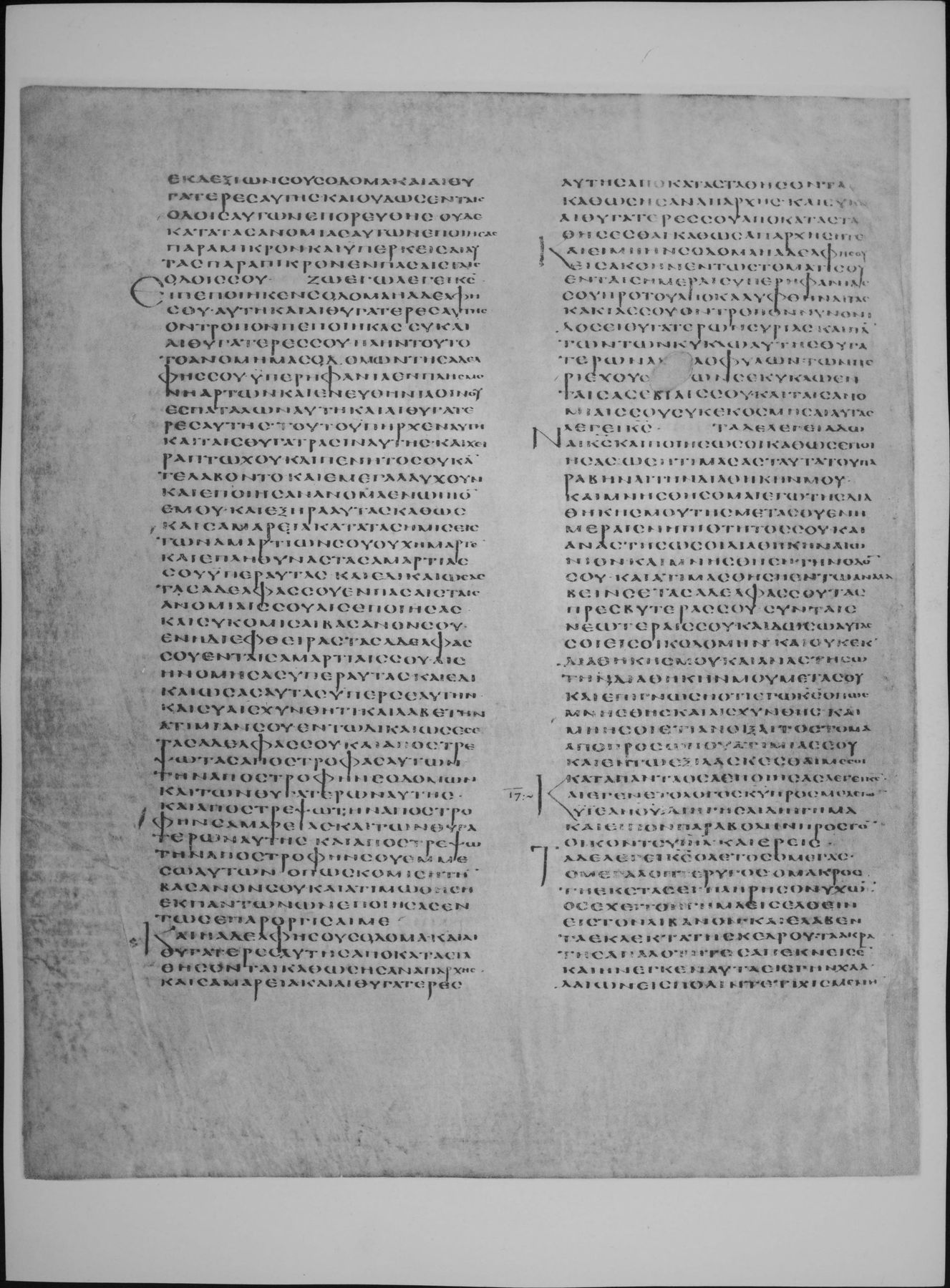
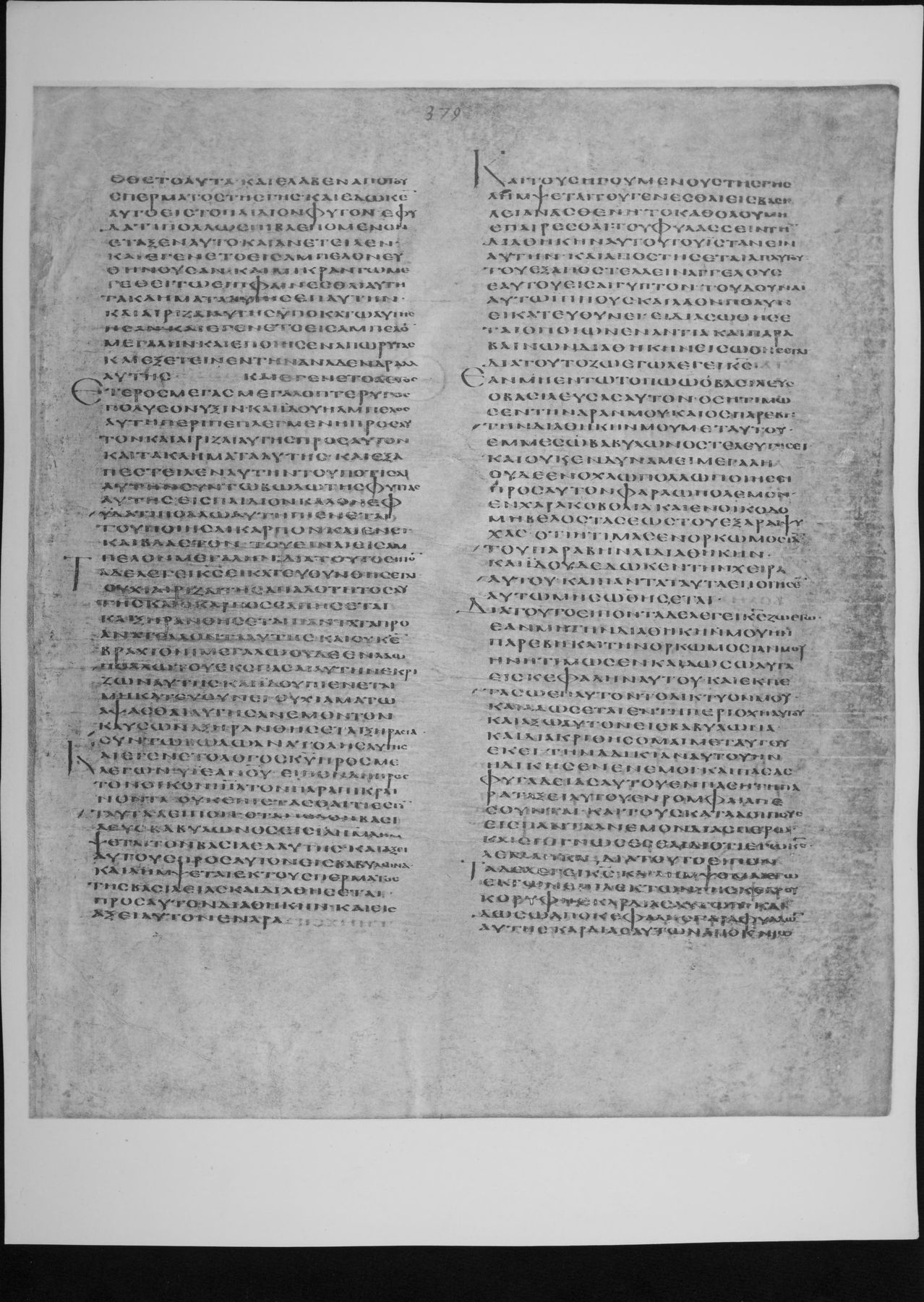
Ezekiel 17:1-4 is on fol. 378v (full-size facsimile of 1879-83, Internet Archive codex-alexandrinus leaf 781). The 1936 reduced facsimile prints beneath this page: Ezek. xvi. 46-xvii. 4. Checked on the plate: the page begins inside Ezekiel 16:46 (first words read: ΕΚ ΔΕΞΙΩΝ ΣΟΥ ΣΟΔΟΜΑ ΚΑΙ ΑΙ ΘΥΓΑΤΕΡΕΣ ΑΥΤΗΣ ΚΑΙ ΟΥΔ ΩΣ ΕΝ ΤΑΙΣ ΟΔΟΙΣ). Ezekiel 17:4-8 is on fol. 379r (full-size facsimile of 1879-83, Internet Archive codex-alexandrinus leaf 782). The 1936 reduced facsimile prints beneath this page: Ezek. xvii. 4-22. Checked on the plate: the page begins inside Ezekiel 17:4 (first words read: ΕΘΕΤΟ ΑΥΤΑ ΚΑΙ ΕΛΑΒΕΝ ΑΠΟ ΤΟΥ ΣΠΕΡΜΑΤΟΣ ΤΗΣ ΓΗΣ ΚΑΙ ΕΔΩΚΕΝ ΑΥΤΟ ΕΙΣ ΠΕΔΙΟΝ ΦΥΤΟΝ).
1Καὶ ἐγένετο λόγος Κυρίου πρὸς μὲ λέγων 2Υἱὲ ἀνθρώπου, διήγησαι διήγημα καὶ εἰπὸν παραβολὴν πρὸς τὸν οἶκον τοῦ Ἰσραήλ, 3καὶ ἐρεῖς Τάδε λέγει Κύριος Ἀετὸς ὁ μέγας ὁ μεγαλοπτέρυγος, ὁ μακρὸς τῇ ἐκτάσει, πλήρης ὀνύχων, ὃς ἔχει τὸ ἥγημα εἰσελθεῖν εἰς τὸν Λίβανον, καὶ ἔλαβε τὰ ἐπίλεκτα τῆς κέδρου, 4τὰ ἄκρα τῆς ἁπαλότητος ἀπέκνισεν, καὶ ἢνεγκεν αὐτὰ εἰς γῆν Χανάαν, εἰς πόλιν τετειχισμένην ἔθετο αὐτά. 5καὶ ἔλαβεν ἀπὸ τοῦ σπέρματος τῆς γῆς καὶ ἔδωκεν αὐτὸ εἰς τὸ πεδίον φυτὸν ἐφ᾽ ὕδατι πολλῷ, ἐπιβλεπόμενον ἔταξεν αὐτό. 6καὶ ἀνέτειλεν καὶ ἐγένετο εἰς ἄμπελον ἀσθενοῦσαν καὶ μικράν, τοῦ ἐπιφαίνεσθαι αὐτὴν τὰ κλήματα αὐτῆς ἐπ᾽ αὐτό, καὶ ῥίζαι αὐτῆς ὑποκάτω αὐτῆς ἦσαν. καὶ ἐγένετο εἰς ἄμπελον καὶ ἐποίησεν ἀπώρυγας καὶ ἐξέτεινεν τὴν ἀναδενδράδα αὐτῆς. 7καὶ ἐγένετο ἀετὸς ἕτερος μέγας μεγαλοπτέρυγος πολὺς ὄνυξιν, καὶ ἰδοὺ ἡ ἄμπελος αὕτη περιπεπλεγμένη πρὸς αὐτόν, καὶ ῥίζαι αὐτῆς πρὸς αὐτόν, καὶ τὰ κλήματα αὐτῆς ἐξαπέστειλεν αὐτῷ τοῦ ποτίσαι αὐτὴν σὺν τῷ βώλῳ τῆς φυτείας αὐτῆς. 8εἰς πεδίον καλὸν ἐφ᾽ ὕδατι πολλῷ αὕτη πιαίνεται, τοῦ ποιεῖν βλαστοὺς καὶ φέρειν καρπόν, τοῦ εἶναι εἰς ἄμπελον μεγάλην.
1And the word of the Lord came to me, saying, 2Son of man, relate a tale, and speak a parable to the house of Israel: 3and thou shalt say, Thus saith the Lord; 4he cropped off the ends of the tender twigs, and brought them into the land of Chanaan; he laid them up in a walled city. 5And he took of the seed of the land, and sowed it in a field planted by much water; he set it in a conspicuous place. 6And it sprang up, and became a weak and little vine, so that the branches thereof appeared upon it, and its roots were under it: and it became a vine, and put forth shoots, and sent forth its tendrils. 7And there was another great eagle, with great wings and many claws: and, behold, this vine bent itself round toward him, and her roots were turned towards him, and she sent forth her branches towards him, that he might water her together with the growth of her plantation. 8She thrives in a fair field by much water, to produce shoots and bear fruit, that she might become a great vine.
Where on the image
Ezekiel 17:9-16 is on fol. 379r (full-size facsimile of 1879-83, Internet Archive codex-alexandrinus leaf 782). The 1936 reduced facsimile prints beneath this page: Ezek. xvii. 4-22. Checked on the plate: the page begins inside Ezekiel 17:4 (first words read: ΕΘΕΤΟ ΑΥΤΑ ΚΑΙ ΕΛΑΒΕΝ ΑΠΟ ΤΟΥ ΣΠΕΡΜΑΤΟΣ ΤΗΣ ΓΗΣ ΚΑΙ ΕΔΩΚΕΝ ΑΥΤΟ ΕΙΣ ΠΕΔΙΟΝ ΦΥΤΟΝ).
9διὰ τοῦτο εἰπόν Τάδε λέγει Κύριος Εἰ κατευθυνεῖ; οὐχὶ αἱ ῥίζαι τῆς ἁπαλότητος αὐτῆς καὶ ὁ καρπὸς σαπήσεται, καὶ ξηρανθήσεται πάντα τὰ προανατέλλοντα αὐτῆς, καὶ οὐκ ἐν βραχίονι μεγάλῳ οὐδ᾽ ἐν λαῷ πολλῷ τοῦ ἐκσπάσαι αὐτὴν ἐκ ῥιζῶν αὐτῆς; 10καὶ ἰδοὺ πιαίνεται· μὴ κατευθυνεῖ; οὐχ ἅμα τῷ ἅψασθαι αὐτῆς ἄνεμον τὸν καύσωνα ξηρανθήσεται; σὺν τῷ βώλῳ ἀνατολῆς αὐτῆς ξηρανθήσεται. 11Καὶ ἐγένετο λόγος Κυρίου πρὸς μὲ λέγων 12Υἱὲ ἀνθρώπου, εἰπὸν δὴ πρὸς τὸν οἶκον τὸν παραπικραίνοντα Οὐκ ἐπίστασθε τί ἦν ταῦτα; εἰπόν Ὅταν ἔλθῃ βασιλεὺς Βαβυλῶνος ἐπὶ Ἰερουσαλήμ, καὶ λήμψεται τὸν βασιλέα αὐτῆς καὶ τοὺς ἄρχοντας αὐτῆς καὶ ἄξει αὐτοὺς πρὸς ἑαυτὸν εἰς Βαβυλῶνα. 13καὶ λήμψεται ἐκ τοῦ σπέρματος τῆς βασιλείας, καὶ διαθήσεται πρὸς αὐτὸν διαθήκην καὶ εἰσάξει αὐτὸν ἐν ἀρᾷ, καὶ τοὺς ἡγεμόνας τῆς γῆς λήμψεται, 14τοῦ γενέσθαι εἰς βασιλείαν ἀσθενῆ τὸ καθόλου μὴ ἐπαίρεσθαι, τοῦ φυλάσσειν τὴν διαθήκην αὐτοῦ καὶ ἱστάνειν αὐτήν. 15καὶ ἀποστήσεται ἀπ᾽ αὐτοῦ τοῦ ἐξαποστέλλειν ἀγγέλους ἑαυτοῦ εἰς Αἴγυπτον, τοῦ δοῦναι αὐτῷ ἵππους καὶ λαὸν πολύν. εἰ κατευθυνεῖ; εἰ διασωθήσεται ὁ ποιῶν ἐναντία; καὶ παραβαίνων διαθήκην εἰ διασωθήσεται; 16ζῶ ἐγώ, λέγει Κύριος, ἐὰν μὴ ἐν τόπῳ ὁ βασιλεὺς ὁ βασιλεύσας αὐτόν, ὃς ἠτίμωσεν τὴν ἀράν μου καὶ ὃς παρέβη τὴν διαθήκην μου, μετ᾽ αὐτοῦ ἐν μέσῳ Βαβυλῶνος τελευτήσει.
9Therefore say, Thus saith the Lord; Shall it prosper? shall not the roots of her tender stem and her fruit be blighted? yea, all her early shoots shall be dried up, and that not by a mighty arm, nor by many people, to tear her up from her roots. 10And, behold, it thrives: shall it prosper? shall it not wither as soon as the east wind touches it? it shall be withered together with the growth of its shoots. 11Moreover the word of the Lord came to me, saying, 12Son of man, say now to the provoking house, Know ye not what these things were? say to them, Whenever the king of Babylon shall come against Jerusalem, then he shall take her king and her princes, and shall take them home to Babylon. 13And he shall take of the seed royal, and shall make a covenant with him, and shall bind him with an oath: and he shall take the princes of the land: 14that it may become a weak kingdom, so as never to lift itself up, that he may keep his covenant, and establish it. 15And if he shall revolt from him, to send his messengers into Egypt, that they may give him horses and much people; shall he prosper? shall he that acts as an adversary be preserved? and shall he that transgresses the covenant be preserved? 16As I live, saith the Lord, verily in the same place where the king is that made him king, who dishonoured my oath, and who broke my covenant, shall he die with him in the midst of Babylon.
Where on the image
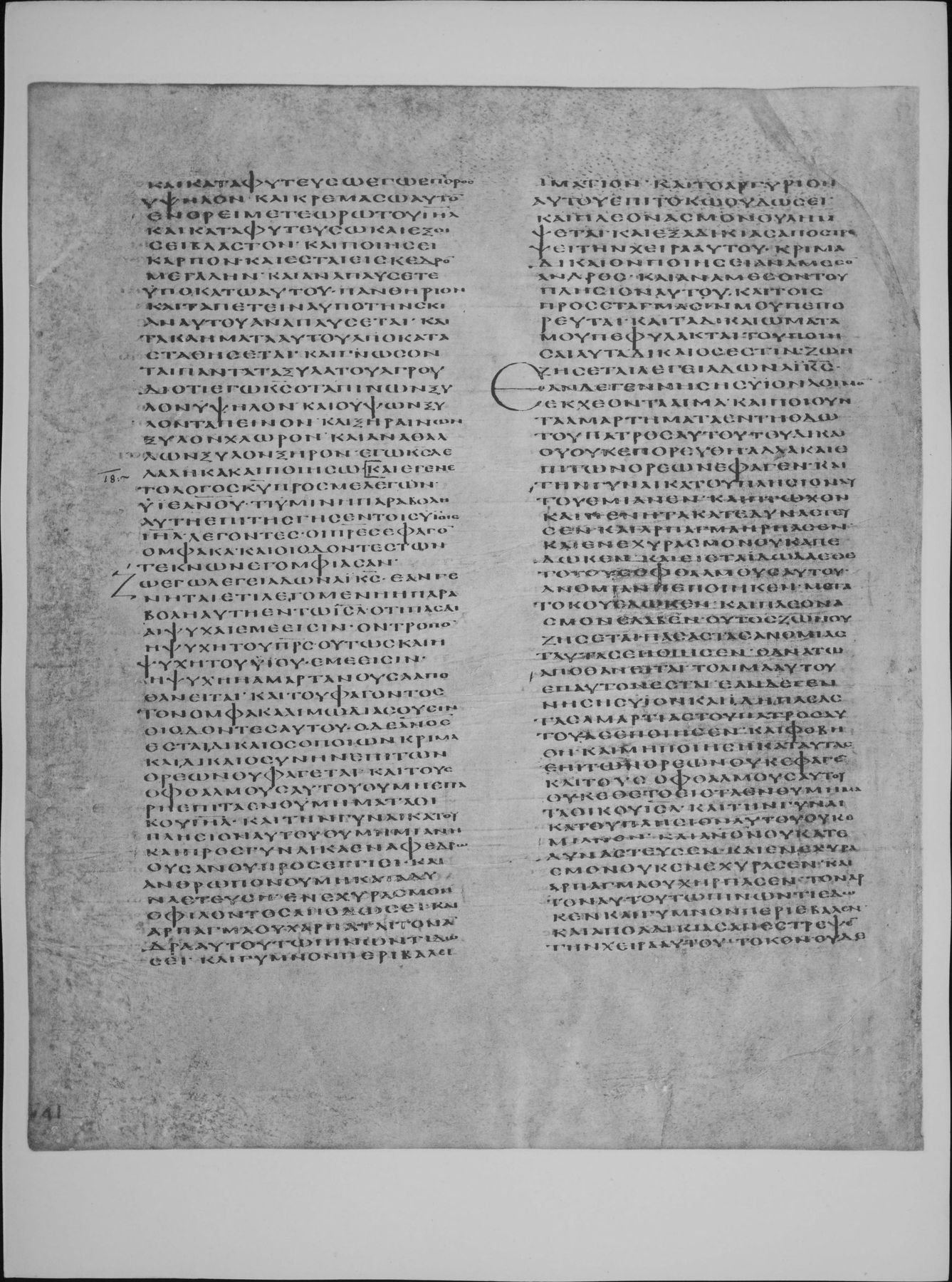
Ezekiel 17:17-22 is on fol. 379r (full-size facsimile of 1879-83, Internet Archive codex-alexandrinus leaf 782). The 1936 reduced facsimile prints beneath this page: Ezek. xvii. 4-22. Checked on the plate: the page begins inside Ezekiel 17:4 (first words read: ΕΘΕΤΟ ΑΥΤΑ ΚΑΙ ΕΛΑΒΕΝ ΑΠΟ ΤΟΥ ΣΠΕΡΜΑΤΟΣ ΤΗΣ ΓΗΣ ΚΑΙ ΕΔΩΚΕΝ ΑΥΤΟ ΕΙΣ ΠΕΔΙΟΝ ΦΥΤΟΝ). Ezekiel 17:22-24 is on fol. 379v (full-size facsimile of 1879-83, Internet Archive codex-alexandrinus leaf 783). The 1936 reduced facsimile prints beneath this page: Ezek. xvii. 22-xviii. 17. Checked on the plate: the page begins inside Ezekiel 17:22 (first words read: ΚΑΙ ΚΑΤΑΦΥΤΕΥΣΩ ΕΓΩ ΕΠ ΟΡΟΣ ΥΨΗΛΟΝ ΚΑΙ ΚΡΕΜΑΣΩ ΑΥΤΟ).
17καὶ οὐκ ἐν δυνάμει μεγάλῃ οὐδ᾽ ἐν ὄχλῳ πολλῷ ποιήσει πρὸς αὐτὸν Φαραὼ πόλεμον, ἐν χαρακοβολίᾳ καὶ ἐν οἰκοδομῇ βελοστάσεων τοῦ ἐξᾶραι ψυχάς. 18καὶ ἠτίμωσεν ὁρκωμοσίαν τοῦ παραβῆναι διαθήκην, καὶ ἰδοὺ δέδωκα τὴν χεῖρα αὐτοῦ, καὶ πάντα ταῦτα ἐποίησεν αὐτῷ· μὴ σωθήσεται; 19διὰ τοῦτο εἰπόν Τάδε λέγει Κύριος Ζῶ ἐγὼ ἐὰν μὴ τὴν ὁρκωμοσίαν μου ἣν ἠτίμωσεν, καὶ τὴν διαθήκην μου ἣν παρέβη, καὶ δώσω αὐτὴν εἰς κεφαλὴν αὐτοῦ. 20καὶ ἐκπετάσω ἐπ᾽ αὐτὸν τὸ δίκτυον, καὶ ἁλώσεται ἐν τῇ περιοχῇ αὐτοῦ. 21ἐν πάσῃ παρατάξει αὐτοῦ ἐν ῥομφαίᾳ πεσοῦνται, καὶ τοὺς καταλοίπους εἰς πάντα ἄνεμον διασπερῶ· καὶ ἐπιγνώσεσθε διότι ἐγὼ Κύριος λελάληκα. 22Διότι τάδε λέγει Κύριος Καὶ λήμψομαι ἐγὼ ἐκ τῶν ἐκλεκτῶν τῆς κέδρου ἐκ κορυφῆς, καρδίας αὐτῶν ἀποκνιῶ καὶ καταφυτεύσω ἐγὼ ἐπ᾽ ὄρος ὑψηλόν, 23καὶ κρεμάσω αὐτὸν ἐν ὄρει μετεώρῳ Ἰσραὴλ καὶ καταφυτεύσω, καὶ ἐξοίσει βλαστὸν καὶ ποιήσει καρπὸν καὶ ἔσται εἰς κέδρον μεγάλην· καὶ ἀναπαύσεται ὑποκάτω αὐτοῦ πᾶν ὄρνεον, καὶ πᾶν πετεινὸν ὑπὸ τὴν σκιὰν αὐτοῦ ἀναπαύσεται· τὰ κλήματα αὐτοῦ ἀποκατασταθήσεται. 24καὶ γνώσονται πάντα τὰ ξύλα τοῦ πεδίου διότι ἐγὼ Κύριος ὁ ταπεινῶν ξύλον ὑψηλὸν καὶ ὑψῶν ξύλον ταπεινόν, καὶ ξηραίνων ξύλον χλωρὸν καὶ ἀναθάλλων ξύλον ξηρόν. ἐγὼ Κύριος λελάληκα καὶ ποιήσω.
17And Pharao shall make war upon him not with a large force or great multitude, in throwing up a mound, and in building of forts, to cut off souls. 18Whereas he has profaned the oath so as to break the covenant, when, behold, I engaged his hand, and he has done all these things to him, he shall not escape. 19Therefore say, Thus saith the Lord; As I live, surely mine oath which he has profaned, and my covenant which he has transgressed, I will even recompense it upon his head. 20And I will spread a net upon him, and he shall be caught in its snare. 21In every battle of his they shall fall by the sword, and I will scatter his remnant to every wind: and ye shall know that I the Lord have spoken it. 22For thus saith the Lord; I will even take of the choice branches of the cedar from the top thereof, I will crop off their hearts, and I will plant it on a high mountain: 23and I will hang it on a lofty mountain of Israel: yea, I will plant it, and it shall put forth shoots, and shall bear fruit, and it shall be a great cedar: and every bird shall rest beneath it, even every fowl shall rest under its shadow: its branches shall be restored. 24And all the trees of the field shall know that I am the Lord that bring low the high tree, and exalt the low tree, and wither the green tree, and cause the dry tree to flourish: I the Lord have spoken, and will do it.
Cite
Sources
- Source: Codex Alexandrinus (British Library Royal MS 1 D. VI) via the British Museum photographic facsimiles of 1879-83 and 1936 (Internet Archive) + Swete's Septuagint + Brenton's English (holding institution)
- Critical edition: H. B. Swete, The Old Testament in Greek according to the Septuagint (1909)
← previous · → next · v cycle view · l back to library