Ezekiel, Chapter 35 (Codex Alexandrinus)
Introduction
Ezekiel 35 in the Greek Old Testament (the Septuagint) as written in Codex Alexandrinus, a Greek Bible copied in the fifth century, probably in Egypt, and now in the British Library (Royal MS 1 D. VI, the second of its four volumes). It is one of the three great early codices of the whole Greek Bible, with Codex Vaticanus and Codex Sinaiticus.
Numbering: Swete's Greek and Brenton's English number or divide some verses of this chapter differently (Swete 35:3-4 = Brenton 35:3-4). Each column keeps its own verse numbers, and sections are cut only where the two texts agree, so each section holds the same passage in both languages.
This entry meets the strict three-criteria standard of the Theosis Library:
- Manuscript scan: the pages of Codex Alexandrinus carrying this chapter (fol. 392r, fol. 392v), from the full-size photographic (autotype) facsimile published by the British Museum in 1879-1883, as digitised on the Internet Archive. The verse range of every page comes from the reduced photographic facsimile of 1936, which prints it beneath each plate, and the opening words of every page were read on the plate to confirm the page and the verse it begins with. Each section links to the page or pages that hold its verses. Folio numbers are those written at the head of each leaf and visible on the plates.
- Original text: Swete's edition, which here prints the text of Codex Vaticanus (Vat. gr. 1209), the base of his edition, and gives the readings of Alexandrinus only in his apparatus. The Greek column is therefore Vaticanus' text; where Alexandrinus differs, the plate shows what Alexandrinus reads.
- English translation: Sir Lancelot C. L. Brenton, The Septuagint Version of the Old Testament (1844; 1851 edition), a translation of the Greek, public domain, from the eBible.org text.
How was this verified? (Provenance)
Where on the image
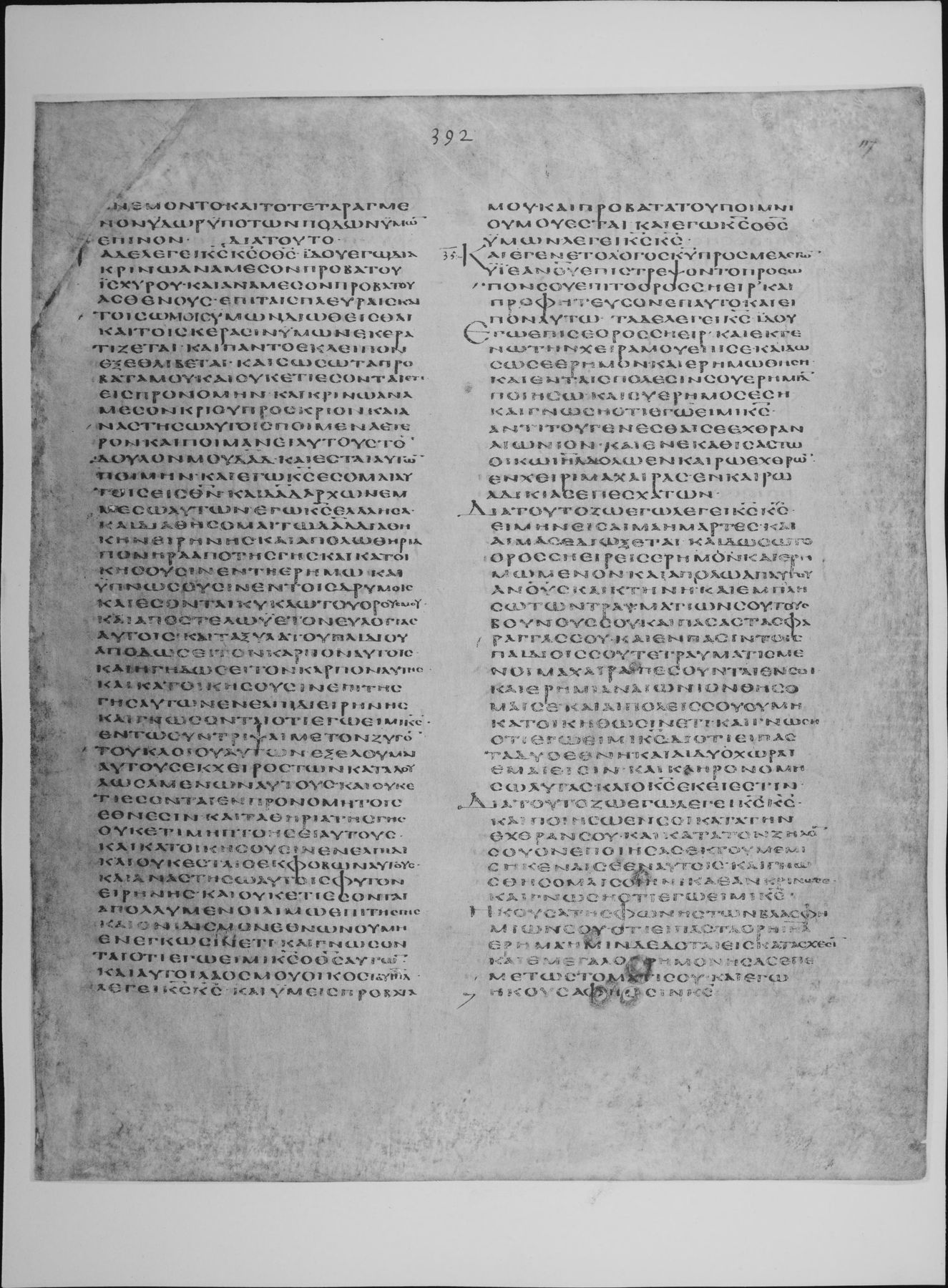
Ezekiel 35:1-8 is on fol. 392r (full-size facsimile of 1879-83, Internet Archive codex-alexandrinus leaf 808). The 1936 reduced facsimile prints beneath this page: Ezek. xxxiv. 19-xxxv. 13. Checked on the plate: the page begins inside Ezekiel 34:19 (first words read: ΕΝΕΜΟΝΤΟ ΚΑΙ ΤΟ ΤΕΤΑΡΑΓΜΕΝΟΝ ΥΔΩΡ ΥΠΟ ΤΩΝ ΠΟΔΩΝ ΥΜΩΝ ΕΠΙΝΟΝ ΔΙΑ ΤΟΥΤΟ).
1Καὶ ἐγένετο λόγος Κυρίου πρὸς μὲ λέγων 2Υἱὲ ἀνθρώπου, ἐπίστρεψον τὸ πρόσωπόν σου ἐπ᾽ ὄρος Σηεὶρ καὶ προφήτευσον εἰς αὐτό, 3καὶ εἰπόν Τάδε λέγει κύριος Κύριος Ἰδού ἐγώ ἐπὶ σέ, ὄρος Σηείρ, καὶ ἐκτενῶ τὴν χεῖρά μου ἐπὶ σέ καὶ δώσω σε εἰς ἔρημον, καὶ ἐρημωθήσῃ, 4καὶ ταῖς πόλεσίν σου ἐρημίαν ποιήσω, καὶ σὺ ἔρημος ἔσῃ, καὶ γνώσῃ ὅτι ἐγώ εἰμι Κύριος. 5ἀντὶ τοῦ γενέσθαι σε ἐχθρὰν αἰωνίαν, καὶ ἐνεκάθισας τῷ οἴκῳ Ἰσραὴλ δόλῳ ἐν χειρὶ ἐχθρῶν μαχαίρᾳ ἐν καιρῷ ἀδικίας ἐπ᾽ ἐσχάτῳ· 6διὰ τοῦτο, ζῶ ἐγώ, λέγει κύριος Κύριος, εἰ μὴν εἰς αἷμα ἥμαρτες, καὶ αἷμά σε διώξεται. 7καὶ δώσω ὄρος Σηεὶρ εἰς ἔρημον καὶ ἠρημωμένον, καὶ ἀπολῶ ἀπ᾽ αὐτοῦ ἀνθρώπους καὶ κτήνη, 8καὶ ἐνπλήσω τῶν τραυματιῶν βουνοὺς καὶ τὰς φάραγγάς σου, καὶ ἐν πᾶσι τοῖς πεδίοις σου τετραυματισμένοι μαχαίρᾳ πεσοῦνται ἐν σοί.
1And the word of the Lord came to me, saying, 2Son of man, set thy face against mount Seir, and prophesy against it, 3and say to it, 4And I will cause desolation in thy cities, and thou shalt be desolate, and thou shalt know that I am the Lord. 5Because thou hast been a perpetual enemy, and hast laid wait craftily for the house of Israel, with the hand of enemies with a sword, in the time of injustice, at the last: 6Therefore, as I live, saith the Lord God, verily thou hast sinned even to blood, therefore blood shall pursue thee. 7And I will make mount Seir a waste, and desolate, and I will destroy from off it men and cattle: 8and I will fill thy hills and thy valleys with slain men, and in all thy plains there shall fall in thee men slain with the sword.
Where on the image
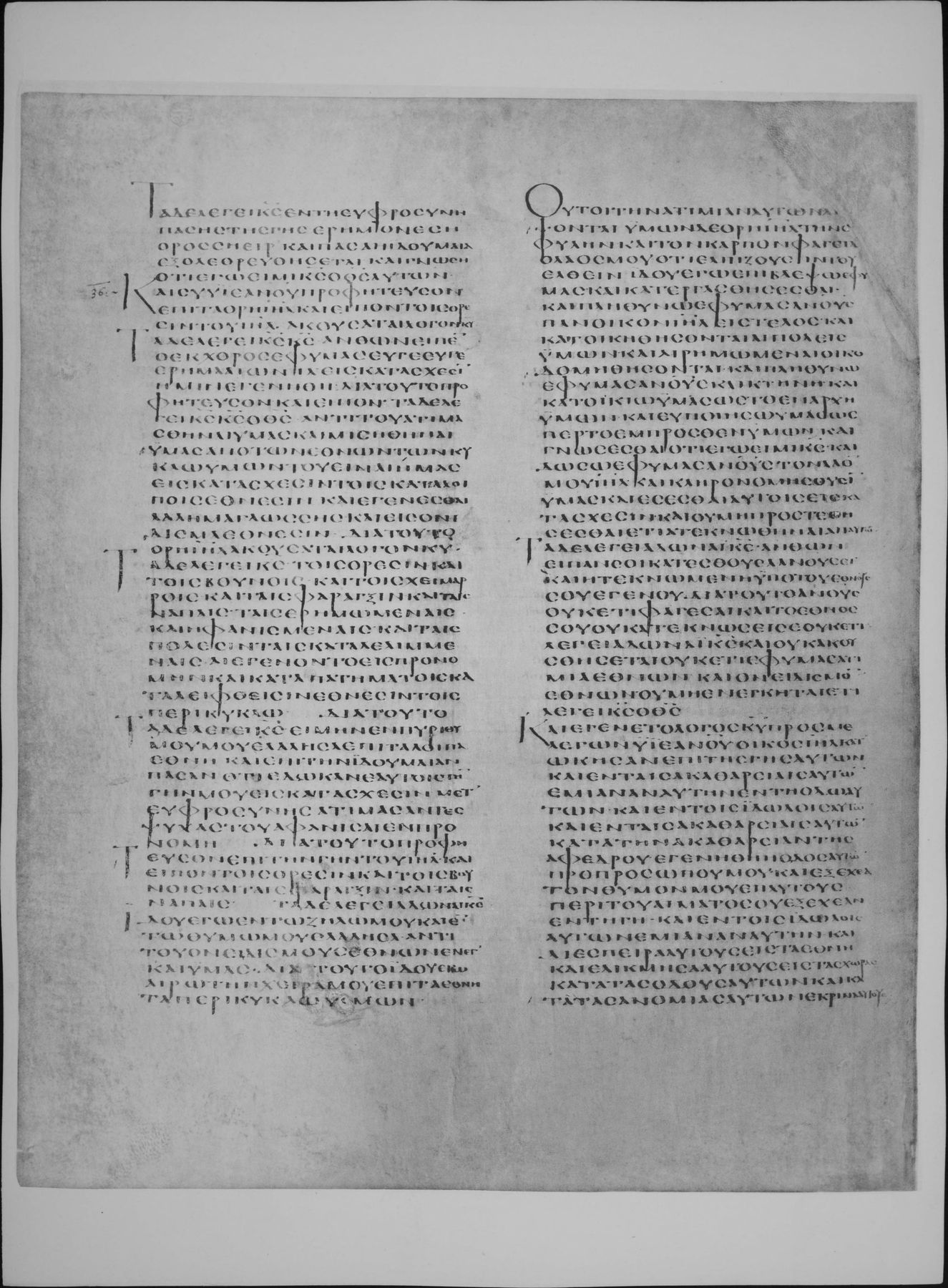
Ezekiel 35:9-13 is on fol. 392r (full-size facsimile of 1879-83, Internet Archive codex-alexandrinus leaf 808). The 1936 reduced facsimile prints beneath this page: Ezek. xxxiv. 19-xxxv. 13. Checked on the plate: the page begins inside Ezekiel 34:19 (first words read: ΕΝΕΜΟΝΤΟ ΚΑΙ ΤΟ ΤΕΤΑΡΑΓΜΕΝΟΝ ΥΔΩΡ ΥΠΟ ΤΩΝ ΠΟΔΩΝ ΥΜΩΝ ΕΠΙΝΟΝ ΔΙΑ ΤΟΥΤΟ). Ezekiel 35:14-15 is on fol. 392v (full-size facsimile of 1879-83, Internet Archive codex-alexandrinus leaf 809). The 1936 reduced facsimile prints beneath this page: Ezek. xxxv. 14-xxxvi. 19. Checked on the plate: the page begins at the start of Ezekiel 35:14 (first words read: ΤΑΔΕ ΛΕΓΕΙ ΚΣ ΕΝ ΤΗ ΕΥΦΡΟΣΥΝΗ ΠΑΣΗΣ ΤΗΣ ΓΗΣ ΕΡΗΜΟΝ ΣΕ ΠΟΙΗΣΩ).
9ἐρημίαν αἰώνιον θήσομαί σε, καὶ αἱ πόλεις σου οὐ μὴ κατοικηθῶσιν ἔτι, καὶ γνώσῃ ὅτι ἐγώ εἰμι Κύριος. 10διὰ τὸ εἰπεῖν σε Τὰ δύο ἔθνη καὶ αἱ δύο χῶραι ἐμαὶ ἔσονται, καὶ κληρονομήσω αὐτάς, καὶ Κύριος ἐκεῖ ἐστιν. 11διὰ τοῦτο, ζῶ ἐγὼ, λέγει Κύριος, καὶ ποιήσω σοι κατὰ τὴν ἔχθραν σου, καὶ γνωσθήσομαί σοι ἡνίκα ἂν κρίνω σε, 12καὶ γνώσῃ ὅτι ἐγώ εἰμι Κύριος. ἤκουσα τῆς φωνῆς τῶν βλασφημιῶν σου, ὅτι εἶπας Τὰ ὄρη Ἰσραὴλ ἔρημα· ἡμῖν δέδοται εἰς κατάβρωμα, 13καὶ ἐμεγαλορημόνησας ἐπ᾽ ἐμὲ τῷ στόματί σου· ἐγὼ ἤκουσα. 14τάδε λέγει Κύριος Ἐν τῇ εὐφροσύνῃ πάσης τῆς γῆς ἔρημον ποιήσω σε· 15ἔρημον ἔσῃ, ὄρος Σηείρ, καὶ πᾶσα ἡ Ἰδουμαία καὶ ἐξαναλωθήσεται· γνώσῃ ὅτι ἐγώ εἰμι Κύριος ὁ θεὸς αὐτῶν.
9I will make thee a perpetual desolation, and thy cities shall not be inhabited any more: and thou shalt know that I am the Lord. 10Because thou saidst, The two nations and the two countries shall be mine, and I shall inherit them; whereas the Lord is there: 11therefore, as I live, saith the Lord, I will even deal with thee according to thine enmity, and I will be made known to thee when I shall judge thee: 12and thou shalt know that I am the Lord. I have heard the voice of thy blasphemies, whereas thou hast said, The desert mountains of Israel are given to us for food; 13and thou hast spoken swelling words against me with thy mouth: I have heard them. 14Thus saith the Lord; When all the earth is rejoicing, I will make thee desert. 15Thou shalt be desert, O mount Seir, and all Idumea; and it shall be utterly consumed: and thou shalt know that I am the Lord their God.
Cite
Sources
- Source: Codex Alexandrinus (British Library Royal MS 1 D. VI) via the British Museum photographic facsimiles of 1879-83 and 1936 (Internet Archive) + Swete's Septuagint + Brenton's English (holding institution)
- Critical edition: H. B. Swete, The Old Testament in Greek according to the Septuagint (1909)
← previous · → next · v cycle view · l back to library