Genesis, Chapter 33 (Codex Alexandrinus)
Introduction
Genesis 33 in the Greek Old Testament (the Septuagint) as written in Codex Alexandrinus, a Greek Bible copied in the fifth century, probably in Egypt, and now in the British Library (Royal MS 1 D. V, the first of its four volumes). It is one of the three great early codices of the whole Greek Bible, with Codex Vaticanus and Codex Sinaiticus, and for Genesis 1:1-46:28, which Codex Vaticanus has lost, it is the oldest surviving complete Greek text (older papyri such as the Berlin Genesis papyrus and Chester Beatty 961 survive only in part).
This entry meets the strict three-criteria standard of the Theosis Library:
- Manuscript scan: the pages of Codex Alexandrinus carrying this chapter (fol. 21r, fol. 21v), from the full-size photographic (autotype) facsimile published by the British Museum in 1879-1883, as digitised on the Internet Archive. The verse range of every page comes from the reduced photographic facsimile of 1915, which prints it beneath each plate, and the opening words of every page were read on the plate to confirm the page and the verse it begins with. Each section links to the page or pages that hold its verses. Folio numbers are those written at the head of each leaf and visible on the plates.
- Original text: Swete's edition, which in Genesis 1:1-46:28 prints the text of Codex Alexandrinus itself (Codex Vaticanus has lost these chapters), with the spelling of A for the most part. Swete adds accents, breathings and punctuation and expands the abbreviated sacred names, so the plate shows the same text in unaccented capitals.
- English translation: Sir Lancelot C. L. Brenton, The Septuagint Version of the Old Testament (1844; 1851 edition), a translation of the Greek, public domain, from the eBible.org text.
How was this verified? (Provenance)
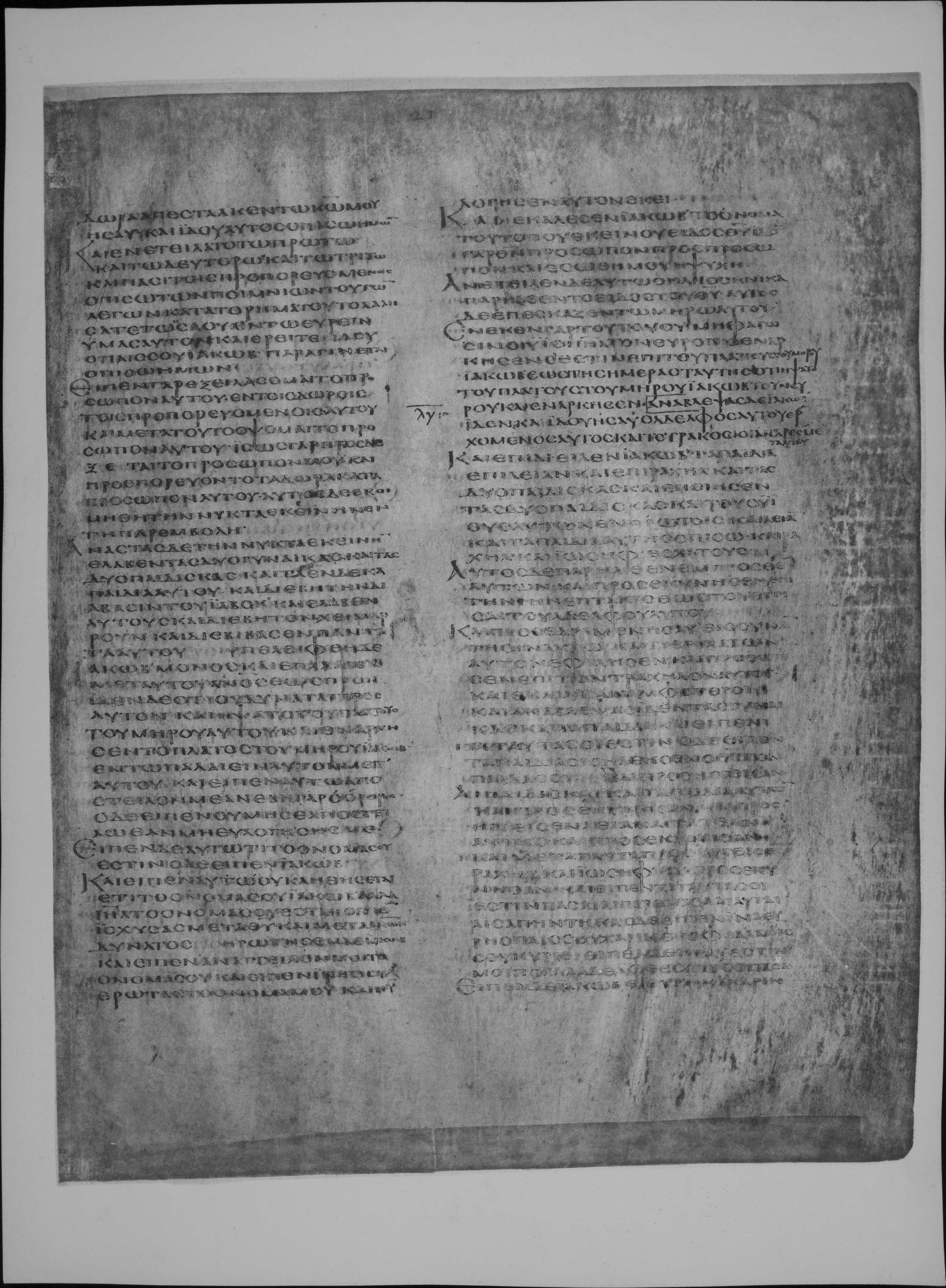
Where on the image
Genesis 33:1-8 is on fol. 21r (full-size facsimile of 1879-83, Internet Archive codex-alexandrinus leaf 62). The 1915 reduced facsimile prints beneath this page: Gen. xxxii. 18-xxxiii. 10. Checked on the plate: the page begins inside Genesis 32:18 (first words read: ΑΠΕΣΤΑΛΚΕΝ ΤΩ ΚΩ ΜΟΥ ΗΣΑΥ ΚΑΙ ΙΔΟΥ ΑΥΤΟΣ ΟΠΙΣΩ ΗΜΩΝ ΚΑΙ ΕΝΕΤΕΙΛΑΤΟ ΤΩ ΠΡΩΤΩ).
1Ἀναβλέψας δὲ Ἰακὼβ ἴδεν, καὶ ἰδοὺ Ἠσαὺ ὁ ἀδελφὸς αὐτοῦ ἐρχόμενος, αὐτὸς καὶ τετρακόσιοι ἄνδρες μετ᾽ αὐτοῦ· καὶ ἐπιδιεῖλεν Ἰακὼβ τὰ παιδία ἐπὶ Λείαν καὶ ἐπὶ Ῥαχὴλ καὶ τὰς δύο παιδίσκας· 2καὶ ἐποίησεν τὰς δύο παιδίσκας καὶ τοὺς υἱοὺς αὐτῶν ἐν πρώτοις, καὶ Λείαν καὶ τὰ παιδία αὐτῆς ὀπίσω, καὶ Ῥαχὴλ καὶ Ἰωσὴφ ἐσχάτους. 3αὐτὸς δὲ παρῆλθεν ἔμπροσθεν αὐτῶν· καὶ προσεκύνησεν ἐπὶ τὴν γῆν ἑπτάκις ἕως τοῦ ἐγγίσαι τοῦ ἀδελφοῦ αὐτοῦ. 4καὶ προσέδραμεν Ἠσαὺ εἰς συνάντησιν αὐτῷ, καὶ περιλαβὼν αὐτὸν ἐφίλησεν καὶ προσέπεσεν ἐπὶ τὸν τράχηλον αὐτοῦ· καὶ ἔκλαυσαν ἀμφότεροι. 5καὶ ἀναβλέψας ἴδεν τὰς γυναῖκας καὶ τὰ παιδία, καὶ εἶπεν Τί ταῦτά σοί ἐστιν; ὁ δὲ εἶπεν Τὰ παιδία οἷς ἠλέησεν ὁ θεὸς τὸν παῖδά σου. 6καὶ προσήγγισαν αἱ παιδίσκαι καὶ τὰ παιδία αὐτῶν, καὶ προσεκύνησαν· 7καὶ προσήγγισεν Λεία καὶ τὰ τέκνα αὐτῆς, καὶ προσεκύνησαν· καὶ μετὰ ταῦτα προσήγγισεν Ῥαχὴλ καὶ Ἰωσήφ, καὶ προσεκύνησαν. 8καὶ εἶπεν Τί ταῦτά σοί ἐστιν, πᾶσαι αἱ παρεμβολαὶ αὗται αἷς ἀπήντηκα; ὁ δὲ εἶπεν Ἵνα εὕρῃ ὁ παῖς σου χάριν ἐν ὀφθαλμοῖς σου, κύριε.
1And Jacob lifted up his eyes, and beheld, and lo! Esau his brother coming, and four hundred men with him; and Jacob divided the children to Lea and to Rachel, and the two handmaidens. 2And he put the two handmaidens and their children with the first, and Lea and her children behind, and Rachel and Joseph last. 3But he advanced himself before them, and did reverence to the ground seven times, until he drew near to his brother. 4And Esau ran on to meet him, and embraced him, and fell on his neck, and kissed him; and they both wept. 5And Esau looked up and saw the women and the children, and said, What are these to thee? And he said, The children with which God has mercifully blessed thy servant. 6And the maid-servants and their children drew near and did reverence. 7And Lea and her children drew near and did reverence; and after this drew near Rachel and Joseph, and did reverence. 8And he said, What are these things to thee, all these companies that I have met? And he said, That thy servant might find grace in thy sight, my lord.
Where on the image
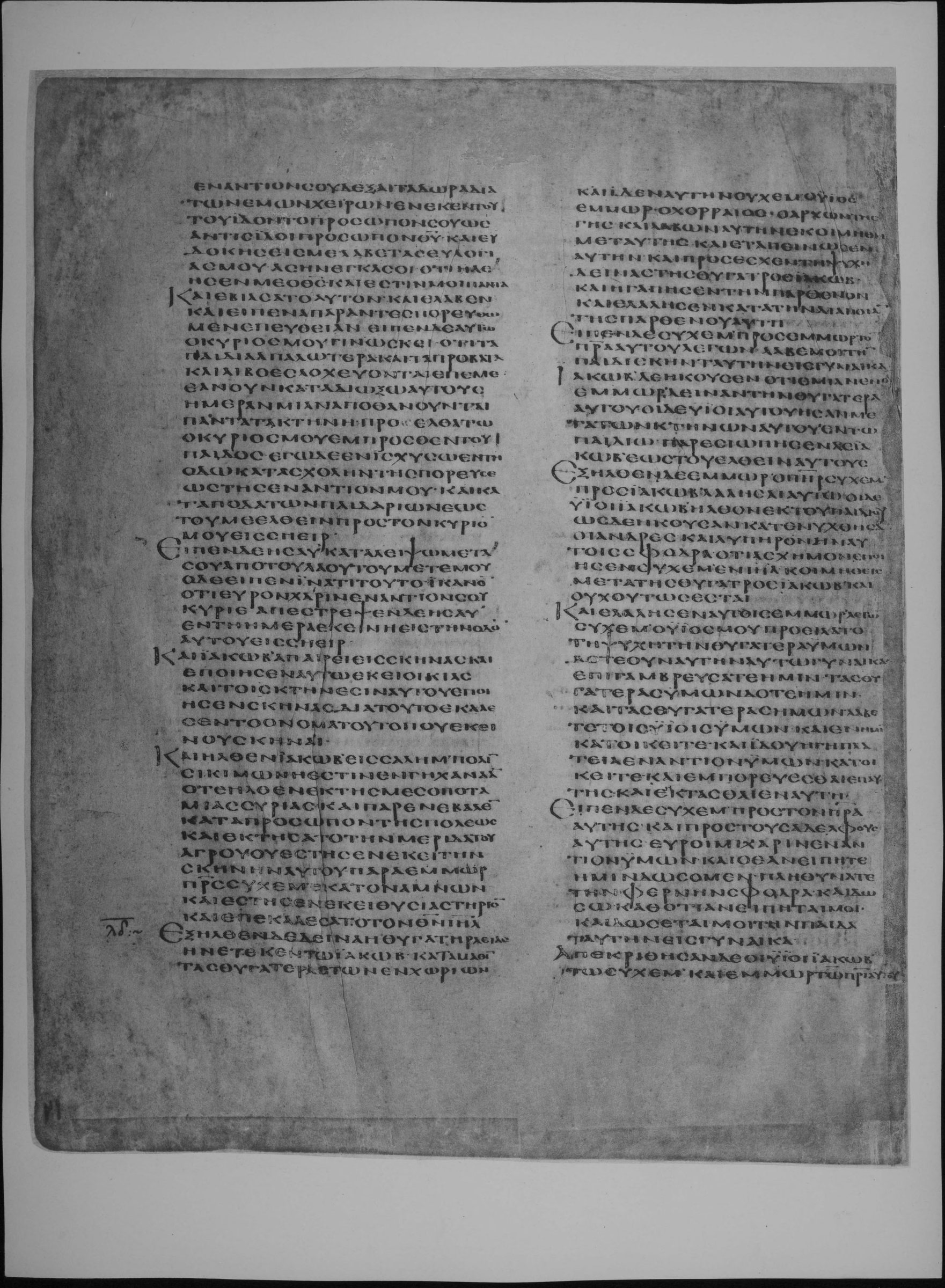
Genesis 33:9-10 is on fol. 21r (full-size facsimile of 1879-83, Internet Archive codex-alexandrinus leaf 62). The 1915 reduced facsimile prints beneath this page: Gen. xxxii. 18-xxxiii. 10. Checked on the plate: the page begins inside Genesis 32:18 (first words read: ΑΠΕΣΤΑΛΚΕΝ ΤΩ ΚΩ ΜΟΥ ΗΣΑΥ ΚΑΙ ΙΔΟΥ ΑΥΤΟΣ ΟΠΙΣΩ ΗΜΩΝ ΚΑΙ ΕΝΕΤΕΙΛΑΤΟ ΤΩ ΠΡΩΤΩ). Genesis 33:10-16 is on fol. 21v (full-size facsimile of 1879-83, Internet Archive codex-alexandrinus leaf 63). The 1915 reduced facsimile prints beneath this page: Gen. xxxiii. 10-xxxiv. 13. Checked on the plate: the page begins inside Genesis 33:10 (first words read: ΕΝΑΝΤΙΟΝ ΣΟΥ ΔΕΞΑΙ ΤΑ ΔΩΡΑ ΔΙΑ ΤΩΝ ΕΜΩΝ ΧΕΙΡΩΝ ΕΝΕΚΕΝ ΤΟΥΤΟΥ).
9εἶπεν δὲ Ἠσαύ Ἔστιν μοι πολλά, ἀδελφέ· ἔστω σοι τὰ σά. 10εἶπεν δὲ Ἰακώβ Εἰ εὕρηκα χάριν ἐναντίον σου, δέξαι τὰ δῶρα διὰ τῶν ἐμῶν χειρῶν· ἕνεκεν τούτου ἴδον τὸ πρόσωπόν σου ὡς ἄν τις ἴδοι πρόσωπον θεοῦ, καὶ εὐδοκήσεις με· 11λάβε τὰς εὐλογίας μου ἃς ἤνεγκά σοι, ὅτι ἠλέησέν με ὁ θεὸς καὶ ἔστιν μοι πάντα. καὶ ἐβιάσατο αὐτόν, καὶ ἔλαβεν. 12καὶ εἶπεν Ἀπάραντες πορευθῶμεν ἐπ᾽ εὐθεῖαν. 13εἶπεν δὲ αὐτῷ Ὁ κύριός μου γινώσκει ὅτι τὰ παιδία ἁπαλώτερα, καὶ τὰ πρόβατα καὶ αἱ βόες λοχεύονται ἐπ᾽ ἐμέ· ἐὰν οὖν καταδιώξω αὐτοὺς ἡμέραν μίαν, ἀποθανοῦνται πάντα τὰ κτήνη. 14προελθάτω ὁ κύριός μου ἔμπροσθεν τοῦ παιδός· ἐγὼ δὲ ἐνισχύσω ἐν τῇ ὁδῷ κατὰ σχολὴν τῆς πορεύσεως τῆς ἐναντίον μου καὶ κατὰ πόδα τῶν παιδαρίων, ἕως τοῦ με ἐλθεῖν πρὸς τὸν κύριόν μου εἰς Σηείρ. 15εἶπεν δὲ Ἠσαύ Καταλείψω μετὰ σοῦ ἀπὸ τοῦ λαοῦ τοῦ μετ᾽ ἐμοῦ. ὁ δὲ εἶπεν Ἵνα τί τοῦτο; ἱκανὸν ὅτι εὗρον χάριν ἐναντίον σου, κύριε. 16ἀπέστρεψεν δὲ Ἠσαὺ ἐν τῇ ἡμέρᾳ ἐκείνῃ εἰς τὴν ὁδὸν αὐτοῦ εἰς Σηείρ.
9And Esau said, I have much, my brother; keep thine own. 10And Jacob said, If I have found grace in thy sight, receive the gifts through my hands; therefore have I seen thy face, as if any one should see the face of God, and thou shalt be well-pleased with me. 11Receive my blessings, which I have brought thee, because God has had mercy on me, and I have all things; and he constrained him, and he took them. 12And he said, Let us depart, and proceed right onward. 13And he said to him, My lord knows, that the children are very tender, and the flocks and the herds with me are with young; if then I shall drive them hard one day, all the cattle will die. 14Let my lord go on before his servant, and I shall have strength on the road according to the ease of the journey before me, and according to the strength of the children, until I come to my lord to Seir. 15And Esau said, I will leave with thee some of the people who are with me. And he said, Why so? it is enough that I have found favour before thee, my lord. 16And Esau returned on that day on his journey to Seir.
Where on the image
Genesis 33:17-20 is on fol. 21v (full-size facsimile of 1879-83, Internet Archive codex-alexandrinus leaf 63). The 1915 reduced facsimile prints beneath this page: Gen. xxxiii. 10-xxxiv. 13. Checked on the plate: the page begins inside Genesis 33:10 (first words read: ΕΝΑΝΤΙΟΝ ΣΟΥ ΔΕΞΑΙ ΤΑ ΔΩΡΑ ΔΙΑ ΤΩΝ ΕΜΩΝ ΧΕΙΡΩΝ ΕΝΕΚΕΝ ΤΟΥΤΟΥ).
17καὶ Ἰακὼβ ἀπαίρει εἰς Σκηνάς· καὶ ἐποίησεν αὐτῷ ἐκεῖ οἰκίας, καὶ τοῖς κτήνεσιν αὐτοῦ ἐποίησεν σκηνάς· διὰ τοῦτο ἐκάλεσεν τὸ ὄνομα τοῦ τόπου ἐκείνου Σκηναί. 18Καὶ ἦλθεν Ἰακὼβ εἰς Σαλὴμ πόλιν Σικίμων, ἥ ἐστιν ἐν γῇ Χανάαν, ὅτε ἦλθεν ἐκ τῆς Μεσοποταμίας Συρίας· καὶ παρενέβαλεν κατὰ πρόσωπον τῆς πόλεως. 19καὶ ἐκτήσατο τὴν μερίδα τοῦ ἀγροῦ, οὗ ἔστησεν ἐκεῖ τὴν σκηνὴν αὐτοῦ, παρὰ Ἐμμὼρ πατρὸς Συχὲμ ἑκατὸν ἀμνῶν· 20καὶ ἔστησεν ἐκεῖ θυσιαστήριον καὶ ἐπεκαλέσατο τὸν θεὸν Ἰσραήλ.
17And Jacob departs to his tents; and he made for himself there habitations, and for his cattle he made booths; therefore he called the name of that place, Booths. 18And Jacob came to Salem, a city of Secima, which is in the land of Chanaan, when he departed out of Mesopotamia of Syria, and took up a position in front of the city. 19And he bought the portion of the field, where he pitched his tent, of Emmor the father of Sychem, for a hundred lambs. 20And he set up there an altar, and called on the God of Israel.
Cite
Sources
- Source: Codex Alexandrinus (British Library Royal MS 1 D. V) via the British Museum photographic facsimiles of 1879-83 and 1915 (Internet Archive) + Swete's Septuagint + Brenton's English (holding institution)
- Critical edition: H. B. Swete, The Old Testament in Greek according to the Septuagint (1909)
← previous · → next · v cycle view · l back to library