Genesis, Chapter 35 (Codex Alexandrinus)
Introduction
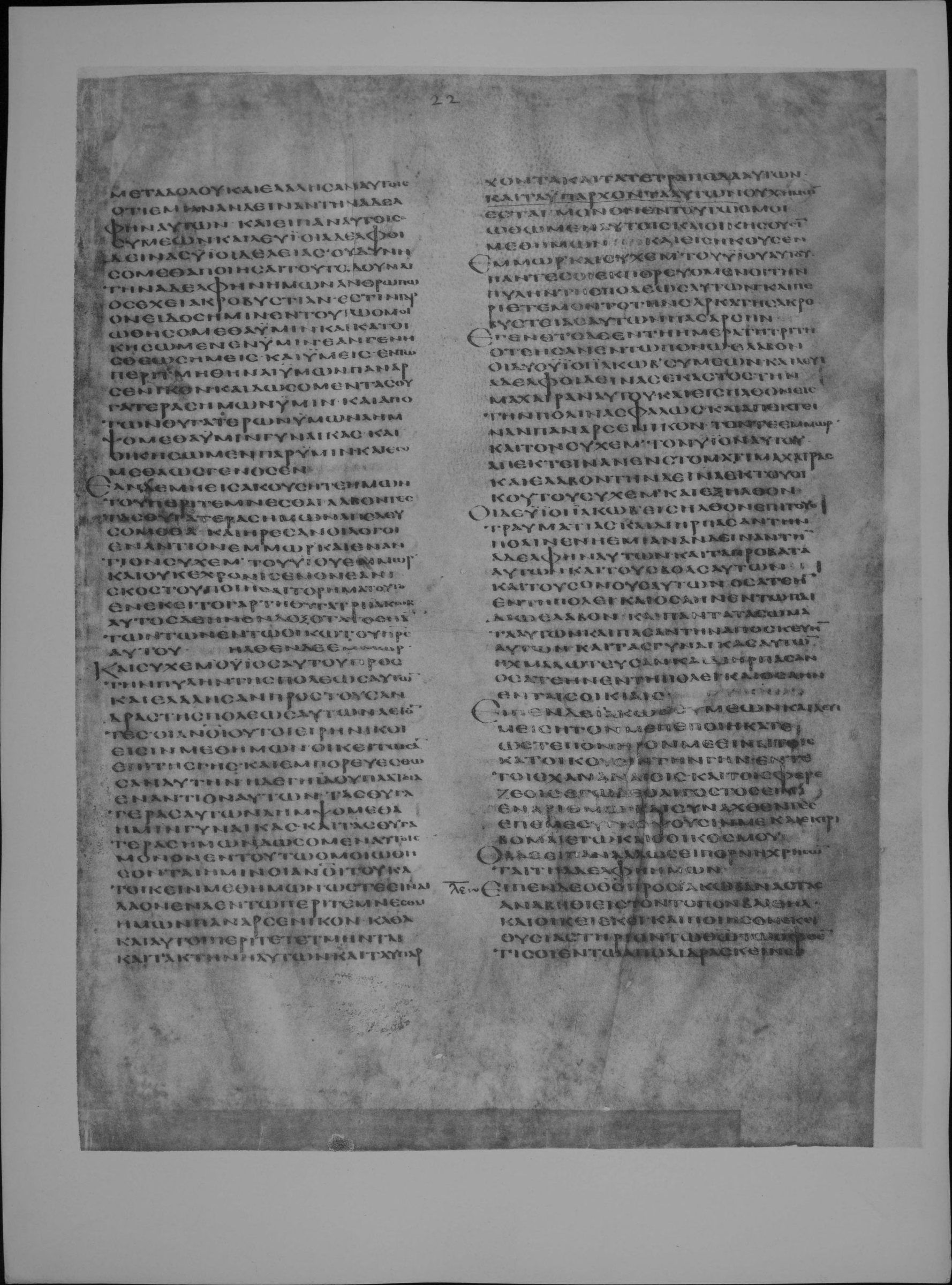
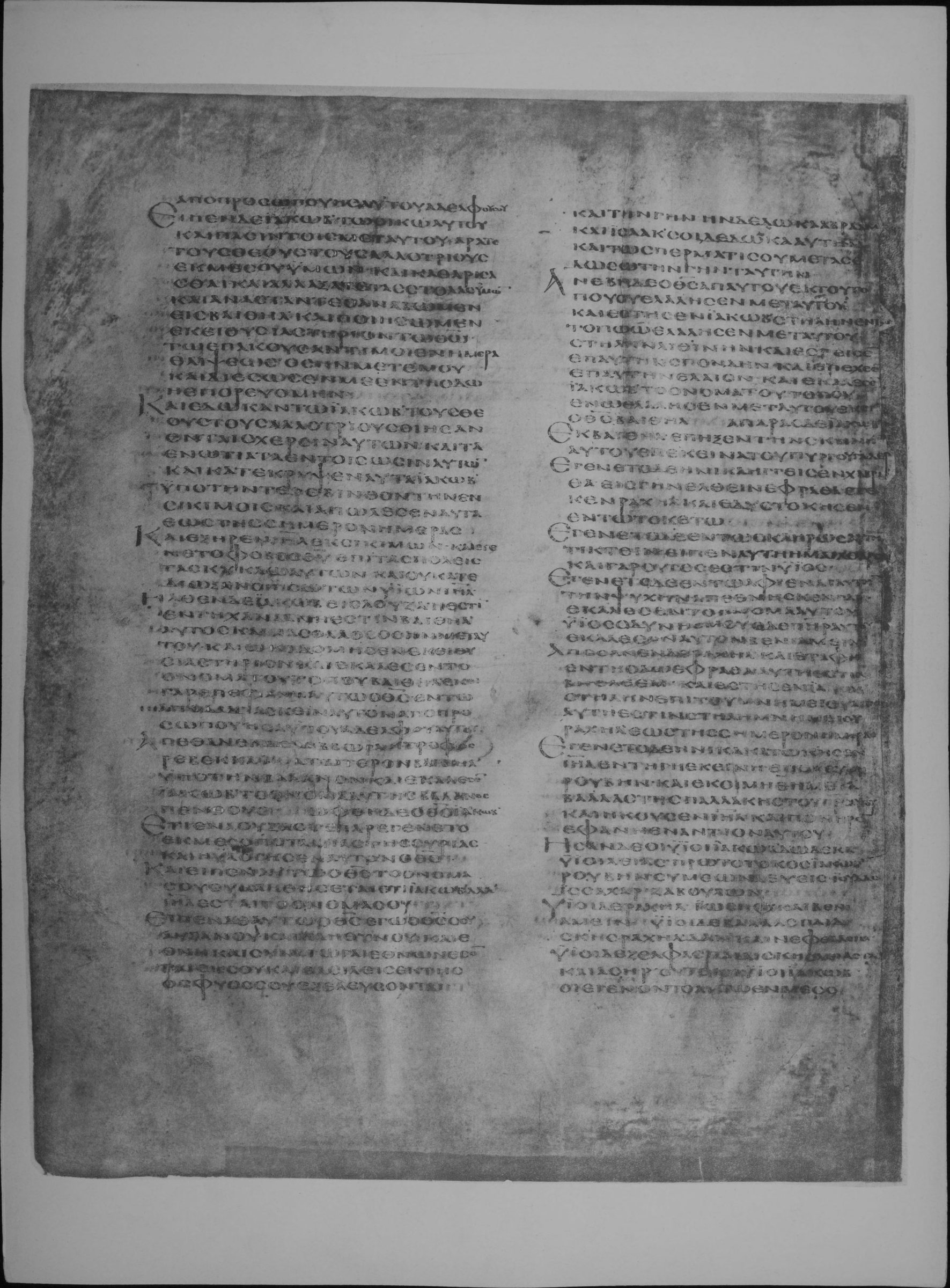
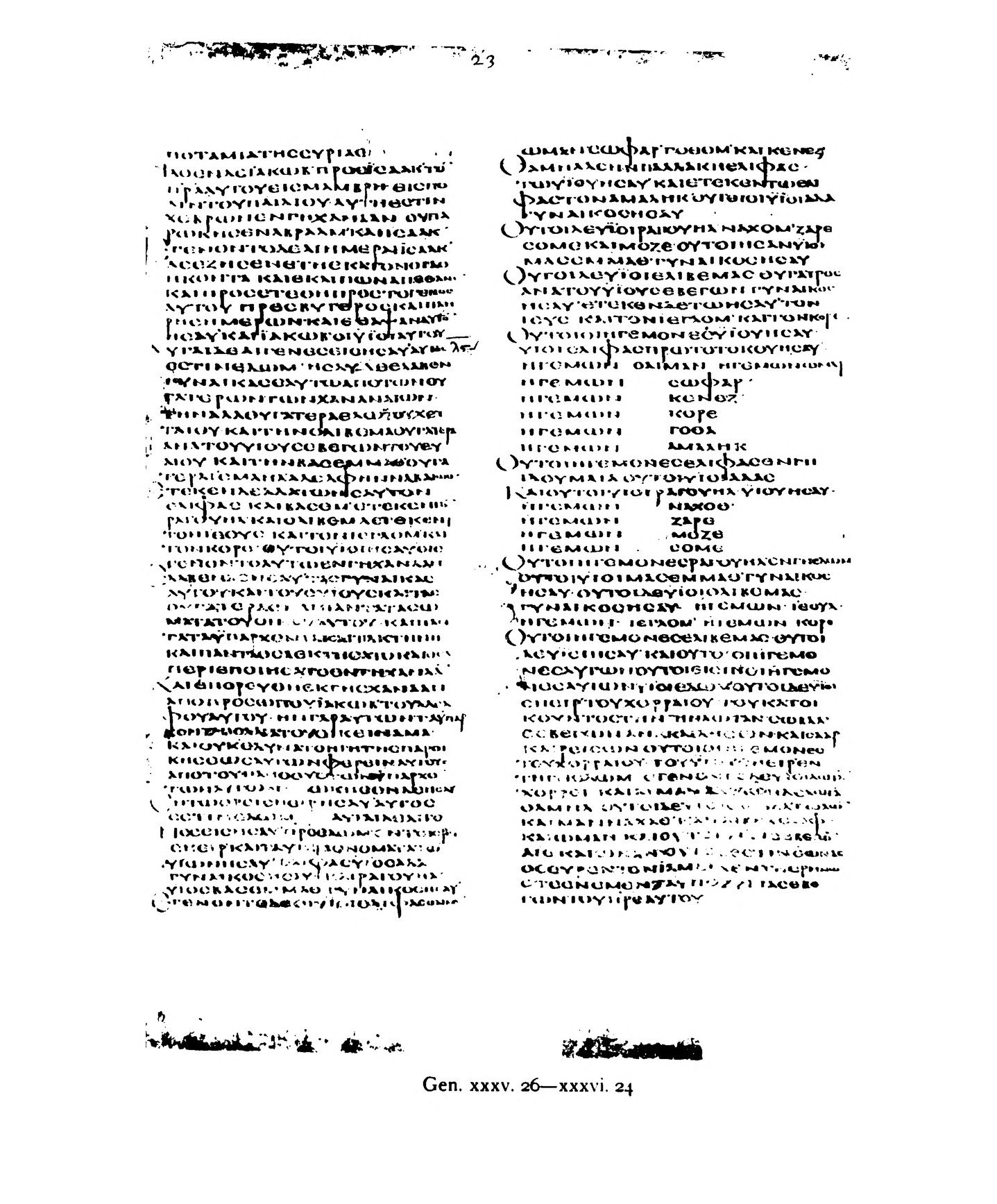
Genesis 35 in the Greek Old Testament (the Septuagint) as written in Codex Alexandrinus, a Greek Bible copied in the fifth century, probably in Egypt, and now in the British Library (Royal MS 1 D. V, the first of its four volumes). It is one of the three great early codices of the whole Greek Bible, with Codex Vaticanus and Codex Sinaiticus, and for Genesis 1:1-46:28, which Codex Vaticanus has lost, it is the oldest surviving complete Greek text (older papyri such as the Berlin Genesis papyrus and Chester Beatty 961 survive only in part).
Numbering: Swete's Greek and Brenton's English number or divide some verses of this chapter differently (Swete 35:21-22 = Brenton 35:22). Each column keeps its own verse numbers, and sections are cut only where the two texts agree, so each section holds the same passage in both languages.
This entry meets the strict three-criteria standard of the Theosis Library:
- Manuscript scan: the pages of Codex Alexandrinus carrying this chapter (fol. 22r, fol. 22v, fol. 23r), from the full-size photographic (autotype) facsimile published by the British Museum in 1879-1883, as digitised on the Internet Archive. The verse range of every page comes from the reduced photographic facsimile of 1915, which prints it beneath each plate, and the opening words of every page were read on the plate to confirm the page and the verse it begins with. Each section links to the page or pages that hold its verses. Folio numbers are those written at the head of each leaf and visible on the plates.
- Original text: Swete's edition, which in Genesis 1:1-46:28 prints the text of Codex Alexandrinus itself (Codex Vaticanus has lost these chapters), with the spelling of A for the most part. Swete adds accents, breathings and punctuation and expands the abbreviated sacred names, so the plate shows the same text in unaccented capitals.
- English translation: Sir Lancelot C. L. Brenton, The Septuagint Version of the Old Testament (1844; 1851 edition), a translation of the Greek, public domain, from the eBible.org text.
How was this verified? (Provenance)
Where on the image
Genesis 35:1 is on fol. 22r (full-size facsimile of 1879-83, Internet Archive codex-alexandrinus leaf 64). The 1915 reduced facsimile prints beneath this page: Gen. xxxiv. 13-xxxv. 1. Checked on the plate: the page begins inside Genesis 34:13 (first words read: ΜΕΤΑ ΔΟΛΟΥ ΚΑΙ ΕΛΑΛΗΣΑΝ ΑΥΤΟΙΣ ΟΤΙ ΕΜΙΑΝΑΝ ΔΕΙΝΑΝ ΤΗΝ ΑΔΕΛΦΗΝ). Genesis 35:1-8 is on fol. 22v (full-size facsimile of 1879-83, Internet Archive codex-alexandrinus leaf 65). The 1915 reduced facsimile prints beneath this page: Gen. xxxv. 1-26. Checked on the plate: the page begins inside Genesis 35:1 (first words read: ΑΠΟ ΠΡΟΣΩΠΟΥ ΗΣΑΥ ΤΟΥ ΑΔΕΛΦΟΥ ΣΟΥ ΕΙΠΕΝ ΔΕ ΙΑΚΩΒ ΤΩ ΟΙΚΩ ΑΥΤΟΥ).
1Εἶπεν δὲ ὁ θεὸς πρὸς Ἰακώβ Ἀναστὰς ἀνάβηθι εἰς τὸν τόπον Βαιθήλ, καὶ οἴκει ἐκεῖ· καὶ ποίησον ἐκεῖ θυσιαστήριον τῷ θεῷ τῷ ὀφθέντι σοι ἐν τῷ ἀποδιδράσκειν σε ἀπὸ προσώπου Ἠσαὺ τοῦ ἀδελφοῦ σου. 2εἶπεν δὲ Ἰακὼβ τῷ οἴκῳ αὐτοῦ καὶ πᾶσιν τοῖς μετ᾽ αὐτοῦ Ἄρατε τοὺς θεοὺς τοὺς ἀλλοτρίους ἐκ μέσου ὑμῶν, καὶ καθαρίσασθε, καὶ ἀλλάξατε τὰς στολὰς ὑμῶν· 3καὶ ἀναστάντες ἀναβῶμεν εἰς Βαιθήλ, καὶ ποιήσωμεν ἐκεῖ θυσιαστήριον τῷ θεῷ τῷ ἐπακούσαντί μοι ἐν ἡμέρᾳ θλίψεως, ὃς ἦν μετ᾽ ἐμοῦ καὶ διέσωσέν με ἐν τῇ ὁδῷ ᾗ ἐπορευόμην. 4καὶ ἔδωκαν τῷ Ἰακὼβ τοὺς θεοὺς τοὺς ἀλλοτρίους οἳ ἦσαν ἐν ταῖς χερσὶν αὐτῶν, καὶ τὰ ἐνώτια τὰ ἐν τοῖς ὠσὶν αὐτῶν· καὶ κατέκρυψεν αὐτὰ Ἰακὼβ ὑπὸ τὴν τερέβινθον τὴν ἐν Σικίμοις, καὶ ἀπώλεσεν αὐτὰ ἕως τῆς σήμερον ἡμέρας. 5καὶ ἐξῆρεν Ἰσραὴλ ἐκ Σικίμων· καὶ ἐγένετο φόβος θεοῦ ἐπὶ τὰς πόλεις τὰς κύκλῳ αὐτῶν, καὶ οὐ κατεδίωξαν ὀπίσω τῶν υἱῶν Ἰσραήλ. 6ἦλθεν δὲ Ἰακὼβ εἰς Λοῦζα ἥ ἐστιν ἐν γῇ Χανάαν, ἥ ἐστιν Βαιθήλ, αὐτὸς καὶ πᾶς ὁ λαὸς ὃς ἦν μετ᾽ αὐτοῦ. 7καὶ ᾠκοδόμησεν ἐκεῖ θυσιαστήριον, καὶ ἐκάλεσεν τὸ ὄνομα τοῦ τόπου Βαιθήλ· ἐκεῖ γὰρ ἐπεφάνη αὐτῷ ὁ θεὸς ἐν τῷ ἀποδιδράσκειν αὐτὸν ἀπὸ προσώπου Ἠσαὺ τοῦ ἀδελφοῦ αὐτοῦ. 8ἀπέθανεν δὲ Δεββωρὰ ἡ τροφὸς Ῥεβέκκας κατώτερον Βαιθὴλ ὑπὸ τὴν βάλανον· καὶ ἐκάλεσεν Ἰακὼβ τὸ ὄνομα αὐτῆς Βάλανος πένθους.
1And God said to Jacob, Arise, go up to the place, Bæthel, and dwell there; and make there an altar to the God that appeared to thee, when thou fleddest from the face of Esau thy brother. 2And Jacob said to his house, and to all that were with him, Remove the strange gods that are with you from the midst of you, and purify yourselves, and change your clothes. 3And let us rise and go up to Bæthel, and let us there make an altar to God who hearkened to me in the day of calamity, who was with me, and preserved me throughout in the journey, by which I went. 4And they gave to Jacob the strange gods, which were in their hands, and the ear-rings which were in their ears, and Jacob hid them under the turpentine tree which is in Secima, and destroyed them to this day. 5So Israel departed from Secima, and the fear of God was upon the cities round about them, and they did not pursue after the children of Israel. 6And Jacob came to Luza, which is in the land of Chanaan, which is Bæthel, he and all the people that were with him. 7And he built there an altar, and called the name of the place Bæthel; for there God appeared to him, when he fled from the face of his brother Esau. 8And Deborrha, Rebecca's nurse, died, and was buried below Bæthel under the oak; and Jacob called its name, The Oak of Mourning.
Where on the image
Genesis 35:9-16 is on fol. 22v (full-size facsimile of 1879-83, Internet Archive codex-alexandrinus leaf 65). The 1915 reduced facsimile prints beneath this page: Gen. xxxv. 1-26. Checked on the plate: the page begins inside Genesis 35:1 (first words read: ΑΠΟ ΠΡΟΣΩΠΟΥ ΗΣΑΥ ΤΟΥ ΑΔΕΛΦΟΥ ΣΟΥ ΕΙΠΕΝ ΔΕ ΙΑΚΩΒ ΤΩ ΟΙΚΩ ΑΥΤΟΥ).
9Ὤφθη δὲ ὁ θεὸς Ἰακὼβ ἔτι ἐν Λοῦζα, ὅτε παρεγένετο ἐκ Μεσοποταμίας τῆς Συρίας, καὶ ηὐλόγησεν αὐτὸν ὁ θεός. 10καὶ εἶπεν αὐτῷ ὁ θεός Τὸ ὄνομά σου οὐ κληθήσεται ἔτι Ἰακώβ, ἀλλ᾽ Ἰσραὴλ ἔσται τὸ ὄνομά σου. 11εἶπεν δὲ αὐτῷ ὁ θεός Ἐγὼ ὁ θεός σου, αὐξάνου καὶ πληθύνου· καὶ ἔθνη καὶ συναγωγαὶ ἐθνῶν ἔσονται ἐκ σοῦ, καὶ βασιλεῖς ἐκ τῆς ὀσφύος σου ἐξελεύσονται. 12καὶ τὴν γῆν ἣν δέδωκα Ἀβραὰμ καὶ Ἰσαάκ, σοὶ δέδωκα αὐτήν, καὶ τῷ σπέρματί σου μετὰ σὲ δώσω τὴν γῆν ταύτην. 13ἀνέβη δὲ ὁ θεὸς ἀπ᾽ αὐτοῦ ἐκ τοῦ τόπου οὗ ἐλάλησεν μετ᾽ αὐτοῦ. 14καὶ ἔστησεν Ἰακὼβ στήλην ἐν τῷ τόπῳ ᾧ ἐλάλησεν μετ᾽ αὐτοῦ, στήλην λιθίνην· καὶ ἔσπεισεν ἐπ᾽ αὐτὴν σπονδήν, καὶ ἐπέχεεν ἐπ᾽ αὐτὴν ἔλαιον. 15καὶ ἐκάλεσεν Ἰακὼβ τὸ ὄνομα τοῦ τόπου, ἐν ᾧ ἐλάλησεν μετ᾽ αὐτοῦ ἐκεῖ ὁ θεός Βαιθήλ. 16Ἀπάρας δὲ Ἰακὼβ ἐκ Βαιθὴλ ἔπηξεν τὴν σκηνὴν αὐτοῦ ἐπέκεινα τοῦ πύργου Γάδερ. ἐγένετο δὲ ἡνίκα ἤγγισεν χαβραθὰ εἰς γῆν ἐλθεῖν Ἐφράθα, ἔτεκεν Ῥαχήλ· καὶ ἐδυστόκησεν ἐν τῷ τοκετῷ.
9And God appeared to Jacob once more in Luza, when he came out of Mesopotamia of Syria, and God blessed him. 10And God said to him, Thy name shall not be called Jacob, but Israel shall be thy name; and he called his name Israel. 11And God said to him, I am thy God; increase and multiply; for nations and gatherings of nations shall be of thee, and kings shall come out of thy loins. 12And the land which I gave to Abraam and Isaac, I have given it to thee; and it shall come to pass that I will give this land also to thy seed after thee. 13And God went up from him from the place where he spoke with him. 14And Jacob set up a pillar in the place where God spoke with him, even a pillar of stone; and offered a libation upon it, and poured oil upon it. 15And Jacob called the name of the place in which God spoke with him, Bæthel. 16[And Jacob removed from Bæthel, and pitched his tent beyond the tower of Gader,] and it came to pass when he drew nigh to Chabratha, to enter into Ephratha, Rachel travailed; and in her travail she was in hard labour.
Where on the image
Genesis 35:17-24 is on fol. 22v (full-size facsimile of 1879-83, Internet Archive codex-alexandrinus leaf 65). The 1915 reduced facsimile prints beneath this page: Gen. xxxv. 1-26. Checked on the plate: the page begins inside Genesis 35:1 (first words read: ΑΠΟ ΠΡΟΣΩΠΟΥ ΗΣΑΥ ΤΟΥ ΑΔΕΛΦΟΥ ΣΟΥ ΕΙΠΕΝ ΔΕ ΙΑΚΩΒ ΤΩ ΟΙΚΩ ΑΥΤΟΥ).
17ἐγένετο δὲ ἐν τῷ σκληρῶς αὐτὴν τίκτειν εἶπεν αὐτῇ ἡ μαῖα Θάρσει, καὶ γὰρ οὗτός ἐστιν υἱός. 18ἐγένετο δὲ ἐν τῷ ἀφιέναι αὐτὴν τὴν ψυχήν, ἀπέθνησκεν γάρ, ἐκάλεσεν τὸ ὄνομα αὐτοῦ Υἱὸς ὀδύνης μου· ὁ δὲ πατὴρ αὐτοῦ ἐκάλεσεν αὐτὸν Βενιαμείν. 19ἀπέθανεν δὲ Ῥαχήλ, καὶ ἐτάφη ἐν τῇ ὁδῷ Ἐφράθα· αὕτη ἐστὶν Βηθλέεμ. 20καὶ ἔστησεν Ἰακὼβ στήλην ἐπὶ τοῦ μνημείου αὐτῆς· αὕτη ἐστὶν στήλη μνημείου Ῥαχὴλ ἕως τῆς σήμερον ἡμέρας. 21ἐγένετο δὲ ἡνίκα κατῴκησεν Ἰσραὴλ ἐν τῇ γῇ ἐκείνῃ, ἐπορεύθη Ῥουβὴν καὶ ἐκοιμήθη μετὰ Βάλλας τῆς παλλακῆς τοῦ πατρὸς αὐτοῦ· καὶ ἤκουσεν Ἰσραήλ, καὶ πονηρὸν ἐφάνη ἐναντίον αὐτοῦ. 22Ἦσαν δὲ οἱ υἱοὶ Ἰακὼβ δώδεκα· 23υἱοὶ Λείας πρωτότοκος Ἰακὼβ Ῥουβήν, Συμεών, Λευείς, Ἰούδας, Ἰσσαχάρ, Ζαβουλών· 24υἱοὶ δὲ Ῥαχὴλ Ἰωσὴφ καὶ Βενιαμείν·
17And it came to pass in her hard labour, that the midwife said to her, Be of good courage, for thou shalt also have this son. 18And it came to pass in her giving up the ghost (for she was dying), that she called his name, The son of my pain; but his father called his name Benjamin. 19So Rachel died, and was buried in the way of the course of Ephratha, this is Bethleem. 20And Jacob set up a pillar on her tomb; this is the pillar on the tomb of Rachel, until this day. 22And it came to pass when Israel dwelt in that land, that Ruben went and lay with Balla, the concubine of his father Jacob; and Israel heard, and the thing appeared grievous before him. 23The sons of Lea, the first-born of Jacob; Ruben, Symeon, Levi, Judas, Issachar, Zabulon. 24And the sons of Rachel; Joseph and Benjamin.
Where on the image
Genesis 35:25-26 is on fol. 22v (full-size facsimile of 1879-83, Internet Archive codex-alexandrinus leaf 65). The 1915 reduced facsimile prints beneath this page: Gen. xxxv. 1-26. Checked on the plate: the page begins inside Genesis 35:1 (first words read: ΑΠΟ ΠΡΟΣΩΠΟΥ ΗΣΑΥ ΤΟΥ ΑΔΕΛΦΟΥ ΣΟΥ ΕΙΠΕΝ ΔΕ ΙΑΚΩΒ ΤΩ ΟΙΚΩ ΑΥΤΟΥ). Genesis 35:26-29 is on fol. 23r (1915 reduced facsimile, Internet Archive TheCodexAlexandrinusV.1 leaf 55). The 1915 reduced facsimile prints beneath this page: Gen. xxxv. 26-xxxvi. 24. Checked on the plate: the page begins inside Genesis 35:26 (first words read: ΠΟΤΑΜΙΑ ΤΗΣ ΣΥΡΙΑΣ ΗΛΘΕΝ ΔΕ ΙΑΚΩΒ ΠΡΟΣ ΙΣΑΑΚ ΤΟΝ ΠΑΤΕΡΑ ΑΥΤΟΥ ΕΙΣ ΜΑΜΒΡΗ). Note: fol. 23r is missing from the full-size facsimile item (it photographs fol. 23v twice, leaves 66 and 67); the 1915 reduced plate is shown.
25υἱοὶ δὲ Βάλλας παιδίσκης Ῥαχὴλ Δὰν καὶ Νεφθαλείμ· 26υἱοὶ δὲ Ζέλφας παιδίσκης Λείας Γὰδ καὶ Ἀσήρ· οὗτοι οἱ υἱοὶ Ἰακώβ, οἳ ἐγένοντο αὐτῷ ἐν Μεσοποταμίᾳ τῆς Συρίας. 27Ἦλθεν δὲ Ἰακὼβ πρὸς Ἰσαὰκ τὸν πατέρα αὐτοῦ εἰς Μαμβρή, εἰς πόλιν τοῦ πεδίου· αὕτη ἐστὶν Χεβρὼν ἐν γῇ Χανάαν, οὗ παρῴκησεν Ἀβραὰμ καὶ Ἰσαάκ. 28ἐγένοντο δὲ αἱ ἡμέραι Ἰσαὰκ ἃς ἔζησεν ἔτη ἑκατὸν ὀγδοήκοντα. 29καὶ ἐκλιπὼν ἀπέθανεν καὶ προσετέθη πρὸς τὸ γένος αὐτοῦ πρεσβύτερος καὶ πλήρης ἡμερῶν· καὶ ἔθαψαν αὐτὸν Ἠσαὺ καὶ Ἰακὼβ οἱ υἱοὶ αὐτοῦ.
25And the sons of Balla, the hand-maid of Rachel; Dan and Nephthalim. 26And the sons of Zelpha, the hand-maid of Lea; Gad and Aser. These are the sons of Jacob, which were born to him in Mesopotamia of Syria. 27And Jacob came to Isaac his father to Mambre, to a city of the plain; this is Chebron in the land of Chanaan, where Abraam and Isaac sojourned. 28And the days of Isaac which he lived were an hundred and eighty years. 29And Isaac gave up the ghost and died, and was laid to his family, old and full of days; and Esau and Jacob his sons buried him.
Cite
Sources
- Source: Codex Alexandrinus (British Library Royal MS 1 D. V) via the British Museum photographic facsimiles of 1879-83 and 1915 (Internet Archive) + Swete's Septuagint + Brenton's English (holding institution)
- Critical edition: H. B. Swete, The Old Testament in Greek according to the Septuagint (1909)
← previous · → next · v cycle view · l back to library