Genesis, Chapter 40 (Codex Alexandrinus)
Introduction
Genesis 40 in the Greek Old Testament (the Septuagint) as written in Codex Alexandrinus, a Greek Bible copied in the fifth century, probably in Egypt, and now in the British Library (Royal MS 1 D. V, the first of its four volumes). It is one of the three great early codices of the whole Greek Bible, with Codex Vaticanus and Codex Sinaiticus, and for Genesis 1:1-46:28, which Codex Vaticanus has lost, it is the oldest surviving complete Greek text (older papyri such as the Berlin Genesis papyrus and Chester Beatty 961 survive only in part).
This entry meets the strict three-criteria standard of the Theosis Library:
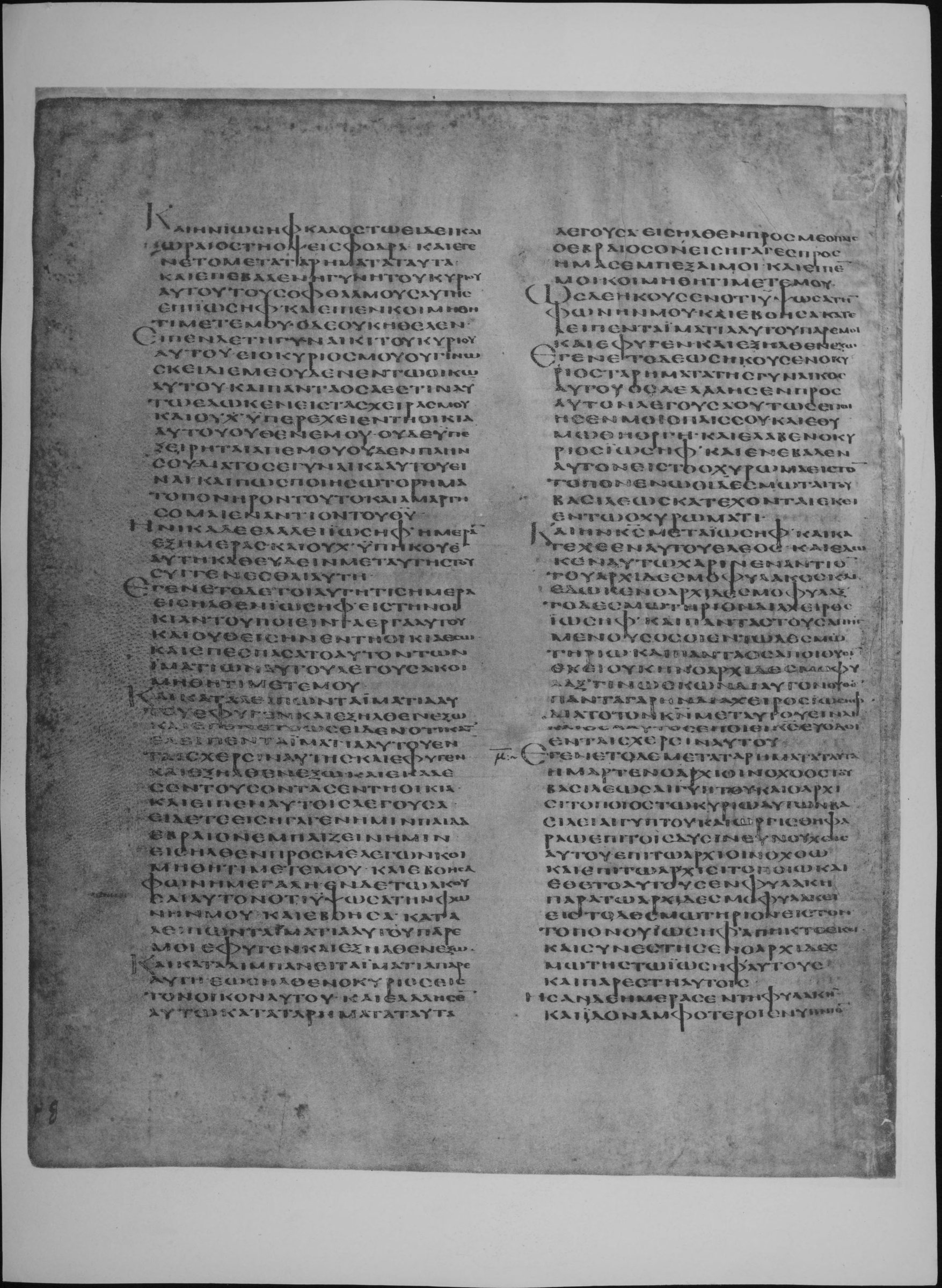
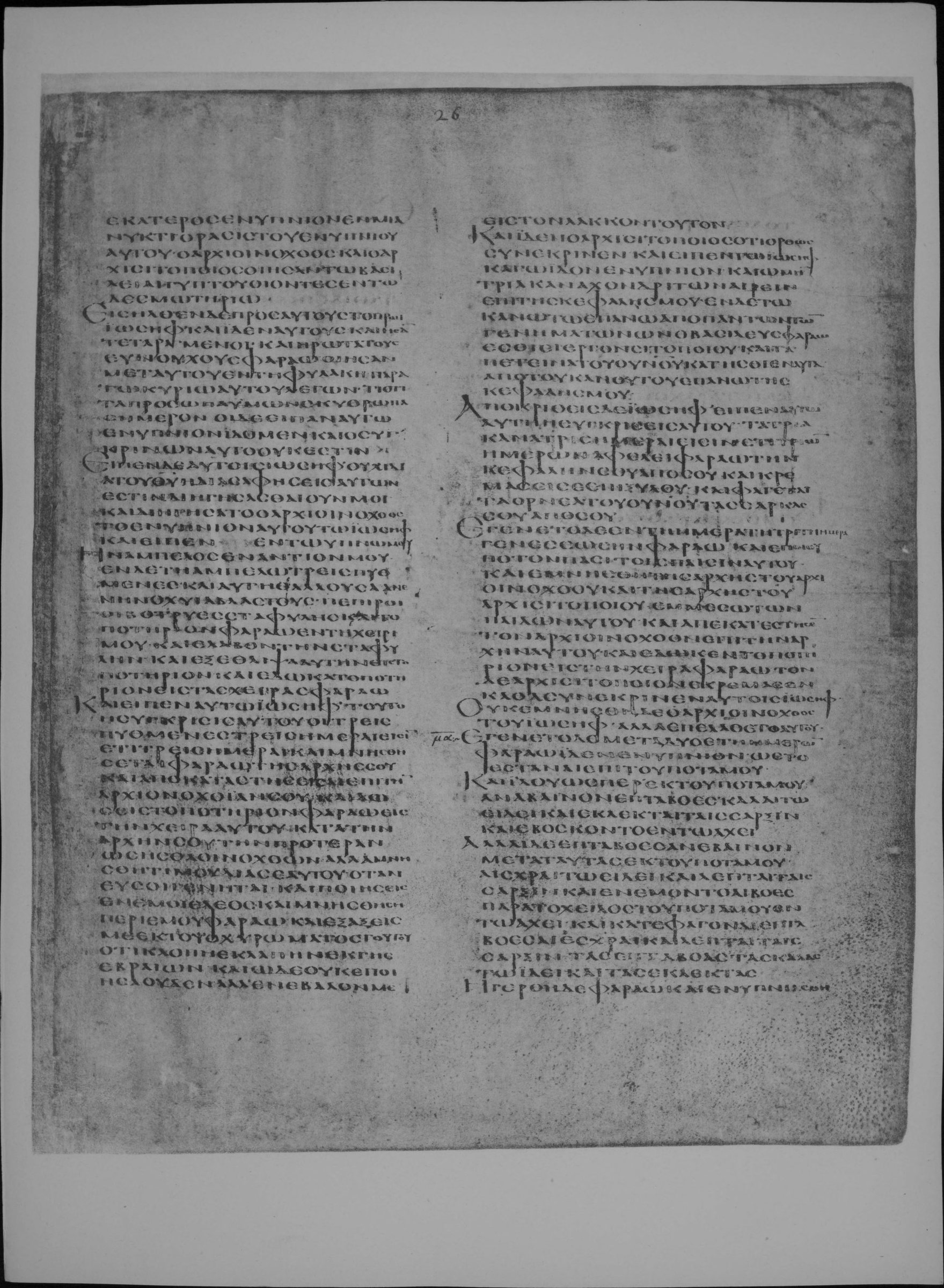
- Manuscript scan: the pages of Codex Alexandrinus carrying this chapter (fol. 25v, fol. 26r), from the full-size photographic (autotype) facsimile published by the British Museum in 1879-1883, as digitised on the Internet Archive. The verse range of every page comes from the reduced photographic facsimile of 1915, which prints it beneath each plate, and the opening words of every page were read on the plate to confirm the page and the verse it begins with. Each section links to the page or pages that hold its verses. Folio numbers are those written at the head of each leaf and visible on the plates.
- Original text: Swete's edition, which in Genesis 1:1-46:28 prints the text of Codex Alexandrinus itself (Codex Vaticanus has lost these chapters), with the spelling of A for the most part. Swete adds accents, breathings and punctuation and expands the abbreviated sacred names, so the plate shows the same text in unaccented capitals.
- English translation: Sir Lancelot C. L. Brenton, The Septuagint Version of the Old Testament (1844; 1851 edition), a translation of the Greek, public domain, from the eBible.org text.
How was this verified? (Provenance)
Where on the image
Genesis 40:1-5 is on fol. 25v (full-size facsimile of 1879-83, Internet Archive codex-alexandrinus leaf 71). The 1915 reduced facsimile prints beneath this page: Gen. xxxix. 6-xl. 5. Checked on the plate: the page begins inside Genesis 39:6 (first words read: ΚΑΙ ΗΝ ΙΩΣΗΦ ΚΑΛΟΣ ΤΩ ΕΙΔΕΙ ΚΑΙ ΩΡΑΙΟΣ ΤΗ ΟΨΕΙ ΣΦΟΔΡΑ). Genesis 40:5-8 is on fol. 26r (full-size facsimile of 1879-83, Internet Archive codex-alexandrinus leaf 72). The 1915 reduced facsimile prints beneath this page: Gen. xl. 5-xli. 5. Checked on the plate: the page begins inside Genesis 40:5 (first words read: ΕΚΑΤΕΡΟΣ ΕΝΥΠΝΙΟΝ ΕΝ ΜΙΑ ΝΥΚΤΙ ΟΡΑΣΙΣ ΤΟΥ ΕΝΥΠΝΙΟΥ ΑΥΤΟΥ).
1Ἐγένετο δὲ μετὰ τὰ ῥήματα ταῦτα ἥμαρτεν ὁ ἀρχιοινοχόος τοῦ βασιλέως Αἰγύπτου καὶ ὁ ἀρχισιτοποιὸς τῷ κυρίῳ αὐτῶν βασιλεῖ Αἰγύπτου. 2καὶ ὠργίσθη Φαραὼ ἐπὶ τοῖς δυσὶν εὐνούχοις αὐτοῦ, ἐπὶ τῷ ἀρχιοινοχόῳ καὶ ἐπὶ τῷ ἀρχισιτοποιῷ· 3καὶ ἔθετο αὐτοὺς ἐν φυλακῇ παρὰ τῷ ἀρχιδεσμοφύλακι εἰς τὸ δεσμωτήριον, εἰς τὸν τόπον οὗ Ἰωσὴφ ἀπῆκτο ἐκεῖ. 4καὶ συνέστησεν ὁ ἀρχιδεσμώτης τῷ Ἰωσὴφ αὐτούς, καὶ παρέστη αὐτοῖς· ἦσαν δὲ ἡμέρας ἐν τῇ φυλακῇ. 5καὶ ἴδον ἀμφότεροι ἐνύπνιον, ἑκάτερος ἐνύπνιον ἐν μιᾷ νυκτί, ὅρασις τοῦ ἐνυπνίου αὐτοῦ, ὁ ἀρχιοινοχόος καὶ ὁ ἀρχισιτοποιὸς οἳ ἦσαν τῷ βασιλεῖ Αἰγύπτου, οἱ ὄντες ἐν τῷ δεσμωτηρίῳ. 6εἰσῆλθεν δὲ πρὸς αὐτοὺς τὸ πρωὶ Ἰωσήφ, καὶ ἴδεν αὐτοὺς καὶ ἦσαν τεταραγμένοι. 7καὶ ἠρώτα τοὺς εὐνούχους Φαραώ, οἵ ἦσαν μετ᾽ αὐτοῦ ἐν τῇ φυλακῇ παρὰ τῷ κυρίῳ αὐτοῦ, λέγων Τί ὅτι τὰ πρόσωπα ὑμῶν σκυθρωπὰ σήμερον; 8οἱ δὲ εἶπαν αὐτῷ Ἐνύπνιον ἴδομεν, καὶ ὁ συγκρίνων αὐτὸ οὐκ ἔστιν. εἶπεν δὲ αὐτοῖς Ἰωσήφ Οὐχὶ διὰ τοῦ θεοῦ ἡ διασάφησις αὐτῶν ἐστίν; διηγήσασθε οὖν μοι.
1And it came to pass after these things, that the chief cupbearer of the king of Egypt and the chief baker trespassed against their lord the king of Egypt. 2And Pharao was wroth with his two eunuchs, with his chief cupbearer, and with his chief baker. 3And he put them in ward, into the prison, into the place whereinto Joseph had been led. 4And the chief keeper of the prison committed them to Joseph, and he stood by them; and they were some days in the prison. 5And they both had a dream in one night; and the vision of the dream of the chief cupbearer and chief baker, who belonged to the king of Egypt, who were in the prison, was this. 6Joseph went in to them in the morning, and saw them, and they had been troubled. 7And he asked the eunuchs of Pharao who were with him in the prison with his master, saying, Why is it that your countenances are sad to-day? 8And they said to him, We have seen a dream, and there is no interpreter of it. And Joseph said to them, Is not the interpretation of them through God? tell them then to me.
Where on the image
Genesis 40:9-16 is on fol. 26r (full-size facsimile of 1879-83, Internet Archive codex-alexandrinus leaf 72). The 1915 reduced facsimile prints beneath this page: Gen. xl. 5-xli. 5. Checked on the plate: the page begins inside Genesis 40:5 (first words read: ΕΚΑΤΕΡΟΣ ΕΝΥΠΝΙΟΝ ΕΝ ΜΙΑ ΝΥΚΤΙ ΟΡΑΣΙΣ ΤΟΥ ΕΝΥΠΝΙΟΥ ΑΥΤΟΥ).
9καὶ διηγήσατο ὁ ἀρχιοινοχόος τὸ ἐνύπνιον αὐτοῦ τῷ Ἰωσὴφ καὶ εἶπεν Ἐν τῷ ὕπνῳ μου ἦν ἄμπελος ἐναντίον μου· 10ἐν δὲ τῇ ἀμπέλῳ τρεῖς πυθμένες, καὶ αὐτὴ θάλλουσα ἀνενηνοχυῖα βλαστούς· πέπειροι οἱ βότρυες σταφυλῆς. 11καὶ τὸ ποτήριον Φαραὼ ἐν τῇ χειρί μου· καὶ ἔλαβον τὴν σταφυλὴν καὶ ἐξέθλιψα αὐτὴν εἰς τὸ ποτήριον, καὶ ἔδωκα τὸ ποτήριον εἰς τὰς χεῖρας Φαραώ. 12καὶ εἶπεν αὐτῷ Ἰωσήφ Τοῦτο ἡ σύγκρισις αὐτοῦ. οἱ τρεῖς πυθμένες τρεῖς ἡμέραι εἰσίν· 13ἔτι τρεῖς ἡμέραι καὶ μνησθήσεται Φαραὼ τῆς ἀρχῆς σου καὶ ἀποκαταστήσει σε ἐπὶ τὴν ἀρχιοινοχοίαν σου, καὶ δώσεις τὸ ποτήριον Φαραὼ εἰς τὴν χεῖρα αὐτοῦ κατὰ τὴν ἀρχήν σου τὴν προτέραν, ὡς ἦσθα οἰνοχοῶν. 14ἀλλὰ μνήσθητί μου διὰ σεαυτοῦ ὅταν εὖ σοι γένηται, καὶ ποιήσεις ἐν ἐμοὶ ἔλεος, καὶ μνησθήσῃ περὶ ἐμοῦ Φαραώ, καὶ ἐξάξεις με ἐκ τοῦ ὀχυρώματος τούτου· 15ὅτι κλοπῇ ἐκλάπην ἐκ γῆς Ἐβραίων· καὶ ὧδε οὐκ ἐποίησα οὐδέν, ἀλλ᾽ ἐνέβαλόν με εἰς τὸν λάκκον τοῦτον. 16καὶ ἴδεν ὁ ἀρχισιτοποιὸς ὅτι ὀρθῶς συνέκρινεν, καὶ εἶπεν τῷ Ἰωσήφ Κἀγὼ ἴδον ἐνύπνιον, καὶ ᾤμην τρία κανᾶ χονδριτῶν αἴρειν ἐπὶ τῆς κεφαλῆς μου·
9And the chief cupbearer related his dream to Joseph, and said, In my dream a vine was before me. 10And in the vine were three stems; and it budding shot forth blossoms; the clusters of grapes were ripe. 11And the cup of Pharao was in my hand; and I took the bunch of grapes, and squeezed it into the cup, and gave the cup into Pharao's hand. 12And Joseph said to him, This is the interpretation of it. The three stems are three days. 13Yet three days and Pharao shall remember thy office, and he shall restore thee to thy place of chief cupbearer, and thou shalt give the cup of Pharao into his hand, according to thy former high place, as thou wast wont to be cupbearer. 14But remember me of thyself, when it shall be well with thee, and thou shalt deal mercifully with me, and thou shalt make mention of me to Pharao, and thou shalt bring me forth out of this dungeon. 15For surely I was stolen away out of the land of the Hebrews, and here I have done nothing, but they have cast me into this pit. 16And the chief baker saw that he interpreted aright; and he said to Joseph, I also saw a dream, and methought I took up on my head three baskets of mealy food.
Where on the image
Genesis 40:17-23 is on fol. 26r (full-size facsimile of 1879-83, Internet Archive codex-alexandrinus leaf 72). The 1915 reduced facsimile prints beneath this page: Gen. xl. 5-xli. 5. Checked on the plate: the page begins inside Genesis 40:5 (first words read: ΕΚΑΤΕΡΟΣ ΕΝΥΠΝΙΟΝ ΕΝ ΜΙΑ ΝΥΚΤΙ ΟΡΑΣΙΣ ΤΟΥ ΕΝΥΠΝΙΟΥ ΑΥΤΟΥ).
17ἐν δὲ τῷ κανῷ τῷ ἐπάνω ἀπὸ πάντων τῶν γενημάτων ὧν ὁ βασιλεὺς Φαραὼ ἐσθίει, ἔργον σιτοποιοῦ· καὶ τὰ πετεινὰ τοῦ οὐρανοῦ κατήσθιεν αὐτὰ ἀπὸ τοῦ κανοῦ τοῦ ἐπάνω τῆς κεφαλῆς μου. 18ἀποκριθεὶς δὲ Ἰωσὴφ εἶπεν αὐτῷ Αὕτη ἡ σύγκρισις αὐτοῦ· τὰ τρία κανᾶ τρεῖς ἡμέραι εἰσίν· 19ἔτι τριῶν ἡμερῶν ἀφελεῖ Φαραὼ τὴν κεφαλήν σου ἀπὸ σοῦ, καὶ κρεμάσει σε ἐπὶ ξύλου, καὶ φάγεται τὰ ὄρνεα τοῦ οὐρανοῦ τὰς σάρκας σου ἀπὸ σοῦ. 20ἐγένετο δὲ ἐν τῇ ἡμέρᾳ τῇ τρίτῃ ἡμέρα γενέσεως ἦν Φαραώ, καὶ ἐποίει πότον πᾶσι τοῖς παισὶν αὐτοῦ· καὶ ἐμνήσθη τῆς ἀρχῆς τοῦ ἀρχιοινοχόου καὶ τῆς ἀρχῆς τοῦ ἀρχισιτοποιοῦ ἐν μέσῳ τῶν παίδων αὐτοῦ. 21καὶ ἀπεκατέστησεν τὸν ἀρχιοινοχόον ἐπὶ τὴν ἀρχὴν αὐτοῦ, καὶ ἔδωκεν τὸ ποτήριον εἰς τὴν χεῖρα Φαραώ· 22τὸν δὲ ἀρχισιτοποιὸν ἐκρέμασεν, καθὰ συνέκρινεν αὐτοῖς Ἰωσήφ. 23οὐκ ἐμνήσθη δὲ ὁ ἀρχιοινοχόος τοῦ Ἰωσήφ, ἀλλὰ ἐπελάθετο αὐτοῦ.
17And in the upper basket there was the work of the baker of every kind which Pharao eats; and the fowls of the air ate them out of the basket that was on my head. 18And Joseph answered and said to him, This is the interpretation of it; The three baskets are three days. 19Yet three days, and Pharao shall take away thy head from off thee, and shall hang thee on a tree, and the birds of the sky shall eat thy flesh from off thee. 20And it came to pass on the third day that it was Pharao's birth-day, and he made a banquet for all his servants, and he remembered the office of the cupbearer and the office of the baker in the midst of his servants. 21And he restored the chief cupbearer to his office, and he gave the cup into Pharao's hand. 22And he hanged the chief baker, as Joseph interpreted to them. 23Yet did not the chief cupbearer remember Joseph, but forgot him.
Cite
Sources
- Source: Codex Alexandrinus (British Library Royal MS 1 D. V) via the British Museum photographic facsimiles of 1879-83 and 1915 (Internet Archive) + Swete's Septuagint + Brenton's English (holding institution)
- Critical edition: H. B. Swete, The Old Testament in Greek according to the Septuagint (1909)
← previous · → next · v cycle view · l back to library