Genesis, Chapter 8 (Codex Alexandrinus)
Introduction
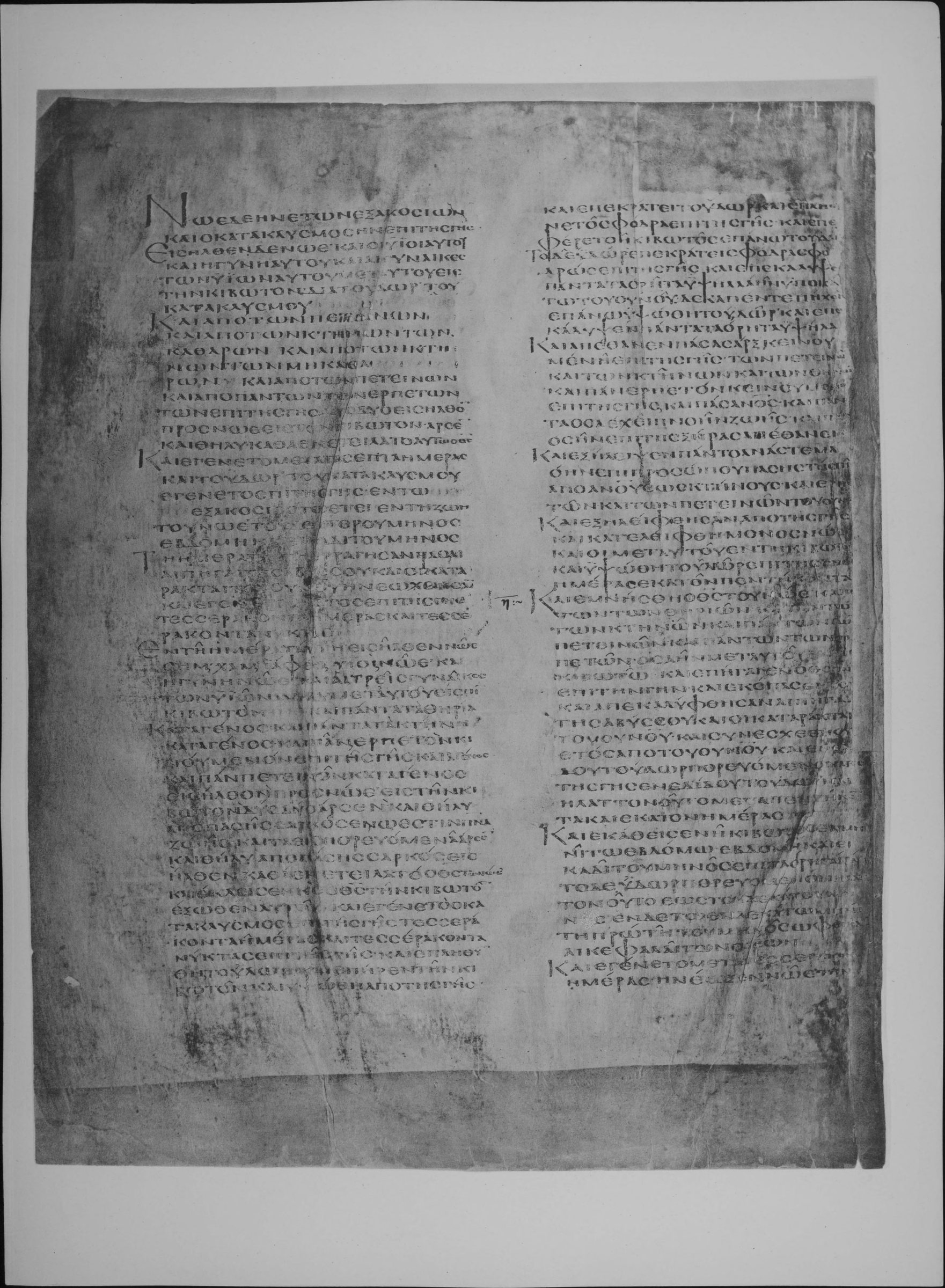
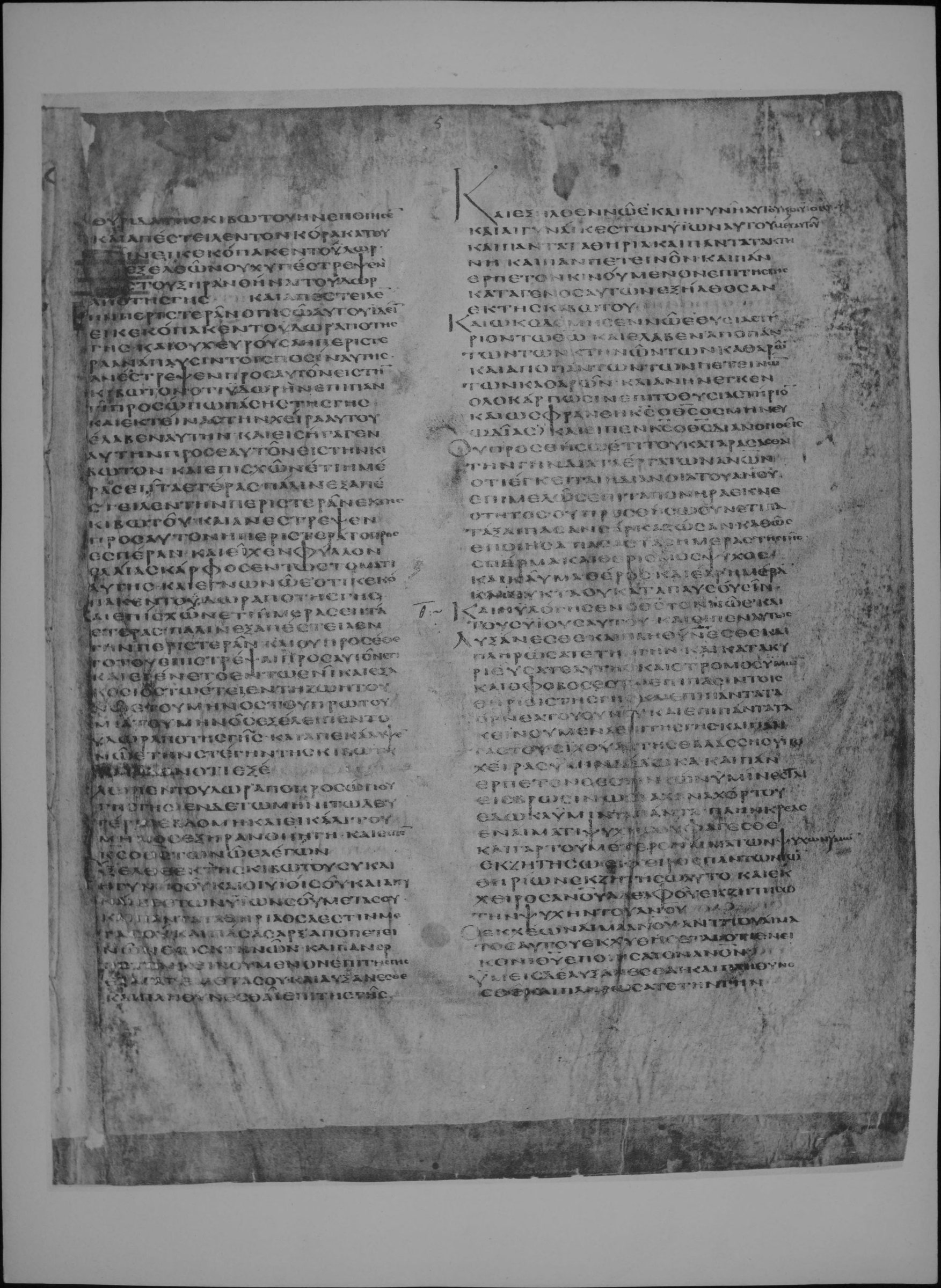
Genesis 8 in the Greek Old Testament (the Septuagint) as written in Codex Alexandrinus, a Greek Bible copied in the fifth century, probably in Egypt, and now in the British Library (Royal MS 1 D. V, the first of its four volumes). It is one of the three great early codices of the whole Greek Bible, with Codex Vaticanus and Codex Sinaiticus, and for Genesis 1:1-46:28, which Codex Vaticanus has lost, it is the oldest surviving complete Greek text (older papyri such as the Berlin Genesis papyrus and Chester Beatty 961 survive only in part).
Numbering: Swete's Greek and Brenton's English number or divide some verses of this chapter differently (Swete 8:3-4 = Brenton 8:3; Swete 8:5 = Brenton 8:4-5). Each column keeps its own verse numbers, and sections are cut only where the two texts agree, so each section holds the same passage in both languages.
This entry meets the strict three-criteria standard of the Theosis Library:
- Manuscript scan: the pages of Codex Alexandrinus carrying this chapter (fol. 4v, fol. 5r), from the full-size photographic (autotype) facsimile published by the British Museum in 1879-1883, as digitised on the Internet Archive. The verse range of every page comes from the reduced photographic facsimile of 1915, which prints it beneath each plate, and the opening words of every page were read on the plate to confirm the page and the verse it begins with. Each section links to the page or pages that hold its verses. Folio numbers are those written at the head of each leaf and visible on the plates.
- Original text: Swete's edition, which in Genesis 1:1-46:28 prints the text of Codex Alexandrinus itself (Codex Vaticanus has lost these chapters), with the spelling of A for the most part. Swete adds accents, breathings and punctuation and expands the abbreviated sacred names, so the plate shows the same text in unaccented capitals.
- English translation: Sir Lancelot C. L. Brenton, The Septuagint Version of the Old Testament (1844; 1851 edition), a translation of the Greek, public domain, from the eBible.org text.
How was this verified? (Provenance)
Where on the image
Genesis 8:1-6 is on fol. 4v (full-size facsimile of 1879-83, Internet Archive codex-alexandrinus leaf 29). The 1915 reduced facsimile prints beneath this page: Gen. vii. 6-viii. 6. Checked on the plate: the page begins at the start of Genesis 7:6 (first words read: ΝΩΕ ΔΕ ΗΝ ΕΤΩΝ ΕΞΑΚΟΣΙΩΝ ΚΑΙ Ο ΚΑΤΑΚΛΥΣΜΟΣ ΕΓΕΝΕΤΟ). Genesis 8:6-8 is on fol. 5r (full-size facsimile of 1879-83, Internet Archive codex-alexandrinus leaf 30). The 1915 reduced facsimile prints beneath this page: Gen. viii. 6-ix. 7. Checked on the plate: the page begins inside Genesis 8:6 (first words read: ΤΗΣ ΚΙΒΩΤΟΥ ΗΝ ΕΠΟΙΗΣΕ ΚΑΙ ΑΠΕΣΤΕΙΛΕΝ ΤΟΝ ΚΟΡΑΚΑ).
1Καὶ ἐμνήσθη ὁ θεὸς τοῦ Νῶε, καὶ πάντων τῶν θηρίων καὶ πάντων τῶν κτηνῶν καὶ πάντων τῶν πετεινῶν καὶ πάντων τῶν ἑρπετῶν ὅσα ἦν μετ᾽ αὐτοῦ ἐν τῇ κιβωτῷ· καὶ ἐπήγαγεν ὁ θεὸς πνεῦμα ἐπὶ τὴν γῆν, καὶ ἐκόπασεν τὸ ὕδωρ. 2καὶ ἀπεκαλύφθησαν αἱ πηγαὶ τῆς ἀβύσσου καὶ οἱ καταράκται τοῦ οὐρανοῦ, καὶ συνεσχέθη ὁ ὑετὸς ἀπὸ τοῦ οὐρανοῦ, 3καὶ ἐνεδίδου τὸ ὕδωρ πορευόμενον ἀπὸ τῆς γῆς· ἐνεδίδου τὸ ὕδωρ καὶ ἠλαττονοῦτο μετὰ πεντήκοντα καὶ ἑκατὸν ἡμέρας. 4καὶ ἐκάθισεν ἡ κιβωτὸς ἐν μηνὶ τῷ ἑβδόμῳ, ἑβδόμῃ καὶ εἰκάδι τοῦ μηνός, ἐπὶ τὰ ὄρη τὰ Ἀραράτ. 5τὸ δὲ ὕδωρ πορευόμενον ἠλαττονοῦτο ἕως τοῦ δεκάτου μηνός· ἐν δὲ τῷ ἑνδεκάτῳ μηνί, τῇ πρώτῃ τοῦ μηνός, ὤφθησαν αἱ κεφαλαὶ τῶν ὀρέων. 6Καὶ ἐγένετο μετὰ τεσσεράκοντα ἡμέρας ἠνέῳξεν Νῶε τὴν θυρίδα τῆς κιβωτοῦ ἣν ἐποίησεν, 7καὶ ἀπέστειλεν τὸν κόρακα τοῦ ἰδεῖν εἰ κεκόπακεν τὸ ὕδωρ· καὶ ἐξελθὼν οὐχ ὑπέστρεψεν ἕως τοῦ ξηρανθῆναι τὸ ὕδωρ ἀπὸ τῆς γῆς. 8καὶ ἀπέστειλεν τὴν περιστερὰν ὀπίσω αὐτοῦ ἰδεῖν εἰ κεκόπακεν τὸ ὕδωρ ἀπὸ τῆς γῆς.
1And God remembered Noe, and all the wild beasts, and all the cattle, and all the birds, and all the reptiles that creep, as many as were with him in the ark, and God brought a wind upon the earth, and the water stayed. 2And the fountains of the deep were closed up, and the flood-gates of heaven, and the rain from heaven was withheld. 3And the water subsided, and went off the earth, and after an hundred and fifty days the water was diminished, and the ark rested in the seventh month, on the twenty-seventh day of the month, on the mountains of Ararat. 4And the water continued to decrease until the tenth month. 5And in the tenth month, on the first day of the month, the heads of the mountains were seen. 6And it came to pass after forty days Noe opened the window of the ark which he had made. 7And he sent forth a raven; and it went forth and returned not until the water was dried from off the earth. 8And he sent a dove after it to see if the water had ceased from off the earth.
Where on the image
Genesis 8:9-16 is on fol. 5r (full-size facsimile of 1879-83, Internet Archive codex-alexandrinus leaf 30). The 1915 reduced facsimile prints beneath this page: Gen. viii. 6-ix. 7. Checked on the plate: the page begins inside Genesis 8:6 (first words read: ΤΗΣ ΚΙΒΩΤΟΥ ΗΝ ΕΠΟΙΗΣΕ ΚΑΙ ΑΠΕΣΤΕΙΛΕΝ ΤΟΝ ΚΟΡΑΚΑ).
9καὶ οὐχ εὑροῦσα ἡ περιστερὰ ἀνάπαυσιν τοῖς ποσὶν αὐτῆς ἀνέστρεψεν πρὸς αὐτὸν εἰς τὴν κιβωτόν, ὅτι ὕδωρ ἦν ἐπὶ παντὶ προσώπῳ πάσης τῆς γῆς· καὶ ἐκτείνας τὴν χεῖρα αὐτοῦ ἔλαβεν αὐτὴν καὶ εἰσήγαγεν αὐτὴν πρὸς ἑαυτὸν εἰς τὴν κιβωτόν. 10καὶ ἐπισχὼν ἔτι ἡμέρας ἑπτὰ ἑτέρας πάλιν ἐξαπέστειλεν τὴν περιστερὰν ἐκ τῆς κιβωτοῦ. 11καὶ ἀνέστρεψεν πρὸς αὐτὸν ἡ περιστερὰ τὸ πρὸς ἑσπέραν, καὶ εἶχεν φύλλον ἐλαίας κάρφος ἐν τῷ στόματι αὐτῆς· καὶ ἔγνω Νῶε ὅτι κεκόπακεν τὸ ὕδωρ ἀπὸ τῆς γῆς. 12καὶ ἐπισχὼν ἔτι ἡμέρας ἑπτὰ ἑτέρας πάλιν ἐξαπέστειλεν τὴν περιστεράν, καὶ οὐ προσέθετο τοῦ ἐπιστρέψαι πρὸς αὐτὸν ἔτι. 13Καὶ ἐγένετο ἐν τῷ ἑνὶ καὶ ἑξακοσιοστῷ ἔτει ἐν τῇ ζωῇ τοῦ Νῶε, τοῦ μηνὸς τοῦ πρώτου, μιᾷ τοῦ μηνός, ἐξέλειπεν τὸ ὕδωρ ἀπὸ τῆς γῆς· καὶ ἀπεκάλυψεν Νῶε τὴν στέγην τῆς κιβωτοῦ, καὶ ἴδεν ὅτι ἐξέλειπεν τὸ ὕδωρ ἀπὸ προσώπου τῆς γῆς. 14ἐν δὲ τῷ μηνὶ τῷ δευτέρῳ, ἑβδόμῃ καὶ εἰκάδι τοῦ μηνός, ἐξηράνθη ἡ γῆ. 15Καὶ εἶπεν Κύριος ὁ θεὸς τῷ Νῶε λέγων 16Ἔξελθε ἐκ τῆς κιβωτοῦ, σὺ καὶ ἡ γυνή σου καὶ οἱ υἱοί σου καὶ αἱ γυναῖκες τῶν υἱῶν σου μετὰ σοῦ,
9And the dove not having found rest for her feet, returned to him into the ark, because the water was on all the face of the earth, and he stretched out his hand and took her, and brought her to himself into the ark. 10And having waited yet seven other days, he again sent forth the dove from the ark. 11And the dove returned to him in the evening, and had a leaf of olive, a sprig in her mouth; and Noe knew that the water had ceased from off the earth. 12And having waited yet seven other days, he again sent forth the dove, and she did not return to him again any more. 13And it came to pass in the six hundred and first year of the life of Noe, in the first month, on the first day of the month, the water subsided from off the earth, and Noe opened the covering of the ark which he had made, and he saw that the water had subsided from the face of the earth. 14And in the second month the earth was dried, on the twenty-seventh day of the month. 15And the Lord God spoke to Noe, saying, 16Come out from the ark, thou and thy wife and thy sons, and thy sons' wives with thee.
Where on the image
Genesis 8:17-22 is on fol. 5r (full-size facsimile of 1879-83, Internet Archive codex-alexandrinus leaf 30). The 1915 reduced facsimile prints beneath this page: Gen. viii. 6-ix. 7. Checked on the plate: the page begins inside Genesis 8:6 (first words read: ΤΗΣ ΚΙΒΩΤΟΥ ΗΝ ΕΠΟΙΗΣΕ ΚΑΙ ΑΠΕΣΤΕΙΛΕΝ ΤΟΝ ΚΟΡΑΚΑ).
17καὶ πάντα τὰ θηρία ὅσα ἐστὶν μετὰ σοῦ, καὶ πᾶσα σὰρξ ἀπὸ πετεινῶν ἕως κτηνῶν, καὶ πᾶν ἑρπετὸν κινούμενον ἐπὶ τῆς γῆς ἐξάγαγε μετὰ σοῦ· καὶ αὐξάνεσθε καὶ πληθύνεσθε ἐπὶ τῆς γῆς. 18καὶ ἐξῆλθεν Νῶε καὶ ἡ γυνὴ αὐτοῦ καὶ οἱ υἱοὶ αὐτοῦ καὶ αἱ γυναῖκες τῶν υἱῶν αὐτοῦ μετ᾽ αὐτοῦ· 19καὶ πάντα τὰ θηρία καὶ πάντα τὰ κτήνη καὶ πᾶν πετεινὸν καὶ πᾶν ἑρπετὸν κινούμενον ἐπὶ τῆς γῆς κατὰ γένος αὐτῶν ἐξήλθοσαν ἐκ τῆς κιβωτοῦ. 20Καὶ ᾠκοδόμησεν Νῶε θυσιαστήριον τῷ θεῷ, καὶ ἔλαβεν ἀπὸ πάντων τῶν κτηνῶν τῶν καθαρῶν καὶ ἀπὸ πάντων τῶν πετεινῶν τῶν καθαρῶν, καὶ ἀνήνεγκεν ὁλοκάρπωσιν ἐπὶ τὸ θυσιαστήριον. 21καὶ ὠσφράνθη Κύριος ὁ θεὸς ὀσμὴν εὐωδίας, καὶ εἶπεν Κύριος ὁ θεὸς διανοηθείς Οὐ προσθήσω ἔτι τοῦ καταράσασθαι τὴν γῆν διὰ τὰ ἔργα τῶν ἀνθρώπων, ὅτι ἔγκειται ἡ διάνοια τοῦ ἀνθρώπου ἐπιμελῶς ἐπὶ τὰ πονηρὰ ἐκ νεότητος· οὐ προσθήσω οὖν ἔτι πατάξαι πᾶσαν σάρκα ζῶσαν καθὼς ἐποίησα. 22πάσας τὰς ἡμέρας τῆς γῆς σπέρμα καὶ θερισμός, ψῦχος καὶ καῦμα, θέρος καὶ ἔαρ ἡμέραν καὶ νύκτα οὐ καταπαύσουσιν.
17And all the wild beasts as many as are with thee, and all flesh both of birds and beasts, and every reptile moving upon the earth, bring forth with thee: and increase ye and multiply upon the earth. 18And Noe came forth, and his wife and his sons, and his sons' wives with him. 19And all the wild beasts and all the cattle and every bird, and every reptile creeping upon the earth after their kind, came forth out of the ark. 20And Noe built an altar to the Lord, and took of all clean beasts, and of all clean birds, and offered a whole burnt-offering upon the altar. 21And the Lord God smelled a smell of sweetness, and the Lord God having considered, said, I will not any more curse the earth, because of the works of men, because the imagination of man is intently bent upon evil things from his youth, I will not therefore any more smite all living flesh as I have done. 22All the days of the earth, seed and harvest, cold and heat, summer and spring, shall not cease by day or night.
Cite
Sources
- Source: Codex Alexandrinus (British Library Royal MS 1 D. V) via the British Museum photographic facsimiles of 1879-83 and 1915 (Internet Archive) + Swete's Septuagint + Brenton's English (holding institution)
- Critical edition: H. B. Swete, The Old Testament in Greek according to the Septuagint (1909)
← previous · → next · v cycle view · l back to library