Hosea, Chapter 11 (Codex Alexandrinus)
Introduction
Hosea 11 in the Greek Old Testament (the Septuagint) as written in Codex Alexandrinus, a Greek Bible copied in the fifth century, probably in Egypt, and now in the British Library (Royal MS 1 D. VI, the second of its four volumes). It is one of the three great early codices of the whole Greek Bible, with Codex Vaticanus and Codex Sinaiticus.
Numbering: Swete's Greek and Brenton's English number or divide some verses of this chapter differently (Swete 11:12 = Brenton 12:1). Each column keeps its own verse numbers, and sections are cut only where the two texts agree, so each section holds the same passage in both languages.
This entry meets the strict three-criteria standard of the Theosis Library:
- Manuscript scan: the pages of Codex Alexandrinus carrying this chapter (fol. 280r, fol. 280v), from the full-size photographic (autotype) facsimile published by the British Museum in 1879-1883, as digitised on the Internet Archive. The verse range of every page comes from the reduced photographic facsimile of 1936, which prints it beneath each plate, and the opening words of every page were read on the plate to confirm the page and the verse it begins with. Each section links to the page or pages that hold its verses. Folio numbers are those written at the head of each leaf and visible on the plates.
- Original text: Swete's edition, which here prints the text of Codex Vaticanus (Vat. gr. 1209), the base of his edition, and gives the readings of Alexandrinus only in his apparatus. The Greek column is therefore Vaticanus' text; where Alexandrinus differs, the plate shows what Alexandrinus reads.
- English translation: Sir Lancelot C. L. Brenton, The Septuagint Version of the Old Testament (1844; 1851 edition), a translation of the Greek, public domain, from the eBible.org text.
How was this verified? (Provenance)
Where on the image
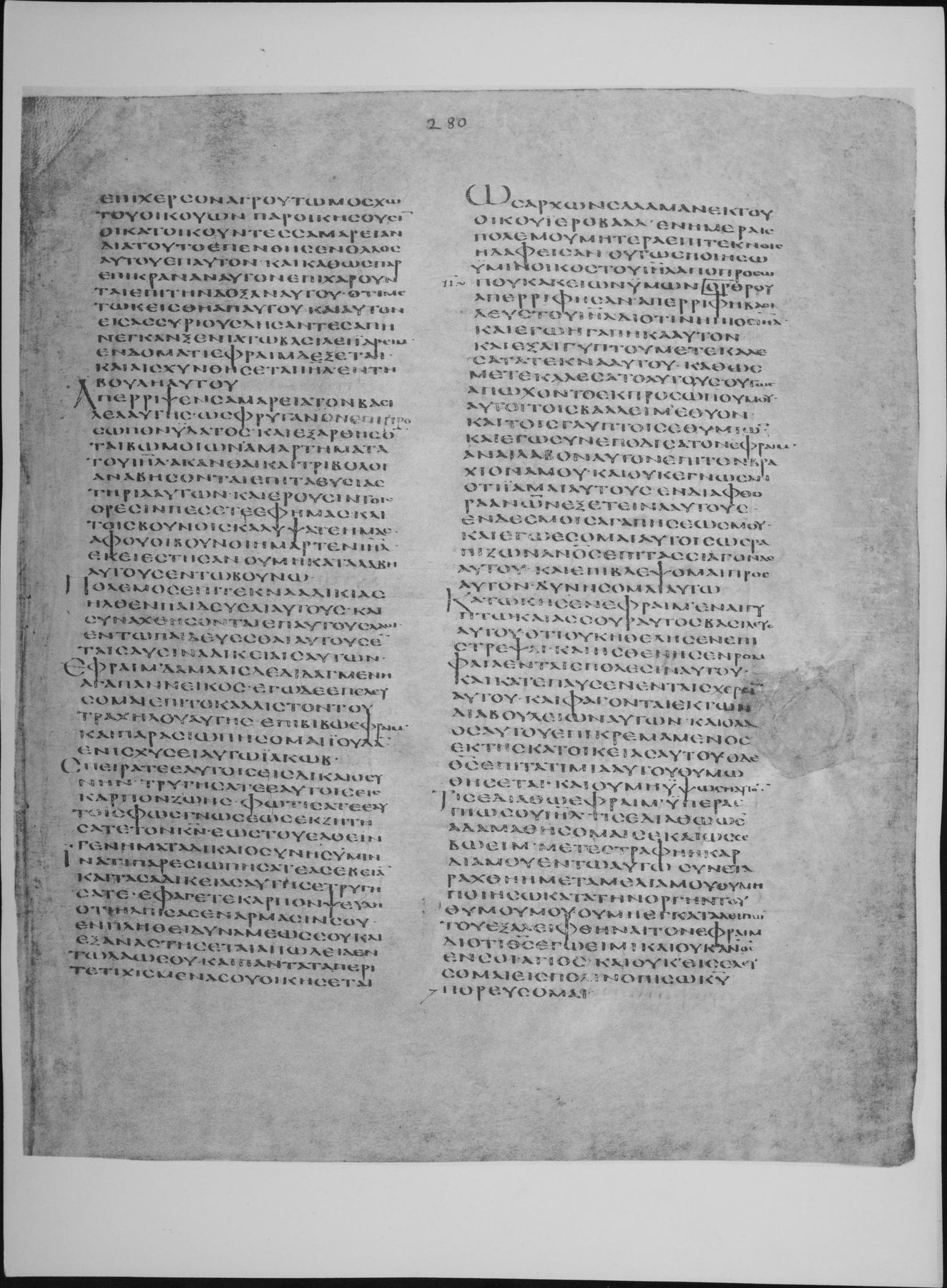
Hosea 11:1-8 is on fol. 280r (full-size facsimile of 1879-83, Internet Archive codex-alexandrinus leaf 584). The 1936 reduced facsimile prints beneath this page: Hos. x. 4-xi. 10. Checked on the plate: the page begins inside Hosea 10:4 (first words read: ΕΠΙ ΧΕΡΣΟΝ ΑΓΡΟΥ ΤΩ ΜΟΣΧΩ ΤΟΥ ΟΙΚΟΥ ΩΝ ΠΑΡΟΙΚΗΣΟΥΣΙΝ ΟΙ ΚΑΤΟΙΚΟΥΝΤΕΣ ΣΑΜΑΡΕΙΑΝ).
1ὄρθρου ἀπερίφησαν· ἀπερίφη βασιλεὺς Ἰσραήλ. Ὅτι νήπιος Ἰσραὴλ καὶ ἐγὼ ἠγάπησα αὐτόν, καὶ ἐξ Αἰγύπτου μετεκάλεσα τὰ τέκνα αὐτοῦ. 2καθὼς μετεκάλεσα αὐτούς, οὕτως ἀπῴχοντο ἐκ προσώπου μου· αὐτοὶ τοῖς Βααλεὶμ ἔθυον καὶ τοῖς γλυπτοῖς ἐθυμίων. 3καὶ ἐγὼ συνεπόδισα τὸν Ἐφράιμ, ἀνέλαβον αὐτὸν ἐπὶ τὸν βραχίονά μου· οὐκ ἔγνωσαν ὅτι ἴαμαι αὐτούς. 4ἐν διαφθορᾷ ἀνθρώπων, ἐξέτεινα αὐτοὺς ἐν δεσμοῖς ἀγαπήσεώς μου, καὶ ἔσομαι αὐτοῖς ὡς ῥαπίζων ἄνθρωπος ἐπὶ τὰς σιαγόνας αὐτοῦ· καὶ ἐπιβλέψομαι πρὸς αὐτόν, δυνήσομαι αὐτῷ. 5κατῴκησεν Ἐφράιμ ἐν Αἰγύπτῳ, καὶ Ἀσσοὺρ αὐτὸς βασιλεὺς αὐτοῦ, ὅτι οὐκ ἠθέλησεν ἐπιστρέψαι· 6καὶ ἠσθένησεν ῥομφαία ἐν ταῖς πόλεσιν αὐτοῦ, καὶ κατέπαυσεν ἐν ταῖς χερσὶν αὐτοῦ· καὶ φάγονται ἐκ τῶν διαβουλίων αὐτῶν. 7καὶ ὁ λαὸς αὐτοῦ ἐπικρεμάμενος ἐκ τῆς κατοικίας αὐτοῦ· καὶ ὁ θεὸς ἐπὶ τὰ τίμια αὐτοῦ θυμωθήσεται, καὶ οὐ μὴ ὑψώσῃ αὐτόν. 8τί σε διαθῶμαι, Ἐφράιμ; ὑπερασπιῶ σου, Ἰσραήλ; τί σε διαθῶ; ὡς Ἀδαμὰ θήσομαί σε καὶ ὡς Σεβωείμ. μετεστράφη ἡ καρδία μου ἐν τῷ αὐτῷ, συνεταράχθη ἡ μεταμελία μου·
1Early in the morning were they cast off, the king of Israel has been cast off: for Israel is a child, and I loved him, and out of Egypt have I called his children. 2As I called them, so they departed from my presence: they sacrificed to Baalim, and burnt incense to graven images. 3Yet I bound the feet of Ephraim, I took him on my arm; but they knew not that I healed them. 4When men were destroyed, I drew them with the bands of my love: and I will be to them as a man smiting another on his cheek: and I will have respect to him, I will prevail with him. 5Ephraim dwelt in Egypt; and as for the Assyrian, he was his king, because he would not return. 6And in his cities he prevailed not with the sword, and he ceased to war with his hands: and they shall eat of the fruit of their own devices: 7and his people shall cleave fondly to their habitation; but God shall be angry with his precious things, and shall not at all exalt him. 8How shall I deal with thee, Ephraim? how shall I protect thee, Israel? what shall I do with thee? I will make thee as Adama, and as Seboim; my heart is turned at once, my repentance is powerfully excited.
Where on the image
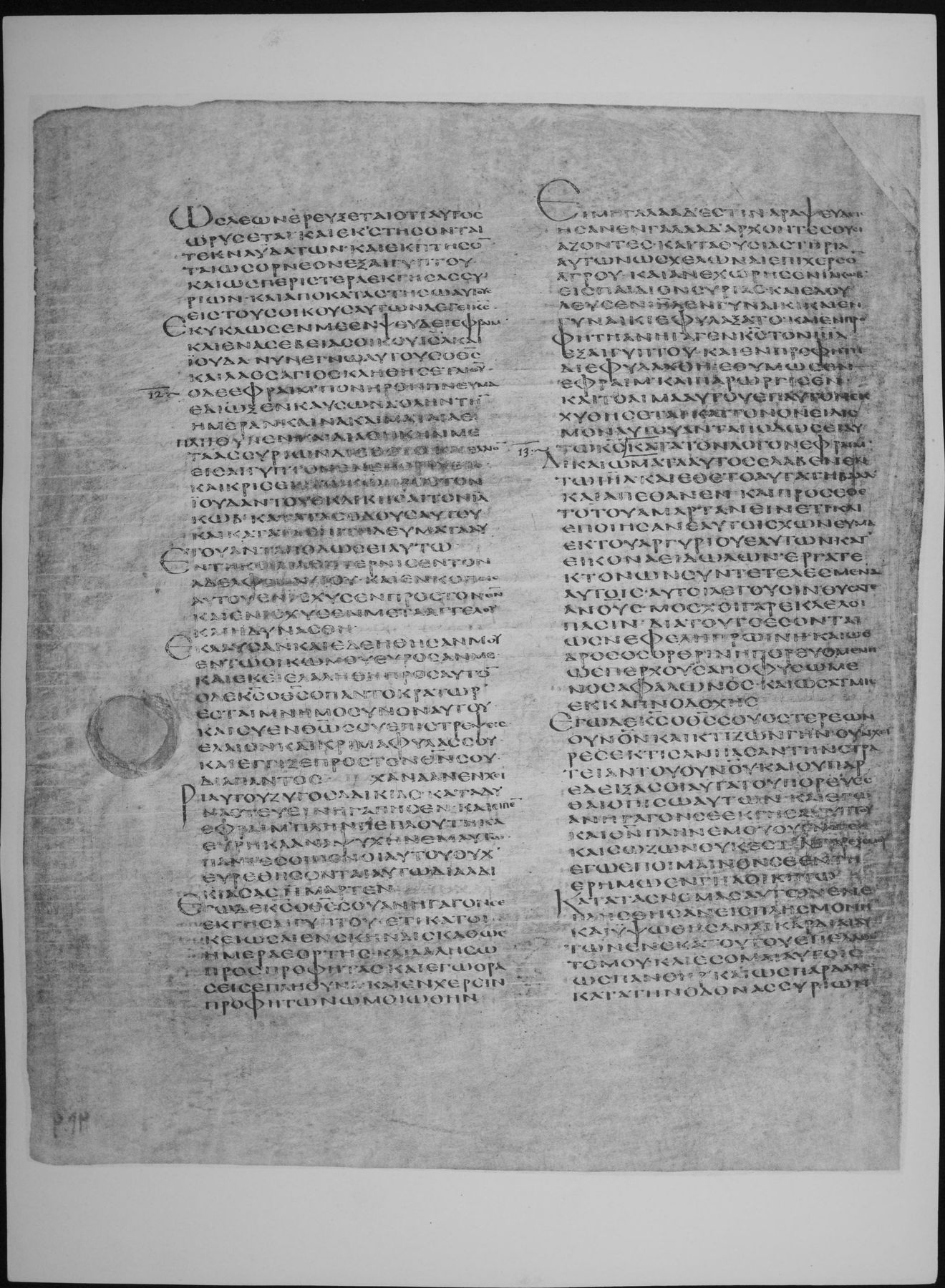
Hosea 11:9-10 is on fol. 280r (full-size facsimile of 1879-83, Internet Archive codex-alexandrinus leaf 584). The 1936 reduced facsimile prints beneath this page: Hos. x. 4-xi. 10. Checked on the plate: the page begins inside Hosea 10:4 (first words read: ΕΠΙ ΧΕΡΣΟΝ ΑΓΡΟΥ ΤΩ ΜΟΣΧΩ ΤΟΥ ΟΙΚΟΥ ΩΝ ΠΑΡΟΙΚΗΣΟΥΣΙΝ ΟΙ ΚΑΤΟΙΚΟΥΝΤΕΣ ΣΑΜΑΡΕΙΑΝ). Hosea 11:10-12 is on fol. 280v (full-size facsimile of 1879-83, Internet Archive codex-alexandrinus leaf 585). The 1936 reduced facsimile prints beneath this page: Hos. xi. 10-xiii. 7. Checked on the plate: the page begins inside Hosea 11:10 (first words read: ΩΣ ΛΕΩΝ ΕΡΕΥΞΕΤΑΙ ΟΤΙ ΑΥΤΟΣ ΩΡΥΣΕΤΑΙ ΚΑΙ ΕΚΣΤΗΣΟΝΤΑΙ ΤΕΚΝΑ ΥΔΑΤΩΝ).
9οὐ μὴ ποιήσω κατά τὴν ὀργὴν τοῦ θυμοῦ μου, οὐ μὴ ἐγκαταλίπω τοῦ ἐξαλειφθῆναι τὸν Ἐφράιμ· διότι θεὸς ἐγώ εἰμι καὶ οὐκ ἄνθρωπος· ἐν σοὶ ἅγιος, καὶ οὐκ εἰσελεύσομαι εἰς πόλιν. 10ὀπίσω Κυρίου πορεύσομαι· ὡς λέων ἐρεύξεται, ὅτι αὐτὸς ὠρύσεται, καὶ ἐκστήσονται τέκνα ὑδάτων. 11ἐκπτήσονται ὡς ὄρνεον ἐξ Αἰγύπτου, καὶ ὡς περιστερὰ ἐκ γῆς Ἀσσυρίων· καὶ ἀποκαταστήσω αὐτοὺς εἰς τοὺς οἴκους αὐτῶν, λέγει Κύριος. 12Ἐκύκλωσέν με ἐν ψεύδει Ἐφράιμ, καὶ ἐν ἀσεβείᾳ οἶκος Ἰσραὴλ καὶ Ἰούδα. νῦν ἔγνω αὐτοὺς ὁ θεός, καὶ λαὸς ἅγιος κεκλήσεται θεοῦ.
9I will not act according to the fury of my wrath, I will not abandon Ephraim to be utterly destroyed: for I am God, and not man; the Holy One within thee: and I will not enter into the city. 10I will go after the Lord: he shall utter his voice as a lion: for he shall roar, and the children of the waters shall be amazed. 11They shall be amazed and fly as a bird out of Egypt, and as a dove out of the land of the Assyrians: and I will restore them to their houses, saith the Lord. 12:1Ephraim has compassed me with falsehood, and the house of Israel and Juda with ungodliness: but now God knows them, and they shall be called God's holy people.
Cite
Sources
- Source: Codex Alexandrinus (British Library Royal MS 1 D. VI) via the British Museum photographic facsimiles of 1879-83 and 1936 (Internet Archive) + Swete's Septuagint + Brenton's English (holding institution)
- Critical edition: H. B. Swete, The Old Testament in Greek according to the Septuagint (1909)
← previous · → next · v cycle view · l back to library