Hosea, Chapter 6 (Codex Alexandrinus)
Introduction
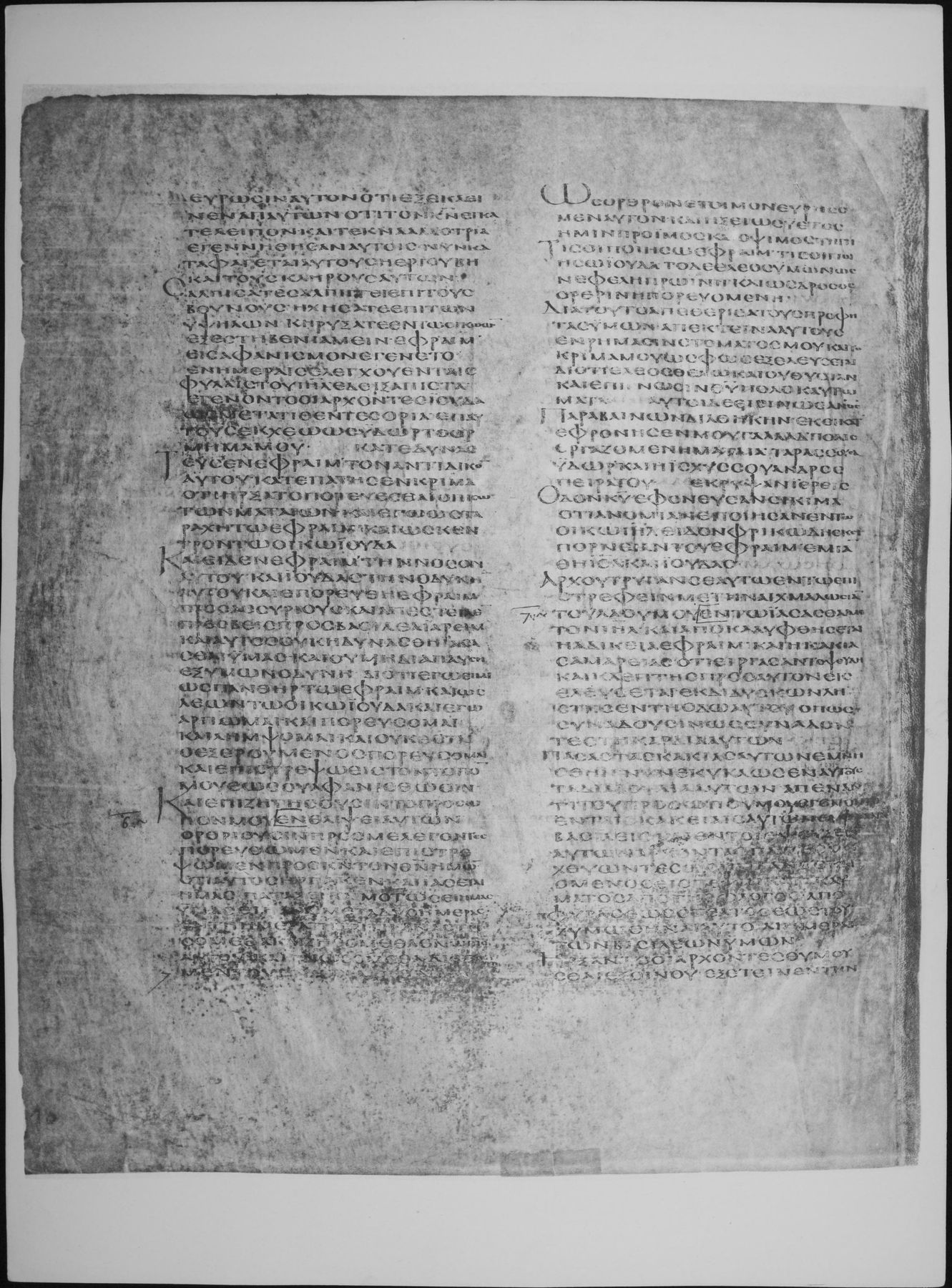
Hosea 6 in the Greek Old Testament (the Septuagint) as written in Codex Alexandrinus, a Greek Bible copied in the fifth century, probably in Egypt, and now in the British Library (Royal MS 1 D. VI, the second of its four volumes). It is one of the three great early codices of the whole Greek Bible, with Codex Vaticanus and Codex Sinaiticus.
This entry meets the strict three-criteria standard of the Theosis Library:
- Manuscript scan: the page of Codex Alexandrinus carrying this chapter (fol. 278v), from the full-size photographic (autotype) facsimile published by the British Museum in 1879-1883, as digitised on the Internet Archive. The verse range of every page comes from the reduced photographic facsimile of 1936, which prints it beneath each plate, and the opening words of every page were read on the plate to confirm the page and the verse it begins with. Each section links to the page or pages that hold its verses. Folio numbers are those written at the head of each leaf and visible on the plates.
- Original text: Swete's edition, which here prints the text of Codex Vaticanus (Vat. gr. 1209), the base of his edition, and gives the readings of Alexandrinus only in his apparatus. The Greek column is therefore Vaticanus' text; where Alexandrinus differs, the plate shows what Alexandrinus reads.
- English translation: Sir Lancelot C. L. Brenton, The Septuagint Version of the Old Testament (1844; 1851 edition), a translation of the Greek, public domain, from the eBible.org text.
How was this verified? (Provenance)
Where on the image
Hosea 6:1-8 is on fol. 278v (full-size facsimile of 1879-83, Internet Archive codex-alexandrinus leaf 581). The 1936 reduced facsimile prints beneath this page: Hos. v. 6-vii. 5. Checked on the plate: the page begins inside Hosea 5:6 (first words read: ΕΥΡΩΣΙΝ ΑΥΤΟΝ ΟΤΙ ΕΞΕΚΛΙΝΕΝ ΑΠ ΑΥΤΩΝ ΟΤΙ ΤΟΝ ΚΝ ΕΓΚΑΤΕΛΙΠΟΝ ΟΤΙ ΤΕΚΝΑ ΑΛΛΟΤΡΙΑ ΕΓΕΝΝΗΘΗΣΑΝ ΑΥΤΟΙΣ).
1Ἐν θλίψει αὐτῶν ὀρθριοῦσι πρὸς μὲ λέγοντες Πορευθῶμεν καὶ ἐπιστρέψωμεν πρὸς Κύριον τὸν θεὸν ἡμῶν, ὅτι αὐτὸς ἣρπακεν καὶ ἰάσεται ἡμᾶς, πατάξει καὶ μοτώσει ἡμᾶς, 2ὑγιάσει ἡμᾶς μετὰ δύο ἡμέρας· ἐν τῇ ἡμέρᾳ τῇ τρίτῃ καὶ ἀναστησόμεθα, καὶ ζησόμεθα ἐνώπιον αὐτοῦ, 3καὶ γνωσόμεθα· διώξομεν τοῦ γνῶναι τὸν κύριον, ὡς ὄρθρον ἕτοιμον εὑρήσομεν αὐτόν, καὶ ἥξει ὡς ὑετὸς ἡμῖν πρόιμος καὶ ὄψιμος γῇ. 4Τί σοι ποιήσω, Ἐφράιμ; τί σοι ποιήσω, Ἰούδα; τὸ δὲ ἔλεος ὑμῶν ὡς νεφέλη πρωινὴ καὶ ὡς δρόσος ὀρθρινὴ πορευομένη. 5διὰ τοῦτο ἀπεθέρισα τοὺς προφήτας ὑμῶν, ἀπέκτεινα αὐτοὺς ἐν ῥήματι στόματός μου, καὶ τὸ κρίμα μου ὡς φῶς ἐξελεύσεται. 6διότι ἔλεος θέλω ἢ θυσίαν, καὶ ἐπίγνωσιν θεοῦ ἢ ὁλοκαυτώματα. 7αὐτοὶ δέ εἰσιν ὡς ἄνθρωπος παραβαίνων διαθήκην· ἐκεῖ κατεφρόνησέν μου 8Γαλαάδ, πόλις ἐργαζομένη μάταια, ταράσσουσα ὕδωρ,
1Let us go, and return to the Lord our God; for he has torn, and will heal us; he will smite, and bind us up. 2After two days he will heal us: in the third day we shall arise, and live before him, and shall know him: 3let us follow on to know the Lord: we shall find him ready as the morning, and he will come to us as the early and latter rain to the earth. 4What shall I do unto thee, Ephraim? What shall I do to thee, Juda? whereas your mercy is as a morning cloud, and as the early dew that goes away. 5Therefore have I mown down your prophets; I have slain them with the word of my mouth: and my judgment shall go forth as the light. 6For I will have mercy rather than sacrifice, and the knowledge of God rather than whole-burnt-offerings. 7But they are as a man transgressing a covenant: 8there the city Galaad despised me, working vanity, troubling water.
Where on the image
Hosea 6:9-11 is on fol. 278v (full-size facsimile of 1879-83, Internet Archive codex-alexandrinus leaf 581). The 1936 reduced facsimile prints beneath this page: Hos. v. 6-vii. 5. Checked on the plate: the page begins inside Hosea 5:6 (first words read: ΕΥΡΩΣΙΝ ΑΥΤΟΝ ΟΤΙ ΕΞΕΚΛΙΝΕΝ ΑΠ ΑΥΤΩΝ ΟΤΙ ΤΟΝ ΚΝ ΕΓΚΑΤΕΛΙΠΟΝ ΟΤΙ ΤΕΚΝΑ ΑΛΛΟΤΡΙΑ ΕΓΕΝΝΗΘΗΣΑΝ ΑΥΤΟΙΣ).
9καὶ ἡ ἰσχύς σου ἀνδρὸς πειρατοῦ· ἔκρυψαν ἱερεῖς ὁδόν, ἐφόνευσαν Σίκιμα, ὅτι ἀνομίαν ἐποίησαν 10ἐν τῷ οἴκῳ τοῦ Ἰσραήλ· εἶδον φρικώδη ἐκεῖ, πορνείαν τοῦ Ἐφράιμ· ἐμιάνθη Ἰσραὴλ καὶ Ἰουδά. 11Ἄρχου τρυγᾷν σεαυτῷ ἐν τῷ ἐπιστρέφειν με τὴν αἰχμαλωσίαν τοῦ λαοῦ μου,
9And thy strength is that of a robber: the priests have hid the way, they have murdered the people of Sicima; for they have wrought iniquity in the house of Israel. 10I have seen horrible things there, even the fornication of Ephraim: Israel and Juda are defiled; 11begin to gather grapes for thyself, when I turn the captivity of my people.
Cite
Sources
- Source: Codex Alexandrinus (British Library Royal MS 1 D. VI) via the British Museum photographic facsimiles of 1879-83 and 1936 (Internet Archive) + Swete's Septuagint + Brenton's English (holding institution)
- Critical edition: H. B. Swete, The Old Testament in Greek according to the Septuagint (1909)
← previous · → next · v cycle view · l back to library