Isaiah, Chapter 41 (Codex Alexandrinus)
Introduction
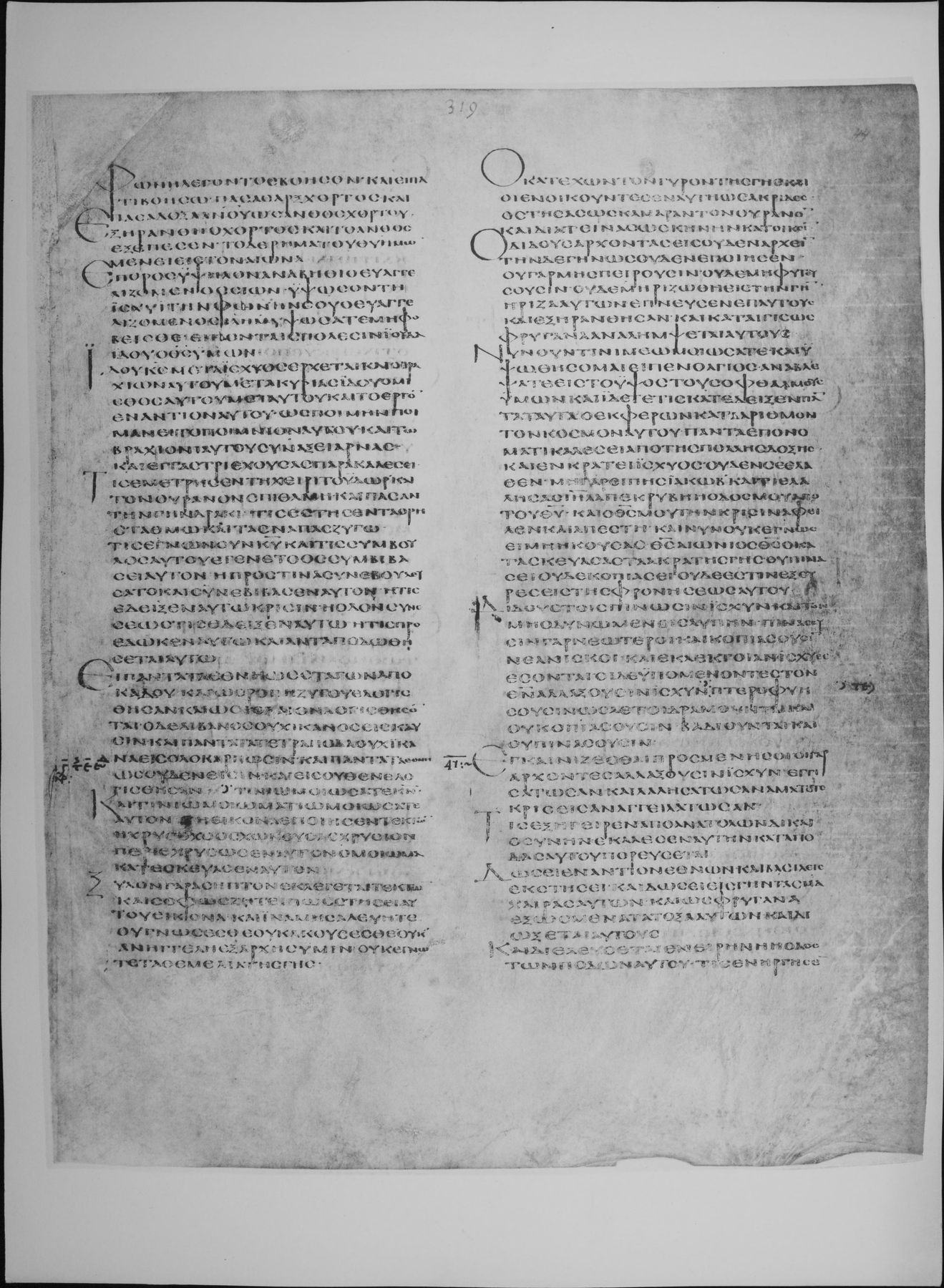
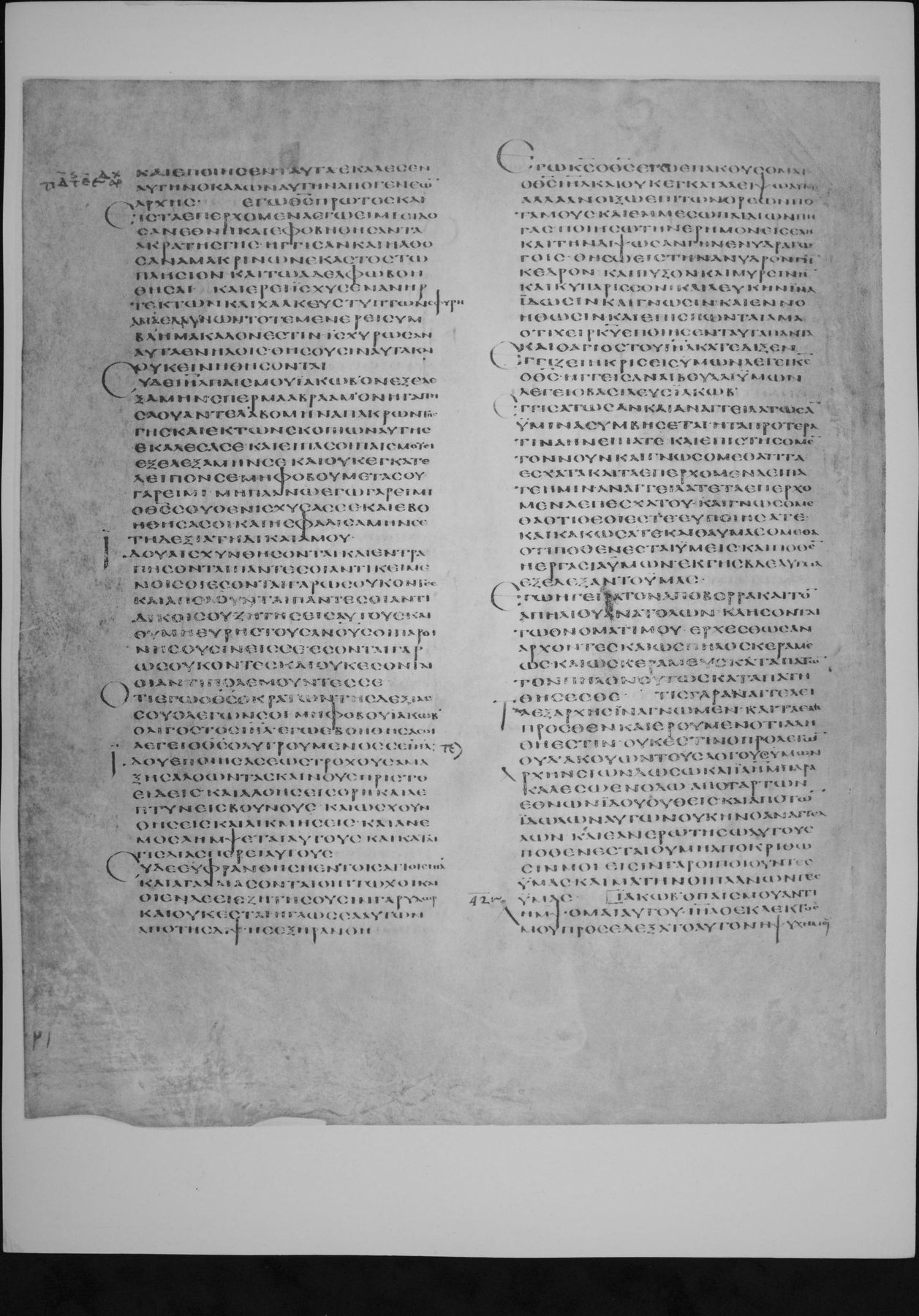
Isaiah 41 in the Greek Old Testament (the Septuagint) as written in Codex Alexandrinus, a Greek Bible copied in the fifth century, probably in Egypt, and now in the British Library (Royal MS 1 D. VI, the second of its four volumes). It is one of the three great early codices of the whole Greek Bible, with Codex Vaticanus and Codex Sinaiticus.
This entry meets the strict three-criteria standard of the Theosis Library:
- Manuscript scan: the pages of Codex Alexandrinus carrying this chapter (fol. 319r, fol. 319v), from the full-size photographic (autotype) facsimile published by the British Museum in 1879-1883, as digitised on the Internet Archive. The verse range of every page comes from the reduced photographic facsimile of 1936, which prints it beneath each plate, and the opening words of every page were read on the plate to confirm the page and the verse it begins with. Each section links to the page or pages that hold its verses. Folio numbers are those written at the head of each leaf and visible on the plates.
- Original text: Swete's edition, which here prints the text of Codex Vaticanus (Vat. gr. 1209), the base of his edition, and gives the readings of Alexandrinus only in his apparatus. The Greek column is therefore Vaticanus' text; where Alexandrinus differs, the plate shows what Alexandrinus reads.
- English translation: Sir Lancelot C. L. Brenton, The Septuagint Version of the Old Testament (1844; 1851 edition), a translation of the Greek, public domain, from the eBible.org text.
How was this verified? (Provenance)
Where on the image
Isaiah 41:1-4 is on fol. 319r (full-size facsimile of 1879-83, Internet Archive codex-alexandrinus leaf 662). The 1936 reduced facsimile prints beneath this page: Is. xl. 6-xli. 4. Checked on the plate: the page begins at the start of Isaiah 40:6 (first words read: ΦΩΝΗ ΛΕΓΟΝΤΟΣ ΒΟΗΣΟΝ ΚΑΙ ΕΙΠΑ ΤΙ ΒΟΗΣΩ ΠΑΣΑ ΣΑΡΞ ΧΟΡΤΟΣ ΚΑΙ ΠΑΣΑ ΔΟΞΑ ΑΝΘΡΩΠΟΥ). Isaiah 41:4-8 is on fol. 319v (full-size facsimile of 1879-83, Internet Archive codex-alexandrinus leaf 663). The 1936 reduced facsimile prints beneath this page: Is. xli. 4-xlii. 1. Checked on the plate: the page begins inside Isaiah 41:4 (first words read: ΚΑΙ ΕΠΟΙΗΣΕΝ ΤΑΥΤΑ ΚΑΛΕΣΑΣ ΑΥΤΗΝ ΑΠΟ ΓΕΝΕΩΝ ΑΡΧΗΣ ΕΓΩ ΘΣ ΠΡΩΤΟΣ).
1Ἐγκαινίζεσθε πρὸς μέ, νῆσοι, οἱ γὰρ ἄρχοντες ἀλλάξουσιν ἰσχύν· ἐγγισάτωσαν καὶ λαλησάτωσαν ἅμα, τότε κρίσιν ἀναγγειλάτωσαν. 2τίς ἐξήγειρεν ἀπὸ ἀνατολῶν δικαιοσύνην, ἐκάλεσεν αὐτὴν κατὰ πόδας αὐτοῦ, καὶ πορεύσεται; δώσει ἐναντίον ἐθνῶν, καὶ βασιλεῖς ἐκστήσει· καὶ δώσει εἰς γῆν τὰς μαχαίρας αὐτῶν, καὶ ὡς φρύγανα ἐξωσμένα τὰ τόξα αὐτῶν· 3καὶ διώξεται αὐτούς, διελεύσεται ἐν εἰρήνῃ ἡ ὁδὸς τῶν ποδῶν αὐτοῦ. 4τίς ἐνήργησεν καὶ ἐποίησεν ταῦτα; ἐκάλεσεν αὐτὴν ὁ καλῶν αὐτὴν ἀπὸ γενεῶν ἀρχῆς· ἐγὼ θεὸς πρῶτος, καὶ εἰς τὰ ἐπερχόμενα ἐγώ εἰμι. 5εἴδοσαν ἔθνη καὶ ἐφοβήθησαν, τὰ ἄκρα τῆς γῆς ἤγγισαν καὶ ἦλθον ἅμα, 6κρίνων ἕκαστος τῷ πλησίον βοηθῆσαι καὶ τῷ ἀδελφῷ, καὶ ἐρεῖ 7Ἴσχυσεν ἀνὴρ τέκτων, καὶ χαλκεὺς τύπτων σφύρῃ, ἅμα ἐλαύνων· ποτὲ μὲν ἐρεῖ Σύμβλημα καλόν ἐστιν, ἰσχύρωσεν αὐτὰ ἐν ἥλοις· θήσουσιν αὐτὰ καὶ οὐ κινηθήσονται. 8Σὺ δέ, Ἰσραήλ, παῖς μου Ἰακώβ ὃν ἐξελεξάμην, σπέρμα Ἀβραὰμ ὃν ἠγάπησα·
1Hold a feast to me, ye islands: for the princes shall renew their strength: let them draw nigh and speak together: then let them declare judgment. 2Who raised up righteousness from the east, and called it to his feet, so that it should go? shall appoint it an adversary of Gentiles, and shall dismay kings, and bury their swords in the earth, and cast forth their bows and arrows as sticks? 3And he shall pursue them; the way of his feet shall proceed in peace. 4Who has wrought and done these things? he has called it who called it from the generations of old; I God, the first and to all futurity, I AM. 5The nations saw, and feared; the ends of the earth drew nigh, and came together, 6every one judging for his neighbour and that to assist his brother: and one will say, 7The artificer has become strong, and the coppersmith that smites with the hammer, and forges also: sometimes he will say, It is a piece well joined: they have fastened them with nails; they will fix them, and they shall not be moved. 8But thou, Israel, art my servant Jacob, and he whom I have chosen, the seed of Abraam, whom I have loved:
Where on the image
Isaiah 41:9-16 is on fol. 319v (full-size facsimile of 1879-83, Internet Archive codex-alexandrinus leaf 663). The 1936 reduced facsimile prints beneath this page: Is. xli. 4-xlii. 1. Checked on the plate: the page begins inside Isaiah 41:4 (first words read: ΚΑΙ ΕΠΟΙΗΣΕΝ ΤΑΥΤΑ ΚΑΛΕΣΑΣ ΑΥΤΗΝ ΑΠΟ ΓΕΝΕΩΝ ΑΡΧΗΣ ΕΓΩ ΘΣ ΠΡΩΤΟΣ).
9οὗ ἀντελαβόμην ἀπ᾽ ἄκρων τῆς γῆς, καὶ ἐκ τῶν σκοπιῶν αὐτῆς ἐκάλεσά σε καὶ εἶπά σοι Παῖς μου εἶ, ἐξελεξάμην σε καὶ οὐκ ἐγκατέλιπόν σε· 10μὴ φοβοῦ, μετὰ σοῦ γάρ εἰμι· μὴ πλανῶ, ἐγὼ γάρ εἰμι ὁ θεός σου ὁ ἐνισχύσας σε, καὶ ἐβοήθησά σοι καὶ ἠσφαλισάμην σε τῇ δεξιᾷ τῇ δικαίᾳ μου. 11ἰδοὺ αἰσχυνθήσονται καὶ ἐντραπήσονται πάντες οἱ ἀντικείμενοί σοι, ἔσονται γὰρ ὡς οὐκ ὄντες, καὶ ἀπολοῦνται πάντες οἱ ἀντίδικοί σου. 12ζητήσεις αὐτούς, καὶ οὐ μὴ εὕρῃς τοὺς ἀνθρώπους οἳ παροινήσουσιν εἰς σέ· ἔσονται γὰρ ὡς οὐκ ὄντες, καὶ οὐκ ἔσονται οἱ ἀντιπολεμοῦντές σε. 13ὅτι ἐγὼ ὁ θεός σου ὁ κρατῶν τῆς δεξιᾶς σου, ὁ λέγων σοι Μὴ φοβοῦ, 14Ἰακώβ, ὀλιγοστὸς Ἰσραήλ· ἐγὼ ἐβοήθησά σοι, λέγει ὁ θεὸς ὁ λυτρούμενος Ἰσραήλ. 15ἰδοὺ ἐποίησά σε ὡς τροχοὺς ἁμάξης ἀλοῶντας καινοὺς πριστηροειδεῖς, καὶ ἀλοήσεις ὄρη καὶ λεπτυνεῖς βουνούς, καὶ ὡς χνοῦν θήσεις, 16καὶ λικμήσεις· καὶ ἄνεμος λήμψεται αὐτούς, καὶ καταιγὶς διασπερεῖ αὐτούς. σὺ δὲ εὐφρανθήσῃ ἐν τοῖς ἁγίοις Ἰσραήλ,
9whom I have taken hold of from the ends of the earth, and from the high places of it I have called thee, and said to thee, Thou art my servant; I have chosen thee, and I have not forsaken thee. 10Fear not; for I am with thee: wander not; for I am thy God, who have strengthened thee; and I have helped thee, and have established thee with my just right hand. 11Behold, all thine adversaries shall be ashamed and confounded; for they shall be as if they were not: and all thine opponents shall perish. 12Thou shalt seek them, and thou shalt not find the men who shall insolently rage against thee: for they shall be as if they were not, and they that war against thee shall not be. 13For I am thy God, who holdeth thy right hand, who saith to thee, 14Fear not, Jacob, and thou Israel few in number; I have helped thee, saith thy God, he that redeems thee, O Israel. 15Behold, I have made thee as new saw-shaped threshing wheels of a waggon; and thou shalt thresh the mountains, and beat the hills to powder, and make them as chaff: 16and thou shalt winnow them, and the wind shall carry them away, and a tempest shall scatter them: but thou shalt rejoice in the holy ones of Israel.
Where on the image
Isaiah 41:17-24 is on fol. 319v (full-size facsimile of 1879-83, Internet Archive codex-alexandrinus leaf 663). The 1936 reduced facsimile prints beneath this page: Is. xli. 4-xlii. 1. Checked on the plate: the page begins inside Isaiah 41:4 (first words read: ΚΑΙ ΕΠΟΙΗΣΕΝ ΤΑΥΤΑ ΚΑΛΕΣΑΣ ΑΥΤΗΝ ΑΠΟ ΓΕΝΕΩΝ ΑΡΧΗΣ ΕΓΩ ΘΣ ΠΡΩΤΟΣ).
17καὶ ἀγαλλιάσονται οἱ πτωχοὶ καὶ οἱ ἐνδεεῖς. ζητήσουσιν γὰρ ὕδωρ καὶ οὐκ ἔσται, ἡ γλῶσσα αὐτῶν ἀπὸ τῆς δίψης ἐξηράνθη· ἐγὼ Κύριος ὁ θεός, ἐπακούσομαι ὁ θεὸς Ἰσραὴλ καὶ οὐκ ἐγκαταλείψω αὐτούς, 18ἀλλὰ ἀνοίξω ἐπὶ τῶν ὀρέων ποταμοὺς καὶ ἐν μέσῳ πεδίων πηγάς, ποιήσω τὴν ἔρημον εἰς ἕλη ὑδάτων καὶ τὴν διψῶσαν γῆν ἐν ὑδραγωγοῖς, 19θήσω εἰς τὴν ἄνυδρον γῆν κέδρον καὶ πύξον, μυρσίνην καὶ κυπάρισσον καὶ λεύκην· 20ἵνα ἴδωσιν καὶ γνῶσιν καὶ ἐννοηθῶσιν καὶ ἐπιστῶνται ἅμα ὅτι χεὶρ Κυρίου ἐποίησεν ταῦτα, καὶ ὁ ἅγιος τοῦ Ἰσραὴλ κατέδειξεν. 21Ἐγγίζει ἡ κρίσις ὑμῶν, λέγει Κύριος ὁ θεός· ἤγγισαν αἱ βουλαὶ ὑμῶν, λέγει ὁ βασιλεὺς Ἰακώβ. 22ἐγγισάτωσαν καὶ ἀναγγειλάτωσαν ὑμῖν ἃ συμβήσεται, ἢ τὰ πρότερον τίνα ἦν εἴπατε, καὶ ἐπιστήσομεν τὸν νοῦν, καὶ γνωσόμεθα τί τὰ ἔσχατα, καὶ τὰ ἐπερχόμενα εἴπατε ἡμῖν· 23ἀναγγείλατε ἡμῖν τὰ ἐπερχόμενα ἐπ᾽ ἐσχάτου, καὶ γνωσόμεθα ὅτι θεοί ἐστε. εὖ ποιήσατε καὶ κακώσατε, καὶ θαυμασόμεθα, καὶ ὀψόμεθα ἅμα· 24ὅτι πόθεν ἐστὲ ὑμεῖς καὶ πόθεν ἡ ἐργασία ὑμῶν; ἐκ γῆς· βδέλυγμα ἐξελέξαντο ὑμᾶς.
17And the poor and the needy shall exult; for when they shall seek water, and there shall be none, and their tongue is parched with thirst, I the Lord God, I the God of Israel will hear, and will not forsake them: 18but I will open rivers on the mountains, and fountains in the midst of plains: I will make the desert pools of water, and a thirsty land watercourses. 19I will plant in the dry land the cedar and box, the myrtle and cypress, and white poplar: 20that they may see, and know, and perceive, and understand together, that the hand of the Lord has wrought these works, and the Holy One of Israel has displayed them. 21Your judgment draws nigh, saith the Lord God; your counsels have drawn nigh, saith the King of Jacob. 22Let them draw nigh, and declare to you what things shall come to pass; or tell us what things were of old, and we will apply our understanding, and we shall know what are the last and the future things: 23tell us, declare ye to us the things that are coming on at the last time, and we shall know that ye are gods: do good, and do evil, and we shall wonder, and see at the same time 24whence ye are, and whence is your work: they have chosen you an abomination out of the earth.
Where on the image
Isaiah 41:25-29 is on fol. 319v (full-size facsimile of 1879-83, Internet Archive codex-alexandrinus leaf 663). The 1936 reduced facsimile prints beneath this page: Is. xli. 4-xlii. 1. Checked on the plate: the page begins inside Isaiah 41:4 (first words read: ΚΑΙ ΕΠΟΙΗΣΕΝ ΤΑΥΤΑ ΚΑΛΕΣΑΣ ΑΥΤΗΝ ΑΠΟ ΓΕΝΕΩΝ ΑΡΧΗΣ ΕΓΩ ΘΣ ΠΡΩΤΟΣ).
25ἐγὼ δὲ ἤγειρα τὸν ἀπὸ βορρᾶ καὶ τὸν ἀφ᾽ ἡλίου ἀνατολῶν, κληθήσονται τῷ ὀνόματί μου· ἐρχέσθωσαν ἄρχοντες, καὶ ὡς πηλὸς κεραμέως καὶ ὡς κεραμεὺς καταπατῶν τὸν πηλόν, οὕτως καταπατηθήσεσθε. 26τίς γὰρ ἀναγγελεῖ τὰ ἐξ ἀρχῆς, ἵνα γνῶμεν, καὶ τὰ ἔμπροσθεν, καὶ ἐροῦμεν ὅτι ἀληθῆ ἐστιν; οὐκ ἔστιν ὁ προλέγων, οὐδὲ ὁ ἀκούων ὑμῶν τοὺς λόγους. 27ἀρχὴν Σειὼν δώσω, καὶ Ἰερουσαλὴμ παρακαλέσω. 28ἀπὸ γὰρ τῶν ἐθνῶν ἰδοὺ οὐδείς, καὶ ἀπὸ τῶν εἰδώλων αὐτῶν οὐκ ἦν ὁ ἀναγγέλλων· καὶ ἐὰν ἐρωτήσω αὐτοὺς πόθεν ἐστέ, οὐ μὴ· ἀποκριθῶσίν μοι. 29εἰσὶν γὰρ οἱ ποιοῦντες ὑμᾶς, καὶ μάτην οἱ πλανῶντες ὑμᾶς.
25But I have raised up him that comes from the north, and him that comes from the rising of the sun: they shall be called by my name: let the princes come, and as potter's clay, and as a potter treading clay, so shall ye be trodden down. 26For who will declare the things from the beginning, that we may know also the former things, and we will say that they are true? there is no one that speaks beforehand, nor any one that hears your words. 27I will give dominion to Sion, and will comfort Jerusalem by the way. 28For from among the nations, behold, there was no one; and of their idols there was none to declare anything: and if I should ask them, Whence are ye? they could not answer me. 29For these are your makers, as ye think, and they that cause you to err in vain.
Cite
Sources
- Source: Codex Alexandrinus (British Library Royal MS 1 D. VI) via the British Museum photographic facsimiles of 1879-83 and 1936 (Internet Archive) + Swete's Septuagint + Brenton's English (holding institution)
- Critical edition: H. B. Swete, The Old Testament in Greek according to the Septuagint (1909)
← previous · → next · v cycle view · l back to library