Isaiah, Chapter 6 (Codex Alexandrinus)
Introduction
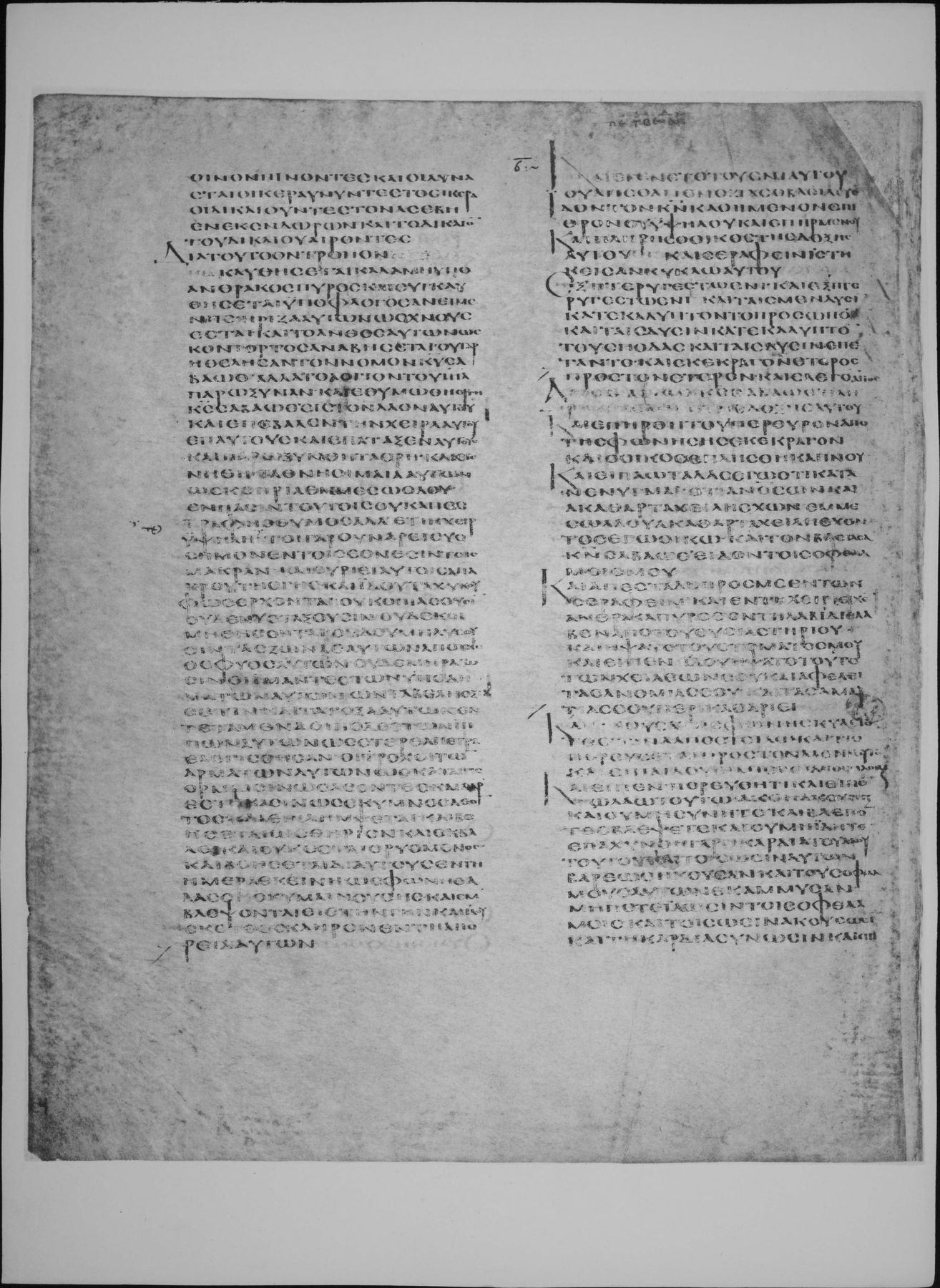
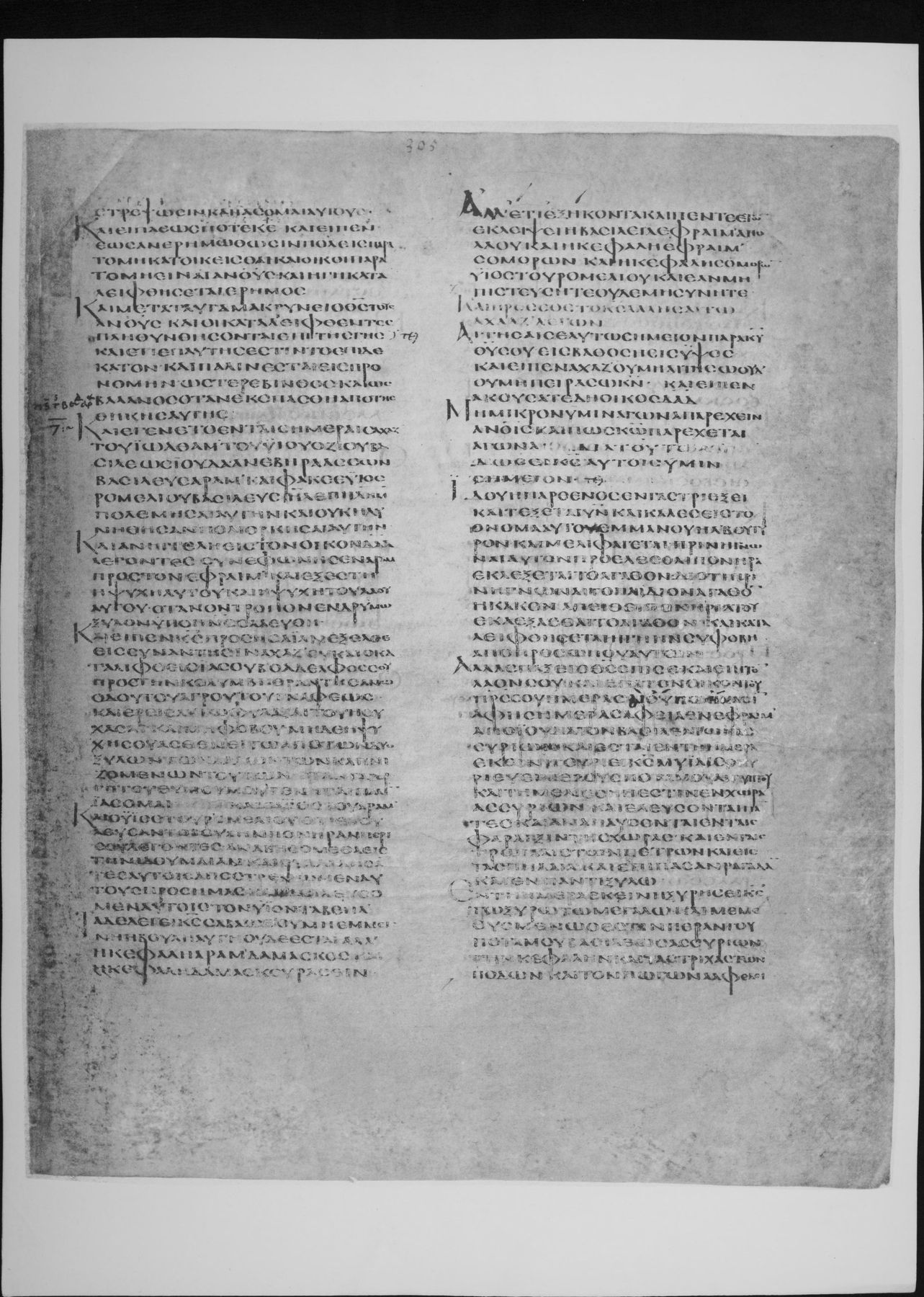
Isaiah 6 in the Greek Old Testament (the Septuagint) as written in Codex Alexandrinus, a Greek Bible copied in the fifth century, probably in Egypt, and now in the British Library (Royal MS 1 D. VI, the second of its four volumes). It is one of the three great early codices of the whole Greek Bible, with Codex Vaticanus and Codex Sinaiticus.
This entry meets the strict three-criteria standard of the Theosis Library:
- Manuscript scan: the pages of Codex Alexandrinus carrying this chapter (fol. 304v, fol. 305r), from the full-size photographic (autotype) facsimile published by the British Museum in 1879-1883, as digitised on the Internet Archive. The verse range of every page comes from the reduced photographic facsimile of 1936, which prints it beneath each plate, and the opening words of every page were read on the plate to confirm the page and the verse it begins with. Each section links to the page or pages that hold its verses. Folio numbers are those written at the head of each leaf and visible on the plates.
- Original text: Swete's edition, which here prints the text of Codex Vaticanus (Vat. gr. 1209), the base of his edition, and gives the readings of Alexandrinus only in his apparatus. The Greek column is therefore Vaticanus' text; where Alexandrinus differs, the plate shows what Alexandrinus reads.
- English translation: Sir Lancelot C. L. Brenton, The Septuagint Version of the Old Testament (1844; 1851 edition), a translation of the Greek, public domain, from the eBible.org text.
How was this verified? (Provenance)
Where on the image
Isaiah 6:1-8 is on fol. 304v (full-size facsimile of 1879-83, Internet Archive codex-alexandrinus leaf 633). The 1936 reduced facsimile prints beneath this page: Is. v. 22-vi. 10. Checked on the plate: the page begins inside Isaiah 5:22 (first words read: ΟΙ ΠΙΝΟΝΤΕΣ ΚΑΙ ΟΙ ΔΥΝΑΣΤΑΙ ΟΙ ΚΕΡΑΝΝΥΝΤΕΣ ΤΟ ΣΙΚΕΡΑ ΟΙ ΔΙΚΑΙΟΥΝΤΕΣ ΤΟΝ ΑΣΕΒΗ).
1Καὶ ἐγένετο τοῦ ἐνιαυτοῦ οὗ ἀπέθανεν Ὀζείας ὁ βασιλεὺς εἶδον τὸν κύριον καθήμενον ἐπὶ θρόνου ὑψηλοῦ καὶ ἐπηρμένου, καὶ πλήρης ὁ οἶκος τῆς δόξης αὐτοῦ. 2καὶ σεραφεὶμ εἱστήκεισαν κύκλῳ αὐτοῦ, ἓξ πτέρυγες τῷ ἑνί, καὶ ἓξ πτέρυγες τῷ ἑνί· καὶ ταῖς μὲν δυσὶν κατεκάλυπτον τὸ πρόσωπον, ταῖς δὲ δυσὶν κατεκάλυπτον τοὺς πόδας, καὶ ταῖς δυσὶν ἐπέταντο. 3καὶ ἐκέκραγεν ἕτερος πρὸς τὸν ἕτερον καὶ ἔλεγον Ἅγιος ἅγιος ἅγιος Κύριος σαβαώθ, πλήρης πᾶσα ἡ γῆ τῆς δόξης αὐτοῦ. 4καὶ ἐπήρθη τὸ ὑπέρθυρον ἀπὸ τῆς φωνῆς ἧς ἐκέκραγον, καὶ ὁ οἶκος ἐνεπλήσθη καπνοῦ. 5καὶ εἶπον Ὢ τάλας ἐγώ, ὅτι κατανένυγμαι, ὅτι ἄνθρωπος ὢν καὶ ἀκάθαρτα χείλη ἔχων ἐν μέσῳ λαοῦ ἀκάθαρτα χείλη ἔχοντος ἐγὼ οἰκῶ, καὶ τὸν βασιλέα Κύριον σαβαὼθ εἶδον τοῖς ὀφθαλμοῖς μου. 6καὶ ἀπεστάλη πρὸς μὲ ἓν τῶν σεραφείν, καὶ ἐν τῇ χειρὶ εἶχεν ἄνθρακα ὃν τῇ λαβίδι ἔλαβεν ἀπὸ τοῦ θυσιαστηρίου, 7καὶ ἥψατο τοῦ στόματός μου καὶ εἶπεν Ἰδοὺ ἥψατο τοῦτο τῶν χειλέων σου, καὶ ἀφελεῖ τὰς ἀνομίας σου, καὶ τὰς ἁμαρτίας σου περικαθαριεῖ. 8καὶ ἤκουσα τῆς φωνῆς Κυρίου λέγοντος Τίνα ἀποστείλω, καὶ τίς πορεύσεται πρὸς τὸν λαὸν τοῦτον; καὶ εἶπα Ἰδού εἰμι ἐγώ· ἀπόστειλόν με.
1And it came to pass in the year in which king Ozias died, that I saw the Lord sitting on a high and exalted throne, and the house was full of his glory. 2And seraphs stood round about him: each one had six wings: and with two they covered their face, and with two they covered their feet, and with two they flew. 3And one cried to the other, and they said, Holy, holy, holy, is the Lord of hosts: the whole earth is full of his glory. 4And the lintel shook at the voice they uttered, and the house was filled with smoke. 5And I said, Woe is me, for I am pricked to the heart; for being a man, and having unclean lips, I dwell in the midst of a people having unclean lips; and I have seen with mine eyes the King, the Lord of hosts. 6And there was sent to me one of the seraphs, and he had in his hand a coal, which he had taken off the altar with the tongs: 7and he touched my mouth, and said, Behold, this has touched thy lips, and will take away thine iniquities, and will purge off thy sins. 8And I heard the voice of the Lord, saying, Whom shall I send, and who will go to this people? And I said, Behold, I am here, send me. And he said, Go, and say to this people,
Where on the image
Isaiah 6:9-10 is on fol. 304v (full-size facsimile of 1879-83, Internet Archive codex-alexandrinus leaf 633). The 1936 reduced facsimile prints beneath this page: Is. v. 22-vi. 10. Checked on the plate: the page begins inside Isaiah 5:22 (first words read: ΟΙ ΠΙΝΟΝΤΕΣ ΚΑΙ ΟΙ ΔΥΝΑΣΤΑΙ ΟΙ ΚΕΡΑΝΝΥΝΤΕΣ ΤΟ ΣΙΚΕΡΑ ΟΙ ΔΙΚΑΙΟΥΝΤΕΣ ΤΟΝ ΑΣΕΒΗ). Isaiah 6:10-13 is on fol. 305r (full-size facsimile of 1879-83, Internet Archive codex-alexandrinus leaf 634). The 1936 reduced facsimile prints beneath this page: Is. vi. 10-vii. 20. Checked on the plate: the page begins inside Isaiah 6:10 (first words read: ΕΠΙΣΤΡΕΨΩΣΙΝ ΚΑΙ ΙΑΣΟΜΑΙ ΑΥΤΟΥΣ ΚΑΙ ΕΙΠΑ ΕΩΣ ΠΟΤΕ ΚΕ ΚΑΙ ΕΙΠΕΝ ΕΩΣ ΑΝ ΕΡΗΜΩΘΩΣΙΝ ΠΟΛΕΙΣ).
9καὶ εἶπεν Πορεύθητι καὶ εἰπὸν τῷ λαῷ τούτῳ Ἀκοῇ ἀκούσετε καὶ οὐ μὴ συνῆτε, καὶ βλέποντες βλέψετε καὶ οὐ μὴ ἴδητε. 10ἐπαχύνθη γὰρ ἡ καρδία τοῦ λαοῦ τούτου, καὶ τοῖς ὠσὶν αὐτῶν βαρέως ἤκουσαν καὶ τοὺς ὀφθαλμοὺς ἐκάμμυσαν, μή ποτε ἴδωσιν τοῖς ὀφθαλμοῖς καὶ τοῖς ὠσὶν ἀκούσωσιν, καὶ τῇ καρδίᾳ συνῶσιν καὶ ἐπιστρέψωσιν, καὶ ἰάσομαι αὐτούς. 11καὶ εἶπα Ἕως πότε, Κύριε; καὶ εἶπεν Ἕως ἂν ἐρημωθῶσιν πόλεις παρὰ τὸ μὴ κατοικεῖσθαι, καὶ οἶκοι παρὰ τὸ μὴ εἶναι ἀνθρώπους, καὶ ἡ γῆ καταλειφθήσεται ἔρημος. 12καὶ μετὰ ταῦτα μακρυνεῖ ὁ θεὸς τοὺς ἀνθρώπους, καὶ οἱ καταλειφθέντες πληθυνθήσονται ἐπὶ τῆς γῆς, 13καὶ ἔτι ἐπ᾽ αὐτῆς ἐστιν τὸ ἐπιδέκατον, καὶ πάλιν ἔσται εἰς προνομήν, ὡς τερέβινθος καὶ ὡς βάλανος ὅταν ἐκπέσῃ ἐκ τῆς θήκης αὐτῆς.
9Ye shall hear indeed, but ye shall not understand; and ye shall see indeed, but ye shall not perceive. 10For the heart of this people has become gross, and their ears are dull of hearing, and their eyes have they closed; lest they should see with their eyes, and hear with their ears, and understand with their heart, and be converted, and I should heal them. 11And I said, How long, O Lord? And he said, Until the cities be deserted by reason of their not being inhabited, and the houses by reason of there being no men, and the land shall be left desolate. 12And after this God shall remove the men far off, and they that are left upon the land shall be multiplied. 13And yet there shall be a tenth upon it, and again it shall be for a spoil, as a turpentine tree, and as an acorn when it falls out of its husk.
Cite
Sources
- Source: Codex Alexandrinus (British Library Royal MS 1 D. VI) via the British Museum photographic facsimiles of 1879-83 and 1936 (Internet Archive) + Swete's Septuagint + Brenton's English (holding institution)
- Critical edition: H. B. Swete, The Old Testament in Greek according to the Septuagint (1909)
← previous · → next · v cycle view · l back to library