Isaiah, Chapter 60 (Codex Alexandrinus)
Introduction
Isaiah 60 in the Greek Old Testament (the Septuagint) as written in Codex Alexandrinus, a Greek Bible copied in the fifth century, probably in Egypt, and now in the British Library (Royal MS 1 D. VI, the second of its four volumes). It is one of the three great early codices of the whole Greek Bible, with Codex Vaticanus and Codex Sinaiticus.
This entry meets the strict three-criteria standard of the Theosis Library:
- Manuscript scan: the pages of Codex Alexandrinus carrying this chapter (fol. 327v, fol. 328r), from the full-size photographic (autotype) facsimile published by the British Museum in 1879-1883, as digitised on the Internet Archive. The verse range of every page comes from the reduced photographic facsimile of 1936, which prints it beneath each plate, and the opening words of every page were read on the plate to confirm the page and the verse it begins with. Each section links to the page or pages that hold its verses. Folio numbers are those written at the head of each leaf and visible on the plates.
- Original text: Swete's edition, which here prints the text of Codex Vaticanus (Vat. gr. 1209), the base of his edition, and gives the readings of Alexandrinus only in his apparatus. The Greek column is therefore Vaticanus' text; where Alexandrinus differs, the plate shows what Alexandrinus reads.
- English translation: Sir Lancelot C. L. Brenton, The Septuagint Version of the Old Testament (1844; 1851 edition), a translation of the Greek, public domain, from the eBible.org text.
How was this verified? (Provenance)
Where on the image
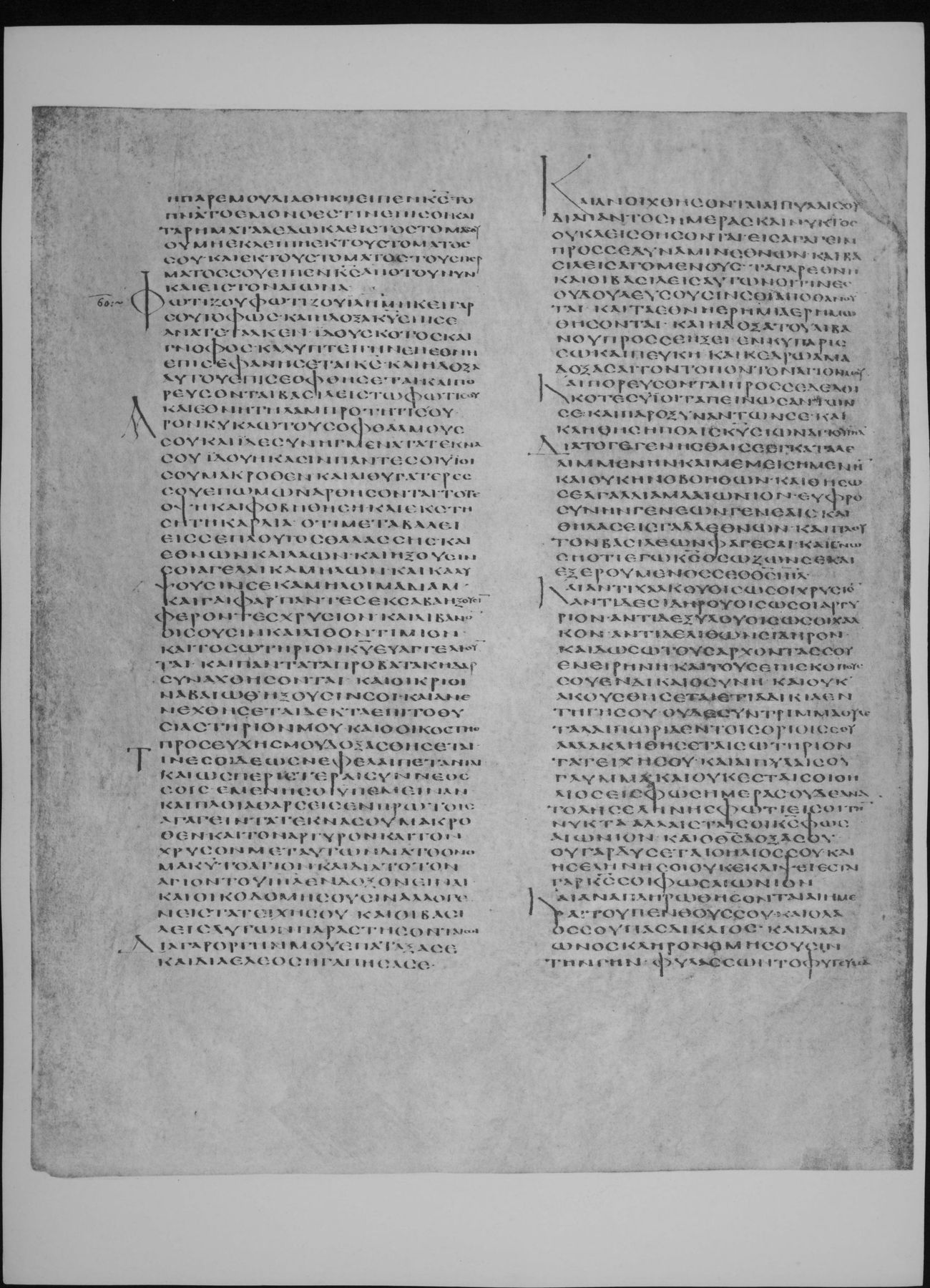
Isaiah 60:1-8 is on fol. 327v (full-size facsimile of 1879-83, Internet Archive codex-alexandrinus leaf 679). The 1936 reduced facsimile prints beneath this page: Is. lix. 21-lx. 21. Checked on the plate: the page begins inside Isaiah 59:21 (first words read: ΤΟ ΠΝΑ ΤΟ ΕΜΟΝ Ο ΕΣΤΙΝ ΕΠΙ ΣΟΙ ΚΑΙ ΤΑ ΡΗΜΑΤΑ Α ΕΔΩΚΑ ΕΙΣ ΤΟ ΣΤΟΜΑ ΣΟΥ).
1Φωτίζου φωτίζου, Ἰερουσαλήμ, ἥκει γάρ σου τὸ φῶς, καὶ ἡ δόξα Κυρίου ἐπὶ σὲ ἀνατέταλκεν. 2ἰδοὺ σκότος καλύψει γῆν, καὶ γνόφος ἐπ᾽ ἔθνη· ἐπὶ δὲ σὲ φανήσεται Κύριος, καὶ ἡ δόξα αὐτοῦ ἐπὶ σὲ ὀφθήσεται· 3καὶ πορεύσονται βασιλεῖς τῷ φωτί σου, καὶ ἔθνη τῇ λαμπρότητί σου. 4ἆρον κύκλῳ τοὺς ὀφθαλμούς σου καὶ ἴδε συνηγμένα τὰ τέκνα σου· ἥκασιν πάντες οἱ υἱοί σου μακρόθεν, καὶ αἱ θυγατέρες σου ἐπ᾽ ὤμων ἀρθήσονται. 5τότε ὄψῃ, καὶ φοβηθήσῃ καὶ ἐκστήσῃ τῇ καρδίᾳ, ὅτι μεταβαλεῖ εἰς σὲ πλοῦτος θαλάσσης καὶ ἐθνῶν καὶ λαῶν. καὶ ἥξουσίν σοι 6ἀγέλαι καμήλων, καὶ καλύψουσίν σε κάμηλοι Μαδιὰμ καὶ Γαιφά· πάντες ἐκ Σαβὰ ἥξουσιν φέροντες χρυσίον, καὶ λίβανον οἴσουσιν, καὶ τὸ σωτήριον Κυρίου εὐαγγελιοῦνται· 7καὶ πάντα τὰ πρόβατα Κηδὰρ συναχθήσονται, καὶ κριοὶ Ναβαιὼθ ἥξουσιν, καὶ ἀνενεχθήσεται δεκτὰ ἐπὶ τὸ θυσιαστήριόν μου, καὶ ὁ οἶκος τῆς προσευχῆς μου δοξασθήσεται. 8τίνες οἵδε ὡς νεφέλαι πέτονται, καὶ ὡς περιστεραὶ σὺν νοσσοῖς ἐπ᾽ ἐμέ;
1Be enlightened, be enlightened, O Jerusalem, for thy light is come, and the glory of the Lord is risen upon thee. 2Behold, darkness shall cover the earth, and there shall be gross darkness on the nations: but the Lord shall appear upon thee, and his glory shall be seen upon thee. 3And kings shall walk in thy light, and nations in thy brightness. 4Lift up thine eyes round about, and behold thy children gathered: all thy sons have come from far, and thy daughters shall be borne on men's shoulders. 5Then shalt thou see, and fear, and be amazed in thine heart; for the wealth of the sea shall come round to thee, and of nations and peoples; and herds of camels shall come to thee, 6and the camels of Madiam and Gæpha shall cover thee: all from Saba shall come bearing gold, and shall bring frankincense, and they shall publish the salvation of the Lord. 7And all the flocks of Kedar shall be gathered, and the rams of Nabæoth shall come; and acceptable sacrifices shall be offered on my altar, and my house of prayer shall be glorified. 8Who are these that fly as clouds, and as doves with young ones to me?
Where on the image
Isaiah 60:9-16 is on fol. 327v (full-size facsimile of 1879-83, Internet Archive codex-alexandrinus leaf 679). The 1936 reduced facsimile prints beneath this page: Is. lix. 21-lx. 21. Checked on the plate: the page begins inside Isaiah 59:21 (first words read: ΤΟ ΠΝΑ ΤΟ ΕΜΟΝ Ο ΕΣΤΙΝ ΕΠΙ ΣΟΙ ΚΑΙ ΤΑ ΡΗΜΑΤΑ Α ΕΔΩΚΑ ΕΙΣ ΤΟ ΣΤΟΜΑ ΣΟΥ).
9ἐμὲ αἱ νῆσοι ὑπέμειναν καὶ πλοῖα Θαρσεὶς ἐν πρώτοις, ἀγαγεῖν τὰ τέκνα σου μακρόθεν καὶ τὸν ἄργυρον καὶ τὸν χρυσὸν αὐτῶν μετ᾽ αὐτῶν, καὶ τὸ ὄνομα Κυρίου τὸ ἅγιον, καὶ διὰ τὸ τὸν ἅγιον τοῦ Ἰσραὴλ ἔνδοξον εἶναι. 10καὶ οἰκοδομήσουσιν ἀλλογενεῖς τὰ τείχη σου, καὶ οἱ βασιλεῖς αὐτῶν παραστήσονταί σοι· διὰ γὰρ ὀργήν μου ἐπάταξά σε, καὶ διὰ ἔλεον ἠγάπησά σε. 11καὶ ἀνοιχθήσονται αἱ πύλαι σου διὰ παντός, ἡμέρας καὶ νυκτὸς οὐ κλεισθήσονται, εἰσαγαγεῖν πρὸς σὲ δύναμιν ἐθνῶν καὶ βασιλεῖς αὐτῶν ἀγομένους. 12τὰ γὰρ ἔθνη καὶ οἱ βασιλεῖς οἵτινες οὐ δουλεύσουσίν σοι ἀπολοῦνται, καὶ τὰ ἔθνη ἐρημίᾳ ἐρημωθήσεται. 13καὶ ἡ δόξα τοῦ Λιβάνου πρὸς σὲ ἥξει ἐν κυπαρίσσῳ καὶ πεύκῃ καὶ κέδρῳ ἅμα, δοξάσαι τὸν τόπον τὸν ἅγιόν μου. 14καὶ πορεύσονται πρὸς σὲ δεδοικότες υἱοὶ ταπεινωσάντων σε καὶ παροξυνάντων σε, καὶ κληθήσῃ Πόλις Κυρίου, Σειὼν Ἁγίου Ἰσραήλ. 15διὰ τὸ γεγενῆσθαί σε ἐνκαταλελιμμένην καὶ μεμισημένην, καὶ οὐκ ἦν ὁ βοηθῶν· καὶ θήσω σε ἀγαλλίαμα αἰώνιον, εὐφροσύνην γενεῶν γενεαῖς. 16καὶ θηλάσεις γάλα ἐθνῶν, καὶ πλοῦτον βασιλέων φάγεσαι, καὶ γνώσῃ ὅτι ἐγὼ Κύριος ὁ σώζων σε, καὶ ἐξαιρούμενός σε θεὸς Ἰσραήλ.
9The isles have waited for me, and the ships of Tharsis among the first, to bring thy children from afar, and their silver and their gold with them, and that for the sake of the holy name of the Lord, and because the Holy One of Israel is glorified. 10And strangers shall build thy walls, and their kings shall wait upon thee: for by reason of my wrath I smote thee, and by reason of mercy I loved thee. 11And thy gates shall be opened continually; they shall not be shut day nor night; to bring in to thee the power of the Gentiles, and their kings as captives. 12For the nations and the kings which will not serve thee shall perish; and those nations shall be made utterly desolate. 13And the glory of Libanus shall come to thee, with the cypress, and pine, and cedar together, to glorify my holy place. 14And the sons of them that afflicted thee, and of them that provoked thee, shall come to thee in fear; and thou shalt be called Sion, the city of the Holy One of Israel. 15Because thou hast become desolate and hated, and there was no helper, therefore I will make thee a perpetual gladness, a joy of many generations. 16And thou shalt suck the milk of the Gentiles, and shalt eat the wealth of kings: and shalt know that I am the Lord that saves thee and delivers thee, the Holy One of Israel.
Where on the image
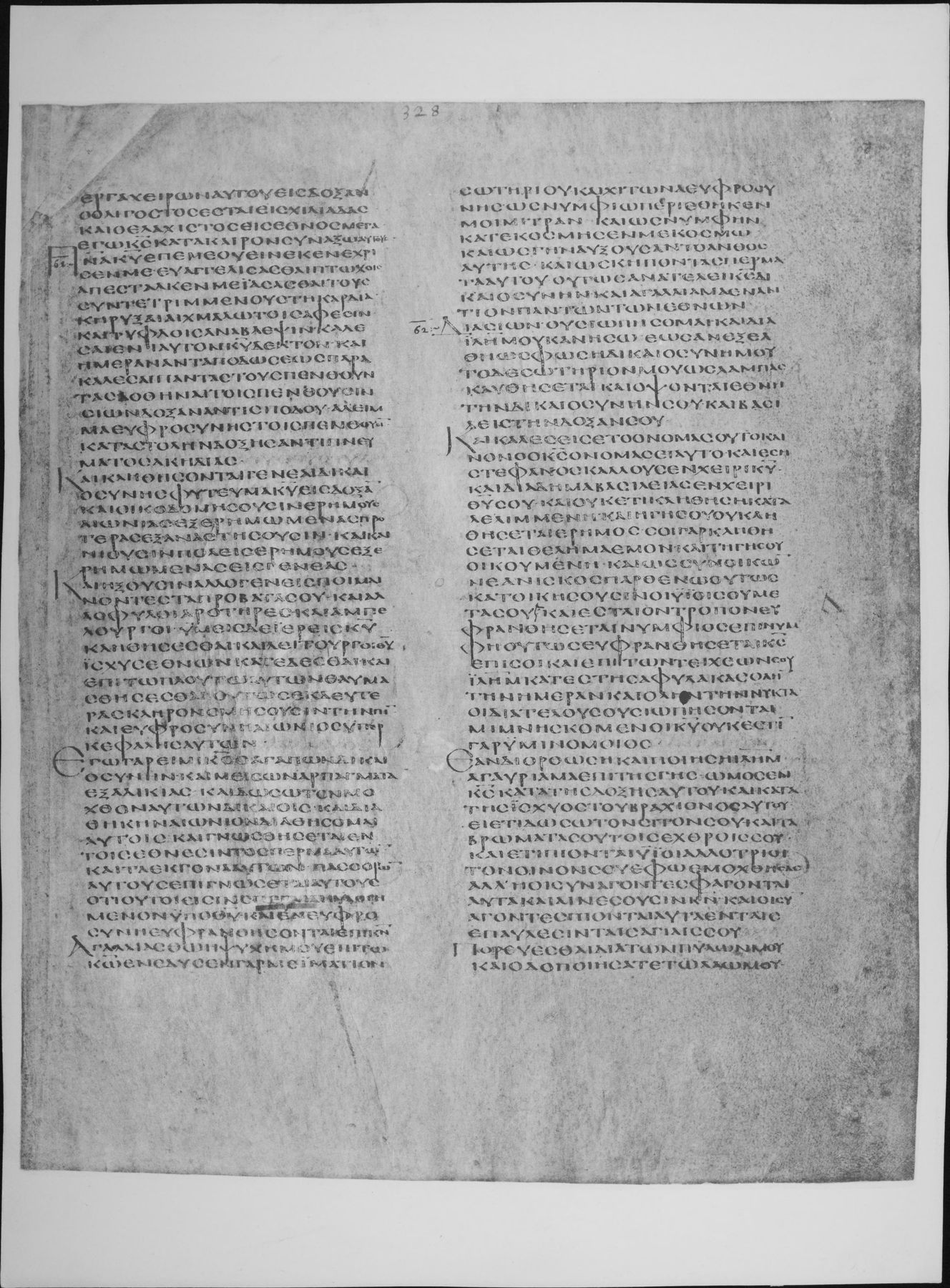
Isaiah 60:17-21 is on fol. 327v (full-size facsimile of 1879-83, Internet Archive codex-alexandrinus leaf 679). The 1936 reduced facsimile prints beneath this page: Is. lix. 21-lx. 21. Checked on the plate: the page begins inside Isaiah 59:21 (first words read: ΤΟ ΠΝΑ ΤΟ ΕΜΟΝ Ο ΕΣΤΙΝ ΕΠΙ ΣΟΙ ΚΑΙ ΤΑ ΡΗΜΑΤΑ Α ΕΔΩΚΑ ΕΙΣ ΤΟ ΣΤΟΜΑ ΣΟΥ). Isaiah 60:21-22 is on fol. 328r (full-size facsimile of 1879-83, Internet Archive codex-alexandrinus leaf 680). The 1936 reduced facsimile prints beneath this page: Is. lx. 21-lxii. 10. Checked on the plate: the page begins inside Isaiah 60:21 (first words read: ΕΡΓΑ ΧΕΙΡΩΝ ΑΥΤΟΥ ΕΙΣ ΔΟΞΑΝ Ο ΟΛΙΓΟΣΤΟΣ ΕΣΤΑΙ ΕΙΣ ΧΙΛΙΑΔΑΣ).
17ἀντὶ χαλκοῦ οἴσω σοι χρυσίον, ἀντὶ δὲ σιδήρου οἴσω σοι ἀργύριον, ἀντὶ δὲ ξύλων οἴσω σοι χαλκόν, ἀντὶ δὲ λίθων σίδηρον. καὶ δώσω τοὺς ἄρχοντάς σου ἐν εἰρήνῃ, καὶ τοὺς ἐπισκόπους σου ἐν δικαιοσύνῃ· 18καὶ οὐκ ἀκουσθήσεται ἔτι ἀδικία ἐν τῇ γῇ σου, οὐδὲ σύντριμμα οὐδὲ ταλαιπωρία ἐν τοῖς ὁρίοις σου, ἀλλά κληθήσεται Σωτήριον τὰ τείχη σου, καὶ αἱ πύλαι σου Γλύμμα. 19καὶ οὐκ ἔσται σοι ἔτι ὁ ἥλιος εἰς φῶς ἡμέρας, οὐδὲ ἀνατολὴ σελήνης φωτιεῖ σοι τὴν νύκτα, ἀλλ᾽ ἔσται σοι Κύριος φῶς αἰώνιον, καὶ ὁ θεὸς δόξα σου. 20οὐ γὰρ δύσεται ὁ ἥλιός σοι, καὶ ἡ σελήνη σοι οὐκ ἐκλείψει· ἔσται γὰρ Κύριός σοι φῶς αἰώνιον, καὶ ἀναπληρωθήσονται αἱ ἡμέραι τοῦ πένθους σου. 21καὶ ὁ λαός σου πᾶς δίκαιος, δι᾽ αἰῶνος κληρονομήσουσιν τὴν γῆν, φυλάσσων τὸ φύτευμα, ἔργα χειρῶν αὐτοῦ εἰς δόξαν. 22ὁ ὀλιγοστὸς ἔσται εἰς χιλιάδας, καὶ ὁ ἐλάχιστος εἰς ἔθνος μέγα· ἐγὼ Κύριος κατὰ καιρὸν συνάξω αὐτούς.
17And for brass I will bring thee gold, and for iron I will bring thee silver, and instead of wood I will bring thee brass, and instead of stones, iron; and I will make thy princes peaceable, and thine overseers righteous. 18And injustice shall no more be heard in thy land, nor destruction nor misery in thy coasts; but thy walls shall be called Salvation, and thy gates Sculptured Work. 19And thou shalt no more have the sun for a light by day, nor shall the rising of the moon lighten thy night; but the Lord shall be thine everlasting light, and God thy glory. 20For the sun shall no more set, nor shall the moon be eclipsed; for the Lord shall be thine everlasting light, and the days of thy mourning shall be completed. 21Thy people also shall be all righteous; they shall inherit the land for ever, preserving that which they have planted, even the works of their hands, for glory. 22The little one shall become thousands, and the least a great nation; I the Lord will gather them in due time.
Cite
Sources
- Source: Codex Alexandrinus (British Library Royal MS 1 D. VI) via the British Museum photographic facsimiles of 1879-83 and 1936 (Internet Archive) + Swete's Septuagint + Brenton's English (holding institution)
- Critical edition: H. B. Swete, The Old Testament in Greek according to the Septuagint (1909)
← previous · → next · v cycle view · l back to library