Jeremiah, Chapter 17 (Codex Alexandrinus)
Introduction
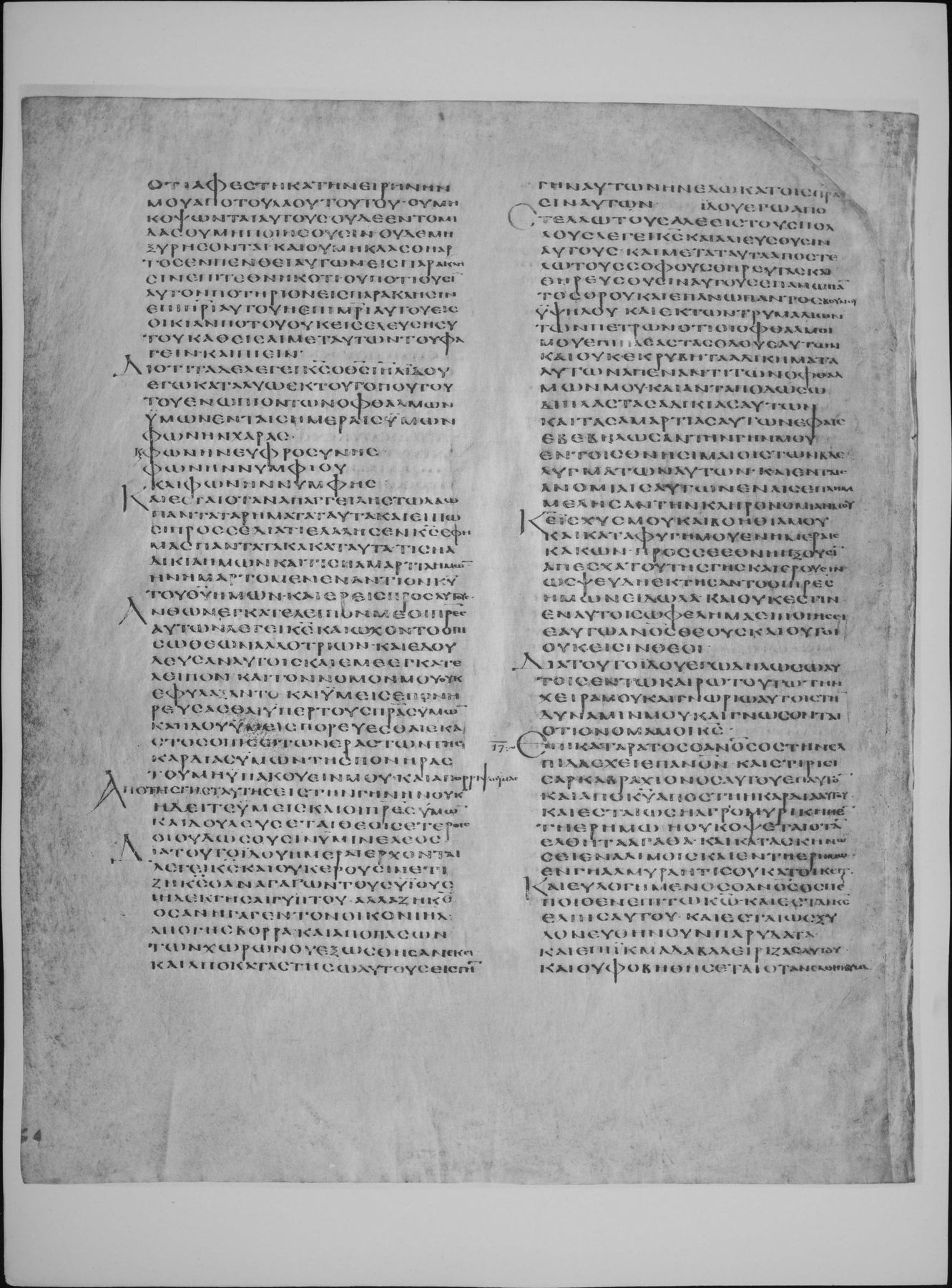
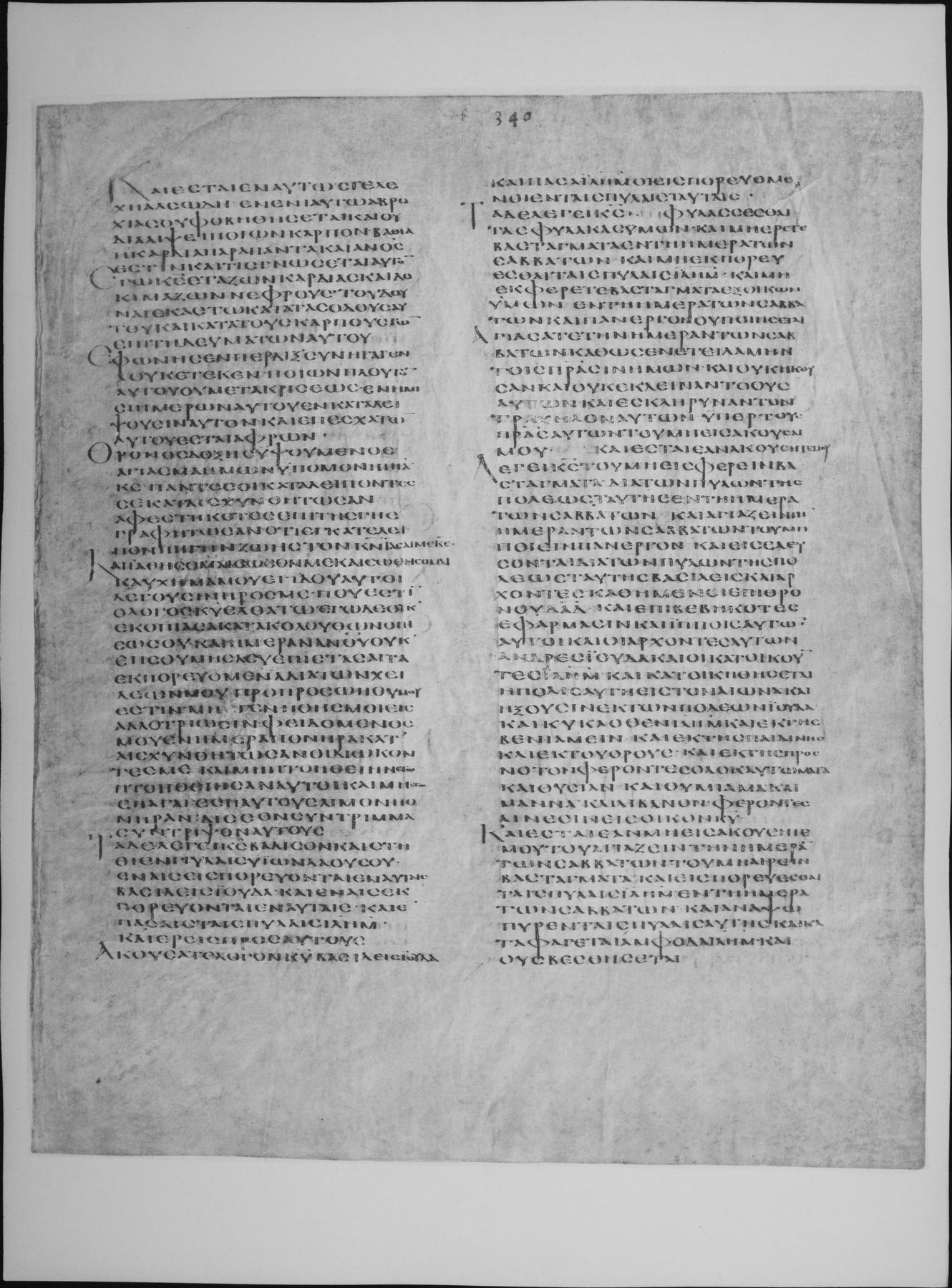
Jeremiah 17 in the Greek Old Testament (the Septuagint) as written in Codex Alexandrinus, a Greek Bible copied in the fifth century, probably in Egypt, and now in the British Library (Royal MS 1 D. VI, the second of its four volumes). It is one of the three great early codices of the whole Greek Bible, with Codex Vaticanus and Codex Sinaiticus.
This entry meets the strict three-criteria standard of the Theosis Library:
- Manuscript scan: the pages of Codex Alexandrinus carrying this chapter (fol. 339v, fol. 340r), from the full-size photographic (autotype) facsimile published by the British Museum in 1879-1883, as digitised on the Internet Archive. The verse range of every page comes from the reduced photographic facsimile of 1936, which prints it beneath each plate, and the opening words of every page were read on the plate to confirm the page and the verse it begins with. Each section links to the page or pages that hold its verses. Folio numbers are those written at the head of each leaf and visible on the plates.
- Original text: Swete's edition, which here prints the text of Codex Vaticanus (Vat. gr. 1209), the base of his edition, and gives the readings of Alexandrinus only in his apparatus. The Greek column is therefore Vaticanus' text; where Alexandrinus differs, the plate shows what Alexandrinus reads.
- English translation: Sir Lancelot C. L. Brenton, The Septuagint Version of the Old Testament (1844; 1851 edition), a translation of the Greek, public domain, from the eBible.org text.
How was this verified? (Provenance)
Where on the image
Jeremiah 17:5-8 is on fol. 339v (full-size facsimile of 1879-83, Internet Archive codex-alexandrinus leaf 703). The 1936 reduced facsimile prints beneath this page: Jer. xvi. 5-xvii. 8. Checked on the plate: the page begins inside Jeremiah 16:5 (first words read: ΟΤΙ ΑΦΕΣΤΑΚΑ ΤΗΝ ΕΙΡΗΝΗΝ ΜΟΥ ΑΠΟ ΤΟΥ ΛΑΟΥ ΤΟΥΤΟΥ). Jeremiah 17:8-12 is on fol. 340r (full-size facsimile of 1879-83, Internet Archive codex-alexandrinus leaf 704). The 1936 reduced facsimile prints beneath this page: Jer. xvii. 8-27. Checked on the plate: the page begins inside Jeremiah 17:8 (first words read: ΚΑΙ ΕΣΤΑΙ ΕΝ ΑΥΤΩ ΣΤΕΛΕΧΗ ΑΛΣΩΔΗ ΕΝ ΕΝΙΑΥΤΩ ΑΒΡΟΧΙΑΣ ΟΥ ΦΟΒΗΘΗΣΕΤΑΙ).
5Ἐπικατάρατος ὁ ἄνθρωπος ὃς τὴν ἐλπίδα ἔχει ἐπ᾽ ἄνθρωπον, καὶ στηρίσει σάρκα βραχίονος αὐτοῦ ἐπ᾽ αὐτόν, καὶ ἀπὸ Κυρίου ἀποστῇ ἡ καρδία αὐτοῦ· 6καὶ ἔσται ὡς ἡ ἀγριομυρίκη ἡ ἐν τῇ ἐρήμῳ, οὐκ ὄψεται ὅταν ἔλθῃ τὰ ἀγαθά, καὶ κατασκηνώσει ἐν ἁλίμοις καὶ ἐν ἐρήμῳ, ἐν γῇ ἁλμυρᾷ ἥτις οὐ κατοικεῖται. 7καὶ εὐλογημένος ὁ ἄνθρωπος ὃς πέποιθεν ἐπὶ τῷ κυρίῳ, καὶ ἔσται Κύριος ἐλπὶς αὐτοῦ· 8καὶ ἔσται ὡς ξύλον εὐθηνοῦν παρ᾽ ὕδατα, καὶ ἐπὶ ἰκμάδα βαλεῖ ῥίζαν αὐτοῦ· οὐ φοβηθήσεται ὅταν ἔλθῃ καῦμα, καὶ ἔσται ἐπ᾽ αὐτῷ στελέχη ἀλσώδη, ἐν ἐνιαυτῷ ἀβροχίας οὐ φοβηθήσεται, καὶ οὐ διαλείψει ποιῶν καρπόν. 9βαθεῖα ἡ καρδία παρὰ πάντα, καὶ ἄνθρωπός ἐστιν· καὶ τίς γνώσεται αὐτόν; 10ἐγὼ Κύριος ἐτάζων καρδίας καὶ δοκιμάζων νεφρούς, τοῦ δοῦναι ἑκάστῳ κατὰ τὰς ὁδοὺς αὐτοῦ καὶ κατὰ τοὺς καρποὺς τῶν ἐπιτηδευμάτων αὐτοῦ. 11ἐφώνησεν πέρδιξ, συνήγαγεν ἃ οὐκ ἔτεκεν· ποιῶν πλοῦτον αὐτοῦ οὐ μετὰ κρίσεως, ἐν ἡμίσει ἡμερῶν αὐτοῦ ἐγκαταλείψουσιν αὐτόν, καὶ ἐπ᾽ ἐσχάτων αὐτοῦ ἔσται ἄφρων. 12Θρόνος δόξης ὑψωμένος ἁγίασμα ἡμῶν·
5Cursed is the man who trusts in man, and will lean his arm of flesh upon him, while his heart departs from the Lord. 6And he shall be as the wild tamarisk in the desert: he shall not see when good comes; but he shall dwell in barren places, and in the wilderness, in a salt land which is not inhabited. 7But blessed is the man who trusts in the Lord, and whose hope the Lord shall be. 8And he shall be as a thriving tree by the waters, and he shall cast forth his root toward a moist place: he shall not fear when heat comes, and there shall be upon him shady branches: he shall not fear in a year of drought, and he shall not fail to bear fruit. 9The heart is deep beyond all things, and it is the man, and who can know him? 10I the Lord try the hearts, and prove the reins, to give to every one according to his ways, and according to the fruits of his devices. 11The partridge utters her voice, she gathers eggs which she did not lay; so is a man gaining his wealth unjustly; in the midst of his days his riches shall leave him, and at his latter end he will be a fool. 12An exalted throne of glory is our sanctuary.
Where on the image
Jeremiah 17:13-20 is on fol. 340r (full-size facsimile of 1879-83, Internet Archive codex-alexandrinus leaf 704). The 1936 reduced facsimile prints beneath this page: Jer. xvii. 8-27. Checked on the plate: the page begins inside Jeremiah 17:8 (first words read: ΚΑΙ ΕΣΤΑΙ ΕΝ ΑΥΤΩ ΣΤΕΛΕΧΗ ΑΛΣΩΔΗ ΕΝ ΕΝΙΑΥΤΩ ΑΒΡΟΧΙΑΣ ΟΥ ΦΟΒΗΘΗΣΕΤΑΙ).
13ὑπομονὴ Ἰσραήλ, Κύριε, πάντες οἱ καταλιπόντες σε καταισχυνθήτωσαν, ἀφεστηκότες ἐπὶ τῆς γῆς γραφήτωσαν, ὅτι ἐγκατέλιπον πηγὴν ζωῆς τὸν κύριον. 14ἴασαί με, Κύριε, καὶ ἰαθήσομαι· σῶσόν με, καὶ σωθήσομαι, ὅτι καύχημά μου σὺ εἶ. 15ἰδοὺ αὐτοὶ λέγουσι πρὸς μέ Ποῦ ἐστιν ὁ λόγος Κυρίου; ἐλθάτω. 16ἐγὼ δὲ οὐκ ἐκοπίασα κατακολουθῶν ὀπίσω σου, καὶ ἡμέραν ἀνθρώπου οὐκ ἐπεθύμησα, σὺ ἐπίστῃ· τὰ ἐκπορευόμενα διὰ τῶν χειλέων μου πρὸ προσώπου σού ἐστιν. 17μὴ γενηθῇς μοι εἰς ἀλλοτρίωσιν, φειδόμενός μου ἐν ἡμέρᾳ πονηρᾷ. 18καταισχυνθήτωσαν οἱ διώκοντές με, καὶ μὴ καταισχυνθείην ἐγώ· πτοηθείησαν αὐτοί, καὶ μὴ πτοηθείην ἐγώ· ἐπάγαγε ἐπ᾽ αὐτοὺς ἡμέραν πονηράν, δισσὸν σύντριμμα σύντριψον αὐτούς. 19Τάδε λέγει Κύριος Βάδισον καὶ στῆθι ἐν ταῖς πύλαις υἱῶν λαοῦ σου, ἐν αἷς εἰσπορεύονται ἐν αὐταῖς βασιλεῖς Ἰούδα καὶ ἐν αἷς ἐκπορεύονται ἐν αὐταῖς, καὶ ἐν πάσαις ταῖς πύλαις Ἰερουσαλήμ, 20καὶ ἐρεῖς αὐτοῖς τὸν λόγον Κυρίου Βασιλεῖς Ἰούδα καὶ πᾶσα Ἰουδαία καὶ πᾶσα Ἰερουσαλήμ, οἱ εἰσπορευόμενοι ἐν ταῖς πύλαις ταύταις,
13O Lord, the hope of Israel, let all that have left thee be ashamed, let them that have revolted be written on the earth, because they have forsaken the fountain of life, the Lord. 14Heal me, O Lord, and I shall be healed; save me, and I shall be saved; for thou art my boast. 15Behold, they say to me, Where is the word of the Lord? let it come. 16But I have not been weary of following thee, nor have I desired the day of man; thou knowest; the words that proceed out of my lips are before thy face. 17Be not to me a stranger, but spare me in the evil day. 18Let them that persecute me be ashamed, but let me not be ashamed: let them be alarmed, but let me not be alarmed: bring upon them the evil day, crush them with double destruction. 19Thus saith the Lord; Go and stand in the gates of the children of thy people, by which the kings of Juda enter, and by which they go out, and in all the gates of Jerusalem: 20and thou shalt say to them, Hear the word of the Lord, ye kings of Juda, and all Judea, and all Jerusalem, all who go in at these gates:
Where on the image
Jeremiah 17:21-27 is on fol. 340r (full-size facsimile of 1879-83, Internet Archive codex-alexandrinus leaf 704). The 1936 reduced facsimile prints beneath this page: Jer. xvii. 8-27. Checked on the plate: the page begins inside Jeremiah 17:8 (first words read: ΚΑΙ ΕΣΤΑΙ ΕΝ ΑΥΤΩ ΣΤΕΛΕΧΗ ΑΛΣΩΔΗ ΕΝ ΕΝΙΑΥΤΩ ΑΒΡΟΧΙΑΣ ΟΥ ΦΟΒΗΘΗΣΕΤΑΙ).
21τάδε λέγει Κύριος Φυλάσσεσθε τὰς ψυχὰς ὑμῶν, καὶ μὴ αἴρετε βαστάγματα ἐν τῇ ἡμέρᾳ τῶν σαββάτων καὶ μὴ ἐκπορεύεσθε ταῖς πύλαις Ἰερουσαλήμ, 22καὶ μὴ ἐκφέρετε βαστάγματα ἐξ οἰκιῶν ὑμῶν ἐν τῇ ἡμέρᾳ τῶν σαββάτων, καὶ πᾶν ἔργον οὐ ποιήσετε· ἁγιάσατε τὴν ἡμέραν τῶν σαββάτων καθὼς ἐνετειλάμην τοῖς πατράσιν ὑμῶν. καὶ οὐκ ἤκουσαν καὶ οὐκ ἔκλιναν τὸ οὖς αὐτῶν, 23καὶ ἐσκλήρυναν τὸν τράχηλον αὐτῶν ὑπὲρ τοὺς πατέρας αὐτῶν τοῦ μὴ ἀκοῦσαί μου καὶ τοῦ μὴ δέξασθαι παιδείαν. 24καὶ ἔσται ἐὰν εἰσακούσητέ μου, λέγει Κύριος, τοῦ μὴ εἰσφέρειν βαστάγματα διὰ τῶν πυλῶν τῆς πόλεως ταύτης ἐν τῇ ἡμέρᾳ τῶν σαββάτων, καὶ ἁγιάζειν τὴν ἡμέραν τῶν σαββάτων τοῦ μὴ ποιεῖν πᾶν ἔργον, 25καὶ εἰσελεύσονται διὰ τῶν πυλῶν τῆς πόλεως ταύτης βασιλεῖς καὶ ἄρχοντες καθήμενοι ἐπὶ θρόνου Δαυεὶδ καὶ ἐπιβεβηκότες ἐφ᾽ ἅρμασιν καὶ ἵπποις αὐτῶν, αὐτοὶ καὶ οἱ ἄρχοντες αὐτῶν, ἄνδρες Ἰούδα καὶ οἱ κατοικοῦντες ἐν Ἰερουσαλήμ· καὶ κατοικισθήσεται ἡ πόλις αὕτη εἰς τὸν αἰῶνα, 26καὶ ἥξουσιν ἐκ τῶν πόλεων Ἰούδα, καὶ κυκλόθεν Ἰερουσαλὴμ καὶ ἐκ γῆς Βενιαμεὶν καὶ ἐκ γῆς πεδινῆς καὶ ἐκ τοῦ ὄρους καὶ ἐκ τῆς πρὸς νότον φέροντες ὁλοκαυτώματα καὶ θυσίαν καὶ θυμιάματα καὶ μάννα καὶ λίβανον, φέροντες αἴνεσιν εἰς οἶκον Κυρίου. 27καὶ ἔσται ἐὰν μὴ εἰσακούσητέ μου τοῦ ἁγιάζειν τὴν ἡμέραν τῶν σαββάτων, τοῦ μὴ αἴρειν βαστάγματα καὶ μὴ εἰσπορεύεσθαι ταῖς πύλαις Ἰερουσαλὴμ ἐν τῇ ἡμέρᾳ τῶν σαββάτων, καὶ ἀνάψω πῦρ ἐν ταῖς πύλαις αὐτῆς καὶ καταφάγεται ἄμφοδα Ἰερουσαλήμ, καὶ οὐ σβεσθήσεται.
21thus saith the Lord; Take heed to your souls, and take up no burdens on the sabbath-day, and go not forth through the gates of Jerusalem; 22and carry forth no burdens out of your houses on the sabbath-day, and ye shall do no work: sanctify the sabbath-day, as I commanded your fathers. 23But they hearkened not, and inclined not their ear, but stiffened their neck more than their fathers did, so as not to hear me, and not to receive correction. 24And it shall come to pass, if ye will hearken to me, saith the Lord, to carry in no burdens through the gates of this city on the sabbath-day, and to sanctify the sabbath-day, so as to do no work upon it, 25that there shall enter through the gates of this city kings and princes sitting on the throne of David, and riding on their chariots and horses, they, and their princes, the men of Juda, and the dwellers in Jerusalem: and this city shall be inhabited for ever. 26And men shall come out of the cities of Juda, and from round about Jerusalem, and out of the land of Benjamin, and out of the plain country, and from the hill country, and from the south country, bringing whole-burnt-offerings, and sacrifices, and incense, and manna, and frankincense, bringing praise to the house of the Lord. 27But it shall come to pass, if ye will not hearken to me to sanctify the sabbath-day, to bear no burdens, nor go in with them by the gates of Jerusalem on the sabbath-day; then will I kindle a fire in the gates thereof, and it shall devour the streets of Jerusalem, and shall not be quenched.
Cite
Sources
- Source: Codex Alexandrinus (British Library Royal MS 1 D. VI) via the British Museum photographic facsimiles of 1879-83 and 1936 (Internet Archive) + Swete's Septuagint + Brenton's English (holding institution)
- Critical edition: H. B. Swete, The Old Testament in Greek according to the Septuagint (1909)
← previous · → next · v cycle view · l back to library