Jeremiah, Chapter 26 (Codex Alexandrinus)
Introduction
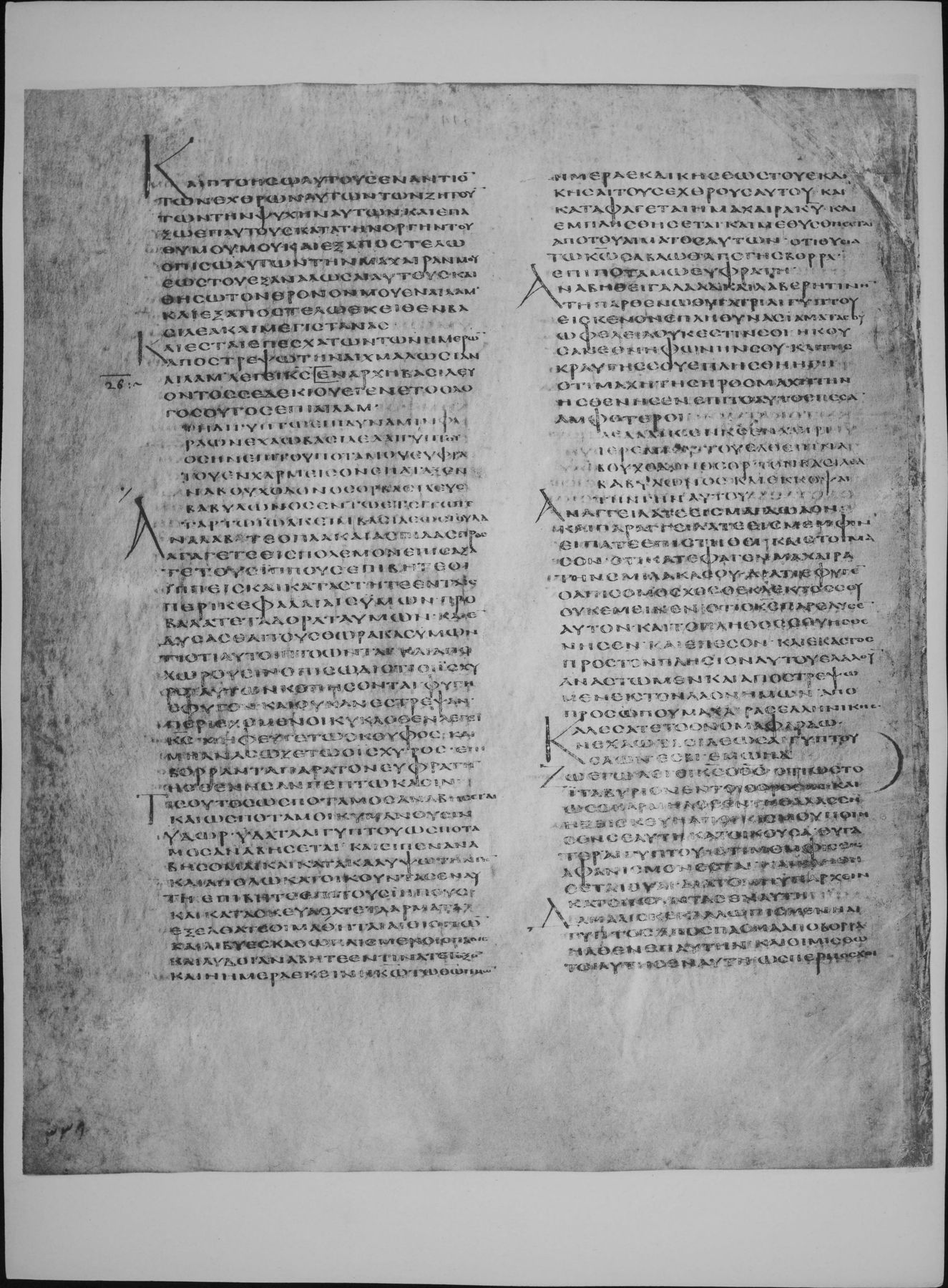
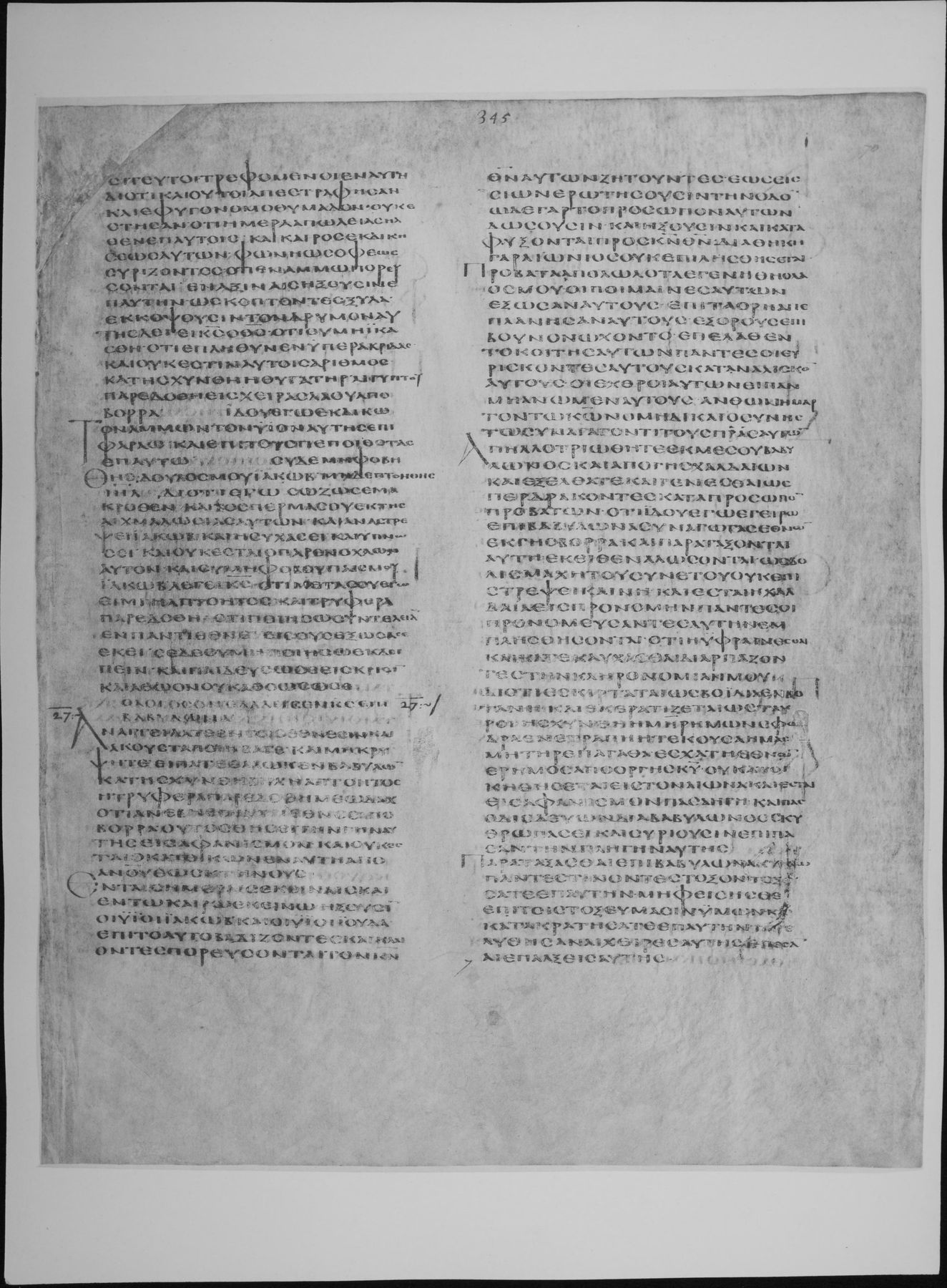
Jeremiah 26 in the Greek Old Testament (the Septuagint) as written in Codex Alexandrinus, a Greek Bible copied in the fifth century, probably in Egypt, and now in the British Library (Royal MS 1 D. VI, the second of its four volumes). It is one of the three great early codices of the whole Greek Bible, with Codex Vaticanus and Codex Sinaiticus.
Numbering: Swete's Greek and Brenton's English number or divide some verses of this chapter differently (Swete 26:1 = Brenton 25:20). Each column keeps its own verse numbers, and sections are cut only where the two texts agree, so each section holds the same passage in both languages.
This entry meets the strict three-criteria standard of the Theosis Library:
- Manuscript scan: the pages of Codex Alexandrinus carrying this chapter (fol. 344v, fol. 345r), from the full-size photographic (autotype) facsimile published by the British Museum in 1879-1883, as digitised on the Internet Archive. The verse range of every page comes from the reduced photographic facsimile of 1936, which prints it beneath each plate, and the opening words of every page were read on the plate to confirm the page and the verse it begins with. Each section links to the page or pages that hold its verses. Folio numbers are those written at the head of each leaf and visible on the plates.
- Original text: Swete's edition, which here prints the text of Codex Vaticanus (Vat. gr. 1209), the base of his edition, and gives the readings of Alexandrinus only in his apparatus. The Greek column is therefore Vaticanus' text; where Alexandrinus differs, the plate shows what Alexandrinus reads.
- English translation: Sir Lancelot C. L. Brenton, The Septuagint Version of the Old Testament (1844; 1851 edition), a translation of the Greek, public domain, from the eBible.org text.
How was this verified? (Provenance)
Where on the image
Jeremiah 26:1-8 is on fol. 344v (full-size facsimile of 1879-83, Internet Archive codex-alexandrinus leaf 713). The 1936 reduced facsimile prints beneath this page: Jer. xxv. 17-xxvi. 21. Checked on the plate: the page begins at the start of Jeremiah 25:17 (first words read: ΚΑΙ ΠΤΟΗΣΩ ΑΥΤΟΥΣ ΕΝΑΝΤΙΟΝ ΤΩΝ ΕΧΘΡΩΝ ΑΥΤΩΝ ΤΩΝ ΖΗΤΟΥΝΤΩΝ ΤΗΝ ΨΥΧΗΝ ΑΥΤΩΝ).
1ἐν ἀρχῇ βασιλεύοντος Σεδεκίον βασιλέως ἐγένετο ὁ λόγος οὗτος περὶ Αἰλάμ. 2Τῇ Αἰγύπτῳ ἐπὶ δύναμιν Φαραὼ Νεχαὼ βασιλέως Αἰγύπτου, ὃς ἦν ἐπὶ τῷ ποταμῷ Εὐφράτῃ ἐν Χαρμείς, ὃν ἐπάταξε Ναβουχοδονόσορ βασιλεὺς Βαβυλῶνος ἐν τῷ ἔτει τῷ τετάρτῳ Ἰωακεὶμ βασιλέως Ἰούδα. 3Ἀναλάβετε ὅπλα καὶ ἀσπίδας, καὶ προσαγάγετε εἰς πόλεμον, 4καὶ ἐπισάξατε τοὺς ἵππους· ἐπίβητε, οἱ ἱππεῖς, καὶ κατάστητε ἐν ταῖς περικεφαλαίαις ὑμῶν, προσβάλετε τὰ δόρατα καὶ ἐνδύσασθε τοὺς θώρακας ὑμῶν. 5τί ὅτι αὐτοὶ πτοοῦνται καὶ ἀποχωροῦσιν εἰς τὸ ὀπίσω;διότι οἱ ἰσχυροὶ αὐτῶν κοπήσονται, φυγῇ ἔφυγον καὶ οὐκ ἀνέστρεψαν περιεχόμενοι κυκλόθεν, λέγει Κύριος. 6μὴ φευγέτω ὁ κοῦφος, καὶ μὴ ἀνασωζέσθω ὁ ἰσχυρὸς ἐπὶ βορρᾶν· τὰ παρὰ τὸν Εὐφράτην ἠσθένησεν, καὶ πεπτώκασιν. 7τίς οὗτος ὡς ποταμὸς ἀναβήσεται, καὶ ὡς ποταμοὶ κυμαίνουσιν ὕδωρ; 8ὕδατα Αἰγύπτου ὡσεὶ ποταμὸς ἀναβήσεται, καὶ εἶπεν Ἀναβήσομαι καὶ κατακαλύψω τὴν γῆν καὶ ἀπολῶ τοὺς κατοικοῦντας ἐν αὐτῇ.
25:20In the beginning of the reign of king Sedekias, there came this word concerning Ælam. 2For Egypt, against the Power of Pharao Nechao King of Egypt, who was by the river Euphrates in Charmis, whom Nabuchodonosor king of Babylon smote in the fourth year of Joakim king of Juda. 3Take up arms and spears, and draw nigh to battle; 4and harness the horses: mount, ye horsemen, and stand ready in your helmets; advance the spears, and put on your breast-plates. 5Why do they fear, and turn back? even because their mighty men shall be slain: they have utterly fled, and being hemmed in they have not rallied, saith the Lord. 6Let not the swift flee, and let not the mighty man escape to the north: the forces at Euphrates are become feeble, and they have fallen. 7Who is this that shall come up as a river, and as rivers roll their waves? 8The waters of Egypt shall come up like a river: and he said, I will go up, and will cover the earth, and will destroy the dwellers in it.
Where on the image
Jeremiah 26:9-16 is on fol. 344v (full-size facsimile of 1879-83, Internet Archive codex-alexandrinus leaf 713). The 1936 reduced facsimile prints beneath this page: Jer. xxv. 17-xxvi. 21. Checked on the plate: the page begins at the start of Jeremiah 25:17 (first words read: ΚΑΙ ΠΤΟΗΣΩ ΑΥΤΟΥΣ ΕΝΑΝΤΙΟΝ ΤΩΝ ΕΧΘΡΩΝ ΑΥΤΩΝ ΤΩΝ ΖΗΤΟΥΝΤΩΝ ΤΗΝ ΨΥΧΗΝ ΑΥΤΩΝ).
9ἐπίβητε ἐπὶ τοὺς ἵππους, παρασκευάσατε τὰ ἅρματα· ἐξέλθατε, οἱ μαχηταὶ Αἰθιόπων καὶ Λίβυες καθωπλισμένοι ὅπλοις καὶ Λυδοί, ἀνάβητε, ἐντείνατε τόξον, 10καὶ ἡ ἡμέρα ἐκείνη Κυρίῳ τῷ θεῷ ἡμῶν ἡμέρα ἐκδικήσεως τοῦ ἐκδικῆσαι τοὺς ἐχθροὺς αὐτοῦ· καὶ καταφάγεται ἡ μάχαιρα Κυρίου, καὶ πλησθήσεται καὶ μεθυσθήσεται ἀπὸ τοῦ αἵματος αὐτῶν· ὅτι θυσία τῷ κυρίῳ ἀπὸ γῆς βορρᾶ ἐπὶ ποταμῷ Εὐφράτῃ. 11ἀνάβηθι, Γαλαάδ, καὶ λάβε ῥητίνην τῇ παρθένῳ θυγατρὶ Αἰγύπτου· εἰς τὸ κενὸν ἐπλήθυνας ἰάματά σου, ὠφέλεια οὐκ ἔστιν σοί. 12ἤκουσαν ἔθνη φωνήν σου, καὶ τῆς κραυγῆς σου ἐπλήσθη ἡ γῆ, ὅτι μαχητὴς πρὸς μαχητὴν ἠσθένησεν, ἐπὶ τὸ αὐτὸ ἔπεσαν ἀμφότεροι. 13Ἃ ἐλάλησεν Κύριος ἐν χειρὶ Ἰερεμίου, τοῦ ἐλθεῖν τὸν βασιλέα Βαβυλῶνος τοῦ κόψαι γῆν Αἰγύπτου. 14Ἀναγγείλατε εἰς Μάγδωλον, καὶ παραγγείλατε εἰς Μέμφιν· εἴπατε Ἐπίστηθι καὶ ἑτοίμασον, ὅτι κατέφαγεν μάχαιρα τὴν σμίλακά σου. 15διὰ τί ἔφυγεν ἀπὸ σοῦ ὁ Ἆπις; ὁ μόσχος ὁ ἐκλεκτός σου οὐκ ἔμεινεν, ὅτι Κύριος παρέλυσεν αὐτόν. 16καὶ τὸ πλῆθός σου ἠσθένησεν καὶ ἔπεσαν, καὶ ἕκαστος πρὸς τὸν πλησίον αὐτοῦ ἐλάλει Ἀναστῶμεν καὶ ἀναστρέψωμεν πρὸς τὸν λαὸν ἡμῶν εἰς τὴν πατρίδα ἡμῶν ἀπὸ προσώπου μαχαίρας Ἑλληνικῆς.
9Mount ye the horses, prepare the chariots; go forth, ye warriors of the Ethiopians, and Libyans armed with shields; and mount, ye Lydians, bend the bow. 10And that day shall be to the Lord our God a day of vengeance, to take vengeance on his enemies: and the sword of the Lord shall devour, and be glutted, and be drunken with their blood: for the Lord has a sacrifice from the land of the north at the river Euphrates. 11Go up to Galaad, and take balm for the virgin daughter of Egypt: in vain hast thou multiplied thy medicines; there is no help in thee. 12The nations have heard thy voice, and the land has been filled with thy cry: for the warriors have fainted fighting one against another, and both are fallen together. 13The Words which the Lord spoke by Jeremias, concerning the coming of the king of Babylon to smite the land of Egypt. 14Proclaim it at Magdol, and declare it at Memphis: say ye, Stand up, and prepare; for the sword has devoured thy yew-tree. 15Wherefore has Apis fled from thee? thy choice calf has not remained; for the Lord has utterly weakened him. 16And thy multitude has fainted and fallen; and each one said to his neighbour, Let us arise, and return into our country to our people, from the Grecian sword.
Where on the image
Jeremiah 26:17-21 is on fol. 344v (full-size facsimile of 1879-83, Internet Archive codex-alexandrinus leaf 713). The 1936 reduced facsimile prints beneath this page: Jer. xxv. 17-xxvi. 21. Checked on the plate: the page begins at the start of Jeremiah 25:17 (first words read: ΚΑΙ ΠΤΟΗΣΩ ΑΥΤΟΥΣ ΕΝΑΝΤΙΟΝ ΤΩΝ ΕΧΘΡΩΝ ΑΥΤΩΝ ΤΩΝ ΖΗΤΟΥΝΤΩΝ ΤΗΝ ΨΥΧΗΝ ΑΥΤΩΝ). Jeremiah 26:21-24 is on fol. 345r (full-size facsimile of 1879-83, Internet Archive codex-alexandrinus leaf 714). The 1936 reduced facsimile prints beneath this page: Jer. xxvi. 21-xxvii. 15. Checked on the plate: the page begins inside Jeremiah 26:21 (first words read: ΔΙΟΤΙ ΚΑΙ ΑΥΤΟΙ ΑΠΕΣΤΡΑΦΗΣΑΝ ΚΑΙ ΕΦΥΓΟΝ ΟΜΟΘΥΜΑΔΟΝ ΟΥΚ ΕΣΤΗΣΑΝ ΟΤΙ ΗΜΕΡΑ ΑΠΩΛΕΙΑΣ).
17καλέσατε τὸ ὄνομα Φαραὼ Νεχαὼ βασιλέως Αἰγύπτου Σαὼν Ἑσβεὶ Ἑμωήδ. 18ζῶ ἐγώ, λέγει Κύριος ὁ θεός, ὅτι ὡς τὸ Ἰταβύριον ἐν τοῖς ὄρεσιν καὶ ὡς ὁ Κάρμηλος ὁ ἐν τῇ θαλάσσῃ, ἥξει. 19σκεύη ἀποικισμοῦ ποίησον σεαυτῇ, κατοικοῦσα θύγατερ Αἰγύπτου· ὅτι Μέμφις εἰς ἀφανισμὸν ἔσται, καὶ κληθήσεται Οὐαί, διὰ τὸ μὴ ὑπάρχειν κατοικοῦντας ἐν αὐτῇ. 20δάμαλις κεκαλλωπισμένη Αἴγυπτος· ἀπόσπασμα ἀπὸ βορρᾶ ἦλθεν ἐπ᾽ αὐτήν, 21καὶ οἱ μισθωτοὶ αὐτῆς ἐν αὐτῇ ὥσπερ μόσχοι σιτευτοὶ τρεφόμενοι ἐν αὐτῇ· διότι καὶ αὐτοὶ ἀπεστράφησαν καὶ ἔφυγον ὁμοθυμαδόν· οὐκ ἔστησαν, ὅτι ἡμέρα ἀπωλείας ἦλθεν ἐπ᾽ αὐτούς καὶ καιρὸς ἐκδικήσεως αὐτῶν. 22φωνὴ ὡς ὄφεως συρίζοντος, ὅτι ἐν ἄμμῳ πορεύονται, ἐν ἀξίναις ἥξουσιν ἐπ᾽ αὐτήν· 23ὡς κόπτοντες ξύλα ἐκκόψουσιν τὸν δρυμὸν αὐτῆς, λέγει Κύριος, ὅτι οὐ μὴ εἰκασθῇ, ὅτι πληθύνει ὑπὲρ ἀκρίδα καὶ οὐκ ἔστιν αὐτοῖς ἀριθμός. 24κατῃσχύνθη ἡ θυγάτηρ Αἰγύπτου, παρεδόθη εἰς χεῖρας λαοῦ ἀπὸ βορρᾶ.
17Call ye the name of Pharao Nechao king of Egypt, Saon esbeie moed. 18As I live, saith the Lord God, he shall come as Itabyrion among the mountains, and as Carmel that is on the sea. 19O daughter of Egypt dwelling at home, prepare thee stuff for removing: for Memphis shall be utterly desolate, and shall be called Woe, because there are no inhabitants in it. 20Egypt is a fair heifer, but destruction from the north is come upon her. 21Also her hired soldiers in the midst of her are as fatted calves fed in her; for they also have turned, and fled with one accord: they stood not, for the day of destruction was come upon them, and the time of their retribution. 22Their voice is as that of a hissing serpent, for they go upon the sand; they shall come upon Egypt with axes, as men that cut wood. 23They shall cut down her forest, saith the Lord, for their number cannot at all be conjectured, for it exceeds the locust in multitude, and they are innumerable. 24The daughter of Egypt is confounded; she is delivered into the hands of a people from the north.
Where on the image
Jeremiah 26:25-28 is on fol. 345r (full-size facsimile of 1879-83, Internet Archive codex-alexandrinus leaf 714). The 1936 reduced facsimile prints beneath this page: Jer. xxvi. 21-xxvii. 15. Checked on the plate: the page begins inside Jeremiah 26:21 (first words read: ΔΙΟΤΙ ΚΑΙ ΑΥΤΟΙ ΑΠΕΣΤΡΑΦΗΣΑΝ ΚΑΙ ΕΦΥΓΟΝ ΟΜΟΘΥΜΑΔΟΝ ΟΥΚ ΕΣΤΗΣΑΝ ΟΤΙ ΗΜΕΡΑ ΑΠΩΛΕΙΑΣ).
25ἰδοὺ ἐγὼ ἐκδικῶ τὸν Ἀμμὼν τὸν υἱὸν αὐτῆς ἐπὶ Φαραὼ καὶ ἐπὶ τοὺς πεποιθότας ἐπ᾽ αὐτῷ. 27σὺ δὲ μὴ φοβηθῇς, δοῦλός μου Ἰακώβ, μηδὲ πτοηθῇς, Ἰσραήλ· διότι ἰδοὺ ἐγὼ σώζων σε μακρόθεν καὶ τὸ σπέρμα σου ἐκ τῆς αἰχμαλωσίας αὐτῶν· καὶ ἀναστρέψει Ἰακὼβ καὶ ἡσυχάσει καὶ ὑπνώσει, καὶ οὐκ ἔσται ὁ παρενοχλῶν αὐτόν. 28μὴ φοβοῦ, παῖς μου Ἰακώβ, λέγει Κύριος, ὅτι μετὰ σοῦ ἐγώ εἰμι· ἡ ἀπτόητος καὶ τρυφερὰ παρεδόθη· ὅτι ποιήσω συντέλειαν ἐν παντὶ εἰς οὓς ἐξῶσά σε ἐκεῖ, σὲ δὲ οὐ μὴ ποιήσω ἐκλιπεῖν· καὶ παιδεύσω σε εἰς κρίμα, καὶ ἀθῷον οὐκ ἀθῳώσω σε.
25Behold, I will avenge Ammon her son upon Pharao, and upon them that trust in him. 27But fear not thou, my servant Jacob, neither be thou alarmed, Israel: for, behold, I will save thee from afar, and thy seed from their captivity; and Jacob shall return, and be at ease, and sleep, and there shall be no one to trouble him. 28Fear not thou, my servant Jacob, saith the Lord; for I am with thee: she that was without fear and in luxury, has been delivered up: for I will make a full end of every nation among whom I have thrust thee forth; but I will not cause thee to fail: yet will I chastise thee in the way of judgment, and will not hold thee entirely guiltless.
Cite
Sources
- Source: Codex Alexandrinus (British Library Royal MS 1 D. VI) via the British Museum photographic facsimiles of 1879-83 and 1936 (Internet Archive) + Swete's Septuagint + Brenton's English (holding institution)
- Critical edition: H. B. Swete, The Old Testament in Greek according to the Septuagint (1909)
← previous · → next · v cycle view · l back to library