Jeremiah, Chapter 32 (Codex Alexandrinus)
Introduction
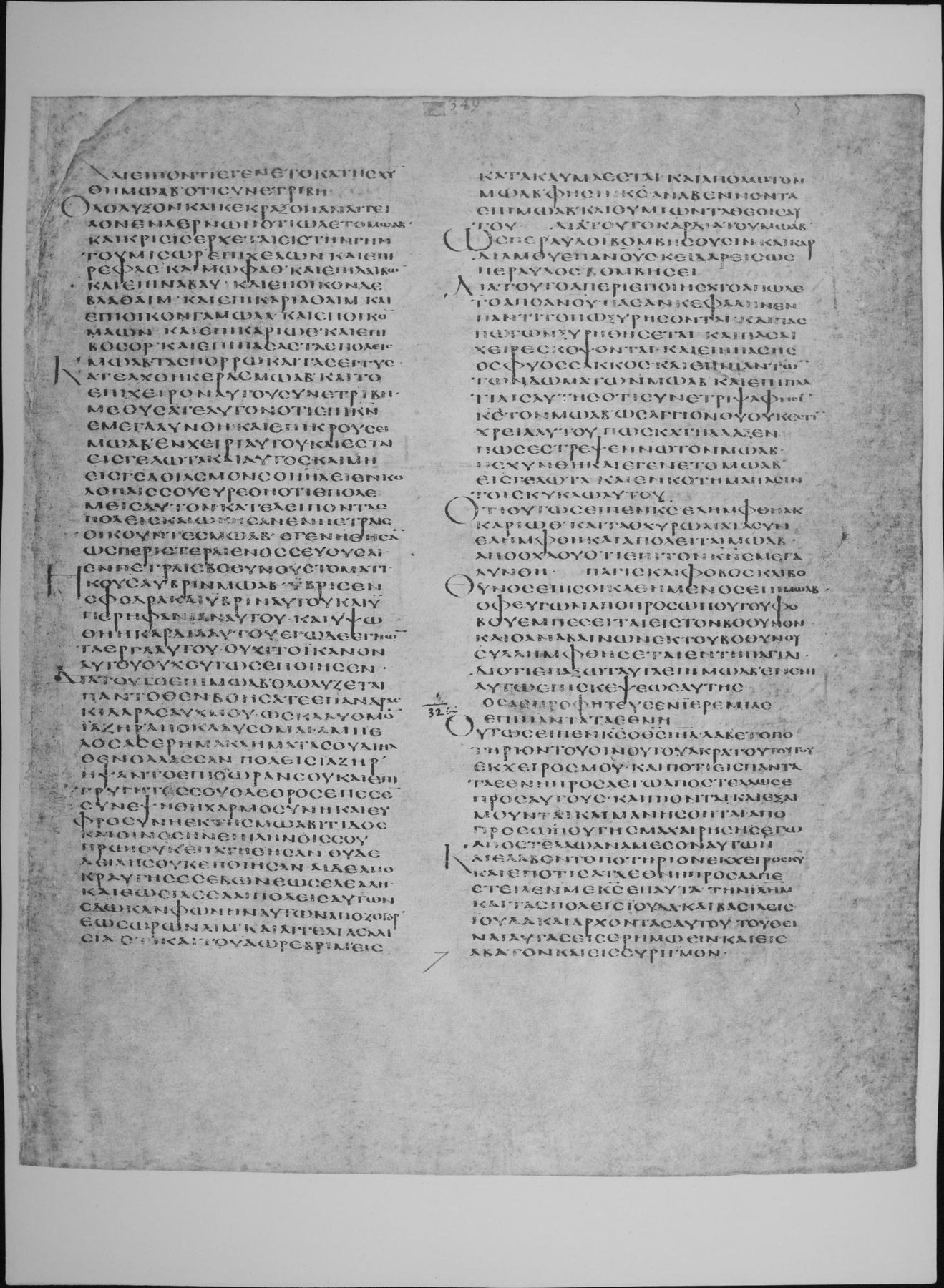
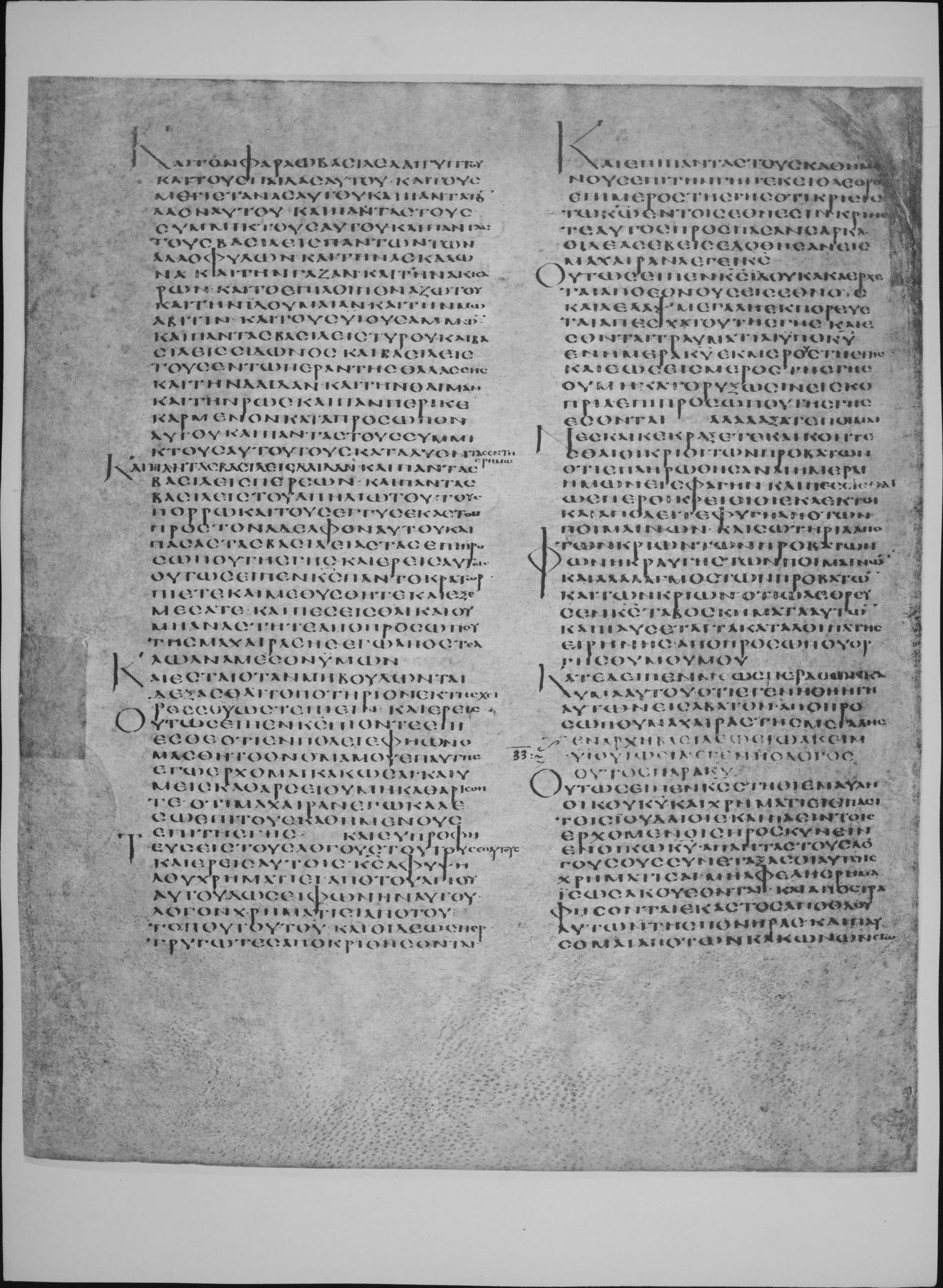
Jeremiah 32 in the Greek Old Testament (the Septuagint) as written in Codex Alexandrinus, a Greek Bible copied in the fifth century, probably in Egypt, and now in the British Library (Royal MS 1 D. VI, the second of its four volumes). It is one of the three great early codices of the whole Greek Bible, with Codex Vaticanus and Codex Sinaiticus.
Numbering: Swete's Greek and Brenton's English number or divide some verses of this chapter differently (Swete 32:1-24 = Brenton 32:15-38). Each column keeps its own verse numbers, and sections are cut only where the two texts agree, so each section holds the same passage in both languages.
This entry meets the strict three-criteria standard of the Theosis Library:
- Manuscript scan: the pages of Codex Alexandrinus carrying this chapter (fol. 349r, fol. 349v), from the full-size photographic (autotype) facsimile published by the British Museum in 1879-1883, as digitised on the Internet Archive. The verse range of every page comes from the reduced photographic facsimile of 1936, which prints it beneath each plate, and the opening words of every page were read on the plate to confirm the page and the verse it begins with. Each section links to the page or pages that hold its verses. Folio numbers are those written at the head of each leaf and visible on the plates.
- Original text: Swete's edition, which here prints the text of Codex Vaticanus (Vat. gr. 1209), the base of his edition, and gives the readings of Alexandrinus only in his apparatus. The Greek column is therefore Vaticanus' text; where Alexandrinus differs, the plate shows what Alexandrinus reads.
- English translation: Sir Lancelot C. L. Brenton, The Septuagint Version of the Old Testament (1844; 1851 edition), a translation of the Greek, public domain, from the eBible.org text.
How was this verified? (Provenance)
Where on the image
Jeremiah 32:1-4 is on fol. 349r (full-size facsimile of 1879-83, Internet Archive codex-alexandrinus leaf 722). The 1936 reduced facsimile prints beneath this page: Jer. xxxi. 19-xxxii. 4. Checked on the plate: the page begins inside Jeremiah 31:19 (first words read: ΚΑΙ ΕΙΠΟΝ ΤΙ ΕΓΕΝΕΤΟ ΚΑΤΗΣΧΥΝΘΗ ΜΩΑΒ ΟΤΙ ΣΥΝΕΤΡΙΒΗ ΟΛΟΛΥΞΟΝ ΚΑΙ ΚΕΚΡΑΞΟΝ). Jeremiah 32:5-8 is on fol. 349v (full-size facsimile of 1879-83, Internet Archive codex-alexandrinus leaf 723). The 1936 reduced facsimile prints beneath this page: Jer. xxxii. 5-xxxiii. 3. Checked on the plate: the page begins at the start of Jeremiah 32:5 (first words read: ΚΑΙ ΤΟΝ ΦΑΡΑΩ ΒΑΣΙΛΕΑ ΑΙΓΥΠΤΟΥ ΚΑΙ ΤΟΥΣ ΠΑΙΔΑΣ ΑΥΤΟΥ ΚΑΙ ΤΟΥΣ ΜΕΓΙΣΤΑΝΑΣ ΑΥΤΟΥ ΚΑΙ ΠΑΝΤΑ ΤΟΝ ΛΑΟΝ ΑΥΤΟΥ).
1Οὕτως εἶπεν Κύριος ὁ θεὸς Ἰσραήλ Λάβε τὸ ποτήριον τοῦ οἴνου τοῦ ἀκράτου τούτου ἐκ χειρός μου, καὶ ποτιεῖς πάντα τὰ ἔθνη πρὸς ἃ ἐγὼ ἀποστέλλω σε πρὸς αὐτούς, 2καὶ ἐξεμοῦνται, καὶ μανήσονται ἀπὸ προσώπου τῆς μαχαίρας ἧς ἐγὼ ἀποστέλλω ἀνὰ μέσον αὐτῶν. 3καὶ ἔλαβον τὸ ποτήριον ἐκ χειρὸς Κυρίου, καὶ ἐπότισα τὰ ἔθνη πρὸς ἃ ἀπέστειλέν με Κύριος πρὸς αὐτά, 4τὴν Ἰερουσαλὴμ καὶ τὰς πόλεις Ἰούδα καὶ βασιλεῖς Ἰούδα καὶ ἄρχοντας αὐτοῦ, τοῦ θεῖναι αὐτὰς εἰς ἐρήμωσιν καὶ εἰς ἄβατον καὶ εἰς συριγμόν, 5καὶ τὸν Φαραὼ βασιλέα Αἰγύπτου καὶ τοὺς παῖδας αὐτοῦ καὶ τοὺς μεγιστᾶνας αὐτοῦ 6καὶ πάντα τὸν λαὸν αὐτοῦ καὶ πάντας τοὺς συμμίκτους, καὶ πάντας τοὺς βασιλεῖς ἀλλοφύλων, τὴν Ἀσκάλωνα καὶ τὴν Γάζαν καὶ τὴν Ἀκκαρών, καὶ τὸ ἐπίλοιπον Ἀζώτου, 7καὶ τὴν Ἰδουμαίαν καὶ τὴν Μωαβεῖτιν καὶ τοὺς υἱοὺς Ἀμμών, 8καὶ βασιλεῖς Τύρου καὶ βασιλεῖς Σειδῶνος καὶ βασιλεῖς τοὺς ἐν τῷ πέραν τῆς θαλάσσης,
15Thus said the Lord God of Israel; Take the cup of this unmixed wine from mine hand, and thou shalt cause all the nations to drink, to whom I send thee. 16And they shall drink, and vomit, and be mad, because of the sword which I send among them. 17So I took the cup out of the Lord's hand, and caused the nations to whom the Lord sent me to drink: 18Jerusalem, and the cities of Juda, and the kings of Juda, and his princes, to make them a desert place, a desolation, and a hissing; 19and Pharao king of Egypt, and his servants, and his nobles, and all his people; 20and all the mingled people, and all the kings of the Philistines, and Ascalon, and Gaza, and Accaron, and the remnant of Azotus, 21and Idumea, and the land of Moab, and the children of Ammon, 22and the kings of Tyre, and the kings of Sidon, and the kings in the country beyond the sea,
Where on the image
Jeremiah 32:9-16 is on fol. 349v (full-size facsimile of 1879-83, Internet Archive codex-alexandrinus leaf 723). The 1936 reduced facsimile prints beneath this page: Jer. xxxii. 5-xxxiii. 3. Checked on the plate: the page begins at the start of Jeremiah 32:5 (first words read: ΚΑΙ ΤΟΝ ΦΑΡΑΩ ΒΑΣΙΛΕΑ ΑΙΓΥΠΤΟΥ ΚΑΙ ΤΟΥΣ ΠΑΙΔΑΣ ΑΥΤΟΥ ΚΑΙ ΤΟΥΣ ΜΕΓΙΣΤΑΝΑΣ ΑΥΤΟΥ ΚΑΙ ΠΑΝΤΑ ΤΟΝ ΛΑΟΝ ΑΥΤΟΥ).
9καὶ τὴν Δαιδὰν καὶ τὴν Θαιμὰν καὶ τὴν Ῥὼς καὶ πᾶν περικεκαρμένον κατὰ πρόσωπον αὐτοῦ, 10καὶ πάντας τοὺς συμμίκτους τοὺς καταλύοντας ἐν τῇ ἐρήμῳ, 11καὶ πάντας βασιλεῖς Αἰλὰμ καὶ πάντας βασιλεῖς Περσῶν, 12καὶ πάντας βασιλεῖς ἀπὸ ἀπηλιώτου τοὺς πόρρω καὶ τοὺς ἐγγύς, ἕκαστον πρὸς τὸν ἀδελφὸν αὐτοῦ, καὶ πάσας βασιλείας τὰς ἐπὶ προσώπου τῆς γῆς. 13καὶ ἐρεῖς αὐτοῖς Οὕτως εἶπεν Κύριος Παντοκράτωρ Πίετε, μεθύσθητε, καὶ ἐξεμέσετε καὶ πεσεῖσθε, καὶ οὐ μὴ ἀναστῆτε ἀπὸ προσώπου τῆς μαχαίρας ἧς ἐγὼ ἀποστέλλω ἀνὰ μέσον ὑμῶν. 14καὶ ἔσται ὅταν μὴ βούλωνται δέξασθαι τὸ ποτήριον ἐκ τῆς χειρός σου ὥστε πιεῖν, καὶ ἐρεῖς Οὕτως εἶπεν Κύριος Πιόντες πίεσθε, 15ὅτι ἐν πόλει ἐν ᾗ ὠνομάσθη τὸ ὄνομά μου ἐπ᾽ αὐτὴν ἐγὼ ἄρχομαι κακῶσαι, καὶ ὑμεῖς καθάρσει οὐ μὴ καθαρισθῆτε, ὅτι μάχαιραν ἐγὼ καλῶ ἐπὶ τοὺς καθημένους ἐπὶ τῆς γῆς. 16καὶ σὺ προφητεύσεις ἐπ᾽ αὐτοὺς τοὺς λόγους τούτους, καὶ ἐρεῖς Κύριος ἀφ᾽ ὑψηλοῦ χρηματιεῖ, ἀπὸ τοῦ ἁγίου αὐτοῦ δώσει φωνὴν αὐτοῦ, λόγον χρηματιεῖ ἐπὶ τοῦ τόπου αὐτοῦ, καὶ οἵδε ὥσπερ τρυγῶντες ἀποκριθήσονται. καὶ ἐπὶ καθημένους τὴν γῆν ἥκει ὄλεθρος,
23and Dædan, and Thæman, and Ros, and every one that is shaved round about the face, 24and all the mingled people lodging in the wilderness, 25and all the kings of Ælam, and all the kings of the Persians, 26and all the kings from the north, the far and the near, each one with his brother, and all the kingdoms which are on the face of the earth. 27And thou shalt say to them, Thus said the Lord Almighty; Drink ye, be ye drunken; and ye shall vomit, and shall fall, and shall in nowise rise, because of the sword which I send among you. 28And it shall come to pass, when they refuse to take the cup out of thine hand, to drink it, that thou shalt say, Thus said the Lord; Ye shall surely drink. 29For I am beginning to afflict the city whereon my name is called, and ye shall by no means be held guiltless: for I am calling a sword upon all that dwell upon the earth. 30And thou shalt prophesy against them these words, and shalt say, The Lord shall speak from on high, from his sanctuary he will utter his voice; he will pronounce a declaration on his place; and these shall answer like men gathering grapes: and destruction is coming on them that dwell on the earth,
Where on the image
Jeremiah 32:17-24 is on fol. 349v (full-size facsimile of 1879-83, Internet Archive codex-alexandrinus leaf 723). The 1936 reduced facsimile prints beneath this page: Jer. xxxii. 5-xxxiii. 3. Checked on the plate: the page begins at the start of Jeremiah 32:5 (first words read: ΚΑΙ ΤΟΝ ΦΑΡΑΩ ΒΑΣΙΛΕΑ ΑΙΓΥΠΤΟΥ ΚΑΙ ΤΟΥΣ ΠΑΙΔΑΣ ΑΥΤΟΥ ΚΑΙ ΤΟΥΣ ΜΕΓΙΣΤΑΝΑΣ ΑΥΤΟΥ ΚΑΙ ΠΑΝΤΑ ΤΟΝ ΛΑΟΝ ΑΥΤΟΥ).
17ἐπὶ μέρος τῆς γῆς, ὅτι κρίσις τῷ κυρίῳ ἐν τοῖς ἔθνεσιν· κρίνεται αὐτὸς πρὸς πᾶσαν σάρκα, οἱ δὲ ἀσεβεῖς ἐδόθησαν εἰς μάχαιραν, λέγει Κύριος. 18Οὕτως εἶπεν Κύριος Ἰδοὺ κακὰ ἔρχεται ἀπὸ ἔθνους ἐπὶ ἔθνος, καὶ λαῖλαψ μεγάλη ἐκπορεύεται ἀπ᾽ ἐσχάτου τῆς γῆς, 19καὶ ἔσονται τραυματίαι ὑπὸ Κυρίου ἐν ἡμέρᾳ Κυρίου ἐκ μέρους τῆς γῆς καὶ ἕως εἰς μέρος τῆς γῆς· οὐ μὴ κατορυγῶσιν, εἰς κόπρια ἐπὶ προσώπου τῆς γῆς ἔσονται. 20ἀλαλάξατε, ποιμένες, καὶ κεκράξατε καὶ κόπτεσθε, οἱ κριοὶ τῶν προβάτων, ὅτι ἐπληρώθησαν αἱ ἡμέραι ὑμῶν εἰς σφαγήν, καὶ πεσεῖσθε ὥσπερ οἱ κριοὶ οἱ ἐκλεκτοί· 21καὶ ἀπολεῖται φυγὴ ἀπὸ τῶν ποιμένων, καὶ σωτηρία ἀπὸ τῶν κριῶν τῶν προβάτων. 22φωνὴ κραυγῆς τῶν ποιμένων, καὶ ἀλαλαγμὸς τῶν προβάτων καὶ τῶν κριῶν, ὅτι ὠλέθρευσεν Κύριος τὰ βοσκήματα αὐτῶν, 23καὶ παύσεται τὰ κατάλοιπα τῆς εἰρήνης ἀπὸ προσώπου ὀργῆς θυμοῦ μου. 24ἐνκατέλιπεν ὥσπερ λέων κατάλυμα αὐτοῦ, ὅτι ἐγενήθη ἡ γῆ αὐτῶν εἰς ἄβατον ἀπὸ προσώπου τῆς μαχαίρας τῆς μεγάλης.
31even upon the extreme part of the earth; for the Lord has a controversy with the nations, he is pleading with all flesh, and the ungodly are given to the sword, saith the Lord. 32Thus said the Lord; Behold, evils are proceeding from nation to nation, and a great whirlwind goes forth from the end of the earth. 33And the slain of the Lord shall be in the day of the Lord from one end of the earth even to the other end of the earth: they shall not be buried; they shall be as dung on the face of the earth. 34Howl, ye shepherds, and cry; and lament, ye rams of the flock: for your days have been completed for slaughter, and ye shall fall as the choice rams. 35And flight shall perish from the shepherds, and safety from the rams of the flock. 36A voice of the crying of the shepherds, and a moaning of the sheep and the rams: for the Lord has destroyed their pastures. 37And the peaceable abodes that remain shall be destroyed before the fierceness of my anger. 38He has forsaken his lair, as a lion: for their land is become desolate before the great sword.
Cite
Sources
- Source: Codex Alexandrinus (British Library Royal MS 1 D. VI) via the British Museum photographic facsimiles of 1879-83 and 1936 (Internet Archive) + Swete's Septuagint + Brenton's English (holding institution)
- Critical edition: H. B. Swete, The Old Testament in Greek according to the Septuagint (1909)
← previous · → next · v cycle view · l back to library