Jeremiah, Chapter 37 (Codex Alexandrinus)
Introduction
Jeremiah 37 in the Greek Old Testament (the Septuagint) as written in Codex Alexandrinus, a Greek Bible copied in the fifth century, probably in Egypt, and now in the British Library (Royal MS 1 D. VI, the second of its four volumes). It is one of the three great early codices of the whole Greek Bible, with Codex Vaticanus and Codex Sinaiticus.
This entry meets the strict three-criteria standard of the Theosis Library:
- Manuscript scan: the pages of Codex Alexandrinus carrying this chapter (fol. 351v, fol. 352r), from the full-size photographic (autotype) facsimile published by the British Museum in 1879-1883, as digitised on the Internet Archive. The verse range of every page comes from the reduced photographic facsimile of 1936, which prints it beneath each plate, and the opening words of every page were read on the plate to confirm the page and the verse it begins with. Each section links to the page or pages that hold its verses. Folio numbers are those written at the head of each leaf and visible on the plates.
- Original text: Swete's edition, which here prints the text of Codex Vaticanus (Vat. gr. 1209), the base of his edition, and gives the readings of Alexandrinus only in his apparatus. The Greek column is therefore Vaticanus' text; where Alexandrinus differs, the plate shows what Alexandrinus reads.
- English translation: Sir Lancelot C. L. Brenton, The Septuagint Version of the Old Testament (1844; 1851 edition), a translation of the Greek, public domain, from the eBible.org text.
How was this verified? (Provenance)
Where on the image
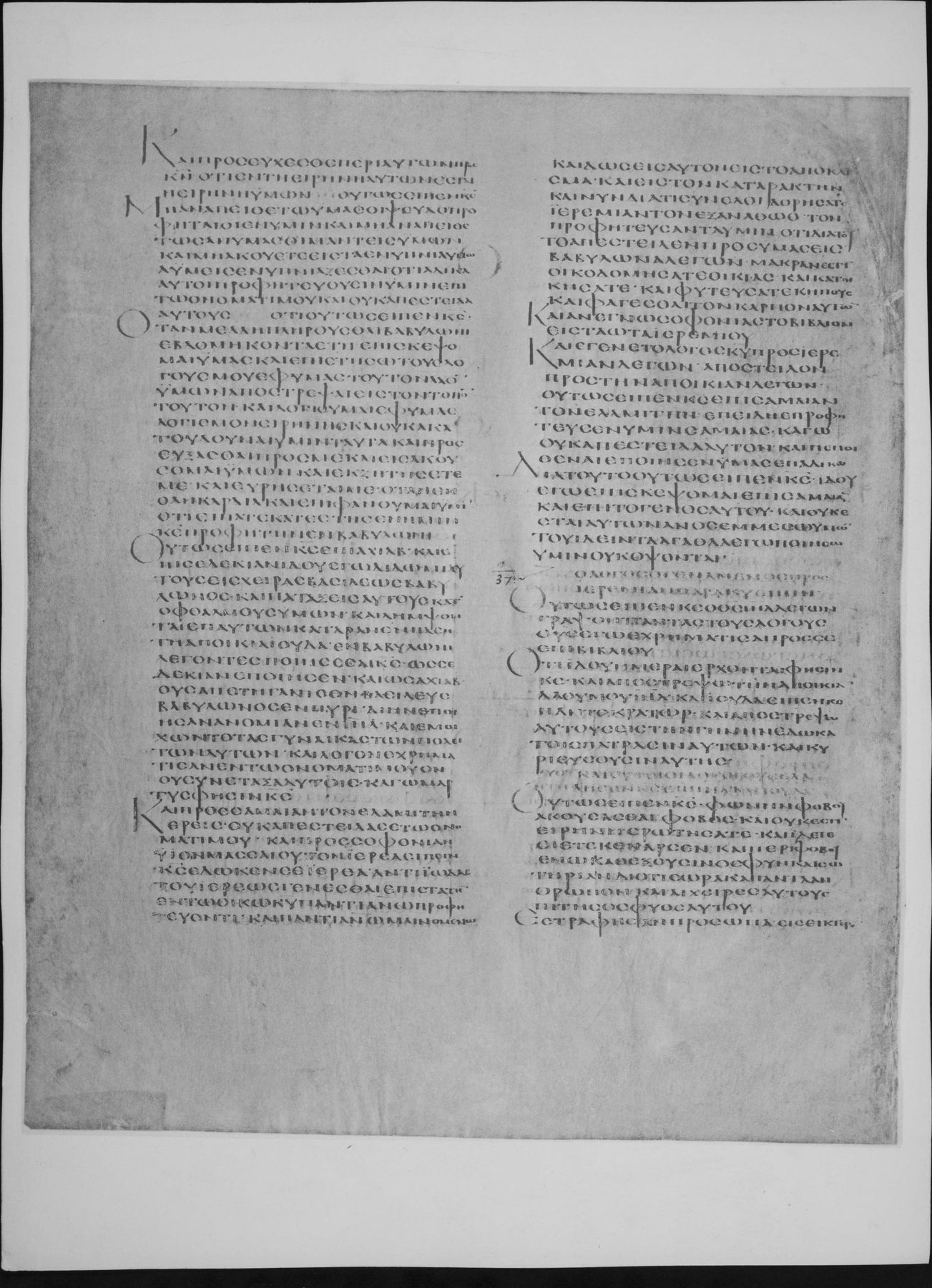
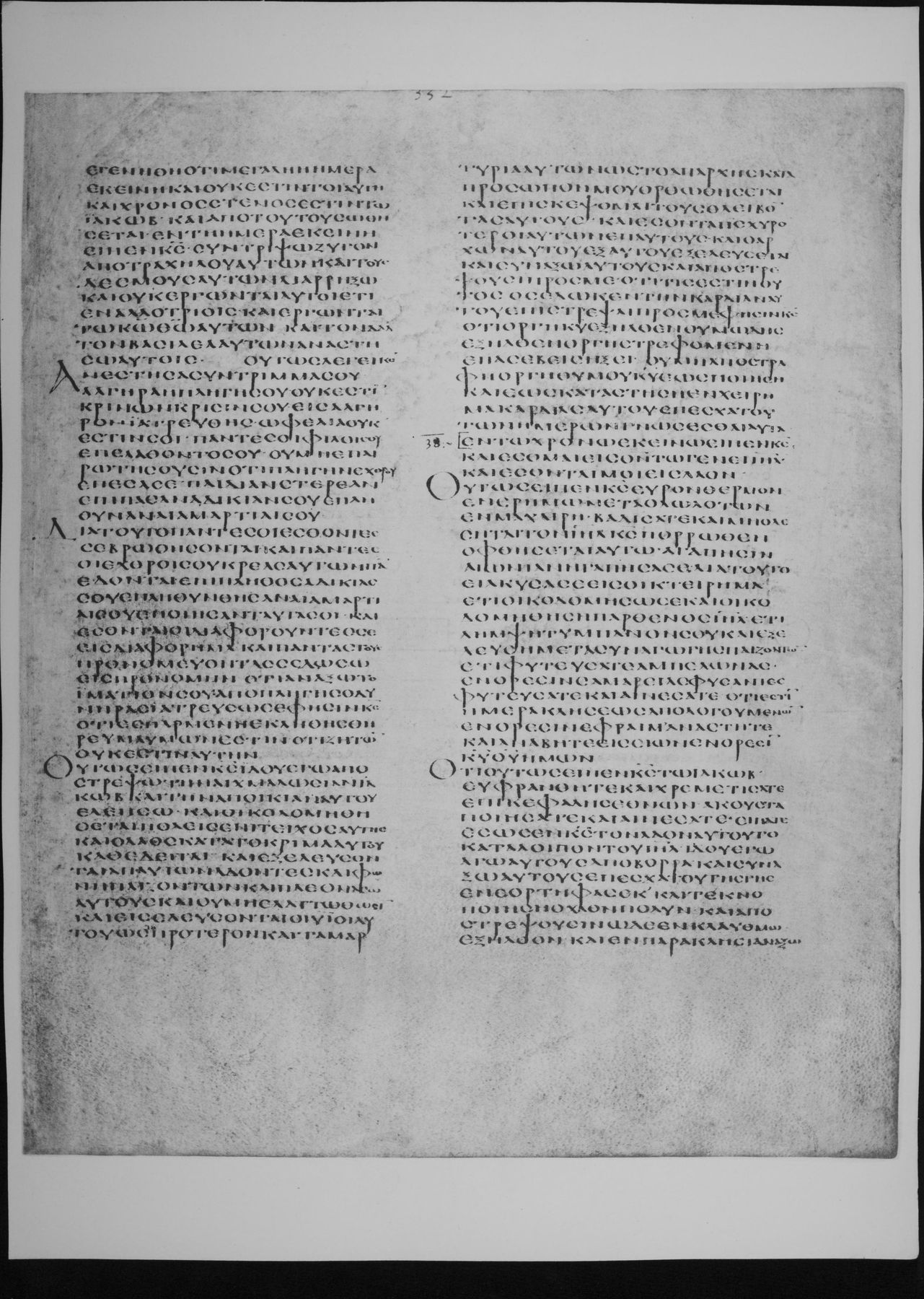
Jeremiah 37:1-6 is on fol. 351v (full-size facsimile of 1879-83, Internet Archive codex-alexandrinus leaf 727). The 1936 reduced facsimile prints beneath this page: Jer. xxxvi. 7-xxxvii. 6. Checked on the plate: the page begins inside Jeremiah 36:7 (first words read: ΚΑΙ ΠΡΟΣΕΥΞΑΣΘΕ ΠΕΡΙ ΑΥΤΩΝ ΠΡΟΣ ΚΝ ΟΤΙ ΕΝ ΕΙΡΗΝΗ ΑΥΤΩΝ ΕΣΤΑΙ ΕΙΡΗΝΗ ΥΜΩΝ). Jeremiah 37:6-8 is on fol. 352r (full-size facsimile of 1879-83, Internet Archive codex-alexandrinus leaf 728). The 1936 reduced facsimile prints beneath this page: Jer. xxxvii. 6-xxxviii. 9. Checked on the plate: the page begins inside Jeremiah 37:6 (first words read: ΕΓΕΝΗΘΗ ΟΤΙ ΜΕΓΑΛΗ Η ΗΜΕΡΑ ΕΚΕΙΝΗ ΚΑΙ ΟΥΚ ΕΣΤΙΝ ΤΟΙΑΥΤΗ ΚΑΙ ΧΡΟΝΟΣ ΣΤΕΝΟΣ ΕΣΤΙΝ ΤΩ ΙΑΚΩΒ).
1Ὁ λόγος ὁ γενόμενος πρὸς Ἰερεμίαν παρὰ Κυρίου εἰπεῖν 2Οὕτως εἶπεν Κύριος ὁ θεὸς Ἰσραὴλ λέγων Γράψον πάντας τοὺς λόγους οὓς ἐχρημάτισα πρὸς σὲ ἐπὶ βιβλίου. 3ὅτι ἰδοὺ ἡμέραι ἔρχονται, φησὶν Κύριος, καὶ ἀποστρέψω τὴν ἀποικίαν λαοῦ μου Ἰσραὴλ καὶ Ἰουδά, εἶπεν Κύριος, καὶ ἀποστρέψω αὐτοὺς εἰς τὴν γῆν ἣν ἔδωκα τοῖς πατράσιν αὐτῶν, καὶ κυριεύσουσιν αὐτῆς. 4Καὶ οὗτοι οἱ λόγοι οὓς ἐλάλησεν Κύριος ἐπὶ Ἰσραὴλ καὶ Ἰουδά. 5Οὕτως εἶπεν Κύριος Φωνὴν φόβου ἀκούσεσθε· φόβος, καὶ οὐκ ἔστιν εἰρήνη. 6ἐρωτήσατε καὶ ἴδετε εἰ ἔτεκεν ἄρσεν, καὶ περὶ φόβου ἐν ᾧ καθέξουσιν ὀσφὺν καὶ σωτηρίαν· διότι ἑώρακα πάντα ἄνθρωπον καὶ αἱ χεῖρες αὐτοῦ ἐπὶ τῆς ὀσφύος αὐτοῦ, ἐστράφησαν πρόσωπα, εἰς ἴκτερον ἐγενήθη. 7ὅτι μεγάλη ἡ ἡμέρα ἐκείνη καὶ οὐκ ἔστιν τοιαύτη, καὶ χρόνος στενός ἐστιν τῷ Ἰακώβ, 8καὶ ἀπὸ τούτου σωθήσεται. ἐν τῇ ἡμέρᾳ ἐκείνῃ, εἶπεν Κύριος, συντρίψω τὸν ζυγὸν ἀπὸ τοῦ τραχήλου αὐτῶν καὶ τοὺς δεσμοὺς αὐτῶν διαρρήξω, καὶ οὐκ ἐργῶνται αὐτοὶ ἀλλοτρίοις,
1The Word that came to Jeremias from the Lord, saying, 2Thus speaks the Lord God of Israel, saying, 3For, behold, the days come, saith the Lord, when I will bring back the captivity of my people Israel and Juda, said the Lord: and I will bring them back to the land which I gave to their fathers, and they shall be lords of it. 4And these are the Words which the Lord spoke concerning Israel and Juda: 5Thus said the Lord: Ye shall hear a sound of fear, there is fear, and there is not peace. 6Enquire, and see if a male has born a child? and ask concerning the fear, wherein they shall hold their loins, and look for safety: for I have seen every man, and his hands are on his loins; their faces are turned to paleness. 7For that day is great, and there is not such another; and it is a time of straitness to Jacob; but he shall be saved out of it. 8In that day, said the Lord, I will break the yoke off their neck, and will burst their bonds, and they shall no longer serve strangers:
Where on the image
Jeremiah 37:9-19 is on fol. 352r (full-size facsimile of 1879-83, Internet Archive codex-alexandrinus leaf 728). The 1936 reduced facsimile prints beneath this page: Jer. xxxvii. 6-xxxviii. 9. Checked on the plate: the page begins inside Jeremiah 37:6 (first words read: ΕΓΕΝΗΘΗ ΟΤΙ ΜΕΓΑΛΗ Η ΗΜΕΡΑ ΕΚΕΙΝΗ ΚΑΙ ΟΥΚ ΕΣΤΙΝ ΤΟΙΑΥΤΗ ΚΑΙ ΧΡΟΝΟΣ ΣΤΕΝΟΣ ΕΣΤΙΝ ΤΩ ΙΑΚΩΒ).
9καὶ ἐργῶνται τῷ κυρίῳ θεῷ αὐτῶν, καὶ τὸν Δαυεὶδ βασιλέα αὐτῶν ἀναστήσω αὐτοῖς. 12Οὕτως εἶπεν Κύριος Ἀνέστησα σύντριμμα, ἀλγηρὰ ἡ πληγή σου, 13οὐκ ἔστιν κρίνων κρίσιν σου, εἰς ἀλγηρὸν ἰατρεύθης, ὠφελία σοι οὐκ ἔστιν. 14πάντες οἱ φίλοι σου ἐπελάθοντό σου, οὐ μὴ ἐπερωτήσουσιν· ὅτι πληγὴν ἐχθροῦ ἔπαισά σε, παιδείαν στερεάν, ἐπὶ πᾶσαν ἀδικίαν σου ἐπλήθυναν αἱ ἁμαρτίαι σου. 16διὰ τοῦτο πάντες οἱ ἔσθοντές σε βρωθήσονται, καὶ πάντες οἱ ἐχθροί σου κρέας αὐτῶν πᾶν ἔδονται· ἐπὶ πλῆθος ἀδικιῶν σου ἐπληθύνθησαν αἱ ἁμαρτίαι σου, ἐποίησαν ταῦτά σοι· καὶ ἔσονται οἱ διαφοροῦντές σε εἰς διαφόρημα, καὶ πάντας τοὺς προνομεύοντάς σε δώσω εἰς προνομήν. 17ὅτι ἀνάξω τὸ ἴαμά σου, ἀπὸ πληγῆς ὀδυνηρᾶς ἰατρεύσω σε, φησὶν Κύριος· ὅτι ἐσπαρμένη ἐκλήθης· θήρευμα ὑμῶν ἐστίν, ὅτι ζητῶν οὐκ ἔστιν αὐτήν. 18οὕτως εἶπεν Κύριος Ἰδοὺ ἐγὼ ἀποστρέψω τὴν ἀποικίαν Ἰακώβ, καὶ αἰχμαλωσίαν αὐτοῦ ἐλεήσω· καὶ οἰκοδομηθήσεται πόλις ἐπὶ τὸ ὕψος αὐτῆς, καὶ ὁ λαὸς κατὰ τὸ κρίμα αὐτοῦ καθεδεῖται. 19καὶ ἐξελεύσονται ἀπ᾽ αὐτῶν ᾄδοντες, φωνὴ παιζόντων· καὶ πλεονάσω αὐτούς, καὶ οὐ μὴ ἐλαττωθῶσιν.
9but they shall serve the Lord their God; and I will raise up to them David their king. 12Thus saith the Lord; I have brought on thee destruction; thy stroke is painful. 13There is none to judge thy cause: thou hast been painfully treated for healing, there is no help for thee. 14All thy friends have forgotten thee; they shall not ask about thee at all, for I have smitten thee with the stroke of an enemy, even severe correction: thy sins have abounded above all thine iniquity. 16Therefore all that devour thee shall be eaten, and all thine enemies shall eat all their own flesh. Thy sins have abounded beyond the multitude of thine iniquities, therefore they have done these things to thee. And they that spoil thee shall become a spoil, and I will give up to be plundered all that have plundered thee. 17For I will bring about thy healing, I will heal thee of thy grievous wound, saith the Lord; for thou art called Dispersed: she is your prey, for no one seeks after her. 18Thus said the Lord; Behold, I will turn the captivity of Jacob, and will have pity upon his prisoners; and the city shall be built upon her hill, and the people shall settle after their manner. 19And there shall go forth from them singers, even the sound of men making merry: and I will multiply them, and they shall not at all be diminished.
Where on the image
Jeremiah 37:20-24 is on fol. 352r (full-size facsimile of 1879-83, Internet Archive codex-alexandrinus leaf 728). The 1936 reduced facsimile prints beneath this page: Jer. xxxvii. 6-xxxviii. 9. Checked on the plate: the page begins inside Jeremiah 37:6 (first words read: ΕΓΕΝΗΘΗ ΟΤΙ ΜΕΓΑΛΗ Η ΗΜΕΡΑ ΕΚΕΙΝΗ ΚΑΙ ΟΥΚ ΕΣΤΙΝ ΤΟΙΑΥΤΗ ΚΑΙ ΧΡΟΝΟΣ ΣΤΕΝΟΣ ΕΣΤΙΝ ΤΩ ΙΑΚΩΒ).
20καὶ εἰσελεύσονται οἱ υἱοὶ αὐτῶν ὡς τὸ πρότερον, καὶ τὰ μαρτύρια αὐτῶν κατὰ πρόσωπόν μου ὀρθωθήσεται· καὶ ἐπισκέψομαι τοὺς θλίβοντας αὐτούς, 21καὶ ἔσονται ἰσχυρότεροι αὐτοῦ ἐπ᾽ αὐτούς, καὶ ὁ ἄρχων αὐτοῦ ἐξ αὐτοῦ ἐξελεύσεται· καὶ συνάξω αὐτούς καὶ ἀποστρέψουσιν πρὸς μέ, ὅτι τίς ἐστιν οὗτος ὃς ἔδωκεν τὴν καρδίαν αὐτοῦ ἀποστρέψαι πρὸς μέ, φησὶν Κύριος; 23ὅτι ὀργὴ Κυρίου ἐξῆλθεν θυμώδης, ἐξῆλθεν ὀργὴ στρεφομένη, ἐπ᾽ ἀσεβεῖς ἥξει. 24οὐ μὴ ἀποστραφῇ ὀργὴ θυμοῦ Κυρίου ἕως ποιήσῃ, καὶ ἕως καταστήσῃ ἐγχείρημα καρδίας αὐτοῦ· ἐπ᾽ ἐσχάτων τῶν ἡμερῶν γνώσεσθε αὐτά.
20And their sons shall go in as before, and their testimonies shall be established before me, and I will visit them that afflict them. 21And their mighty ones shall be over them, and their prince shall proceed of themselves; and I will gather them, and they shall return to me: for who is this that has set his heart to return to me? saith the Lord. 23For the wrathful anger of the Lord has gone forth, even a whirlwind of anger has gone forth: it shall come upon the ungodly. 24The fierce anger of the Lord shall not return, until he shall execute it, and until he shall establish the purpose of his heart: in the latter days ye shall know these things.
Cite
Sources
- Source: Codex Alexandrinus (British Library Royal MS 1 D. VI) via the British Museum photographic facsimiles of 1879-83 and 1936 (Internet Archive) + Swete's Septuagint + Brenton's English (holding institution)
- Critical edition: H. B. Swete, The Old Testament in Greek according to the Septuagint (1909)
← previous · → next · v cycle view · l back to library