Jeremiah, Chapter 40 (Codex Alexandrinus)
Introduction
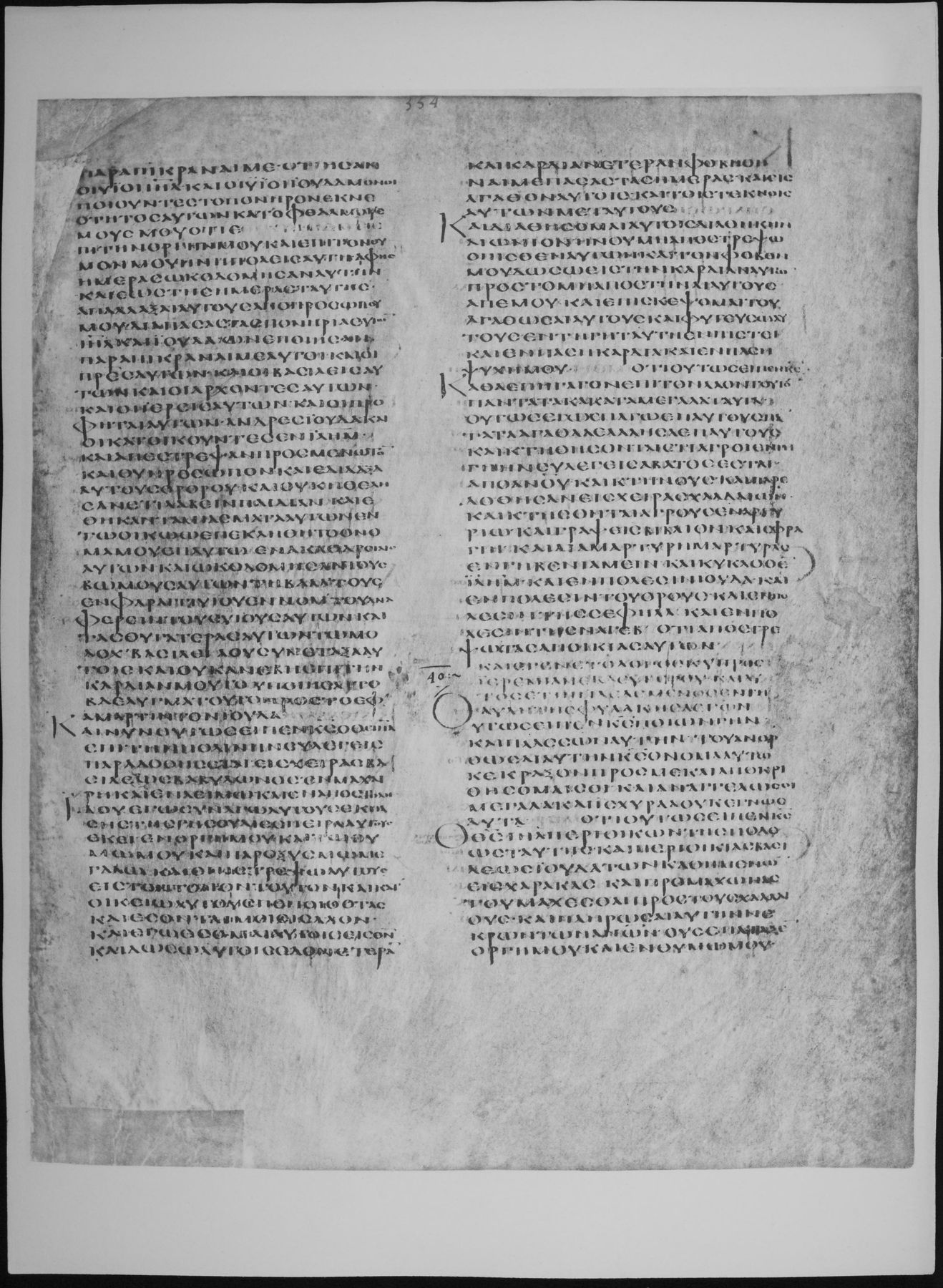
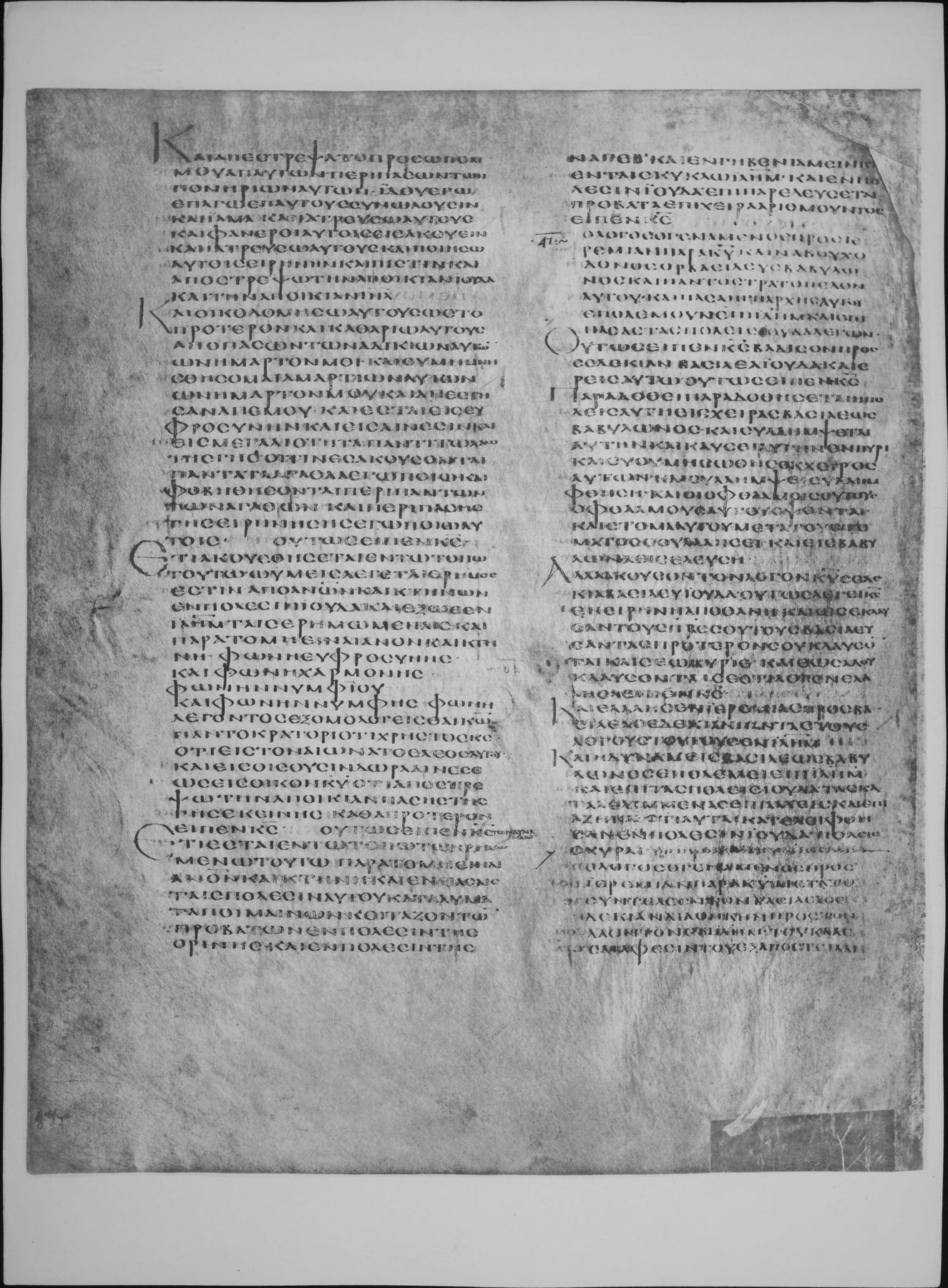
Jeremiah 40 in the Greek Old Testament (the Septuagint) as written in Codex Alexandrinus, a Greek Bible copied in the fifth century, probably in Egypt, and now in the British Library (Royal MS 1 D. VI, the second of its four volumes). It is one of the three great early codices of the whole Greek Bible, with Codex Vaticanus and Codex Sinaiticus.
This entry meets the strict three-criteria standard of the Theosis Library:
- Manuscript scan: the pages of Codex Alexandrinus carrying this chapter (fol. 354r, fol. 354v), from the full-size photographic (autotype) facsimile published by the British Museum in 1879-1883, as digitised on the Internet Archive. The verse range of every page comes from the reduced photographic facsimile of 1936, which prints it beneath each plate, and the opening words of every page were read on the plate to confirm the page and the verse it begins with. Each section links to the page or pages that hold its verses. Folio numbers are those written at the head of each leaf and visible on the plates.
- Original text: Swete's edition, which here prints the text of Codex Vaticanus (Vat. gr. 1209), the base of his edition, and gives the readings of Alexandrinus only in his apparatus. The Greek column is therefore Vaticanus' text; where Alexandrinus differs, the plate shows what Alexandrinus reads.
- English translation: Sir Lancelot C. L. Brenton, The Septuagint Version of the Old Testament (1844; 1851 edition), a translation of the Greek, public domain, from the eBible.org text.
How was this verified? (Provenance)
Where on the image
Jeremiah 40:1-5 is on fol. 354r (full-size facsimile of 1879-83, Internet Archive codex-alexandrinus leaf 732). The 1936 reduced facsimile prints beneath this page: Jer. xxxix. 29-xl. 5. Checked on the plate: the page begins inside Jeremiah 39:29 (first words read: ΠΑΡΑΠΙΚΡΑΝΑΙ ΜΕ ΟΤΙ ΗΣΑΝ ΟΙ ΥΙΟΙ ΙΣΡΑΗΛ ΚΑΙ ΟΙ ΥΙΟΙ ΙΟΥΔΑ ΜΟΝΟΙ ΠΟΙΟΥΝΤΕΣ ΤΟ ΠΟΝΗΡΟΝ). Jeremiah 40:5-8 is on fol. 354v (full-size facsimile of 1879-83, Internet Archive codex-alexandrinus leaf 733). The 1936 reduced facsimile prints beneath this page: Jer. xl. 5-xli. 9. Checked on the plate: the page begins inside Jeremiah 40:5 (first words read: ΚΑΙ ΑΠΕΣΤΡΕΨΑ ΤΟ ΠΡΟΣΩΠΟΝ ΜΟΥ ΑΠ ΑΥΤΩΝ ΠΕΡΙ ΠΑΣΩΝ ΤΩΝ ΠΟΝΗΡΙΩΝ ΑΥΤΩΝ).
1Καὶ ἐγένετο λόγος Κυρίου πρὸς Ἰερεμίαν δεύτερον, καὶ αὐτὸς ἦν ἔτι δεδεμένος ἐν τῇ αὐλῇ τῆς φυλακῆς, λέγων 2Οὕτως εἶπεν Κύριος, ποιῶν γῆν καὶ πλάσσων αὐτὴν τοῦ ἀνορθῶσαι αὐτήν, Κύριος ὄνομα αὐτῷ 3Κέκραξον πρὸς μὲ καὶ ἀποκριθήσομαί σοι, καὶ ἀπαγγελῶ σοι μεγάλα καὶ ἰσχυρὰ ἃ οὐκ ἔγνως αὐτά. 4ὅτι οὕτως εἶπεν Κύριος περὶ οἴκων τῆς πόλεως ταύτης καὶ περὶ οἴκων βασιλέως Ἰούδα τῶν καθῃρημένων εἰς χάρακας καὶ προμαχῶνας, 5τοῦ μάχεσθαι πρὸς τοὺς Χαλδαίους καὶ πληρῶσαι αὐτὴν τῶν νεκρῶν τῶν ἀνθρώπων οὓς ἐπάταξα ἐν ὀργῇ μου καὶ ἐν θυμῷ μου, καὶ ἀπέστρεψα τὸ πρόσωπόν μου ἀπ᾽ αὐτῶν περὶ πασῶν τῶν πονηριῶν αὐτῶν 6Ἰδοὺ ἐγὼ ἀνάγω αὐτῇ συνούλωσιν καὶ ἴαμα, καὶ φανερώσω αὐτοῖς καὶ ἰατρεύσω αὐτήν, καὶ εἰρήνην καὶ πίστιν· 7καὶ ἐπιστρέψω τὴν ἀποικίαν Ἰούδα καὶ τὴν ἀποικίαν Ἰσραήλ, καὶ οἰκοδομήσω αὐτοὺς καθὼς καὶ τὸ πρότερον, 8καὶ καθαριῶ αὐτοὺς ἀπὸ πασῶν τῶν ἀδικιῶν αὐτῶν ὧν ἡμάρτοσάν μοι, καὶ οὐ μὴ μνησθήσομαι ἁμαρτιῶν αὐτῶν ὧν ἥμαρτόν μοι καὶ ἀπέστησαν ἀπ᾽ ἐμοῦ.
1And the word of the Lord came to Jeremias the second time, when he was yet bound in the court of the prison, saying, 2Thus saith the Lord, who made the earth and formed it, to establish it; the Lord is his name; 3Cry to me, and I will answer thee, and I will declare to thee great and mighty things, which thou knowest not. 4For thus saith the Lord concerning the houses of this city, and concerning the houses of the king of Juda, which have been pulled down for mounds and fortifications, 5to fight against the Chaldeans, and to fill it with the corpses of men, whom I smote in mine anger and my wrath, and turned away my face from them, for all their wickedness: 6Behold, I bring upon her healing and cure, and I will show myself to them, and will heal her, and make both peace and security. 7And I will turn the captivity of Juda, and the captivity of Israel, and will build them, even as before. 8And I will cleanse them from all their iniquities, whereby they have sinned against me, and will not remember their sins, whereby they have sinned against me, and revolted from me.
Where on the image
Jeremiah 40:9-13 is on fol. 354v (full-size facsimile of 1879-83, Internet Archive codex-alexandrinus leaf 733). The 1936 reduced facsimile prints beneath this page: Jer. xl. 5-xli. 9. Checked on the plate: the page begins inside Jeremiah 40:5 (first words read: ΚΑΙ ΑΠΕΣΤΡΕΨΑ ΤΟ ΠΡΟΣΩΠΟΝ ΜΟΥ ΑΠ ΑΥΤΩΝ ΠΕΡΙ ΠΑΣΩΝ ΤΩΝ ΠΟΝΗΡΙΩΝ ΑΥΤΩΝ).
9καὶ ἔσται εἰς εὐφροσύνην καὶ αἴνεσιν καὶ εἰς μεγαλειότητα παντὶ τῷ λαῷ τῆς γῆς οἵτινες ἀκούσονται πάντα τὰ ἀγαθὰ ἃ ἐγὼ ποιήσω, καὶ φοβηθήσονται καὶ πικρανθήσονται περὶ πάντων τῶν ἀγαθῶν καὶ περὶ πάσης τῆς εἰρήνης ἧς ἐγὼ ποιήσω αὐτοῖς. 10οὕτως εἶπεν Κύριος Ἔτι ἀκουσθήσεται ἐν τῷ τόπῳ τούτῳ ᾧ ὑμεῖς λέγετε Ἔρημός ἐστιν ἀπὸ ἀνθρώπων καὶ κτηνῶν, ἐν πόλεσιν Ἰούδα καὶ ἔξωθεν Ἰερουσαλὴμ ταῖς ἠρημωμέναις παρὰ τὸ μὴ εἶναι ἄνθρωπον καὶ κτήνη, 11φωνὴ εὐφροσύνης καὶ φωνὴ χαρμοσύνης, φωνὴ νυμφίου καὶ φωνὴ νύμφης, φωνὴ λεγόντων Ἐξομολογεῖσθε Κυρίῳ Παντοκράτορι, ὅτι χρηστὸς Κύριος, ὅτι εἰς τὸν αἰῶνα τὸ ἔλεος αὐτοῦ· καὶ εἰσοίσουσιν δῶρα εἰς οἶκον Κυρίου, ὅτι ἀποστρέψω πᾶσαν τὴν ἀποικίαν τῆς γῆς ἐκείνης κατὰ τὸ πρότερον, εἶπεν Κύριος. 12οὕτως εἶπεν Κύριος τῶν δυνάμεων ὅτι Ἔσται ἐν τῷ τόπῳ τούτῳ τῷ ἐρήμῳ παρὰ τὸ μὴ εἶναι ἄνθρωπον καὶ κτῆνος, ἐν πάσαις ταῖς πόλεσιν αὐτοῦ καταλύματα ποιμένων κοιταζόντων πρόβατα, 13ἐν πόλεσιν τῆς ὀρινῆς καὶ ἐν πόλεσιν τῆς σεφηλὰ καὶ ἐν πόλεσιν τῆς νάγεβ καὶ ἐν γῇ Βενιαμεὶν καὶ ἐν ταῖς κύκλῳ Ἰερουσαλὴμ καὶ ἐν πόλεσιν Ἰούδα, ἔτι παρελεύσεται πρόβατα ἐπὶ χεῖρα ἀριθμοῦντος, εἶπεν Κύριος.
9And it shall be for joy and praise, and for glory to all the people of the earth, who shall hear all the good that I will do: and they shall fear and be provoked for all the good things and for all the peace which I will bring upon them. 10Thus saith the Lord; There shall yet be heard in this place, of which ye say, It is destitute of men and cattle, in the cities of Juda, and in the streets of Jerusalem, the places that have been made desolate for want of men and cattle, 11the voice of gladness, and the voice of joy, the voice of the bridegroom, and the voice of the bride, the voice of men saying, Give thanks to the Lord Almighty: for the Lord is good; for his mercy endures for ever: and they shall bring gifts into the house of the Lord; for I will turn all the captivity of that land as before, said the Lord. 12Thus saith the Lord of hosts; There shall yet be in this place, that is desert for want of man and beast, in all the cities thereof, resting-places for shepherds causing their flocks to lie down. 13In the cities of the hill country, and in the cities of the valley, and in the cities of the south, and in the land of Benjamin, and in the cities round about Jerusalem, and in the cities of Juda, flocks shall yet pass under the hand of him that numbers them, saith the Lord.
Cite
Sources
- Source: Codex Alexandrinus (British Library Royal MS 1 D. VI) via the British Museum photographic facsimiles of 1879-83 and 1936 (Internet Archive) + Swete's Septuagint + Brenton's English (holding institution)
- Critical edition: H. B. Swete, The Old Testament in Greek according to the Septuagint (1909)
← previous · → next · v cycle view · l back to library