Jeremiah, Chapter 8 (Codex Alexandrinus)
Introduction
Jeremiah 8 in the Greek Old Testament (the Septuagint) as written in Codex Alexandrinus, a Greek Bible copied in the fifth century, probably in Egypt, and now in the British Library (Royal MS 1 D. VI, the second of its four volumes). It is one of the three great early codices of the whole Greek Bible, with Codex Vaticanus and Codex Sinaiticus.
This entry meets the strict three-criteria standard of the Theosis Library:
- Manuscript scan: the pages of Codex Alexandrinus carrying this chapter (fol. 335r, fol. 335v), from the full-size photographic (autotype) facsimile published by the British Museum in 1879-1883, as digitised on the Internet Archive. The verse range of every page comes from the reduced photographic facsimile of 1936, which prints it beneath each plate, and the opening words of every page were read on the plate to confirm the page and the verse it begins with. Each section links to the page or pages that hold its verses. Folio numbers are those written at the head of each leaf and visible on the plates.
- Original text: Swete's edition, which here prints the text of Codex Vaticanus (Vat. gr. 1209), the base of his edition, and gives the readings of Alexandrinus only in his apparatus. The Greek column is therefore Vaticanus' text; where Alexandrinus differs, the plate shows what Alexandrinus reads.
- English translation: Sir Lancelot C. L. Brenton, The Septuagint Version of the Old Testament (1844; 1851 edition), a translation of the Greek, public domain, from the eBible.org text.
How was this verified? (Provenance)
Where on the image
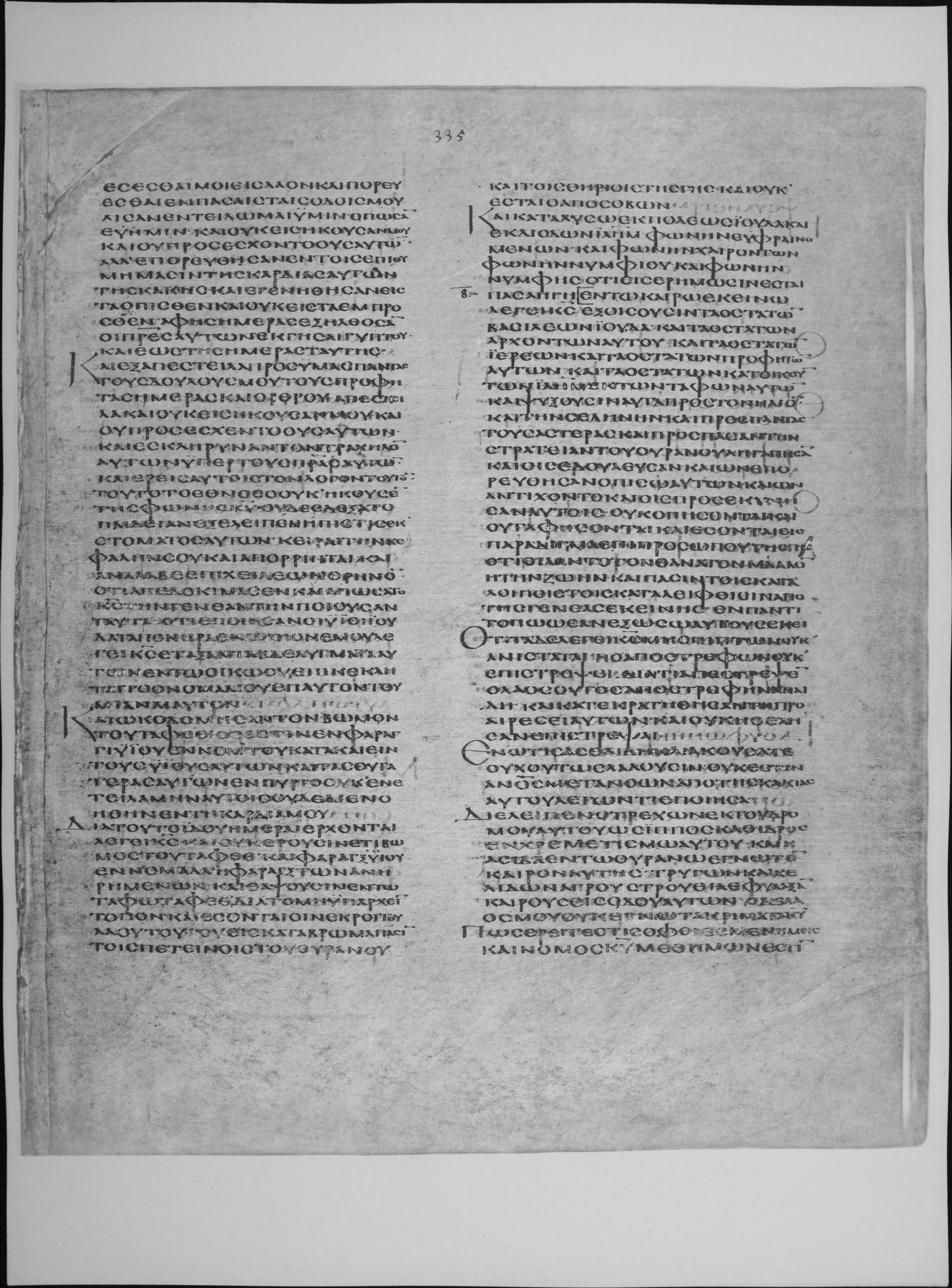
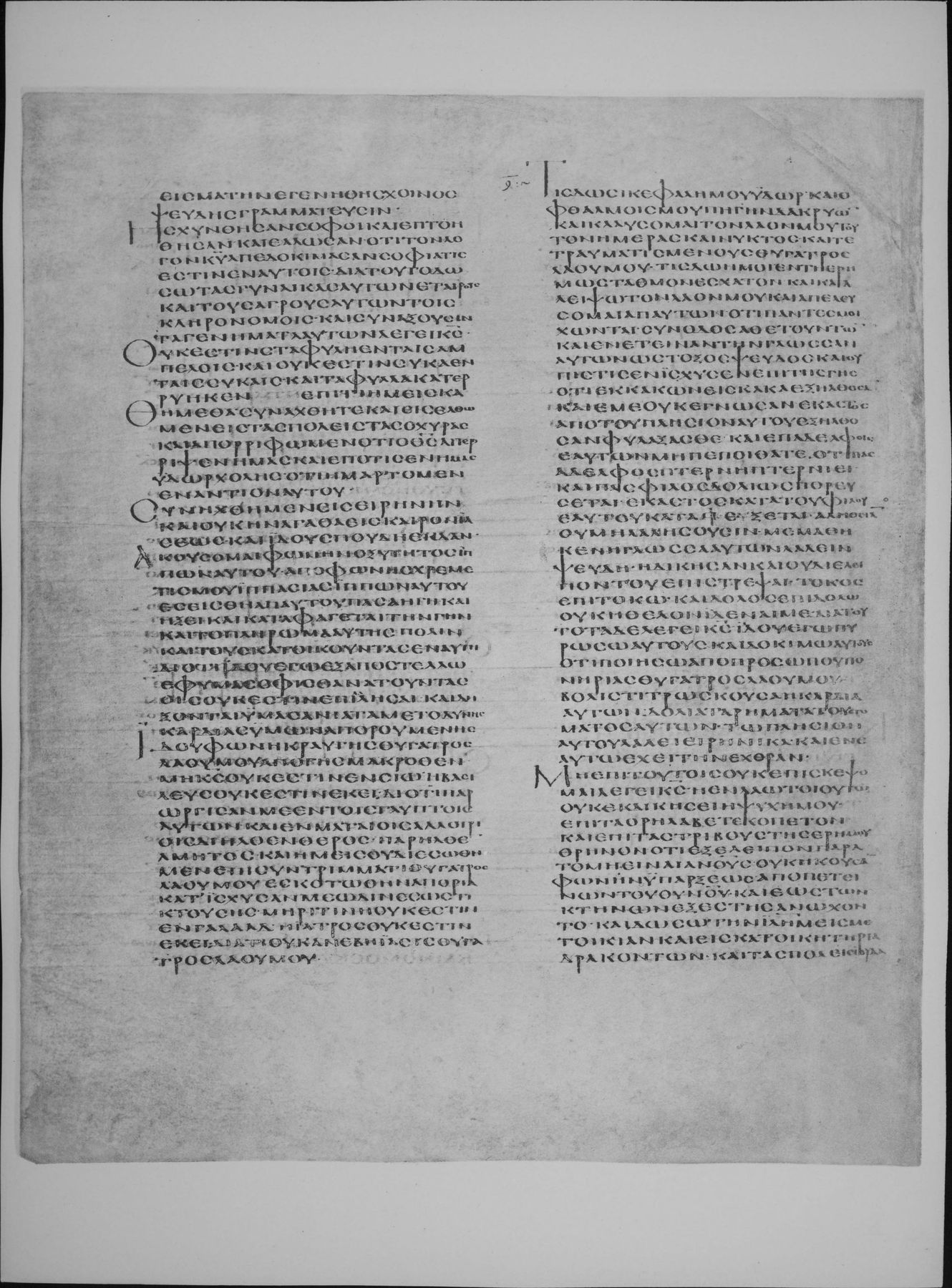
Jeremiah 8:1-8 is on fol. 335r (full-size facsimile of 1879-83, Internet Archive codex-alexandrinus leaf 694). The 1936 reduced facsimile prints beneath this page: Jer. vii. 23-viii. 8. Checked on the plate: the page begins inside Jeremiah 7:23 (first words read: ΚΑΙ ΕΣΕΣΘΕ ΜΟΙ ΕΙΣ ΛΑΟΝ ΚΑΙ ΠΟΡΕΥΕΣΘΕ ΕΝ ΠΑΣΑΙΣ ΤΑΙΣ ΟΔΟΙΣ ΜΟΥ ΑΙΣ ΑΝ ΕΝΤΕΙΛΩΜΑΙ ΥΜΙΝ). Jeremiah 8:8 is on fol. 335v (full-size facsimile of 1879-83, Internet Archive codex-alexandrinus leaf 695). The 1936 reduced facsimile prints beneath this page: Jer. viii. 8-ix. 11. Checked on the plate: the page begins inside Jeremiah 8:8 (first words read: ΕΙΣ ΜΑΤΗΝ ΕΓΕΝΗΘΗ ΣΧΟΙΝΟΣ ΨΕΥΔΗΣ ΓΡΑΜΜΑΤΕΥΣΙΝ ΗΣΧΥΝΘΗΣΑΝ ΣΟΦΟΙ ΚΑΙ ΕΠΤΟΗΘΗΣΑΝ).
1Ἐν τῷ καιρῷ ἐκείνῳ, λέγει Κύριος, ἐξοίσουσιν τὸ ὀστᾶ τῶν βασιλέων Ἰούδα καὶ τὰ ὀστᾶ τῶν ἀρχόντων αὐτοῦ καὶ τὰ ὀστᾶ τῶν ἱερέων καὶ τὰ ὀστᾶ προφητῶν καὶ τὰ ὀστᾶ τῶν κατοικούντων ἐν Ἰερουσαλὴμ ἐκ τῶν τάφων αὐτῶν, 2καὶ ψύξουσιν αὐτὰ πρὸς τὸν ἥλιον καὶ τὴν σελήνην καὶ πρὸς πάντας τοὺς ἀστέρας καὶ πρὸς πᾶσαν τὴν στρατιὰν τοῦ οὐρανοῦ, ἃ ἠγάπησαν καὶ οἷς ἐδούλευσαν καὶ ὧν ἐπορεύθησαν ὀπίσω αὐτῶν καὶ ὧν ἀντείχοντο καὶ οἷς προσεκύνησαν αὐτοῖς· οὐ κοπήσονται καὶ οὐ ταφήσονται, καὶ ἔσονται εἰς παράδειγμα ἐπὶ προσώπου τῆς γῆς, 3ὅτι εἵλοντο τὸν θάνατον ἢ τὴν ζωήν, καὶ πᾶσιν τοῖς καταλοίποις τοῖς καταλειφθεῖσιν ἀπὸ τῆς γενεᾶς ἐκείνης, ἐν παντὶ τόπῳ οὗ ἐὰν ἐξώσω αὐτοὺς ἐκεῖ. 4Ὅτι τάδε λέγει Κύριος Μὴ ὁ πίπτων οὐκ ἀνίσταται; ἢ ὁ ἀποστρέφων οὐκ ἀναστρέφει; 5διὰ τί ἀπέστρεψεν ὁ λαός μου οὗτος ἀποστροφὴν ἀναιδῆ, καὶ κατεκρατήθησαν ἐν τῇ προαιρέσει αὐτῶν καὶ οὐκ ἠθέλησαν τοῦ ἐπιστρέψαι; 6ἐνωτίσασθε δὴ καὶ ἀκούσατε· οὐχ οὕτως λαλήσουσιν Οὐκ ἔστιν ἄνθρωπος μετανοῶν ἀπὸ τῆς κακίας αὐτοῦ, λέγων Τί ἐποίησα; διέλιπεν ὁ τρέχων ἀπὸ τοῦ δρόμου αὐτοῦ ὡς ἵππος κάθιδρος ἐν χρεμετισμῷ αὐτοῦ. 7καὶ ἡ ἁσιδὰ ἐν τῷ οὐρανῷ ἔγνω τὸν καιρὸν αὐτῆς· τρυγὼν καὶ χελιδὼν ἀγροῦ, στρουθία ἐφύλαξαν καιροὺς εἰσόδων ἑαυτῶν· ὁ δὲ λαός μου οὐκ ἔγνω τὰ κρίματα Κυρίου. 8πῶς ἐρεῖτε ὅτι Σοφοί ἐσμεν ἡμεῖς, καὶ νόμος Κυρίου ἐστὶν μεθ᾽ ἡμῶν; εἰς μάτην ἐγενήθη σχοῖνος ψευδὴς γραμματεῦσιν.
1At that time, saith the Lord, they shall bring out the bones of the kings of Juda, and the bones of his princes, and the bones of the priests, and the bones of the prophets, and the bones of the inhabitants of Jerusalem, out of their graves; 2and they shall spread them out to the sun, and the moon, and to all the stars, and to all the host of heaven, which they have loved, and which they have served, and after which they have walked, and to which they have held, and which they have worshipped; they shall not be mourned for, neither shall they be buried; but they shall be for an example on the face of the earth, 3because they chose death rather than life, even to all the remnant that are left of that family, in every place whither I shall drive them out. 4For thus saith the Lord, Shall not he that falls arise? or he that turns away, shall he not turn back again? 5Wherefore has this my people turned away with a shameless revolting, and strengthened themselves in their wilfulness, and refused to return? 6Hearken, I pray you, and hear: will they not speak thus, There is no man that repents of his wickedness, saying, What have I done? the runner has failed from his course, as a tired horse in his neighing. 7Yea, the stork in the heaven knows her time, also the turtle-dove and wild swallow; the sparrows observe the times of their coming in; but this my people knows not the judgments of the Lord. 8How will ye say, We are wise, and the law of the Lord is with us? In vain have the scribes used a false pen.
Where on the image
Jeremiah 8:9-18 is on fol. 335v (full-size facsimile of 1879-83, Internet Archive codex-alexandrinus leaf 695). The 1936 reduced facsimile prints beneath this page: Jer. viii. 8-ix. 11. Checked on the plate: the page begins inside Jeremiah 8:8 (first words read: ΕΙΣ ΜΑΤΗΝ ΕΓΕΝΗΘΗ ΣΧΟΙΝΟΣ ΨΕΥΔΗΣ ΓΡΑΜΜΑΤΕΥΣΙΝ ΗΣΧΥΝΘΗΣΑΝ ΣΟΦΟΙ ΚΑΙ ΕΠΤΟΗΘΗΣΑΝ).
9ᾐσχύνθησαν σοφοὶ καὶ ἐπτοήθησαν καὶ ἑάλωσαν, ὅτι τὸν νόμον Κυρίου ἀπεδοκίμασαν· σοφία τίς ἐστιν ἐν αὐτοῖς; 10διὰ τοῦτο δώσω τὰς γυναῖκας αὐτῶν ἑτέροις, καὶ τοὺς ἀγροὺς αὐτῶν τοῖς κληρονόμοις, 13καὶ συνάξουσιν τὰ γενήματα αὐτῶν, λέγει Κύριος· οὐκ ἔστιν σταφυλὴ ἐν ταῖς ἀμπέλοις, καὶ οὐκ ἔστιν σῦκα ἐν ταῖς συκαῖς, καὶ τὰ φύλλα κατερρύηκεν. 14ἐπὶ τί ἡμεῖς καθήμεθα; συνάχθητε καὶ εἰσέλθωμεν εἰς τὰς πόλεις τὰς ὀχυρὰς καὶ ἀποριφῶμεν, ὅτι ὁ θεὸς ἀπέριψεν ἡμᾶς καὶ ἐπότισεν ἡμᾶς ὕδωρ χολῆς, ὅτι ἡμάρτομεν ἐναντίον αὐτοῦ. 15συνήχθημεν εἰς εἰρήνην, καὶ οὐκ ἦν ἀγαθά· εἰς καιρὸν ἰάσεως, καὶ ἰδοὺ σπουδή. 16ἐκ Δὰν ἀκουσόμεθα φωνὴν ὀξύτητος ἵππων αὐτοῦ, ἀπὸ φωνῆς χρεμετισμοῦ ἱππασίας ἵππων αὐτοῦ ἐσείσθη πᾶσα ἡ γῆ· καὶ ἥξει καὶ καταφάγεται τὴν γῆν καὶ τὸ πλήρωμα αὐτῆς, πόλιν καὶ τοὺς κατοικοῦντας ἐν αὐτῇ. 17διότι ἰδοὺ ἐγὼ ἐξαποστέλλω εἰς ὑμᾶς ὄφεις θανατοῦντας, οἷς οὐκ ἔστιν ἐπᾷσαι, καὶ δήξονται ὑμᾶς 18ἀνίατα μετ᾽ ὀδύνης, καρδίας ὑμῶν ἀπορουμένης.
9The wise men are ashamed, and alarmed, and taken; because they have rejected the word of the Lord; what wisdom is there in them? 10Therefore will I give their wives to others, and their fields to new inheritors; and they shall gather their fruits, saith the Lord. 13There are no grapes on the vines, and there are no figs on the fig-trees, and the leaves have fallen off. 14Why do we sit still? assemble yourselves, and let us enter into the strong cities, and let us be cast out there: for God has cast us out, and made us drink water of gall, because we have sinned before him. 15We assembled for peace, but there was no prosperity; for a time of healing, but behold anxiety. 16We shall hear the neighing of his swift horses out of Dan: the whole land quaked at the sound of the neighing of his horses; and he shall come, and devour the land and the fulness of it; the city, and them that dwell in it. 17For, behold, I send forth against you deadly serpents, which cannot be charmed, and they shall bite you 18mortally with the pain of your distressed heart.
Where on the image
Jeremiah 8:19-22 is on fol. 335v (full-size facsimile of 1879-83, Internet Archive codex-alexandrinus leaf 695). The 1936 reduced facsimile prints beneath this page: Jer. viii. 8-ix. 11. Checked on the plate: the page begins inside Jeremiah 8:8 (first words read: ΕΙΣ ΜΑΤΗΝ ΕΓΕΝΗΘΗ ΣΧΟΙΝΟΣ ΨΕΥΔΗΣ ΓΡΑΜΜΑΤΕΥΣΙΝ ΗΣΧΥΝΘΗΣΑΝ ΣΟΦΟΙ ΚΑΙ ΕΠΤΟΗΘΗΣΑΝ).
19ἰδοὺ φωνὴ κραυγῆς θυγατρὸς λαοῦ μου ἀπὸ γῆς μακρόθεν· μὴ Κύριος οὐκ ἔστιν ἐν Σειών; ἢ βασιλεὺς οὐκ ἔστιν ἐκεῖ; διὰ τί παρώργισάν με ἐν τοῖς γλυπτοῖς αὐτῶν καὶ ἐν ματαίοις ἀλλοτρίοις; 20διῆλθεν θέρος, παρῆλθεν ἄμητος, καὶ ἡμεῖς οὐ διεσώθημεν. 21ἐπὶ συντρίμματι θυγατρὸς λαοῦ μου ἐσκοτώθην· ἀπορίᾳ κατίσχυσάν με ὠδῖνες ὡς τικτούσης. 22μὴ ῥητίνη οὐκ ἔστιν ἐν Γαλαάδ, ἢ ἰατρὸς οὐκ ἔστιν ἐκεῖ; διὰ τί οὐκ ἀνέβη ἴασις θυγατρὸς λαοῦ μου;
19Behold, there is a sound of the cry of the daughter of my people from a land afar off: Is not the Lord in Sion? is there not a king there? because they have provoked me with their graven images, and with strange vanities. 20The summer is gone, the harvest is past, and we are not saved. 21For the breach of the daughter of my people I have been saddened: in my perplexity pangs have seized upon me as of a woman in travail. 22And is there no balm in Galaad, or is there no physician there? why has not the healing of the daughter of my people taken place?
Cite
Sources
- Source: Codex Alexandrinus (British Library Royal MS 1 D. VI) via the British Museum photographic facsimiles of 1879-83 and 1936 (Internet Archive) + Swete's Septuagint + Brenton's English (holding institution)
- Critical edition: H. B. Swete, The Old Testament in Greek according to the Septuagint (1909)
← previous · → next · v cycle view · l back to library