Joshua, Chapter 4 (Codex Alexandrinus)
Introduction
Joshua 4 in the Greek Old Testament (the Septuagint) as written in Codex Alexandrinus, a Greek Bible copied in the fifth century, probably in Egypt, and now in the British Library (Royal MS 1 D. V, the first of its four volumes). It is one of the three great early codices of the whole Greek Bible, with Codex Vaticanus and Codex Sinaiticus, and for Genesis 1:1-46:28, which Codex Vaticanus has lost, it is the oldest surviving complete Greek text (older papyri such as the Berlin Genesis papyrus and Chester Beatty 961 survive only in part).
This entry meets the strict three-criteria standard of the Theosis Library:
- Manuscript scan: the pages of Codex Alexandrinus carrying this chapter (fol. 126v, fol. 127r), from the full-size photographic (autotype) facsimile published by the British Museum in 1879-1883, as digitised on the Internet Archive. The verse range of every page comes from the reduced photographic facsimile of 1915, which prints it beneath each plate, and the opening words of every page were read on the plate to confirm the page and the verse it begins with. Each section links to the page or pages that hold its verses. Folio numbers are those written at the head of each leaf and visible on the plates.
- Original text: Swete's edition, which here prints the text of Codex Vaticanus (Vat. gr. 1209), the base of his edition, and gives the readings of Alexandrinus only in his apparatus. The Greek column is therefore Vaticanus' text; where Alexandrinus differs, the plate shows what Alexandrinus reads.
- English translation: Sir Lancelot C. L. Brenton, The Septuagint Version of the Old Testament (1844; 1851 edition), a translation of the Greek, public domain, from the eBible.org text.
How was this verified? (Provenance)
Where on the image
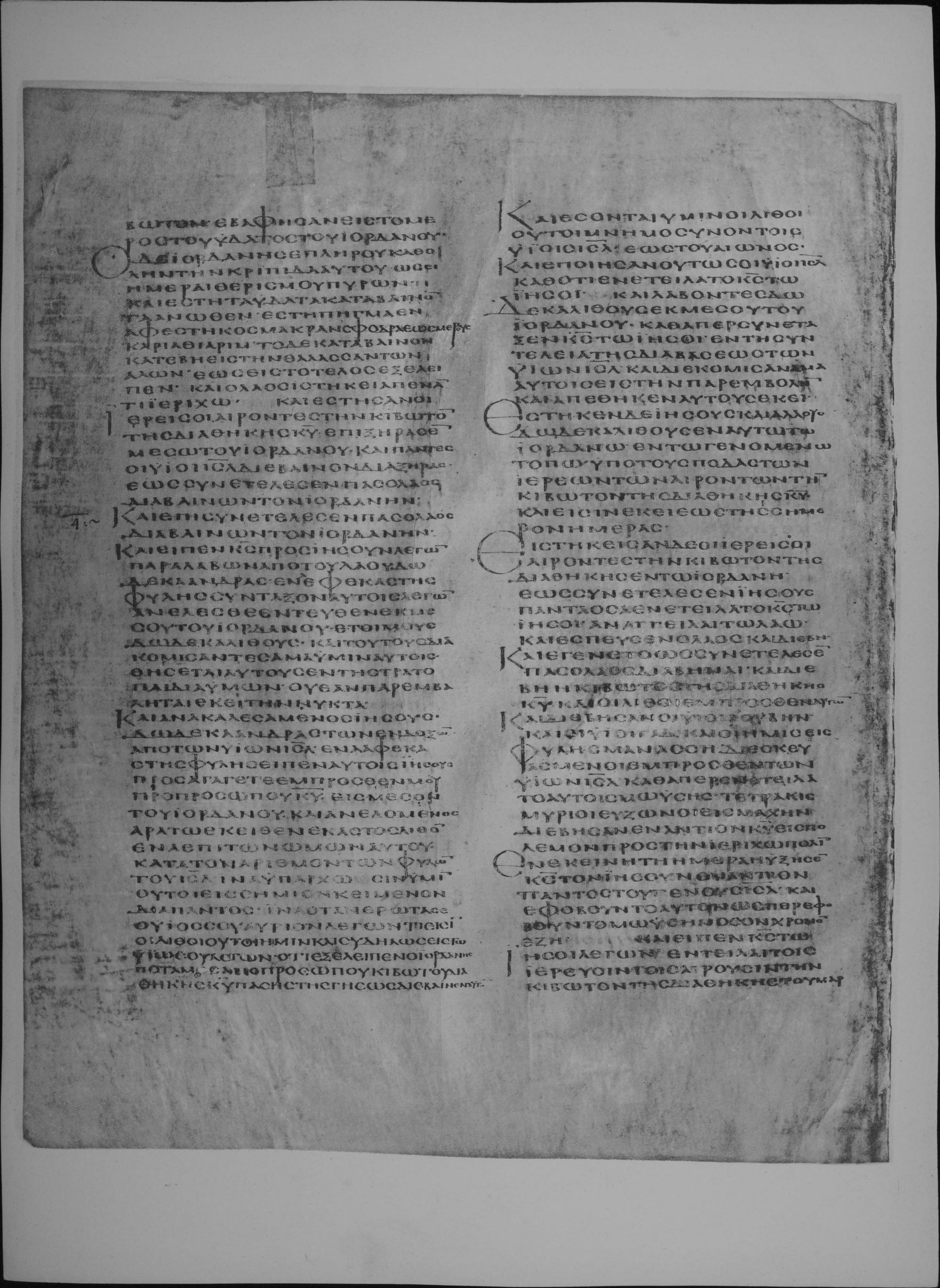
Joshua 4:1-8 is on fol. 126v (full-size facsimile of 1879-83, Internet Archive codex-alexandrinus leaf 273). The 1915 reduced facsimile prints beneath this page: Jos. iii. 15-iv. 16. Checked on the plate: the page begins inside Joshua 3:15 (first words read: ΚΙΒΩΤΟΝ ΕΒΑΦΗΣΑΝ ΕΙΣ ΤΟ ΜΕΡΟΣ ΤΟΥ ΥΔΑΤΟΣ ΤΟΥ ΙΟΡΔΑΝΟΥ Ο ΔΕ ΙΟΡΔΑΝΗΣ ΕΠΛΗΡΟΥ).
1Καὶ ἐπεὶ συνετέλεσεν πᾶς ὁ λαὸς διαβαίνων τὸν Ἰορδάνην, καὶ εἶπεν Κύριος τῷ Ἰησοῖ λέγων 2Παραλαβὼν ἄνδρας ἀπὸ τοῦ λαοῦ, ἕνα ἀφ᾽ ἑκάστης φυλῆς, 3σύνταξον αὐτοῖς Καὶ ἀνέλεσθε ἐκ μέσου τοῦ Ἰορδάνου ἑτοίμους δώδεκα λίθους, καὶ τούτους διακομίσαντες ἅμα ὑμῖν καὶ αὐτοῖς θέτε αὐτοὺς ἐν τῇ στρατοπεδίᾳ ὑμῶν, οὗ ἐὰν παρεμβάλητε ἐκεῖ τὴν νύκτα. 4καὶ ἀνακαλεσάμενος Ἰησοῦς δώδεκα ἄνδρας τῶν ἐνδόξων ἀπὸ τῶν υἱῶν Ἰσραήλ, ἕνα ἀφ᾽ ἑκάστης φυλῆς, 5εἶπεν αὐτοῖς Προσαγάγετε ἔμπροσθέν μου πρὸ προσώπου Κυρίου εἰς μέσον τοῦ Ἰροδάνου, καὶ ἀνελόμενος ἐκεῖθεν ἕκαστος λίθον ἀράτω ἐπὶ τῶν ὤμων αὐτοῦ κατὰ τὸν ἀριθμὸν τῶν δώδεκα φυλῶν τοῦ Ἰσραήλ. 6ἵνα ὑπάρχωσιν ὑμῖν οὗτοι εἰς σημεῖον κείμενον διὰ παντός· ἵνα ὅταν ἐρωτᾷ σε ὁ υἱός σου αὔριον λέγων Τί εἰσιν οἱ λίθοι οὗτοι ἡμῖν; 7καὶ σὺ δηλώσεις τῷ υἱῷ σου λέγων ὅτι Ἐξέλιπεν ὁ Ἰορδάνης ποταμὸς ἀπὸ προσώπου κιβωτοῦ διαθήκης Κυρίου πάσης τῆς γῆς, ὡς διέβαινεν αὐτόν. καὶ ἔσονται οἱ λίθοι οὗτοι ὑμῖν μνημόσυνον τοῖς υἱοῖς Ἰσραὴλ ἕως τοῦ αἰῶνος. 8καὶ ἐποίησαν οὕτως οἱ υἱοὶ Ἰσραὴλ καθότι ἐνετείλατο Κύριος τῷ Ἰησοῖ· καὶ λαβόντες δώδεκα λίθους ἐκ μέσου τοῦ Ἰορδάνου, καθάπερ συνέταξεν Κύριος τῷ Ἰησοῖ ἐν τῇ συντελείᾳ τῆς διαβάσεως τῶν υἱῶν Ἰσραήλ, καὶ διεκόμισαν ἅμα ἑαυτοῖς εἰς τὴν παρεμβολὴν καὶ ἀπέθηκαν ἐκεῖ.
1And when the people had completely passed over Jordan, the Lord spoke to Joshua, saying, 2Take men from the people, one of each tribe, 3and charge them; and ye shall take out of the midst of Jordan twelve fit stones, and having carried them across together with yourselves, place them in your camp, where ye shall encamp for the night. 4And Joshua having called twelve men of distinction among the children of Israel, one of each tribe, 5said to them, Advance before me in the presence of the Lord into the midst of Jordan, and each having taken up a stone from thence, let him carry it on his shoulders, according to the number of the twelve tribes of Israel: 6that these may be to you continually for an appointed sign, that when thy son asks thee in future, saying, What are these stones to us? 7then thou mayest explain to thy son, saying, The river Jordan was dried up from before the ark of the covenant of the Lord of the whole earth, when it passed it: and these stones shall be for a memorial for you for the children of Israel for ever. 8And the children of Israel did so, as the Lord commanded Joshua; and they took up twelve stones out of the midst of Jordan, (as the Lord commanded Joshua, when the children of Israel had completely passed over,) and carried these stones with them into the camp, and laid them down there.
Where on the image
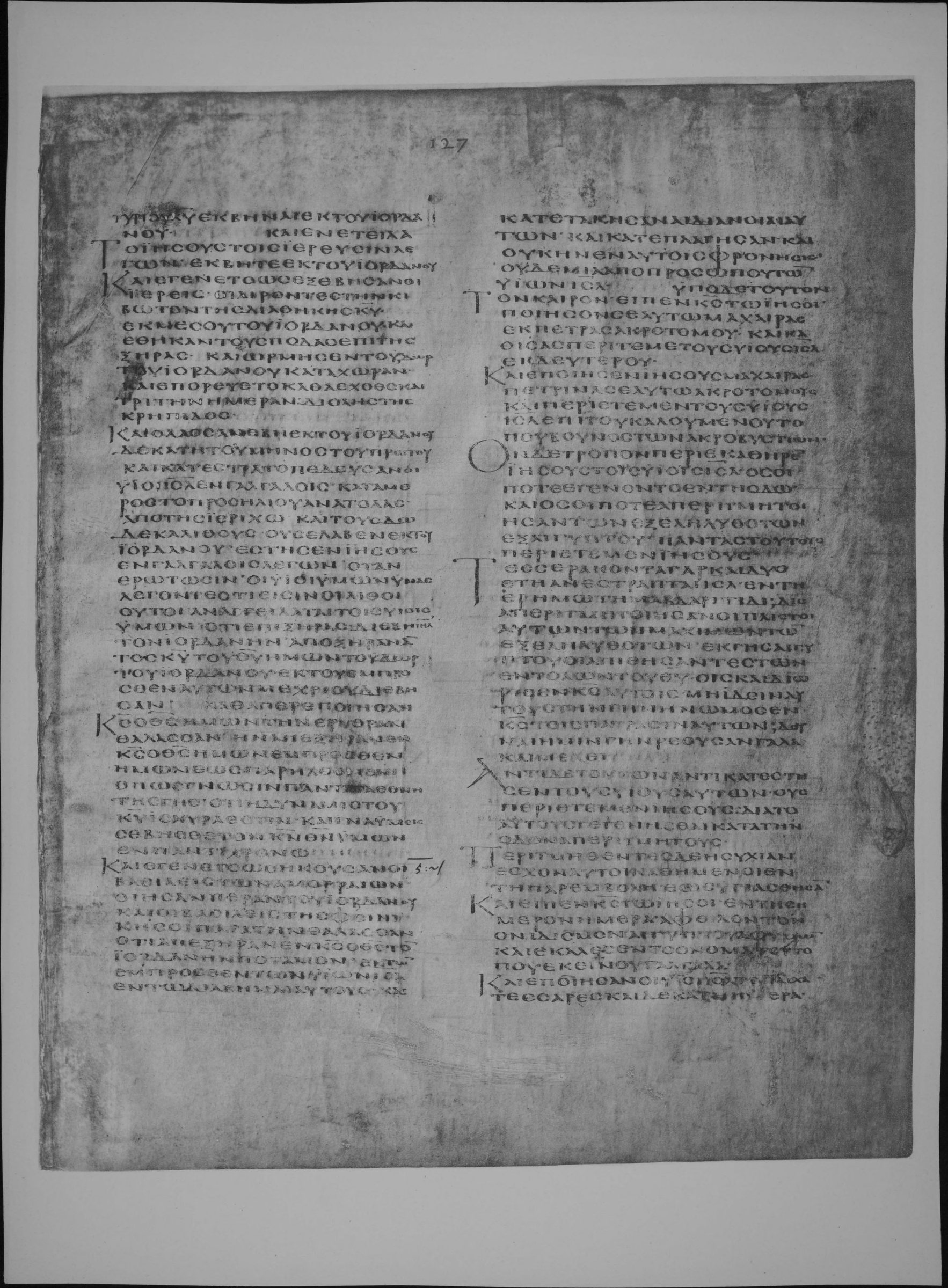
Joshua 4:9-16 is on fol. 126v (full-size facsimile of 1879-83, Internet Archive codex-alexandrinus leaf 273). The 1915 reduced facsimile prints beneath this page: Jos. iii. 15-iv. 16. Checked on the plate: the page begins inside Joshua 3:15 (first words read: ΚΙΒΩΤΟΝ ΕΒΑΦΗΣΑΝ ΕΙΣ ΤΟ ΜΕΡΟΣ ΤΟΥ ΥΔΑΤΟΣ ΤΟΥ ΙΟΡΔΑΝΟΥ Ο ΔΕ ΙΟΡΔΑΝΗΣ ΕΠΛΗΡΟΥ). Joshua 4:16 is on fol. 127r (full-size facsimile of 1879-83, Internet Archive codex-alexandrinus leaf 274). The 1915 reduced facsimile prints beneath this page: Jos. iv. 16-v. 10. Checked on the plate: the page begins inside Joshua 4:16 (first words read: ΤΟΥ ΜΑΡΤΥΡΙΟΥ ΚΥ ΕΚΒΗΝΑΙ ΕΚ ΤΟΥ ΙΟΡΔΑΝΟΥ ΚΑΙ ΕΝΕΤΕΙΛΑΤΟ ΙΗΣΟΥΣ ΤΟΙΣ ΙΕΡΕΥΣΙΝ).
9ἔστησεν δὲ Ἰησοῦς καὶ ἄλλους δώδεκα λίθους ἐν αὐτῷ τῷ Ἰορδάνῃ ἐν τῷ γενομένῳ τόπῳ ὑπὸ τοὺς πόδας τῶν ἱερέων τῶν αἰρόντων τὴν κιβωτὸν τῆς διαθήκης Κυρίου, καὶ εἰσὶν ἐκεῖ ἕως τῆς σήμερον ἡμέρας. 10ἱστήκεισαν δὲ οἱ ἱερεῖς οἱ αἴροντες τὴν κιβωτὸν τῆς διαθήκης ἐν τῷ Ἰορδάνῃ ἕως οὗ συνετέλεσεν Ἰησοῦς πάντα ἃ ἐνετείλατο Κύριος ἀναγγεῖλαι τῷ λαῷ· καὶ ἔσπευσεν ὁ λαός, καὶ διέβησαν. 11καὶ ἐγένετο ὡς συνετέλεσεν πᾶς ὁ λαὸς διαβῆναι, καὶ διέβη ἡ κιβωτὸς τῆς διαθήκης Κυρίου, καὶ οἱ λίθοι ἔμπροσθεν αὐτῶν. 12καὶ διέβησαν οἱ υἱοὶ Ῥουβὴν καὶ οἱ υἱοὶ Γὰδ καὶ οἱ ἡμίσεις φυλῆς Μανασσὴ διεσκευασμένοι ἔμπροσθεν τῶν υἱῶν Ἰσραήλ, καθάπερ ἐνετείλατο αὐτοῖς Μωυσῆς. 13τετρακισμύριοι εὔζωνοι εἰς μάχην διέβησαν ἐναντίον Κυρίου εἰς πόλεμον πρὸς τὴν Ἰερειχὼ πόλιν. 14ἐν ἐκείνῃ τῇ ἡμέρᾳ ηὔξησεν Κύριος τὸν Ἰησοῦν ἐναντίον τοῦ παντὸς γένους Ἰσραήλ, καὶ ἐφοβοῦντο αὐτὸν ὥσπερ Μωυσῆν, ὅσον χρόνον ἔζη. 15Καὶ εἶπεν Κύριος τῷ Ἰησοῖ λέγων 16Ἔντειλαι τοῖς ἱερεῦσιν τοῖς αἴρουσιν τὴν κιβωτὸν τῆς διαθήκης τοῦ μαρτυρίου Κυρίου ἐκβῆναι ἐκ τοῦ Ἰορδάνου.
9And Joshua set also other twelve stones in Jordan itself, in the place that was under the feet of the priests that bore the ark of the covenant of the Lord; and there they are to this day. 10And the priests that bore the ark of the covenant stood in Jordan, until Joshua had finished all that the Lord commanded him to report to the people; and the people hasted and passed over. 11And it came to pass when all the people had passed over, that the ark of the covenant of the Lord passed over, and the stones before them. 12And the sons of Ruben, and the sons of Gad, and the half tribe of Manasse passed over armed before the children of Israel, as Moses commanded them. 13Forty thousand armed for battle went over before the Lord to war, to the city of Jericho. 14In that day the Lord magnified Joshua before all the people of Israel; and they feared him, as they did Moses, as long as he lived. 15And the Lord spoke to Joshua, saying, 16Charge the priests that bear the ark of the covenant of the testimony of the Lord, to go up out of Jordan.
Where on the image
Joshua 4:17-24 is on fol. 127r (full-size facsimile of 1879-83, Internet Archive codex-alexandrinus leaf 274). The 1915 reduced facsimile prints beneath this page: Jos. iv. 16-v. 10. Checked on the plate: the page begins inside Joshua 4:16 (first words read: ΤΟΥ ΜΑΡΤΥΡΙΟΥ ΚΥ ΕΚΒΗΝΑΙ ΕΚ ΤΟΥ ΙΟΡΔΑΝΟΥ ΚΑΙ ΕΝΕΤΕΙΛΑΤΟ ΙΗΣΟΥΣ ΤΟΙΣ ΙΕΡΕΥΣΙΝ).
17καὶ ἐνετείλατο Ἰησοῦς τοῖς ἱερεῦσιν λέγων Ἔκβητε ἐκ τοῦ Ἰορδάνου. 18καὶ ἐγένετο ὡς ἐξέβησαν οἱ ἱερεῖς οἱ αἴροντες τὴν κιβωτὸν τῆς διαθήκης Κυρίου ἐκ τοῦ Ἰορδάνου καὶ ἔθηκαν τοὺς πόδας ἐπὶ τῆς γῆς, ὥρμησεν τὸ ὕδωρ τοῦ Ἰορδάνου κατὰ χώραν, καὶ ἐπορεύετο καθὰ ἐχθὲς καὶ τρίτην ἡμέραν δι᾽ ὅλης τῆς κρηπῖδος. 19καὶ ὁ λαὸς ἀνέβη ἐκ τοῦ Ἰρδάνου δεκάτῃ τοῦ μηνὸς τοῦ πρώτου· καὶ κατεστρατοπέδευσαν οἱ υἱοὶ Ἰσραήλ ἐν Γαλγάλοις κατὰ μέρος τὸ πρὸς ἡλίου ἀνατολὰς ἀπὸ τῆς Ἰερειχώ. 20καὶ τούς δώδεκα λίθους τούτους οὓς ἔλαβεν ἐκ τοῦ Ἰορδάνου ἔστησεν Ἰησοῦς ἐν Γαλγάλοις 21λέγων Ὅταν ἐρωτῶσιν ὑμᾶς οἱ υἱοὶ ὑμῶν λέγοντες Τί εἰσιν οἱ λίθοι οὗτοι; 22ἀναγγείλατε τοῖς υἱοῖς ὑμῶν ὅτι Ἐπὶ ξηρᾶς διέβη Ἰσραὴλ τὸν Ἰορδάνην τοῦτον, 23ἀποξηράναντος Κυρίου τοῦ θεοῦ ἡμῶν τὸ ὕδωρ τοῦ Ἰορδάνου ἐκ τῶν ἔμπροσθεν αὐτῶν μέχρι οὗ διέβησαν· καθάπερ ἐποίησεν Κύριος ὁ θεὸς ἡμῶν τὴν ἐρυθρὰν θάλασσαν, ἣν ἀπεξήρανεν Κύριος ὁ θεὸς ἡμῶν ἔμπροσθεν ἡμῶν ἕως παρήλθομεν· 24ὅπως γνῶσιν πάντα τὰ ἔθνη τῆς γῆς ὅτι ἡ δύναμις τοῦ κυρίου ἰσχυρά ἐστιν, καὶ ἵνα ὑμεῖς σέβησθε Κύριον τὸν θεὸν ἡμῶν ἐν παντὶ ἔργῳ.
17And Joshua charged the priests, saying, Go up out of Jordan. 18And it came to pass when the priests who bore the ark of the covenant of the Lord were gone up out of Jordan, and set their feet upon the land, that the water of Jordan returned impetuously to its place, and went as before over all its banks. 19And the people went up out of Jordan on the tenth day of the first month; and the children of Israel encamped in Galgala in the region eastward from Jericho. 20And Joshua set these twelve stones which he took out of Jordan, in Galgala, 21saying, When your sons ask you, saying, What are these stones? 22Tell your sons, that Israel went over this Jordan on dry land, 23when the Lord our God had dried up the water of Jordan from before them, until they had passed over; as the Lord our God did to the Red Sea, which the Lord our God dried up from before us, until we passed over. 24That all the nations of the earth might know, that the power of the Lord is mighty, and that ye might worship the Lord our God in every work.
Cite
Sources
- Source: Codex Alexandrinus (British Library Royal MS 1 D. V) via the British Museum photographic facsimiles of 1879-83 and 1915 (Internet Archive) + Swete's Septuagint + Brenton's English (holding institution)
- Critical edition: H. B. Swete, The Old Testament in Greek according to the Septuagint (1909)
← previous · → next · v cycle view · l back to library