Joshua, Chapter 7 (Codex Alexandrinus)
Introduction
Joshua 7 in the Greek Old Testament (the Septuagint) as written in Codex Alexandrinus, a Greek Bible copied in the fifth century, probably in Egypt, and now in the British Library (Royal MS 1 D. V, the first of its four volumes). It is one of the three great early codices of the whole Greek Bible, with Codex Vaticanus and Codex Sinaiticus, and for Genesis 1:1-46:28, which Codex Vaticanus has lost, it is the oldest surviving complete Greek text (older papyri such as the Berlin Genesis papyrus and Chester Beatty 961 survive only in part).
This entry meets the strict three-criteria standard of the Theosis Library:
- Manuscript scan: the pages of Codex Alexandrinus carrying this chapter (fol. 128r, fol. 128v, fol. 129r), from the full-size photographic (autotype) facsimile published by the British Museum in 1879-1883, as digitised on the Internet Archive. The verse range of every page comes from the reduced photographic facsimile of 1915, which prints it beneath each plate, and the opening words of every page were read on the plate to confirm the page and the verse it begins with. Each section links to the page or pages that hold its verses. Folio numbers are those written at the head of each leaf and visible on the plates.
- Original text: Swete's edition, which here prints the text of Codex Vaticanus (Vat. gr. 1209), the base of his edition, and gives the readings of Alexandrinus only in his apparatus. The Greek column is therefore Vaticanus' text; where Alexandrinus differs, the plate shows what Alexandrinus reads.
- English translation: Sir Lancelot C. L. Brenton, The Septuagint Version of the Old Testament (1844; 1851 edition), a translation of the Greek, public domain, from the eBible.org text.
How was this verified? (Provenance)
Where on the image
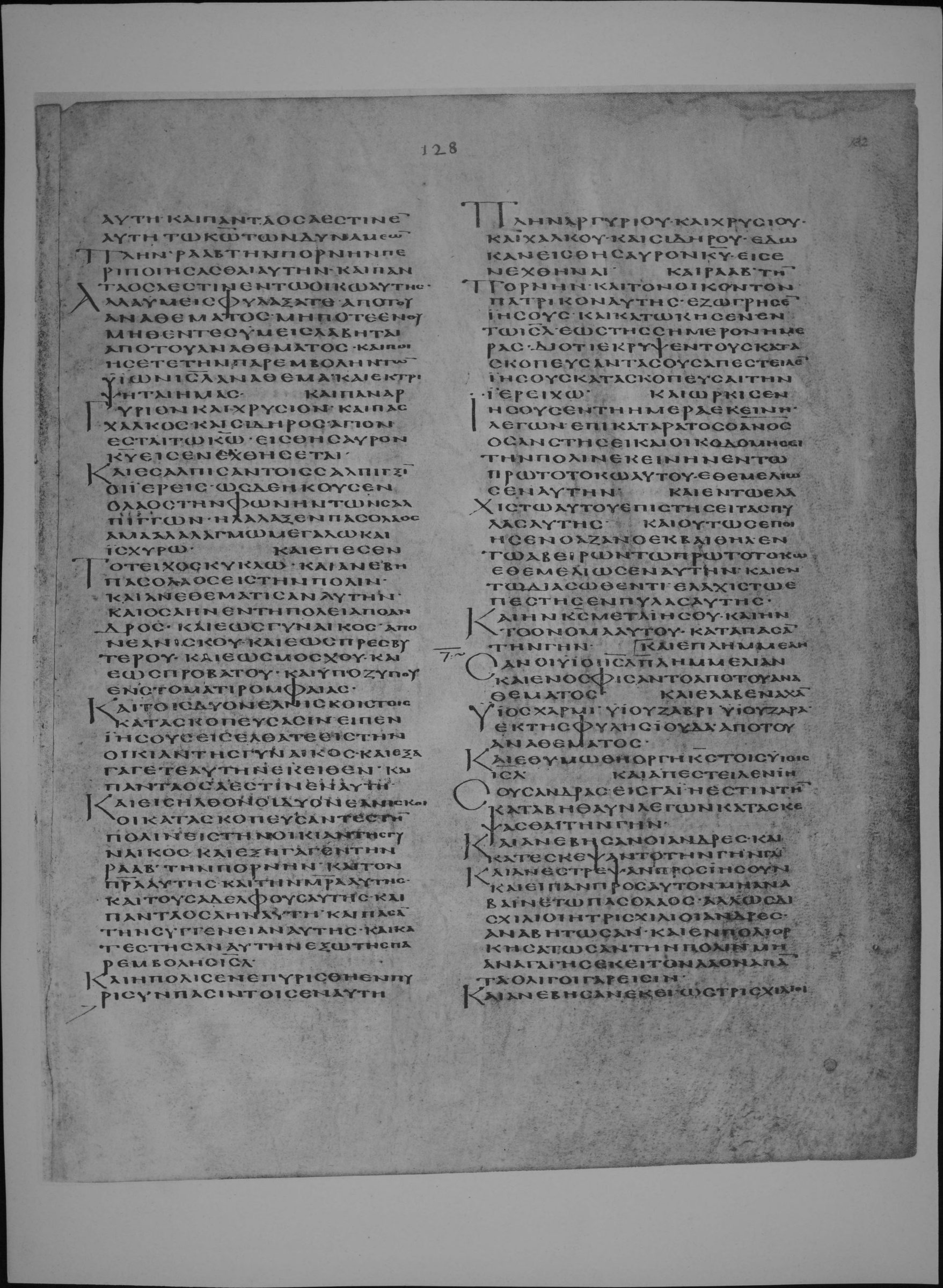
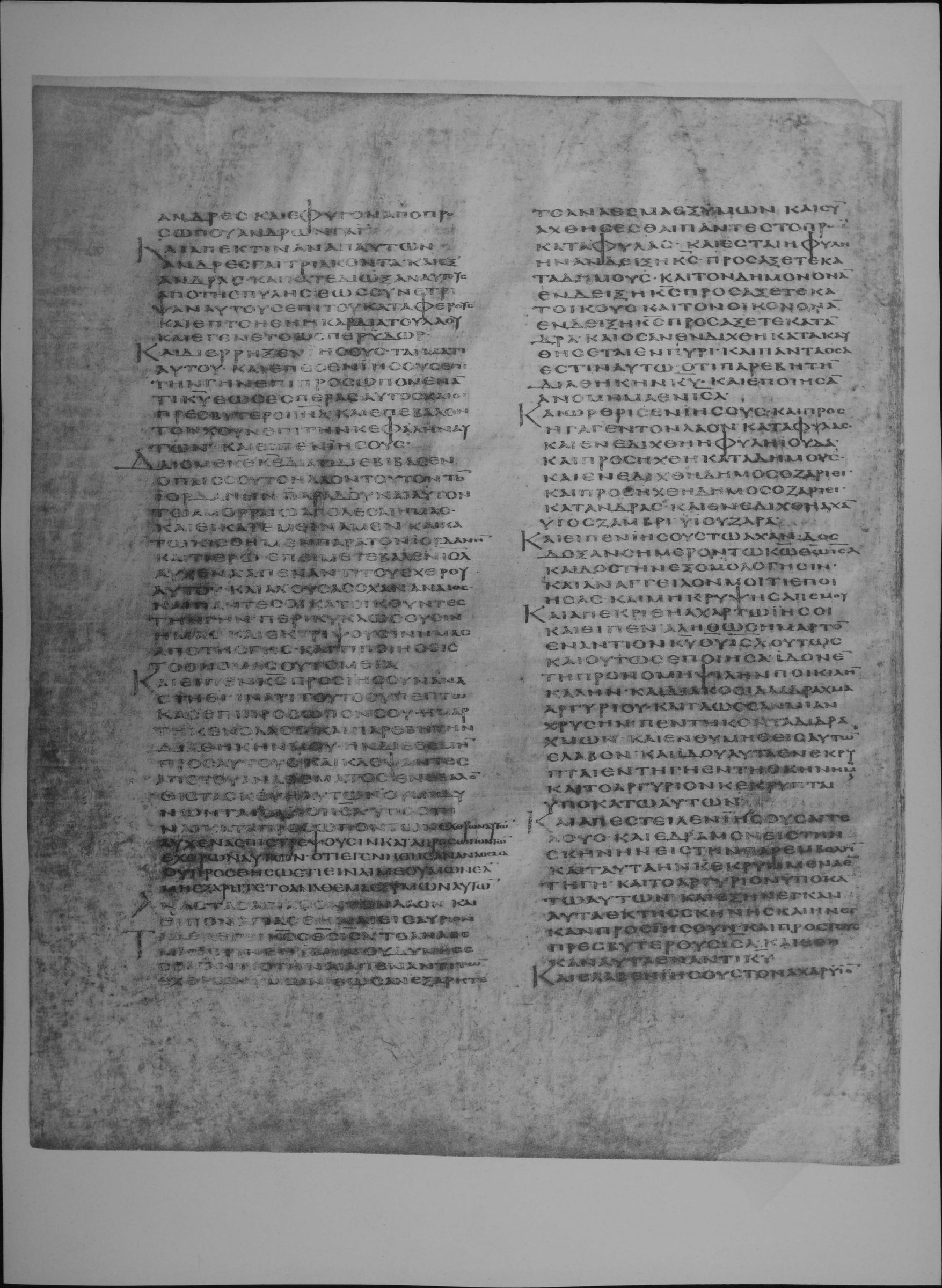
Joshua 7:1-4 is on fol. 128r (full-size facsimile of 1879-83, Internet Archive codex-alexandrinus leaf 276). The 1915 reduced facsimile prints beneath this page: Jos. vi. 17-vii. 4. Checked on the plate: the page begins inside Joshua 6:17 (first words read: ΑΥΤΗ ΚΑΙ ΠΑΝΤΑ ΟΣΑ ΕΣΤΙΝ ΕΝ ΑΥΤΗ ΤΩ ΚΩ ΤΩΝ ΔΥΝΑΜΕΩΝ ΠΛΗΝ ΡΑΑΒ ΤΗΝ ΠΟΡΝΗΝ). Joshua 7:4-8 is on fol. 128v (full-size facsimile of 1879-83, Internet Archive codex-alexandrinus leaf 277). The 1915 reduced facsimile prints beneath this page: Jos. vii. 4-24. Checked on the plate: the page begins inside Joshua 7:4 (first words read: ΑΝΔΡΕΣ ΚΑΙ ΕΦΥΓΟΝ ΑΠΟ ΠΡΟΣΩΠΟΥ ΑΝΔΡΩΝ ΓΑΙ ΚΑΙ ΑΠΕΚΤΕΙΝΑΝ ΑΠ ΑΥΤΩΝ).
1Καὶ ἐπλημμέλησαν οἱ υἱοὶ Ἰσραὴλ πλημμελίαν μεγάλην καὶ ἐνοσφίσαντο ἀπὸ τοῦ ἀναθέματος· καὶ ἔλαβεν Ἀχὰρ υἱὸς Χαρμεὶ υἱοῦ Ζαμβρεὶ υἱοῦ Ζάρα ἐκ τῆς φυλῆς Ἰούδα ἀπὸ τοῦ ἀναθέματος· καὶ ἐθυμώθη ὀργῇ Κύριος τοῖς υἱοῖς Ἰσραήλ. 2Καὶ ἀπέστειλεν Ἰησοῦς ἄνδρας εἰς Γαί, ἥ ἐστιν κατὰ Βαιθήλ, λέγων Κατασκέψασθε τὴν Γαί. 3καὶ ἀνέβησαν οἱ ἄνδρες καὶ κατεσκέψαντο τὴν Γαί, καὶ ἀνέστρεψαν πρὸς Ἰησοῦν καὶ εἶπαν πρὸς αὐτόν Μὴ ἀναβήτω πᾶς ὁ λαός, ἀλλ᾽ ὡς δισχίλιοι ἢ τρισχίλιοι ἄνδρες ἀναβήτωσαν καὶ ἐκπολιορκησάτωσαν τὴν πόλιν· μὴ ἀναγάγῃς ἐκεῖ τὸν λαὸν πάντα, ὀλίγοι γάρ εἰσιν. 4καὶ ἀνέβησαν ὡσεὶ τρισχίλιοι ἄνδρες, καὶ ἔφυγον ἀπὸ προσώπου τῶν ἀνδρῶν Γαί. 5καὶ ἀπέκτειναν ἀπ᾽ αὐτῶν ἄνδρες Γαὶ εἰς τριάκοντα καὶ ἓξ ἄνδρας, καὶ κατεδίωξαν αὐτοὺς ἀπὸ τῆς πύλης καὶ συνέτριψαν αὐτοὺς ἀπὸ τοῦ καταφεροῦς· καὶ ἐπτοήθη ἡ καρδία τοῦ λαοῦ καὶ ἐγένετο ὥσπερ ὕδωρ. 6καὶ διέρρηξεν Ἰησοῦς τὰ ἱμάτια αὐτοῦ· καὶ ἔπεσεν Ἰησοῦς ἐπὶ τὴν γῆν ἐπὶ πρόσωπον ἐναντίον Κυρίου ἕως ἑσπέρας, αὐτὸς καὶ οἱ πρεσβύτεροι Ἰσραήλ, καὶ ἐπεβάλοντο χοῦν ἐπὶ τὰς κεφαλὰς αὐτῶν. 7καὶ εἶπεν Ἰησοῦς Δέομαι, Κύριε, ἵνα τί διεβίβασεν ὁ παῖς σου τὸν λαὸν τοῦτον τὸν Ἰορδάνην, παραδοῦναι αὐτὸν τῷ Ἀμορραίῳ ἀπολέσαι ἡμᾶς; καὶ εἰ κατεμείναμεν καὶ κατῳκίσθημεν παρὰ τὸν Ἰορδάνην. 8καὶ τί ἐρῶ, ἐπεὶ μετέβαλεν Ἰσραὴλ αὐχένα ἀπέναντι τοῦ ἐχθροῦ αὐτοῦ;
1But the children of Israel committed a great trespass, and purloined part of the accursed thing; and Achar the son of Charmi, the son of Zambri, the son of Zara, of the tribe of Juda, took of the accursed thing; and the Lord was very angry with the children of Israel. 2And Joshua sent men to Gai, which is by Bæthel, saying, Spy out Gai: and the men went up and spied Gai. 3And they returned to Joshua, and said to him, Let not all the people go up, but let about two or three thousand men go up and take the city by siege: carry not up thither the whole people, for the enemy are few. 4And there went up about three thousand men, and they fled from before the men of Gai. 5And the men of Gai slew of them to the number of thirty-six men, and they pursued them from the gate, and destroyed them from the steep hill; and the heart of the people was alarmed and became as water. 6And Joshua tore his garments; and Joshua fell on the earth on his face before the Lord until evening, he and the elders of Israel; and they cast dust on their heads. 7And Joshua said, I pray, Lord, wherefore has thy servant brought this people over Jordan to deliver them to the Amorite to destroy us? would we had remained and settled ourselves beyond Jordan. 8And what shall I say since Israel has turned his back before his enemy?
Where on the image
Joshua 7:9-16 is on fol. 128v (full-size facsimile of 1879-83, Internet Archive codex-alexandrinus leaf 277). The 1915 reduced facsimile prints beneath this page: Jos. vii. 4-24. Checked on the plate: the page begins inside Joshua 7:4 (first words read: ΑΝΔΡΕΣ ΚΑΙ ΕΦΥΓΟΝ ΑΠΟ ΠΡΟΣΩΠΟΥ ΑΝΔΡΩΝ ΓΑΙ ΚΑΙ ΑΠΕΚΤΕΙΝΑΝ ΑΠ ΑΥΤΩΝ).
9καὶ ἀκούσας ὁ Χαναναῖος καὶ πάντες οἱ κατοικοῦντες τὴν γῆν περικυκλώσουσιν ἡμᾶς καὶ ἐκτρίψουσιν ἡμᾶς ἀπὸ τῆς γῆς· καὶ τί ποιήσεις τὸ ὄνομά σου τὸ μέγα; 10Καὶ εἶπεν Κύριος πρὸς Ἰησοῦν Ἀνάστηθι· ἵνα τί τοῦτο σὺ πέπτωκας ἐπὶ πρόσωπόν σου; 11ἡμάρτηκεν ὁ λαὸς καὶ παρέβη τὴν διαθήκην ἣν διεθέμην πρὸς αὐτούς· κλέψαντες ἀπὸ τοῦ ἀναθέματος ἐνέβαλον εἰς τὰ σκεύη αὐτῶν. 12οὐ μὴ δύνωνται οἱ υἱοὶ Ἰσραὴλ ὑποστῆναι κατὰ πρόσωπον τῶν ἐχθρῶν αὐτῶν· αὐχένα ὑποστρέψουσιν ἔναντι τῶν ἐχθρῶν αὐτῶν, ὅτι ἐγενήθησαν ἀνάθεμα· οὐ προσθήσω ἔτι εἶναι μεθ᾽ ὑμῶν, ἐὰν μὴ ἐξάρητε τὸ ἀνάθεμα ἐξ ὑμῶν αὐτῶν. 13ἀναστὰς ἁγίασον τὸν λαόν, καὶ εἰπὸν ἁγιασθῆναι εἰς αὔριον. τάδε λέγει Κύριος ὁ θεὸς Ἰσραήλ Τὸ ἀνάθεμα ἐν ὑμῖν ἐστιν· οὐ δυνήσεσθε ἀντιστῆναι ἀπέναντι τῶν ἐχθρῶν ὑμῶν, ἕως ἂν ἐξάρητε τὸ ἀνάθεμα ἐξ ὑμῶν. 14καὶ συναχθήσεσθε πάντες τὸ πρωὶ κατὰ φυλάς, καὶ ἔσται ἡ φυλὴ ἣν ἂν δείξῃ Κύριος, προσάξετε κατὰ δήμους· καὶ τὸν δῆμον ὃν ἐὰν δείξῃ Κύριος, προσάξετε κατ᾽ οἶκον· καὶ τὸν οἶκον ὃν ἐὰν δέξῃ Κύριος, προσάξετε κατ᾽ ἄνδρα. 15καὶ ὃς ἂν ἐνδειχθῇ, κατακαυθήσεται ἐν πυρί, καὶ πάντα ὅσα ἐστὶν αὐτῷ· ὅτι παρέβη τὴν διαθήκην Κυρίου καὶ ἐποίησεν ἀνόμημα ἐν Ἰσραήλ. 16Καὶ ὤρθρισεν Ἰησοῦς καὶ προσήγαγεν τὸν λαὸν κατὰ φυλάς· καὶ ἐνεδείχθη ἡ φυλὴ Ἰούδα.
9And when the Chananite and all the inhabitants of the land hear it, they shall compass us round and destroy us from off the land: and what wilt thou do for thy great name? 10And the Lord said to Joshua, Rise up; why hast thou fallen upon thy face? 11The people has sinned, and transgressed the covenant which I made with them; they have stolen from the cursed thing, and put it into their store. 12And the children of Israel will not be able to stand before their enemies; they will turn their back before their enemies, for they have become an accursed thing: I will not any longer be with you, unless ye remove the cursed thing from yourselves. 13Rise, sanctify the people and tell them to sanctify themselves for the morrow: thus says the Lord God of Israel, The accursed thing is among you; ye shall not be able to stand before your enemies, until ye shall have removed the cursed thing from among you. 14And ye shall all be gathered together by your tribes in the morning, and it shall come to pass that the tribe which the Lord shall shew, ye shall bring by families; and the family which the Lord shall shew, ye shall bring by households; and the household which the Lord shall shew, ye shall bring man by man. 15And the man who shall be pointed out, shall be burnt with fire, and all that he has; because he has transgressed the covenant of the Lord, and has wrought wickedness in Israel. 16And Joshua rose up early, and brought the people by their tribes; and the tribe of Juda was pointed out.
Where on the image
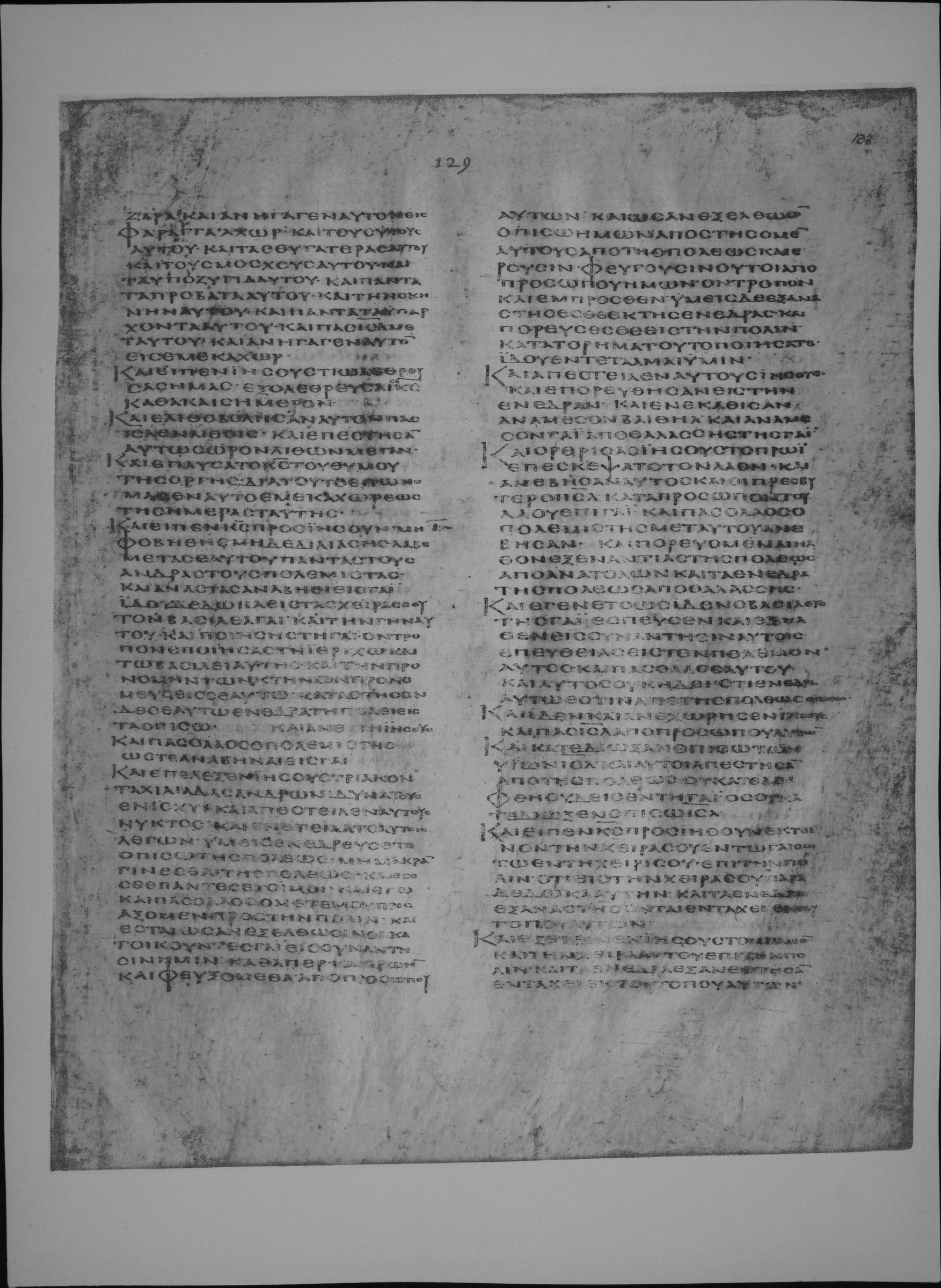
Joshua 7:17-24 is on fol. 128v (full-size facsimile of 1879-83, Internet Archive codex-alexandrinus leaf 277). The 1915 reduced facsimile prints beneath this page: Jos. vii. 4-24. Checked on the plate: the page begins inside Joshua 7:4 (first words read: ΑΝΔΡΕΣ ΚΑΙ ΕΦΥΓΟΝ ΑΠΟ ΠΡΟΣΩΠΟΥ ΑΝΔΡΩΝ ΓΑΙ ΚΑΙ ΑΠΕΚΤΕΙΝΑΝ ΑΠ ΑΥΤΩΝ). Joshua 7:24-26 is on fol. 129r (full-size facsimile of 1879-83, Internet Archive codex-alexandrinus leaf 278). The 1915 reduced facsimile prints beneath this page: Jos. vii. 24-viii. 19. Checked on the plate: the page begins inside Joshua 7:24 (first words read: ΖΑΡΑ ΚΑΙ ΑΝΗΓΑΓΕΝ ΑΥΤΟΝ ΕΙΣ ΦΑΡΑΓΓΑ ΑΧΩΡ ΚΑΙ ΤΟΥΣ ΥΙΟΥΣ ΑΥΤΟΥ ΚΑΙ ΤΑΣ ΘΥΓΑΤΕΡΑΣ ΑΥΤΟΥ).
17καὶ προσήχθη κατὰ δήμους, καὶ ἐνεδείχθη δῆμος Ζαραεί· καὶ προσήχθη κατὰ ἄνδρα, 18καὶ ἐνεδείχθη Ἀχὰρ υἱὸς Ζαμβρεὶ υἱοῦ Ζάρα. 19καὶ εἶπεν Ἰησοῦς τῷ Ἀχάρ Δὸς δόξαν σήμερον τῷ κυρίῳ θεῷ Ἰσραήλ, καὶ δὸς τὴν ἐξομολόγησιν καὶ ἀνάγγειλόν μοι τί ἐποίησας, καὶ μὴ κρύψῃς ἀπ᾽ ἐμοῦ. 20καὶ ἀπεκρίθη Ἀχὰρ τῷ Ἰησοῖ καὶ εἶπεν Ἀληθῶς ἥμαρτον ἐναντίον Κυρίου θεοῦ Ἰσραήλ· οὕτως καὶ οὕτως ἐποίησα. 21ἴδον ἐν τῇ προνομῇ ψιλὴν ποικίλην καὶ διακόσια δίδραχμα ἀργυρίου καὶ γλῶσσαν μίαν χρυσῆν πεντήκοντα διδράχμων, καὶ ἐνθυμηθεὶς αὐτῶν ἔλαβον· καὶ ἰδοὺ αὐτὰ ἐνκέκρυπται ἐν τῇ σκηνῇ μου, καὶ τὸ ἀργύριον κέκρυπται ὑποκάτω αὐτῶν. 22καὶ ἀπέστειλεν Ἰησοῦς ἀγγέλους, καὶ ἔδραμον εἰς τὴν σκηνὴν εἰς τὴν παρεμβολήν· καὶ ταῦτα ἦν ἐνκεκρυμμένα εἰς τὴν σκηνήν, καὶ τὸ ἀργύριον ὑποκάτω αὐτῶν. 23καὶ ἐξήνεγκαν αὐτὰ ἐκ τῆς σκηνῆς καὶ ἤνεγκαν πρὸς Ἰησοῦν καὶ τοὺς πρεσβυτέρους Ἰσραήλ, καὶ ἔθηκαν αὐτὰ ἔναντι Κυρίου. 24καὶ ἔλαβεν Ἰησοῦς τὸν Ἀχὰρ υἱὸν Ζάρα καὶ ἀνήγαγεν αὐτὸν εἰς φάραγγα Ἀχώρ, καὶ τοὺς υἱοὺς αὐτοῦ καὶ τὰς θυγατέρας αὐτοῦ καὶ τοὺς μόσχους αὐτοῦ καὶ τὰ ὑποζύγια αὐτοῦ καὶ πάντα τὰ πρόβατα αὐτοῦ καὶ τὴν σκηνὴν αὐτοῦ καὶ πάντα τὰ ὑπάρχοντα αὐτοῦ, καὶ πᾶς ὁ λαὸς μετ᾽ αὐτοῦ· καὶ ἀνήγαγεν αὐτοὺς εἰς Ἐμεκαχώρ. 25καὶ εἶπεν Ἰησοῦς τῷ Ἀχάρ Τί ὠλέθρευσας ἡμᾶς; ἐξολεθρεύσαι σε Κύριος, καθὰ καὶ σήμερον. καὶ ἐλιθοβόλησαν αὐτὸν λίθοις πᾶς Ἰσραήλ, 26καὶ ἐπέστησαν αὐτῷ σωρὸν λίθων μέγαν· καὶ ἐπαύσατο Κύριος τοῦ θυμοῦ τῆς ὀργῆς. διὰ τοῦτο ἐπωνόμασεν αὐτὸ Ἐμεκαχὼρ ἕως τῆς ἡμέρας ταύτης.
17And it was brought by their families, and the family of the Zaraites was pointed out. 18And it was brought man by man, and Achar the son of Zambri the son of Zara was pointed out. 19And Joshua said to Achar, Give glory this day to the Lord God of Israel, and make confession; and tell me what thou hast done, and hide it not from me. 20And Achar answered Joshua, and said, Indeed I have sinned against the Lord God of Israel: thus and thus have I done: 21I saw in the spoil an embroidered mantle, and two hundred didrachms of silver, and one golden wedge of fifty didrachms, and I desired them and took them; and, behold, they are hid in my tent, and the silver is hid under them. 22And Joshua sent messengers, and they ran to the tent into the camp; and these things were hidden in his tent, and the silver under them. 23And they brought them out of the tent, and brought them to Joshua and the elders of Israel, and they laid them before the Lord. 24And Joshua took Achar the son of Zara, and brought him to the valley of Achor, and his sons, and his daughters, and his calves, and his asses, and all his sheep, and his tent, and all his property, and all the people were with him; and he brought them to Emec Achor. 25And Joshua said to Achar, Why hast thou destroyed us? the Lord destroy thee as at this day. And all Israel stoned him with stones. 26And they set up over him a great heap of stones; and the Lord ceased from his fierce anger. Therefore he called the place Emecachor until this day.
Cite
Sources
- Source: Codex Alexandrinus (British Library Royal MS 1 D. V) via the British Museum photographic facsimiles of 1879-83 and 1915 (Internet Archive) + Swete's Septuagint + Brenton's English (holding institution)
- Critical edition: H. B. Swete, The Old Testament in Greek according to the Septuagint (1909)
← previous · → next · v cycle view · l back to library