Judith, Chapter 11 (Codex Alexandrinus)
Introduction
Judith 11 in the Greek Old Testament (the Septuagint) as written in Codex Alexandrinus, a Greek Bible copied in the fifth century, probably in Egypt, and now in the British Library (Royal MS 1 D. VI, the second of its four volumes). It is one of the three great early codices of the whole Greek Bible, with Codex Vaticanus and Codex Sinaiticus.
This entry meets the strict three-criteria standard of the Theosis Library:
- Manuscript scan: the pages of Codex Alexandrinus carrying this chapter (fol. 434v, fol. 435r), from the full-size photographic (autotype) facsimile published by the British Museum in 1879-1883, as digitised on the Internet Archive. The verse range of every page comes from the reduced photographic facsimile of 1936, which prints it beneath each plate, and the opening words of every page were read on the plate to confirm the page and the verse it begins with. Each section links to the page or pages that hold its verses. Folio numbers are those written at the head of each leaf and visible on the plates.
- Original text: Swete's edition, which here prints the text of Codex Vaticanus (Vat. gr. 1209), the base of his edition, and gives the readings of Alexandrinus only in his apparatus. The Greek column is therefore Vaticanus' text; where Alexandrinus differs, the plate shows what Alexandrinus reads.
- English translation: Sir Lancelot C. L. Brenton, The Septuagint Version of the Old Testament (1844; 1851 edition), a translation of the Greek, public domain, from the eBible.org text.
How was this verified? (Provenance)
Where on the image
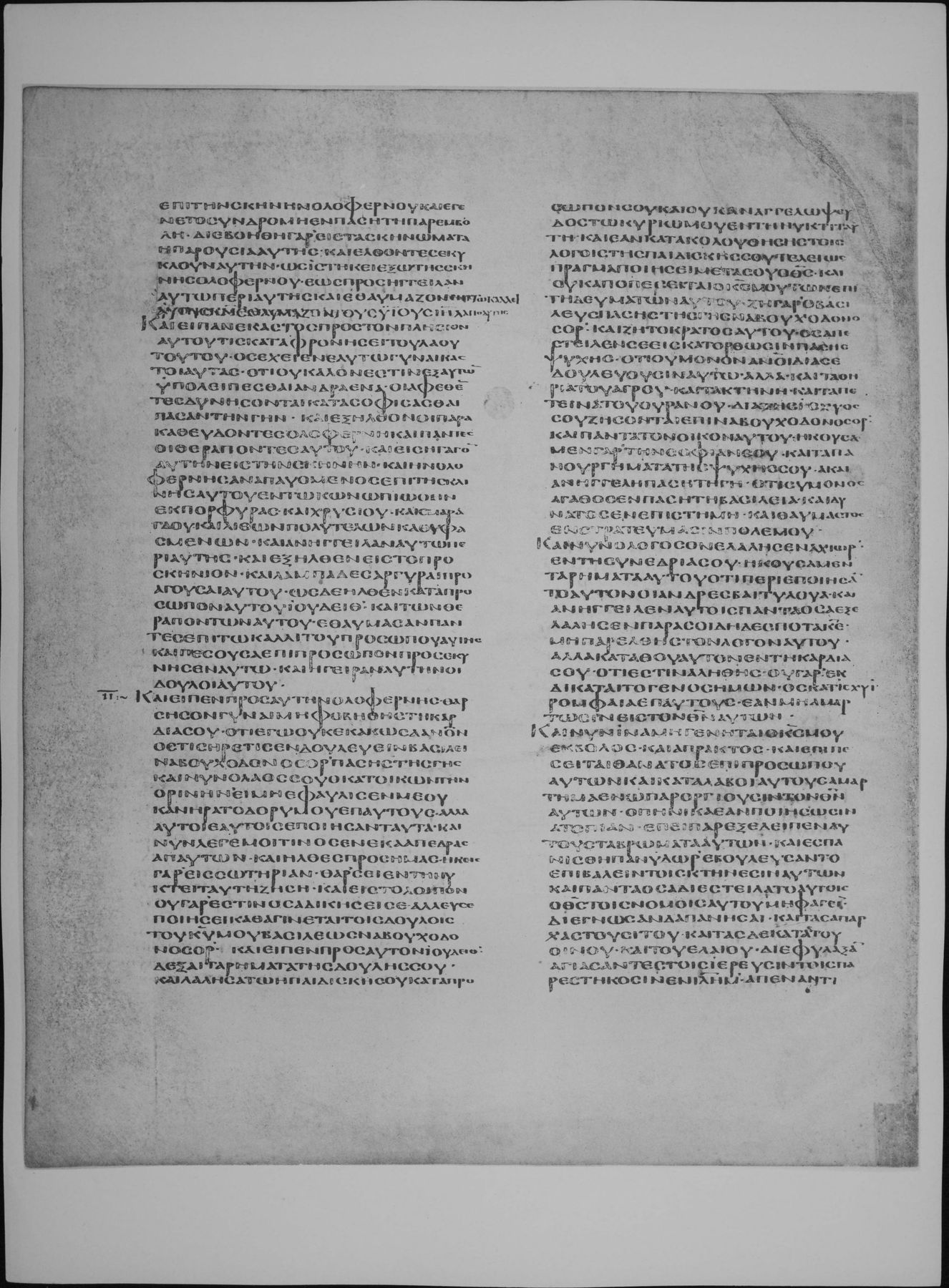
Judith 11:1-8 is on fol. 434v (full-size facsimile of 1879-83, Internet Archive codex-alexandrinus leaf 893). The 1936 reduced facsimile prints beneath this page: Judith x. 17-xi. 13. Checked on the plate: the page begins inside Judith 10:17 (first words read: ΕΠΙ ΤΗΝ ΣΚΗΝΗΝ ΟΛΟΦΕΡΝΟΥ ΚΑΙ ΕΓΕΝΕΤΟ ΣΥΝΔΡΟΜΗ ΕΝ ΠΑΣΗ ΤΗ ΠΑΡΕΜΒΟΛΗ).
1Καὶ εἶπεν πρὸς αὐτὴν Ὀλοφέρνης Θάρσησον, γύναι, μὴ φοβηθῇς τῇ καρδίᾳ σου· ὅτι ἐγὼ οὐκ ἐκάκωσα ἄνθρωπον ὅστις ᾑρέτικεν δουλεύειν βασιλεῖ Ναβουχοδονοσὸρ πάσης τῆς γῆς. 2καὶ νῦν ὁ λαός σου ὁ κατοικῶν τὴν ὀρινήν, εἰ μὴ ἐφαύλισάν με, οὐκ ἂν ἦρα τὸ δόρυ μου ἐπ᾽ αὐτούς, ἀλλὰ αὐτοὶ ἑαυτοῖς ἐποίησαν ταῦτα. 3καὶ νῦν λέγε μοι τίνος ἕνεκεν ἀπέδρας ἀπ᾽ αὐτῶν καὶ ἦλθες πρὸς ἡμᾶς· ἥκεις γὰρ εἰς σωτηρίαν· θάρσει, ἐν τῇ νυκτὶ ταύτῃ ζήσῃ καὶ εἰς τὸ λοιπόν· 4οὐ γὰρ ἔστιν ὃς ἀδικήσει σε, ἀλλ᾽ εὖ σε ποιήσει καθὰ γίνεται τοῖς δούλοις τοῦ κυρίου μου βασιλέως Ναβουχοδονοσόρ. 5καὶ εἶπεν πρὸς αὐτὸν Ἰουδείθ Δέξαι τὰ ῥήματα τῆς δούλης σου, καὶ λαλησάτω ἡ παιδίσκη σου κατὰ πρόσωπόν σου, καὶ οὐκ ἀναγγελῶ ψεῦδος τῷ κυρίῳ μου ἐν τῇ νυκτὶ ταύτῃ. 6καὶ ἐὰν κατακολουθήσῃς τοῖς λόγοις τῆς παιδίσκης σου, τελείως πρᾶγμα ποιήσει μετὰ σοῦ ὁ θεός, καὶ οὐκ ἀποπεσεῖται ὁ κύριός μου τῶν ἐπιτηδευμάτων αὐτοῦ. 7ζῇ γὰρ βασιλεὺς Ναβουχοδονοσὸρ πάσης τῆς γῆς καὶ ζῇ τὸ κράτος αὐτοῦ, ὃς ἀπέστειλέν σε εἰς κατόρθωσιν πάσης ψυχῆς, ὅτι οὐ μόνον ἄνθρωποι διὰ σὲ δουλεύουσιν αὐτῷ, ἀλλὰ καὶ τὰ θηρία τοῦ ἀγροῦ καὶ τὰ κτὴνη καὶ τὰ πετεινὰ τοῦ οὐρανοῦ διὰ τῆς ἰσχύος σου ζήσονται Ναβουχοδονοσὸρ καὶ πάντα τὸν οἶκον αὐτοῦ. 8ἠκούσαμεν γὰρ τὴν σοφίαν σου καὶ τὰ πανουργεύματα τῆς ψυχῆς σου, καὶ ἀνηγγέλη πάσῃ τῇ γῇ ὅτι σὺ μόνος ἀγαθὸς ἐν πάσῃ βασιλείᾳ καὶ δυνατὸς ἐν ἐπιστήμῃ καὶ θαυμαστὸς ἐν στρατεύμασιν πολέμου.
1Then said Holofernes unto her, Woman, be of good comfort, fear not in thine heart: for I never hurt any that was willing to serve Nabuchodonosor, the king of all the earth. 2Now therefore, if thy people that dwelleth in the mountains had not set light by me, I would not have lifted up my spear against them: but they have done these things to themselves. 3But now tell me wherefore thou art fled from them, and art come unto us: for thou art come for safeguard; be of good comfort, thou shalt live this night, and hereafter: 4for none shall hurt thee, but entreat thee well, as they do the servants of king Nabuchodonosor my lord. 5Then Judith said unto him, Receive the words of thy servant, and suffer thine handmaid to speak in thy presence, and I will declare no lie to my lord this night. 6And if thou wilt follow the words of thine handmaid, God will bring the thing perfectly to pass by thee; and my lord shall not fail of his purposes. 7As Nabuchodonosor king of all the earth liveth, and as his power liveth, who hath sent thee for the upholding of every living thing: for not only men shall serve him by thee, but also the beasts of the field, and the cattle, and the fowls of the air, shall live by thy power under Nabuchodonosor and all his house. 8For we have heard of thy wisdom and thy policies, and it is reported in all the earth, that thou only art excellent in all the kingdom, and mighty in knowledge, and wonderful in feats of war.
Where on the image
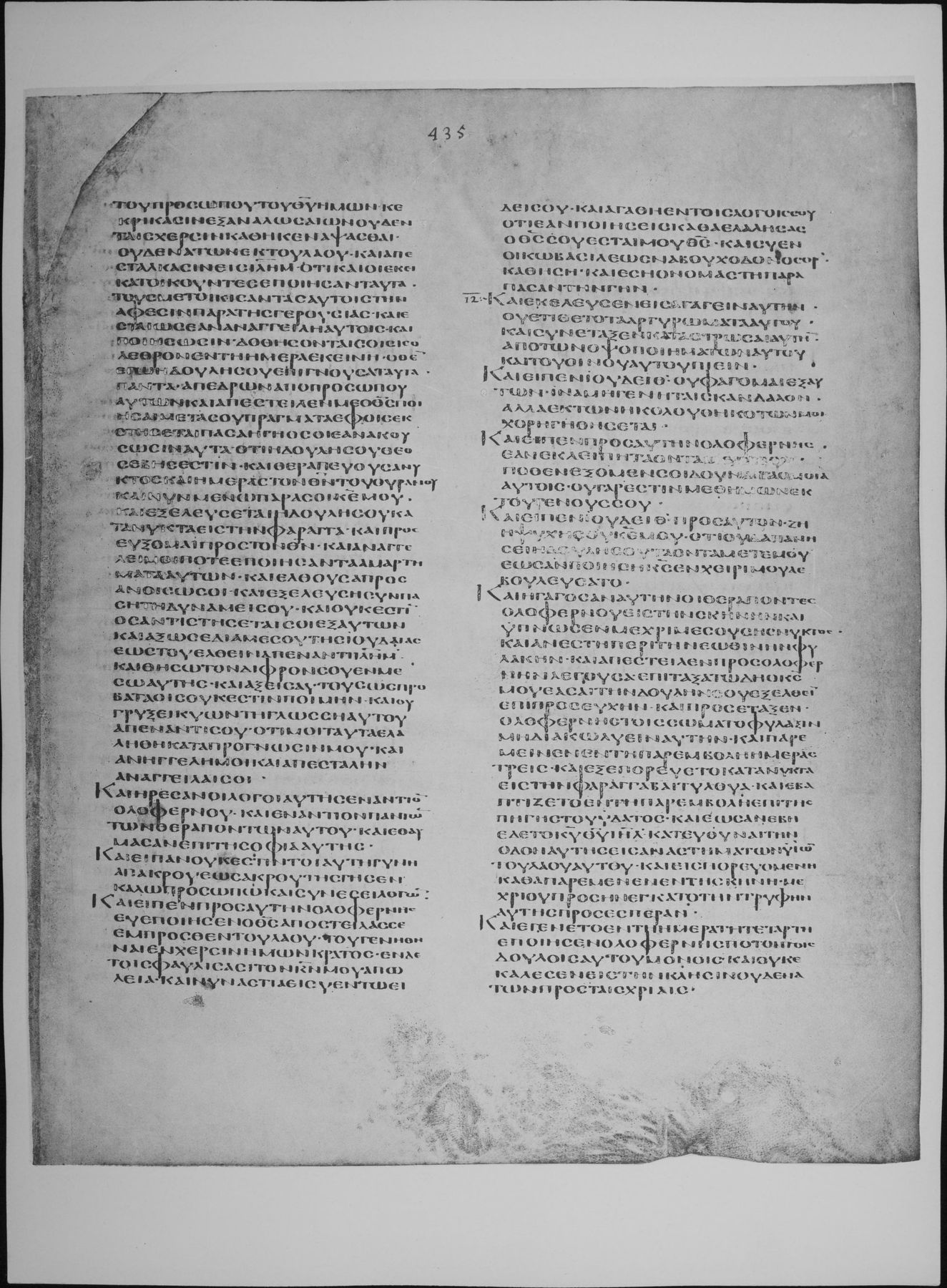
Judith 11:9-13 is on fol. 434v (full-size facsimile of 1879-83, Internet Archive codex-alexandrinus leaf 893). The 1936 reduced facsimile prints beneath this page: Judith x. 17-xi. 13. Checked on the plate: the page begins inside Judith 10:17 (first words read: ΕΠΙ ΤΗΝ ΣΚΗΝΗΝ ΟΛΟΦΕΡΝΟΥ ΚΑΙ ΕΓΕΝΕΤΟ ΣΥΝΔΡΟΜΗ ΕΝ ΠΑΣΗ ΤΗ ΠΑΡΕΜΒΟΛΗ). Judith 11:13-16 is on fol. 435r (full-size facsimile of 1879-83, Internet Archive codex-alexandrinus leaf 894). The 1936 reduced facsimile prints beneath this page: Judith xi. 13-xii. 10. Checked on the plate: the page begins inside Judith 11:13 (first words read: ΤΟΥ ΠΡΟΣΩΠΟΥ ΤΟΥ ΘΥ ΗΜΩΝ ΚΕΚΡΙΚΑΣΙΝ ΕΞΑΝΑΛΩΣΑΙ).
9καὶ νῦν λόγος ὃν ἐλάλησεν Ἀχιὼρ ἐν τῇ συνεδρείᾳ σου, ἠκούσαμεν τὰ ῥήματα αὐτοῦ, ὅτι περιεποιήσαντο αὐτὸν οἱ ἄνδρες Βαιτυλουά, καὶ ἀνήγγειλεν αὐτοῖς πάντα ὅσα ἐξελάλησεν παρὰ σοί. 10διό, δέσποτα κύριε, μὴ παρέλθῃς τὸν λόγον αὐτοῦ, ἀλλὰ κατάθου αὐτὸν ἐν τῇ καρδίᾳ σου, ὅτι ἐστιν ἀληθής· οὐ γὰρ ἐκδικᾶται τὸ γένος ἡμῶν, οὐ κατισχύει ῥομφαία ἐπ᾽ αὐτοὺς ἐὰν μὴ ἁμάρτωσιν εἰς τὸν θεὸν αὐτῶν. 11καὶ νῦν ἵνα μὴ γένηται ὁ κύριός μου ἔκβολος καὶ ἄπρακτος, ἐπιπεσεῖται θάνατος ἐπὶ πρόσωπον αὐτῶν, καὶ κατελάβετο αὐτοὺς ἁμάρτημα ἐν ᾧ παροργιοῦσιν τὸν θεὸν αὐτῶν, ὁπηνίκα ἂν ποιήσωσιν ἀτοπίαν. 12ἐπεὶ γὰρ ἐξέλειπεν αὐτοὺς τὰ βρώματα καὶ ἐσπανίσθη πᾶν ὕδωρ, ἐβουλεύσαντο ἐπιβαλεῖν τοῖς κτήνεσιν αὐτῶν, καὶ πάντα ὅσα διεστείλατο αὐτοῖς ὁ θεὸς τοῖς νόμοις αὐτοῦ μὴ φαγεῖν διέγνωσαν δαπανῆσαι. 13καὶ τὰς ἀπαρχὰς τοῦ σίτου καὶ τὰς δεκάτας τοῦ οἴνου καὶ τοῦ ἐλαίου, ἃ διεφύλαξαν ἁγιάσαντες τοῖς ἱερεῦσιν τοῖς παρεστηκόσιν ἐν Ἰερουσαλὴμ ἀπέναντι τοῦ προσώπου τοῦ θεοῦ ἡμῶν, κεκρίκασιν ἐξαναλῶσαι, ὧν οὐδὲ ταῖς χερσὶν καθῆκεν ἅψασθαι οὐδένα τῶν ἐκ τοῦ λαοῦ. 14καὶ ἀπεστάλκασιν εἰς Ἰερουσαλήμ, ὅτι καὶ οἱ ἐκεῖ κατοικοῦντες ἐποίησαν ταῦτα, τοὺς μετοικίσαντας αὐτοῖς τὴν ἄφεσιν παρὰ τῆς γερουσίας. 15καὶ ἔσται ὡς ἂν ἀναγγείλῃ αὐτοῖς καὶ ποιήσωσιν, δοθήσονταί σοι εἰς ὄλεθρον ἐν τῇ ἡμέρᾳ ἐκείνῃ. 16ὅθεν ἐγὼ ἡ δούλη σου ἐπιγνοῦσα ταῦτα πάντα ἀπέδρων ἀπὸ προσώπου αὐτῶν, καὶ ἀπέστειλέν με ὁ θεὸς ποιῆσαι μετὰ σοῦ πράγματα ἐφ᾽ οἷς ἐκστήσεται πᾶσα ἡ γῆ ὅσοι ἐὰν ἀκούσωσιν αὐτά.
9Now as concerning the matter, which Achior did speak in thy council, we have heard his words; for the men of Bethulia saved him, and he declared unto them all that he had spoken unto thee. 10Therefore, O lord and governor, reject not his word; but lay it up in thine heart, for it is true: for our nation shall not be punished, neither can the sword prevail against them, except they sin against their God. 11And now, that my lord be not defeated and frustrate of his purpose, even death is now fallen upon them, and their sin hath overtaken them, wherewith they will provoke their God to anger, whensoever they shall do that which is not fit to be done: 12for their victuals fail them, and all their water is scant, and they have determined to lay hands upon their cattle, and purposed to consume all those things, that God hath forbidden them to eat by his laws: 13and are resolved to spend the firstfruits of the corn, and the tenths of wine and oil, which they had sanctified, and reserved for the priests that serve in Jerusalem before the face of our God; the which things it is not lawful for any of the people so much as to touch with their hands. 14For they have sent some to Jerusalem, because they also that dwell there have done the like, to bring them a licence from the senate. 15Now when they shall bring them word, they will forthwith do it, and they shall be given thee to be destroyed the same day. 16Wherefore I thine handmaid, knowing all this, am fled from their presence; and God hath sent me to work things with thee, whereat all the earth shall be astonished, and whosoever shall hear it.
Where on the image
Judith 11:17-23 is on fol. 435r (full-size facsimile of 1879-83, Internet Archive codex-alexandrinus leaf 894). The 1936 reduced facsimile prints beneath this page: Judith xi. 13-xii. 10. Checked on the plate: the page begins inside Judith 11:13 (first words read: ΤΟΥ ΠΡΟΣΩΠΟΥ ΤΟΥ ΘΥ ΗΜΩΝ ΚΕΚΡΙΚΑΣΙΝ ΕΞΑΝΑΛΩΣΑΙ).
17ὅτι ἡ δούλη σου θεοσεβής ἐστιν, καὶ θεραπεύουσα νυκτὸς καὶ ἡμέρας τὸν θεὸν τοῦ οὐρανοῦ· καὶ νῦν μενῶ παρὰ σοί, κύριέ μου, καὶ ἐξελεύσεται ἡ δούλη σου κατὰ νύκτα εἰς τὴν φάραγγα καὶ προσεύξομαι πρὸς τὸν θεόν, καὶ ἐρεῖ μοι πότε ἐποίησαν τὰ ἁμαρτήματα αὐτῶν. 18καὶ ἐλθοῦσα προσανοίσω σοι, καὶ ἐξελεύσῃ σὺν πάσῃ τῇ δυνάμει σου, καὶ οὐκ ἔστιν ὃς ἀντιστήσεταί σοι ἐξ αὐτῶν. 19καὶ ἄξω σε διὰ μέσου τῆς Ἰουδαίας ἕως τοῦ ἐλθεῖν ἀπέναντι Ἰερουσαλήμ, καὶ θήσω τὸν δίφρον σου ἐν μέσῳ αὐτῆς, καὶ ἄξεις αὐτοὺς ὡς πρόβατα οἷς οὐκ ἔστιν ποιμήν, καὶ οὐ γρύξει κύων τῇ γλώσσῃ αὐτοῦ ἀπέναντί σου· ὅτι ταῦτα ἐλαλήθη μοι κατὰ πρόγνωσίν μου καὶ ἀπηγγέλη μοι, καὶ ἀπεστάλην ἀναγγεῖλαί σοι. 20Καὶ ἤρεσαν οἱ λόγοι αὐτῆς ἐναντίον Ὀλοφέρνου καὶ ἐναντίον πάντων τῶν θεραπόντων αὐτοῦ, καὶ ἐθαύμασαν ἐπὶ τῇ σοφίᾳ αὐτῆς καὶ εἶπαν 21Οὐκ ἔστιν τοιαύτη γυνὴ ἀπ᾽ ἄκρου ἕως ἄκρου τῆς γῆς, ἐν καλῷ προσώπῳ καὶ συνέσει λόγων. 22καὶ εἶπεν πρὸς αὐτὴν Ὀλοφέρνης Εὖ ἐποίησεν ὁ θεὸς ἀποστείλας σε ἔμπροσθεν τοῦ λαοῦ, τοῦ γενηθῆναι ἐν χερσὶν ἡμῶν κράτος, ἐν δὲ τοῖς φαυλίσασι τὸν κύριόν μου ἀπώλεια. 23καὶ νῦν ἀστεία εἶ σὺ ἐν τῷ εἴδει σου καὶ ἀγαθὴ ἐν τοῖς λόγοις σου· ὅτι ἐὰν ποιήσῃ καθὰ ἐλάλησας, ὁ θεός σου ἔσται μοῦ θεός, καὶ σὺ ἐν οἴκῳ Ναβουχοδονοσὸρ βασιλέως καθήσῃ, καὶ ἔσῃ ὀνομαστὴ παρὰ πᾶσαν τὴν γῆν.
17For thy servant is religious, and serveth the God of heaven day and night: now therefore, my lord, I will remain with thee, and thy servant will go out by night into the valley, and I will pray unto God, and he will tell me when they have committed their sins: 18and I will come and shew it unto thee: then thou shalt go forth with all thine army, and there shall be none of them that shall resist thee. 19And I will lead thee through the midst of Judea, until thou come before Jerusalem; and I will set thy throne in the midst thereof; and thou shalt drive them as sheep that have no shepherd, and a dog shall not so much as open his mouth at thee: for these things were told me according to my foreknowledge, and they were declared unto me, and I am sent to tell thee. 20Then her words pleased Holofernes and all his servants; and they marvelled at her wisdom, and said, 21There is not such a woman from one end of the earth to the other, both for beauty of face, and wisdom of words. 22Likewise Holofernes said unto her, God hath done well to send thee before the people, that strength might be in our hands, and destruction upon them that lightly regard my lord. 23And now thou art both beautiful in thy countenance, and witty in thy words: surely if thou do as thou hast spoken, thy God shall be my God, and thou shalt dwell in the house of king Nabuchodonosor, and shalt be renowned through the whole earth.
Cite
Sources
- Source: Codex Alexandrinus (British Library Royal MS 1 D. VI) via the British Museum photographic facsimiles of 1879-83 and 1936 (Internet Archive) + Swete's Septuagint + Brenton's English (holding institution)
- Critical edition: H. B. Swete, The Old Testament in Greek according to the Septuagint (1909)
← previous · → next · v cycle view · l back to library